Results by title
751 books match the query 'International Relations' and 42 start with b

Bacardi
The Hidden WarHernando Calvo Ospina
Pluto Press, 2002

Backpack Ambassadors
How Youth Travel Integrated EuropeRichard Ivan Jobs
University of Chicago Press, 2017
From the Berlin Wall to the beaches of Spain, the Spanish Steps in Rome to the Pudding Shop in Istanbul, Jobs tells the stories of backpackers whose personal desire for freedom of movement brought the people and places of Europe into ever-closer contact. As greater and greater numbers of young people trekked around the continent, and a truly international youth culture began to emerge, the result was a Europe that, even in the midst of Cold War tensions, found its people more and more connected, their lives more and more integrated. Drawing on archival work in eight countries and five languages, and featuring trenchant commentary on the relevance of this period for contemporary concerns about borders and migration, Backpack Ambassadors brilliantly recreates a movement that was far more influential and important than its footsore travelers could ever have realized.
Ballymurphy and the Irish War
Ciaran de Baroid
Pluto Press, 2000
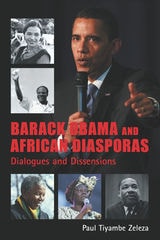
Barack Obama and African Diasporas
Dialogues and DissensionsPaul Tiyambe Zeleza
Ohio University Press, 2009
In the title essay, Zeleza analyzes the significance of the election of a member of the African diaspora to the presidency of the United States. He also addresses Africa’s urgent political concerns: China’s role in Africa, South Africa's difficulties in making the transition to a postapartheid society, the agony of Zimbabwe, and a discussion of Pan-Africanism, its history and contemporary challenges. Other posts introduce the reader to the rhythms of daily life, including football and other leisure activities, in capturing the different aspects of Africa.
An original and respected voice, Zeleza engages the reader in a series of passionate public conversations on issues and events of utmost importance to the globalized world. He deserves a wide readership.

Batman Saves the Congo
How Celebrities Disrupt the Politics of DevelopmentAlexandra Cosima Budabin
University of Minnesota Press, 2021
How celebrity strategic partnerships are disrupting humanitarian space
Can a celebrity be a “disrupter,” promoting strategic partnerships to bring new ideas and funding to revitalize the development field—or are celebrities just charismatic ambassadors for big business? Examining the role of the rich and famous in development and humanitarianism, Batman Saves the Congo argues that celebrities do both, and that understanding why and how yields insight into the realities of neoliberal development.
In 2010, entertainer Ben Affleck, known for his superhero performance as Batman, launched the Eastern Congo Initiative to bring a new approach to the region’s development. This case study is central to Batman Saves the Congo. Affleck’s organization operates with special access, diversified funding, and significant support of elites within political, philanthropic, development, and humanitarian circuits. This sets it apart from other development organizations. With his convening power, Affleck has built partnerships with those inside and outside development, staking bipartisan political ground that is neither charity nor aid but “good business.” Such visible and recognizable celebrity humanitarians are occupying the public domain yet not engaging meaningfully with any public, argues Batman Saves the Congo. They are an unruly bunch of new players in development who amplify business solutions.
As elite political participants, celebrities shape development practices through strategic partnerships that are both an innovative way to raise awareness and funding for neglected causes and a troubling trend of unaccountable elite leadership in North–South relations. Batman Saves the Congo helps illuminate the power of celebritized business solutions and the development contexts they create.
Battle for Allegiance
Governments, Terrorist Groups, and Constituencies in ConflictSeden Akcinaroglu and Efe Tokdemir
University of Michigan Press, 2020
Using a multimethod approach based on exclusive interviews and focus groups from Turkey and large N original data from around the world, Seden Akcinaroglu and Efe Tokdemir present the first systematic empirical analysis of the ways in which terrorist groups, the government, and the citizens relate to each other in a triadic web of action. They study the nonviolent actions of terrorist groups toward their constituencies, the nonviolent actions of governments toward terrorists, and the nonviolent actions of governments toward the terrorist group’s constituencies. By investigating the causes, targets, and consequences of accommodative actions, this book sheds light on an important, but generally ignored, aspect of terrorism: interactive nonviolent strategies.

Becoming Educated
A Midwest StorySimone C. Drake
The Ohio State University Press, 2026
Becoming Educated is Simone C. Drake’s engaging and bold memoir about race, class, gender, and the meaning of education in the urban Midwest. Drake, a scholar of literature, culture, and law, uses her own story as a Black girl attending recently desegregated Columbus public schools in the 1980s and 1990s to explore the United States’ most entrenched social problems and how local systems have tried to combat them. From starting kindergarten the year after an Ohio court decision called for busing to end school segregation, to climbing the ranks of academia, to her decision to send her sons to highly rated but largely white suburban schools, Drake weaves a lively and erudite accounting of her identity formation as an “integration guinea pig.” She punctuates her story with rich evocations of the music, TV, and film that shaped her generation, powerful reflections on relevant works by Black writers and artists from Dawoud Bey to Jay-Z, and images of her own artwork. This prismatic book is a must-read for Gen Xers, Midwesterners, and Americans of any race wanting to think more deeply about how our nation’s educational systems—and by extension, all of us—must reckon with inequalities past and present.
Being Useful
Policy Relevance and International Relations TheoryMiroslav Nincic and Joseph Lepgold, Editors
University of Michigan Press, 2000
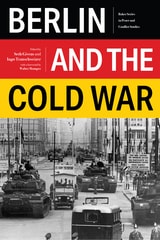
Berlin and the Cold War
Seth Givens; Ingo Trauschweizer
Ohio University Press, 2024

Between Rebels and Relief
Negotiating Humanitarian Access in the Democratic Republic of the CongoMyfanwy James
University of Michigan Press, 2027
Between Rebels and Relief follows the frontline humanitarians who negotiate access with rebel groups in North Kivu, in the eastern Democratic Republic of the Congo, to foreground the work of local aid workers who are the backbone of humanitarian operations. Myfanwy James examines how global endeavors are built on the personal networks, knowledge, and skills of local personnel who are rarely given credit. Based on ethnographic research on Médecins Sans Frontières (Doctors Without Borders), James uncovers the brokerage, translation, and creative identity work that keeps medical relief operations running, and the crucial role of locally hired staff in navigating violent political terrains and building trust with armed groups.
Humanitarian agencies draw upon the personal profiles of different staff who learn to position themselves strategically for different audiences, casting and recasting themselves as a form of tactical agency in uncertain violent terrains. Identities are put to work—they become tools, influencing who can wield power, who can gain trust, and who is at particular risk of violence. Yet this produces a central paradox: To uphold a universalist mandate, humanitarian organizations leverage and reproduce the very borders between people—of race, gender, ethnicity, and personal history—that their egalitarian values seek to transcend.
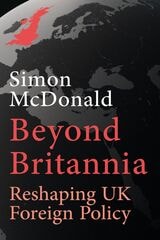
Beyond Britannia
Reshaping UK Foreign PolicySimon McDonald
Haus Publishing, 2023
What should the future of British foreign policy look like? For too long, successive governments have shied away from acknowledging uncomfortable truths about the decline of Britain’s military capabilities. As we approach the middle years of the twenty-first century, a new set of urgent and daunting challenges lie ahead, including climate change, technological development, the rise of AI, and a growing threat from China. The need for us to reconcile ourselves with our position in the world has never been more acute. In Beyond Britannia: Reshaping UK Foreign Policy, Simon McDonald persuasively argues that the United Kingdom’s significant soft-power strengths can be harnessed to expand its international influence. Such a shift will only be possible, he says, if we first acknowledge the challenges of Brexit and the need to reduce our unrealistic hard-power ambitions. Excellence in areas that other countries care about will keep the United Kingdom internationally relevant in the second half of the century in a way that nostalgia for a lost pre-eminence will not.
Beyond Britannia
Reshaping UK Foreign PolicySimon McDonald
Haus Publishing, 2023
What should the future of British foreign policy look like? For too long, successive governments have shied away from acknowledging uncomfortable truths about the decline of Britain’s military capabilities. As we approach the middle years of the twenty-first century, a new set of urgent and daunting challenges lie ahead, including climate change, technological development, the rise of AI, and a growing threat from China. The need for us to reconcile ourselves with our position in the world has never been more acute. In Beyond Britannia: Reshaping UK Foreign Policy, Simon McDonald persuasively argues that the United Kingdom’s significant soft-power strengths can be harnessed to expand its international influence. Such a shift will only be possible, he says, if we first acknowledge the challenges of Brexit and the need to reduce our unrealistic hard-power ambitions. Excellence in areas that other countries care about will keep the United Kingdom internationally relevant in the second half of the century in a way that nostalgia for a lost pre-eminence will not.
Beyond Groupthink
Political Group Dynamics and Foreign Policy-makingPaul 't Hart, Eric K. Stern, and Bengt Sundelius, Editors
University of Michigan Press, 1997
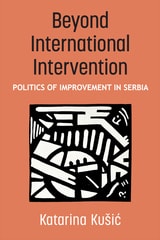
Beyond International Intervention
Politics of Improvement in SerbiaKatarina Kušic
University of Michigan Press, 2025
By engaging with subjects, the book not only enhances our understanding of intervention, but also uncovers the limitations of the concept. Katarina Kušić argues that the concept limits what we can observe and theorize, and it prevents researchers from engaging with the people living in spaces of intervention as coeval political subjects. As an alternative, she proposes to foreground improvement over “intervention.” This reorientation enables researchers to trace hierarchies beyond the local/international dichotomy, expands fields of visibility beyond those prescribed by interventions themselves, and seriously considers the contradictions at the heart of liberalism.
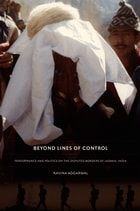
Beyond Lines of Control
Performance and Politics on the Disputed Borders of Ladakh, IndiaRavina Aggarwal
Duke University Press, 2004
Aggarwal brings the insights of performance studies and the growing field of the anthropology of international borders to bear on her extensive fieldwork in Ladakh. She examines how social and religious boundaries are created on the Ladakhi frontier, how they are influenced by directives of the nation-state, and how they are shaped into political struggles for regional control that are legitimized through discourses of religious purity, patriotism, and development. She demonstrates in lively detail the ways that these struggles are enacted in particular cultural performances such as national holidays, festivals, rites of passage ceremonies, films, and archery games. By placing cultural performances and political movements in Ladakh center stage, Aggarwal rewrites the standard plot of nation and border along the Line of Control.
Beyond the Boomerang
From Transnational Advocacy Networks to Transcalar Advocacy in International PoliticsEdited by Christopher L. Pallas and Elizabeth A. Bloodgood
University of Alabama Press, 2022
From Networks to Scales: Rethinking Advocacy Power in Global Politics.
Margaret E. Keck and Kathryn Sikkink introduced the boomerang theory in their 1998 book, Activists beyond Borders: Advocacy Networks in International Politics. It remains one of the first broadly applicable theories for why groups of NGOs and interested individuals form transnational advocacy networks. Since its publication, however, the empirical conditions that prompted their theory have changed. The types of actors involved in transnational advocacy have diversified. Northern NGOs have lost power and influence and have been restricted in their access to southern states. Southern NGOs have developed the capacity to undertake advocacy on their own and often built closer relationships with their own governments. The architecture of global governance has likewise changed, providing new avenues of access and influence for southern voices.
In Beyond the Boomerang: From Transnational Advocacy Networks to Transcalar Advocacy in International Politics, editors Christopher L. Pallas and Elizabeth A. Bloodgood offer cutting-edge scholarship that synthesizes a new theoretical framework to develop a coherent, integrated picture of the current dynamics in global advocacy. This new theory of transcalar advocacy focuses on advocacy activities and policy impacts that transcend different levels or scales of political action. In transcalar advocacy, all NGOs–northern and southern–are treated as strategic actors, choosing the targets, scales of advocacy, and partnerships that best suit their capacities and goals. The case studies in the volume develop the empirical grounding of this theory using data from Latin America, Africa, Europe, and Asia, with several chapters featuring cross-national comparison. The chapters highlight the wide variety of actors involved in advocacy work, including NGOs, social movements, international institutions, governments, and businesses. Contributors use both qualitative and quantitative methodologies and bring to bear insights from political science, international relations, and sociology. The case studies also include diverse issue areas, from women’s rights to environmental protection, sustainable agriculture, health policy, and democracy promotion.
Beyond the Veil of Knowledge
Triangulating Security, Democracy, and Academic ScholarshipPiki Ish-Shalom
University of Michigan Press, 2019

Beyond the Wall
Writing a Path through PalestineBidisha
Seagull Books, 2012

Beyond the Wall
Writing a Path through PalestineBidisha
Seagull Books, 2025
Their voices come from Bethlehem and Hebron. You can hear them from Jerusalem to Nazareth, and witness their protests in Gaza and Ramallah. From the refugee camps in the West Bank, you can hear the voices of the Palestinian people call out to demand self-determination and a better quality of life. But outside of Israel and the occupied territories, these individual voices are rarely heard—until now.
In Beyond the Wall: Writing a Path through Palestine, internationally renowned feminist critic and writer Bidisha collects the testimonies of an occupied people—ordinary citizens, activists, and children—alongside those of international aid workers and foreign visitors for a revelatory look at a population on the margins.
Called “beautifully belligerent, [and] fiercely intelligent” by The Independent and a “dazzlingly creative writer” by the London Times, Bidisha amplifies the voices of the Palestinian people in this book and lends them her own considerable strength.

Bioinsecurities
Disease Interventions, Empire, and the Government of SpeciesNeel Ahuja
Duke University Press, 2016
Birth of Hegemony
Crisis, Financial Revolution, and Emerging Global NetworksAndrew C. Sobel
University of Chicago Press, 2012
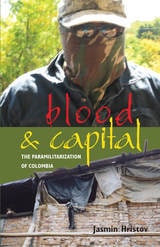
Blood and Capital
The Paramilitarization of ColombiaJasmin Hristov
Ohio University Press, 2009
WOLA-Duke Book Award Finalist
In Blood and Capital: The Paramilitarization of Colombia, Jasmin Hristov examines the complexities, dynamics, and contradictions of present-day armed conflict in Colombia. She conducts an in-depth inquiry into the restructuring of the state’s coercive apparatus and the phenomenon of paramilitarism by looking at its military, political, and legal dimensions. Hristov demonstrates how various interrelated forms of violence by state forces, paramilitary groups, and organized crime are instrumental to the process of capital accumulation by the local elite as well as the exercise of political power by foreign enterprises. She addresses, as well, issues of forced displacement, proletarianization of peasants, concentration of landownership, growth in urban and rural poverty, and human rights violations in relation to the use of legal means and extralegal armed force by local dominant groups and foreign companies.
Hristov documents the penetration of major state institutions by right-wing armed groups and the persistence of human rights violations against social movements and sectors of the low-income population. Blood and Capital raises crucial questions about the promised dismantling of paramilitarism in Colombia and the validity of the so-called demobilization of paramilitary groups, both of which have been widely considered by North American and some European governments as proof of Colombian president Álvaro Uribe’s advances in the wars on terror and drugs.

Blood, Ink, and Culture
Miseries and Splendors of the Post-Mexican ConditionRoger Bartra
Duke University Press, 2002
Written with verve over a period of twenty years, these essays—most translated into English here for the first time—suggest why Bartra has become one of Latin America’s leading public intellectuals. The essays cover a broad range of topics, from the canonical forms of Mexican culture to the meaning of postnational identity in a globalizing age, from the repercussions of the 1994 Zapatista uprising to the 2000 election of Vicente Fox and the end of the PRI’s seven-decade rule. Across this range of topics, Bartra imparts astute insights into a critical period of transition in Mexican history, stressing throughout the importance of democracy, the complexity of identity, and the vibrancy of the Left. In Blood, Ink, and Culture, he provides a stimulating inside look at political and intellectual life in the southern reaches of North America.
Book of the Disappeared
The Quest for Transnational JusticeJennifer Heath and Ashraf Zahedi, Editors
University of Michigan Press, 2023
Book of the Disappeared confronts worldwide human rights violations of enforced disappearance and genocide and explores the global quest for justice with forceful, outstanding contributions by respected scholars, expert practitioners, and provocative contemporary artists. This profoundly humane book spotlights our historic inhumanity while offering insights for survival and transformation.

Border Air
A History of US-Mexico Environmental CooperationLaura M. Uribarri
University of Texas Press, 0
Tracing a century of pollution and transnational collaboration in the Paso del Norte air basin.
The air knows no borders, which makes atmospheric pollution a devilish legal and environmental challenge. The problem is especially dangerous in the Paso del Norte, where the industry and urbanization of Juárez-El Paso stretch across the international boundary, and surrounding mountains trap airborne pollutants. Laura Uribarri traces the nineteenth- and twentieth-century transformations of the region, uncovering the sources of pollution and analyzing transnational efforts to regulate and improve the air.
Border Air shows how a favorable location, rail expansion, and numerous trade and labor agreements made Juárez-El Paso a global manufacturing hub, leading to unfettered growth and declining air quality. By the mid-1990s, El Paso and Juárez ranked among the most polluted cities on the continent. Environmental treaties crafted in Washington and Mexico City made little difference. But fronterizos themselves had an impact. Uribarri focuses on the Paso del Norte Air Quality Task Force, a citizen group that pioneered successful mitigation projects such as working with emitters to design cleaner production methods without disrupting workers’ livelihoods. This history shows what can be accomplished at the grassroots and offers lessons on how border communities can collaborate to address complex environmental problems.
Border Rhetorics
Citizenship and Identity on the US-Mexico FrontierEdited by D. Robert DeChaine
University of Alabama Press, 2012
Undertakes a wide-ranging examination of the US-Mexico border as it functions in the rhetorical production of civic unity in the United States
A “border” is a powerful and versatile concept, variously invoked as the delineation of geographical territories, as a judicial marker of citizenship, and as an ideological trope for defining inclusion and exclusion. It has implications for both the empowerment and subjugation of any given populace. Both real and imagined, the border separates a zone of physical and symbolic exchange whose geographical, political, economic, and cultural interactions bear profoundly on popular understandings and experiences of citizenship and identity.
The border’s rhetorical significance is nowhere more apparent, nor its effects more concentrated, than on the frontier between the United States and Mexico. Often understood as an unruly boundary in dire need of containment from the ravages of criminals, illegal aliens, and other undesirable threats to the national body, this geopolitical locus exemplifies how normative constructions of “proper”; border relations reinforce definitions of US citizenship, which in turn can lead to anxiety, unrest, and violence centered around the struggle to define what it means to be a member of a national political community.
Borrowing Credibility
Global Banks and Monetary RegimesJana Grittersová
University of Michigan Press, 2017
These banks enhance credibility by promoting financial transparency in the local system, improving the quality of banking regulation and supervision, and by serving as private lenders of last resort. Reputable multinational banks provide an enforcement mechanism for publicized economic policies, signaling to international financial markets that the host government is committed to low inflation and stable currency.
Grittersová examines actual changes in government behavior of nations trying to gain legitimacy in international financial markets, and the ways in which perceptions of these nations change in relation to multinational banks. In addition to quantitative analysis of over 80 emerging-market countries, she offers extensive case studies of credibility building in the transition countries of Eastern Europe, Argentina in 2001, and the global financial crisis of 2008. Grittersová illuminates the complex interactions between multinational banks and national policymaking that characterize the process of financial globalization to reveal the importance of market confidence in a world of mobile capital.
Bosnia
Faking Democracy After DaytonDavid Chandler
Pluto Press, 2000

Bound by Struggle
The Strategic Evolution of Enduring International RivalriesZeev Maoz and Ben D. Mor
University of Michigan Press, 2002

Brazil and the Quiet Intervention, 1964
By Phyllis R. Parker
University of Texas Press, 1979
When the Brazilian military overthrew President João Goulart in 1964, American diplomats characterized the coup as a "100 percent Brazilian movement." It has since become apparent, largely through government documents declassified during the course of research for this book, that the United States had an invisible but pervasive part in the coup.
Relying principally on documents from the Johnson and Kennedy presidential libraries, Phyllis Parker unravels the events of the coup in fascinating detail. The evidence she presents is corroborated by interviews with key participants.
U.S. interference in the Goulart regime began when normal diplomatic pressure failed to produce the desired enthusiasm from him for the Alliance of Progress. Political and economic manipulations also proving ineffective, the United States stood ready to back a military takeover of Brazil's constitutional democracy.
U.S. operation "Brother Sam" involved shipments of petroleum, a naval task force, and tons of arms and ammunition in preparation for intervention during the 1964 coup. When the Brazilian military gained control without calling on the ready assistance, U.S. policy makers immediately accorded recognition to the new government and set in motion plans for economic support.
Brazil and the Soviet Challenge, 1917–1947
By Stanley E. Hilton
University of Texas Press, 1991
Between 1918 and 1961, Brazil and the USSR maintained formal diplomatic ties for only thirty-one months, at the end of World War II. Yet, despite the official distance, the USSR is the only external actor whose behavior, real or imagined, influenced the structure of the Brazilian state in the twentieth century. In Brazil and the Soviet Challenge, 1917–1947, Stanley Hilton provides the first analysis in any language of Brazilian policy toward the Soviet Union during this period.
Drawing on American, British, and German diplomatic archives and unprecedented access to official and private Brazilian records, Hilton elucidates the connection between the Brazilian elite’s perception of a communist threat and the creation of the authoritarian Estado Novo (1937–1945), the forerunner of the post-1964 national security state. He shows how the 1935 communist revolt, prepared by Comintern agents, was a pivotal event in Brazilian history, making prophets of conservative alarmists and generating irresistible pressure for an authoritarian government to contain the Soviet threat. He details the Brazilian government’s secret cooperation with the Gestapo during the 1930s and its concomitant efforts to forge an anti-Soviet front in the Southern Cone. And he uncovers an unexplored aspect of Brazil’s national security policy, namely, the attempt to build counterintelligence capabilities not only within Brazil but also in neighboring countries.
While the history of the Brazilian communist movement has been extensively studied, this is the first work to explore how images of the Soviet Union and its policies influenced the Brazilian foreign policy elite. It will be important reading for all students of twentieth-century political history.
Brazil's Long Revolution
Radical Achievements of the Landless Workers MovementAnthony Pahnke
University of Arizona Press, 2018
Brazil’s Long Revolution shows how the Movimento dos Trabalhadores Rurais Sem Terra (the Brazilian Landless Workers Movement, or MST) positioned itself to take advantage of challenging economic times to improve its members’ lives. Pahnke analyzes the origins and development of the movement, one of the largest and most innovative social movements currently active. Over the last three decades, the MST has mobilized more than a million Brazilians through grassroots initiatives, addressing political and economic inequalities.
The MST and its allies—together known as the Landless Movement—confront inequality by constructing democratic ways of governing economic, political, and social life in collectivized production cooperatives, movement-run schools, and decentralized agrarian reform encampments and settlements. Their strategies for organizing political, economic, and social life challenge the current neoliberal orthodoxy that privileges individualized, market-oriented practices.
Based on research conducted over five years, Pahnke’s book places the Landless Movement squarely within the tradition of Latin American revolutionary struggles, while at the same time showing the potential for similar forms of radical resistance to develop in the United States and elsewhere in the Global North.
Breaking the South Slav Dream
The Rise and Fall of YugoslaviaKate Hudson
Pluto Press, 2003

Breaks in the Chain
What Immigrant Workers Can Teach America about DemocracyPaul Apostolidis
University of Minnesota Press, 2010
Breaks in the Chain shows how immigrant workers-individually and sometimes collectively-both reinforce and contest a tacit but lethal form of biopolitics that differentiates the life chances of racial groups. Examining their personal narratives, Apostolidis recasts our understanding of the ways immigrants construct and transform social power.
Apostolidis uses empirical inquiry to spark new reflections in critical theory as he analyzes how immigrant workers' local practices confront structural power within and beyond America's borders. Linking stories of immigration to stories about working on the meat production line-the chain-he reveals the surprising power of activism by immigrant workers and their allies and demonstrates how it can-and should-promote social and political democracy in America.
Bridging State and Civil Society
Informal Organizations in Tajik/Afghan BadakhshanSuzanne Levi-Sanchez
University of Michigan Press, 2021
Bridging State and Civil Society provides an in-depth study of parts of Central Asia and Afghanistan that remain marginalized from the larger region. As such, the people have developed distinct ways of governing and surviving, sometimes in spite of the state and in part because of informal organizations. Suzanne Levi-Sanchez provides eight case studies, each an independent look at a particular informal organization, but each also part of a larger picture that helps the reader understand the importance and key role that informal organizations play for civil society and the state. Each case explores how informal organizations operate and investigates their structures and interactions with official state institutions, civil society, familial networks, and development organizations. As such, each chapter explores the concepts through a different lens while asking a deceptively simple question: What is the relationship between informal organizations and the state?
Britain and World Power since 1945
Constructing a Nation's Role in International PoliticsDavid M. McCourt
University of Michigan Press, 2014
Britain and the Greek Economic Crisis, 1944-1947
From Liberation to the Truman DoctrineAthanasios Lykogiannis
University of Missouri Press, 2002
British Diplomacy and Swedish Politics, 1758-1773
Michael Roberts
University of Minnesota Press, 1980
British Diplomacy and Swedish Politics, 1758–1773 was first published in 1980. Minnesota Archive Editions uses digital technology to make long-unavailable books once again accessible, and are published unaltered from the original University of Minnesota Press editions.
This book has three objectives; to shed light on the central issue in British foreign policy during a period inadequately explored by historians; to present, for the first time in English, an account of the dramatic last decade of Swedish "liberty" and its final overthrow by Gustavus III; and finally, to direct the attention of historians to the career of Sir John Goodricke—a diplomat whom Lor Rochford called "the best man we have abroad; you can trust him with anything—except money."
These themes are in fact inextricably linked. For Great Britain, emerging from the Seven Years War victorious but isolated, needed to safeguard her trade with Russia and British statesmen felt that an Anglo-Russian alliance could best be achieved by first concluding a treaty with Sweden to which Russia would adhere. To achieve this aim, it was essential to break French influence in Stockholm, to oust the francophile Hats from power, and to install their anglophile rivals the Caps. Thus Swedish party politics, and the Swedish constitutions, unexpectedly became matters of great consequence in Whitehall. To win the necessary victory in Stockholm Britain needed a minister of peculiar talents and no little ability. Sir John Goodricke was such a minister. And the record of his exertions, and of his eventual failure, is necessary to any proper understanding of British policy in the postwar decade.
This book is an important contribution to both British and Scandinavian history and, since it also illuminates the subject of European political relations in the eighteenth century, it will be welcomed by diplomatic historians and specialists in eighteenth-century studies as well. Michael Roberts tells his story with customary verve and grace, and effectively refutes any idea that diplomatic history need be dull.

Building a New Legal Order for the Oceans
Tommy Koh
National University of Singapore Press, 2019
In this book, Koh fully explains the many new concepts of international law that arose from UNCLOS III, such as the Exclusive Economic Zone, Archipelagic State, Straits Used for International Navigation, Transit Passage, Archipelagic Sealane Passage, and the Common Heritage of Mankind. He also discusses current threats to maritime security and explains the intricacies of the disputes in the South China Sea. Koh asks What can be learned from the success of UNCLOS? How can we build on that success and manage the new tensions that arise in the Law of the Sea? There is no better guide to this aspect of international law than Koh.
Building a New World Order
Sustainable Policies for the FutureHarald Müller
Haus Publishing, 2009
Burma
The Curse of IndependenceShelby Tucker
Pluto Press, 2001
Burma’s Mass Lay Meditation Movement
Buddhism and the Cultural Construction of PowerIngrid Jordt
Ohio University Press, 2007
Burma's Mass Lay Meditation Movement: Buddhism and the Cultural Construction of Power describes a transformation in Buddhist practice in contemporary Burma. This revitalization movement has had real consequences for how the oppressive military junta, in power since the early 1960s, governs the country.
Drawing on more than ten years of extensive fieldwork in Burma, Ingrid Jordt explains how vipassanā meditation has brought about a change of worldview for millions of individuals, enabling them to think and act independently of the totalitarian regime. She addresses human rights as well as the relationship between politics and religion in a country in which neither the government nor the people clearly separates the two. Jordt explains how the movement has been successful in its challenge to the Burmese military dictatorship where democratically inspired resistance movements have failed.
Jordt's unsurpassed access to the centers of political and religious power in Burma becomes the reader's opportunity to witness the political workings of one of the world's most secretive and tyrannically ruled countries. Burma's Mass Lay Meditation Movement is a valuable contribution to Buddhist studies as well as anthropology, religious studies, and political science.