264 books match the query 'Introduction' and 11 start with b
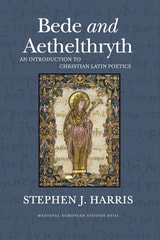
cover of Bede and Aethelthryth: An Introduction to Christian Latin Poetics

Bede and Aethelthryth

An Introduction to Christian Latin Poetics

Stephen J. Harris

West Virginia University Press, 2016

Bede and Aethelthryth asks why Christians in Britain around the year 700 enjoyed Latin poetry. What did they see in it? What did they get from it? This book attempts to reconstruct the horizon of expectation of a highly learned, Latin-speaking nun as she encounters a fifty-line poem by the Venerable Bede, the Hymn to Aethelthryth. 

The reconstruction is hypothetical and derived from grammatical manuals, learned commentaries from the early medieval period (especially Servius’s commentary on Virgil), and a wide variety of aesthetic observations by classical and medieval readers. The first four chapters describe basic expectations of a reader of Christian Latin poetry. The fifth chapter places the Hymn in its context within Bede’s Ecclesiastical History. A few pages after Bede records his hymn, Caedmon will recite his own hymn under the watchful eye of Whitby’s Abbess Hild, who was a friend of Aethelthryth. 

Both hymns are attempts to reform the lyric traditions of pagan Rome and pagan Anglo-Saxon England in the light of Christian teaching. The last three chapters contain a line-by-line commentary on Bede’s alphabetic, epanaleptic elegy.

[more]
cover of Berlioz and His Century: An Introduction to the Age of Romanticism

Berlioz and His Century

An Introduction to the Age of Romanticism

Jacques Barzun

University of Chicago Press, 1982
In this abridgment of his monumental study, Berlioz and the Romantic Century, Jacques Barzun recounts the events and extraordinary achievements of the great composer's life against the background of the romantic era. As the author eloquently demonstrates, Berloiz was an archetype whose destiny was the story of an age, the incarnation of an artistic style and a historical spirit. "In order to understand the nineteenth century, it is essential to understand Berlioz," notes W. H. Auden, "and in order to understand Berlioz, it is essential to read Professor Barzun."
[more]
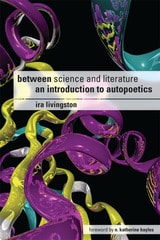
cover of Between Science and Literature: AN INTRODUCTION TO AUTOPOETICS

Between Science and Literature

AN INTRODUCTION TO AUTOPOETICS

Ira Livingston

University of Illinois Press, 2005

Between Literature and Science follows through to its emerging 21st-century future the central insight of 20th-century literary and cultural theory: that language and culture, along with their subsystems and artifacts, are self-referential systems. The book explores the workings of self-reference (and the related performativity) in linguistic utterances and assorted texts, through examples of the more open social-discursive systems of post-structuralism and cultural studies, and into the sciences, where complex systems organized by recursive self-reference are now being embraced as an emergent paradigm. This paradigmatic convergence between the humanities and sciences is autopoetics (adapting biologist Hubert Maturana’s term for “self-making” systems), and it signals a long-term epistemological shift across the nature/culture divide so definitive for modernity.  If cultural theory has taught us that language, because of its self-referential nature, cannot bear simple witness to the world, the new paradigmatic status of self-referential systems in the natural sciences points toward a revived kinship of language and culture with the world: language bears “witness” to the world.
The main movement of the book is through a series of model explications and analyses, operational definitions of concepts and terms, more extended case studies, vignettes and thought experiments designed to give the reader a feel for the concepts and how to use them, while working to expand the autopoetic internee by putting cultural self-reference in dialogue with the self-organizing systems of the sciences.  Along the way the reader is introduced to self-reference in epistemology (Foucault), sociology (Luhmann), biology (Maturana/Varela/Kauffman), and physics and cosmology (Smolin). Livingston works through the fundamentals of cultural, literary, and science studies and makes them comprehensible to a non-specialist audience.
 
[more]
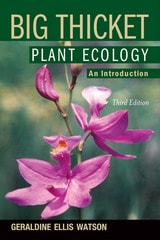
cover of Big Thicket Plant Ecology: An Introduction, Third Edition

Big Thicket Plant Ecology

An Introduction, Third Edition

Geraldine Ellis Watson

University of North Texas Press, 2006
[more]
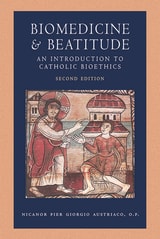
cover of Biomedicen and Beatitude: An Introduction to Catholic Bioethics, Second Edition

Biomedicen and Beatitude

An Introduction to Catholic Bioethics, Second Edition

Nicanor Pier Giorgio Austriaco

Catholic University of America Press, 2021
This timely and up to date new edition of Biomedicine and Beatitude features an entirely new chapter on the ethics of bodily modification. It is also updated throughout to reflect the pontificate of Pope Francis, recent concerns including ethical issues raised by the COVID-19 pandemic, and feedback from the many instructors who used the first edition in the classroom.
[more]
cover of Biomedicine and Beatitude: An Introduction to Catholic Bioethics

Biomedicine and Beatitude

An Introduction to Catholic Bioethics

Nicanor Pier Giorgio AUSTRIACO

Catholic University of America Press, 2011
Besides ethical questions raised at the beginning and the end of life, Nicanor Austriaco, O.P., discusses the ethics of the clinical encounter, human procreation, organ donation and transplantation, and biomedical research.
[more]
cover of Biotechnology and Society: An Introduction

Biotechnology and Society

An Introduction

Hallam Stevens

University of Chicago Press, 2016
With Biotechnology and Society, Hallam Stevens offers an up-to-date primer to help us understand the interactions of biotechnology and society and the debates, controversies, fears, and hopes that have shaped how we think about bodies, organisms, and life in the twenty-first century. Stevens addresses such topics as genetically modified foods, cloning, and stem cells; genetic testing and the potential for discrimination; fears of (and, in some cases, hopes for) designer babies; personal genomics; biosecurity; and biotech art. Taken as a whole, the book presents a clear, authoritative picture of the relationship between biotechnology and society today, and how our conceptions (and misconceptions) of it could shape future developments. It is an essential volume for students and scholars working with biotechnology, while still being accessible to the general reader interested in the truth behind breathless media accounts about biotech’s promise and perils.
[more]
cover of Boojoo!: An Introduction to Wisconsin Walloon

Boojoo!

An Introduction to Wisconsin Walloon

Kelly Biers

University of Wisconsin Press, 2026

Walloon is a language still spoken by a minority population in its home country of Belgium. It can also still be found among a few sparse communities descended from Belgian immigrants in northeastern Wisconsin. Although spoken by a small number of people, the language plays a vital role in the ethnic heritage of the state and is audible in local words like “booyah” and “trippe.”

This book is the first to introduce the language without recourse to French, of which Walloon is sometimes mistakenly described as a variant or dialect. With this text, English-language speakers will need nothing more than interest to pick up basic conversational Walloon, thanks to Kelly Biers’s clear guidance for pronunciation, vocabulary, and grammar. Additionally, readers will learn about how this minority language arrived in the Upper Midwest, the history of Belgian American immigration and settlement, and the language’s linguistic features.

Boojoo and welcome to Wisconsin Walloon!
[more]
cover of Border Crossings: An Introduction to East German Prose

Border Crossings

An Introduction to East German Prose

Thomas C. Fox

University of Michigan Press, 1993
Border Crossings is an accessible and comprehensive overview of the work of prose fiction writers in what was the German Democratic Republic. Thomas C. Fox introduces readers to the best and most important East German writers—among them Christa Wolf, Jurek Becker, Anna Seghers, Stefan Heym, and Franz Fühmann—restricting his study to work that is available in English translation so that readers who do not know German will be able to read for themselves the literature he discusses.During a period of forty years, writers in the German Democratic Republic struggled with increasing success to free themselves from a smothering and paternalistic governmental embrace, thus anticipating, and helping to constitute, the events of 1989. In its relentless interrogation of the status quo, in its persistent ability to create alternatives, and in its call for more openness, literature in East Germany served as an outlet for energies and ideas that might have been channeled, in the West, into politics, philosophy, or journalism. In addition to discussing the role that literature played in shaping historical events, Fox shows that it can be appreciated simply as literature, outside of its political contexts.
[more]
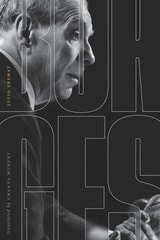
cover of Borges: An Introduction

Borges

An Introduction

Julio Premat

Vanderbilt University Press, 2021

This book, available for the first time in English, offers a thorough introductory reading of Jorge Luis Borges, one of the most remarkable and influential writers of the twentieth century. Julio Premat, a specialist in the field of Borges studies, presents the main questions posed by Borges's often paradoxical writing, and leads the novice through the complexity and breadth of Borges's vast literary production.

Originally published in French by an Argentine ex-pat living in Paris, Borges includes the Argentine specificities of Borges’s work—specificities that are often unrecognized or glossed over in Anglophone readings.

This book is a boon for university students of philosophy and literature, teachers and researchers in these fields who are looking to better understand this complex author, and anyone interested in the advanced study of literature. Somewhere between a guidebook and an exhaustive work of advanced research, Borges is the ultimate stepping-stone into the deeper Borgesian world.
[more]
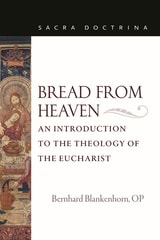
cover of Bread from Heaven: An Introduction to the Theology of the Eucharist

Bread from Heaven

An Introduction to the Theology of the Eucharist

Bernhard Blankenhorn

Catholic University of America Press, 2021

Bread from Heaven offers a contemporary theological synthesis on the Eucharist that brings together classical and critical biblical exegesis, debates on the early history of the Christian liturgy, patristic doctrine, the teachings offered by the Councils of Florence, Trent and Vatican II, and the Church’s lex orandi, all within a framework provided by the Eucharistic theology of Thomas Aquinas. The volume begins with Christ’s Bread of Life discourse in John 6, in light of the Old Testament theme of the manna, and the Synoptic accounts of the Last Supper. These biblical texts offer solid foundation for a theology of Eucharistic sacrifice, presence and Communion. It then continues with a historical and systematic study of the institution of the Eucharist by Christ, with special attention given to the emergence of the first Eucharistic prayers. Then follows a survey of key Christological and ecclesiological themes which undergird Eucharistic theology. The chapters on Eucharistic sacrifice and presence form the heart of the work. Here, the focus moves to key conciliar, patristic and Thomistic insights on these themes. Bread from Heaven clarifies misunderstandings of Eucharistic sacrifice and renders transubstantiation accessible to beginners. Blankenhorn concludes with a study of the consecration, the minister of the Eucharist and the fruits of communion. The chapter on the debate over the words of institution and the epiclesis gives a fresh perspective that integrates both eastern and western tradition. The study of the Eucharistic celebrant strikes a balance between a spirituality of the priest as acting in persona Christi and of the priest as praying in persona ecclesiae. The concluding chapter centers on the Eucharist’s unitive, mystical fruits in the Church. This textbook is ideal for an advanced undergraduate or graduate course on Eucharistic theology. It also seeks to advance the debate on several controversial historical and speculative issues in sacramental theology.
[more]