Results by title
4030 books match the query 'Language Arts & Disciplines' and 126 start with b
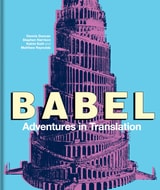
Babel
Adventures in TranslationDennis Duncan, Stephen Harrison, Katrin Kohl, and Matthew Reynolds
Bodleian Library Publishing, 2019
Starting with the concept of Babel itself, which illustrates the early cultural prominence of multilingualism, the book examines a Mediterranean language of four millennia ago called Linear A, which still resists deciphering today. Going on to explore how languages have interacted with each other in different contexts, the book also sheds light on the multilingual transmission of key texts in religion, science, fables and fairy-tales, and epic literature. Lavishly illustrated with a diverse range of material, from papyrus fragments found at Oxyrhynchus in Egypt to Esperanto handbooks to Asterix cartoons, Babel opens up a world of adventures into translation.

Baby Storytime Magic
Active Early Literacy through Bounces, Rhymes, Tickles, and MoreKathy MacMillan
American Library Association, 2014
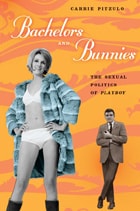
Bachelors and Bunnies
The Sexual Politics of PlayboyCarrie Pitzulo
University of Chicago Press, 2011
For a lot of people, thoughts about the sexual politics of Playboy run along the lines of what Gloria Steinem reportedly once told Hugh Hefner: “A woman reading Playboy feels a little like a Jew reading a Nazi manual.” Hefner’s magazine celebrates men as swinging bachelors and women as objects of desire; ergo, it’s sexist.
Not so fast, says Carrie Pitzulo. With Bachelors and Bunnies, she delves into the history of the magazine to reveal its surprisingly strong record of support for women’s rights and the modernization of sexual and gender roles. Taking readers behind the scenes of Playboy’s heyday, Pitzulo shows how Hefner’s own complicated but thoughtful perspective on modern manhood, sexual liberation, and feminism played into debates—both in the editorial offices and on the magazine’s pages—about how Playboy’s trademark “girl next door” appeal could accommodate, acknowledge, and even honor the changing roles and new aspirations of women in postwar America. Revealing interviews with Hugh Hefner and his daughter (and later Playboy CEO) Christie Hefner, as well as with a number of editors and even Playmates, show that even as the magazine continued to present a romanticized notion of gender difference, it again and again demonstrated a commitment to equality and expanded opportunities for women.
Offering a surprising new take on a twentieth-century icon, Bachelors and Bunnies goes beyond the smoking jacket and the centerfold to uncover an unlikely ally for the feminist cause.
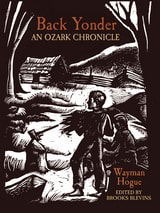
Back Yonder
An Ozark ChronicleCharles Wayman Hogue
University of Arkansas Press, 2016
Wayman Hogue’s stories of growing up in the Ozarks, according to a 1932 review in the New York Times, “brilliantly illuminate mountain life to its very heart and in its most profound aspects.” A standout among the Ozarks literature that was popular during the Great Depression, this memoir of life in rural Arkansas in the decades following the Civil War has since been forgotten by all but a few students of Arkansas history and folklore.
Back Yonder is a special book. Hogue, like his contemporary Laura Ingalls Wilder, weaves a narrative of a family making its way in rugged, impoverished, and sometimes violent places. From one-room schoolhouses to moonshiners, the details in this story capture the essence of a particular time and place, even as the characters reflect a universal quality that will endear them to modern readers.
Historian Brooks Blevins’s new introduction explores the life of Charles Wayman Hogue, analyzes the people and events that inspired the book, and places the volume in the context of America’s discovery of the Ozarks in the years between the World Wars. The University of Arkansas Press is proud to reissue Back Yonder as the first book in the Chronicles of the Ozarks series, making this Arkansas classic available again, ready to be discovered and rediscovered by readers sure to find the book as interesting and entertaining as ever.
Bad News Travels Fast
The Telegraph, Libel, and Press Freedom in the Progressive EraPatrick C. File
University of Massachusetts Press, 2019
This largely forgotten era in the development of American libel law provides crucial historical context for contemporary debates about the news media, public discourse, and the role of a free press. File argues that the legal thinking surrounding these cases laid the groundwork for the more friendly libel standards the press now enjoys and helped to establish today's regulations of press freedom amid the promise and peril of high-speed communication technology.

Bad News, Good News
Conversational Order in Everyday Talk and Clinical SettingsDouglas W. Maynard
University of Chicago Press, 2003
Uncovering vocal and nonvocal patterns in everyday conversations, clinics, and other organizations, Maynard shows practices by which people give and receive good or bad news, how they come to realize the news and their new world, how they suppress or express their emotions, and how they construct social relationships through the sharing of news. He also reveals the implications of his study for understanding public affairs in which transmitting news may influence society at large, and he provides recommendations for professionals and others on how to deliver bad or good tidings more effectively.
For anyone who wants to understand the interactional facets of news delivery and receipt and their social implications, Bad News, Good News offers a wealth of scholarly insights and practical advice.
Baghdadi Judeo-Arabic
An Introductory TextAssaf Bar-Moshe
University College London, 2024
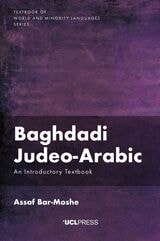
This textbook is dedicated to spoken Baghdadi Judeo-Arabic—the native tongue spoken by the Jews of Baghdad and other towns of Southern Iraq—and is designed to guide beginners to an advanced level of speaking. It focuses on common expressions, introduces Baghdad’s historic Jewish culture, and guides readers through sample texts, key vocabulary, grammar points, and exercises, as well as particular topics, such as greetings, family, shopping, and cuisine.
Banned in Kansas
Motion Picture Censorship, 1915-1966Gerald R. Butters, Jr.
University of Missouri Press, 2016
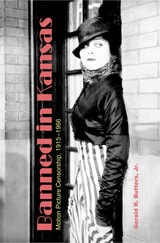
In 1915, Kansas became one of only a handful of states to establish its own film censorship board. The Kansas board controlled screen content in the state for more than fifty years, yet little is known about its activities. This first book-length study of state film censorship examines the unique political, social, and economic factors that led to its implementation in Kansas, examining why censorship legislation was enacted, what the attitudes of Kansans were toward censorship, and why it lasted for half a century.
Cinema historian Gerald Butters places the Kansas Board of Review’s attempts to control screen content in the context of nationwide censorship efforts during the early part of the twentieth century. He tells how factors such as Progressivism, concern over child rearing, and a supportive press contributed to censorship, and he traces the board’s history from the problems posed by the emergence of “talkies” through changing sexual mores in the 1920s to challenges to its power in the 1950s.
In addition to revealing the fine points of film content deemed too sensitive for screening, Butters describes the daily operations of the board, illustrating the difficulties it encountered as it wrestled not only with constantly shifting definitions of morality but also with the vagaries of the political and legal systems. Stills from motion pictures illustrate the type of screen content the board attempted to censor.
As Kansas faced the march of modernity, even state politicians began to criticize film censorship, and Butters tells how by the 1960s the board was fighting to remain relevant as film companies increasingly challenged its attempts to control screen content. Banned in Kansas weaves a fascinating tale of the enforcement of public morality, making it a definitive study for cinema scholars and an entertaining read for film buffs.
Banning Queer Blood
Rhetorics of Citizenship, Contagion, and ResistanceJeffrey A. Bennett
University of Alabama Press, 2009
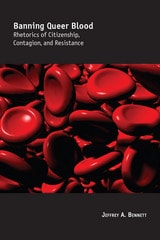
In Banning Queer Blood, Jeffrey Bennett frames blood donation as a performance of civic identity closely linked to the meaning of citizenship. However, with the advent of HIV came the notion of blood donation as a potentially dangerous process. Bennett argues that the Food and Drug Administration, by employing images that specifically depict gay men as contagious, has categorized gay men as a menace to the nation. The FDA's ban on blood donation by gay men served to propagate the social misconceptions about gay men that continue to circulate within both the straight and LGBT/Queer communities.
Bennett explores the role of scientific research cited by these banned-blood policies and its disquieting relationship to government agencies, including the FDA. Bennett draws parallels between the FDA's position on homosexuality and the historical precedents of discrimination by government agencies against racial minorities. The author concludes by describing the resistance posed by queer donors, who either lie in order to donate blood or protest discrimination at donation sites, and by calling for these prejudiced policies to be abolished.
Bantu Applicative Constructions
Sara Pacchiarotti
CSLI, 2019
Bantu Historical Linguistics
Theoretical and Empirical PerspectivesEdited by Jean-Marie Hombert and Larry M. Hyman
CSLI, 1999
Bare Bones Young Adult Services
Tips for Public Library GeneralistsAmerican Library Association, 2000

Baseball and Rhetorics of Purity
The National Pastime and American Identity During the War on TerrorMichael L. Butterworth
University of Alabama Press, 2010
An investigation into the culture and mythology of baseball, a study of its limits and failures, and an invitation to remake the game in a more democratic way.
Baseball has long been considered America’s “national pastime,” touted variously as a healthy diversion, a symbol of national unity, and a model of democratic inclusion. But, according to Michael Butterworth, such favorable rhetoric belies baseball’s complicity in the rhetorical construction of a world defined by good and evil.
Baseball and Rhetorics of Purity is an investigation into the culture and mythology of baseball, a study of its limits and failures, and an invitation to remake the game in a more democratic way. It pays special attention to baseball’s role in the reconstruction of American identity after September 11, 2001. This study is framed by a discussion that links the development of baseball to the discourses of innocence and purity in 19th-century America. From there, it examines ritual performances at baseball games; a traveling museum exhibit sponsored by the National Baseball Hall of Fame and Museum; the recent debate about the use of performance-enhancing drugs; the return of Major League Baseball to Washington, D.C., in 2005; and the advent of the World Baseball Classic in 2006.
Butterworth argues that by promoting myths of citizenship and purity, post-9/11 discourse concerning baseball ironically threatens the health of the democratic system and that baseball cannot be viewed as an innocent diversion or escape. Instead, Butterworth highlights how the game on the field reflects a more complex and diverse worldview, and makes a plea for the game’s recovery, both as a national pastime and as a site for celebrating the best of who we are and who we can be.
Basic Color Terms
Their Universality and EvolutionBrent Berlin and Paul Kay
CSLI, 1999
The work reported in this monograph was begun in the winter of 1967 in a graduate seminar at Berkeley. Many of the basic data were gathered by members of the seminar and the theoretical framework presented here was initially developed in the context of the seminar discussions.
Much has been discovered since1969, the date of original publication, regarding the psychophysical and neurophysical determinants of universal, cross-linguistic constraints on the shape of basic color lexicons, and something, albeit less, can now also be said with some confidence regarding the constraining effects of these language-independent processes of color perception and conceptualization on the direction of evolution of basic color term lexicons.
Basics of Language for Language Learners, 2nd Edition
Peter W. Culicover and Elizabeth V. Hume
The Ohio State University Press, 2017
Learning a language involves so much more than just rote memorization of rules. Basics of Language for Language Learners, 2nd edition, by Peter W. Culicover and Elizabeth V. Hume, systematically explores all the aspects of language central to second language learning: the sounds of language, the different grammatical structures, the social functions of communication, and the psychology of language learning and use.
Unlike books specific to one single language, Basics of Language will help students of all languages. Readers will gain insight into the structure and use of their own language and will therefore see more clearly how the language they are learning differs from their first language. Language instructors will find the approach provocative, and the book will stimulate many new and effective ideas for teaching. Both a textbook and a reference work, Basics of Language will enhance the learning experience for anyone taking a foreign language course as well as the do-it-yourself learner.
A new section, “Tools and Strategies for Language Learning,” has been added to this second edition. It comprises three chapters that focus on brain training, memory and using a dictionary. In addition, the section “Thinking Like a Native Speaker” has been substantially updated to include more discussion of errors made by language learners.
Battle in the Mind Fields
John A. Goldsmith and Bernard Laks
University of Chicago Press, 2019
Taking note of this phenomenon, John Goldsmith and Bernard Laks embark on a uniquely interdisciplinary history of the genesis of linguistics, from nineteenth-century currents of thought in the mind sciences through to the origins of structuralism and the ruptures, both political and intellectual, in the years leading up to World War II. Seeking to explain where contemporary ideas in linguistics come from and how they have been justified, Battle in the Mind Fields investigates the porous interplay of concepts between psychology, philosophy, mathematical logic, and linguistics. Goldsmith and Laks trace theories of thought, self-consciousness, and language from the machine age obsession with mind and matter to the development of analytic philosophy, behaviorism, Gestalt psychology, positivism, and structural linguistics, emphasizing throughout the synthesis and continuity that has brought about progress in our understanding of the human mind. Arguing that it is impossible to understand the history of any of these fields in isolation, Goldsmith and Laks suggest that the ruptures between them arose chiefly from social and institutional circumstances rather than a fundamental disparity of ideas.
Bawaajimo
A Dialect of Dreams in Anishinaabe Language and LiteratureMargaret Noodin
Michigan State University Press, 2014
Be a Great Boss
One Year to SuccessCatherine Hakala-Ausperk
American Library Association, 2011
Becoming Writers
Twenty-First-Century Ways of ComposingKaren Lunsford
Utah State University Press, 2026
Becoming Writers draws on phenomenological and lifespan approaches to writing research, reframing writing as a lived process shaped by social contexts, evolving technologies, and a writer’s own sense of self and agency. It moves beyond familiar binaries and offers a more holistic account of what it means to become a writer today.
Bringing together scholars from across the fields of writing studies and rhetoric/composition to consider the ways “writing” is changing in the twenty-first century, this collection tracks how and why people talk about the various forms of writing they do. Contributors address how younger generations understand the role and place of writing in their lives, particularly amid increasing and dramatic economic, social, and political change, as well as the ever-evolving role of writing in what it means to be human.
Becoming Writers builds on the Wayfinding Project (https://thewayfindingproject.com), a multiyear study of writing development focused on college graduates. Rather than focusing solely on the classroom, Becoming Writers investigates how writing functions in people’s professional, civic, personal, and digital lives. By centering lived experiences across domains, it provides a model of the empirical depth and different methodological approaches being used by scholars interested in writing development across the lifespan.

Becoming a Library Leader
Seven Stages of Leadership Development for Academic LibrariansShin Freedman
Assoc of College & Research Libraries, 2019
Becoming a Media Mentor
A Guide for Working with Children and FamiliesCen Campbell
American Library Association, 2016
Becoming a Reflective Librarian and Teacher
Strategies for Mindful Academic PracticeMichelle Reale
American Library Association, 2016
Becoming a Social Science Researcher
Quest and ContextBruce Parrott
University of Michigan Press, 2023
Becoming a Social Science Researcher is designed to help aspiring social scientists, including credentialed scholars, understand the formidable complexities of the research process. Instead of explaining specific research techniques, it concentrates on the philosophical, sociological, and psychological dimensions of social research. These dimensions have received little coverage in guides written for social science researchers, but they are arguably even more important than particular analytical techniques. Truly sophisticated social science scholarship requires that the researcher understand the intellectual and social contexts in which they collect and interpret information. While social science training in US graduate schools has become more systematic over the past two decades with numerous publications aimed at instruction, training and guidance still fall short in addressing the fundamental needs of this field.
Becoming an Embedded Librarian
Making Connections in the ClassroomMichelle Reale
American Library Association, 2015
Becoming an Expert Writer
A Holistic Guide to Writing for PublicationDana Lynn Driscoll
University Press of Colorado, 2026
In Becoming an Expert Writer, Dana Lynn Driscoll explores the core concepts that create publication expertise. Informed by groundbreaking studies of successful emerging and expert writers as they seek to publish their work, this research-based guide illuminates the often-invisible dimensions of writing for publication. Driscoll describes strategies that move beyond conventional advice, allowing writers to craft a holistic process and relationship with their work. Each chapter integrates empirical research with reflective and practical activities, guiding writers from idea generation and flow to identity development and mentoring. The result is a transformative resource for developing sustainable, meaningful, and expert writing practices.

Becoming an Interpreter
Rachel E. Herring
Gallaudet University Press, 2026
How does one become an interpreter, and what knowledge and skills are developed along the way? What does developing an identity as an interpreter involve? Becoming an Interpreter bridges the gap between theory and practice, weaving together personal narratives and research insights to explore questions like these.
Becoming an Interpreter is structured around five dimensions of becoming that connect foundational concepts to lived experience: community, social aspects, acquisition of interpreting skills, ethical reasoning and decision-making, and coping with emotion and stress. Together, these varied perspectives and experiences show that there is no one single breakthrough moment for becoming an interpreter; there are many. At the end of each chapter, there are interactive prompts that invite readers to pause and reflect.
Designed for students, developing interpreters, and individuals considering interpreting as a career, Becoming an Interpreter is an introduction to the field and an essential resource for professional reflection and growth.
Becoming the Second City
Chicago's Mass News Media, 1833-1898Richard Junger
University of Illinois Press, 2010
Becoming the Story
War Correspondents since 9/11Lindsay Palmer
University of Illinois Press, 2018
Becoming the Story examines the transformation of war reporting in the decade after 9/11. Lindsay Palmer delves into times when print or television correspondents themselves received intense public scrutiny because of an incident associated with the work of war reporting. Such instances include Daniel Pearl’s kidnapping and murder; Bob Woodruff’s near-fatal injury in Iraq; the expulsions of Maziar Bahari and Nazila Fathi from Iran in 2009; the sexual assault of Lara Logan; and Marie Colvin’s 2012 death in Syria. Merging analysis with in-depth interviews of Woodruff and others, Palmer shows what these events say about how post-9/11 conflicts transformed the day-to-day labor of reporting. But they also illuminate how journalists’ work became entangled with issues ranging from digitization processes to unprecedented hostility from all sides to the political logic of the War on Terror.
Before Journalism Schools
How Gilded Age Reporters Learned the RulesRandall S. Sumpter
University of Missouri Press, 2018
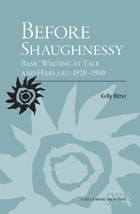
Before Shaughnessy
Basic Writing at Yale and Harvard, 1920-1960Kelly Ritter
Southern Illinois University Press, 2009
In Before Shaughnessy: Basic Writing at Yale and Harvard, 1920–1960, Kelly Ritter uses materials from the archives at Harvard and Yale and contemporary theories of writing instruction to reconsider the definition of basic writing and basic writers within a socio-historical context. Ritter challenges the association of basic writing with only poorly funded institutions and poorly prepared students.
Using Yale and Harvard as two sample case studies, Ritter shows that basic writing courses were alive and well, even in the Ivy League, in the early twentieth century. She argues not only that basic writers exist across institutional types and diverse student populations, but that the prevalence of these writers has existed far more historically than we generally acknowledge.
Uncovering this forgotten history of basic writing at elite institutions, Ritter contends that the politics and problems of the identification and the definition of basic writers and basic writing began long before the work of Mina Shaughnessy in Errors and Expectations and the rise of open admissions. Indeed, she illustrates how the problems and politics have been with us since the advent of English A at Harvard and the heightened consumer-based policies that resulted in the new admissions criteria of the early twentieth-century American university. In order to recognize this long-standing reality of basic writing, we must now reconsider whether the nearly standardized, nationalized definition of “basic” is any longer a beneficial one for the positive growth and democratic development of our first-year writing programs and students.
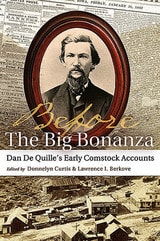
Before THE BIG BONANZA
Dan De Quille's Early Comstock AccountsEdited by Donnelyn Curtis and Lawrence I. Berkove
University of Missouri Press, 2015
Before the Ballot
Building Political Support for Library FundingJohn Chrastka
American Library Association, 2018
Behind the Book
Eleven Authors on Their Path to PublicationChris Mackenzie Jones
University of Chicago Press, 2018
Behind the Book explores how eleven contemporary first-time authors, in genres ranging from post-apocalyptic fiction to young adult fantasy to travel memoir, navigated these pathways with their debut works. Based on extensive interviews with the authors, it covers the process of writing and publishing a book from beginning to end, including idea generation, developing a process, building a support network, revising the manuscript, finding the right approach to publication, building awareness, and ultimately moving on to the next project. It also includes insights from editors, agents, publishers, and others who helped to bring these projects to life.
Unlike other books on writing craft, Behind the Book looks at the larger picture of how an author’s work and choices can affect the outcome of a project. The authors profiled in each story open up about their challenges, mistakes, and successes. While their paths to publication may be unique, together they offer important lessons that authors of all types can apply to their own writing journeys.
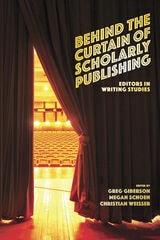
Behind the Curtain of Scholarly Publishing
Editors in Writing StudiesGreg Giberson
Utah State University Press, 2022
Each chapter in the collection examines the unique experiences and individual contributions of its authors during their time as editors, offering advice to scholars and potential editors on how to navigate the publication process and understand editorial roles. The contributors provide multiple perspectives on the growth, transformation, and, in some cases, founding of some of the most influential publishing venues in writing studies.
The personal and historical narratives, along with the unique perspectives and insightful analyses of the individual authors in Behind the Curtain of Scholarly Publishing, offer needed transparency and context to what has historically been an opaque, yet inevitable and consequential, part of academic life. This volume will help researchers in the field understand the publishing process.
Contributors: Cheryl Ball, David Bartholomae, Charles Bazerman, Jean Ferguson Carr, Douglas Eyman, Muriel Harris, Byron Hawk, Alice Horning, Paul Kei Matsuda, Laura Micciche, Mike Palmquist, Michael Pemberton, Malea Powell, Kelly Ritter, Victor Villanueva, Victor Vitanza, Kathleen Blake Yancey

Behind the Times
Inside the New New York TimesEdwin Diamond
University of Chicago Press, 1995
"Edwin Diamond's Behind the Times sets the Paper of Record straight—a fascinating look at the people and policies, the dissension and debate behind the seemingly serene masthead of the New York Times. No newsroom is a Garden of Eden, and only the rare reporter wears a halo: the Times, not surprisingly, is an imperfect place. But Edwin Diamond is careful to note the triumph as well as the turmoil at this great American newspaper. The result is a window on the changing world of journalism today."—Dan Rather
Being Indispensable
A School Librarian's Guide to Becoming an Invaluable LeaderRuth Toor
American Library Association, 2010
Being a Teen Library Services Advocate
Linda Braun
American Library Association, 2012
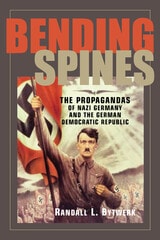
Bending Spines
The Propagandas of Nazi Germany and the German Democratic RepublicRandall L. Bytwerk
Michigan State University Press, 2004
Why do totalitarian propaganda such as those created in Nazi Germany and the former German Democratic Republic initially succeed, and why do they ultimately fail? Outside observers often make two serious mistakes when they interpret the propaganda of this time. First, they assume the propaganda worked largely because they were supported by a police state, that people cheered Hitler and Honecker because they feared the consequences of not doing so. Second, they assume that propaganda really succeeded in persuading most of the citizenry that the Nuremberg rallies were a reflection of how most Germans thought, or that most East Germans were convinced Marxist-Leninists. Subsequently, World War II Allies feared that rooting out Nazism would be a very difficult task. No leading scholar or politician in the West expected East Germany to collapse nearly as rapidly as it did. Effective propaganda depends on a full range of persuasive methods, from the gentlest suggestion to overt violence, which the dictatorships of the twentieth century understood well.
In many ways, modern totalitarian movements present worldviews that are religious in nature. Nazism and Marxism-Leninism presented themselves as explanations for all of life—culture, morality, science, history, and recreation. They provided people with reasons for accepting the status quo. Bending Spines examines the full range of persuasive techniques used by Nazi Germany and the German Democratic Republic, and concludes that both systems failed in part because they expected more of their propaganda than it was able to deliver.
Best AltWeekly Writing 2009 & 2010
Association of Alternative Newsweeklies
Northwestern University Press, 2011
Best AltWeekly Writing 2009 & 2010 showcases articles that won the Association of Alternative Newsweeklies’s AltWeekly Awards in 2009 and 2010. These pieces embody the in-depth investigative journalism, narrative style, and defiant viewpoints that define alternative weeklies. Interviews with the authors illuminate the methods and personalities behind the stories. Articles feature music criticism from the Village Voice and election coverage from City Pages and the Texas Observer, as well as pieces from Westword, LA Weekly, San Francisco Weekly, and LEO Weekly. Interviews include journalists Anne Schindler, Sarah Fenske, Joel Warner, Jonathan Gold, John Dickerson, Jeffrey C. Billman, Erik Wemple, David Koon and Rob Harvilla.
Best Books for Young Adults
American Library Association, 2007
Best Practices For Credit- Bearing Information Literacy
Christopher Hollister
Assoc of College & Research Libraries, 2011
Best Practices for Credit-Bearing Information Literacy Courses
Christopher Vance Hollister
Assoc of College & Research Libraries, 2011
Better Practices
Exploring the Teaching of Writing in Online and Hybrid SpacesAmy Cicchino
University Press of Colorado, 2024
Between Politics and Ethics
Toward a Vocative History of English StudiesJames N. Comas
Southern Illinois University Press, 2006
For nearly twenty-five years, English studies has been focused on two terms: politics and ethics. However, the institutional emergence, development, and relationship of these two concepts have yet to be examined. Between Politics and Ethics: Toward a Vocative History of English Studies traces the development of politics and ethics in contemporary English studies, questions the current political orientation of the discipline, and proposes a rethinking of the history of English studies based on a “vocative” dimension of writing—the idea that writers form a virtual community by “calling to” and listening to other writers.
In a series of interrelated discussions, James Comas examines the historical trends leading to recent confusion regarding ethics and its relation to the politics of English studies. Through close, rhetorical readings of texts by Judith Butler, Stephen Greenblatt, Edward Said, and others, Comas argues that this confusion is largely the result of a “political turn” that resists theorizing itself. In addition, he argues that work on ethics by Wayne Booth, Geoffrey Harpham, and J. Hillis Miller reflects an uneasy dialectic between the ethics and politics of reading and writing. In response to this discord, Comas turns to the theories of Emmanuel Levinas and Maurice Blanchot, as well as to the examples of Georges Bataille and Kenneth Burke, and proposes a vocative approach to assessing English studies and its history. In doing so, this volume offers a thoughtful reassessment of English studies that affects our understanding of the rhetoric of disciplinary histories.
Between Talk And Teaching
Reconsidering the Writing ConferenceLaurel Johnson Black
Utah State University Press, 1998
The teacher-student conference is standard in the repertoire of teachers at all levels. Because it's a one-to-one encounter, teachers work hard to make it comfortable; but because it's a pedagogical moment, they hope that learning occurs in the encounter, too. The literature in this area often suggests that a conference is a conversation, but this doesn't account for a teacher's need to use it pedagogically. Laurel Johnson Black's new book explores the conflicting meanings and relations embedded in conferencing and offers a new theoretical understanding of the conference along with practical approaches to conferencing more effectively with students.
Analyzing taped conferences of several different teachers and students, Black considers the influence that power, gender, and culture can have on a conference. She draws on sociolinguistic theory, as well as critical theory in composition and rhetoric, to build an understanding of the writing conference as an encounter somewhere between conversation and the classroom. She finds neither the conversation model nor versions of the master-apprentice model satisfactory. Her approach is humane, student-centered, and progressive, but it does not ignore the valid pedagogical purposes a teacher might have in conferencing. Between Talk and Teaching will be a valuable addition to the professional library of writing teachers and writing program administrators.
Between Watergate and the Gulag
The French Press and Politics, 1970–1985Charles R. Eisendrath
Michigan Publishing Services, 2022
Also introduced: “surplus freedom” a novel approach for gauging self-censorship by comparing the degree of free expression a legal system permits to what publications actually exercise.
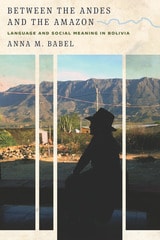
Between the Andes and the Amazon
Language and Social Meaning in BoliviaAnna M. Babel
University of Arizona Press, 2018
Between the Andes and the Amazon is ethnography in storytelling form, a rigorous yet sensitive exploration of how people understand themselves and others as members of social groups through the words and languages they use.
Drawing on fifteen years of ethnographic research, Babel offers a close examination of how people produce oppositions, even as they might position themselves “in between” those categories. These oppositions form the raw material of the social system that people accept as “normal” or “the way things are.” Meaning-making happens through language use and language play, Babel explains, and the practice of using Spanish versus Quechua is a claim to an identity or a social position. Babel gives personal perspectives on what it is like to live in this community, focusing on her own experiences and those of her key consultants. Between the Andes and the Amazon opens new ways of thinking about what it means to be a speaker of an indigenous or colonial language—or a mix of both.
Beyond Alternations
Laura A. Michaelis and Josef Ruppenhofer
CSLI, 2001
of corpora, the authors propose that this pattern is inherently meaningful and that its meaning provides the basis for creative extensions.
Beyond Banned Books
Defending Intellectual Freedom throughout Your LibraryKristin Pekoll
American Library Association, 2019
Beyond Book Sales
The Complete Guide to Raising Real Money for Your LibrarySusan Dowd
American Library Association, 2013