Results by title
320 books match the query 'Legal status, laws, etc' and 16 start with b
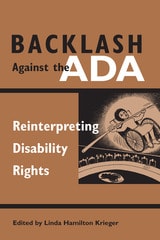
Backlash Against the ADA
Reinterpreting Disability RightsLinda Hamilton Krieger, Editor
University of Michigan Press, 2003

Basketball Trafficking
Stolen Black Panamanian DreamsJavier Wallace
Duke University Press, 2025

Battered Women In The Courtroom
The Power of Judicial ResponsesUniversity Press of New England, 1999
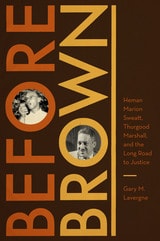
Before Brown
Heman Marion Sweatt, Thurgood Marshall, and the Long Road to JusticeBy Gary M. Lavergne
University of Texas Press, 2010
Winner, Coral Horton Tullis Memorial Prize for Best Book on Texas History, Texas State Historical Association, 2010
Carr P. Collins Award, Texas Institute of Letters, 2011
On February 26, 1946, an African American from Houston applied for admission to the University of Texas School of Law. Although he met all of the school's academic qualifications, Heman Marion Sweatt was denied admission because he was black. He challenged the university's decision in court, and the resulting case, Sweatt v. Painter, went to the U.S. Supreme Court, which ruled in Sweatt's favor. The Sweatt case paved the way for the landmark Brown v. Board of Education of Topeka rulings that finally opened the doors to higher education for all African Americans and desegregated public education in the United States.
In this engrossing, well-researched book, Gary M. Lavergne tells the fascinating story of Heman Sweatt's struggle for justice and how it became a milestone for the civil rights movement. He reveals that Sweatt was a central player in a master plan conceived by the National Association for the Advancement of Colored People (NAACP) for ending racial segregation in the United States. Lavergne masterfully describes how the NAACP used the Sweatt case to practically invalidate the "separate but equal" doctrine that had undergirded segregated education for decades. He also shows how the Sweatt case advanced the career of Thurgood Marshall, whose advocacy of Sweatt taught him valuable lessons that he used to win the Brown v. Board of Education case in 1954 and ultimately led to his becoming the first black Associate Justice of the Supreme Court.
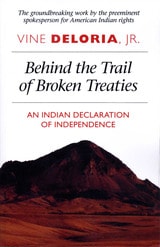
Behind the Trail of Broken Treaties
An Indian Declaration of IndependenceBy Vine Deloria, Jr.
University of Texas Press, 1985
Originally published in 1974, just as the Wounded Knee occupation was coming to an end, Behind the Trail of Broken Treaties raises disturbing questions about the status of American Indians within the American and international political landscapes. Analyzing the history of Indian treaty relations with the United States, Vine Deloria presents population and land ownership information to support his argument that many Indian tribes have more impressive landholdings than some small members of the United Nations. Yet American Indians are not even accorded status within the UN's trust territories recognition process.
A 2000 study published by the Annual Survey of International and Comparative Law recommends that the United Nations offer membership to the Iroquois, Cherokee, Navajo, and other Indian tribes. Ironically, the study also recommends that smaller tribes band together to form a confederation to seek membership—a suggestion nearly identical to the one the United States made to the Delaware Indians in 1778—and that a presidential commission explore ways to move beyond the Doctrine of Discovery, under which European nations justified their confiscation of Indian lands. Many of these ideas appear here in this book, which predates the 2000 study by twenty-six years. Thus, Behind the Trail of Broken Treaties anticipates recent events as history comes full circle, making the book imperative reading for anyone wishing to understand the background of the movement of American Indians onto the world political stage.
In the quarter century since this book was written, Indian nations have taken great strides in demonstrating their claims to recognized nationhood. Together with Tribes, Treaties, and Constitutional Tribulations, by Deloria and David E. Wilkins, Behind the Trail of Broken Treaties highlights the historical events that helped bring these changes to fruition. At the conclusion of Behind the Trail of Broken Treaties, Deloria states: "The recommendations made in the Twenty Points and the justification for such a change as articulated in the book may well come to pass in our lifetime." Now we are seeing his statement come true.

Benjamin Franklin, Pennsylvania, and the First Nations
The Treaties of 1736-62Edited by Susan Kalter
University of Illinois Press, 2006
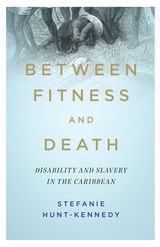
Between Fitness and Death
Disability and Slavery in the CaribbeanStefanie Hunt-Kennedy
University of Illinois Press, 2020
Stefanie Hunt-Kennedy provides a three-pronged analysis of disability in the context of Atlantic slavery. First, she examines the connections of enslavement and representations of disability and the parallel development of English anti-black racism. From there, she moves from realms of representation to reality in order to illuminate the physical, emotional, and psychological impairments inflicted by slavery and endured by the enslaved. Finally, she looks at slave law as a system of enforced disablement.
Audacious and powerful, Between Fitness and Death is a groundbreaking journey into the entwined histories of racism and ableism.
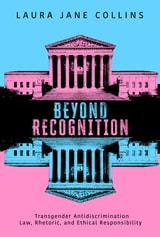
Beyond Recognition
Transgender Antidiscrimination Law, Rhetoric, and Ethical ResponsibilityCollins, Laura Jane
University of Alabama Press, 2026
A bold and original analysis of how the complexity of legal struggles over transgender rights is shaped not only by politics but by a deeper cultural anxiety about the meaning of sex itself.
Beyond Recognition: Transgender Antidiscrimination Law, Rhetoric, and Ethical Responsibility is a timely analysis that challenges the idea of transgender antidiscrimination law as a simple matter of inclusion or exclusion. Far from treating the law as a straightforward recognition project, Laura Jane Collins employs a rhetorically responsive approach that reveals how legal systems both reflect and shape our deepest uncertainties about sex, identity, and justice.
Through close readings of Title VII case law, state-level legislation such as California’s Fair Employment and Housing Act, and legislative debates surrounding bathroom access and trans rights, Collins exposes the deep-seated anxieties driving contemporary legal debates. While courts, policymakers, and advocates struggle to construct legal protections, the very act of defining sex within the law exposes law’s limitations.
Rather than condemning the law’s failures or romanticizing its liberatory potential, Collins calls for a more self-reflective, ethically engaged response. She argues that our demand for legal clarity often conceals a broader discomfort with ambiguity—and that the law’s so-called shortcomings may in fact reflect our own refusal to confront the complexity of sex as a category and system of power.
A vital contribution to scholarship in law and rhetoric, gender studies, and critical legal theory, Beyond Recognition invites a deeper reckoning with both legal frameworks and personal responsibility. It offers a compelling perspective on the evolving landscape of transgender rights and the cultural anxieties that continue to shape it.
Beyond the Schoolhouse Gate
Free Speech and the Inculcation of ValuesRobert Wheeler Lane
Temple University Press, 1995

Beyond the Wall
Writing a Path through PalestineBidisha
Seagull Books, 2012
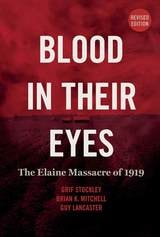
Blood in Their Eyes
The Elaine Massacre of 1919Grif Stockley
University of Arkansas Press, 2020
The first edition of Grif Stockley’s Blood in Their Eyes, published in 2001, brought renewed attention to the Elaine Massacre and sparked valuable new studies on racial violence and exploitation in Arkansas and beyond. With contributions from fellow historians Brian K. Mitchell and Guy Lancaster, this revised edition draws from recently uncovered source material and explores in greater detail the actions of the mob, the lives of those who survived the massacre, and the regime of fear and terror that prevailed under Jim Crow.

Blood on Their Hands
How Greedy Companies, Inept Bureaucracy, and Bad Science Killed Thousands of HemophiliacsWeinberg, Eric
Rutgers University Press, 2017
Blood on Their Hands is an inspiring, firsthand account of the legal battles fought on behalf of hemophiliacs who were unwittingly infected with tainted blood. As part of the team behind the key class action litigation filed by the infected, young New Jersey lawyer Eric Weinberg was faced with a daunting task: to prove the negligence of a powerful, well-connected global industry worth billions. Weinberg and journalist Donna Shaw tell the dramatic story of how idealistic attorneys and their heroic, mortally-ill clients fought to achieve justice and prevent further infections. A stunning exposé of one of the American medical system’s most shameful debacles, Blood on Their Hands is a rousing reminder that, through perseverance, the victims of corporate greed can sometimes achieve great victory.
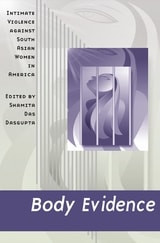
Body Evidence
Intimate Violence against South Asian Women in AmericaEdited by Shamita Das Dasgupta
Rutgers University Press, 2007
In Body Evidence, more than twenty scholars and public health professionals uncover the unique challenges faced by victims of violence in intimate spaces . . . within families, communities and trusted relationships in South Asian American communities. Topics include cultural obsession with women's chastity and virginity; the continued silence surrounding intimate violence among women who identify themselves as lesbian, bisexual, or transgender; the consequences of refusing marriage proposals or failing to meet dowry demands; and, ultimately, the ways in which the United States courts often confuse and exacerbate the plights of these women.

Bong Hits 4 Jesus
A Perfect Constitutional Storm in Alaska's CapitalJames C. Foster
University of Alaska Press, 2010
In January 2002, for the first time, the Olympic Torch Relay visited Alaska on its way to the Winter Games. When the relay runner and accompanying camera cars passed Juneau-Douglas High School, senior Joseph Frederick and several friends unfurled a fourteen-foot banner reading "BONG HiTS 4 JESUS."
An in-depth look at student rights within a public high school, this book chronicles the events that followed: Frederick's suspension, the subsequent suit against the school district, and, ultimately, the escalation of a local conflict into a federal case. Brought to life through interviews with the principal figures in the case, Bong Hits 4 Jesus is a gripping tale of the boundaries of free speech in an American high school.
Book of the Disappeared
The Quest for Transnational JusticeJennifer Heath and Ashraf Zahedi, Editors
University of Michigan Press, 2023
Book of the Disappeared confronts worldwide human rights violations of enforced disappearance and genocide and explores the global quest for justice with forceful, outstanding contributions by respected scholars, expert practitioners, and provocative contemporary artists. This profoundly humane book spotlights our historic inhumanity while offering insights for survival and transformation.
Breaking Chains
Slavery on Trial in the Oregon TerritoryR. Gregory Nokes
Oregon State University Press, 2013
In Breaking Chains, R. Gregory Nokes tells the story of the only slavery case adjudicated in Oregon’s pre-Civil War courts—Holmes v. Ford. Through the lens of this landmark case, Nokes explores the historical context of racism in Oregon and the West, reminding readers that there actually were slaves in Oregon, though relatively few in number.
Drawing on the court record, Nokes offers an intimate account of the relationship between a slave and his master from the slave’s point of view. He also explores the experiences of other slaves in early Oregon, examining attitudes toward race and revealing contradictions in the state’s history. Oregon was the only free state admitted to the union with a voter-approved constitutional clause banning African Americans and, despite the prohibition of slavery in the state, many in Oregon tolerated it and supported politicians who advocated for slavery, including Oregon’s first territorial governor.
Breaking Chains sheds light on a somber part of Oregon’s history, bringing the story of slavery in Oregon to a broader audience. The book will appeal to readers interested in Pacific Northwest history and in the history of slavery in the United States.