Results by title
1414 books match the query 'Medical' and 72 start with b
BODIES OF TECHNOLOGY
Women’s Involvement with Reproductive MedicineEdited by Ann R. Saetnan, Nelly Oudshoorn, and Marta Kirejczyk
The Ohio State University Press, 2000
Bodies of Technology is based on the premise that technology and society mutually shape one another, and on a concern for women’s health and autonomy. A basic question is one of cultural appropriation: Do technologies take on different shapes, different practices, and have different impacts as they spread from one place to another? By juxtaposing a number of culturally and historically contextualized studies of similar technologies, the editors demonstrate that although technologies globalize by spreading among cultures, they are also localized by the cultures they encounter.
The first part of the book investigates how potential users of hormone-based contraceptives are represented as these technologies are developed in laboratories and field tests. The next section explores the political and economic processes that regulate access to and practices of assisted fertilization. The final section focuses on individual users engaging with fetal diagnostic technologies in clinical practice. Taken as a whole, the book points out the need and the possibilities for women to become directly involved in the shaping of technologies that so strongly affect their health and their daily lives.
Babylost
Racism, Survival, and the Quiet Politics of Infant Mortality, from A to ZMonica J. Casper
Rutgers University Press, 2021

Back to the Breast
Natural Motherhood and Breastfeeding in AmericaJessica Martucci
University of Chicago Press, 2015
That movement—in which the personal and political were inextricably linked—effectively challenged midcentury norms of sexuality, gender, and consumption, and articulated early environmental concerns about chemical and nuclear contamination of foods, bodies, and breast milk. In its groundbreaking chronicle of the breastfeeding movement, Back to the Breast provides a welcome and vital account of what it has meant, and what it means today, to breastfeed in modern America.
Banning Queer Blood
Rhetorics of Citizenship, Contagion, and ResistanceJeffrey A. Bennett
University of Alabama Press, 2009
In Banning Queer Blood, Jeffrey Bennett frames blood donation as a performance of civic identity closely linked to the meaning of citizenship. However, with the advent of HIV came the notion of blood donation as a potentially dangerous process. Bennett argues that the Food and Drug Administration, by employing images that specifically depict gay men as contagious, has categorized gay men as a menace to the nation. The FDA's ban on blood donation by gay men served to propagate the social misconceptions about gay men that continue to circulate within both the straight and LGBT/Queer communities.
Bennett explores the role of scientific research cited by these banned-blood policies and its disquieting relationship to government agencies, including the FDA. Bennett draws parallels between the FDA's position on homosexuality and the historical precedents of discrimination by government agencies against racial minorities. The author concludes by describing the resistance posed by queer donors, who either lie in order to donate blood or protest discrimination at donation sites, and by calling for these prejudiced policies to be abolished.

Battle
The Nature and Consequences of Civil War CombatEdited by Kent Gramm
University of Alabama Press, 2008
A critical, multidisciplinary examination of Civil War combat that interrogates the technological, medical, psychological, and cultural forces shaping battlefield experience and its enduring national legacy.
“In our youth, our hearts were touched with fire,” wrote Oliver Wendell Holmes of his generation’s Civil War days. Through the ages, war stories have gleamed with romantic glory, and American memories of the cataclysmic Civil War inspire pageantry and poetry even today.
The essays in Battle form a corrective to such celebratory histories by examining the lethal realities of Civil War combat—Enlightenment science applied to the creation of weapons that maimed and killed, which far outpaced advances in diet, sanitation, and medical treatment. The book reveals that behind the drums and trumpets, sashes and swords, the armies of the Union and Confederacy alike were haunted by fear, pain, and death.
The collection includes an introduction and afterword by editor Kent Gramm, who also contributes an essay titled “Numbers” that reveals the war in statistics. Paul Fussell contributes a powerful essay titled “The Culture of War.” D. Scott Hartwig examines the face of battle at Gettysburg. Bruce A. Evans discusses medical technology in “Wounds, Death, and Medical Care in the Civil War.” Eric T. Dean challenges the meanings and consequences of combat in “The Awful Shock and Rage of Battle.” The collection is rounded out by Alan T. Nolan’s masterful review of the national consequences of battle and the resultant myth of the Confederacy’s Lost Cause.
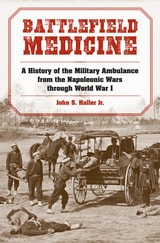
Battlefield Medicine
A History of the Military Ambulance from the Napoleonic Wars through World War IJohn S. Haller, Jr.
Southern Illinois University Press, 1992
In this first history of the military ambulance, historian John S. Haller Jr. documents the development of medical technologies for treating and transporting wounded soldiers on the battlefield. Noting that the word ambulance has been used to refer to both a mobile medical support system and a mode of transport, Haller takes readers back to the origins of the modern ambulance, covering their evolution in depth from the late eighteenth century through World War I.
The rising nationalism, economic and imperial competition, and military alliances and arms races of the nineteenth and early twentieth centuries figure prominently in this history of the military ambulance, which focuses mainly on British and American technological advancements. Beginning with changes introduced by Dominique-Jean Larrey during the Napoleonic Wars, the book traces the organizational and technological challenges faced by opposing armies in the Crimean War, the American Civil War, the Franco-Prussian War, and the Philippines Insurrection, then climaxes with the trench warfare that defined World War I. The operative word is "challenges" of medical care and evacuation because while some things learned in a conflict are carried into the next, too often, the spasms of war force its participants to repeat the errors of the past before acquiring much needed insight.
More than a history of medical evacuation systems and vehicles, this exhaustively researched and richly illustrated volume tells a fascinating story, giving readers a unique perspective of the changing nature of warfare in the nineteenth and early twentieth centuries.

Be Fruitful and Multiply
Eugenics and Other Anglican Efforts to Control Fertility in Interwar EnglandAndrew Moeller
Rutgers University Press, 2027
Be Fruitful and Multiply examines the moral justification offered by Anglican leaders for their support for eugenic, pronatalist, and neo-Malthusian schemes in the United Kingdom during the interwar period. These religious leaders often comprehended their efforts to control fertility within the context of a broader struggle over competing conceptions of human purpose in English society, and regularly justified their efforts on the grounds that fertility-manipulation schemes served to align procreative behaviors with “Christian” conceptions of human purpose. The shared moral logic of Anglican leaders helps to explain the pervasive interest in birthrate patterns, along with the enduring appeal of fertility-manipulation schemes, amongst middle- and upper-classes during the first half of the twentieth century. This book also sheds light on how population concerns led to the liberalization of church positions on marriage and sexuality, and illuminates how Anglican leaders sought to maintain moral influence in the face of the perceived large-scale rejection of Christian moral teachings.

Beasts of the Earth
Animals, Humans, and DiseaseTorrey, E. Fuller
Rutgers University Press, 2014
Humans have lived in close proximity to other animals for thousands of years. Recent scientific studies have even shown that the presence of animals has a positive effect on our physical and mental health. People with pets typically have lower blood pressure, show fewer symptoms of depression, and tend to get more exercise.
But there is a darker side to the relationship between animals and humans. Animals are carriers of harmful infectious agents and the source of a myriad of human diseases. In recent years, the emergence of high-profile illnesses such as AIDS, SARS, West Nile virus, and bird flu has drawn much public attention, but as E. Fuller Torrey and Robert H. Yolken reveal, the transfer of deadly microbes from animals to humans is neither a new nor an easily avoided problem.
Beginning with the domestication of farm animals nearly 10,000 years ago, Beasts of the Earth traces the ways that human-animal contact has evolved over time. Today, shared living quarters, overlapping ecosystems, and experimental surgical practices where organs or tissues are transplanted from non-humans into humans continue to open new avenues for the transmission of infectious agents. Other changes in human behavior like increased air travel, automated food processing, and threats of bioterrorism are increasing the contagion factor by transporting microbes further distances and to larger populations in virtually no time at all.
While the authors urge that a better understanding of past diseases may help us lessen the severity of some illnesses, they also warn that, given our increasingly crowded planet, it is not a question of if but when and how often animal-transmitted diseases will pose serious challenges to human health in the future.
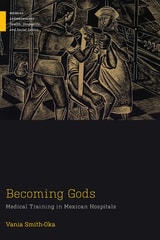
Becoming Gods
Medical Training in Mexican HospitalsVania Smith-Oka
Rutgers University Press, 2021
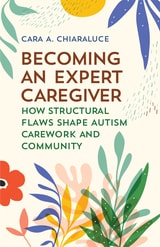
Becoming an Expert Caregiver
How Structural Flaws Shape Autism Carework and CommunityCara A. Chiaraluce
Rutgers University Press, 2025
Throughout the chapters in this book, the expert caregiver is one person who faces unbelievably daunting tasks of filling or reforming persistent institutional gaps, primarily in education and health care, and subverting ableist cultural norms. Without institutional support, answers to their questions, or pragmatic avenues to access resources, lay caregivers become the experts. Their trials and tribulations, especially when navigating the boundaries of professional/lay and private/public worlds, illuminate a type of carework that is increasingly relevant to a growing number of young families caring for neurodivergent, disabled, medically fragile, and/or chronically ill children. These stories offer a vivid picture of the often invisible complex challenges and structural forces that drive individuals to become expert caregivers in the first place.
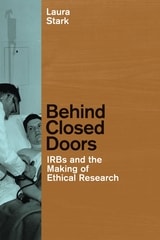
Behind Closed Doors
IRBs and the Making of Ethical ResearchLaura Stark
University of Chicago Press, 2011
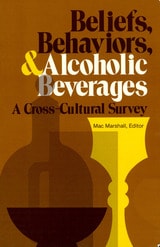
Beliefs, Behaviors, and Alcoholic Beverages
A Cross-Cultural SurveyMac Marshall, Editor
University of Michigan Press, 1979
Between Feast and Famine
Food, Health, and the History of Ghana's Long Twentieth CenturyJohn Nott
University College London, 2025
Between Feast and Famine unravels the intertwined histories of food, health, and capitalism in Ghana, charting the country’s shifting nutritional landscape from colonial-era hunger crises to contemporary epidemics of obesity and diabetes. Moving between Ghana’s diverse ecological and economic zones, John Nott excavates how uneven capitalist transformation reshaped diets and childhood nutrition across the twentieth century. At the heart of this story is the evolving science of nutrition itself, from its colonial-era applications to its role in shaping modern health policies.
Using a new historical approach, Between Feast and Famine exposes how global scientific debates and local lived realities co-produced the country’s shifting nutritional conditions. A necessary contribution to African history and medical humanities, this book debunks preconceived notions about hunger and public health, suggesting crucial insights into the complex relationship between food systems and human well-being.

Between HIV Prevention and LGBTI Rights
The Political Economy of Queer Activism in GhanaEllie Gore
University of Michigan Press, 2024
Gore combines original ethnography, documentary analysis, and the examination of development and global health data to connect the struggle for queer liberation in Ghana to broader trajectories of capitalist transformation and crisis and the afterlives of colonialism. In doing so, Between HIV Prevention and LGBTI Rights offers fascinating insights into the political economy of sexuality and global development for scholars, activists, and policymakers seeking to understand and address sexual injustice and oppression, both in Africa and beyond.
The open access edition of this book was made possible through the support of the Economic and Social Research Council (UK).
Beyond Caring
Hospitals, Nurses, and the Social Organization of EthicsDaniel F. Chambliss
University of Chicago Press, 1996
Vividly documenting the real world of the contemporary hospital, its nurses, and their moral and ethical crises, Dan Chambliss offers a sobering revelation of the forces shaping moral decisions in our hospitals.
Based on more than ten years' field research, Beyond Caring is filled with eyewitness accounts and personal stories demonstrating how nurses turn the awesome into the routine. It shows how patients, many weak and helpless, too often become objects of the bureaucratic machinery of the health care system and how ethics decisions, once the dilemmas of troubled individuals, become the setting for political turf battles between occupational interest groups. The result is a compelling combination of realism and a powerful theoretical argument about moral life in large organizations.
Beyond Complementary Medicine
Legal and Ethical Perspectives on Health Care and Human EvolutionMichael H. Cohen
University of Michigan Press, 2000
Integration of divergent philosophies, paradigms, and practices requires responsible investigation, informed judgment, and open-minded yet critical study and analysis of various systems of healing. Michael H. Cohen offers providers and policymakers vitally important information by addressing questions such as credentialing, malpractice, informed consent, and liability for referrals. He describes both practical strategies for minimizing liability, as well as the necessary future evolution of the legal and regulatory structure.
Cohen also probes uncharted ethical and bioethical issues in complementary medicine and integrative health care. He further explores the connection between law, medicine, and spirituality and the role of this connection in human evolution. The book's range mirrors the integrative process itself, a process of grappling with, and meaningfully assimilating, disparate traditions and unfamiliar ways of thinking about the significance of health, body, and being.
Beyond Complementary Medicine is required reading for anyone involved in health care, including executives, insurers, managed care organizations, attorneys, ethicists, and lawmakers; physicians integrating complementary and alternative therapies; complementary and alternative medicine practitioners; medical schools, law schools, and educational institutions offering programs in health care, public health, and complementary therapies; companies manufacturing herbs and dietary supplements; and most of all, patients and their families.
Michael H. Cohen is President of the Institute for Integrative and Energy Medicine, a nonprofit organization in health care policy, ethics, and legal and regulatory affairs, and an attorney with an international practice in integrative health care.
Beyond Health, Beyond Choice
Breastfeeding Constraints and RealitiesEdited by Paige Hall Smith, Bernice L Hausman, and Miriam Labbok
Rutgers University Press, 2012
Current public health promotion of breastfeeding relies heavily on health messaging and individual behavior change. Women are told that “breast is best” but too little serious attention is given to addressing the many social, economic, and political factors that combine to limit women’s real choice to breastfeed beyond a few days or weeks. The result: women’s, infants’, and public health interests are undermined. Beyond Health, Beyond Choice examines how feminist perspectives can inform public health support for breastfeeding.
Written by authors from diverse disciplines, perspectives, and countries, this collection of essays is arranged thematically and considers breastfeeding in relation to public health and health care; work and family; embodiment (specifically breastfeeding in public); economic and ethnic factors; guilt; violence; and commercialization. By examining women’s experiences and bringing feminist insights to bear on a public issue, the editors attempt to reframe the discussion to better inform public health approaches and political action. Doing so can help us recognize the value of breastfeeding for the public’s health and the important productive and reproductive contributions women make to the world.
Beyond Method
Philosophical Conversations in Healthcare Research and ScholarshipEdited by Pamela M. Ironside
University of Wisconsin Press, 2005
Beyond Obamacare
Life, Death, and Social PolicyJames S. House is Angus Campbell Distinguished University Professor Emeritus of Survey Research, Public Policy, and Sociology at the University of Michigan, Ann Arbor.
Russell Sage Foundation, 2015

Beyond Pain
Making the Mind-Body ConnectionAngela Mailis-Gagnon and David Israelson
University of Michigan Press, 2005
Beyond Surgery
Injury, Healing, and Religion at an Ethiopian HospitalAnita Hannig
University of Chicago Press, 2017
Through her in-depth ethnography of two repair and rehabilitation centers operating in Ethiopia, Hannig takes the reader deep into a world inside hospital walls, where women recount stories of loss and belonging, shame and delight. As she chronicles the lived experiences of fistula patients in clinical treatment, Hannig explores the danger of labeling “culture” the culprit, showing how this common argument ignores the larger problem of insufficient medical access in rural Africa. Beyond Surgery portrays the complex social outcomes of surgery in an effort to deepen our understanding of medical missions in Africa, expose cultural biases, and clear the path toward more effective ways of delivering care to those who need it most.
Big Med
Megaproviders and the High Cost of Health Care in AmericaDavid Dranove and Lawton Robert Burns
University of Chicago Press, 2021
Drawing on decades of combined expertise in health care consolidation, Dranove and Burns trace Big Med’s emergence in the 1990s, followed by its swift rise amid false promises of scale economies and organizational collaboration. In the decades since, megaproviders have gobbled up market share and turned independent physicians into salaried employees of big bureaucracies, while delivering on none of their early promises. For patients this means higher costs and lesser care. Meanwhile, physicians report increasingly low morale, making it all but impossible for most systems to implement meaningful reforms.
In Big Med, Dranove and Burns combine their respective skills in economics and management to provide a nuanced explanation of how the provision of health care has been corrupted and submerged under consolidation. They offer practical recommendations for improving competition policies that would reform megaproviders to actually achieve the efficiencies and quality improvements they have long promised.
This is an essential read for understanding the current state of the health care system in America—and the steps urgently needed to create an environment of better care for all of us.
Big Med
Megaproviders and the High Cost of Health Care in AmericaDavid Dranove and Lawton Robert Burns
University of Chicago Press, 2021
This is an auto-narrated audiobook edition of this book.
There is little debate that health care in the United States is in need of reform. But where should those improvements begin? With insurers? Drug makers? The doctors themselves? In Big Med, David Dranove and Lawton Robert Burns argue that we’re overlooking the most ubiquitous cause of our costly and underperforming system: megaproviders, the expansive health care organizations that have become the face of American medicine. Your local hospital is likely part of one. Your doctors, too. And the megaproviders are bad news for your health and your wallet.
Drawing on decades of combined expertise in health care consolidation, Dranove and Burns trace Big Med’s emergence in the 1990s, followed by its swift rise amid false promises of scale economies and organizational collaboration. In the decades since, megaproviders have gobbled up market share and turned independent physicians into salaried employees of big bureaucracies, while delivering on none of their early promises. For patients this means higher costs and lesser care. Meanwhile, physicians report increasingly low morale, making it all but impossible for most systems to implement meaningful reforms.
In Big Med, Dranove and Burns combine their respective skills in economics and management to provide a nuanced explanation of how the provision of health care has been corrupted and submerged under consolidation. They offer practical recommendations for improving competition policies that would reform megaproviders to actually achieve the efficiencies and quality improvements they have long promised.
This is an essential read for understanding the current state of the health care system in America—and the steps urgently needed to create an environment of better care for all of us.
Bioarchaeological Studies of Life in the Age of Agriculture
A View from the SoutheastEdited by Patricia M. Lambert
University of Alabama Press, 2000
Investigations of skeletal remains from key archaeological sites reveal new data and offer insights on prehistoric life and health in the Southeast.
The shift from foraging to farming had important health consequences for prehistoric peoples, but variations in health existed within communities that had made this transition. This new collection draws on the rich bioarchaeological record of the Southeastern United States to explore variability in health and behavior within the age of agriculture. It offers new perspectives on human adaptation to various geographic and cultural landscapes across the entire Southeast, from Texas to Virginia, and presents new data from both classic and little-known sites.
The contributors question the reliance on simple cause-and-effect relationships in human health and behavior by addressing such key bioarchaeological issues as disease history and epidemiology, dietary composition and sufficiency, workload stress, patterns of violence, mortuary practices, and biological consequences of European contact. They also advance our understanding of agriculture by showing that uses of maize were more varied than has been previously supposed.
Representing some of the best work being done today by physical anthropologists, this volume provides new insights into human adaptation for both archaeologists and osteologists. It attests to the heterogeneous character of Southeastern societies during the late prehistoric and early historic periods while effectively detailing the many factors that have shaped biocultural evolution.
Bioethics In Social Context
edited by Barry Hoffmaster
Temple University Press, 2001
The original essays in this volume use qualitative research methods to expose the multiple contexts within which the problems of bioethics arise, are defined and debated, and ultimately resolved. In a provocative concluding essay, one contributor asks his fellow ethnographers to reflect on the ethical problems of ethnography.
Bioethics Mediation
A Guide to Shaping Shared Solutions, Revised and Expanded EditionNancy Neveloff Dubler
Vanderbilt University Press, 2011
Conflicts come in different guises, and the key to successful resolution is early identification and intervention. Every bioethics mediator needs to be prepared with skills to listen, "level the playing field," identify individual interests, explore options, and help craft a "principled resolution" -- a consensus that identifies a plan aligned with accepted ethical principles, legal stipulations, and moral rules and that charts a clear course of future intervention.
The organization of the book makes it ideal for teaching or as a handbook for the practitioner. It includes actual cases, modified to protect the privacy of patients, providers, and institutions; detailed case analyses; tools for step-by-step mediation; techniques for the mediator; sample chart notes; and a set of actual role plays with expert mediator and bioethics commentaries. The role plays include:
- discharge planning for a dying patient
- an at-risk pregnancy
- HIV and postsurgical complications in the ICU
- treatment for a dying adolescent
- dialysis and multiple systems failure
Expanded by two-thirds from the 2004 edition, the new edition features two new role plays, a new chapter on how to write chart notes, and a discussion of new understandings of the role of the clinical ethics consultant.
Biofeedback for the Brain
How Neurotherapy Effectively Treats Depression, ADHD, Autism, and MorePaul G. Swingle, PhD
Rutgers University Press, 2008
Neurofeedback is a cutting-edge, drug-free therapeutic technique used by over a thousand licensed therapists in North America to treat a range of conditions from attention deficit and hyperactivity disorders to epilepsy, stroke, anxiety, migraine, and depression. First popularized in the 1970s, this naturalistic method is based on the idea that we can control our brain activity and that, through training, the brain can learn to modify its own electrical patterns for more efficient processing or to overcome various states of dysfunction.
In Biofeedback for the Brain, Dr. Paul G. Swingle describes in clear and coherent language how these procedures work. With numerous actual case examples, readers follow the progress of clients from the initial “brain map” that shows the location and severity of the neurological abnormalities to the various stages of treatment. Conditions often considered untreatable by conventional health practitioners respond positively to neurotherapeutic treatment and Swingle describes many of these remarkable recoveries. Other chapters describe the use of neurotherapy for a variety of surprising purposes, including performance training for elite athletes, of which the most famous example is the Italian soccer team who considered the technique to be their “secret weapon” in attaining a World Cup victory.
Despite wide-ranging success stories and the endorsement of the American Psychological Association, many health care practitioners remain skeptical of neurofeedback and the procedures are still not well-known by the public or conventional health care providers. This book provides a thorough, definitive, and highly readable presentation of this remarkable health care alternative that offers millions of individuals a chance for healing.
Biological Relatives
IVF, Stem Cells, and the Future of KinshipSarah Franklin
Duke University Press, 2013
Biomedicalization
Technoscience, Health, and Illness in the U.S.Adele E. Clarke, Laura Mamo, Jennifer Ruth Fosket, Jennifer R. Fishman, and Janet K. Shim, eds.
Duke University Press, 2010
Contributors. Natalie Boero, Adele E. Clarke, Jennifer R. Fishman, Jennifer Ruth Fosket, Kelly Joyce, Jonathan Kahn, Laura Mamo, Jackie Orr, Elianne Riska, Janet K. Shim, Sara Shostak

Biomedicen and Beatitude
An Introduction to Catholic Bioethics, Second EditionNicanor Pier Giorgio Austriaco
Catholic University of America Press, 2021
Biomedicine and Alternative Healing Systems in America
Issues of Class, Race, and GenderHans A. Baer
University of Wisconsin Press, 2001
Examining medical pluralism in the United States from the Revolutionary War period through the end of the twentieth century, Hans Baer brings together in one convenient reference a vast array of information on healing systems as diverse as Christian Science, osteopathy, acupuncture, Santeria, southern Appalachian herbalism, evangelical faith healing, and Navajo healing.
In a country where the dominant paradigm of biomedicine (medical schools, research hospitals, clinics staffed by M.D.s and R.N.s) has been long established and supported by laws and regulations, the continuing appeal of other medical systems and subsystems bears careful consideration. Distinctions of class, Baer emphasizes, as well as differences in race, ethnicity, and gender, are fundamental to the diversity of beliefs, techniques, and social organizations represented in the phenomenon of medical pluralism.
Baer traces the simultaneous emergence in the nineteenth century of formalized biomedicine and of homeopathy, botanic medicine, hydropathy, Christian Science, osteopathy, and chiropractic. He examines present-day osteopathic medicine as a system parallel to biomedicine with an emphasis on primary care; chiropractic, naturopathy, and acupuncture as professionalized heterodox medical systems; homeopathy, herbalism, bodywork, and lay midwifery in the context of the holistic health movement; Anglo-American religious healing; and folk medical systems, particularly among racial and ethnic minorities. In closing he focuses on the persistence of folk medical systems among working-class Americans and considers the growing interest of biomedical physicians, pharmaceutical and healthcare corporations, and government in the holistic health movement
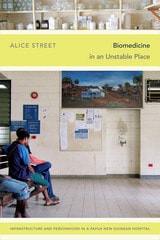
Biomedicine in an Unstable Place
Infrastructure and Personhood in a Papua New Guinean HospitalAlice Street
Duke University Press, 2014
In the hospital's clinics, biomedical practitioners struggle amid severe resource shortages to make the diseased body visible and knowable to the clinical gaze. That struggle is entangled with attempts by doctors, nurses, and patients to make themselves visible to external others—to kin, clinical experts, global scientists, politicians, and international development workers—as socially recognizable and valuable persons. Here hospital infrastructures emerge as relational technologies that are fundamentally fragile but also offer crucial opportunities for making people visible and knowable in new, unpredictable, and powerful ways.

Birth Figures
Early Modern Prints and the Pregnant BodyRebecca Whiteley
University of Chicago Press, 2023
Birth figures are printed images of the pregnant womb, always shown in series, that depict the variety of ways in which a fetus can present for birth. Historian Rebecca Whiteley coined the term and here offers the first systematic analysis of the images’ creation, use, and impact. Whiteley reveals their origins in ancient medicine and explores their inclusion in many medieval gynecological manuscripts, focusing on their explosion in printed midwifery and surgical books in Western Europe from the mid-sixteenth to the mid-eighteenth century. During this period, birth figures formed a key part of the visual culture of medicine and midwifery and were widely produced. They reflected and shaped how the pregnant body was known and treated. And by providing crucial bodily knowledge to midwives and surgeons, birth figures were also deeply entangled with wider cultural preoccupations with generation and creativity, female power and agency, knowledge and its dissemination, and even the condition of the human in the universe.
Birth Figures studies how different kinds of people understood childbirth and engaged with midwifery manuals, from learned physicians to midwives to illiterate listeners. Rich and detailed, this vital history reveals the importance of birth figures in how midwifery was practiced and in how people, both medical professionals and lay readers, envisioned and understood the mysterious state of pregnancy.

Bishops and Bodies
Reproductive Care in American Catholic HospitalsLori Freedman
Rutgers University Press, 2023
One out of every six patients in the United States is treated in a Catholic hospital that follows the policies of the U.S. Conference of Catholic Bishops. These policies prohibit abortion, sterilization, contraception, some treatments for miscarriage and gender confirmation, and other reproductive care, undermining hard-won patients’ rights to bodily autonomy and informed decision-making. Drawing on rich interviews with patients and providers, this book reveals both how the bishops’ directives operate and how people inside Catholic hospitals navigate the resulting restrictions on medical practice. In doing so, Bishops and Bodies fleshes out a vivid picture of how The Church’s stance on sex, reproduction, and “life” itself manifests in institutions that affect us all.

Bitter Roots
The Search for Healing Plants in AfricaAbena Dove Osseo-Asare
University of Chicago Press, 2013

Black Dogs and Blue Words
Depression and Gender in the Age of Self-CareKimberly K. Emmons
Rutgers University Press, 2014
Black Dogs and Blue Words analyzes the rhetoric surrounding depression. Kimberly K. Emmons maintains that the techniques and language of depression marketing strategies--vague words such as "worry," "irritability," and "loss of interest"--target women and young girls and encourage self-diagnosis and self-medication. Further, depression narratives and other texts encode a series of gendered messages about health and illness.
As depression and other forms of mental illness move from the medical-professional sphere into that of the consumer-public, the boundary at which distress becomes disease grows ever more encompassing, the need for remediation and treatment increasingly warranted. Black Dogs and Blue Words demonstrates the need for rhetorical reading strategies as one response to these expanding and gendered illness definitions.
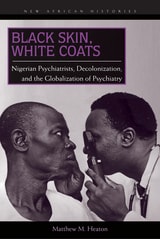
Black Skin, White Coats
Nigerian Psychiatrists, Decolonization, and the Globalization of PsychiatryMatthew M. Heaton
Ohio University Press, 2013
Black Skin, White Coats is a history of psychiatry in Nigeria from the 1950s to the 1980s. Working in the contexts of decolonization and anticolonial nationalism, Nigerian psychiatrists sought to replace racist colonial psychiatric theories about the psychological inferiority of Africans with a universal and egalitarian model focusing on broad psychological similarities across cultural and racial boundaries. Particular emphasis is placed on Dr. T. Adeoye Lambo, the first indigenous Nigerian to earn a specialty degree in psychiatry in the United Kingdom in 1954. Lambo returned to Nigeria to become the medical superintendent of the newly founded Aro Mental Hospital in Abeokuta, Nigeria’s first “modern” mental hospital. At Aro, Lambo began to revolutionize psychiatric research and clinical practice in Nigeria, working to integrate “modern” western medical theory and technologies with “traditional” cultural understandings of mental illness. Lambo’s research focused on deracializing psychiatric thinking and redefining mental illness in terms of a model of universal human similarities that crossed racial and cultural divides.
Black Skin, White Coats is the first work to focus primarily on black Africans as producers of psychiatric knowledge and as definers of mental illness in their own right. By examining the ways that Nigerian psychiatrists worked to integrate their psychiatric training with their indigenous backgrounds and cultural and civic nationalisms, Black Skin, White Coats provides a foil to Frantz Fanon’s widely publicized reactionary articulations of the relationship between colonialism and psychiatry. Black Skin, White Coats is also on the cutting edge of histories of psychiatry that are increasingly drawing connections between local and national developments in late-colonial and postcolonial settings and international scientific networks. Heaton argues that Nigerian psychiatrists were intimately aware of the need to engage in international discourses as part and parcel of the transformation of psychiatry at home.
Blacks, Medical Schools, and Society
James L. Curtis, M.D.
University of Michigan Press, 1971

Blind in Early Modern Japan
Disability, Medicine, and IdentityWei Yu Wayne Tan
University of Michigan Press, 2022
Blood Relations
Transfusion and the Making of Human GeneticsJenny Bangham
University of Chicago Press, 2020
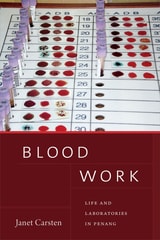
Blood Work
Life and Laboratories in PenangJanet Carsten
Duke University Press, 2019
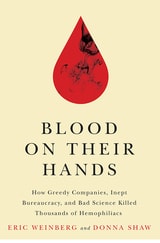
Blood on Their Hands
How Greedy Companies, Inept Bureaucracy, and Bad Science Killed Thousands of HemophiliacsWeinberg, Eric
Rutgers University Press, 2017
Blood on Their Hands is an inspiring, firsthand account of the legal battles fought on behalf of hemophiliacs who were unwittingly infected with tainted blood. As part of the team behind the key class action litigation filed by the infected, young New Jersey lawyer Eric Weinberg was faced with a daunting task: to prove the negligence of a powerful, well-connected global industry worth billions. Weinberg and journalist Donna Shaw tell the dramatic story of how idealistic attorneys and their heroic, mortally-ill clients fought to achieve justice and prevent further infections. A stunning exposé of one of the American medical system’s most shameful debacles, Blood on Their Hands is a rousing reminder that, through perseverance, the victims of corporate greed can sometimes achieve great victory.

Blue Juice
Euthanasia in Veterinary MedicinePatricia Morris
Temple University Press, 2012
Offering a candid behind-the-scenes look at small-animal veterinary practices, Blue Juice explores the emotional and ethical conflicts involved in providing a "good death" for companion animals. Patricia Morris presents a nuanced ethnographic account of how veterinarians manage patient care and client relations when their responsibility shifts from saving an animal's life to negotiating a decision to end it.
Using her own experiences and observations in veterinary settings as well as the voices of seasoned and novice vets, Morris reveals how veterinarians think about euthanasia and why this "dirty work" often precipitates "burnout," moral quandaries, and even tense or emotional interactions with clients. Closely observing these interactions, Morris illuminates the ways in which euthanasia reflects deep and unresolved tension in human-animal relationships.
Blue Juice seeks to understand how practitioners, charged with the difficult task of balancing the interests of animals and their humans, deal with the responsibility of ending their patients' lives.
Bodies Unbound
Gender-Specific Cancer and BiolegitimacyPiper Sledge
Rutgers University Press, 2021
Bodies in Flux
Scientific Methods for Negotiating Medical UncertaintyChrista Teston
University of Chicago Press, 2017
Bodies in Flux explores the inventive ways humans and nonhumans work together to manufacture medical evidence. Each chapter draws on rhetorical theory to investigate a specific scientific method for negotiating medical uncertainty in cancer care, including evidential visualization, assessment, synthesis, and computation. Case studies unveil how doctors rely on visuals when deliberating about a patient’s treatment options, how members of the FDA use inferential statistics to predict a drug’s effectiveness, how researchers synthesize hundreds of clinical trials into a single evidence-based recommendation, and how genetic testing companies compute and commoditize human health. Teston concludes by advocating for an ethic of care that pushes back against the fetishization of certainty—an ethic of care that honors human fragility and bodily flux.
Bodies in Formation
An Ethnography of Anatomy and Surgery EducationRachel Prentice
Duke University Press, 2012

Bodies of Knowledge
The Medicalization of Reproduction in GreeceEugenia Georges
Vanderbilt University Press, 2008
Recipient of the 2006 Norman L. and Roselea J. Goldberg Prize for the best project in the area of medicine.
The author, a second-generation Greek American, returned to Greece with her young daughter to do fieldwork over the course of a decade. Focusing on Rhodes, an island that blends continuity with the past and rapid social change in often unexpected ways, she interviewed over a hundred women, doctors, and midwives about issues of reproduction.
The result is a detailed portrait of how a longstanding system of "local" gynecological and obstetrical knowledge under the control of women was rapidly displaced in the the period following World War II, and how the technologically-intensive biomedical model that took its place in turn assumed its own distinctive signature.
Bodies of Knowledge is a vivid ethnographic study of how a presumably globalizing and homogenizing process like medicalization can be reshaped as women and medical experts alike selectively accept or reject new practices and technologies. Georges found, for example, that women in Rhodes have enthusiastically embraced some new technologies, like fetal imaging during pregnancy, but rejected others, like medical contraception. They are also avid consumers of popular childbirth manuals.
This book is the recipient of the 2006 Norman L. and Roselea J. Goldberg Prize for the best project in the area of medicine.
Bodily Matters
The Anti-Vaccination Movement in England, 1853–1907Nadja Durbach
Duke University Press, 2005
Analyzing historical documents on both sides of the vaccination debate, Durbach focuses on the key events and rhetorical strategies of the resistance campaign. She shows that those for and against the vaccine had very different ideas about how human bodies worked and how best to safeguard them from disease. Individuals opposed to mandatory vaccination saw their own and their children’s bodies not as potentially contagious and thus dangerous to society but rather as highly vulnerable to contamination and violation. Bodily Matters challenges the notion that resistance to vaccination can best be understood, and thus easily dismissed, as the ravings of an unscientific “lunatic fringe.” It locates the anti-vaccination movement at the very center of broad public debates in Victorian England over medical developments, the politics of class, the extent of government intervention into the private lives of its citizens, and the values of a liberal society.

Body Burdens
Toxic Endurance and Decolonial Desire in the French AtlanticVanessa Agard-Jones
Duke University Press, 2027
Body Language
Medicine and the Eighteenth-Century Comic NovelKathleen Tamayo Alves
Bucknell University Press, 2026
Body Language examines the complex intersections of British eighteenth-century comic fiction and medical discourse. By engaging medical writings of renowned and widely-read physicians of the Enlightenment such as John Freind, Thomas Sydenham, Albrecht von Haller, John Whytt, and William Cullen, with novels of humor by Henry Fielding, Tobias Smollett, Laurence Sterne, and Charlotte Lennox, Alves explains how medicine shaped comic language by dramatizing female-specific phenomena like menstruation, hysteria, nervous disorders, and pregnancy. In these novels, the medical belief that women are incapable of bodily self-regulation becomes an imperative for policing women’s bodies and highlights the enduring shortcomings of patriarchal systems. Ultimately, these comic representations offer a counternarrative of women’s bodies, agency, and selfhood, exposing masculine anxieties about the effectiveness of marriage to regulate women’s sexuality.
Published by Bucknell University Press. Distributed worldwide by Rutgers University Press.