Results by title
618 books match the query 'Motion pictures' and 28 start with b
Badmen, Bandits, and Folk Heroes
The Ambivalence of Mexican American Identity in Literature and FilmJuan J. Alonzo
University of Arizona Press, 2009
Alonzo opens his provocative study with a fresh look at the adventure stories of Stephen Crane and the silent Western movies of D. W. Griffith. He also investigates the conflation of the greaser, the bandit, and the Mexican revolutionary into one villainous figure in early Western movies and, more broadly, traces the development of the badman in Westerns. He newly interrogates the writings of Américo Paredes regarding the makeup of Mexican masculinity, and productively trains his analytic eye on the recent films of Jim Mendiola and the contemporary poetry of Evangelina Vigil.
Throughout Badmen, Bandits, and Folk Heroes, Alonzo convincingly demonstrates how fiction and films that formerly appeared one-dimensional in their treatment of Mexicans and Mexican Americans actually offer surprisingly multifarious and ambivalent representations. At the same time, his valuation of indeterminacy, contingency, and hybridity in contemporary cultural production creates new possibilities for understanding identity formation.
Banned in Kansas
Motion Picture Censorship, 1915-1966Gerald R. Butters, Jr.
University of Missouri Press, 2016
In 1915, Kansas became one of only a handful of states to establish its own film censorship board. The Kansas board controlled screen content in the state for more than fifty years, yet little is known about its activities. This first book-length study of state film censorship examines the unique political, social, and economic factors that led to its implementation in Kansas, examining why censorship legislation was enacted, what the attitudes of Kansans were toward censorship, and why it lasted for half a century.
Cinema historian Gerald Butters places the Kansas Board of Review’s attempts to control screen content in the context of nationwide censorship efforts during the early part of the twentieth century. He tells how factors such as Progressivism, concern over child rearing, and a supportive press contributed to censorship, and he traces the board’s history from the problems posed by the emergence of “talkies” through changing sexual mores in the 1920s to challenges to its power in the 1950s.
In addition to revealing the fine points of film content deemed too sensitive for screening, Butters describes the daily operations of the board, illustrating the difficulties it encountered as it wrestled not only with constantly shifting definitions of morality but also with the vagaries of the political and legal systems. Stills from motion pictures illustrate the type of screen content the board attempted to censor.
As Kansas faced the march of modernity, even state politicians began to criticize film censorship, and Butters tells how by the 1960s the board was fighting to remain relevant as film companies increasingly challenged its attempts to control screen content. Banned in Kansas weaves a fascinating tale of the enforcement of public morality, making it a definitive study for cinema scholars and an entertaining read for film buffs.
Before Bemberg
Women Filmmakers in ArgentinaMatt Losada
Rutgers University Press, 2020
Watch some of the films discussed in the book with English subtitles (https://www.youtube.com/channel/UCF_6F4am5024rklIWwExUVA?view_as=subscriber).
Believable Impossibilities
Race, Testimony, and the Horror FilmChristopher Bracken
University of Chicago Press, 2026
A gripping exploration of belief in the impossible through horror film, informed by philosophy, history, and anthropology.
What if aliens crash-landed at an old mine? What if you discovered your spouse is protecting you from witchcraft? What if you received messages from the dead? You wouldn’t believe it, of course—but you might investigate. As Christopher Bracken shows through this gripping exploration of the horror film, this is the first step toward believing the impossible.
In Believable Impossibilities, Bracken examines the genre in which we are most frequently called on to believe something seemingly impossible has unsettled our ordinary lives—the horror story. Whether on the page or on screen, horror draws us into narratives in which a community of nonbelievers are suddenly confronted with the challenge of believing in events and experiences that radically break with expectation. As Bracken argues, questions of belief often intersect with issues of race and Indigeneity because, historically, belief in the impossible has been racially coded as a trait of “primitive” thought. Drawing on philosophy, anthropology, and psychoanalysis, Bracken explores the fictional spaces in which the paranormal and supernatural challenge and defy our social bonds.
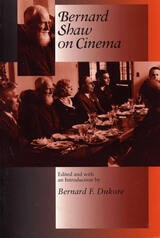
Bernard Shaw on Cinema
Edited by Bernard F. Dukore
Southern Illinois University Press, 1997
With his customary wit and quite often with remarkable prescience, Bernard Shaw maintained a dialogue on cinema that ran almost from the infancy of the industry in 1908 until his death in 1950. Bernard F. Dukore presents the first collection of Bernard Shaw’s writings and oral statements about cinema. Of the more than one hundred comments Dukore has selected, fifty-nine—more than half—are new to today’s readers. Twelve are previously unpublished, one is published in full for the first time, and forty-six appear in a collected edition of Shaw’s writings for the first time since their publication in newspapers and magazines.
Very early in the life of cinema, Shaw perceived that as an invention, movies would be more momentous than the printing press because they appealed to the illiterate as well as the literate, to the manual laborer at the end of an exhausting day as well as to the person with more leisure. He predicted that cinema would form people’s minds and shape their conduct. He recognized that cinema’s "colossal proportions make mediocrity compulsory" by leveling art and life down to the blandest morality and to the lowest common denominator of potential audiences throughout the world.
By 1908, Shaw was familiar with experiments synchronizing movies and sound. When talkies arrived, he discerned that they would precipitate major changes in acting, writing, and economics. He also saw how they would affect live theatre: "The theatre may survive as a place where people are taught to act," he said in 1930, "but apart from that there will be nothing but ‘talkies’ soon." At that time, few people in the theatrical profession were making such prophecies, at least not in public.
Best Years
Going to the Movies, 1945-1946Charles Affron and Mirella Jona Affron
Rutgers University Press, 2009
Best Years is a panoramic study, shining light on this critical juncture in American historyand the history of American cinemaùthe end of World War II (1945) and a year of unprecedented success in Hollywood's "Golden Age" (1946). This unique time, the last year of war and the first full year of peace, provides a rich blend of cinema genres and typesùfrom the battlefront to the home front, the peace film to the woman's film, psychological drama, and the period's provocative new style, film noir.
Best Years focuses on films that were famous, infamous, forgotten, and unforgettable. Big budget A-films, road shows, and familiar series share the spotlight. From Bergman and Grant in Notorious to Abbott and Costello in Lost in a Harem, Charles Affron and Mirella Jona Affron examine why the bond between screen and viewer was perhaps never tighter. Paying special attention to the movie-going public in key cities--Atlanta, New York, Boston, Honolulu, and Chicago--this ambitious work takes us on a cinematic journey to recapture a magical time.
Between Film and Screen
Modernism's Photo SynthesisGarrett Stewart
University of Chicago Press, 2000
In this ambitious, sophisticated study, Garrett Stewart discusses the photogram not only as the undertext of screen images but also in its unexpected links to the early modernist writings of James, Conrad, Forster, Joyce, and others. Engaging the work of such media theorists as Eisenstein, Benjamin, Kracauer, Bazin, Baudry, Cavell, Deleuze, and Jameson, this study pursues the suppressed photogram as it ripples the narrative surface of several dozen films from Lang and Chaplin through Bergman, Coppola, and beyond. To locate the exact repercussions of such effects, Stewart includes over three hundred frame enlargements drawn from genres as different as science fiction, film noir, and recent Victorian costume drama.

Beyond Auteurism
New Directions in Authorial Film Practices in France, Italy and Spain since the 1980sRosanna Maule
Intellect Books, 2008
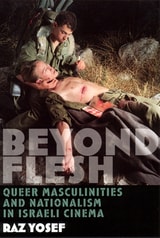
Beyond Flesh
Queer Masculinities and Nationalism in Israeli CinemaYosef, Raz
Rutgers University Press, 2004
Zionism was not only a political and ideological program but also a sexual one. The liberation of Jews and creation of a new nation were closely intertwined with a longing for the redemption and normalization of the Jewish male body. That body had to be rescued from anti-Semitic, scientific-medical discourse associating it with disease, madness, degeneracy, sexual perversity, and femininityeven with homosexuality. The Zionist movement was intent on transforming the very nature of European Jewish masculinity as it had existed in the diaspora. Zionist/Israeli films expressed this desire through visual and narrative tropes, enforcing the image of the hypermasculine, colonialist-explorer and militaristic nation-builder, an image dependent on the homophobic repudiation of the "feminine" within men.
The creation of a new heterosexual Jewish man was further intertwined with attitudes on the breeding of children, bodily hygiene, racial improvement, and Orientalist perspectiveswhich associated the East, and especially Eastern bodies, with unsanitary practices, plagues, disease, and sexual perversity. By stigmatizing Israels Eastern populations as agents of death and degeneration, Zionism created internal biologized enemies, against whom the Zionist society had to defend itself. In the name of securing the life and reproduction of the new Ashkenazi Jewry, Israeli society discriminated against both its internal enemies, the Palestinians, and its own citizens, the Mizrahim (Oriental Jews).
Yosefs critique of the construction of masculinities and queerness in Israeli cinema and culture also serves as a model for the investigation of the role of male sexuality within national culture in general.

Beyond the Stars 4
Locales in American Popular FilmPaul Loukides
University of Wisconsin Press, 1990
In this volume of the Beyond the Stars series, the subject of the various individual essays are discrete conventions of movie locales, but the subject of the volume as a whole—as with the other books in the series—is the viability of film convention studies as a tool for the study of film and American culture.
Beyond the Stars 5
Themes and Ideologies in American Popular FilmUniversity of Wisconsin Press, 1990
Beyond the Stars
Stock Characters in American Popular FilmUniversity of Wisconsin Press, 1990

Beyond the Subtitle
Remapping European Art CinemaMark Betz
University of Minnesota Press, 2009
A provocative rethinking of national cinema, authorship, and the discipline of film studies
Examining European art films of the 1950s and 1960s, Mark Betz argues that it is time for film analysis to move beyond prevailing New Wave historiography, mired in outdated notions of nationalism and dragged down by decades of auteurist criticism. Focusing on the cinemas of France and Italy, Betz reveals how the flowering of European art films in the postwar era is inseparable from the complex historical and political frameworks of the time.
Remapping the practices and paradigms of film history, Beyond the Subtitle calls into question the concept of national cinema and explores the largely neglected subjects of subtitling, dubbing, and art film coproductions. Betz also analyzes the iconic figure of the “wandering woman,” or flanêuse, who appears in many of the films under consideration, in light of the postwar boom, modernization, and decolonization. Finally, he rescues the omnibus films to show the need for a new film studies approach. Beyond the Subtitle demonstrates how the geopolitical and institutional contexts that gave rise to these films and to academic film studies should be incorporated into future analysis in order to gain new insight into debates on race, gender, and imperialism.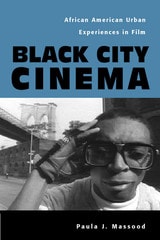
Black City Cinema
African American Urban Experiences In FilmPaula J. Massood
Temple University Press, 2003
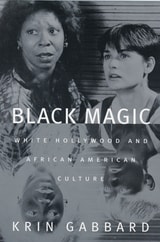
Black Magic
White Hollywood and African American CultureKrin Gabbard
Rutgers University Press, 2004
As Krin Gabbard brilliantly reveals in Black Magic, we duly recognize the cultural heritage of African Americans in literature, music, and art, but there is a disturbing pattern in the roles that blacks are asked to play-particularly in the movies. Many recent films, including The Matrix, Fargo, The Green Mile, Ghost, The Talented Mr. Ripley, Pleasantville, The Bridges of Madison County, and Crumb, reveal a fascination with black music and sexuality even as they preserve the old racial hierarchies. Quite often the dependence on African American culture remains hidden-although it is almost perversely pervasive. In the final chapters of Black Magic, Gabbard looks at films by Robert Altman and Spike Lee that attempt to reverse many of these widespread trends.
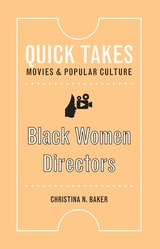
Black Women Directors
Christina N. Baker
Rutgers University Press, 2022
Black women have long recognized the power of film for storytelling. For far too long, however, the cultural and historical narratives about film have not accounted for the contributions of Black women directors. This book remedies this omission by highlighting the trajectory of the culturally significant work of Black women directors in the United States, from the under-examined pioneers of the silent era, to the documentarians who sought to highlight the voices and struggles of Black women, and the contemporary Black women directors in Hollywood. Applying a Black feminist perspective, this book examines the ways that Black women filmmakers have made a way for themselves and their work by resisting the dominant cultural expectations for Black women and for the medium of film, as a whole.
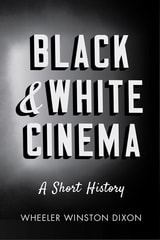
Black and White Cinema
A Short HistoryWheeler Winston Dixon
Rutgers University Press, 2015
Black and White Cinema is the first study to consider the use of black-and-white as an art form in its own right, providing a comprehensive and global overview of the era when it flourished, from the 1900s to the 1960s. Acclaimed film scholar Wheeler Winston Dixon introduces us to the masters of this art, discussing the signature styles and technical innovations of award-winning cinematographers like James Wong Howe, Gregg Toland, Freddie Francis, and Sven Nykvist. Giving us a unique glimpse behind the scenes, Dixon also reveals the creative teams—from lighting technicians to matte painters—whose work profoundly shaped the look of black-and-white cinema.
More than just a study of film history, this book is a rallying cry, meant to inspire a love for the artistry of black-and-white film, so that we might work to preserve this important part of our cinematic heritage. Lavishly illustrated with more than forty on-the-set stills, Black and White Cinema provides a vivid and illuminating look at a creatively vital era.
Bombay Cinema
An Archive of the CityRanjani Mazumdar
University of Minnesota Press, 2007
In this analysis of the cinematic city, Mazumdar reveals a complex postnationalist world, convulsed by the social crisis of the 1970s and transformed by the experience of globalization in the 1990s. She argues that the upheaval of postcolonial nationalism led to Bombay cinema’s articulation of urban life in entirely new terms. Specifically, the place of the village in the imaginary constitution of anticolonial nationalism gave way to a greater acknowledgment, even centrality, of urban space. Bombay Cinema takes the reader on an inventive journey through a cinematic city of mass crowds, violence, fashion, architectural fantasies, and subcultural identities. Moving through the world of gangsters and vamps, families and drifters, and heroes and villains, Bombay Cinema explores an urban landscape marked by industrial decline, civic crisis, working-class disenchantment, and diverse street life.Combining the anecdotal with the theoretical, the philosophical with the political, and the textual with the historical, Bombay Cinema leads the reader into the heart of the urban labyrinth in India, revising and deepening our understanding of both the city and the cinema.
"A landmark study—carefully researched, well organized and offering refreshingly uncondescending and strikingly insightful discussions of mainstream films—that deserves to be read by anyone interested in India's popular cinema or its contemporary urban life." —Journal of Asian Studies
"Bombay Cinema is an exciting and important contribution to a field that has, to date, been under researched and under theorized. Lively, provocative and richly suggestive, it will also serve as a surefire incentive to watch those films all over again." —Screen
"Here, at last, is a book length study on Cinema in India that does not get locked into a dance of hermetic closure between what transpires on screen and a set of stock off screen textual and cultural references, but more importantly, walks the streets where the films are set, looks at shop windows, publicity material, costumes, fashion, architecture, telecommunications and the concrete materiality that surrounds the film object." —Seminar
"Bombay Cinema is lucid, provocative, stylish and substantial. It is an illuminating scholarly study that spares no effort to bring Bombay cinema out of the academic closet." —The Book Review India
"Departing from the obsession that Film Studies in India has displayed with the idea of cinema as a national allegory, the book convincingly argues for the need to examine the city's hidden archive as one that cannot be subsumed within the sign of the national." —Biblio
"Mazumdar has a great capacity to discuss Indian cinema, with a brilliant grasp of its political, historical, and aesthetic developments, but equally she is well attuned to the interests and ruptures in the academic discourse of film and cinema studies."—Film International
"Mazumdar's experience as a filmmaker allowed her to offer significant readings of not just the narratives and character development in the films, but of the cinematography, mise-en-scene, and other technical and performance aspects of production." —Journal of Popular Culture
"At once about Hindi films, spatial practices, urban modernity and globalization . . . the strength of Bombay Cinema lies in bringing all of them together in a productive conversation.” —Economic and Political Weekly
"Bombay Cinema is methodologically challenging in its deployment of moments rather than discursiveformations of film as text. The book also refuses to read film alone, but interprets the medium alongside the detailed insights of people involved in making them, and with the recent history of Bombay, within which the film industry is located. In Mazumdar's evocative reading of the films she engages with, the cinematic city becomes the space of critique of the nation, the site of the ruin of the modern nationalist project." —Contemporary South Asia
Border Bandits
Hollywood on the Southern FrontierBy Camilla Fojas
University of Texas Press, 2008
The southern frontier is one of the most emotionally charged zones in the United States, second only to its historical predecessor and partner, the western frontier. Though they span many genres, border films share common themes, trace the mood swings of public policy, and shape our cultural agenda.
In this examination, Camilla Fojas studies how major Hollywood films exploit the border between Mexico and the United States to tell a story about U.S. dominance in the American hemisphere. She charts the shift from the mythos of the open western frontier to that of the embattled southern frontier by offering in-depth analyses of particular border films, from post-World War II Westerns to drug-trafficking films to contemporary Latino/a cinema, within their historical and political contexts.
Fojas argues that Hollywood border films do important social work by offering a cinematic space through which viewers can manage traumatic and undesirable histories and ultimately reaffirm core "American" values. At the same time, these border narratives delineate opposing values and ideas.
Latino border films offer a critical vantage onto these topics; they challenge the presumptions of U.S. nationalism and subsequent cultural attitudes about immigrants and immigration, and often critically reconstruct their Hollywood kin.
By analyzing films such as Duel in the Sun, The Wild Bunch, El Norte, The Border, Traffic, and Brokeback Mountain, Fojas demands that we reexamine the powerful mythology of the Hollywood borderlands. This detailed scrutiny recognizes that these films are part of a national narrative comprised of many texts and symbols that create the myth of the United States as capital of the Americas.
Border Cinema
Reimagining Identity through AestheticsEdited by Monica Hanna and Rebecca A. Sheehan
Rutgers University Press, 2019
Brain Is The Screen
Deleuze and the Philosophy of CinemaGregory Flaxman
University of Minnesota Press, 2000
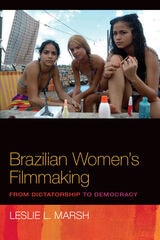
Brazilian Women's Filmmaking
From Dictatorship to DemocracyLeslie Marsh
University of Illinois Press, 2012
At most recent count, there are no fewer than forty-five women in Brazil directing or codirecting feature-length fiction or documentary films. In the early 1990s, women filmmakers in Brazil were credited for being at the forefront of the rebirth of filmmaking, or retomada, after the abolition of the state film agency and subsequent standstill of film production. Despite their numbers and success, films by Brazilian women directors are generally absent from discussions of Latin American film and published scholarly works.
Broadcasting Hollywood
The Struggle over Feature Films on Early TVJennifer Porst
Rutgers University Press, 2021
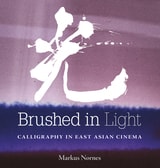
Brushed in Light
Calligraphy in East Asian CinemaMarkus Nornes
University of Michigan Press, 2021
Drawing on a millennia of calligraphy theory and history, Brushed in Light examines how the brushed word appears in films and in film cultures of Korea, Japan, Taiwan, Hong Kong, and PRC cinemas. This includes silent era intertitles, subtitles, title frames, letters, graffiti, end titles, and props. Markus Nornes also looks at the role of calligraphy in film culture at large, from gifts to correspondence to advertising. The book begins with a historical dimension, tracking how calligraphy is initially used in early cinema and how it is continually rearticulated by transforming conventions and the integration of new technologies. These chapters ask how calligraphy creates new meaning in cinema and demonstrate how calligraphy, cinematography, and acting work together in a single film. The last part of the book moves to other regions of theory. Nornes explores the cinematization of the handwritten word and explores how calligraphers understand their own work.
Brutal Vision
The Neorealist Body in Postwar Italian CinemaKarl Schoonover
University of Minnesota Press, 2012
Film history identifies Italian neorealism as the exemplar of national cinema, a specifically domestic response to wartime atrocities. Brutal Vision challenges this orthodoxy by arguing that neorealist films—including such classics as Rome, Open City; Paisan; Shoeshine; and Bicycle Thieves—should be understood less as national products and more as complex agents of a postwar reorganization of global politics. For these films, cinema facilitates the liberal humanist sympathy required to usher in a new era of world stability.
In his readings of crucial films and newly discovered documents from the archives of neorealism’s international distribution, Karl Schoonover reveals how these films used images of the imperiled body to reconstitute the concept of the human and to recalibrate the scale of human community. He traces how Italian neorealism emerges from and consolidates the transnational space of the North Atlantic, with scenarios of physical suffering dramatizing the geopolitical stakes of a newly global vision. Here we see how—in their views of injury, torture, and martyrdom—these films propose a new mode of spectating that answers the period’s call for extranational witnesses, makes the imposition of limited sovereignty palatable, and underwrites a new visual politics of liberal compassion that Schoonover calls brutal humanism.
These films redefine moviegoing as a form of political action and place the filmgoer at the center of a postwar geopolitics of international aid. Brutal Vision interrogates the role of neorealism’s famously heart-wrenching scenes in a new global order that requires its citizenry to invest emotionally in large-scale international aid packages, from the Marshall Plan to the liberal charity schemes of NGOs. The book fundamentally revises ideas of cinematic specificity, the human, and geopolitical scale that we inherit from neorealism and its postwar milieu—ideas that continue to set the terms for political filmmaking today.

Building Character
The Art and Science of CastingAmy Cook
University of Michigan Press, 2018
Business Plans for Filmmakers
John W. Cones
Southern Illinois University Press, 2010
The practical and legal aspects of writing a business plan for a film venture can be daunting to navigate without a firm grasp of know-how. With this in mind, John W. Cones's Business Plans for Filmmakers arms independent movie-makers and students with everything they need to successfully tackle the confusing intersection of law, business, and art when creating a business plan for a movie. This pragmatic volume offers plenty of examples and strategies for success, sharing straightforward insight into some of the toughest challenges independent filmmakers face when encountering these documents.
With simple yet thorough detail and clarity, Cones outlines the legal requirements affecting movie proposals, including ways to evaluate the necessity for a business plan or a securities disclosure document, as well as the legal definition of "an active investor." Also addressed are the numerous subjects filmmakers and students must consider before a film offering, including the efficacy of a business plan to fund the development, production, and distribution phases of a film; common elements of fraud of which fledgling filmmakers should beware; the intricacies of revenue sharing; and how to render financial projections. Cones also imparts useful distinctions between such industry terms as "company financing" versus "project financing," along with many others.
This bookalso includes in-depth guidance through the murky paths of investor analysis and key strategies to find and attract parties interested in financing film. Drawing upon his many years as a securities and entertainment attorney, and his experiences advising independent film producers, Cones offers the tools necessary not only to understand investors' motivations but also to use that knowledge to the filmmaker's advantage. Also provided are perceptive studies of the investment vehicles commonly used in business plans seeking investors, with analysis of each method's pros and cons. Throughout the volume, Cones uses sample plans to offer a real-world grasp of the intricacies of the business.
In the business of this art, knowledge is power. Business Plans for Filmmakers dispels the myths and misinformation circulating among filmmakers to provide accurate and useful advice.

Béla Tarr, the Time After
Jacques Rancière
University of Minnesota Press, 2013
Exploring the concept of time in the work of one of Europe’s greatest filmmakers
From Almanac of Fall (1984) to The Turin Horse (2011), renowned Hungarian filmmaker Béla Tarr has followed the collapse of the communist promise. The “time after” is not the uniform and morose time of those who no longer believe in anything. It is the time when we are less interested in histories and their successes or failures than we are in the delicate fabric of time from which they are carved. It is the time of pure material events against which belief will be measured for as long as life will sustain it.