126 books match the query 'New England' and 9 start with b
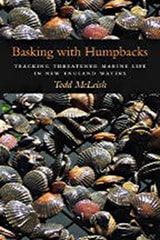
cover of Basking with Humpbacks: Tracking Threatened Marine Life in New England Waters

Basking with Humpbacks

Tracking Threatened Marine Life in New England Waters

Todd McLeish

University Press of New England, 2016
Basking with Humpbacks offers an exciting, close-up look at some of the most rare marine creatures living in New England waters and examines the complex threats they face. In eleven chapters, each featuring a different animal or plant, McLeish takes readers on an entertaining journey with scientists who study these species. The author follows basking sharks—the second largest fish in the sea—in their hunt for food, helps harbor porpoises escape from fishing nets, snorkels in search of wild bay scallops, and learns how the blood of horseshoe crabs is used in medical research. Along the way he visits the islands where rare seabirds nest, tracks humpback whales on their long migration to the Gulf of Maine, and watches as stranded leatherback turtles are returned to the ocean. These first-person experiences are coupled with interviews with biologists and other experts who explain in their own words the important role these creatures play in the marine ecosystem and what steps must be taken to protect them. In examining the natural history of selected plants and animals, McLeish also discusses the physics of waves and currents, the geology of the seabed, the chemistry of sea water, and other natural factors that influence the survival of New England marine life.
[more]
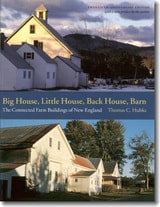
cover of Big House, Little House, Back House, Barn: The Connected Farm Buildings of New England

Big House, Little House, Back House, Barn

The Connected Farm Buildings of New England

Thomas C. Hubka

University Press of New England, 2004
“Big house, little house, back house, barn”—this rhythmic cadence was sung by nineteenth-century children as they played. It also portrays the four essential components of the farms where many of them lived. The stately and beautiful connected farm buildings made by nineteenth-century New Englanders stand today as a living expression of a rural culture, offering insights into the people who made them and their agricultural way of life. A visual delight as well as an engaging tribute to our nineteenth-century forebears, this book has become one of the standard works on regional farmsteads in America.
[more]
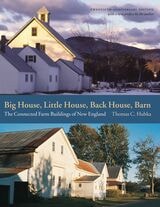
cover of Big House, Little House, Back House, Barn: The Connected Farm Buildings of New England

Big House, Little House, Back House, Barn

The Connected Farm Buildings of New England

Thomas C. Hubka

Brandeis University Press, 2022

A classic work on farm buildings made by nineteenth-century New Englanders refreshed with a new introduction.
 
Big House, Little House, Back House, Barn portrays the four essential components of the stately and beautiful connected farm buildings made by nineteenth-century New Englanders that stand today as a living expression of a rural culture, offering insights into the people who made them and their agricultural way of life. A visual delight as well as an engaging tribute to our nineteenth-century forebears, this book, first published nearly forty years ago, has become one of the standard works on regional farmsteads in America. This new edition features a new preface by the author.
[more]
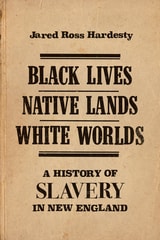
cover of Black Lives, Native Lands, White Worlds: A History of Slavery in New England

Black Lives, Native Lands, White Worlds

A History of Slavery in New England

Jared Ross Hardesty

University of Massachusetts Press, 2019

Shortly after the first Europeans arrived in seventeenth-century New England, they began to import Africans and capture the area's indigenous peoples as slaves. By the eve of the American Revolution, enslaved people comprised only about 4 percent of the population, but slavery had become instrumental to the region's economy and had shaped its cultural traditions. This story of slavery in New England has been little told.

In this concise yet comprehensive history, Jared Ross Hardesty focuses on the individual stories of enslaved people, bringing their experiences to life. He also explores larger issues such as the importance of slavery to the colonization of the region and to agriculture and industry, New England's deep connections to Caribbean plantation societies, and the significance of emancipation movements in the era of the American Revolution. Thoroughly researched and engagingly written, Black Lives, Native Lands, White Worlds is a must-read for anyone interested in the history of New England.
[more]
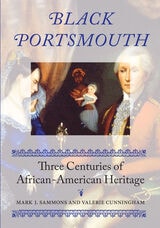
cover of Black Portsmouth: Three Centuries of African-American Heritage

Black Portsmouth

Three Centuries of African-American Heritage

Mark J. Sammons

University of New Hampshire Press, 2004

Few people think of a rich Black heritage when they think of New England. In the pioneering book Black Portsmouth, Mark J. Sammons and Valerie Cunningham celebrate it, guiding the reader through more than three centuries of New England and Portsmouth social, political, economic, and cultural history as well as scores of personal and site-specific stories. 

Here, we meet such Africans as the likely negro boys and girls from Gambia, who debarked at Portsmouth from a slave ship in 1758, and Prince Whipple, who fought in the American Revolution. We learn about their descendants, including the performer Richard Potter and John Tate of the People's Baptist Church, who overcame the tragedies and challenges of their ancestors' enslavement and subsequent marginalization to build communities and families, found institutions, and contribute to their city, region, state, and nation in many capacities. Individual entries speak to broader issues—the anti-slavery movement, American religion, and foodways, for example. We also learn about the extant historical sites important to Black Portsmouth—including the surprise revelation of an African burial ground in October 2003—as well as the extraordinary efforts being made to preserve remnants of the city's early Black heritage.
[more]
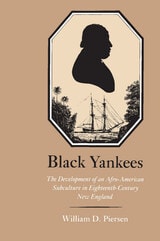
cover of Black Yankees: The Development of an Afro-American Subculture in Eighteenth-Century New England

Black Yankees

The Development of an Afro-American Subculture in Eighteenth-Century New England

William D. Piersen

University of Massachusetts Press, 1988

This book examines the development of an Afro-American subculture in eighteenth-century New England. Piersen concerns himself not with the machinery of slave control or the political and social disabilities of bondage, but with the processes of cultural change and creation from the black bondsman's point of view. What was it like to be an African immigrant in colonial New England? What attitudes and assumptions underlay the Afro-American response to Yankee culture? What does the development within the confines of a predominantly white and ethnocentric New England of an Afro-American folk culture in religion, public rituals, folk arts and crafts, social mores, and daily behavior say about the creation of American culture?

On the face of it, the master class called the tunes and slaves danced the beat. Blacks who were taken into New England's bondage were clearly engulfed in a pervasive, narrow-minded Euro-American society that had no interest in fostering Afro-American autonomy. The New England experience was often cruel, and the numbers alone suggest it was among the most unequal of black/white cultural contacts in the New World. Nonetheless, despite the strictures of bondage, the black Yankees of eighteenth-century New England created a sustaining folk culture of their own.

[more]
cover of Bluejackets in the Blubber Room: A Biography of the William Badger,1828-1865

Bluejackets in the Blubber Room

A Biography of the William Badger,1828-1865

Kurtz, Peter

University of Alabama Press, 2013

Explores key events in US maritime history from the 1820s to the end of the Civil War through the biography of the sailing ship William Badger
 
Taking a biographical approach to his subject, Peter Kurtz describes three phases of the life of the William Badger, a sailing ship with a long and exemplary life on the sea: first as a merchant ship carrying raw materials and goods between New England, the US South, and Europe; second as a whaling ship; and finally as a supply ship providing coal and stores for the North Atlantic Blockading Squadron in Beaufort, North Carolina, during the Civil War.
 
Kurtz begins Bluejackets in the Blubber Room by exploring early American shipbuilding and shipbuilders in the Piscataqua region of Maine and New Hampshire and the kinds of raw materials harvested and used in making the wooden sailing ships of the time. After its construction, the Badger became part of the key economic trade between New England, the US South, and Europe. The ship carried raw materials such as timber from New England to New Orleans and subsequently cotton from New Orleans to Spain and Liverpool, England. Using ship logs, sailors’ accounts, and other primary sources, Kurtz delves into both the people and the economics of this critical “cotton triangle” trade.
 
Following service as a merchant ship, the Badger became a whaling ship, carrying its New England–based crew as far as the South Pacific. Kurtz presents a colorful story of life aboard a whaling ship and in the whaling towns ranging from Lynn, Massachusetts, to Cape Leeuwin, Australia. Finally, Kurtz describes the last phase of the Badger’s life as a key player as a supply ship in the Union Navy’s blockade effort. Although not the most dramatic duty a sailor could have, blockade supply nevertheless was critical to the United States’ prosecution of the Civil War and eventual victory. Kurtz examines the decision-making involved in procuring such ships and their crew, notably “refugees” and escaped slaves known as “contrabands.”
[more]
cover of Breaking the Banks: Representations and Realities in New England Fisheries, 1866-1966

Breaking the Banks

Representations and Realities in New England Fisheries, 1866-1966

Matthew McKenzie

University of Massachusetts Press, 2018

With skillful storytelling, Matthew McKenzie weaves together the industrial, cultural, political, and ecological history of New England's fisheries through the story of how the Boston haddock fleet—one of the region's largest and most heavily industrialized—rose, flourished, and then fished itself into near oblivion before the arrival of foreign competition in 1961. This fleet also embodied the industry's change during this period, as it shucked its sail-and-oar, hook-and-line origins to embrace mechanized power and propulsion, more sophisticated business practices, and political engagement.

Books, films, and the media have long portrayed the Yankee fisherman's hard-scrabble existence, as he faced brutal weather on the open seas and unnecessary governmental restrictions. As McKenzie contends, this simplistic view has long betrayed commercial fisheries' sophisticated legislative campaigns in Washington, DC, as they sought federal subsidies and relief and, eventually, fewer constricting regulations. This clash between fisheries' representation and their reality still grips fishing communities today as they struggle to navigate age-old trends of fleet consolidation, stock decline, and intense competition.
[more]
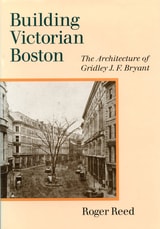
cover of Building Victorian Boston: The Architecture of Gridley J.F. Bryant

Building Victorian Boston

The Architecture of Gridley J.F. Bryant

Roger G. Reed

University of Massachusetts Press, 2007

Much of Boston's rich heritage of Victorian buildings dates from the mid-nineteenth century when Gridley James Fox Bryant (1816–1899) dominated the profession of architecture in the city. At that time, Boston was undergoing a transformation from a quaint post-colonial town to a rapidly expanding Victorian metropolis. Bryant led this transformation, providing an important link between the earlier architecture of Charles Bulfinch and Alexander Parris and the later work of such practitioners as H. H. Richardson and Peabody & Stearns.

In Building Victorian Boston, Roger Reed focuses on representative projects by Bryant, presenting them in a chronological narrative that both illuminates the trajectory of his career and creates a portrait of the profession of architecture during a defining period of New England history. Bryant designed more major buildings in Boston from 1840 to 1880 than any other architect. He also undertook commissions throughout New
England, especially in towns linked to Boston by newly constructed railroad lines. In many ways, his practice presaged aspects of modern architectural firms. His ability to work with a variety of designers, his expertise in construction management, and his exceptional talent for self-promotion all contributed to his success. Although by the time of his death his work was no longer fashionable, newspaper accounts noted the passing of the "Famed Bostonian" and "Great Builder" whose career had had such a dramatic impact on the face of the city.

For this volume, Reed has tracked down hundreds of Bryant's drawings as well as specifications, letters, newspaper articles, published renderings, and historical photographs. These materials are amply represented in this book, the definitive study of a quintessential Victorian architect.
[more]