Results by title
1427 books match the query 'Politics' and 55 start with b
BEYOND THE REPRODUCTIVE BODY
Politics of Women’s Health & Work in Early Victorian EnglandMarjorie Levine-Clark
The Ohio State University Press, 2004

Bad Water
Nature, Pollution, and Politics in Japan, 1870-1950Robert Stolz
Duke University Press, 2014
Badiou and Politics
Bruno Bosteels
Duke University Press, 2011
Bandits, Peasants, and Politics
The Case of "La Violencia" in ColombiaBy Gonzalo Sánchez and Donny Meertens
University of Texas Press, 2001
The years 1945-1965 saw heavy partisan conflict in the rural areas of Colombia, with at least 200,000 people killed. This virtual civil war began as a sectarian conflict between the Liberal and Conservative parties, with rural workers (campesinos) constituting the majority of combatants and casualties. Yet La Violencia resists classification as a social uprising, since calls for social reform were largely absent during this phase of the struggle. In fact, once the elite leadership settled on a power-sharing agreement in 1958, the conflict appeared to subside.
This book focuses on the second phase (1958-1965) of the struggle, in which the social dimensions of the conflict emerged in a uniquely Colombian form: the campesinos, shaped by the earlier violence, became social and political bandits, no longer acting exclusively for powerful men above them but more in defense of the peasantry. In comparing them with other regional expressions of bandolerismo, the authors weigh the limited prospects for the evolution of Colombian banditry into full-scale social revolution.
Published originally in 1983 as Bandoleros, gamonales y campesinos and now updated with a new epilogue, this book makes a timely contribution to the discourse on social banditry and the Colombian violencia. Its importance rests in the insights it provides not only on the period in question but also on Colombia's present situation.

Battering States
The Politics of Domestic Violence in IsraelMadelaine Adelman
Vanderbilt University Press, 2017
The politics of domestic violence create novel entry points to understanding how, although women may be vulnerable to gender-based violence, they do not necessarily share the same kind of belonging to the state. This means that markers of identity and power, such as gender, nationality, ethnicity, religion and religiosity, and socio-economic and geographic location, matter when it comes to safety and pathways to justice.
The study centers on Israel, where a number of factors bring connections between the cultural politics of the state and domestic violence into stark relief: the presence of a contentious multinational and multiethnic population; competing and overlapping sets of religious and civil laws; a growing gap between the wealthy and the poor; and the dominant presence of a security state in people's everyday lives. The exact combination of these factors is unique to Israel, but they are typical of states with a diverse population in a time of globalization. In this way, the example of Israel offers insights wherever the political and personal impinge on one another.
Beaches, Ruins, Resorts
The Politics of Tourism in the Arab WorldWaleed Hazbun
University of Minnesota Press, 2008
How Arab states use tourism for their own ends
Despite being viewed as a dangerous region to visit, leisure travel across the Middle East has thrived even in the post–9/11 era. In Beaches, Ruins, Resorts, Waleed Hazbun investigates this overlooked industry to show how tourism is shaping the economic development and international relations of the region in dramatic ways.
Following Europeans seeking Mediterranean beaches, Israelis crossing into Jordan as leisure tourists, and visitors discovering Dubai, Hazbun offers an original perspective on the Middle East and North Africa and challenges common portrayals of Arab nations as disconnected from the rest of the world. Rather, Hazbun reveals how government elites are using tourism to take part in globalization while, at the same time, crafting it to serve state interests. Paradoxically, the expansion of travel in the region has allowed states to encourage integration into the global economy while simultaneously expanding control over their society. Beaches, Ruins, Resorts also explores tourism’s broader beneficial effects on the region, such as aiding the peace process between Israel and Jordan, fostering Tunisia’s economic connection with Europe, and transforming Arab cities into hubs of international travel.Hazbun tells the new and surprising story of how the draw of glittering beaches, luxury hotels and resorts, and sightseeing at ancient ruins impacts the Arab world—promoting both economic globalization and political authoritarianism. In doing so, Beaches, Ruins, Resorts provides a much-needed guide for those interested in the changing nature of this fraught region and its place in the world.
Beauvoir and Her Sisters
The Politics of Women's Bodies in FranceSandra Reineke
University of Illinois Press, 2011
Becoming Refugee American
The Politics of Rescue in Little SaigonPhuong Nguyen
University of Illinois Press, 2017
Phuong Tran Nguyen examines the phenomenon of refugee nationalism among Vietnamese Americans in Southern California. Here, the residents of Little Saigon keep alive nostalgia for the old regime and, by extension, their claim to a lost statehood. Their refugee nationalism is less a refusal to assimilate than a mode of becoming, in essence, a distinct group of refugee Americans. Nguyen examines the factors that encouraged them to adopt this identity. His analysis also moves beyond the familiar rescue narrative to chart the intimate yet contentious relationship these Vietnamese Americans have with their adopted homeland. Nguyen sets their plight within the context of the Cold War, an era when Americans sought to atone for broken promises but also saw themselves as providing a sanctuary for people everywhere fleeing communism.
Becoming St. Louis
Family, Faith, and the Politics of Citizenship, 1820-1920Sharon Hartman Strom
University of Illinois Press, 2025
Becoming Undone
Darwinian Reflections on Life, Politics, and ArtElizabeth Grosz
Duke University Press, 2011
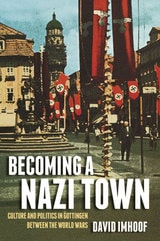
Becoming a Nazi Town
Culture and Politics in Göttingen between the World WarsDavid Imhoof
University of Michigan Press, 2013
Becoming a Nazi Townreveals the ways in which ordinary Germans changed their cultural lives and their politics from the mid-1920s to the mid-1930s. Casting the origins of Nazism in a new light, David Imhoof charts the process by which Weimar and Nazi culture flowed into each other. He analyzes this dramatic transition by looking closely at three examples of everyday cultural life in the mid-sized German city of Göttingen: sharpshooting, an opera festival, and cinema.
Imhoof draws on individual and community experiences over a series of interwar periods to highlight and connect shifts in culture, politics, and everyday life. He demonstrates how Nazi leaders crafted cultural policies based in part on homegrown cultural practices of the 1920s and argues that overdrawn distinctions between “Weimar” and “Nazi” culture did not always conform to most Germans’ daily lives. Further, Imhoof presents experiences in Göttingen as a reflection of the common reality of many German towns beyond the capital city of Berlin.
Beginning the Quest
Law and Politics in the Early Work of Eric VoegelinBarry Cooper
University of Missouri Press, 2009
Belle and Bob La Follette
Partners in PoliticsBob Kann
Wisconsin Historical Society Press, 2008
The most famous couple in Wisconsin politics, "Fighting Bob" La Follette and his wife, Belle Case La Follette, come to life in the pages of the newest addition to the Badger Biographies series for young readers. In an accessible format that includes historic images, a glossary of terms, and sidebars explaining political concepts, students learn about Progressive politics and reform in the early 20th century through the experiences of this pioneering couple.
The father of "Progressive politics," Bob La Follette was famous for digging in his heels when it came to reforming government corruption. He also gained a reputation for fiery speeches on the campaign trail and on the Senate floor. Belle La Follette was political in her own right. The first woman to graduate from the University of Wisconsin's Law School, she was an advocate for world peace and an agitator for the women's vote. She was also Bob's most trusted political advisor. Together, the couple raised a family and fought for the changes they believed would make the world a better place.
Benton, Pollock, and the Politics of Modernism
From Regionalism to Abstract ExpressionismErika Doss
University of Chicago Press, 1991
"A welcome addition to the growing body of literature that deals with the art and culture of the depression and cold war eras. It is a pioneering work that makes a valuable contribution to our understanding of a puzzling conundrum of American art—the shift from regionalism to abstract expressionism."—M. Sue Kendall, Winterthur Portfolio
"An important scholarly contribution. . . . This book will stand as a step along the way to a better understanding of the most amazing transition in the art of our tumultuous century."—James G. Rogers, Jr., Art Journal
"A valuable and interesting book that restores continuity and political context to the decades of depression and war."—Marlene Park, American Historical Review

Bergson, Politics, and Religion
Alexandre Lefebvre and Melanie White, eds.
Duke University Press, 2012
Contributors. Keith Ansell-Pearson, G. William Barnard, Claire Colebrook, Hisashi Fujita, Suzanne Guerlac, Vladimir Jankélévitch, Frédéric Keck, Leonard Lawlor, Alexandre Lefebvre, Paola Marrati, John Mullarkey, Paulina Ochoa Espejo, Carl Power, Philippe Soulez, Jim Urpeth, Melanie White, Frédéric Worms
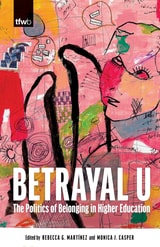
Betrayal U
The Politics of Belonging in Higher EducationEdited by Rebecca G. Martínez and Monica J. Casper
University of Arizona Press, 2025
Betrayal U intervenes in this context with a diverse, rich collection of essays, art, poetry, and research that explores these inequities through the lens of institutional betrayal, theorized by psychologist Jennifer Freyd. Edited by Rebecca G. Martínez and Monica J. Casper, this collection brings together thirty-six contributors who share personal experiences covering a range of topics in higher education. The work spans five thematic sections that examine the complexities of belonging and exclusion in academic settings.
The contributors share their lived experiences of academic life from diverse vantage points, showing the ways minoritized groups are made to feel unwelcome, further marginalized, and often positioned as the problem. Exhibiting courage, compassion, and a commitment to better futures, the voices in this collection offer both a searing indictment of higher education and pathways to alternative practices and structures. They shine a spotlight on academia today, including the promise of inclusion and the perils of exclusion.
Contributors
Celeste Atkins
Jasmine Banks
Krista L. Benson
Jessica Bishop-Royse
Samit Dipon Bordoloi
Monica J. Casper
Aparajita De
Kathy Diehl
Taylor Marie Doherty
Reshmi Dutt-Ballerstadt
Alma Flores
Alanna Gillis
C. Goldberg
Jennifer M. Gómez
Kristina Gupta
Jasmine L. Harris
Susan Hillock
Doreen Hsu
Jennifer Lai
Amy Andrea Martinez
Rebecca G. Martínez
Shantel Martinez
Sara A. Mata
Rachael McCollum
Wang Ping
Emily Rosser
Angélica Ruvalcaba
Brandy L. Simula
Rashna Batliwala Singh
Cierra Raine Sorin
Connor Spencer
Chantelle Spicer
James M. Thomas
Mercedes Valadez
Meg A. Warren
Matthew Wills
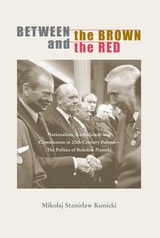
Between the Brown and the Red
Nationalism, Catholicism, and Communism in Twentieth-Century Poland—The Politics of Boleslaw PiaseckiMikolaj Stanislaw Kunicki
Ohio University Press, 2012
Between the Brown and the Red captures the multifaceted nature of church-state relations in communist Poland, relations that oscillated between mutual confrontation, accommodation, and dialogue. Ironically, under communism the bond between religion and nation in Poland grew stronger. This happened in spite of the fact that the government deployed nationalist themes in order to portray itself as more Polish than communist. Between the Brown and the Red also introduces one of the most fascinating figures in the history of twentieth-century Poland and the communist world.
In this study of the complex relationships between nationalism, communism, authoritarianism, and religion in twentieth-century Poland, Mikołaj Kunicki shows the ways in which the country’s communist rulers tried to adapt communism to local traditions, particularly ethnocentric nationalism and Catholicism. Focusing on the political career of Bolesław Piasecki, a Polish nationalist politician who began his surprising but illuminating journey as a fascist before the Second World War and ended it as a procommunist activist, Kunicki demonstrates that Polish communists reinforced an ethnocentric self-definition of Polishness and—as Piasecki’s case demonstrates—thereby prolonged the existence of Poland’s nationalist Right.
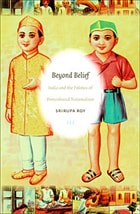
Beyond Belief
India and the Politics of Postcolonial NationalismSrirupa Roy
Duke University Press, 2007
Roy considers several different ways that identification with the Indian nation-state was produced and consolidated during the 1950s and 1960s. She looks at how the Films Division of India, a state-owned documentary and newsreel production agency, allowed national audiences to “see the state”; how the “unity in diversity” formation of nationhood was reinforced in commemorations of India’s annual Republic Day; and how the government produced a policy discourse claiming that scientific development was the ultimate national need and the most pressing priority for the state to address. She also analyzes the fate of the steel towns—industrial townships built to house the workers of nationalized steel plants—which were upheld as the exemplary national spaces of the new India. By prioritizing the role of actual manifestations of and encounters with the state, Roy moves beyond theories of nationalism and state formation based on collective belief.
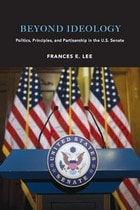
Beyond Ideology
Politics, Principles, and Partisanship in the U. S. SenateFrances E. Lee
University of Chicago Press, 2009
The congressional agenda, Frances Lee contends, includes many issues about which liberals and conservatives generally agree. Even over these matters, though, Democratic and Republican senators tend to fight with each other. What explains this discord? Beyond Ideology argues that many partisan battles are rooted in competition for power rather than disagreement over the rightful role of government.
The first book to systematically distinguish Senate disputes centering on ideological questions from the large proportion of them that do not, this volume foregrounds the role of power struggle in partisan conflict. Presidential leadership, for example, inherently polarizes legislators who can influence public opinion of the president and his party by how they handle his agenda. Senators also exploit good government measures and floor debate to embarrass opponents and burnish their own party’s image—even when the issues involved are broadly supported or low-stakes. Moreover, Lee contends, the congressional agenda itself amplifies conflict by increasingly focusing on issues that reliably differentiate the parties. With the new president pledging to stem the tide of partisan polarization, Beyond Ideology provides a timely taxonomy of exactly what stands in his way.
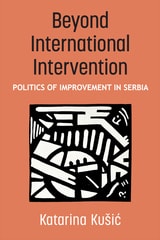
Beyond International Intervention
Politics of Improvement in SerbiaKatarina Kušic
University of Michigan Press, 2025
By engaging with subjects, the book not only enhances our understanding of intervention, but also uncovers the limitations of the concept. Katarina Kušić argues that the concept limits what we can observe and theorize, and it prevents researchers from engaging with the people living in spaces of intervention as coeval political subjects. As an alternative, she proposes to foreground improvement over “intervention.” This reorientation enables researchers to trace hierarchies beyond the local/international dichotomy, expands fields of visibility beyond those prescribed by interventions themselves, and seriously considers the contradictions at the heart of liberalism.
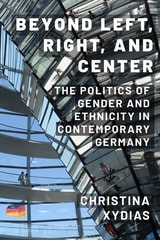
Beyond Left, Right, and Center
The Politics of Gender and Ethnicity in Contemporary GermanyChristina Xydias
Temple University Press, 2024
Christina Xydias shows that some right-leaning parties advocate for women’s rights and interests, while left- and right-leaning parties can be equally indifferent to lack of representation for women from marginalized groups. These findings follow from analyses of election results, transcripts from debates and speeches, and personal interviews, as well as from a close reading of intertwined military and citizenship policies that illustrate how women’s and ethnic minority groups’ rights are constructed.
Beyond Left, Right, and Center concludes with an analysis of women’s representation across OECD countries, showing that right-leaning parties are more likely to support women’s rights and interests in societies that are more egalitarian.
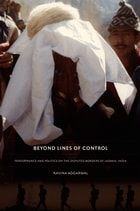
Beyond Lines of Control
Performance and Politics on the Disputed Borders of Ladakh, IndiaRavina Aggarwal
Duke University Press, 2004
Aggarwal brings the insights of performance studies and the growing field of the anthropology of international borders to bear on her extensive fieldwork in Ladakh. She examines how social and religious boundaries are created on the Ladakhi frontier, how they are influenced by directives of the nation-state, and how they are shaped into political struggles for regional control that are legitimized through discourses of religious purity, patriotism, and development. She demonstrates in lively detail the ways that these struggles are enacted in particular cultural performances such as national holidays, festivals, rites of passage ceremonies, films, and archery games. By placing cultural performances and political movements in Ladakh center stage, Aggarwal rewrites the standard plot of nation and border along the Line of Control.
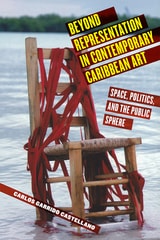
Beyond Representation in Contemporary Caribbean Art
Space, Politics, and the Public SphereCarlos Garrido Castellano
Rutgers University Press, 2019
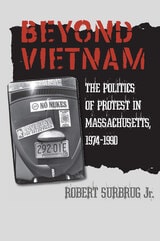
Beyond Vietnam
The Politics of Protest in Massachusetts, 1974-1990Robert Surbrug
University of Massachusetts Press, 2009
Narratives of the 1960s typically describe an ascending arc of political activism that peaked in 1968, then began a precipitous descent as the revolutionary dreams of the New Left failed to come to fruition. The May 1970 killings at Kent State often stand as an epitaph to a decade of protest, after which the principal story becomes the resurgence of the right.
In Beyond Vietnam: The Politics of Protest in Massachusetts, 1974–1990, Robert Surbrug challenges this prevailing paradigm by examining three protest movements that were direct descendants of Vietnam-era activism: the movement against nuclear energy; the nuclear weapons freeze movement; and the Central American solidarity movement. Drawing lessons from the successes and failures of the preceding era, these movements had a significant impact on the liberal wing of the Democratic Party, which itself had been undergoing major transformations in the wake of the 1960s.
By focusing on one state—Massachusetts—Surbrug is able to illuminate the interaction between the activist left and mainstream liberalism, showing how each influenced the other and how together they helped shape the politics of the 1970s and 1980s. During these years, Massachusetts emerged as a center of opposition to nuclear power, the continuing Cold War arms race, and Ronald Reagan's interventionist policies in Central America. The state's role in national policy was greatly enhanced by prominent political figures such as Senator Edward Kennedy, Speaker of the House Thomas “Tip” O'Neill, presidential candidate Governor Michael Dukakis, Vietnam veteran Senator John Kerry, and moderate Republican Silvio Conte.
What Beyond Vietnam shows is that the rise of the right in the aftermath of the 1960s was by no means a unilateral ascendancy. Instead it involved a bifurcation of American politics in which an increasingly strong conservative movement was vigorously contested by an activist left and a reinvigorated mainstream liberalism.

Beyond Wolves
The Politics Of Wolf Recovery And ManagementMartin A. Nie
University of Minnesota Press, 2003
Looks at the next stages of the controversy over wolf recovery
Since 1995, when the U.S. Fish and Wildlife Service released Canadian gray wolves into Yellowstone National Park as part of its wolf recovery program, reintroduction has been widely challenged in public forums and sensationalized in the media. This conflict has pitted western ranchers and property rights activists against environmental groups, highlighting starkly contrasting political perspectives. In this informed account, Martin A. Nie examines not only the future of wolf recovery but also the issues that will define debates around the politics of wildlife management, animal rights issues, and other flash points. The result is a revelatory look at the way the democratic process works when the subject is an environmental hot-button issue.
Examining the wolf recovery program from a policy-making perspective, Nie looks at programs in Alaska, the Lake Superior region, the Northern Rockies, the Southwest, and New England and upstate New York. He analyzes the social, political, and cultural backdrop in the areas in which wolves have been reintroduced and explores such contentious issues as the role of science in public policy; the struggle between wilderness protection, resource management, and private property; and the use of stakeholders in environmental conflicts.For Nie, the debate over wolf recovery is above all a value-based political conflict that should take place in a more inclusive, participatory, and representative democratic arena. Wolves, Nie writes, are an important indicator species both biologically and politically, and in Beyond Wolves, he tells an important story of wolves and people, place and politics, that resonates far beyond the fate of America’s most misunderstood inhabitants.
Bhangra and Asian Underground
South Asian Music and the Politics of Belonging in BritainFalu Bakrania
Duke University Press, 2013

Big Bill Thompson, Chicago, and the Politics of Image
Douglas Bukowski
University of Illinois Press, 1998
A brilliant chameleon of a politician, Thompson could move from pro- to anti-prohibition, from opposing the Chicago Teachers Federation to opposing a superintendent hostile to it, from being anti-Catholic to winning, in huge numbers, the Catholic vote. Shape-shifter extraordinaire, Thompson stayed in power by repeatedly altering his political image. In Big Bill Thompson, Chicago, and the Politics of Image, Douglas Bukowski captures the essence of this wily urban politico as no other biographer or historian has. Using materials accessible only thanks to the Freedom of Information Act, Bukowski has fashioned an unforgettable story of a volatile Chicago leader and his era. And he does it with such grace and in such an irresistible style that readers will yearn to visit the local speakeasy and lift a glass to colorful politicians gone by.

Bill and Hillary
The Politics of the PersonalWilliam H. Chafe
Duke University Press, 2012
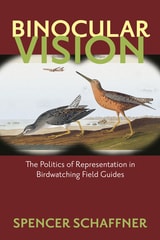
Binocular Vision
The Politics of Representation in Birdwatching Field GuidesSpencer Schaffner
University of Massachusetts Press, 2011
From meadows to marshlands, seashores to suburbs, field guides help us identify many of the things we find outdoors: plants, insects, mammals, birds. In these texts, nature is typically represented, both in words and images, as ordered, clean, and untouched by human technology and development. This preoccupation with species identification, however, has produced an increasingly narrow view of nature, a “binocular vision,” that separates the study of individual elements from a range of larger, interconnected environmental issues. In this book, Spencer Schaffner reconsiders this approach to nature study by focusing on how birds are presented in field guides.
Starting with popular books from the late nineteenth century and moving ultimately to the electronic guides of the current day, Binocular Vision contextualizes birdwatching field guides historically, culturally, and in terms of a wide range of important environmental issues. Schaffner questions the assumptions found in field guides to tease out their ideological workings. He argues that the sanitized world represented in these guides misleads readers by omitting industrial landscapes and so-called nuisance birds, leaving users of the guides disconnected from environmental degradation and its impact on bird populations.
By putting field guides into direct conversation with concerns about species conservation, environmental management, the human alteration of the environment, and the problem of toxic pollution, Binocular Vision is a field guide to field guides that takes a novel perspective on how we think about and interact with the world around us.

Biohackers
The Politics of Open ScienceAlessandro Delfanti
Pluto Press, 2013
Biohackers explores fundamental changes occuring in the circulation and ownership of scientific information. Alessandro Delfanti argues that the combination of the ethos of 20th century science, the hacker movement and the free software movement is producing an open science culture which redefines the relationship between researchers, scientific institutions and commercial companies.
Biohackers looks at the emergence of the citizen biology community ‘DIYbio’, the shift to open access by the American biologist Craig Venter and the rebellion of the Italian virologist Ilaria Capua against WHO data-sharing policies.
Delfanti argues that these biologists and many others are involved in a transformation of both life sciences and information systems, using open access tools and claiming independence from both academic and corporate institutions.
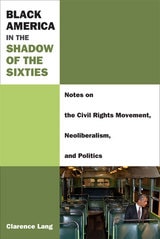
Black America in the Shadow of the Sixties
Notes on the Civil Rights Movement, Neoliberalism, and PoliticsClarence Lang
University of Michigan Press, 2015
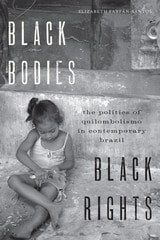
Black Bodies, Black Rights
The Politics of Quilombolismo in Contemporary BrazilBy Elizabeth Farfán-Santos
University of Texas Press, 2016
Under a provision in the Brazilian constitution, rural black communities identified as the modern descendants of quilombos—runaway slave communities—are promised land rights as a form of reparations for the historic exclusion of blacks from land ownership. The quilombo provision has been hailed as a success for black rights; however, rights for quilombolas are highly controversial and, in many cases, have led to violent land conflicts. Although thousands of rural black communities have been legally recognized, only a handful have received the rights they were promised. Conflict over quilombola rights is widespread and carries important consequences for race relations and political representations of blackness in twenty-first century Brazil.
Drawing on a year of field research in a quilombola community, Elizabeth Farfán-Santos explores how quilombo recognition has significantly affected the everyday lives of those who experience the often-complicated political process. Questions of identity, race, and entitlement play out against a community’s struggle to prove its historical authenticity—and to gain the land and rights they need to survive. This work not only demonstrates the lived experience of a new, particular form of blackness in Brazil, but also shows how blackness is being mobilized and reimagined to gain social rights and political recognition. Black Bodies, Black Rights thus represents an important contribution to the rapidly growing interdisciplinary field of Afro-Latino studies.
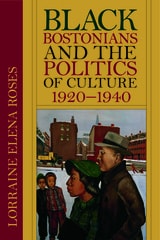
Black Bostonians and the Politics of Culture, 1920-1940
Lorraine Elena Roses
University of Massachusetts Press, 2017
In the 1920s and 1930s Boston became a rich and distinctive site of African American artistic production, unfolding at the same time as the Harlem Renaissance and encompassing literature, theater, music, and visual art. Owing to the ephemeral nature of much of this work, many of the era's primary sources have been lost.
In this book, Lorraine Elena Roses employs archival sources and personal interviews to recover this artistic output, examining the work of celebrated figures such as Dorothy West, Helene Johnson, Meta Warrick Fuller, and Allan Rohan Crite, as well as lesser-known artists including Eugene Gordon, Ralf Coleman, Gertrude “Toki” Schalk, and Alvira Hazzard. Black Bostonians and the Politics of Culture, 1920–1940 demonstrates how this creative community militated against the color line not solely through powerful acts of civil disobedience but also by way of a strong repertoire of artistic projects.
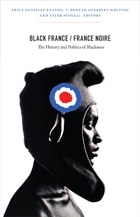
Black France / France Noire
The History and Politics of BlacknessTrica Danielle Keaton, T. Denean Sharpley-Whiting and Tyler Stovall, eds.
Duke University Press, 2012
Contributors. Rémy Bazenguissa-Ganga, Allison Blakely, Jennifer Anne Boittin, Marcus Bruce, Fred Constant, Mamadou Diouf, Arlette Frund, Michel Giraud, Bennetta Jules-Rosette, Trica Danielle Keaton, Jake Lamar, Patrick Lozès, Alain Mabanckou, Elisabeth Mudimbe-Boyi, T. Denean Sharpley-Whiting, Tyler Stovall, Christiane Taubira, Dominic Thomas, Gary Wilder
Black Women and Politics in New York City
Julie A. Gallagher
University of Illinois Press, 2014
Historian and human rights activist Julie A. Gallagher deftly examines how race, gender, and the structure of the state itself shape outcomes, and exposes the layers of power and discrimination at work in American society. She combines her analysis with a look at the career of Shirley Chisholm, the first black woman elected to Congress and the first to run for president on a national party ticket. In so doing, she rewrites twentieth-century women's history and the dominant narrative arcs of feminist history that hitherto ignored African American women and their accomplishments.
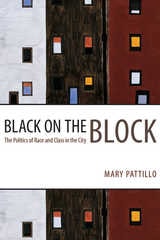
Black on the Block
The Politics of Race and Class in the CityMary Pattillo
University of Chicago Press, 2007
“To see how diversity creates strange and sometimes awkward bedfellows . . . turn to Mary Pattillo's Black on the Block.”—Boston Globe
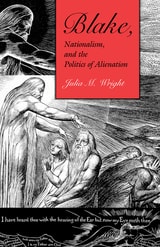
Blake, Nationalism, and the Politics of Alienation
Julia M. Wright
Ohio University Press, 2027
William Blake’s reputation as a staunch individualist is based in large measure on his repeated attacks on institutions and belief systems that constrain the individual’s imagination. Blake, however, rarely represents isolation positively, suggesting that the individual’s absolute freedom from communal pressures is not the ideal. Instead, as Julia Wright argues in her award-winning study Blake, Nationalism, and the Politics of Alienation, Blake’s concern lies with the kind of community that is being established. Moreover, writing at the moment of the emergence of modern nationalism, Blake reveals a concern with the national community in particular.
Beginning with a discussion of the priority of national narrative in late-eighteenth-century art theory and antiquarianism, Blake, Nationalism, and the Politics of Alienation traces its relevance in Blake’s printed works, from The Poetical Sketches and the Lambeth Prophecies to The Laocoön. Professor Wright then turns to Europe, America, and Visions of the Daughters of Albion, focusing on Blake’s portrayals of particular characters’ alienation from the groups and ideologies represented in the texts. The book closes by arguing that Blake’s major printed works, Milton and Jerusalem, are explicit and extensive engagements with the question of nation—and empire.
Although nationalism existed in various forms during the Romantic period, Blake’s contemporaries generally assumed that nations should progress continuously, producing a clear narrative line from an auspicious origin to the perfect fulfillment of that promise. Wright argues that these mutually determining constructs of national character and national narrative inform Blake’s handling of the problem of the individual-within-a-community.
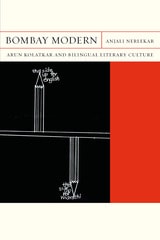
Bombay Modern
Arun Kolatkar and Bilingual Literary CultureAnjali Nerlekar
Northwestern University Press, 2016
Bombay Modern uncovers an alternative and provincial modernism through poetry, a genre that is marginal to postcolonial studies, and through bilingual scholarship across English and Marathi texts, a methodology that is currently peripheral at best to both modernist studies and postcolonial literary criticism in India. Eschewing any attempt to define an overarching or universal modernism, Bombay Modern delimits its sphere of study to "Bombay" and to the "post-1960" (the sathottari period) in an attempt to examine at close range the specific way in which this poetry redeployed the regional, the national, and the international to create a very tangible yet transient local.
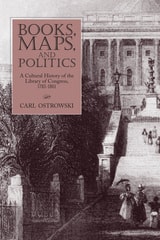
Books, Maps, and Politics
A Cultural History of the Library of Congress, 1783-1861Carl Ostrowski
University of Massachusetts Press, 2004
The author explores the relationship between the Library and the period's expanding print culture. He identifies the books that legislators required to be placed in the Library and establishes how these volumes were used. His analysis of the earliest printed catalogs of the Library reveals that law, politics, economics, geography, and history were the subjects most assiduously collected. These books provided government officials with practical guidance in domestic legislation and foreign affairs, including disputes with European powers over territorial boundaries.
Ostrowski also discusses a number of secondary functions of the Library, one of which was to provide reading material for the entertainment and instruction of government officials and their families. As a result, the richness of America's burgeoning literary culture from the 1830s to the 1860s was amply represented on the Library's shelves. For those with access to its Capitol rooms, the Library served an important social function, providing a space for interaction and the display and appreciation of American works of art.
Ostrowski skillfully demonstrates that the history of the Library of Congress offers a lens through which we can view changing American attitudes toward books, literature, and the relationship between the federal government and the world of arts and letters.
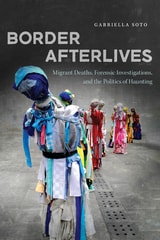
Border Afterlives
Migrant Deaths, Forensic Investigations, and the Politics of HauntingGabriella Soto
University of Arizona Press, 2026
Drawing on over a decade of ethnographic, participatory, and community-engaged research, author Gabriella Soto examines the postmortem journeys of these migrants through the fragmented infrastructure of medicolegal death investigation in the U.S. Southwest. She reveals how the state’s deterrence-based border policies not only generate death but also fail to provide adequate care for the dead. Soto argues that these deaths should be understood as structural homicides and that the forensic neglect they face is a form of ongoing violence.
Moving between the practical and the philosophical, Soto asks what it means to care for the dead and what society owes to those who die in its name. Through the lens of haunting, she explores how the dead continue to shape the living, not as objects of horror but as moral agents whose presence demands justice. Border Afterlives offers a border-scale comparative account of forensic practices, critiques the limits of “best practices” in under-resourced systems, and calls for a reimagining of forensic humanitarianism grounded in reciprocity and dignity, beyond human rights. This is a book that insists on remembering the dead.
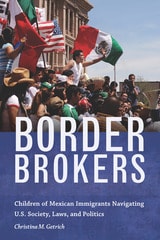
Border Brokers
Children of Mexican Immigrants Navigating U.S. Society, Laws, and PoliticsChristina M. Getrich
University of Arizona Press, 2019
Based on ethnographic fieldwork in San Diego over more than a decade, Border Brokers documents the continuing deleterious effects of U.S. immigration policies and enforcement practices on a group of now young adults and their families. In the first book-length longitudinal study of mixed-status families, Christina M. Getrich provides an on-the-ground portrayal of these young adults’ lives from their own perspectives and in their own words.
More importantly, Getrich identifies how these individuals have developed resiliency and agency beginning in their teens to improve circumstances for immigrant communities. Despite the significant constraints their families face, these children have emerged into adulthood as grounded and skilled brokers who effectively use their local knowledge bases, life skills honed in their families, and transborder competencies. Refuting the notion of their failure to assimilate, she highlights the mature, engaged citizenship they model as they transition to adulthood to be perhaps their most enduring contribution to creating a better U.S. society.
An accessible ethnography rooted in the everyday, this book portrays the complexity of life in the U.S.-Mexico borderlands. It offers important insights for anthropologists, educators, policy-makers, and activists working on immigration and social justice issues.

Border Water
The Politics of U.S.-Mexico Transboundary Water Management, 1945–2015Stephen Paul Mumme
University of Arizona Press, 2023
The international boundary between the United States and Mexico spans more than 1,900 miles. Along much of this international border, water is what separates one country from the other. Border Water provides a historical account of the development of governance related to transboundary and border water resources between the United States and Mexico in the last seventy years.
This work examines the phases and pivot points in the development of U.S.-Mexico border water resources and reviews the theoretical approaches and explanation that impart a better understanding of these events. Author Stephen Paul Mumme, a leading expert in water policy and border studies, describes three important periods in the chronology of transboundary water management. First, Mumme examines the 1944 Water Treaty, the establishment of the International Boundary and Water Commission (IBWC) in 1945, and early transborder politics between the two governments. Next, he describes the early 1970s and the rise of environmentalism. In this period, pollution and salinization of the Colorado River Delta come into focus. Mumme shows how new actors, now including environmentalists and municipalities, broadened and strengthened the treaty’s applications in transboundary water management. The third period of transborder interaction described covers the opening and restricting of borders due to NAFTA and then 9/11.
Border Water places transboundary water management in the frame of the larger binational relationship, offering a comprehensive history of transnational water management between the United States and Mexico. As we move into the next century of transnational water management, this important work offers critical insights into lessons learned and charts a path for the future.

Bound and Gagged
Pornography and the Politics of Fantasy in AmericaLaura Kipnis
Duke University Press, 1998
Using this textbook example of social hysteria as a springboard, Kipnis argues that criminalizing fantasy—even perverse and unacceptable fantasy—has dire social consequences. Exploring the entire spectrum of pornography, she declares that porn isn’t just about gender and that fantasy doesn’t necessarily constitute intent. She reveals Larry Flynt’s Hustler to be one of the most politically outspoken and class-antagonistic magazine in the country and shows how fetishes such as fat admiration challenge our aesthetic prejudices and socially sanctioned disgust. Kipnis demonstrates that the porn industry—whose multibillion-dollar annual revenues rival those of the three major television networks combined—know precisely how to tap into our culture’s deepest anxieties and desires, and that this knowledge, more than all the naked bodies, is what guarantees its vast popularity.
Bound and Gagged challenges our most basic assumptions about America’s relationship with pornography and questions what the calls to eliminate it are really attempting to protect.

Braking the Special Interests
Trucking Deregulation and the Politics of Policy ReformDorothy Robyn
University of Chicago Press, 1987
Robyn focuses her analysis on four elements of strategy responsible for the deregulator's victory—elements that are essential, she argues, to any successful policy battle against entrenched special interests: the effective use of economic data and analysis to make a strong case for the merits of reform; the formation and management of a diverse lobbying coalition of firms and interest groups; presidential bargaining to gain political leverage; and transition schemes to reduce uncertainty and cushion the blow to losers.
Drawing on political and economic theory, Braking the Special Interests is an immensely rich and readable study of political strategy and skill, with general insights relevant to current political battles surrounding trade, agriculture, and tax policies. Robyn's interdisciplinary work will be of great value to scholars and practitioners of politics, economics, and public policy.
Brazil
Essays on History and PoliticsLeslie Bethell
University of London Press, 2018

Breaking the Chains
Gender, Context, and the Politics of Writing in Modern ChinaDong Limin
Seagull Books, 2025
How has literature shaped gender politics in modern China? How has the concept of “woman” evolved within the shifting sociopolitical landscape? Old Chains and New delves into these questions by examining the dynamic interplay between literature, gender, and historical change. Drawing from literary studies, history, and sociology, this book reveals how women’s writing has not only reflected but also actively shaped cultural and national transformations.
From the late Qing era, when the “woman question” emerged as part of China’s response to imperialist pressures, to the ongoing evolution of feminist literary scholarship, this study argues that gender and literature are deeply interwoven. Women’s liberation in modern China was never solely about gender equality—it became a driving force for broader social change and national identity formation. Engaging with the complexities of women’s literature through a cultural-political lens, this book challenges static definitions and calls for a reevaluation of women’s literature not just as a literary category but as a key component in shaping China’s modern intellectual and cultural history.
By adopting the framework of “China as method,” Old Chains and New reimagines the role of literature in ideological and cultural shifts. It highlights women’s writing as a unique form of aesthetic politics—one with the power to intervene in and transform reality.

Bribes, People, and Politics
How Everyday Corruption Shapes Governance in EurasiaWilliam M. Reisinger & Marina Zaloznaya
University of Michigan Press, 2027
Everyday bureaucratic corruption is not the domain of oligarchs or powerful elites, but of informal exchanges between bureaucrats and ordinary citizens seeking to move paperwork, secure benefits, or avoid penalties. Despite extensive research on the economic, legal, and social consequences of corruption, this mundane form has rarely been treated as a political phenomenon.
Drawing on original, nationally representative surveys conducted in Russia, Ukraine, Georgia, and China, Bribes, People, and Politics analyzes how citizens’ encounters with corrupt bureaucratic practices influence popular political trust, perceptions of elite corruption, legal attitudes, voting behavior, and political activism. After each interaction with public bureaucracy, citizens subtly revise their views about what role people like themselves play within the political system. As a result, corrupt bureaucratic encounters can significantly shape popular attitudes and behavior toward the political order. By linking the microdynamics of bureaucratic encounters to macro-level questions of political legitimacy and regime durability, this book bridges the literature on corruption, political sociology, and comparative politics, offering a new framework for understanding the persistent phenomenon of public sector corruption in Eurasia.

British Working-Class and Radical Writing Since 1700
Edited by John Goodridge and Adam Bridgen
University of London Press, 2025
At a time when working-class writing is gaining long-overdue recognition, British Working-Class and Radical Writing Since 1700 explores the intersection of class and literature over more than three centuries. This volume brings together leading scholars to examine the problems faced by working-class writers and the impact of class on themes such as feminism and anti-imperialism. Spanning from early laboring-class poets to contemporary memoirists, the collection revisits figures like John Clare and Ethel Carnie Holdsworth and also recovers overlooked voices and texts.
Covering poetry, fiction, drama, and political writing, the book investigates the relationship between class and literary production, offering fresh perspectives on how working-class and radical literature has shaped British cultural history. From the Romantic-era resistance of laboring poets to mid-century miners’ novels and the evolution of contemporary working-class memoirs, these essays reveal how literature has served as both a site of struggle and a tool of empowerment.
Brokered Subjects
Sex, Trafficking, and the Politics of FreedomElizabeth Bernstein
University of Chicago Press, 2018
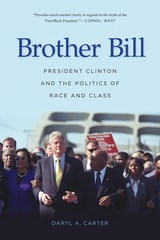
Brother Bill
President Clinton and the Politics of Race and ClassDaryl A Carter
University of Arkansas Press, 2016
“This book is a fascinating analysis of race and class in the age of President Bill Clinton. It provides much-needed clarity in regards to the myth of the ‘First Black President.’ It contributes much to our understanding of the history that informs our present moment!”
—Cornel West
As President Barack Obama was sworn into office on January 20, 2009, the United States was abuzz with talk of the first African American president. At this historic moment, one man standing on the inaugural platform, seemingly a relic of the past, had actually been called by the moniker the “first black president” for years.
President William Jefferson Clinton had long enjoyed the support of African Americans during his political career, but the man from Hope also had a complex and tenuous relationship with this faction of his political base. Clinton stood at the nexus of intense political battles between conservatives’ demands for a return to the past and African Americans’ demands for change and fuller equality. He also struggled with the class dynamics dividing the American electorate, especially African Americans. Those with financial means seized newfound opportunities to go to college, enter the professions, pursue entrepreneurial ambitions, and engage in mainstream politics, while those without financial means were essentially left behind. The former became key to Clinton’s political success as he skillfully negotiated the African American class structure while at the same time maintaining the support of white Americans. The results were tremendously positive for some African Americans. For others, the Clinton presidency was devastating.
Brother Bill examines President Clinton’s political relationship with African Americans and illuminates the nuances of race and class at the end of the twentieth century, an era of technological, political, and social upheaval.