Results by title
325 books match the query 'Race identity' and 34 start with b
Baseball as Mediated Latinidad
Race, Masculinity, Nationalism, and Performances of IdentityJennifer Domino Rudolph
The Ohio State University Press, 2020
Becoming Black
Creating Identity in the African DiasporaMichelle M. Wright
Duke University Press, 2004
Wright argues that three nineteenth-century American and European works addressing race—Thomas Jefferson’s Notes on the State of Virginia, G. W. F. Hegel’s Philosophy of History, and Count Arthur de Gobineau’s Essay on the Inequality of the Human Races—were particularly influential in shaping twentieth-century ideas about Black subjectivity. She considers these treatises in depth and describes how the revolutionary Black thinkers W. E. B. Du Bois, Aimé Césaire, Léopold Sédar Senghor, and Frantz Fanon countered the theories they promulgated. She explains that while Du Bois, Césaire, Senghor, and Fanon rejected the racist ideologies of Jefferson, Hegel, and Gobineau, for the most part they did so within what remained a nationalist, patriarchal framework. Such persistent nationalist and sexist ideologies were later subverted, Wright shows, in the work of Black women writers including Carolyn Rodgers and Audre Lorde and, more recently, the British novelists Joan Riley, Naomi King, Jo Hodges, and Andrea Levy. By considering diasporic writing ranging from Du Bois to Lorde to the contemporary African novelists Simon Njami and Daniel Biyaoula, Wright reveals Black subjectivity as rich, varied, and always evolving.
Being La Dominicana
Race and Identity in the Visual Culture of Santo DomingoRachel Afi Quinn
University of Illinois Press, 2021
Engaging and astute, Being La Dominicana reveals the little-studied world of today's young Dominican women and what their personal stories and transnational experiences can tell us about the larger neoliberal world.
Between Brown and Black
Anti-Racist Activism in BrazilAntonio José Bacelar da Silva
Rutgers University Press, 2022
Between Shadows and Noise
Sensation, Situatedness, and the UndisciplinedAmber Jamilla Musser
Duke University Press, 2024
Black Aliveness, or A Poetics of Being
Kevin Quashie
Duke University Press, 2021
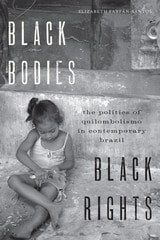
Black Bodies, Black Rights
The Politics of Quilombolismo in Contemporary BrazilBy Elizabeth Farfán-Santos
University of Texas Press, 2016
Under a provision in the Brazilian constitution, rural black communities identified as the modern descendants of quilombos—runaway slave communities—are promised land rights as a form of reparations for the historic exclusion of blacks from land ownership. The quilombo provision has been hailed as a success for black rights; however, rights for quilombolas are highly controversial and, in many cases, have led to violent land conflicts. Although thousands of rural black communities have been legally recognized, only a handful have received the rights they were promised. Conflict over quilombola rights is widespread and carries important consequences for race relations and political representations of blackness in twenty-first century Brazil.
Drawing on a year of field research in a quilombola community, Elizabeth Farfán-Santos explores how quilombo recognition has significantly affected the everyday lives of those who experience the often-complicated political process. Questions of identity, race, and entitlement play out against a community’s struggle to prove its historical authenticity—and to gain the land and rights they need to survive. This work not only demonstrates the lived experience of a new, particular form of blackness in Brazil, but also shows how blackness is being mobilized and reimagined to gain social rights and political recognition. Black Bodies, Black Rights thus represents an important contribution to the rapidly growing interdisciplinary field of Afro-Latino studies.
Black Camelot
African-American Culture Heroes in Their Times, 1960-1980William L. Van Deburg
University of Chicago Press, 1997
In Black Camelot, William Van Deburg examines the dynamic rise of these new black champions, the social and historical contexts in which they flourished, and their powerful impact on the African-American community.
"Van Deburg manages the enviable feat of writing with flair within a standardized academic framework, covering politics, social issues and entertainment with equal aplomb."—Jonathan Pearl, Jazz Times
"[A] fascinating, thorough account of how African-American icons of the 1960s and '70s have changed the course of American history. . . . An in-depth, even-tempered analysis. . . . Van Deburg's witty, lively and always grounded style entertains while it instructs."—Publishers Weekly
Black Cultural Traffic
Crossroads in Global Performance and Popular CultureEdited by Harry J. Elam, Jr. and Kennell Jackson
University of Michigan Press, 2005
"A shrewdly designed, generously expansive, timely contribution to our understanding of how 'black' expression continues to define and defy the contours of global (post)modernity. The essays argue persuasively for a transnational ethos binding disparate African and diasporic enactments, and together provide a robust conversation about the nature, history, future, and even possibility of 'blackness' as a distinctive mode of cultural practice."
--Kimberly Benston, author of Performing Blackness
"Black Cultural Traffic is nothing less than our generation's manifesto on black performance and popular culture. With a distinguished roster of contributors and topics ranging across academic disciplines and the arts (including commentary on film, music, literature, theater, television, and visual cultures), this volume is not only required reading for scholars serious about the various dimensions of black performance, it is also a timely and necessary teaching tool. It captures the excitement and intellectual innovation of a field that has come of age. Kudos!"
--Dwight A. McBride, author of Why I Hate Abercrombie & Fitch
"The explosion of interest in black popular culture studies in the past fifteen years has left a significant need for a reader that reflects this new scholarly energy. Black Cultural Traffic answers that need."
--Mark Anthony Neal, author of Songs in the Key of Black Life
"A revolutionary anthology that will be widely read and taught. It crisscrosses continents and cultures and examines confluences and influences of black popular culture -- music, dance, theatre, television, fashion and film. It also adds a new dimension to current discussions of racial, ethnic, and national identity."
--Horace Porter, author of The Making of a Black Scholar
Black Dragon
Afro Asian Performance and the Martial Arts ImaginationZachary F. Price
The Ohio State University Press, 2022
Black Empire
The Masculine Global Imaginary of Caribbean Intellectuals in the United States, 1914–1962Michelle Ann Stephens
Duke University Press, 2005
Stephens argues that the global black political consciousness she identifies was constituted by both radical and reactionary impulses. On the one hand, Garvey, McKay, and James saw freedom of movement as the basis of black transnationalism. The Caribbean archipelago—a geographic space ideally suited to the free movement of black subjects across national boundaries—became the metaphoric heart of their vision. On the other hand, these three writers were deeply influenced by the ideas of militarism, empire, and male sovereignty that shaped global political discourse in the early twentieth century. As such, their vision of transnational blackness excluded women’s political subjectivities. Drawing together insights from American, African American, Caribbean, and gender studies, Black Empire is a major contribution to ongoing conversations about nation and diaspora.
Black Europe and the African Diaspora
Edited by Darlene Clark Hine, Trica Danielle Keaton, and Stephen Small
University of Illinois Press, 2009
The presence of Blacks in a number of European societies has drawn increasing interest from scholars, policymakers, and the general public. This interdisciplinary and multi-disciplinary collection penetrates the multifaceted Black presence in Europe, and, in so doing, complicates the notions of race, belonging, desire, and identities assumed and presumed in revealing portraits of Black experiences in a European context. In focusing on contemporary intellectual currents and themes, the contributors theorize and re-imagine a range of historical and contemporary issues related to the broader questions of blackness, diaspora, hegemony, transnationalism, and "Black Europe" itself as lived and perceived realities.
Contributors are Allison Blakely, Jacqueline Nassy Brown, Tina Campt, Fred Constant, Alessandra Di Maio, Philomena Essed, Terri Francis, Barnor Hesse, Darlene Clark Hine, Dienke Hondius, Eileen Julien, Trica Danielle Keaton, Kwame Nimako, Tiffany Ruby Patterson, T. Denean Sharpley-Whiting, Stephen Small, Tyler Stovall, Alexander G. Weheliye, Gloria Wekker, and Michelle M. Wright.
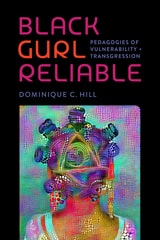
Black Gurl Reliable
Pedagogies of Vulnerability and TransgressionDominique C. Hill
Vanderbilt University Press, 2025
As a means of mitigating the deleterious effects of schooling on Black girls’ and women’s bodies and making legible the insights and knowledge produced from schooling experiences, Hill introduces the concept of Transgressngroove. This living feminist practice explores the relationships between Black girlhood, education, and the body, as researched for over a decade through workshops, consulting, classrooms, personal development, and other teaching/learning spaces.

Black Hunger
Soul Food And AmericaDoris Witt
University of Minnesota Press, 2004
Explores the complex relationship between food and African American history
In 1889, the owners of a pancake mix witnessed the vaudeville performance of a white man in blackface and drag playing a character called Aunt Jemima. This character went on to become one of the most pervasive stereotypes of black women in the United States, embodying not only the pancakes she was appropriated to market but also post–Civil War race and gender hierarchies—including the subordination of African American women as servants and white fantasies of the nurturing mammy.
Using the history of Aunt Jemima as a springboard for exploring the relationship between food and African Americans, Black Hunger focuses on debates over soul food since the 1960s to illuminate a complex web of political, economic, religious, sexual, and racial tensions between whites and blacks and within the black community itself. Celebrated by many African Americans as a sacramental emblem of slavery and protest, soul food was simultaneously rejected by others as a manifestation of middle-class black “slumming.”
Highlighting the importance of food for men as well as women, Doris Witt traces the promotion of soul food by New York Times food writer Craig Claiborne and its prohibition by Nation of Islam leader Elijah Muhammad and comedian-turned-diet guru Dick Gregory. A discussion of cookbook author Vertamae Grosvenor, who distanced herself from the myth of plantation mammy by reimagining soul food as "vibration cooking," sets the stage for Witt's concluding argument that the bodies and appetites of African American women should be viewed as central to contemporary conversations about eating disorders and reproductive rights.
Witt draws on vaudeville, literature, film, visual art, and cookbooks to explore how food has been used both to perpetuate and to challenge racial stereotypes. Raising her fist in a Black Power salute, wielding her spatula like a sword, Aunt Jemima steps off the pancake box in a righteous fury.
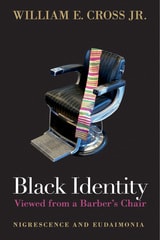
Black Identity Viewed from a Barber's Chair
Nigrescence and EudaimoniaWilliam E. Cross, Jr.
Temple University Press, 2021
Throughout his esteemed career, William Cross has tried to reconcile how Black men he met in the barber shop “seemed so normal,” but the portrayal in college textbooks of Black people in general—and the Black working class in particular—is self-hating and pathological. In Black Identity Viewed from a Barber’s Chair, Cross revisits his ground-breaking model on Black identity awakening known as Nigrescence, connects W. E. B. DuBois’s concept of double consciousness to an analysis of how Black identity is performed in everyday life, and traces the origins of the deficit perspective on Black culture to scholarship dating back to the 1930s. He follows with a critique showing such deficit and Black self-hatred tropes were always based on extremely weak evidence.
Black Identity Viewed from a Barber’s Chair ends with a new understanding of the psychology of slavery that helps explain why and how, during the first twelve years of emancipation, countless former slaves exhibited amazing psychological, political, and cultural independence. Once free, their previously hidden psychology became public.
His booksets out to disrupt and agitate as Cross attempts to more accurately capture the humanity of Black people that has been overlooked in previous research.
Black Identity
Rhetoric, Ideology, and Nineteenth-Century Black NationalismDexter B. Gordon
Southern Illinois University Press, 2006
Exploring the role of rhetoric in African American identity and political discourse
Dexter B. Gordon’s Black Identity: Rhetoric, Ideology, and Nineteenth-Century Black Nationalism explores the problem of racial alienation and the importance of rhetoric in the formation of black identity in the United States. Faced with alienation and disenfranchisement as a part of their daily experience, African Americans developed collective practices of empowerment that cohere as a constitutive rhetoric of black ideology. Exploring the origins of that rhetoric, Gordon reveals how the ideology of black nationalism functions in contemporary African American political discourse.
Rooting his study in the words and works of nineteenth-century black abolitionists such as Maria Stewart, David Walker, and Henry Garnet, Gordon explores the rapprochement between rhetorical theory, race, alienation, and the role of public memory in identity formation. He argues that abolitionists used language in their speeches, pamphlets, letters, petitions, and broadsides that established black identity in ways that would foster liberation and empowerment. The arguments presented here constitute the only sustained treatment of nineteenth-century black activists from a rhetorical perspective.
Gordon demonstrates the pivotal role of rhetoric in African American efforts to create a viable public voice. Understanding nineteenth-century black alienation—and its intersection with twentieth-century racism—is crucial to understanding the continued sense of alienation that African Americans express about their American experience. Gordon explains how the ideology of black nationalism disciplines and describes African American life for its own ends, exposing a central piece of the ideological struggle for the soul of America. The book is both a platform for further discussion and an invitation for more voices to join the discourse as we search for ways to comprehend the sense of alienation experienced and expressed by African Americans in contemporary society.
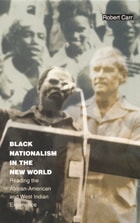
Black Nationalism in the New World
Reading the African-American and West Indian ExperienceRobert Carr
Duke University Press, 2002
Black Nationalism in the New World combines geography, political economy, and subaltern studies in readings of noncanonical literary works, which in turn illuminate debates over African-American and West Indian culture, identity, and politics. In addition to Martin Delany’s Blake, or the Huts of America, Carr focuses on Pauline Hopkins’s Contending Forces; Crown Jewel, R. A. C. de Boissière’s novel of the Trinidadian revolt against British rule; Wilson Harris’s Guyana Quartet; the writings of the Oakland Black Panthers—particularly Huey Newton, Bobby Seale, and Eldridge Cleaver; the gay novella Just Being Guys Together; and Lionheart Gal, a collection of patois testimonials assembled by Sistren, a radical Jamaican women’s theater group active in the ‘80s.
With its comparative approach, broad historical sweep, and use of texts not well known in the United States, Black Nationalism in the New World extends the work of such theorists as Homi Bhabha, Paul Gilroy, and Nell Irwin Painter. It will be necessary reading for those interested in African American studies, Caribbean studies, cultural studies, women’s studies, and American studies.
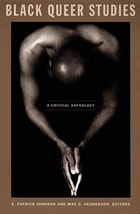
Black Queer Studies
A Critical AnthologyE. Patrick Johnson and Mae G. Henderson, eds.
Duke University Press, 2005
The contributors consider representations of the black queer body, black queer literature, the pedagogical implications of black queer studies, and the ways that gender and sexuality have been glossed over in black studies and race and class marginalized in queer studies. Whether exploring the closet as a racially loaded metaphor, arguing for the inclusion of diaspora studies in black queer studies, considering how the black lesbian voice that was so expressive in the 1970s and 1980s is all but inaudible today, or investigating how the social sciences have solidified racial and sexual exclusionary practices, these insightful essays signal an important and necessary expansion of queer studies.
Contributors. Bryant K. Alexander, Devon Carbado, Faedra Chatard Carpenter, Keith Clark, Cathy Cohen, Roderick A. Ferguson, Jewelle Gomez, Phillip Brian Harper, Mae G. Henderson, Sharon P. Holland, E. Patrick Johnson, Kara Keeling, Dwight A. McBride, Charles I. Nero, Marlon B. Ross, Rinaldo Walcott, Maurice O. Wallace
Black Trans Feminism
Marquis Bey
Duke University Press, 2022
Black Undertow
Hugo ka Canham
Duke University Press, 2026
Black Utopias
Speculative Life and the Music of Other WorldsJayna Brown
Duke University Press, 2021
Black Visions
The Roots of Contemporary African-American Political IdeologiesMichael C. Dawson
University of Chicago Press, 2001

Black and Blur
Fred Moten
Duke University Press, 2017
In Black and Blur—the first volume in his sublime and compelling trilogy consent not to be a single being—Fred Moten engages in a capacious consideration of the place and force of blackness in African diaspora arts, politics, and life. In these interrelated essays, Moten attends to entanglement, the blurring of borders, and other practices that trouble notions of self-determination and sovereignty within political and aesthetic realms. Black and Blur is marked by unlikely juxtapositions: Althusser informs analyses of rappers Pras and Ol' Dirty Bastard; Shakespeare encounters Stokely Carmichael; thinkers like Kant, Adorno, and José Esteban Muñoz and artists and musicians including Thornton Dial and Cecil Taylor play off each other. Moten holds that blackness encompasses a range of social, aesthetic, and theoretical insurgencies that respond to a shared modernity founded upon the sociological catastrophe of the transatlantic slave trade and settler colonialism. In so doing, he unsettles normative ways of reading, hearing, and seeing, thereby reordering the senses to create new means of knowing.
Black and Green
Afro-Colombians, Development, and Nature in the Pacific LowlandsKiran Asher
Duke University Press, 2009
The Pacific region had yet to be overrun by drug traffickers, guerrillas, and paramilitary forces in the early 1990s. It was better known as the largest area of black culture in the country (90 percent of the region’s population is Afro-Colombian) and as a supplier of natural resources, including timber, gold, platinum, and silver. Colombia’s Law 70, passed in 1993, promised ethnic and cultural rights, collective land ownership, and socioeconomic development to Afro-Colombian communities. At the same time that various constituencies sought to interpret and implement Law 70, the state was moving ahead with large-scale development initiatives intended to modernize the economically backward coastal lowlands. Meanwhile national and international conservation organizations were attempting to protect the region’s rich biodiversity. Asher explores this juxtaposition of black rights, economic development, and conservation—and the tensions it catalyzed. She analyzes the meanings attached to “culture,” “nature,” and “development” by the Colombian state and Afro-Colombian social movements, including women’s groups. In so doing, she shows that the appropriation of development and conservation discourses by the social movements had a paradoxical effect. It legitimized the presence of state, development, and conservation agencies in the Pacific region even as it influenced those agencies’ visions and plans.

Black behind the Ears
Dominican Racial Identity from Museums to Beauty ShopsGinetta E. B. Candelario
Duke University Press, 2007
Candelario draws on her participant observation in a Dominican beauty shop in Washington Heights, a New York City neighborhood with the oldest and largest Dominican community outside the Republic, and on interviews with Dominicans in New York City, Washington, D.C., and Santo Domingo. She also analyzes museum archives and displays in the Museo del Hombre Dominicano and the Smithsonian Institution as well as nineteenth- and early-twentieth-century European and American travel narratives.
Black or Right
Anti/Racist Campus RhetoricsLouis M. Maraj
Utah State University Press, 2020
Offering four Black rhetorics as antiracist means for rhetorical reclamation—autoethnography, hashtagging, inter(con)textual reading, and reconceptualized disruption—the book uses Black feminist relationality via an African indigenous approach. Maraj examines fluid, quotidian ways Black folk engage anti/racism at historically white institutions in the United States in response to violent campus spaces, educational structures, protest movements, and policy practice. Black or Right’s experimental, creative style strives to undiscipline knowledge from academic confinement. Exercising different vantage points in each chapter—autoethnographer, digital media scholar/pedagogue, cultural rhetorician, and critical discourse analyst—Maraj challenges readers to ecologically understand shifting, multiple meanings of Blackness in knowledge-making. Black or Right’s expressive form, organization, narratives, and poetics intimately interweave with its argument that Black folk must continuously invent “otherwise” in reiterative escape from oppressive white spaces.
In centering Black experiences, Black theory, and diasporic Blackness, Black or Right mobilizes generative approaches to destabilizing institutional whiteness, as opposed to reparative attempts to “fix racism,” which often paradoxically center whiteness. It will be of interest to both academic and general readers and significant for specialists in cultural rhetorics, Black studies, and critical theory.
Black, Jewish, and Interracial
It’s Not the Color of Your Skin, but the Race of Your Kin, and Other Myths of IdentityKatya Gibel Azoulay
Duke University Press, 1997
Beginning with an examination of the concept of identity as it figures in philosophical and political thought, Gibel Azoulay moves on to consider and compare the politics and traditions of the Black and Jewish experience in America. Her inquiry draws together such diverse subjects as Plessy v. Ferguson, the Leo Frank case, "passing," intermarriage, civil rights, and anti-Semitism. The paradoxical presence of being both Black and Jewish, she argues, leads questions of identity, identity politics, and diversity in a new direction as it challenges distinct notions of whiteness and blackness. Rising above familiar notions of identity crisis and cultural confrontation, she offers new insights into the discourse of race and multiculturalism as she suggests that identity can be a more encompassing concept than is usually thought. Gibel Azoulay adds her own personal history and interviews with eight other Black and Jewish individuals to reveal various ways in which interracial identities are being lived, experienced, and understood in contemporary America.
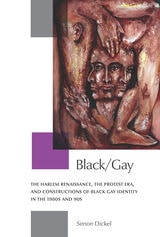
Black/Gay
The Harlem Renaissance, the Protest Era, and the Constructions of Black Gay Identity in the 1980s and 90sSimon Dickel
Michigan State University Press, 2011
This book explores key texts of the black gay culture of the 1980s and ’90s. Starting with an analysis of the political discourse in anthologies such as In the Life and Brother to Brother, it identifies the references to the Harlem Renaissance and the Protest Era as common elements of black gay discourse. This connection to African American cultural and political traditions legitimizes black gay identity and criticizes the construction of gay identity as white. Readings of Isaac Julien’s Looking for Langston, Samuel R. Delany’s “Atlantis: Model 1924” and The Motion of Light in Water, Melvin Dixon’s Vanishing Rooms, Randall Kenan’s A Visitation of Spirits, and Steven Corbin’s No Easy Place to Be demonstrate how these strategies of signifying are used in affirmative, humorous, and ironic ways.
Blacked Out
Dilemmas of Race, Identity, and Success at Capital HighSignithia Fordham
University of Chicago Press, 1996

Blacks, Coloureds and National Identity in Nineteenth-century Latin America
Edited by Nancy Priscilla Naro
University of London Press, 2003
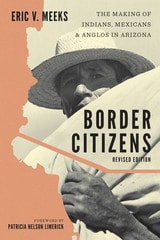
Border Citizens
The Making of Indians, Mexicans, and Anglos in ArizonaBy Eric V. Meeks; foreword by Patricia Nelson Limerick
University of Texas Press, 2007
In Border Citizens, historian Eric V. Meeks explores how the racial classification and identities of the diverse indigenous, mestizo, and Euro-American residents of Arizona’s borderlands evolved as the region was politically and economically incorporated into the United States. First published in 2007, the book examines the complex relationship between racial subordination and resistance over the course of a century. On the one hand, Meeks links the construction of multiple racial categories to the process of nation-state building and capitalist integration. On the other, he explores how the region’s diverse communities altered the blueprint drawn up by government officials and members of the Anglo majority for their assimilation or exclusion while redefining citizenship and national belonging.
The revised edition of this highly praised and influential study features dozens of new images, an introductory essay by historian Patricia Nelson Limerick, and a chapter-length afterword by the author. In his afterword, Meeks details and contextualizes Arizona’s aggressive response to undocumented immigration and ethnic studies in the decade after Border Citizens was first published, demonstrating that the broad-based movement against these measures had ramifications well beyond Arizona. He also revisits the Yaqui and Tohono O’odham nations on both sides of the Sonora-Arizona border, focusing on their efforts to retain, extend, and enrich their connections to one another in the face of increasingly stringent border enforcement.
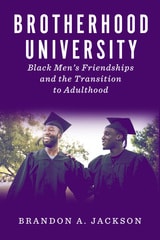
Brotherhood University
Black Men's Friendships and the Transition to AdulthoodBrandon A. Jackson
Rutgers University Press, 2024
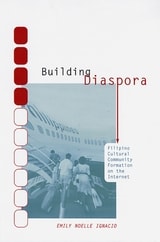
Building Diaspora
Filipino Cultural Community Formation on the InternetIgnacio, Emily N
Rutgers University Press, 2004
In Building Diaspora, Emily Noelle Ignacio explores how Filipinos have used these subtle, cyber, but very real social connections to construct and reinforce a sense of national, ethnic, and racial identity with distant others. Through an extensive analysis of newsgroup debates, listserves, and website postings, she illustrates the significant ways that computer-mediated communication has contributed to solidifying what can credibly be called a Filipino diaspora. Lively cyber-discussions on topics including Eurocentrism, Orientalism, patriarchy, gender issues, language, and "mail-order-brides" have helped Filipinos better understand and articulate their postcolonial situation as well as their relationship with other national and ethnic communities around the world. Significant attention is given to the complicated history of Philippine-American relations, including the ways Filipinos are racialized as a result of their political and economic subjugation to U.S. interests.
As Filipinos and many other ethnic groups continue to migrate globally, Building Diaspora makes an important contribution to our changing understanding of "homeland." The author makes the powerful argument that while home is being further removed from geographic place, it is being increasingly territorialized in space.
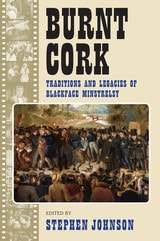
Burnt Cork
Traditions and Legacies of Blackface MinstrelsyStephen Johnson
University of Massachusetts Press, 2012
Beginning in the 1830s and continuing for more than a century, blackface minstrelsy—stage performances that claimed to represent the culture of black Americans—remained arguably the most popular entertainment in North America. A renewed scholarly interest in this contentious form of entertainment has produced studies treating a range of issues: its contradictory depictions of class, race, and gender; its role in the development of racial stereotyping; and its legacy in humor, dance, and music, and in live performance, film, and television. The style and substance of minstrelsy persist in popular music, tap and hip-hop dance, the language of the standup comic, and everyday rituals of contemporary culture. The blackface makeup all but disappeared for a time, though its influence never diminished—and recently, even the makeup has been making a comeback.
This collection of original essays brings together a group of prominent scholars of blackface performance to reflect on this complex and troublesome tradition. Essays consider the early relationship of the blackface performer with American politics and the antislavery movement; the relationship of minstrels to the commonplace compromises of the touring “show” business and to the mechanization of the industrial revolution; the exploration and exploitation of blackface in the mass media, by D. W. Griffith and Spike Lee, in early sound animation, and in reality television; and the recent reappropriation of the form at home and abroad.
In addition to the editor, contributors include Dale Cockrell, Catherine Cole, Louis Chude-Sokei, W. T. Lhamon, Alice Maurice, Nicholas Sammond, and Linda Williams.