Results by title
397 books match the query 'Rome' and 8 start with b
Baetica Felix
People and Prosperity in Southern Spain from Caesar to Septimius SeverusBy Evan W. Haley
University of Texas Press, 2003
Baetica, the present-day region of Andalusia in southern Spain, was the wealthiest province of the Roman Empire. Its society was dynamic and marked by upward social and economic mobility, as the imperial peace allowed the emergence of a substantial middle social and economic stratum. Indeed, so mutually beneficial was the imposition of Roman rule on the local population of Baetica that it demands a new understanding of the relationship between Imperial Rome and its provinces.
Baetica Felix builds a new model of Roman-provincial relations through a socio-economic history of the province from Julius Caesar to the end of the second century A.D. Describing and analyzing the impact of Roman rule on a core province, Evan Haley addresses two broad questions: what effect did Roman rule have on patterns of settlement and production in Baetica, and how did it contribute to wealth generation and social mobility? His findings conclusively demonstrate that meeting the multiple demands of the Roman state created a substantial freeborn and ex-slave "middle stratum" of the population that outnumbered both the super-rich elite and the destitute poor.
Bernini
Flights of Love, the Art of DevotionGiovanni Careri
University of Chicago Press, 1994
In the Fonseca Chapel, the Albertoni Chapel, and the church of Sant' Andrea al Quirinale, all in Rome, Careri identifies three types of ensemble and links each to a particular spiritual journey. Using contemporary theories in anthropology, film, and reception aesthetics, he shows how Bernini's formal mechanisms established an emotional dynamic between the beholder and a specific arrangement of forms. As an inquiry into the ways art in a certain historical context transformed and was transformed by its audience, Bernini: Flights of Love, the Art of Devotion is also a penetrating investigation into the aesthetic principles of multimedia composition.

Bernini
His Life and His RomeFranco Mormando
University of Chicago Press, 2011
Sculptor, architect, painter, playwright, and scenographer, Gian Lorenzo Bernini (1598–1680) was the last of the great universal artistic geniuses of early modern Italy, placed by both contemporaries and posterity in the same exalted company as Leonardo, Raphael, and Michelangelo. And his artistic vision remains palpably present today, through the countless statues, fountains, and buildings that transformed Rome into the Baroque theater that continues to enthrall tourists today.
Between Sahara and Sea
Africa in the Roman EmpireDavid J. Mattingly
University of Michigan Press, 2023
Winner of the 2024 Association of American Publishers PROSE Award for Classics
- Winner of the 2025 Vinson Sutlive Book Prize and Lecture
Between Sahara and Sea: Africa in the Roman Empire challenges orthodox views of the story of Africa under Roman domination. It presents a new framework for understanding this and other territories incorporated in the Roman Empire. Based on decades of research in North Africa, David Mattingly’s book is a cleverly constructed and innovative account of the history and archaeology of ancient North Africa (roughly equivalent to Morocco, Algeria, Tunisia, and Libya) from the first century BCE to the third century CE. He charts a new path toward a bottom-up understanding of North African archaeology, exploring in turn the differing material cultures and experiences of the Roman communities of the military and the urban and rural areas. Regional and societal differences emerge as significant and of long duration in the fascinating story of one of the most important sectors of the Roman Empire.
This important book is the most comprehensive in English on Roman North Africa. It is remarkably rich, with up-to-date references and a host of new ideas and perspectives. Well written and illustrated, with a plethora of maps, it will be required reading for anyone interested in the subject. Rather than emphasizing the role of external actors, as studies of “Roman Africa” have traditionally done, Between Sahara and Sea focuses on local contributions to the making of Africa in the Roman Empire. The author demonstrates that the multiple populations encountered by Rome were not an indistinct bloc, but had different identities and cultures.
Beyond the River, Under the Eye of Rome
Timothy C. Hart
University of Michigan Press, 2024
Drawing on textual, inscriptional, and archaeological evidence, Hart illustrates how Roman ethnic and ecological stereotypes were employed in the Danubian borderland to support the imperial frontier edifice fundamentally at odds with the region’s natural topography. Distorted Roman perceptions of these Danubian neighbors resulted in disastrous mismanagement of border wars and migrant crises throughout the first five centuries CE. Beyond the River demonstrates how state-supported stereotypes, when coupled with Roman military and economic power, exerted strong influences on the social structures and evolving group identities of the peoples dwelling in the borderland.
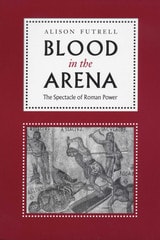
Blood in the Arena
The Spectacle of Roman PowerBy Alison Futrell
University of Texas Press, 1997
From the center of Imperial Rome to the farthest reaches of ancient Britain, Gaul, and Spain, amphitheaters marked the landscape of the Western Roman Empire. Built to bring Roman institutions and the spectacle of Roman power to conquered peoples, many still remain as witnesses to the extent and control of the empire.
In this book, Alison Futrell explores the arena as a key social and political institution for binding Rome and its provinces. She begins with the origins of the gladiatorial contest and shows how it came to play an important role in restructuring Roman authority in the later Republic. She then traces the spread of amphitheaters across the Western Empire as a means of transmitting and maintaining Roman culture and control in the provinces.
Futrell also examines the larger implications of the arena as a venue for the ritualized mass slaughter of human beings, showing how the gladiatorial contest took on both religious and political overtones. This wide-ranging study, which draws insights from archaeology and anthropology, as well as Classics, broadens our understanding of the gladiatorial contest and its place within the highly politicized cult practice of the Roman Empire.
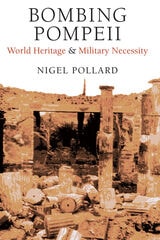
Bombing Pompeii
World Heritage and Military NecessityNigel Pollard
University of Michigan Press, 2020
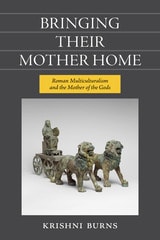
Bringing Their Mother Home
Roman Multiculturalism and the Mother of the GodsKrishni Burns
University of Michigan Press, 2025
Drawing on historical, literary, and archaeological evidence, Bringing Their Mother Home reevaluates the semiotics and practices of the Magna Mater cult as a way to perform the multicultural Roman identity and explores the political and military climate of the Mediterranean leading up to the cult's adoption in 204 BCE.