Results by title
4127 books match the query 'Science' and 162 start with b
Baboon Metaphysics
The Evolution of a Social MindDorothy L. Cheney and Robert M. Seyfarth
University of Chicago Press, 2007
“The vivid narrative is like a bush detective story.”—Steven Poole, Guardian
“Baboon Metaphysics is a distillation of a big chunk of academic lives. . . . It is exactly what such a book should be—full of imaginative experiments, meticulous scholarship, limpid literary style, and above all, truly important questions.”—Alison Jolly, Science
“Cheney and Seyfarth found that for a baboon to get on in life involves a complicated blend of short-term relationships, friendships, and careful status calculations. . . . Needless to say, the ensuing political machinations and convenient romantic dalliances in the quest to become numero uno rival the bard himself.”—Science News
“Through ingenious playback experiments . . . Cheney and Seyfarth have worked out many aspects of what baboons used their minds for, along with their limitations. Reading a baboon’s mind affords an excellent grasp of the dynamics of baboon society. But more than that, it bears on the evolution of the human mind and the nature of human existence.”—Nicholas Wade, New York Times
Baboon Mothers and Infants
Jeanne Altmann
University of Chicago Press, 2001
Baboquivari Mountain Plants
Identification, Ecology, and EthnobotanyDaniel F. Austin
University of Arizona Press, 2010
The term “sky island” was first used by Weldon Heald in 1967 to describe mountain ranges that are separated from each other by valleys of grassland or desert. The valleys create barriers to the spread of plant species in a way that is similar to the separation of islands in an ocean. The 70,000-square-mile Sky Islands region of southeastern Arizona, southwestern New Mexico, and northwestern Mexico is of particular interest to botanists because of its striking diversity of plant species and habitats. With more than 3,000 species of plants, the region offers a surprising range of tropical and temperate zones. Although others have written about the region, this is the first book to focus exclusively on the plant life of the Baboquivari Mountains.
The book offers an introduction to the history of the region, along with a discussion of human influences, and includes a useful appendix that lists all of the plants known to be growing in the Baboquivari Mountain chain.
Bachelors of Science
Seventeenth Century Identity, Then and NowNaomi Zack
Temple University Press, 1996
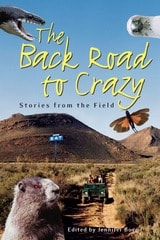
Back Road To Crazy
Stories From The FieldJennifer Bove
University of Utah Press, 2005
During five years of working in snake-ridden sloughs and rough northern seas, Jennifer Bové often asked herself 'Why am I doing this?' Realizing her own experiences were only the tip of the iceberg, she invited friends and colleagues to answer the same question. The result is stories that include deadly snakebites, a plague of marmots, special delivery skunk oil, bald eagle wrangling, and a mountain goat loose in the galley of a research vessel. These adventures are the details behind the data collected by these men and women driven to unlock nature’s truths. In The Back Road to Crazy, seasoned researchers and novices alike reveal the impulse to trade the comfort of a more sheltered career for demanding physical labor, whims of weather, and the company of unruly creatures.

Back to the Breast
Natural Motherhood and Breastfeeding in AmericaJessica Martucci
University of Chicago Press, 2015
That movement—in which the personal and political were inextricably linked—effectively challenged midcentury norms of sexuality, gender, and consumption, and articulated early environmental concerns about chemical and nuclear contamination of foods, bodies, and breast milk. In its groundbreaking chronicle of the breastfeeding movement, Back to the Breast provides a welcome and vital account of what it has meant, and what it means today, to breastfeed in modern America.
Back to the Roots
Memory, Inequality, and Urban AgricultureSara Shostak
Rutgers University Press, 2021
Backcasts
A Global History of Fly Fishing and ConservationEdited by Samuel Snyder, Bryon Borgelt, and Elizabeth Tobey
University of Chicago Press, 2016
Though Maclean writes of an age-old focus of all anglers—the day’s catch—he may as well be speaking to another, deeper accomplishment of the best fishermen and fisherwomen: the preservation of natural resources.
Backcasts celebrates this centuries-old confluence of fly fishing and conservation. However religious, however patiently spiritual the tying and casting of the fly may be, no angler wishes to wade into rivers of industrial runoff or cast into waters devoid of fish or full of invasive species like the Asian carp. So it comes as no surprise that those who fish have long played an active, foundational role in the preservation, management, and restoration of the world’s coldwater fisheries. With sections covering the history of fly fishing; the sport’s global evolution, from the rivers of South Africa to Japan; the journeys of both native and nonnative trout; and the work of conservation organizations such as the Federation of Fly Fishers and Trout Unlimited, Backcasts casts wide.
Highlighting the historical significance of outdoor recreation and sports to conservation in a collection important for fly anglers and scholars of fisheries ecology, conservation history, and environmental ethics, Backcasts explores both the problems anglers and their organizations face and how they might serve as models of conservation—in the individual trout streams, watersheds, and landscapes through which these waters flow.
Bacteria to AI
Human Futures with Our Nonhuman SymbiontsN. Katherine Hayles
University of Chicago Press, 2025
A new theory of mind that includes nonhuman and artificial intelligences.
The much-lauded superiority of human intelligence has not prevented us from driving the planet into ecological disaster. For N. Katherine Hayles, the climate crisis demands that we rethink basic assumptions about human and nonhuman intelligences. In Bacteria to AI, Hayles develops a new theory of mind—what she calls an integrated cognitive framework (ICF)—that includes the meaning-making practices of lifeforms from bacteria to plants, animals, humans, and some forms of artificial intelligence. Through a sweeping survey of evolutionary biology, computer science, and contemporary literature, Hayles insists that another way of life, with ICF at its core, is not only possible but necessary to safeguard our planet’s future.
Bacula of North American Mammals
William Henry Burt
University of Michigan Press, 1960
Baja California's Coastal Landscapes Revealed
Excursions in Geologic Time and Climate ChangeMarkes E. Johnson
University of Arizona Press, 2021
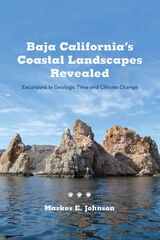
Johnson reveals a geologic history that is outside the temporal framework of a human lifetime and scored by violent storms. We see how hurricanes have shaped coastal landscapes all along the peninsula’s inner coast, a fascinating story only possible by disassembling the rocks that on first appraisal seem incomprehensible.
Looking closely, Johnson shows us how geology not only helps us look backward but also forward toward an uncertain future. The landscape Johnson describes may be apart from the rest of Mexico, but his expert eye reveals how it is influenced by the unfolding drama of Planet Earth’s global warming.
Bamboos of Bhutan
C. Stapleton
Royal Botanic Gardens, Kew, 1994
Banquet at Delmonico's
The Gilded Age and the Triumph of Evolution in AmericaBarry Werth
University of Chicago Press, 2011
In Banquet at Delmonico’s, Barry Werth draws readers inside the circle of intellectuals, scientists, politicians, businessmen, and clergymen who brought Charles Darwin’s controversial ideas to post-Civil-War America. Each chapter is dedicated to a crucial intellectual encounter, culminating with an exclusive farewell dinner held in English philosopher Herbert Spencer’s honor at the venerable New York restaurant Delmonico’s in 1882. In this thought-provoking and nuanced account, Werth firmly situates social Darwinism in the context of the Gilded Age. Banquet at Delmonico’s is social history at its finest.
Baobab - Africa's Upside-Down Tree
G. E. Wickens
Royal Botanic Gardens, Kew, 1982
Bark Beetles in North American Conifers
A System for the Study of Evolutionary BiologyEdited by Jeffry B. Mitton and Kareen B. Sturgeon
University of Texas Press, 1982
Because they prey upon a wide variety of conifers, bark beetles have a major impact upon western forests. In most of the western states, for example, we have witnessed bark beetles in epidemic outbreaks, attacking and damaging ponderosa pine, limber pine, and other hosts.
The ecosystem of bark beetle and host tree is a highly coevolved community of organisms in which the evolution of one member of the community significantly influences the evolution of the other. Largely because of the enormous economic impact these insects exert on the management of our forests, few other such communities have been studied so extensively. Bark Beetles in North American Conifers brings together in one volume both theory and a wealth of empirical data gathered by researchers from all the fields in which bark beetles are studied: ecology, evolutionary biology, population genetics, entomology, and forestry.
Topics covered include the life cycle of bark beetles and their population dynamics, their genetic variation and evolutionary mechanisms, the evolution and systematics of the major groups of bark beetles, pheromone production and its implications for coevolution among these organisms, the interaction between bark beetles and their predators, host resistance and susceptibility, the relationship of parasites and symbiotic micro-organisms in general, and management and control of bark beetles based on sound ecological and evolutionary concepts. The concluding section of the book summarizes the dynamics of the coevolved system of bark beetle and host tree and discusses controversial issues for which this system may provide important answers.
Bark
A Field Guide to Trees of the NortheastMichael Wojtech
Brandeis University Press, 2020
What kind of tree is that? Whether you’re hiking in the woods or simply sitting in your backyard, from Maine to New York you’ll never be without an answer to that question, thanks to this handy companion to the trees of the Northeast. Featuring detailed information and illustrations covering each phase of a tree’s lifecycle, this indispensable guidebook explains how to identify trees by their bark alone—no more need to wait for leaf season. Chapters on the structure and ecology of tree bark, descriptions of bark appearance, an easy-to-use identification key, and supplemental information on non-bark characteristics—all enhanced by more than 450 photographs, illustrations, and maps—will show you how to distinguish the textures, shapes, and colors of bark to recognize various tree species, and also understand why these traits evolved.
Whether you’re a professional naturalist or a parent leading a family hike, this new edition of Bark: A Field Guide to Trees of the Northeast is your essential guide to the region’s 67 native and naturalized tree species.
Baroque Science
Ofer Gal and Raz Chen-Morris
University of Chicago Press, 2013
Gal and Chen-Morris show how the protagonists of the new mathematical natural philosophy grasped at the very far and very small by entrusting observation to the mediation of artificial instruments, and how they justified this mediation by naturalizing and denigrating the human senses. They show how the physical-mathematical ordering of heavens and earth demanded obscure and spurious mathematical procedures, replacing the divine harmonies of the late Renaissance with an assemblage of isolated, contingent laws and approximated constants. Finally, they show how the new savants, forced to contend that reason is hopelessly estranged from its surrounding world and that nature is irreducibly complex, turned to the passions to provide an alternative, naturalized foundation for their epistemology and ethics.
Enforcing order in the face of threatening chaos, blurring the boundaries of the natural and the artificial, and mobilizing the passions in the service of objective knowledge, the New Science, Gal and Chen-Morris reveal, is a Baroque phenomenon: deeply entrenched in and crucially formative of the culture of its time.
Basic Circuitry of the MIDAC and MIDSAC
J.E. De Turk, H.L. Garner, J. Kaufman, H.W. Bethel, R.E. Hock
University of Michigan Press, 1954

Basic Questions in Paleontology
Geologic Time, Organic Evolution, and Biological SystematicsOtto H. Schindewolf
University of Chicago Press, 1993
"[This book] would rank number one on my list of items awaiting translation from the history of twentieth-century evolutionary theory."—Stephen Jay Gould
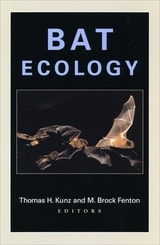
Bat Ecology
Edited by Thomas H. Kunz and M. Brock Fenton
University of Chicago Press, 2003
The first part of the book covers the life history and behavioral ecology of bats, from migration to sperm competition and natural selection. The next section focuses on functional ecology, including ecomorphology, feeding, and physiology. In the third section, contributors explore macroecological issues such as the evolution of ecological diversity, range size, and infectious diseases (including rabies) in bats. A final chapter discusses conservation challenges facing these fascinating flying mammals.
Bat Ecology is the most comprehensive state-of-the-field collection for scientists and researchers.
Contributors:
John D. Altringham, Robert M. R. Barclay, Tenley M. Conway, Elizabeth R. Dumont, Peggy Eby, Abigail C. Entwistle, Theodore H. Fleming, Patricia W. Freeman, Lawrence D. Harder, Gareth Jones, Linda F. Lumsden, Gary F. McCracken, Sharon L. Messenger, Bruce D. Patterson, Paul A. Racey, Jens Rydell, Charles E. Rupprecht, Nancy B. Simmons, Jean S. Smith, John R. Speakman, Richard D. Stevens, Elizabeth F. Stockwell, Sharon M. Swartz, Donald W. Thomas, Otto von Helversen, Gerald S. Wilkinson, Michael R. Willig, York Winter

Bataille’s Peak
Energy, Religion, and PostsustainabilityAllan Stoekl
University of Minnesota Press, 2007
As the price of oil climbs toward $100 a barrel, our impending post-fossil fuel future appears to offer two alternatives: a bleak existence defined by scarcity and sacrifice or one in which humanity places its faith in technological solutions with unforeseen consequences. Are there other ways to imagine life in an era that will be characterized by resource depletion?
The French intellectual Georges Bataille saw energy as the basis of all human activity—the essence of the human—and he envisioned a society that, instead of renouncing profligate spending, would embrace a more radical type of energy expenditure: la dépense, or “spending without return.” In Bataille’s Peak, Allan Stoekl demonstrates how a close reading of Bataille—in the wake of Giordano Bruno and the Marquis de Sade— can help us rethink not only energy and consumption, but also such related topics as the city, the body, eroticism, and religion. Through these cases, Stoekl identifies the differences between waste, which Bataille condemned, and expenditure, which he celebrated.
The challenge of living in the twenty-first century, Stoekl argues, will be to comprehend—without recourse to austerity and self-denial—the inevitable and necessary shift from a civilization founded on waste to one based on Bataillean expenditure.
Allan Stoekl is professor of French and comparative literature at Penn State University. He is the author of Agonies of the Intellectual: Commitment, Subjectivity, and the Performative in the Twentieth-Century French Tradition and translator of Bataille’s Visions of Excess: Selected Writings, 1927–1939 (Minnesota, 1985).
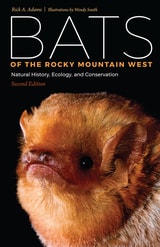
Bats of the Rocky Mountain West
Natural History, Ecology, and ConservationRick A. Adams
University Press of Colorado, 2025
In the twenty years since the original publication of Bats of the Rocky Mountain West, chiropterology (bat science) has exploded, significantly altering our understanding of the ecology, behavior, distribution, and conservation of one of the world's most enigmatic mammals. This notably updated second edition further brings to life the wonderful world of bats with beautiful illustrations and photography that grip the imagination and reveal the magnificent natural history of the only true flying mammal. In addition, thirty-two accounts of regional species with photographs, range maps, and echolocation sonograms report informative and thoroughly revised findings on bats now living in the Rocky Mountain West. Leave any preconceived notions behind and learn the real-life biology of bats, which eclipses the fabled tales of the crypt and macabre.
Bats
A World of Science and MysteryM. Brock Fenton and Nancy B. Simmons
University of Chicago Press, 2015
Bats: A World of Science and Mystery presents these fascinating nocturnal creatures in a new light. Lush, full-color photographs portray bats in flight, feeding, and mating in views that show them in exceptional detail. The photos also take the reader into the roosts of bats, from caves and mines to the tents some bats build out of leaves. A comprehensive guide to what scientists know about the world of bats, the book begins with a look at bats’ origins and evolution. The book goes on to address a host of questions related to flight, diet, habitat, reproduction, and social structure: Why do some bats live alone and others in large colonies? When do bats reproduce and care for their young? How has the ability to fly—unique among mammals—influenced bats’ mating behavior? A chapter on biosonar, or echolocation, takes readers through the system of high-pitched calls bats emit to navigate and catch prey. More than half of the world’s bat species are either in decline or already considered endangered, and the book concludes with suggestions for what we can do to protect these species for future generations to benefit from and enjoy.
From the tiny “bumblebee bat”—the world’s smallest mammal—to the Giant Golden-Crowned Flying Fox, whose wingspan exceeds five feet, A Battery of Bats presents a panoramic view of one of the world’s most fascinating yet least-understood species.
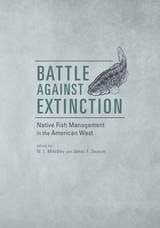
Battle Against Extinction
Native Fish Management in the American WestEdited by W. L. Minckley and James E. Deacon; Foreword by Stewart L. Udall
University of Arizona Press, 1991
Nearly a third of the native fish fauna of North America lives in the arid West; this book traces their decline toward extinction as a result of human interference and the threat to their genetic diversity posed by decreases in their populations. What can be done to slow or end this tragedy? As the most comprehensive treatment ever attempted on the subject, Battle Against Extinction shows how conservation efforts have been or can be used to reverse these trends.
In covering fishes in arid lands west of the Mississippi Valley, the contributors provide a species-by-species appraisal of their status and potential for recovery, bringing together in one volume nearly all of the scattered literature on western fishes to produce a monumental work in conservation biology. They also ponder ethical considerations related to the issue, ask why conservation efforts have not proceeded at a proper pace, and suggest how native fish protection relates to other aspects of biodiversity planetwide. Their insights will allow scientific and public agencies to evaluate future management of these animal populations and will offer additional guidance for those active in water rights and conservation biology.
First published in 1991, Battle Against Extinction is now back in print and available as an open-access e-book thanks to the Desert Fishes Council.

Battle Against Extinction
Native Fish Management in the American WestEdited by W. L. Minckley and James E. Deacon; Foreword by Stewart L. Udall
University of Arizona Press, 1991
Nearly a third of the native fish fauna of North America lives in the arid West; this book traces their decline toward extinction as a result of human interference and the threat to their genetic diversity posed by decreases in their populations. What can be done to slow or end this tragedy? As the most comprehensive treatment ever attempted on the subject, Battle Against Extinction shows how conservation efforts have been or can be used to reverse these trends.
In covering fishes in arid lands west of the Mississippi Valley, the contributors provide a species-by-species appraisal of their status and potential for recovery, bringing together in one volume nearly all of the scattered literature on western fishes to produce a monumental work in conservation biology. They also ponder ethical considerations related to the issue, ask why conservation efforts have not proceeded at a proper pace, and suggest how native fish protection relates to other aspects of biodiversity planetwide. Their insights will allow scientific and public agencies to evaluate future management of these animal populations and will offer additional guidance for those active in water rights and conservation biology.
Battle in the Mind Fields
John A. Goldsmith and Bernard Laks
University of Chicago Press, 2019
Taking note of this phenomenon, John Goldsmith and Bernard Laks embark on a uniquely interdisciplinary history of the genesis of linguistics, from nineteenth-century currents of thought in the mind sciences through to the origins of structuralism and the ruptures, both political and intellectual, in the years leading up to World War II. Seeking to explain where contemporary ideas in linguistics come from and how they have been justified, Battle in the Mind Fields investigates the porous interplay of concepts between psychology, philosophy, mathematical logic, and linguistics. Goldsmith and Laks trace theories of thought, self-consciousness, and language from the machine age obsession with mind and matter to the development of analytic philosophy, behaviorism, Gestalt psychology, positivism, and structural linguistics, emphasizing throughout the synthesis and continuity that has brought about progress in our understanding of the human mind. Arguing that it is impossible to understand the history of any of these fields in isolation, Goldsmith and Laks suggest that the ruptures between them arose chiefly from social and institutional circumstances rather than a fundamental disparity of ideas.
Battle of the Big Bang
The New Tales of Our Cosmic OriginsNiayesh Afshordi and Phil Halper
University of Chicago Press, 2025
“Excellent.”—Steven Poole, The Wall Street Journal • “Terrific.”—Liz Else, New Scientist (Best Popular Science Books of 2025 So Far) • “A brilliant overview of the state of modern cosmology.”—Alex O'Connor, alexoconnor.com • “This will expand readers’ minds.”—Publishers Weekly • One of Smithsonian's Ten Best Science Books of 2025
“An intellectual feast.”—Carlo Rovelli • “A must-read.”—Sabine Hossenfelder • “Wonderfully broad and open-minded.”—Roger Penrose • “Remarkable.”—Brian Keating
A thrilling exploration of competing cosmological origin stories, comparing new scientific ideas that upend our very notions of space, time, and reality.
By most popular accounts, the universe started with a bang some 13.8 billion years ago. But what happened before the Big Bang? And how do we know it happened at all? Here prominent cosmologist Niayesh Afshordi and science communicator Phil Halper offer a tour of the peculiar possibilities: bouncing and cyclic universes, time loops, creations from nothing, multiverses, black hole births, string theories, and holograms. Along the way, they offer both a call for new physics and a riveting story of scientific debate.
Incorporating insights from Afshordi’s cutting-edge research and Halper’s original interviews with scientists like Stephen Hawking, Roger Penrose, and Alan Guth, Battle of the Big Bang compares these models for the origin of our origins, showing each theory’s strengths and weaknesses and explaining new attempts to test these notions. Battle of the Big Bang is a tale of rivalries and intrigue, of clashes of ideas that have raged from Greek antiquity to the present day over whether the universe is eternal or had a beginning, whether it is unique or one of many. But most of all, Afshordi and Halper show that this search is filled with wonder, discovery, and community—all essential for remembering a forgotten cosmic past.
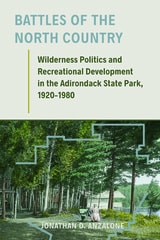
Battles of the North Country
Wilderness Politics and Recreational Development in the Adirondack State Park, 1920-1980Jonathan D. Anzalone
University of Massachusetts Press, 2018
Through a series of case studies, historian Jonathan D. Anzalone highlights the role of public and private interests in the region and shows how partnerships frayed and realigned in the course of several key developments: the rise of camping in the 1920s and 1930s; the 1932 Lake Placid Olympics; the construction of a highway to the top of Whiteface Mountain; the postwar rise of downhill skiing; the completion of I-87 and the resulting demand for second homes; and the 1980 Lake Placid Olympics. Battles of the North Country reveals how class, economic self-interest, state power, and a wide range of environmental concerns have shaped modern politics in the Adirondacks and beyond.
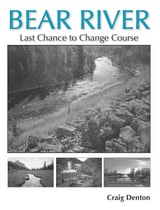
Bear River
Last Chance to Change CourseCraig Denton
Utah State University Press, 2007
Craig Denton's documentary takes on these questions. He tells the story of the river and the people, of many sorts, with diverse purposes, who live and depend on it. Bear River begins in alpine snowfields, lakes, and creeks in the Uinta Mountains, flows north through Wyoming, loops south in Idaho, and enters the inland sea by way of the an environmentally critical bird refuge. Along the way it has many uses: habitat, farms, electricity, recreation, lawns and homes. Denton researches the natural and human history of the river, photographed it, interviewed many stakeholders, and tried to capture the river perspective. His photographs, printed as crisp duotones, carry us downstream, ultimately to big questions, begging to be answered soon, about what we should and can make of the Bear River. Denton writes,
Gravity my engine,
Water my soul.
I am the teller of life and deep time.
You would measure me.
Sever me.
Own me.
In your name.
Let me flow
In your imagination
That I may speak.
Beasts of the Earth
Animals, Humans, and DiseaseTorrey, E. Fuller
Rutgers University Press, 2014
Humans have lived in close proximity to other animals for thousands of years. Recent scientific studies have even shown that the presence of animals has a positive effect on our physical and mental health. People with pets typically have lower blood pressure, show fewer symptoms of depression, and tend to get more exercise.
But there is a darker side to the relationship between animals and humans. Animals are carriers of harmful infectious agents and the source of a myriad of human diseases. In recent years, the emergence of high-profile illnesses such as AIDS, SARS, West Nile virus, and bird flu has drawn much public attention, but as E. Fuller Torrey and Robert H. Yolken reveal, the transfer of deadly microbes from animals to humans is neither a new nor an easily avoided problem.
Beginning with the domestication of farm animals nearly 10,000 years ago, Beasts of the Earth traces the ways that human-animal contact has evolved over time. Today, shared living quarters, overlapping ecosystems, and experimental surgical practices where organs or tissues are transplanted from non-humans into humans continue to open new avenues for the transmission of infectious agents. Other changes in human behavior like increased air travel, automated food processing, and threats of bioterrorism are increasing the contagion factor by transporting microbes further distances and to larger populations in virtually no time at all.
While the authors urge that a better understanding of past diseases may help us lessen the severity of some illnesses, they also warn that, given our increasingly crowded planet, it is not a question of if but when and how often animal-transmitted diseases will pose serious challenges to human health in the future.
Beautiful Experiments
An Illustrated History of Experimental SciencePhilip Ball
University of Chicago Press, 2023
Featuring two hundred color plates, this history of the craft of scientific inquiry is as exquisite as the experiments whose stories it shares.
This illustrated history of experimental science is more than just a celebration of the ingenuity that scientists and natural philosophers have used throughout the ages to study—and to change—the world. Here we see in intricate detail experiments that have, in some way or another, exhibited elegance and beauty: in their design, their conception, and their execution. Celebrated science writer Philip Ball invites readers to marvel at and admire the craftsmanship of scientific instruments and apparatus on display, from the earliest microscopes to the giant particle colliders of today. With Ball as our expert guide, we are encouraged to think carefully about what experiments are, what they mean, and how they are used. Ranging across millennia and geographies, Beautiful Experiments demonstrates why “experiment” remains a contested notion in science, while also exploring how we came to understand the way the world functions, what it contains, and where the pursuit of that understanding has brought us today.
Beautiful Flesh
A Body of EssaysStephanie G'Schwind
University Press of Colorado, 2017
Selected from the country’s leading literary journals and publications—Colorado Review, Creative Nonfiction, Georgia Review, Prairie Schooner, Crazyhorse, The Normal School, and others—Beautiful Flesh gathers eighteen essays on the body, essentially building a multi-gender, multi-ethnic body out of essays, each concerning a different part of the body: belly, brain, bones, blood, ears, eyes, hair, hands, heart, lungs, nose, ovaries, pancreas, sinuses, skin, spine, teeth, and vas deferens. The title is drawn from Wendy Call’s essay “Beautiful Flesh,” a meditation on the pancreas: “gorgeously ugly, hideously beautiful: crimson globes embedded in a pinkish-tan oval, all nestled on a bed of cabbage-olive green, spun through with gossamer gold.”
Other essays include Dinty W. Moore’s “The Aquatic Ape,” in which the author explores the curious design and necessity of sinuses; Katherine E. Standefer’s “Shock to the Heart, Or: A Primer on the Practical Applications of Electricity,” a modular essay about the author’s internal cardiac defibrillator and the nature of electricity; Matt Roberts’s “Vasectomy Instruction 7,” in which the author considers the various reasons for and implications of surgically severing and sealing the vas deferens; and Peggy Shinner’s “Elective,” which examines the author’s own experience with rhinoplasty and cultural considerations of the “Jewish nose.” Echoing the myriad shapes, sizes, abilities, and types of the human body, these essays showcase the many forms of the genre: personal, memoir, lyric, braided, and so on.
Contributors: Amy Butcher, Wendy Call, Steven Church, Sarah Rose Etter, Matthew Ferrence, Hester Kaplan, Sarah K. Lenz, Lupe Linares, Jody Mace, Dinty W. Moore, Angela Pelster, Matt Roberts, Peggy Shinner, Samantha Simpson, Floyd Skloot, Danielle R. Spencer, Katherine E. Standefer, Kaitlyn Teer, Sarah Viren, Vicki Weiqi Yang
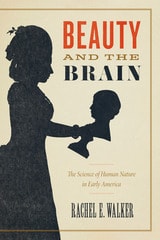
Beauty and the Brain
The Science of Human Nature in Early AmericaRachel E. Walker
University of Chicago Press, 2023
Between the 1770s and the 1860s, people all across the globe relied on physiognomy and phrenology to evaluate human worth. These once-popular but now-discredited disciplines were based on a deceptively simple premise: that facial features or skull shape could reveal a person’s intelligence, character, and personality. In the United States, these were culturally ubiquitous sciences that both elite thinkers and ordinary people used to understand human nature.
While the modern world dismisses phrenology and physiognomy as silly and debunked disciplines, Beauty and the Brain shows why they must be taken seriously: they were the intellectual tools that a diverse group of Americans used to debate questions of race, gender, and social justice. While prominent intellectuals and political thinkers invoked these sciences to justify hierarchy, marginalized people and progressive activists deployed them for their own political aims, creatively interpreting human minds and bodies as they fought for racial justice and gender equality. Ultimately, though, physiognomy and phrenology were as dangerous as they were popular. In addition to validating the idea that external beauty was a sign of internal worth, these disciplines often appealed to the very people who were damaged by their prejudicial doctrines. In taking physiognomy and phrenology seriously, Beauty and the Brain recovers a vibrant—if largely forgotten—cultural and intellectual universe, showing how popular sciences shaped some of the greatest political debates of the American past.
Beauty and the Brain
The Science of Human Nature in Early AmericaRachel E. Walker
University of Chicago Press, 2023
Examining the history of phrenology and physiognomy, Beauty and the Brain proposes a bold new way of understanding the connection between science, politics, and popular culture in early America.
Between the 1770s and the 1860s, people all across the globe relied on physiognomy and phrenology to evaluate human worth. These once-popular but now discredited disciplines were based on a deceptively simple premise: that facial features or skull shape could reveal a person’s intelligence, character, and personality. In the United States, these were culturally ubiquitous sciences that both elite thinkers and ordinary people used to understand human nature.
While the modern world dismisses phrenology and physiognomy as silly and debunked disciplines, Beauty and the Brain shows why they must be taken seriously: they were the intellectual tools that a diverse group of Americans used to debate questions of race, gender, and social justice. While prominent intellectuals and political thinkers invoked these sciences to justify hierarchy, marginalized people and progressive activists deployed them for their own political aims, creatively interpreting human minds and bodies as they fought for racial justice and gender equality. Ultimately, though, physiognomy and phrenology were as dangerous as they were popular. In addition to validating the idea that external beauty was a sign of internal worth, these disciplines often appealed to the very people who were damaged by their prejudicial doctrines. In taking physiognomy and phrenology seriously, Beauty and the Brain recovers a vibrant—if largely forgotten—cultural and intellectual universe, showing how popular sciences shaped some of the greatest political debates of the American past.
Becoming Beside Ourselves
The Alphabet, Ghosts, and Distributed Human BeingBrian Rotman
Duke University Press, 2008
Alphabetic texts do not convey the bodily gestures of human speech: the hesitations, silences, and changes of pitch that infuse spoken language with affect. Rotman suggests that by removing the body from communication, alphabetic texts enable belief in singular, disembodied, authoritative forms of being such as God and the psyche. He argues that while disembodied agencies are credible and real to “lettered selves,” they are increasingly incompatible with selves and subjectivities formed in relation to new virtual technologies and networked media. Digital motion-capture technologies are restoring gesture and even touch to a prominent role in communication. Parallel computing is challenging the linear thought patterns and ideas of singularity facilitated by alphabetic language. Barriers between self and other are breaking down as the networked self is traversed by other selves to become multiple and distributed, formed through many actions and perceptions at once. The digital self is going plural, becoming beside itself.
Becoming Creole
Nature and Race in BelizeJohnson, Melissa A.
Rutgers University Press, 2019
Becoming Undone
Darwinian Reflections on Life, Politics, and ArtElizabeth Grosz
Duke University Press, 2011
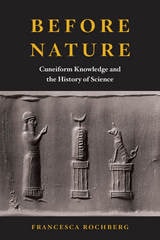
Before Nature
Cuneiform Knowledge and the History of ScienceFrancesca Rochberg
University of Chicago Press, 2016
Before the concept of nature formed over the long history of European philosophy and science, our ancestors in ancient Assyria and Babylonia developed an inquiry into the world in a way that is kindred to our modern science. With Before Nature, Francesca Rochberg explores that Assyro-Babylonian knowledge tradition and shows how it relates to the entire history of science. From a modern, Western perspective, a world not conceived somehow within the framework of physical nature is difficult—if not impossible—to imagine. Yet, as Rochberg lays out, ancient investigations of regularity and irregularity, norms and anomalies clearly established an axis of knowledge between the knower and an intelligible, ordered world. Rochberg is the first scholar to make a case for how exactly we can understand cuneiform knowledge, observation, prediction, and explanation in relation to science—without recourse to later ideas of nature. Systematically examining the whole of Mesopotamian science with a distinctive historical and methodological approach, Before Nature will open up surprising new pathways for studying the history of science.
Before Voltaire
The French Origins of “Newtonian” Mechanics, 1680-1715J.B. Shank
University of Chicago Press, 2017
Before Voltaire explores how Newton’s ideas made their way not just through the realm of French science, but into the larger world of society and culture of which Principia was an intertwined part. Shank also details a history of the beginnings of calculus-based mathematical physics that integrates it into the larger intellectual currents in France at the time, including the Battle of the Ancients and the Moderns, the emergence of wider audiences for science, and the role of the newly reorganized Royal Academy of Sciences. The resulting book offers an unprecedented cultural history of one the most important and influential elements of Enlightenment science.
Beginning to End the Climate Crisis
A History of Our FutureLuisa Neubauer and Alexander Repenning
Brandeis University Press, 2023
“Act as though your house is on fire. Because it is.” Following Greta Thunberg, millions of young climate activists have been taking to the streets around the globe as part of the Fridays For Future movement. They demand that we “unite behind the science,” as, for too long, climate scientists have been ringing the alarm bells about rising temperatures, tipping points, and the devastating consequences of extreme weather—but politicians do nothing.
So how do you begin to end the climate crisis? Luisa Neubauer and Alexander Repenning begin by telling stories. Neubauer cofounded the youth climate activist group in Germany and has become its most prominent voice. In this book she and Repenning weave in personal accounts of their evolution as climate activists with a thorough analysis of how climate change impacts their generation, and what every one of us can and must do about it. The young and old in the United States and around the world can learn valuable lessons from their European counterparts.
Behavioral Mechanisms in Evolutionary Ecology
Leslie A. Real
University of Chicago Press, 1994
With studies of species ranging from insects to primates, the contributors examine how various animals identify and use environmental resources and deal with ecological constraints, as well as the roles of learning, communication, and cognitive aspects of social interaction in behavioral evolution. Taken together, the chapters demonstrate how the study of internal mechanistic foundations of behavior in relation to their ecological and evolutionary contexts and outcomes provides valuable insight into such behaviors as predation, mating, and dispersal.
Behavioral Mechanisms in Evolutionary Ecology shows how a mechanistic approach unites various levels of biological organization to provide a broader understanding of the biological bases of behavioral evolution.
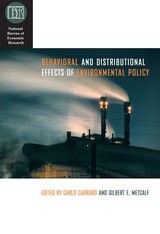
Behavioral and Distributional Effects of Environmental Policy
Edited by Carlo Carraro and Gilbert E. Metcalf
University of Chicago Press, 2001
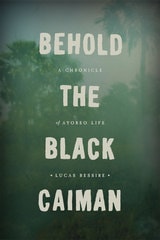
Behold the Black Caiman
A Chronicle of Ayoreo LifeLucas Bessire
University of Chicago Press, 2014
Drawing on ten years of fieldwork, Bessire highlights the stark disconnect between the desperate conditions of Ayoreo life for those out of the forest and the well-funded global efforts to preserve those Ayoreo still living in it. By showing how this disconnect reverberates within Ayoreo bodies and minds, his reflexive account takes aim at the devastating consequences of our society’s continued obsession with the primitive and raises important questions about anthropology’s potent capacity to further or impede indigenous struggles for sovereignty. The result is a timely update to the classic literary ethnographies of South America, a sustained critique of the so-called ontological turn—one of anthropology’s hottest trends—and, above all, an urgent call for scholars and activists alike to rethink their notions of difference.

Being Human
The Search for OrderSeán Ó Nualláin
Intellect Books, 2013
We live at a time of unparallelled environmental and moral crisis. Not only do we not believe anything but, despite exponential advances in information production, we do not know very much either. This book is a guide for everyone who, understandably, feels perplexed.
Presenting an explanation of recent findings in science and their relationship with society and politics as we enter the third millennium, the book also seeks to provide guidance towards responsible political action in this current crisis. From new technology's power to preserve the status quo, to the true impetus behind the Human Genome Project, Sean Ó Nualláin brings to topical concerns some much needed clarity.
Complete with reader-friendly summaries to current thought in the biological, physical, and social sciences, the book is designed to be accessible to a general readership, it should also appeal to all those working or studying in the Sciences.
Being Interdisciplinary
Adventures in Urban Science and BeyondAlan Wilson
University College London, 2022
In Being Interdisciplinary, Alan Wilson draws on five decades as a leading figure in urban science to set out a systems approach to interdisciplinarity for those conducting research in this and other fields. He argues that most research is interdisciplinary at its base and that a systems perspective is particularly appropriate for collaboration because it fosters an outlook that sees beyond disciplines. A systems approach enables researchers to identify the game-changers of the past as a basis for thinking outside of convention, for learning how to do something new and how to be ambitious.
Building on this systems focus, the book first establishes the basics of interdisciplinarity. Then, by drawing on the author’s wide experience in interdisciplinary research—as a researcher in urban science, a university professor and vice-chancellor, a civil servant, and an institute director, it illustrates general principles and a framework from which researchers can build their own interdisciplinary approach. In the last section, the book tackles questions of managing and organizing research from individual to institutional scales.
Being Modern
The Cultural Impact of Science in the Early Twentieth CenturyEdited by Robert Bud, Paul Greenhalgh, Frank James, and Morag Shiach
University College London, 2018
Being Young, Male and Muslim in Luton
Ashraf Hoque
University College London, 2018
Drawn from the author’s ethnographic research of British-born Muslim men in the English town of Luton, Being Young, Muslim and Male in Luton explores the everyday lives of young men and, focusing on how their identity as Muslims has shaped the way they interact with each other, the local community, and the wider world. Through a study of religious values, the pressures of masculinity, the complexities of family and social life, and attitudes towards work and leisure, Ashraf Hoque argues that young Muslims in Luton are subverting what it means to be “British” by consciously prioritizing and rearticulating their “Muslim identities” in novel and dynamic ways that suit their experiences. Employing rich interviews and extensive participant observation, Hoque paints a detailed picture of young Muslims living in a town consistently associated in the popular media with terrorist activity and as a hotbed for radicalization. He challenges widely held assumptions and gives voice to an emerging generation of Muslims who view Britain as their home and are very much invested in the long-term future of the country and their permanent place within it.
Believing In Place
A Spiritual Geography Of The Great BasinRichard V. Francaviglia
University of Nevada Press, 2016
The austere landscape of the Great Basin has inspired diverse responses from the people who have moved through or settled in it. Author Richard V. Francaviglia is interested in the connection between environment and spirituality in the Great Basin, for here, he says, "faith and landscape conspire to resurrect old myths and create new ones." As a geographer, Francaviglia knows that place means more than physical space. Human perceptions and interpretations are what give place its meaning. In Believing in Place, he examines the varying human perceptions of and relationships with the Great Basin landscape, from the region's Native American groups to contemporary tourists and politicians, to determine the spiritual issues that have shaped our connections with this place. In doing so, he considers the creation and flood myths of several cultures, the impact of the Judeo-Christian tradition and individualism, Native American animism and shamanist traditions, the Mormon landscape, the spiritual dimensions of gambling, the religious foundations of Cold War ideology, stories of UFOs and alien presence, and the convergence of science and spirituality.
Believing in Place is a profound and totally engaging reflection on the ways that human needs and spiritual traditions can shape our perceptions of the land. That the Great Basin has inspired such a complex variety of responses is partly due to its enigmatic vastness and isolation, partly to the remarkable range of peoples who have found themselves in the region. Using not only the materials of traditional geography but folklore, anthropology, Native American and Euro-American religion, contemporary politics, and New Age philosophies, Francaviglia has produced a fascinating and timely investigation of the role of human conceptions of place in that space we call the Great Basin.
Belonging and Identity in STEM Higher Education
Edited by Camille Kandiko Howson and Martyn Kingsbury
University College London, 2024
In Belonging and Identity in STEM Higher Education, Camille Kandiko Howson and Martyn Kingsbury examine the role of science, technology, engineering, and mathematics (STEM) pedagogies in facilitating belonging, variable impacts across student characteristics, and the experiences of STEM students in higher education. Through case study contributions, the book analyzes the unique educational environments for STEM staff and students throughout Europe and Asia, challenging the assumptions that STEM fields are inherently unemotional and impersonal disciplines.
Beneath the Surface
Understanding Nature in the Mullica Valley EstuaryKenneth W. Able
Rutgers University Press, 2020
The Mullica Valley estuary and its watershed, formed over the last 10,000 years, are among the cleanest estuaries along the east coast of the United States. This 365,000-acre ecosystem benefits from a combination of protected watershed, low human population density, and general lack of extensive development. In Beneath the Surface, marine scientist Ken Able helps the reader penetrate the surface and gain insights into the kinds of habitats, animals, and plants that live there. Readers will gain a better understanding of the importance of these shallow waters; how the amount of salt in the water determines where animals and plants are found in estuaries; the day-night, seasonal, and annual variation in their occurrence; and how change is occurring as the result of climate variation. Throughout the book are insightful sidebars telling intimate stories of where various animals came from and where they are going as they travel through the estuary on their way to and from other portions of the east coast. Beneath the Surface emphasizes the kinds and importance of the animals and plants that live beneath the surface of this unique ecosystem.