94 books match the query 'Services for' and 5 start with b
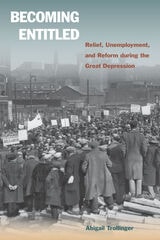
cover of Becoming Entitled: Relief, Unemployment, and Reform during the Great Depression

Becoming Entitled

Relief, Unemployment, and Reform during the Great Depression

Abigail Trollinger

Temple University Press, 2020

In the 1930s, the unemployed were organizing. Jobless workers felt they were “entitled" to a new kind of government protection—the protection from undeserved unemployment and the financial straits that such unemployment created. They wanted dignified forms of relief (including work relief) during the Depression, and unemployment insurance after.

Becoming Entitled artfully chronicles the emergence of this worker entitlement and the people who cultivated it. Abigail Trollinger focuses largely on Chicago after the Progressive Era, where the settlement house and labor movements both flourished. She shows how reformers joined workers and relief officials to redeem the unemployed and secure government-funded social insurance for them. Becoming Entitled also offers a critical reappraisal of New Deal social and economic changes, suggesting that the transformations of the 1930s came from reformers in the “middle,” who helped establish a limited form of entitlement for workers.

Ultimately, Trollinger highlights the achievements made by reformers working on city- and nation-wide issues. She captures the moment when some people shed the stigma that came with unemployment and demanded that the government do the same.
[more]
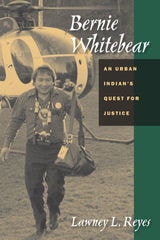
cover of Bernie Whitebear: An Urban Indian's Quest for Justice

Bernie Whitebear

An Urban Indian's Quest for Justice

Lawney L. Reyes

University of Arizona Press, 2006

When American Indians left reservations in the 1950s, enticed by the federal government’s relocation program, many were drawn to cities like Tacoma and Seattle. But in these new homes they found unemployment and discrimination, and they were no better off. Sin Aikst Indian Bernie Whitebear was an urban activist in the Pacific Northwest during the last decades of the twentieth century, a man dedicated to improving the lives of Indians and other ethnic groups by working for change and justice. He unified Northwest tribes to fight for the return of their land and was the first to accomplish this in the United States. But far from a fearsome agitator, Bernie was a persuasive figure who won the praise and admiration of an entire community. Bernie began organizing powwows in the 1960s with an eye toward greater authenticity; and by making a name in the Seattle area as an entertainment promoter, he soon became a successful networker and master of diplomacy, enabling him to win over those who had long ignored the problems of urban Indians. Soft-spoken but outspoken, Bernie successfully negotiated with officials at all levels of government on behalf of Indians and other minorities, crossing into political territory normally off-limits to his people.

Bernie Whitebear’s story takes readers from an impoverished youth—including a rare account of life on the Colville Reservation during the 1930s—to the “Red Power” movement as it traces Bernie’s emergence as an activist influenced by contemporaries such as Bob Satiacum, Vine DeLoria, and Joe Delacruz. By choosing this course, Bernie was clearly making a break with his past, but with an eye toward a better future, whether staging the successful protest at Fort Lawton or acting on behalf of Native fishing rights in Puget Sound. When he died in July 2000, Bernie Whitebear had left an inestimable legacy, accomplishing things that no other Indian seemed able to do. His biography is an inspiring story for readers at many levels, an account of how one American Indian overcame hardships and obstacles to make a difference in the lives of his people—and an entire community.

[more]
cover of Body Evidence: Intimate Violence against South Asian Women in America

Body Evidence

Intimate Violence against South Asian Women in America

Edited by Shamita Das Dasgupta

Rutgers University Press, 2007

When South Asians immigrated to the United States in great numbers in the 1970s, they were passionately driven to achieve economic stability and socialize the next generation to retain the traditions of their home culture. During these years, the immigrant community went to great lengths to project an impeccable public image by denying the existence of social problems such as domestic violence, sexual assault, child sexual abuse, mental illness, racism, and intergenerational conflict. It was not until recently that activist groups have worked to bring these issues out into the open.

In Body Evidence, more than twenty scholars and public health professionals uncover the unique challenges faced by victims of violence in intimate spaces . . . within families, communities and trusted relationships in South Asian American communities. Topics include cultural obsession with women's chastity and virginity; the continued silence surrounding intimate violence among women who identify themselves as lesbian, bisexual, or transgender; the consequences of refusing marriage proposals or failing to meet dowry demands; and, ultimately, the ways in which the United States courts often confuse and exacerbate the plights of these women.
 
[more]
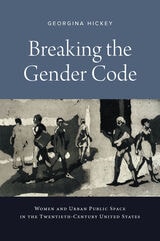
cover of Breaking the Gender Code: Women and Urban Public Space in the Twentieth-Century United States

Breaking the Gender Code

Women and Urban Public Space in the Twentieth-Century United States

Georgina Hickey

University of Texas Press, 2023

A history of the activism that made public spaces in American cities more accessible to women.

From the closing years of the nineteenth century, women received subtle—and not so subtle—messages that they shouldn’t be in public. Or, if they were, that they were not safe. Breaking the Gender Code tells the story of both this danger narrative and the resistance to it.

Historian Georgina Hickey investigates challenges to the code of urban gender segregation in the twentieth century, focusing on organized advocacy to make the public spaces of American cities accessible to women. She traces waves of activism from the Progressive Era, with its calls for public restrooms, safe and accessible transportation, and public accommodations, through and beyond second-wave feminism, and its focus on the creation of alternative, women-only spaces and extensive anti-violence efforts. In doing so, Hickey explores how gender segregation intertwined with other systems of social control, as well as how class, race, and sexuality shaped activists' agendas and women's experiences of urban space. Drawing connections between the vulnerability of women in public spaces, real and presumed, and contemporary debates surrounding rape culture, bathroom bills, and domestic violence, Hickey unveils both the strikingly successful and the incomplete initiatives of activists who worked to open up public space to women.

[more]
cover of Britain's War on Poverty

Britain's War on Poverty

Jane Waldfogel

Russell Sage Foundation, 2010

In 1999, one in four British children lived in poverty—the third highest child poverty rate among industrialized countries. Five years later, the child poverty rate in Britain had fallen by more than half in absolute terms. How did the British government accomplish this and what can the United States learn from the British experience? Jane Waldfogel offers a sharp analysis of the New Labour government's anti-poverty agenda, its dramatic early success and eventual stalled progress. Comparing Britain's anti-poverty initiative to U.S. welfare reform, the book shows how the policies of both countries have affected child poverty, living standards, and well-being in low-income families and suggests next steps for future reforms. Britain's War on Poverty evaluates the three-pronged anti-poverty strategy employed by the British government and what these efforts accomplished. British reforms sought to promote work and make work pay, to increase financial support for families with children, and to invest in the health, early-life development, and education of children. The latter two features set the British reforms apart from the work-oriented U.S. welfare reforms, which did not specifically target income or program supports for children. Plagued by premature initiatives and what some experts called an overly ambitious agenda, the British reforms fell short of their intended goal but nevertheless significantly increased single-parent employment, raised incomes for low-income families, and improved child outcomes. Poverty has fallen, and the pattern of low-income family expenditures on child enrichment and healthy food has begun to converge with higher-income families. As Waldfogel sees it, further success in reducing child poverty in Britain will rely on understanding who is poor and who is at highest risk. More than half of poor children live in families where at least one parent is working, followed by unemployed single- and two-parent homes, respectively. Poverty rates are also notably higher for children with disabled parents, large families, and for Pakistani and Bangladeshi children. Based on these demographics, Waldfogel argues that future reforms must, among other goals, raise working-family incomes, provide more work for single parents, and better engage high-risk racial and ethnic minority groups. What can the United States learn from the British example? Britain's War on Poverty is a primer in the triumphs and pitfalls of protracted policy. Notable differences distinguish the British and U.S. models, but Waldfogel asserts that a future U.S. poverty agenda must specifically address child poverty and the income inequality that helps create it. By any measurement and despite obstacles, Britain has significantly reduced child poverty. The book's key lesson is that it can be done.
[more]