323 books match the query 'Southeast Asia' and 15 start with b
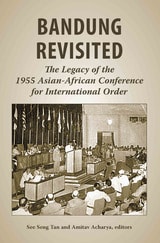
cover of Bandung Revisited: The Legacy of the 1955 Asian-African Conference for International Order

Bandung Revisited

The Legacy of the 1955 Asian-African Conference for International Order

Edited by Amitav Acharya and Tan See Seng

National University of Singapore Press, 2008

The 1955 Asia-Africa conference (the “Bandung Conference”) was a meeting of 29 Asian and African nations that sought to draw on Asian and African nationalism and religious traditions to forge a new international order that was neither communist nor capitalist, and led six years later to the non-aligned movement. Few would dispute the notion that the inaugural meeting in 1955 was a watershed in international history, but there is much disagreement about its long-term legacy and its significance for present-day international affairs. Was it a post-colonial ideological reaction to the passing of the age of empire or an innovative effort to promote a new regionalism? Were its principles of peaceful coexistence a rhetorical flourish or a substantive policy initiative? Did the Conference help define North-South relations? And in what way did the Conference contribute to the regional order of contemporary Asia?


The authors in the present volume argue that the Bandung Conference had a lasting normative influence on the contemporary regional order of Asia, and that it underlies the diplomatic principles and loosely defined normative framework that characterize present-day Asian international relations.
[more]
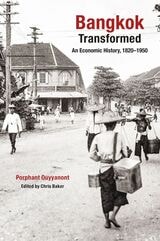
cover of Bangkok Transformed: An Economic History, 1820–1950

Bangkok Transformed

An Economic History, 1820–1950

Porphant Ouyyanont

National University of Singapore Press, 2026

A history of the economic evolution of the city of Bangkok.

For much of its early history, Bangkok was little more than a riverside settlement, yet by the mid-twentieth century, it had become the commercial and political heart of Thailand. Bangkok Transformed deciphers this progress, outlining how the city’s economy and urban landscape were shaped by global trade and royal intervention. As the rice trade boomed, Chinese immigrants poured in, forming the backbone of Bangkok’s labor force and entrepreneurial class. Meanwhile, the Siamese monarchy, particularly under King Chulalongkorn, wielded economic power through state-run enterprises and control over key industries. These forces propelled Bangkok into modernity but also left behind a centralized governance structure that continues to influence the city today.

Written by Thailand’s foremost economic historian, Porphant Ouyyanont, and completed posthumously by historian Chris Baker, this meticulously researched study offers an innovative economic and social history of Bangkok. Spanning from the early nineteenth century to 1950, it displays how the foundations of contemporary Bangkok were laid in its first great transformation.
[more]
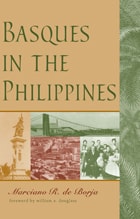
cover of Basques in the Philippines

Basques in the Philippines

Marciano R. De Borja

University of Nevada Press, 2012

The Basques played a remarkably influential role in the creation and maintenance of Spain’s colonial establishment in the Philippines. Their skills as shipbuilders and businessmen, their evangelical zeal, and their ethnic cohesion and work-oriented culture made them successful as explorers, colonial administrators, missionaries, merchants, and settlers. They continued to play prominent roles in the governance and economy of the archipelago until the end of Spanish sovereignty, and their descendants still contribute in significant ways to the culture and economy of the contemporary Philippines. This book offers important new information about a little-known aspect of Philippine history and the influence of Basque immigration in the Spanish Empire, and it fills an important void in the literature of the Basque diaspora.
[more]
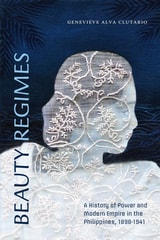
cover of Beauty Regimes: A History of Power and Modern Empire in the Philippines, 1898–1941

Beauty Regimes

A History of Power and Modern Empire in the Philippines, 1898–1941

Genevieve Alva Clutario

Duke University Press, 2023
Genevieve Alva Clutario traces how beauty and fashion in the Philippines shaped the intertwined projects of imperial expansion and modern nation building during the turbulent transition between Spanish, US, and Japanese empires.
[more]
cover of Becoming Refugee American: The Politics of Rescue in Little Saigon

Becoming Refugee American

The Politics of Rescue in Little Saigon

Phuong Nguyen

University of Illinois Press, 2017

Vietnamese refugees fleeing the fall of South Vietnam faced a paradox. The same guilt-ridden America that only reluctantly accepted them expected, and rewarded, expressions of gratitude for their rescue. Meanwhile, their status as refugees—as opposed to willing immigrants—profoundly influenced their cultural identity.

Phuong Tran Nguyen examines the phenomenon of refugee nationalism among Vietnamese Americans in Southern California. Here, the residents of Little Saigon keep alive nostalgia for the old regime and, by extension, their claim to a lost statehood. Their refugee nationalism is less a refusal to assimilate than a mode of becoming, in essence, a distinct group of refugee Americans. Nguyen examines the factors that encouraged them to adopt this identity. His analysis also moves beyond the familiar rescue narrative to chart the intimate yet contentious relationship these Vietnamese Americans have with their adopted homeland. Nguyen sets their plight within the context of the Cold War, an era when Americans sought to atone for broken promises but also saw themselves as providing a sanctuary for people everywhere fleeing communism.
[more]
cover of Beyond Binary Histories: Re-imagining Eurasia to c. 1830

Beyond Binary Histories

Re-imagining Eurasia to c. 1830

Victor Lieberman, Editor

University of Michigan Press, 1999

Seeking to transcend the hoary insistence on East-West dichotomies, this collection looks for transformations in cultural and political organization across Eurasia that were both more general and more psychologically significant to pre-1830 actors themselves than the problem that has obsessed twentieth-century comparativists, namely, the origins of a unique European industrialism. Specifically, it contains nine coordinated essays which explore the proposition that the integration of isolated units to form more cohesive systems in France, Russia, and other European countries ca 1000-1830 corresponds in important respects to integrative processes in parts of Southeast Asia, South Asia, and Japan.
The collaborators of this project show, in varying degrees, that political centralization in these areas reflected and inspired the creation of vernacular literatures at the expense of more universal languages. They illustrate that societies in widely separated areas, with no obvious links, became more literate, mobile, specialized, and commercial at roughly the same time. And they point out that administrative development in many of these same areas showed curiously synchronized cycles. Finally, having defined Eurasian parallels and sketched their limits, they push on to explore the underlying dynamics of these discoveries, scrutinizing the role of guns, global climate, markets, new information networks, institutional pressures, and sixteenth-century messianism.
Insofar as similarities between some European and Asian areas exceeded those between different sectors of Asia, this collection invites historians to reject continental perspectives in favor of more thematic, contextually-specific categories. But at the same time, it raises the possibility of a broad "early modern" period for Eurasia at large.
The contributors are Mary Elizabeth Berry (University of California, Berkeley), Peter Carey (University of Oxford), James B. Collins (Georgetown University), Valerie Kivelson (University of Michigan), R. I. Moore (University of Newcastle upon Tyne), Sanjay Subrahmanyam (Ecole des Hautes Etudes en Sciences Sociales, Paris), John K. Whitemore (University of Michigan), and David K. Wyatt (Cornell University).

[more]
cover of Beyond Translation: Essays toward a Modern Philology

Beyond Translation

Essays toward a Modern Philology

A. L. Becker

University of Michigan Press, 2000
"This is not only a new philology but a new American linguistic philology. . . . Becker's harvest over a lifetime will be widely welcomed and respected." -Paul Friedrich, University of Chicago
". . . a book of extraordinary quality and importance." -James Boyd White, University of Michigan
How does Ralph Waldo Emerson sound in Kawi?
In this collection of essays A. L. Becker develops a new approach to translation he calls modern philology, an approach that insists, beyond translation, on the sorting out of ambiguities and contexts of meaning. Becker describes how texts in Burmese, Javanese, and Malay differ profoundly from English in all the ways they have meaning: in the games they play, the worlds they constitute, the memories they evoke, and the silences they maintain. In each of these dimensions there are excesses and inadequacies of meaning that make a difference across languages.
Drawn from over three decades of studying, teaching, translating and writing about Southeast Asian languages and literatures, the essays collected here for the first time are particular accounts of Becker's experiences in attempting to translate into or out of Burmese, Javanese, and Malay a variety of texts. They describe such things as the building of a Javanese shadowplay, how a Sanskrit story about the language of animals has been used in Indonesia, and some of the profound semantic silences a translator faces in taking an anecdote by Gregory Bateson from English into Malay.
In linguistics, the essays emphasize important kinds of nonuniversality in all aspects of language and look toward a new theory of language grounded in American pragmatism. In anthropology, the essays demonstrate that much of culture can be described in terms of text-building strategies. And for the comparativist, whether in literature, history, rhetoric, music, or psychology, the essays provide a new array of tools of comparison across distant languages and cultures.
A. L. Becker is Professor Emeritus of Linguistics and Anthropology, University of Michigan.
[more]
cover of Beyond the Sacred Forest: Complicating Conservation in Southeast Asia

Beyond the Sacred Forest

Complicating Conservation in Southeast Asia

Michael R. Dove, Percy E. Sajise, and Amity A. Doolittle, eds.

Duke University Press, 2011

Reflecting new thinking about conservation in Southeast Asia, Beyond the Sacred Forest is the product of a unique, decade-long, interdisciplinary collaboration involving research in Indonesia, Malaysia, and the Philippines. Scholars from these countries and the United States rethink the translation of environmental concepts between East and West, particularly ideas of nature and culture; the meaning of conservation; and the ways that conservation policy is applied and transformed in the everyday landscapes of Southeast Asia. The contributors focus more on folk, community, and vernacular conservation discourses than on those of formal institutions and the state. They reject the notion that conservation only takes place in bounded, static, otherworldly spaces such as protected areas or sacred forests. Thick with ethnographic detail, their essays move beyond the forest to agriculture and other land uses, leave behind orthodox notions of the sacred, discard outdated ideas of environmental harmony and stasis, and reject views of the environment that seek to avoid or escape politics. Natural-resource managers and policymakers who work with this more complicated vision of nature and culture are likely to enjoy more enduring success than those who simply seek to remove the influence and impact of humans from conserved landscapes. As many of the essays suggest, this requires the ability to manage contradictions, to relinquish orthodox ideas of what conservation looks like, and to practice continuously adaptive management techniques.

Contributors. Upik Djalins, Amity A. Doolittle, Michael R. Dove, Levita Duhaylungsod, Emily E. Harwell, Jeyamalar Kathirithamby-Wells, Lye Tuck-Po, Percy E. Sajise, Endah Sulistyawati, Yunita T. Winarto
[more]
cover of BitterSweet: The Memoir of a Chinese-Indonesian Family in the Twentieth Century

BitterSweet

The Memoir of a Chinese-Indonesian Family in the Twentieth Century

Stuart Pearson

Ohio University Press, 2008

Millions of Chinese have left the mainland over the last two centuries in search of new beginnings. The majority went to Southeast Asia, and the single largest destination was the colony of the Dutch East Indies, now known as Indonesia. Wherever the Chinese landed they prospered, but in Indonesia, even though some families made fortunes, they never felt they quite belonged.

BitterSweet is the account of one Chinese-Indonesian family whose story stretches over the generations as their fortunes waxed and waned through revolution, riots, war, depression, occupation, and finally emigration to yet another country—Australia.

BitterSweet offers a unique insight into a world rarely seen before. An Sudibjo’s memoir, written from a woman’s perspective, is a valuable resource for anyone studying Indonesian history or the Chinese Diaspora.

[more]
cover of Bomb Children: Life in the Former Battlefields of Laos

Bomb Children

Life in the Former Battlefields of Laos

Leah Zani

Duke University Press, 2019

Half a century after the CIA's Secret War in Laos—the largest bombing campaign in history—explosive remnants of war continue to be part of people's everyday lives. In Bomb Children Leah Zani offers a perceptive analysis of the long-term, often subtle, and unintended effects of massive air warfare. Zani traces the sociocultural impact of cluster submunitions—known in Laos as “bomb children”—through stories of explosives clearance technicians and others living and working in these old air strike zones. Zani presents her ethnography alongside poetry written in the field, crafting a startlingly beautiful analysis of state terror, authoritarian revival, rapid development, and ecological contamination. In so doing, she proposes that postwar zones are their own cultural and area studies, offering new ways to understand the parallel relationship between ongoing war violence and postwar revival.
[more]
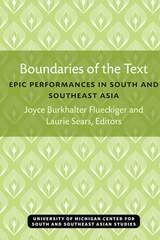
cover of Boundaries of the Text: Epic Performances in South and Southeast Asia

Boundaries of the Text

Epic Performances in South and Southeast Asia

Joyce Burkhalter Flueckiger and Laurie Sears, Editors

University of Michigan Press, 1991
When the Mahabharata and Ramayana are performed in South and Southeast Asia, audiences may witness a variety of styles. A single performer may deliver a two-hour recitation, women may meet in informal singing groups, shaddow puppets may host an all-night play, or professional theaters may put on productions lasting thirty nights. Performances often celebrate ritual passages: births, deaths, marriages, and religious observances. The stories live and are transmitted through performance; their characters are well known and well loved.
Yet written versions of the Mahabharata and Ramayana have existed in both South and Southeast Asia for hundreds of years. Rarely have these texts been intended for private reading. What is the relationship between written text and oral performance? What do performers and audiences mean when they identify something as “Ramayana” or “Mahabharata”? How do they conceive of texts? What are the boundaries of the texts?
By analyzing specific performance traditions, Boundaries of the Text addresses questions of what happens to written texts when they are preformed and how performance traditions are affected when they interact with written texts. The dynamics of this interaction are of particular interest in South and Southeast Asia where oral performance and written traditions share a long, interwoven history. The contributors to Boundaries of the Text show the difficulty of maintaining sharp distinctions between oral and written patterns, as the traditions they consider defy a unidirectional movement from oral to written. The boundaries of epic traditions are in a state of flux, contracting or expanding as South and Southeast Asian societies respond to increasing access to modern education, print technology, and electronic media.
[more]
cover of Breeds of Empire: The Invention of the Horse in Southeast Asia and Southern Africa 1500-1950

Breeds of Empire

The Invention of the Horse in Southeast Asia and Southern Africa 1500-1950

Edited by Greg Bankoff and Sandra Swart

National University of Singapore Press, 2007
Ships of empire carried not just merchandise, soldiers and administrators but also equine genes from as far afield as Europe, Arabia, the Americas, China and Japan. In the process, they introduced horses into parts of the world not native to that animal in historical times. As a result, horses in Thailand, the Philippine Horses, the Cape Horse in South Africa and the Basotho Pony in the mountain kingdom of Lesotho share a genetic lineage with the horse found in the Indonesian archipelago.This book explores the 'invention' of specific breeds of horse in the context of imperial design and colonial trade routes. Here, it focuses on the introduction, invention and use of the horse in Thailand, the Philippines and southern Africa as well as examining its roots and evolution within Indonesia. In addition, it examines the colonial trade in horses within the Indian Ocean and discusses the historiographical and methodological problems associated with writing a more species- or horse-centric history. This is a fascinating study that will appeal not only to scholars but also to the broad horse-reading public interested in all things equine.
[more]
cover of Brunei: From the Age of Commerce to the 21st Century

Brunei

From the Age of Commerce to the 21st Century

Marie-Sybille de Vienne

National University of Singapore Press, 2015

Now an energy-rich sultanate, for centuries a important trading port in the South China Sea, Brunei has taken a different direction than its Persian Gulf peers. Immigration is restricted, and Brunei’s hydrocarbon wealth is invested conservatively, mostly outside the country.


Today home to some 393,000 inhabitants and comprising 5,765 square kilometers in area, Brunei first appears in the historical record at the end of the 10th century. After the Spanish attack of 1578, Brunei struggled to regain and expand its control on coastal West Borneo and to remain within the trading networks of the South China Sea. It later fell under British sway, and a residency was established in 1906, but it took the discovery of oil in Seria in 1929 before the colonial power began to establish the bases of a modern state.


Governed by an absolute monarchy, Bruneians today nonetheless enjoy a high level of social protection and rule of law. Ranking second (after Singapore) in Southeast Asia in terms of standards of living, the sultanate is implementing an Islamic penal code for the first time of its history. Focusing on Brunei’s political economy, history and geography, this book aims to understand the forces behind Brunei’s to-and-fro of tradition and modernisation.
[more]
cover of Building Socialism: The Afterlife of East German Architecture in Urban Vietnam

Building Socialism

The Afterlife of East German Architecture in Urban Vietnam

Christina Schwenkel

Duke University Press, 2020
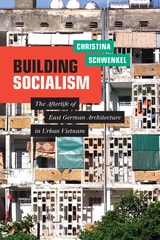
Following a decade of U.S. bombing campaigns that obliterated northern Vietnam, East Germany helped Vietnam rebuild in an act of socialist solidarity. In Building Socialism Christina Schwenkel examines the utopian visions of an expert group of Vietnamese and East German urban planners who sought to transform the devastated industrial town of Vinh into a model socialist city. Drawing on archival and ethnographic research in Vietnam and Germany with architects, engineers, construction workers, and tenants in Vinh’s mass housing complex, Schwenkel explores the material and affective dimensions of urban possibility and the quick fall of Vinh’s new built environment into unplanned obsolescence. She analyzes the tensions between aspirational infrastructure and postwar uncertainty to show how design models and practices that circulated between the socialist North and the decolonizing South underwent significant modification to accommodate alternative cultural logics and ideas about urban futurity. By documenting the building of Vietnam’s first planned city and its aftermath of decay and repurposing, Schwenkel argues that underlying the ambivalent and often unpredictable responses to modernist architectural forms were anxieties about modernity and the future of socialism itself.
[more]
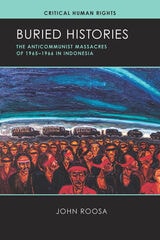
cover of Buried Histories: The Anticommunist Massacres of 1965–1966 in Indonesia

Buried Histories

The Anticommunist Massacres of 1965–1966 in Indonesia

John Roosa

University of Wisconsin Press, 2022

In 1965–66, army-organized massacres claimed the lives of hundreds of thousands of supporters of the Communist Party of Indonesia. Very few of these atrocities have been studied in any detail, and answers to basic questions remain unclear. What was the relationship between the army and civilian militias? How could the perpetrators come to view unarmed individuals as dangerous enemies of the nation? Why did Communist Party supporters, who numbered in the millions, not resist?
Drawing upon years of research and interviews with survivors, Buried Histories is an impressive contribution to the literature on genocide and mass atrocity, crucially addressing the topics of media, military organization, economic interests, and resistance.
[more]