Results by title
370 books match the query 'Spain' and 15 start with b

BULLFIGHT
Garry Marvin
University of Illinois Press, 1994
public celebration, describing and analyzing the corrida in a way not previously attempted in English.

Back to Bizkaia
A Basque-American MemoirVince J. Juaristi
University of Nevada Press, 2011
Nevada sheep rancher Joe Juaristi spoke for years about making a trip back to the Spanish Basque Country that he left sixty years earlier, but each time the subject came up the discussion evolved into a family debate about the scope and members of the journey. Finally Joe's son, Vince, secretly resolved to organize the trip that his father wanted and needed--the two of them, traveling alone, making a quiet reunion with Joe's twin sister, who suffers from Alzheimer's, visiting other aging siblings and friends, and recounting the places that formed Joe's memories of his youth.
Back to Bizkaia is part travel book, part memoir of two men exploring their mutual roots and their unique father-son bond. The narrative intertwines an engaging account of the contemporary Basque Country with Joe's experiences as an immigrant making his way in a new country and Vince's memories of growing up in a close Basque-American community in the American West. This is a book about Basques and their American families, but on another level it is every immigrant's story of return to a beloved homeland.
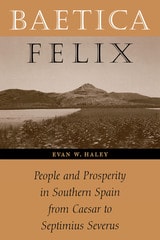
Baetica Felix
People and Prosperity in Southern Spain from Caesar to Septimius SeverusBy Evan W. Haley
University of Texas Press, 2003
Baetica, the present-day region of Andalusia in southern Spain, was the wealthiest province of the Roman Empire. Its society was dynamic and marked by upward social and economic mobility, as the imperial peace allowed the emergence of a substantial middle social and economic stratum. Indeed, so mutually beneficial was the imposition of Roman rule on the local population of Baetica that it demands a new understanding of the relationship between Imperial Rome and its provinces.
Baetica Felix builds a new model of Roman-provincial relations through a socio-economic history of the province from Julius Caesar to the end of the second century A.D. Describing and analyzing the impact of Roman rule on a core province, Evan Haley addresses two broad questions: what effect did Roman rule have on patterns of settlement and production in Baetica, and how did it contribute to wealth generation and social mobility? His findings conclusively demonstrate that meeting the multiple demands of the Roman state created a substantial freeborn and ex-slave "middle stratum" of the population that outnumbered both the super-rich elite and the destitute poor.
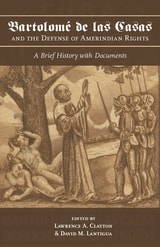
Bartolomé de las Casas and the Defense of Amerindian Rights
A Brief History with DocumentsEdited by Lawrence A. Clayton and David M. Lantigua
University of Alabama Press, 2020
The writings of a sixteenth-century advocate who challenged empire in defense of Indigenous peoples.
With the exception of Christopher Columbus, Bartolomé de las Casas is arguably the most notable figure of the Encounter Age. He is remembered principally as the creator of the Black Legend, as well as the protector of American Indians. He was one of the pioneers of the human rights movement, and a Christian activist who invoked law and Biblical scripture to challenge European colonialism in the great age of the Encounter. He was also one of the first and most thorough chroniclers of the conquest, and a biographer who saved the diary of Columbus’s first voyage for posterity by transcribing it in his History of the Indies before the diary was lost.
Bartolomé de las Casas and the Defense of Amerindian Rights: A Brief History with Documents provides the most wide-ranging and concise anthology of Las Casas’s writings, in translation, ever made available. It contains not only excerpts from his most well-known texts, but also his largely unavailable writings on political philosophy and law, and addresses the underappreciated aspects of his thought. Fifteen of the twenty-six documents are entirely new translations of Las Casas’s writings, a number of them appearing in English for the first time.
This volume focuses on his historical, political, and legal writings that address the deeply conflicted and violent sixteenth-century encounter between Europeans and indigenous peoples of the Americas. It also presents Las Casas as a more comprehensive and systematic philosophical and legal thinker than he is typically given credit for. The introduction by Lawrence A. Clayton and David M. Lantigua places these writings into a synthetic whole, tracing his advocacy for indigenous peoples throughout his career. By considering Las Casas’s ideas, actions, and even regrets in tandem, readers will understand the historical dynamics of Spanish imperialism more acutely within the social-political context of the times.
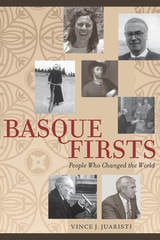
Basque Firsts
People Who Changed the WorldVince J. Juaristi
University of Nevada Press, 2016
The profiles use primary sources to tell fresh stories and offer a wonderful variety, showing the astonishing breadth of Basque contributions. They include Juan Sebastían Elcano, the first person to circumnavigate the earth; St. Ignatius of Loyola, the first Jesuit to seed a worldwide movement in education; Santiago Ramón y Cajal, the Father of Neurology and a Nobel laureate; Cristóbal Balenciaga, the king of haute couture; Paul Laxalt, one of Ronald Reagan’s closest friends in politics; and Edurne Pasaban, the first woman to climb the world’s fourteen tallest mountains.
Basque Firsts provides a rare look at a culture’s people, revealing the significant contributions they have shared.
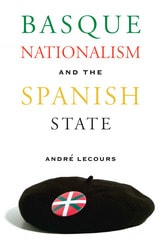
Basque Nationalism and the Spanish State
Andre Lecours
University of Nevada Press, 2016
An examination of Basque nationalism from a historical perspective. Basque nationalism has been extensively examined from the perspectives of Basque culture and internal conditions in the Basque Country, but André Lecours is among the first to demonstrate how Basque nationalism was shaped by the many forms and historical phases of the Spanish state. His discussion employs one of the most debated approaches in the social sciences—historical institutionalism—and it includes an up-to-date examination of the circumstances for, and consequences of, recent events such as ETA's announcement in 2006 of a permanent cease-fire. Lecours also analyzes other aspects of Basque nationalism, including the international relations of the Basque Autonomous Government, as well as the responses of the contemporary Spanish state and how it deploys its own brand of nationalism. Finally, the book offers a comparative discussion of Basque, Catalan, Scottish, Flemish, and Quebecois nationalist movements, suggesting that nationalism in the Basque Country, despite the historical presence of violence, is in many ways similar to nationalism in other industrialized democracies. Basque Nationalism and the Spanish State is an original and provocative discussion that is essential reading for anyone interested in the Basques or in the development of modern nationalist movements.

Beyond Auteurism
New Directions in Authorial Film Practices in France, Italy and Spain since the 1980sRosanna Maule
Intellect Books, 2008
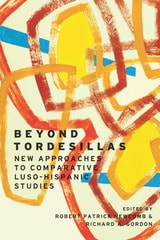
Beyond Tordesillas
New Approaches to Comparative Luso-Hispanic StudiesEdited by Robert Patrick Newcomb and Richard A. Gordon
The Ohio State University Press, 2017
The jumping-off point for Beyond Tordesillas is the critic Jorge Schwartz’s evocative call to arms, “Down with Tordesillas!” In this groundbreaking essay, Schwartz looks to the imaginary line created by the Treaty of Tordesillas (1494), which divided the known world into Spanish and Portuguese spheres of influence, to stand in for generations of literary and cultural noncommunication between the Spanish- and Portuguese-speaking spheres, and their attendant academic disciplines. This volume’s contributions range topically across continents, from the Iberian Peninsula to Latin American countries. They also range across genres, with studies that analyze fictional narrative, music, performance, and visual culture. Beyond Tordesillas forcefully challenges the disciplinary—and indeed, arbitrary—boundaries that for too long have separated Hispanic and Luso-Brazilian studies.
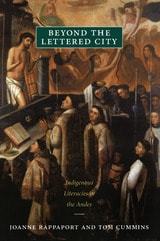
Beyond the Lettered City
Indigenous Literacies in the AndesJoanne Rappaport and Tom Cummins
Duke University Press, 2012

Bishops, Councils, and Consensus in the Visigothic Kingdom, 589-633
Rachel L. Stocking
University of Michigan Press, 2001
This eloquently presented, exhaustive study concludes that legislation, however persistently enacted, was unequal to the task of remedying a lack of unity and other social and political ills. Notions of consensus are explored as a way of maintaining community cohesion and order in the absence of strong central authorities. Other issues the author confronts are Catholic tolerance and intolerance toward heterodox and non-Christian "others;" the transformation and transmission of ancient ideals and social structures from the Roman to the later medieval worlds; and the position of medieval Spain in relation to the mainstream of western European history.
This nuanced study is a must-read for anyone interested in medieval life, politics, religion, and the precarious nature of the medieval state.
Rachel Stocking is Professor of History, Southern Illinois University at Carbondale.
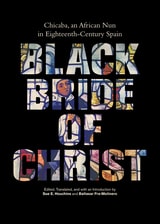
Black Bride of Christ
Chicaba, an African Nun in Eighteenth-Century SpainSue E. Houchins
Vanderbilt University Press, 2018
This volume, the first English translation of the Compendio, is a hagiography, an example of a biographical genre that recounts the lives and describes the spiritual practices of saints officially canonized by the Church, respected ecclesiastical leaders, or holy people informally recognized by local devotees. The effort to have Chicaba canonized continues today, as Fra-Molinero and Houchins explore in their introduction to the volume.
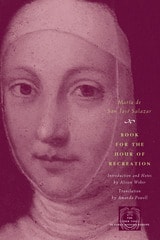
Book for the Hour of Recreation
María de San José Salazar
University of Chicago Press, 2002
María wrote this book as a defense of the Discalced practice of setting aside two hours each day for conversation, music, and staging of religious plays. Casting the book in the form of a dialogue, María demonstrates through fictional conversations among a group of nuns during their hours of recreation how women could serve as very effective spiritual teachers for each other. The book includes one of the first biographical portraits of Teresa and Maria's personal account of the troubled founding of the Discalced convent at Seville, as well as her tribulations as an Inquisitional suspect. Rich in allusions to women's affective relationships in the early modern convent, Book for the Hour of Recreation also serves as an example of how a woman might write when relatively free of clerical censorship and expectations.
A detailed introduction and notes by Alison Weber provide historical and biographical context for Amanda Powell's fluid translation.

Books against Tyranny
Catalan Publishers under FrancoLaura Vilardell
Vanderbilt University Press, 2022
Author Laura Vilardell examines documents including firsthand witness accounts, correspondence, memoirs, censorship files, newspapers, original interviews, and unpublished material housed in various Spanish archives. As such, Books against Tyranny opens up the field and serves as an informative tool for scholars of Franco's Spain, Catalan social movements, and censorship more generally.

Bulls, Bullfighting, and Spanish Identities
Carrie B. Douglass
University of Arizona Press, 1997
In talking about bulls and bullfighting, observes Douglass, one ends up talking not only about differences in region, class, and politics in Spain but also about that country's ongoing struggle between modernity and tradition. She relates how Spaniards and outsiders see bullfighting as representative of a traditional, irrational Spain contrasted with a more civilized Europe, and she shows how Spaniards' ambivalence about bullfighting is actually a way of expressing ambivalence about the loss of traditional culture in a modern world. To fully explore the symbolism of bulls and bullfighting, Douglass offers an overview of Spain's fiesta cycle, in which the bull is central. She broadly and meticulously details three different fiestas through ethnographic fieldwork conducted over a number of years, delineating the differences in festivals held in different regions.
She also shows how a cycle of these fiestas may hold the key to resolving some of Spain's fundamental political contradictions by uniting the different regions of Spain and reconciling opposing political camps--the right, which holds that there is one Spain, and the left, which contends that there are many. Bulls, Bullfighting, and Spanish Identities is an intriguing study of symbolism used to examine the broader anthropological issues of identity and nationhood. Through its focus on the political discourse of bulls and bullfighting, it makes an original contribution to understanding not only Spanish politics but also Spain's place in the modern world.
Butterflies Will Burn
Prosecuting Sodomites in Early Modern Spain and MexicoBy Federico Garza Carvajal
University of Texas Press, 2003
As Spain consolidated its Empire in the sixteenth and seventeenth centuries, discourses about the perfect Spanish man or "Vir" went hand-in-hand with discourses about another kind of man, one who engaged in the "abominable crime and sin against nature"—sodomy. In both Spain and Mexico, sodomy came to rank second only to heresy as a cause for prosecution, and hundreds of sodomites were tortured, garroted, or burned alive for violating Spanish ideals of manliness. Yet in reality, as Federico Garza Carvajal argues in this groundbreaking book, the prosecution of sodomites had little to do with issues of gender and was much more a concomitant of empire building and the need to justify political and economic domination of subject peoples.
Drawing on previously unpublished records of some three hundred sodomy trials conducted in Spain and Mexico between 1561 and 1699, Garza Carvajal examines the sodomy discourses that emerged in Andalucía, seat of Spain's colonial apparatus, and in the viceroyalty of New Spain (Mexico), its first and largest American colony. From these discourses, he convincingly demonstrates that the concept of sodomy (more than the actual practice) was crucial to the Iberian colonizing program. Because sodomy opposed the ideal of "Vir" and the Spanish nationhood with which it was intimately associated, the prosecution of sodomy justified Spain's domination of foreigners (many of whom were represented as sodomites) in the peninsula and of "Indios" in Mexico, a totally subject people depicted as effeminate and prone to sodomitical acts, cannibalism, and inebriation.