Results by title
454 books match the query 'Study and teaching (Higher)' and 14 start with b
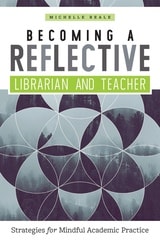
Becoming a Reflective Librarian and Teacher
Strategies for Mindful Academic PracticeMichelle Reale
American Library Association, 2016

Becoming an Embedded Librarian
Making Connections in the ClassroomMichelle Reale
American Library Association, 2015
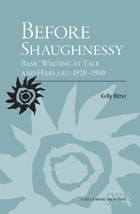
Before Shaughnessy
Basic Writing at Yale and Harvard, 1920-1960Kelly Ritter
Southern Illinois University Press, 2009
In Before Shaughnessy: Basic Writing at Yale and Harvard, 1920–1960, Kelly Ritter uses materials from the archives at Harvard and Yale and contemporary theories of writing instruction to reconsider the definition of basic writing and basic writers within a socio-historical context. Ritter challenges the association of basic writing with only poorly funded institutions and poorly prepared students.
Using Yale and Harvard as two sample case studies, Ritter shows that basic writing courses were alive and well, even in the Ivy League, in the early twentieth century. She argues not only that basic writers exist across institutional types and diverse student populations, but that the prevalence of these writers has existed far more historically than we generally acknowledge.
Uncovering this forgotten history of basic writing at elite institutions, Ritter contends that the politics and problems of the identification and the definition of basic writers and basic writing began long before the work of Mina Shaughnessy in Errors and Expectations and the rise of open admissions. Indeed, she illustrates how the problems and politics have been with us since the advent of English A at Harvard and the heightened consumer-based policies that resulted in the new admissions criteria of the early twentieth-century American university. In order to recognize this long-standing reality of basic writing, we must now reconsider whether the nearly standardized, nationalized definition of “basic” is any longer a beneficial one for the positive growth and democratic development of our first-year writing programs and students.
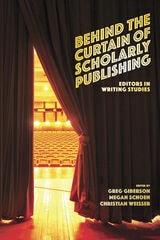
Behind the Curtain of Scholarly Publishing
Editors in Writing StudiesGreg Giberson
Utah State University Press, 2022
Each chapter in the collection examines the unique experiences and individual contributions of its authors during their time as editors, offering advice to scholars and potential editors on how to navigate the publication process and understand editorial roles. The contributors provide multiple perspectives on the growth, transformation, and, in some cases, founding of some of the most influential publishing venues in writing studies.
The personal and historical narratives, along with the unique perspectives and insightful analyses of the individual authors in Behind the Curtain of Scholarly Publishing, offer needed transparency and context to what has historically been an opaque, yet inevitable and consequential, part of academic life. This volume will help researchers in the field understand the publishing process.
Contributors: Cheryl Ball, David Bartholomae, Charles Bazerman, Jean Ferguson Carr, Douglas Eyman, Muriel Harris, Byron Hawk, Alice Horning, Paul Kei Matsuda, Laura Micciche, Mike Palmquist, Michael Pemberton, Malea Powell, Kelly Ritter, Victor Villanueva, Victor Vitanza, Kathleen Blake Yancey
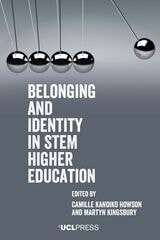
Belonging and Identity in STEM Higher Education
Edited by Camille Kandiko Howson and Martyn Kingsbury
University College London, 2024
In Belonging and Identity in STEM Higher Education, Camille Kandiko Howson and Martyn Kingsbury examine the role of science, technology, engineering, and mathematics (STEM) pedagogies in facilitating belonging, variable impacts across student characteristics, and the experiences of STEM students in higher education. Through case study contributions, the book analyzes the unique educational environments for STEM staff and students throughout Europe and Asia, challenging the assumptions that STEM fields are inherently unemotional and impersonal disciplines.

Best Practices For Credit- Bearing Information Literacy
Christopher Hollister
Assoc of College & Research Libraries, 2011
Between Talk And Teaching
Reconsidering the Writing ConferenceLaurel Johnson Black
Utah State University Press, 1998
The teacher-student conference is standard in the repertoire of teachers at all levels. Because it's a one-to-one encounter, teachers work hard to make it comfortable; but because it's a pedagogical moment, they hope that learning occurs in the encounter, too. The literature in this area often suggests that a conference is a conversation, but this doesn't account for a teacher's need to use it pedagogically. Laurel Johnson Black's new book explores the conflicting meanings and relations embedded in conferencing and offers a new theoretical understanding of the conference along with practical approaches to conferencing more effectively with students.
Analyzing taped conferences of several different teachers and students, Black considers the influence that power, gender, and culture can have on a conference. She draws on sociolinguistic theory, as well as critical theory in composition and rhetoric, to build an understanding of the writing conference as an encounter somewhere between conversation and the classroom. She finds neither the conversation model nor versions of the master-apprentice model satisfactory. Her approach is humane, student-centered, and progressive, but it does not ignore the valid pedagogical purposes a teacher might have in conferencing. Between Talk and Teaching will be a valuable addition to the professional library of writing teachers and writing program administrators.
Beyond Postprocess
Sidney I. Dobrin, J.A. Rice, and Michael Vastola
Utah State University Press, 2011
Beyond Postprocess offers a vigorous, provocative discussion of postprocess theory in its contemporary profile. Fueled by something like a fundamental refusal to see writing as self-evident, reducible, and easily explicable, the contributors rethink postprocess, suggesting that there is no easily defined moment or method that could be called postprocess. Instead, each contribution to this collection provides a unique and important example of what work beyond postprocess could be.
Since postprocess theory in writing studies first challenged traditional conceptions of writing and the subject who writes, developments there have continued to push theorists of writing in a number of promising theoretical directions. Spaces for writing have arisen that radically alter ideological notions of space, rational thinking, intellectual property and politics, and epistemologies; and new media, digital, and visual rhetorics have increasingly complicated the scene, as well.
Contributors to Beyond Postprocess reconsider writing and writing studies through posthumanism, ecology, new media, materiality, multimodal and digital writing, institutional critique, and postpedagogy. Through the lively and provocative character of these essays, Beyond Postprocess aims to provide a critical site for nothing less than the broad reevaluation of what it means to study writing today. Its polyvocal considerations and conclusions invest the volume with a unique potential to describe not what that field of study should be, but what it has the capacity to create. The central purpose of Beyond Postprocess is to unleash this creative potential.

Biology Takes Form
Animal Morphology and the German Universities, 1800-1900Lynn K. Nyhart
University of Chicago Press, 1995
Although there were neither professors of morphology nor a morphologists' society, morphologists achieved influence by "colonizing" niches in a variety of disciplines. Scientists in anatomy, zoology, natural history, and physiology considered their work morphological, and the term encompassed research that today might be classified as embryology, systematics, functional morphology, comparative physiology, ecology, behavior, evolutionary theory, or histology. Nyhart draws on research notes, correspondence, and other archival material to examine how these scientists responded to new ideas and to the work of colleagues. She examines the intertwined histories of morphology and the broader biological enterprise, demonstrating that the study of form was central to investigations of such issues as the relationships between an animal's structure and function, between an organism and its environment, and between living species and their ancestors.
Black Studies, Rap, and the Academy
Houston A. Baker Jr.
University of Chicago Press, 1993
Bridging Divides
The Origins of the Beckman Institute at IllinoisTheodore L. Brown. Forewords by Stanley O. Ikenberry and Richard H. Herman.
University of Illinois Press, 2009
Bridging the Multimodal Gap
From Theory to PracticeSantosh Khadka
Utah State University Press, 2018
After an introductory section reviewing the theory literature, chapters present research on implementing multimodal composition in diverse contexts. Contributors address starter subjects like using comics, blogs, or multimodal journals; more ambitious topics such as multimodal assignments in online instruction or digital story telling; and complex issues like assessment, transfer, and rhetorical awareness.
Bridging the Multimodal Gap translates theory into practice and will encourage teachers, including WPAs, TAs, and contingent faculty, to experiment with multiple modes of communication in their projects.
Contributors: Sara P. Alvarez, Steven Alvarez, Michael Baumann, Joel Bloch, Aaron Block, Jessie C. Borgman, Andrew Bourelle, Tiffany Bourelle, Kara Mae Brown, Jennifer J. Buckner, Angela Clark-Oates, Michelle Day, Susan DeRosa, Dànielle Nicole DeVoss, Stephen Ferruci, Layne M. P. Gordon, Bruce Horner, Matthew Irwin, Elizabeth Kleinfeld, Ashanka Kumari, Laura Sceniak Matravers, Jessica S. B. Newman, Mark Pedretti, Adam Perzynski, Breanne Potter, Caitlin E. Ray, Areti Sakellaris, Khirsten L. Scott, Rebecca Thorndike-Breeze, Jon Udelson, Shane A. Wood, Rick Wysocki, Kathleen Blake Yancey
Building Writing Center Assessments That Matter
Ellen Schendel and William J. Macauley, Jr.
Utah State University Press, 2012
No less than other divisions of the college or university, contemporary writing centers find themselves within a galaxy of competing questions and demands that relate to assessment—questions and demands that usually embed priorities from outside the purview of the writing center itself. Writing centers are used to certain kinds of assessment, both quantitative and qualitative, but are often unprepared to address larger institutional or societal issues. In Building Writing Center Assessments that Matter, Schendel and Macauley start from the kinds of assessment strengths already in place in writing centers, and they build a framework that can help writing centers satisfy local needs and put them in useful dialogue with the larger needs of their institutions, while staying rooted in writing assessment theory.
The authors begin from the position that tutoring writers is already an assessment activity, and that good assessment practice (rooted in the work of Adler-Kassner, O'Neill, Moore, and Huot) already reflects the values of writing center theory and practice. They offer examples of assessments developed in local contexts, and of how assessment data built within those contexts can powerfully inform decisions and shape the futures of local writing centers. With additional contributions by Neal Lerner, Brian Huot and Nicole Caswell, and with a strong commitment to honoring on-site local needs, the volume does not advocate a one-size-fits-all answer. But, like the modeling often used in a writing consultation, examples here illustrate how important assessment principles have been applied in a range of local contexts. Ultimately, Building Writing Assessments that Matter describes a theory stance toward assessment for writing centers that honors the uniqueness of the writing center context, and examples of assessment in action that are concrete, manageable, portable, and adaptable.
Burnin' Daylight
Building a Principle-Driven Writing ProgramRyan J. Dippre
Utah State University Press, 2024
WPAs face a range of challenges on a regular basis: organizing class schedules, leading professional learning events, conducting program assessments, responding to student needs, meeting with deans and provosts, and more. Additionally, WPAs need to learn about and direct their programs strategically when considering the kind of program they currently have, the sort of program they envision, and how they can transition from one to another. Burnin’ Daylight acts as a roadmap for IRB-approved research and provides WPAs—specifically, new and returning WPAs—with a detailed yet flexible plan for understanding the inner workings of a writing program and how to develop a future trajectory for it.
Burnin’ Daylight is for writing program administrators of all experience levels and other administrators interested in taking a “principled practices” approach to their work.