Results by title
1927 books match the query 'Technology & Engineering' and 44 start with b
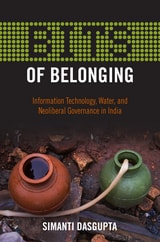
BITS of Belonging
Information Technology, Water, and Neoliberal Governance in IndiaSimanti Dasgupta
Temple University Press, 2015
India’s global success in the Information Technology industry has also prompted the growth of neoliberalism and the re-emergence of the middle class in contemporary urban areas, such as Bangalore. In her significant study, BITS of Belonging, Simanti Dasgupta shows that this economic shift produces new forms of social inequality while reinforcing older ones. She investigates this economic disparity by looking at IT and water privatization to explain how these otherwise unrelated domains correspond to our thinking about citizenship, governance, and belonging.
Dasgupta’s ethnographic study shows how work and human processes in the IT industry intertwine to meet the market stipulations of the global economy. Meanwhile, in the recasting of water from a public good to a commodity, the middle class insists on a governance and citizenship model based upon market participation. Dasgupta provides a critical analysis of the grassroots activism involved in a contested water project where different classes lay their divergent claims to the city.

BLACK SWAMP FARM
Howard E. Good
The Ohio State University Press, 1997
Good remembers playing shinny with clamp-on skates and a tin can that had been stomped until it could whiz across the ice given just the right combination of speed and accuracy. He tells of the boom of the steam engine as it pulled the threshing machine to a neighboring farm on a hot summer day, and of the excitement of riding high on a wagonload of hay, gazing down on the horses’ broad, shining backs. He describes the springtime task of making soap, the ritual of the shivaree, and the pleasure of the church ice-cream social. He remembers well—and chronicles for the reader—the unproclaimed achievements of men and women whose courage and grueling toil brought them rich rewards.
First published in 1967, this reprint makes available once again a faithful portrayal of Black Swamp—a place that no longer exists—and provides a treasure trove of history for Ohioans.
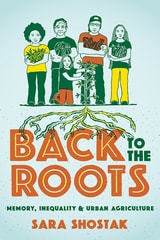
Back to the Roots
Memory, Inequality, and Urban AgricultureSara Shostak
Rutgers University Press, 2021

Baking Powder Wars
The Cutthroat Food Fight that Revolutionized CookingLinda Civitello
University of Illinois Press, 2017

Balsam Fir
A Monographic ReviewE.V. Bakuzis and H.L. Hansen
University of Minnesota Press, 1965
Balsam Fir was first published in 1965. Minnesota Archive Editions uses digital technology to make long-unavailable books once again accessible, and are published unaltered from the original University of Minnesota Press editions.
Professors Bakuzis and Hansen, with the assistance of a number of co-authors of individual chapters, present an exhaustive survey of the literature on the balsam fir, providing a coherent picture of the species and its place in nature and forestry practice. The balsam fir is used extensively in the pulp and paper industry, and it is known to millions as a traditional Christmas tree. In North America it is a major tree species in Canada, in the northeastern United States, and in the Great Lakes region.
In the search of the literature, over 2000 sources were consulted and considerably more than half of them are cited in the book. The references, organized in an ecological framework, cover the period from the seventeenth century to the present. The authors have reviewed and integrated these data in a unified, but multipurposed, book. In the integration of the source material the authors also made contributions of their own. The book contains the following chapters: Botanical Foundations, Geography and Synecology, Ecological Factors, Microbiology, Entomology, Reproduction, Stand Development, Growth and Yield, and Utilization. Appendixes list fungi and myxomycetes and insects associated with balsam fir. There are 30 illustrations, including a frontispiece drawing by the noted nature artist Francis Lee Jaques.
The book will appeal to a wide range of readers specifically concerned with forestry, including research workers, educators, entomologists, pathologists, and managing foresters, as well as conservationists and wildlife biologist in general.
Battery Management Systems and Inductive Balancing
Alex Van den Bossche
The Institution of Engineering and Technology, 2022

Battery State Estimation
Methods and modelsShunli Wang
The Institution of Engineering and Technology, 2022
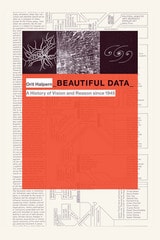
Beautiful Data
A History of Vision and Reason since 1945Orit Halpern
Duke University Press, 2015
Behavioural Modelling and Simulation of Bicycle Traffic
Ling Huang
The Institution of Engineering and Technology, 2021
Between Two Pines
Ushering in a Sustainable Future Through an Art-Science PracticeEdgar Cardenas
Michigan Publishing Services, 2019
“I am truly thankful that Dr. Edgar Cardenas’s thoughtful research is now available in this beautiful book. I have recommended his work to more people, both in my personal and professional spheres of my life, than I can count, and I’m glad to have this provocative and elegant publication to put into people’s hands. Cardenas shows us how each of us really can make a difference.”
“Between Two Pines anticipates and leads the discussion of scholarship around questions of land and landscape. This work brilliantly and ethically refocuses our vision, from distanced scrutiny to connection and proximity, rooted in daily care-taking and ecological efforts. Thoughtfully imaged, the photographs offer an aesthetic that is based in balanced, enduring reflection, rather than on the grand view. These beautiful images reveal discoveries that bridge the arts, ecology, and sociology, and will serve to reconnect every reader with the world in their backyard and beyond.”
“Drawing from a long photographic tradition of examining the relationship between humans and their environment, Edgar Cardenas has found a voice that is as compassionate as it is poignant. Yet he is not content for his photographs to be mere observations, recording the relationship. Between Two Pines is a call to action – a platform by which we might imagine together, with all of the tools in our tool kit, a sustainable future.”
Bifacial Photovoltaics
Technology and systemsJoris Libal
The Institution of Engineering and Technology, 2026
Bifacial Photovoltaics
Technology, applications and economicsJoris Libal
The Institution of Engineering and Technology, 2019

Bioelectromagnetics in Healthcare
Advanced sensing and communication applicationsWilliam Whittow
The Institution of Engineering and Technology, 2022
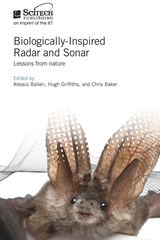
Biologically-Inspired Radar and Sonar
Lessons from natureAlessio Balleri
The Institution of Engineering and Technology, 2017
Biomedia
Eugene Thacker
University of Minnesota Press, 2004
The merging of computer science and molecular biology, genetic codes and computer codes
As biotechnology defines the new millennium, genetic codes and computer codes increasingly merge—life understood as data, flesh rendered programmable. Where this trend will take us, and what it might mean, is what concerns Eugene Thacker in this timely book, a penetrating look into the intersection of molecular biology and computer science in our day and its likely ramifications for the future.
Integrating approaches from science and media studies, Biomedia is a critical analysis of research fields that explore relationships between biologies and technologies, between genetic and computer “codes.” In doing so, the book looks beyond the familiar examples of cloning, genetic engineering, and gene therapy—fields based on the centrality of DNA or genes—to emerging fields in which “life” is often understood as “information.” Focusing especially on interactions between genetic and computer codes, or between “life” and “information,” Thacker shows how each kind of “body” produced—from biochip to DNA computer—demonstrates how molecular biology and computer science are interwoven to provide unique means of understanding and controlling living matter.Throughout, Thacker provides in-depth accounts of theoretical issues implicit in biotechnical artifacts—issues that arise in the fields of bioinformatics, proteomics, systems biology, and biocomputing. Research in biotechnology, Biomedia suggests, flouts our assumptions about the division between biological and technological systems. New ways of thinking about this division are needed if we are to understand the cultural, social, and philosophical dimensions of such research, and this book marks a significant advance in the coming intellectual revolution.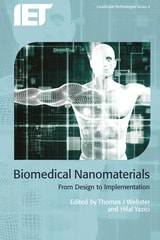
Biomedical Nanomaterials
From design to implementationThomas J. Webster
The Institution of Engineering and Technology, 2016
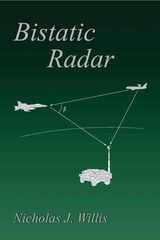
Bistatic Radar
Nicholas J. Willis
The Institution of Engineering and Technology, 2005

Blackburn Buccaneer
Nico Braas
Amsterdam University Press, 2023
Blockchain Technology for Smart Grids
Implementation, management and securityH.L. Gururaj
The Institution of Engineering and Technology, 2022

Blockchain Technology in e-Healthcare Management
Suyel Namasudra
The Institution of Engineering and Technology, 2022
Blockchain, Smart Contracts and Distributed Ledger Technologies in the Built Environment
Key concepts, technologies, and applicationsMohamad Kassem
The Institution of Engineering and Technology, 2025
Blood Relations
Transfusion and the Making of Human GeneticsJenny Bangham
University of Chicago Press, 2020

Blue Skies
A History of Cable TelevisionPatrick R. Parsons
Temple University Press, 2008
Since the 1960s, one of the pervasive visions of "cable" has been of a ubiquitous, flexible, interactive communications system capable of providing news, information, entertainment, diverse local programming, and even social services. That set of utopian hopes became known as the "Blue Sky" vision of cable television, from which the book takes its title.
Thoroughly documented and carefully researched, yet lively, occasionally humorous, and consistently insightful, Blue Skies is the genealogy of our media society.
Bodies In Technology
Don Ihde
University of Minnesota Press, 2001
An original exploration of the ways cyberspace affects human experience.
New technologies suggest new ideas about embodiment: our "reach" extends to global sites through the Internet; we enter cyberspace through the engines of virtual reality. In this book, a leading philosopher of technology explores the meaning of bodies in technology-how the sense of our bodies and of our orientation in the world is affected by the various information technologies.
Bodies in Technology begins with an analysis of embodiment in cyberspace, then moves on to consider ways in which social theorists have interpreted or overlooked these conditions. An astute and sensible judge of these theories, Don Ihde is a uniquely provocative and helpful guide through contemporary thinking about technology and embodiment, drawing on sources and examples as various as video games, popular films, the workings of e-mail, and virtual reality techniques.Charting the historical, philosophical, and practical territory between virtual reality and real life, this work is an important contribution to the national conversation on the impact technology-and information technology in particular-has on our lives in a wired, global age.
Bodie’s Gold
Tall Tales and True History from a California Mining TownMarguerite Sprague
University of Nevada Press, 2011

Boeing B-47 Stratojet
the cold war jet bomberNico Braas
Amsterdam University Press, 2023
Boll Weevil Blues
Cotton, Myth, and Power in the American SouthJames C. Giesen
University of Chicago Press, 2011
Between the 1890s and the early 1920s, the boll weevil slowly ate its way across the Cotton South from Texas to the Atlantic Ocean. At the turn of the century, some Texas counties were reporting crop losses of over 70 percent, as were areas of Louisiana, Arkansas, and Mississippi. By the time the boll weevil reached the limits of the cotton belt, it had destroyed much of the region’s chief cash crop—tens of billions of pounds of cotton, worth nearly a trillion dollars.
As staggering as these numbers may seem, James C. Giesen demonstrates that it was the very idea of the boll weevil and the struggle over its meanings that most profoundly changed the South—as different groups, from policymakers to blues singers, projected onto this natural disaster the consequences they feared and the outcomes they sought. Giesen asks how the myth of the boll weevil’s lasting impact helped obscure the real problems of the region—those caused not by insects, but by landowning patterns, antiquated credit systems, white supremacist ideology, and declining soil fertility. Boll Weevil Blues brings together these cultural, environmental, and agricultural narratives in a novel and important way that allows us to reconsider the making of the modern American South.
Bone Flute to Auto-Tune
Forty Thousand Years of Music TechnologyDeirdre Loughridge
University of Chicago Press, 2026
An accessible history of music technology from the earliest days to the present.
For more than forty thousand years, humans have been using technologies simple and complex to fashion instruments for making music, the earliest surviving examples being simple bone flutes. The first book to offer a history of western music through the lens of tools, Bone Flute to Auto-Tune explores the relationship between music and technology from the Paleolithic Age to the present day. Taking an expansive view of music technology, Deirdre Loughridge develops critical perspectives on on the ways the past is built into the present, the affordances and constraints of tools, and the trade-offs made in adopting one tool rather than another. By examining music-technological transitions from across history, including the violin, piano, cymbal, electric guitar, and synthesizer, Bone Flute to Auto-Tune shows how earlier eras have been built into later technologies, influencing not only the sound of our music but also how our tools can both help and hinder us.
The result is a music history attuned to the possibilities that new technologies open up or reveal and those they foreclose or conceal, and that considers what is gained and lost in the transition from one technology to another. By identifying turning points and trade-offs, a long historical perspective enables us to see alternate paths along which music technologies might have developed, and to grapple with our own moment in the ongoing interplay between technological change and the enduring human need for music.
Boomtown Saloons
Archaeology And History In Virginia CityKelly J. Dixon
University of Nevada Press, 2006
The image of Old West saloons as sites of violence and raucous entertainment has been perpetuated by film and legend, but the true story of such establishments is far more complex. In Boomtown Saloons, archaeologist Kelly J. Dixon recounts the excavation of four historic saloon sites in Nevada’s Virginia City, one of the West’s most important boomtowns, and shows how the physical traces of this handful of disparate drinking places offer a new perspective on authentic life in the mining West. During the second half of the nineteenth century, the Comstock Lode’s mineral wealth attracted people from all over the world. At its peak, Virginia City had a cosmopolitan population of over 20,000 people. Like people everywhere, they sought to pass their leisure time in congenial company, often in one or another of the four saloons studied here. Dixon’s account of the role these four establishments played in the social and economic life of Virginia City offers keen insight into the businesses and people who made up the backdrop of a mining boomtown. The saloons in this study were quieter than legend would have us believe; they served relatively distinct groups and offered their customers a place of refuge, solidarity, and social contact with peers in a city where few people had longtime ties or initially any close contacts. Boomtown Saloons also offers an equally vivid portrait of the modern historical archaeologist who combines time-honored digging, reconstruction, and analysis methods with such cutting-edge technology as DNA analysis of saliva traces on a 150-year-old pipestem and chemical analysis of the residue in discarded condiment bottles. The book is illustrated with historical photographs and maps, as well as photographs of artifacts uncovered during the excavations of the four sites. Dixon’s sparkling text and thoughtful interpretation of evidence reveal an unknown aspect of daily life in one of the West’s most storied boomtowns and demonstrate that, contrary to legend, the traditional western saloon served an vital and complex social role in its community. Available in hardcover and paperback.

Breathomics
Volatile organic compounds (VOCs) sensor technology for healthcare diagnosticsAjit Khosla
The Institution of Engineering and Technology, 2026

Breeding Bio Insecurity
How U.S. Biodefense Is Exporting Fear, Globalizing Risk, and Making Us All Less SecureLynn C. Klotz and Edward J. Sylvester
University of Chicago Press, 2009
In the years since the 9/11 attacks—and the subsequent lethal anthrax letters—the United States has spent billions of dollars on measures to defend the population against the threat of biological weapons. But as Lynn C. Klotz and Edward J. Sylvester argue forcefully in Breeding Bio Insecurity, all that money and effort hasn’t made us any safer—in fact, it has made us more vulnerable.
Breeding Bio Insecurity reveals the mistakes made to this point and lays out the necessary steps to set us on the path toward true biosecurity. The fundamental problem with the current approach, according to the authors, is the danger caused by the sheer size and secrecy of our biodefense effort. Thousands of scientists spread throughout hundreds of locations are now working with lethal bioweapons agents—but their inability to make their work public causes suspicion among our enemies and allies alike, even as the enormous number of laboratories greatly multiplies the inherent risk of deadly accidents or theft. Meanwhile, vital public health needs go unmet because of this new biodefense focus. True biosecurity, the authors argue, will require a multipronged effort based in an understanding of the complexity of the issue, guided by scientific ethics, and watched over by a vigilant citizenry attentive to the difference between fear mongering and true analysis of risk.
An impassioned warning that never loses sight of political and scientific reality, Breeding Bio Insecurity is a crucial first step toward meeting the evolving threats of the twenty-first century.
Breeds of Empire
The Invention of the Horse in Southeast Asia and Southern Africa 1500-1950Edited by Greg Bankoff and Sandra Swart
National University of Singapore Press, 2007

Brewster Buffalo
Nico Braas
Amsterdam University Press, 2023
This book presents an overview of the development and operational use of the Buffalo with many photos including a number not published before.
British Literature and Technology, 1600-1830
Kristin M. Girten
Bucknell University Press, 2023
Enlightenment-era writers had not yet come to take technology for granted, but nonetheless were—as we are today—both attracted to and repelled by its potential. This volume registers the deep history of such ambivalence, examining technology’s influence on Enlightenment British literature, as well as the impact of literature on conceptions of, attitudes toward, and implementations of technology. Offering a counterbalance to the abundance of studies on literature and science in seventeenth- and eighteenth-century Britain, this volume’s focus encompasses approaches to literary history that help us understand technologies like the steam engine and the telegraph along with representations of technology in literature such as the “political machine.” Contributors ultimately show how literature across genres provided important sites for Enlightenment readers to recognize themselves as “chimeras”—“hybrids of machine and organism”—and to explore the modern self as “a creature of social reality as well as a creature of fiction.”

British TV and Film Culture in the 1950s
Coming to a TV Near YouSu Holmes
Intellect Books, 1995
British Television
The formative yearsRussell Burns
The Institution of Engineering and Technology, 1986

Broadband Applications and the Digital Home
John Turnbull
The Institution of Engineering and Technology, 2003
Broadband Communications and Home Networking
Scott R. Bullock
The Institution of Engineering and Technology, 2001
Broken Heartland
The Rise of America's Rural GhettoOsha Gray Davidson
University of Iowa Press, 1996
Between 1940 and the mid 1980s, farm production expenses in America's Heartland tripled, capital purchases quadrupled, interest payments jumped tenfold, profits fell by 10 percent, the number of farmers decreased by two-thirds, and nearly every farming community lost population, businesses, and economic stability. Growth for these desperate communities has come to mean low-paying part-time jobs, expensive tax concessions, waste dumps, and industrial hog farming, all of which come with environmental and psychological price tags. In Broken Heartland, Osha Gray Davidson chronicles the decline of the Heartland and its transformation into a bitterly divided and isolated regional ghetto. Through interviews with more than two hundred farmers, social workers, government officials, and scholars, he puts a human face on the farm crisis of the 1980s.
In this expanded edition Davidson emphasizes the tenacious power of far-right-wing groups; his chapter on these burgeoning rural organizations in the original edition of Broken Heartland was the first in-depth look—six years before of the Oklahoma City bombing—at the politics of hate they nurture. He also spotlights NAFTA, hog lots, sustainable agriculture, and the other battles and changes over the past six years in rural America.
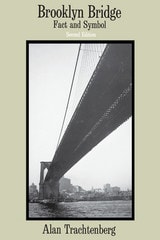
Brooklyn Bridge
Fact and SymbolAlan Trachtenberg
University of Chicago Press, 1979
"[Brooklyn Bridge] is familiar in so many movies, in so many stage sets and, as Mr. Trachtenberg shows in this brilliant . . . book, it is at least as much a symbol as a reality. . . . Mr. Trachtenberg is always exciting and illuminating."—Times Literary Supplement
"The book is a skillful and insightful synthesis of materials about Brooklyn Bridge from such diverse fields as history, engineering, literature and art. Essentially it asks the question of why Brooklyn Bridge achieved such great impact on the nineteenth century American imagination and why it has continued to have a significant impact on twentieth century art and literature. In addition to its exploration of the bridge's symbolic significance, which includes perceptive analyses of such particular works as Hart Crane's great poem cycle and the paintings of artists like Joseph Stella, the book also includes a solidly researched account of the conception, planning and construction of the bridge. Trachtenberg's account of the intellectual and cultural sources of the bridge is particularly fascinating in its demonstration of the convergence of many different philosophical and ideological currents of the time around this great engineering enterprise, illustrating as effectively as any discussion I know the complex interplay of ideas and material culture."—John G. Cawelti, University of Chicago
"Alan Trachtenberg's Brooklyn Bridge is a fascinating story, the philosophic genesis of the idea in Europe, John Roebling's heroic effort to translate it into masonry and steel, and the meanings that Americans attached to the physical object as an emblem of their aspirations."—Leo Marx, Amherst College, author of The Machine in the Garden

Build With Adobe
Marcia Southwick
Ohio University Press, 1974
“What can you spend?”
“Where will you put it?”
“Who is going to build it?”
This new updated and enlarged edition includes hundreds of photographs, drawings and house plans as well as new information about passive solar heating and cooling, and specific details on construction.
Building Materials and Technology in Hong Kong, Expanded Second Edition
Wah Sang Wong, Wing Yan, Alice Chan, Chui Chi, Rosman Wai, Yee Chun, Tris Kee, Kam Lung, Franky Choi, Jingxuan, and Lila Xie
Hong Kong University Press, 2026
This book is a thorough documentation of tectonics in the Hong Kong construction industry. It looks at how buildings have been designed and built in a high-density city in a subtropical climate. Written in both Chinese and English, it covers almost all aspects of building materials and technology in Hong Kong with a succinct sequence that follows the construction process of a building project. The case studies in Chapter 3 brings together 16 local projects, which embrace a wide range of building types: from single-storey buildings to high-rise towers, from private development to public institutional construction, from office to residence, and provide invaluable information on the application of building materials and technology.
While it is intended primarily for students in architecture, surveying, and construction, Building Materials and Technology in Hong Kong is an indispensable reference for professionals and practitioners who are dealing with building design and construction. Those with a general interest in building construction will also find this highly illustrated book an interesting and engaging read.
Bulletproof Feathers
How Science Uses Nature's Secrets to Design Cutting-Edge TechnologyEdited by Robert Allen
University of Chicago Press, 2010
Fabrics that are not only stain resistant but actually clean themselves. Airplane wings that change shape in midair to take advantage of shifts in wind currents. Hypodermic needles that use tiny serrations to render injections virtually pain free.
Though they may sound like the stuff of science fiction, in fact such inventions represent only the most recent iterations of natural mechanisms that are billions of years old—the focus of the rapidly growing field of biomimetics. Based on the realization that natural selection has for countless eons been conducting trial-and-error experiments with the laws of physics, chemistry, material science, and engineering, biomimetics takes nature as its laboratory, looking to the most successful developments and strategies of an array of plants and animals as a source of technological innovation and ideas. Thus the lotus flower, with its waxy, water-resistant surface, gives us stainproofing; the feathers of raptors become transformable airplane wings; and the nerve-deadening serrations on a mosquito’s proboscis are adapted to hypodermics.
With Bulletproof Feathers, Robert Allen brings together some of the greatest minds in the field of biomimetics to provide a fascinating—at times even jaw-dropping—overview of cutting-edge research in the field. In chapters packed with illustrations, Steven Vogel explains how architects and building engineers are drawing lessons from prairie dogs, termites, and even sand dollars in order to heat and cool buildings more efficiently; Julian Vincent goes to the very building blocks of nature, revealing how different structures and arrangements of molecules have inspired the development of some fascinating new materials, such as waterproof clothing based on shark skin; Tomonari Akamatsu shows how sonar technology has been greatly improved through detailed research into dolphin communication; Yoseph Bar-Cohen delves into the ways that robotics engineers have learned to solve design problems through reference to human musculature; Jeannette Yen explores how marine creatures have inspired a new generation of underwater robots; and Robert Allen shows us how cooperative behavior between birds, fish, and insects has inspired technological innovations in fields ranging from Web hosting to underwater exploration.
A readable, yet authoritative introduction to a field that is at the forefront of design and technology—and poised to become even more important in the coming decades as population pressures and climate change make the need for efficient technological solutions more acute—Bulletproof Feathers offers adventurous readers a tantalizing peek into the future, by way of our evolutionary past.
Bushmanders and Bullwinkles
How Politicians Manipulate Electronic Maps and Census Data to Win ElectionsMark Monmonier
University of Chicago Press, 2001
Written from the perspective of a cartographer rather than a political scientist, Bushmanders and Bullwinkles examines the political tales maps tell when votes and power are at stake. Monmonier shows how redistricting committees carve out favorable election districts for themselves and their allies; how disgruntled politicians use shape to challenge alleged racial gerrymanders; and how geographic information systems can make reapportionment a controversial process with outrageous products. He also explores controversies over the proper roles of natural boundaries, media maps, census enumeration, and ethnic identity. Raising important questions about Supreme Court decisions in regulating redistricting, Monmonier asks if the focus on form rather than function may be little more than a distraction from larger issues like election reform.
Characterized by the same wit and clarity as Monmonier's previous books, Bushmanders and Bullwinkles is essential background for understanding what might prove the most contentious political debate of the new decade.