Results by title
527 books match the query 'Translations into English' and 17 start with b
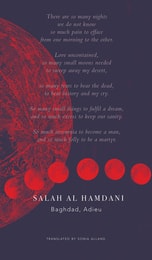
Baghdad, Adieu
Selected Poems of Memory and ExileSalah Al Hamdani
Seagull Books, 2018
This landmark collection gathers thirty-five years of his writings, from his first volume in Arabic, Memory of Embers, to his latest collection, written originally in French, For You I Dream. It offers English-language readers their first substantial overview of Al Hamdani’s work, fired by the fight against injustice and shot through with longing for the home to which he can never return.
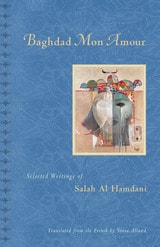
Baghdad, Mon Amour
Selected Writings of Salah Al HamdaniSalah Al Hamdani
Northwestern University Press, 2008
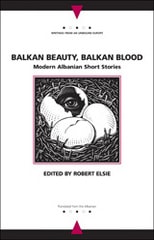
Balkan Beauty, Balkan Blood
Modern Albanian Short StoriesRobert Elsie
Northwestern University Press, 2006
Albania's more established writers (including Dritëro Agolli, Ismail Kadare, Teodor Laço, and Eqrem Basha) appear here alongside newer talents (such as Ylljet Aliçka, Mimoza Ahmeti, Elivra Dones, Lindita Arapi, and Kim Mehmeti), providing English-speaking readers with an elucidating and entertaining overview of the recent history, and the future, of the nation's literature.
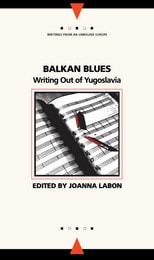
Balkan Blues
Writing Out of YugoslaviaJoanna Labon
Northwestern University Press, 1995
Contributors: Dubravka Ugrešić, Bogdan Bogdanović, Dragan Velikić, Danilo Kiš, Drago Jančar, Mirko Kovač, Goran Stefanovski, Dževad Karahasan, and Slobodan Blagojević.
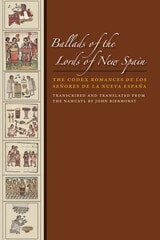
Ballads of the Lords of New Spain
The Codex Romances de los Senores de la Nueva EspanaTranscribed and translated from the Nahuatl by John Bierhorst
University of Texas Press, 2009
Compiled in 1582, Ballads of the Lords of New Spain is one of the two principal sources of Nahuatl song, as well as a poetical window into the mindset of the Aztec people some sixty years after the conquest of Mexico. Presented as a cancionero, or anthology, in the mode of New Spain, the ballads show a reordering—but not an abandonment—of classic Aztec values. In the careful reading of John Bierhorst, the ballads reveal in no uncertain terms the pre-conquest Aztec belief in the warrior's paradise and in the virtue of sacrifice.
This volume contains an exact transcription of the thirty-six Nahuatl song texts, accompanied by authoritative English translations. Bierhorst includes all the numerals (which give interpretive clues) in the Nahuatl texts and also differentiates the text from scribal glosses. His translations are thoroughly annotated to help readers understand the imagery and allusions in the texts. The volume also includes a helpful introduction and a larger essay, "On the Translation of Aztec Poetry," that discusses many relevant historical and literary issues.
In Bierhorst's expert translation and interpretation, Ballads of the Lords of New Spain emerges as a song of resistance by a conquered people and the recollection of a glorious past.
Bard of Iceland
Jonas Hallgrimsson, Poet and ScientistRichard Ringler
University of Wisconsin Press, 2002
Bard of Iceland makes available for the first time in any language other than Icelandic an extensive selection of works by Jónas Hallgrímsson (1807–1845), the most important poet of modern Iceland. Jónas was also Iceland’s first professionally trained geologist and an active contributor in a number of other scientific fields: geography, botany, zoology, and archaeology. He played a key role as well in Iceland’s struggle to gain independence from Denmark. "Descriptive power and fullness of spirit were the hallmarks of his soul," wrote a contemporary admirer.
Dick Ringler, one of the premier scholars of Icelandic literature in the world, offers a substantial biography of Jónas, a representative selection of his most important poems, and some of his prose work in science and belles lettres. Ringler also provides extended commentaries and an essay on Icelandic prosody.
The poems are translated into English equivalents of their original complex meters in Icelandic and Danish. As a poet Jónas was intimately familiar with his nation’s medieval literary inheritance—the sagas and eddas—and also with the groundbreaking work of contemporary German and Danish Romanticism (Chamisso, Heine, Oehlenschläger). A master of poetic form, Jónas not only exploited and enlarged the possibilities of traditional eddic and skaldic meters, but introduced the sonnet, triolet stanza, terza and ottava rima, and blank verse into the Icelandic metrical repertory.
Bartolomé de las Casas and the Defense of Amerindian Rights
A Brief History with DocumentsEdited by Lawrence A. Clayton and David M. Lantigua
University of Alabama Press, 2020
The writings of a sixteenth-century advocate who challenged empire in defense of Indigenous peoples.
With the exception of Christopher Columbus, Bartolomé de las Casas is arguably the most notable figure of the Encounter Age. He is remembered principally as the creator of the Black Legend, as well as the protector of American Indians. He was one of the pioneers of the human rights movement, and a Christian activist who invoked law and Biblical scripture to challenge European colonialism in the great age of the Encounter. He was also one of the first and most thorough chroniclers of the conquest, and a biographer who saved the diary of Columbus’s first voyage for posterity by transcribing it in his History of the Indies before the diary was lost.
Bartolomé de las Casas and the Defense of Amerindian Rights: A Brief History with Documents provides the most wide-ranging and concise anthology of Las Casas’s writings, in translation, ever made available. It contains not only excerpts from his most well-known texts, but also his largely unavailable writings on political philosophy and law, and addresses the underappreciated aspects of his thought. Fifteen of the twenty-six documents are entirely new translations of Las Casas’s writings, a number of them appearing in English for the first time.
This volume focuses on his historical, political, and legal writings that address the deeply conflicted and violent sixteenth-century encounter between Europeans and indigenous peoples of the Americas. It also presents Las Casas as a more comprehensive and systematic philosophical and legal thinker than he is typically given credit for. The introduction by Lawrence A. Clayton and David M. Lantigua places these writings into a synthetic whole, tracing his advocacy for indigenous peoples throughout his career. By considering Las Casas’s ideas, actions, and even regrets in tandem, readers will understand the historical dynamics of Spanish imperialism more acutely within the social-political context of the times.

Battle Of Kosovo
John Matthias
Ohio University Press, 1987
The Battle of Kosovo cycle of heroic ballads is generally considered the finest work of Serbian folk poetry. Commemorating the Serbian Empire’s defeat at the hands of the Turks in the late fourteenth century, these poems and fragments have been known for centuries in Eastern Europe. With the appearance of the collections of Serbian folk poems by Vuk Stefanovic Karasdzic, the brilliance of the poetry in the Kosovo and related cycles of ballads was affirmed by poets and critics as deeply influential as Goethe, Jacob Brimm, Adam Mickiewicz, and Alexander Pushkin. Although translations into English have been attempted before, few of them, as Charles Simic notes in his preface, have been persuasive until now. Simic compares the movement of the verse in these translations to the “variable foot” effect of William Carlos Williams’s later poetry, and argues that John Matthias “grasps the poetic strategies of the anonymous Serbian poet as well as Pound did those of Chinese poetry.”
First published in 1987, the translation of the Battle of Kosovo is now reprinted both because of its intrinsic merits and because the recent crisis in Kosovo itself compels the entire world to understand the nature of the ancient conflicts and passions that fuel it. Although Matthias and Simic have elected to retain their original preface and introduction, Christopher Merrill, a scholar of the region and author of Only the Nails Remain, has contributed a brief afterword explaining the importance of this poetry in the context of NATO’s first military action ever against a sovereign nation.
Becoming Heidegger
On the Trail of His Early Occasional Writings, 1910-1927Theodore Kisiel
Northwestern University Press, 2007
Accompanied by incisive commentary, these pieces from Heidegger's student days, his early Freiburg period, and the time of his Marburg lecture courses will contribute substantially to rethinking the making and meaning of Being and Time. The contents are of a depth and quality that make this volume the collection for those interested in Heidegger's work prior to his masterwork. The book will also serve those concerned with Heidegger's relation to such figures as Aristotle, Dilthey, Husserl, Jaspers, and Löwith, as well as scholars whose interests are more topically centered on questions of history, logic, religion, and truth. Important in their own right, these pieces will also prove particularly useful to students of Heidegger's thought and of twentieth-century philosophy in general.
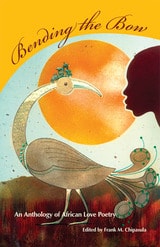
Bending the Bow
An Anthology of African Love PoetryEdited by Frank M. Chipasula
Southern Illinois University Press, 2008
From the ancient Egyptian inventors of the love lyric to contemporary poets, Bending the Bow: An Anthology of African Love Poetry gathers together both written and sung love poetry from Africa.
This anthology is a work of literary archaeology that lays bare a genre of African poetry that has been overshadowed by political poetry. Frank Chipasula has assembled a historically and geographically comprehensive wealth of African love poetry that spans more than three thousand years. By collecting a continent’s celebrations and explorations of the nature of love, he expands African literature into the sublime territory of the heart.
Bending the Bow traces the development of African love poetry from antiquity to modernity while establishing a cross-millennial dialogue. The anonymously written love poems fromPharaonic Egypt that open the anthology both predate Biblical love poetry and reveal the longevity of written love poetry in Africa. The middle section is devoted to sung love poetry from all regions of the continent. These great works serve as the foundation for modern poetry and testify to love poetry’s omnipresence in Africa. The final section, showcasing forty-eight modern African poets, celebrates the genre’s continuing vitality. Among those represented are Muyaka bin Hajji and Shaaban Robert,two major Swahili poets; Gabriel Okara, the innovative though underrated Nigerian poet; Léopold Sédar Senghor, the first president of Senegal and a founder of the Negritude Movement in francophone African literature; Rashidah Ismaili from Benin; Flavien Ranaivo from Madagascar; and Gabeba Baderoon from South Africa.
Ranging from the subtly suggestive to the openly erotic, this collection highlights love’s endurance in a world too often riven by contention. Bending the Bow bears testimony to poetry’s role as conciliator while opening up a new area of study for scholars and students.

Between God and Man
Pope Innocent III
Catholic University of America Press, 2004
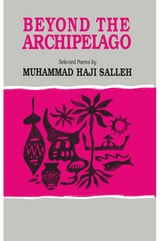
Beyond the Archipelago
Selected PoemsMuhammad Haji Salleh
Ohio University Press, 1994
A collections of 70 poems from one of Malaya’s leading poets, that depict longing, loneliness, modernization, and insights in Malaysian culture.

Biogea
Michel Serres
University of Minnesota Press, 2012
Biogea is a mixture of poetry, philosophy, science, and biography exemplary of the style that has made Michel Serres one of the most extraordinary thinkers of his age. His philosophical and poetic inquiry sings in praise of earth and life, what he names singularly as Biogea. In these times when species are disappearing, when catastrophic events such as earthquakes and tsunamis impale the earth, Serres wonders if anyone “worries about the death pangs of the rivers.” And for Serres, one can ask the same question of philosophy as the humanities increasingly find themselves in need of defenders. Today, all living organisms discover themselves part of this Biogea. “Today we have other neighbors, constituents of the Biogea: the sea, my lover; our mother, the Earth, becomes our daughter; this beautiful breeze which inspires the spirit, a spiritual mistress; our light friends, the fresh and flowing waters.”
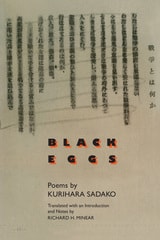
Black Eggs
Poems by Kurihara SadakoKurihara Sadako; Translated with an Introduction and Notes by Richard H. Minear
University of Michigan Press, 1994

Blood Pact and Other Stories
Mario Benedetti
Northwestern University Press, 1997
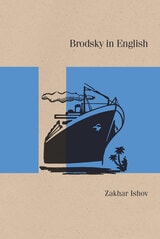
Brodsky in English
Zakhar Ishov
Northwestern University Press, 2023
Joseph Brodsky’s translations of his own Russian-language poems into English “new originals” have been criticized for their “un-Englishness,” an appraisal based on a narrow understanding of translation itself. With this radical reassessment of the Nobel Prize winner’s self-translations, Zakhar Ishov proposes a fresh approach to poetry translation and challenges the assumption that poetic form is untranslatable.
Brodsky in English draws on previously unexamined archival materials, including drafts and correspondence with translators and publishers, to trace the arc of Brodsky’s experience with the English language. Ishov shows how Brodsky’s belief in the intellectual continuity between his former life in the Soviet Union and his new career in the United States, including as Poet Laureate, anchored his insistence on maintaining the formal architecture of his poems in translation, locating the transmission of poetic meaning in the rhythms of language itself. This book highlights Brodsky’s place within the long history of the compromises translation must make between linguistic material and poetic process.
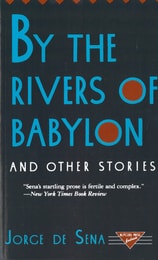
By the Rivers of Babylon and Other Stories
Patai, Daphne
Rutgers University Press, 1991