Results by title
1441 books match the query 'World' and 74 start with b
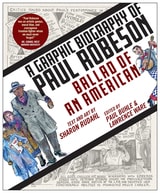
Ballad of an American
A Graphic Biography of Paul RobesonSharon Rudahl
Rutgers University Press, 2021
The first-ever graphic biography of Paul Robeson, Ballad of an American, charts Robeson’s career as a singer, actor, scholar, athlete, and activist who achieved global fame. Through his films, concerts, and records, he became a potent symbol representing the promise of a multicultural, multiracial American democracy at a time when, despite his stardom, he was denied personal access to his many audiences.
Robeson was a major figure in the rise of anti-colonialism in Africa and elsewhere, and a tireless campaigner for internationalism, peace, and human rights. Later in life, he embraced the civil rights and antiwar movements with the hope that new generations would attain his ideals of a peaceful and abundant world. Ballad of an American features beautifully drawn chapters by artist Sharon Rudahl, a compelling narrative about his life, and an afterword on the lasting impact of Robeson’s work in both the arts and politics. This graphic biography will enable all kinds of readers—especially newer generations who may be unfamiliar with him—to understand his life’s story and everlasting global significance.
Ballad of an American: A Graphic Biography of Paul Robeson is published in conjunction with Rutgers University’s centennial commemoration of Robeson’s 1919 graduation from the university.
Study guide for Ballad of an American: A Graphic Biography of Paul Robeson (https://d3tto5i5w9ogdd.cloudfront.net/wp-content/uploads/2021/05/10201015/YA_Adult-Study-Guide-for-A-Graphic-Biography-of-Paul-Robeson.pdf).
View the blad for Ballad of an American.
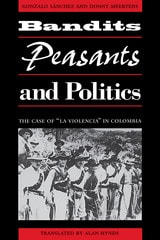
Bandits, Peasants, and Politics
The Case of "La Violencia" in ColombiaBy Gonzalo Sánchez and Donny Meertens
University of Texas Press, 2001
The years 1945-1965 saw heavy partisan conflict in the rural areas of Colombia, with at least 200,000 people killed. This virtual civil war began as a sectarian conflict between the Liberal and Conservative parties, with rural workers (campesinos) constituting the majority of combatants and casualties. Yet La Violencia resists classification as a social uprising, since calls for social reform were largely absent during this phase of the struggle. In fact, once the elite leadership settled on a power-sharing agreement in 1958, the conflict appeared to subside.
This book focuses on the second phase (1958-1965) of the struggle, in which the social dimensions of the conflict emerged in a uniquely Colombian form: the campesinos, shaped by the earlier violence, became social and political bandits, no longer acting exclusively for powerful men above them but more in defense of the peasantry. In comparing them with other regional expressions of bandolerismo, the authors weigh the limited prospects for the evolution of Colombian banditry into full-scale social revolution.
Published originally in 1983 as Bandoleros, gamonales y campesinos and now updated with a new epilogue, this book makes a timely contribution to the discourse on social banditry and the Colombian violencia. Its importance rests in the insights it provides not only on the period in question but also on Colombia's present situation.

Bankruptcy and Debt Collection in Liberal Capitalism
Switzerland, 1800–1900Mischa Suter
University of Michigan Press, 2021
Drawing on perspectives from anthropology and social theory, this book explores the quotidian routines of debt collection in nineteenth-century capitalism. It focuses on Switzerland, an exemplary case of liberal rule. Debt collection and bankruptcy relied on received practices until they were standardized in a Swiss federal law in 1889. The vast array of these practices was summarized by the idiomatic Swiss legal term “Rechtstrieb” (literally, “law drive”). Analyzing these forms of summary justice opens a window to the makeshift economies and the contested political imaginaries of nineteenth-century everyday life. Ultimately, the book advances an empirically grounded and theoretically informed history of quotidian legal practices in the everyday economy; it is an argument for studying capitalism from the bottom up.
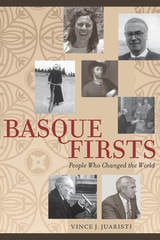
Basque Firsts
People Who Changed the WorldVince J. Juaristi
University of Nevada Press, 2016
The profiles use primary sources to tell fresh stories and offer a wonderful variety, showing the astonishing breadth of Basque contributions. They include Juan Sebastían Elcano, the first person to circumnavigate the earth; St. Ignatius of Loyola, the first Jesuit to seed a worldwide movement in education; Santiago Ramón y Cajal, the Father of Neurology and a Nobel laureate; Cristóbal Balenciaga, the king of haute couture; Paul Laxalt, one of Ronald Reagan’s closest friends in politics; and Edurne Pasaban, the first woman to climb the world’s fourteen tallest mountains.
Basque Firsts provides a rare look at a culture’s people, revealing the significant contributions they have shared.
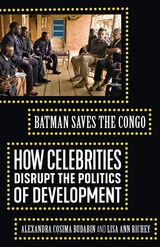
Batman Saves the Congo
How Celebrities Disrupt the Politics of DevelopmentAlexandra Cosima Budabin
University of Minnesota Press, 2021
How celebrity strategic partnerships are disrupting humanitarian space
Can a celebrity be a “disrupter,” promoting strategic partnerships to bring new ideas and funding to revitalize the development field—or are celebrities just charismatic ambassadors for big business? Examining the role of the rich and famous in development and humanitarianism, Batman Saves the Congo argues that celebrities do both, and that understanding why and how yields insight into the realities of neoliberal development.
In 2010, entertainer Ben Affleck, known for his superhero performance as Batman, launched the Eastern Congo Initiative to bring a new approach to the region’s development. This case study is central to Batman Saves the Congo. Affleck’s organization operates with special access, diversified funding, and significant support of elites within political, philanthropic, development, and humanitarian circuits. This sets it apart from other development organizations. With his convening power, Affleck has built partnerships with those inside and outside development, staking bipartisan political ground that is neither charity nor aid but “good business.” Such visible and recognizable celebrity humanitarians are occupying the public domain yet not engaging meaningfully with any public, argues Batman Saves the Congo. They are an unruly bunch of new players in development who amplify business solutions.
As elite political participants, celebrities shape development practices through strategic partnerships that are both an innovative way to raise awareness and funding for neglected causes and a troubling trend of unaccountable elite leadership in North–South relations. Batman Saves the Congo helps illuminate the power of celebritized business solutions and the development contexts they create.

Bats
A World of Science and MysteryM. Brock Fenton and Nancy B. Simmons
University of Chicago Press, 2015
Bats: A World of Science and Mystery presents these fascinating nocturnal creatures in a new light. Lush, full-color photographs portray bats in flight, feeding, and mating in views that show them in exceptional detail. The photos also take the reader into the roosts of bats, from caves and mines to the tents some bats build out of leaves. A comprehensive guide to what scientists know about the world of bats, the book begins with a look at bats’ origins and evolution. The book goes on to address a host of questions related to flight, diet, habitat, reproduction, and social structure: Why do some bats live alone and others in large colonies? When do bats reproduce and care for their young? How has the ability to fly—unique among mammals—influenced bats’ mating behavior? A chapter on biosonar, or echolocation, takes readers through the system of high-pitched calls bats emit to navigate and catch prey. More than half of the world’s bat species are either in decline or already considered endangered, and the book concludes with suggestions for what we can do to protect these species for future generations to benefit from and enjoy.
From the tiny “bumblebee bat”—the world’s smallest mammal—to the Giant Golden-Crowned Flying Fox, whose wingspan exceeds five feet, A Battery of Bats presents a panoramic view of one of the world’s most fascinating yet least-understood species.
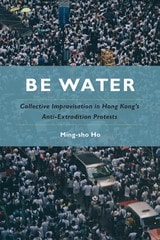
Be Water
Collective Improvisation in Hong Kong's Anti-Extradition ProtestsMing-sho Ho
Temple University Press, 2025
In Be Water, Ming-sho Ho examines the dynamics of the city-wide uprising from the perspective of agency power. He seeks to understand how numerous and anonymous Hongkongers contributed to this epoch-making campaign as well as how they responded to the full-scale state repression that enveloped them. Ho praises and questions the durability of the inventive Be Water Revolution and how the activists encouraged protests spontaneously, through interpersonal networks and by voluntarily collaborating with strangers at great personal risk.
Ho posits a new concept of “collective improvisation” to make sense of such a decentralized yet creative way of protesting. Be Water seeks to understand the rise and long afterlife of this movement and illustrate its efficacy. As Ho shows, these dynamics of collective improvisation have implications for contemporary protest movements around the world.
Before Before
A Story of Discovery and Loss in Sierra LeoneBetsy Small
University of Michigan Press, 2025
2025 Foreword INDIES Finalist for Political and Social Sciences
- 2026 Nautilus Silver Book Award in World Cultures' Transformational Growth & Development
Sierra Leone is often sensationalized as a place of extreme violence and suffering—of blood diamonds, child soldiers, war amputations, and Ebola and now the highly addictive drug Kush. Before Before captures daily life in a different country, one Betsy Small first encountered as a Peace Corps worker between 1984–1987, and then rediscovered when she returned decades later with her daughter. Living in Tokpombu, a remote community of forty rice-farming families, the author faced struggles that changed her forever and witnessed the growing tensions in this rainforest village—between the young and old, between the traditions of oral history and honoring the ancestors valued by the elders and the siren call of the illicit diamond mines faced by the youth.
Before Before offers a rare portrait of everyday people, with particular focus on the lives of women and girls, before the brutal war of 1991 tore the country apart. Through Small’s account of immersion in another world as she witnessed injustice and was welcomed as a friend, readers are invited to explore the shared ground of our humanity.
Before the Nation
Kokugaku and the Imagining of Community in Early Modern JapanSusan L. Burns
Duke University Press, 2003
Central to Burns's analysis is Motoori Norinaga’s Kojikiden, arguably the most important intellectual work of Japan's early modern period. Burns situates the Kojikiden as one in a series of attempts to analyze and interpret the mythohistories dating from the early eighth century, the Kojiki and Nihon shoki. Norinaga saw these texts as keys to an original, authentic, and idyllic Japan that existed before being tainted by "flawed" foreign influences, notably Confucianism and Buddhism. Hailed in the nineteenth century as the begetter of a new national consciousness, Norinaga's Kojikiden was later condemned by some as a source of Japan's twentieth-century descent into militarism, war, and defeat. Burns looks in depth at three kokugaku writers—Ueda Akinari, Fujitani Mitsue, and Tachibana Moribe—who contested Norinaga's interpretations and produced competing readings of the mythohistories that offered new theories of community as the basis for Japanese social and cultural identity. Though relegated to the footnotes by a later generation of scholars, these writers were quite influential in their day, and by recovering their arguments, Burns reveals kokugaku as a complex debate—involving history, language, and subjectivity—with repercussions extending well into the modern era.
Being Human
Political Modernity and Hospitality in Kurdistan-IraqFazil Moradi
Rutgers University Press, 2024
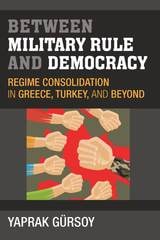
Between Military Rule and Democracy
Regime Consolidation in Greece, Turkey, and BeyondYaprak Gürsoy
University of Michigan Press, 2017
Based on more than 150 interviews with Greek and Turkish elites, Gürsoy offers a detailed analysis of both countries from the interwar period to recent regime crises. She argues that officers, politicians, and businesspeople prefer democracy, authoritarianism, or short-lived coups depending on the degree of threat they perceive to their interests from each other and the lower classes. The power of elites relative to the opposition, determined in part by the coalitions they establish with each other, affects the success of military interventions and the consolidation of regimes.
With historical and theoretical depth, Between Military Rule and Democracy will interest students of regime change and civil-military relations in Greece, Turkey, Thailand, and Egypt, as well as in countries facing similar challenges to democratization.

Between Rebels and Relief
Negotiating Humanitarian Access in the Democratic Republic of the CongoMyfanwy James
University of Michigan Press, 2027
Between Rebels and Relief follows the frontline humanitarians who negotiate access with rebel groups in North Kivu, in the eastern Democratic Republic of the Congo, to foreground the work of local aid workers who are the backbone of humanitarian operations. Myfanwy James examines how global endeavors are built on the personal networks, knowledge, and skills of local personnel who are rarely given credit. Based on ethnographic research on Médecins Sans Frontières (Doctors Without Borders), James uncovers the brokerage, translation, and creative identity work that keeps medical relief operations running, and the crucial role of locally hired staff in navigating violent political terrains and building trust with armed groups.
Humanitarian agencies draw upon the personal profiles of different staff who learn to position themselves strategically for different audiences, casting and recasting themselves as a form of tactical agency in uncertain violent terrains. Identities are put to work—they become tools, influencing who can wield power, who can gain trust, and who is at particular risk of violence. Yet this produces a central paradox: To uphold a universalist mandate, humanitarian organizations leverage and reproduce the very borders between people—of race, gender, ethnicity, and personal history—that their egalitarian values seek to transcend.
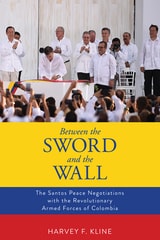
Between the Sword and the Wall
The Santos Peace Negotiations with the Revolutionary Armed Forces of ColombiaHarvey F. Kline
University of Alabama Press, 2020
Chronicles the peace process negotiations between Colombian president Juan Manuel Santos and the Marxist Revolutionary Armed Forces of Colombia
In Between the Sword and the Wall: The Santos Peace Negotiations with the Revolutionary Armed Forces of Colombia, Harvey Kline, a noted expert on contemporary Colombian politics, brings to a close his multivolume chronicle of the incessant violence that has devastated Colombia’s population, politics, and military for decades. This, his newest work on the subject, recounts and analyzes the negotiations between Colombian president Juan Manuel Santos and the Marxist Revolutionary Armed Forces of Colombia (FARC), which ended with a peace agreement in 2016.
The FARC insurgency began in 1964, and every Colombian president after 1980 unsuccessfully tried to negotiate a peace agreement with the group. Kline analyzes how the Santos administration was ultimately able to negotiate peace with the FARC. The agreement failed to receive the approval of the Colombian people in an October 2016 plebiscite, but a renegotiated version was later approved by the congress in the same year. Afterward, more than 7,000 rebels turned over their weapons to the UN mission in Colombia. The former combatants were then to be judged by a special court empowered to punish but not imprison those who had violated human rights. Throughout the book, Kline emphasizes the dual nature of the Santos negotiations, first with the FARC and second with the democratic opposition to the agreement led by former president Álvaro Uribe Vélez.
Kline provides readers with a well-researched analysis based on a variety of resources, including media articles and primary documents from the government, international organizations, and the FARC. He also conducted extensive interviews with twenty-eight government officials and Colombian experts from all ideological persuasions.
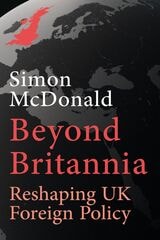
Beyond Britannia
Reshaping UK Foreign PolicySimon McDonald
Haus Publishing, 2023
What should the future of British foreign policy look like? For too long, successive governments have shied away from acknowledging uncomfortable truths about the decline of Britain’s military capabilities. As we approach the middle years of the twenty-first century, a new set of urgent and daunting challenges lie ahead, including climate change, technological development, the rise of AI, and a growing threat from China. The need for us to reconcile ourselves with our position in the world has never been more acute. In Beyond Britannia: Reshaping UK Foreign Policy, Simon McDonald persuasively argues that the United Kingdom’s significant soft-power strengths can be harnessed to expand its international influence. Such a shift will only be possible, he says, if we first acknowledge the challenges of Brexit and the need to reduce our unrealistic hard-power ambitions. Excellence in areas that other countries care about will keep the United Kingdom internationally relevant in the second half of the century in a way that nostalgia for a lost pre-eminence will not.
Beyond Britannia
Reshaping UK Foreign PolicySimon McDonald
Haus Publishing, 2023
What should the future of British foreign policy look like? For too long, successive governments have shied away from acknowledging uncomfortable truths about the decline of Britain’s military capabilities. As we approach the middle years of the twenty-first century, a new set of urgent and daunting challenges lie ahead, including climate change, technological development, the rise of AI, and a growing threat from China. The need for us to reconcile ourselves with our position in the world has never been more acute. In Beyond Britannia: Reshaping UK Foreign Policy, Simon McDonald persuasively argues that the United Kingdom’s significant soft-power strengths can be harnessed to expand its international influence. Such a shift will only be possible, he says, if we first acknowledge the challenges of Brexit and the need to reduce our unrealistic hard-power ambitions. Excellence in areas that other countries care about will keep the United Kingdom internationally relevant in the second half of the century in a way that nostalgia for a lost pre-eminence will not.
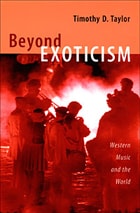
Beyond Exoticism
Western Music and the WorldTimothy D. Taylor
Duke University Press, 2007
Beginning with a focus on musical manifestations of colonialism and imperialism, Taylor discusses how the “discovery” of the New World and the development of an understanding of self as distinct from the other, of “here” as different from “there,” was implicated in the development of tonality, a musical system which effectively creates centers and margins. He describes how musical practices signifying nonwestern peoples entered the western European musical vocabulary and how Darwinian thought shaped the cultural conditions of early-twentieth-century music. In the era of globalization, new communication technologies and the explosion of marketing and consumption have accelerated the production and circulation of tropes of otherness. Considering western music produced under rubrics including multiculturalism, collaboration, hybridity, and world music, Taylor scrutinizes contemporary representations of difference. He argues that musical interpretations of the nonwestern other developed hundreds of years ago have not necessarily been discarded; rather they have been recycled and retooled.
Beyond International Intervention
Politics of Improvement in SerbiaKatarina Kušic
University of Michigan Press, 2025
By engaging with subjects, the book not only enhances our understanding of intervention, but also uncovers the limitations of the concept. Katarina Kušić argues that the concept limits what we can observe and theorize, and it prevents researchers from engaging with the people living in spaces of intervention as coeval political subjects. As an alternative, she proposes to foreground improvement over “intervention.” This reorientation enables researchers to trace hierarchies beyond the local/international dichotomy, expands fields of visibility beyond those prescribed by interventions themselves, and seriously considers the contradictions at the heart of liberalism.
Beyond Left, Right, and Center
The Politics of Gender and Ethnicity in Contemporary GermanyChristina Xydias
Temple University Press, 2024
Christina Xydias shows that some right-leaning parties advocate for women’s rights and interests, while left- and right-leaning parties can be equally indifferent to lack of representation for women from marginalized groups. These findings follow from analyses of election results, transcripts from debates and speeches, and personal interviews, as well as from a close reading of intertwined military and citizenship policies that illustrate how women’s and ethnic minority groups’ rights are constructed.
Beyond Left, Right, and Center concludes with an analysis of women’s representation across OECD countries, showing that right-leaning parties are more likely to support women’s rights and interests in societies that are more egalitarian.
Beyond Mestizaje
Contemporary Debates on Race in MexicoTania Islas Weinstein and Milena Ang, editors
Amherst College Press, 2024
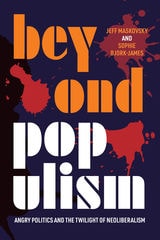
Beyond Populism
Angry Politics and the Twilight of NeoliberalismJeff Maskovsky
West Virginia University Press, 2020
Across the world, politics is lurching to the right, ethnic nationalism is on the rise, and people are furious. Beyond Populism critically examines the new destructive projects of resentment that have surfaced in the political spaces opened by neoliberalism’s failures, particularly since the financial collapse of 2008. It contextualizes the recent history of the Global North—notably Brexit and the Trump election—among wider comparative politics, with chapters on India, Colombia, Eastern Europe, the Philippines, Ethiopia, and other parts of the globe marked by populist insurgencies.
The essays collected here explore how global, regional, national, and local structures of power produce angry politics. They go beyond conventional academic debates about populism to explore the different kinds of anger that shape politics today and to make legible the multiplicity of forces, antagonisms, conflicts, and emergent political forms that mark the present. By examining the politics of anger, Beyond Populism also considers what is needed to transform anger from a reactionary to an emancipatory force.
Beyond Progress
An Interpretive Odyssey to the FutureHugh De Santis
University of Chicago Press, 1996
Explaining that we have arrived at a great historic divide, De Santis asserts that the old modern order is giving way to an age of "mutualism." He draws on world history and the study of international relations to explore the emerging future, in which new forms of social and political identity and regional associations and alignments will be needed to solve global problems. Demonstrating that mutualism will require a dramatic change in the way states, international institutions, corporations, and local communities interact, De Santis argues that this transformation will be especially difficult for the United States, which will have to abandon its exceptionalist identity and rejoin a world it can no longer escape.
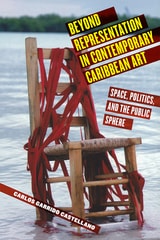
Beyond Representation in Contemporary Caribbean Art
Space, Politics, and the Public SphereCarlos Garrido Castellano
Rutgers University Press, 2019
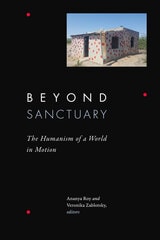
Beyond Sanctuary
The Humanism of a World in MotionAnanya Roy and Veronika Zablotsky, editors
Duke University Press, 2025
Contributors. Leisy Abrego, Damon Azali-Rojas, Amy Sara Carroll, Sharad Chari, Nicholas De Genova, Ricardo Dominguez, Lorgia García-Peña, Sarah Haley, Gaye Theresa Johnson, Moon-Kie Jung, Maria Kaika, Saree Makdisi, Kyle T. Mays, Ananya Roy, Charles Sepulveda, SA Smythe, Vanessa E. Thompson, Charalampos Tsavdaroglou, João H. Costa Vargas, Rinaldo Walcott, Veronika Zablotsky, Maite Zubiaurre
Beyond the Death of God
Religion in 21st Century International PoliticsSimone Raudino and Patricia Sohn, Editors
University of Michigan Press, 2022
This volume offers a nuanced picture with specific instances of religion and politics in Muslim, Jewish, Christian, Buddhist, and Hindu contexts, broadly presenting the phenomenon of religion and politics via country and thematic case studies. Qualitative, quantitative, material, philosophical, and theological analyses draw upon social theory to show how (and why) religion matters deeply in each time and place.
The authors and contributors demonstrate that religion is a significant force that drives societies and polities around the world, and that a radical change in the Western understanding of value-driven global politics is needed. Beyond the Death of God offers new, local voices to Western audiences—through essays that suggest the need for an appreciation of Divinity as a quintessence holding a significant place in the hearts, minds, social orders, and political organization of polities around the world.
Beyond the Gender Gap in Japan
Gill Steel, Editor
University of Michigan Press, 2019
Beyond the Rebel Girl
Women and the Industrial Workers of the World in the Pacific Northwest, 1905-1924Heather Mayer
Oregon State University Press, 2018
In Beyond the Rebel Girl, historian Heather Mayer questions the well-worn vision of Wobblies as young, single, male, itinerant workers. While such workers formed a large portion of the membership, they weren’t the whole picture. In small towns across the Northwest, and in the larger cities of Seattle, Portland, and Spokane, women played an integral role in Wobbly life. Single women, but also families—husband and wife Wobbly teams—played important roles in some of the biggest fights for justice. IWW halls in these Northwest cities often functioned as community centers, with family-friendly events and entertainment.
Women were drawn to the IWW for its radical vision, inclusionary policies, birth control advocacy, and emphasis on freedom of choice in marriage. The IWW also offered women an avenue for activism that wasn’t focused primarily on the fight for suffrage. Beyond the Rebel Girl deepens our understanding of how the IWW functioned and how the union supported women in their fight for birth control, sexual emancipation, and better labor conditions, all while facing persecution at the local, state, and federal levels.

Beyond the Wall
Writing a Path through PalestineBidisha
Seagull Books, 2025
Their voices come from Bethlehem and Hebron. You can hear them from Jerusalem to Nazareth, and witness their protests in Gaza and Ramallah. From the refugee camps in the West Bank, you can hear the voices of the Palestinian people call out to demand self-determination and a better quality of life. But outside of Israel and the occupied territories, these individual voices are rarely heard—until now.
In Beyond the Wall: Writing a Path through Palestine, internationally renowned feminist critic and writer Bidisha collects the testimonies of an occupied people—ordinary citizens, activists, and children—alongside those of international aid workers and foreign visitors for a revelatory look at a population on the margins.
Called “beautifully belligerent, [and] fiercely intelligent” by The Independent and a “dazzlingly creative writer” by the London Times, Bidisha amplifies the voices of the Palestinian people in this book and lends them her own considerable strength.

Beyond the World of Men
Women’s Fiction at the Czech Fin de SiècleEdited by Geoffrey Chew
Karolinum Press, 2024
Bringing together Czech fiction published by women between 1890 and 1910, Beyond the World of Men presents works that confront pivotal issues of the time, including the “woman question” and women’s rights, class conflict, lesbian love, and the relationship between the aristocracy and the Czech peasantry (as in two stories originally written in German by the aristocrat Marie von Ebner-Eschenbach). The collection contains stories that are of literary merit, but also hold historical value. In these works, the authors offer trenchant social commentary while injecting both comic and sentimental elements into their writing, employing humanity and subtlety.
As a whole, the collection suggests a revision of the critical understanding of Czech literary modernism; these writers represent voices that were not usually heard in the male writing of the period. They also demand evaluation in their differing (but constant) reactions to earlier women’s writing in Czech and in other European languages, but particularly that of the central figure of Božena Nemcová, to whose canonic novel Babicka they constantly return.

Big Brother and the Grim Reaper
Political Life After DeathBenjamin Ginsberg
Michigan State University Press, 2024

Bill Clifton
America's Bluegrass Ambassador to the WorldBill C Malone
University of Illinois Press, 2016
Biopolitics of the More-Than-Human
Forensic Ecologies of ViolenceJoseph Pugliese
Duke University Press, 2020

Biopower in Putin’s Russia
From Taking Care to Taking LivesSergei Medvedev
Central European University Press, 2024
In this book, Makarychev and Medvedev examine the importance of biopolitics in fueling Russia’s confrontation with the West. In their view, the development of Putin’s illiberal authoritarianism was largely triggered by what they call a biopolitical turn. This shift is exemplified by the use of an increasing number of regulatory mechanisms to discipline and constrain the human body. Such political practices concern issues of sexuality, reproductive behavior, adoption, fertility, family planning, public hygiene, and demography. This turn created a new disciplinary framework for the population and the elite. Bans and restrictions of a biopolitical nature, became one of the main tools for articulating the rules of belonging in the political community and drawing its political boundaries. Biopolitical discourses have taken up the core of the Russian identity formation, which contrasts a positive “conservative Russia” with a supposedly vicious “liberal West.”
The presentation of the political genealogy of the body-centric structures of power and hegemony in Russia implies their transformation from bio- to necropolitics. Necropolitical (repressive and life-depriving) components are inscribed in the biopolitical regimes of power: they form the core of Putin’s rule over Russia and are a key factor behind the war against Ukraine.
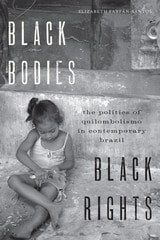
Black Bodies, Black Rights
The Politics of Quilombolismo in Contemporary BrazilBy Elizabeth Farfán-Santos
University of Texas Press, 2016
Under a provision in the Brazilian constitution, rural black communities identified as the modern descendants of quilombos—runaway slave communities—are promised land rights as a form of reparations for the historic exclusion of blacks from land ownership. The quilombo provision has been hailed as a success for black rights; however, rights for quilombolas are highly controversial and, in many cases, have led to violent land conflicts. Although thousands of rural black communities have been legally recognized, only a handful have received the rights they were promised. Conflict over quilombola rights is widespread and carries important consequences for race relations and political representations of blackness in twenty-first century Brazil.
Drawing on a year of field research in a quilombola community, Elizabeth Farfán-Santos explores how quilombo recognition has significantly affected the everyday lives of those who experience the often-complicated political process. Questions of identity, race, and entitlement play out against a community’s struggle to prove its historical authenticity—and to gain the land and rights they need to survive. This work not only demonstrates the lived experience of a new, particular form of blackness in Brazil, but also shows how blackness is being mobilized and reimagined to gain social rights and political recognition. Black Bodies, Black Rights thus represents an important contribution to the rapidly growing interdisciplinary field of Afro-Latino studies.

Black Regions of the Imagination
African American Writers between the Nation and the WorldEve Dunbar
Temple University Press, 2012
Zora Neale Hurston, Richard Wright, James Baldwin, and Chester Himes were all pressured by critics and publishers to enlighten mainstream (white) audiences about race and African American culture. Focusing on fiction and non-fiction they produced between the Harlem Renaissance and the Black Arts Movement, Eve Dunbar’s important book, Black Regions of the Imagination, examines how these African American writers—who lived and traveled outside the United States—both document and re-imagine their “homegrown” racial experiences within a worldly framework.
From Hurston’s participant-observational accounts and Wright’s travel writing to Baldwin’s Another Country and Himes’ detective fiction, these writers helped develop the concept of a “region” of blackness that resists boundaries of genre and geography. Each writer represents—and signifies—blackness in new ways and within the larger context of the world. As they negotiated issues of “belonging,” these writers were more critical of social segregation in America as well as increasingly resistant to their expected roles as cultural “translators.”
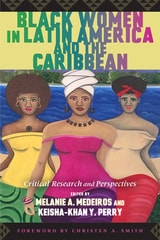
Black Women in Latin America and the Caribbean
Critical Research and PerspectivesMelanie A. Medeiros
Rutgers University Press, 2023
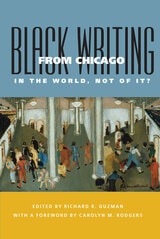
Black Writing from Chicago
In the World, Not of It?Edited by Richard R. Guzman. Foreword by Carolyn M. Rodgers
Southern Illinois University Press, 2006
Black Writing from Chicago: In the World, Not of It? takes readers on a cultural trip through Chicago’s literary history. Editor Richard R. Guzman compiles the first comprehensive collection of the works of Chicago’s black writers from 1861 to the present day. The anthology, which includes works from newspaper writing, poetry, fiction, drama, essays, and historical and social commentary, seeks not only to represent a broad range of writings but also to focus tightly on such themes as hope and despair, racism and equality, spirituality and religion. More than sixty writers, from the anonymous “J. W. M. (Colored)” to Ken Green, unfold a story that reflects the literary periods in black American history. Each author’s selection is preceded by a biographical and a bibliographical introduction. Readers interested in Chicago, race relations, and literature, as well as scholars of history, sociology, urban studies, and cultural studies, will find the collection invaluable.
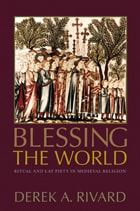
Blessing the World
Ritual and Lay Piety in Medieval ReligionDerek A. Rivard
Catholic University of America Press, 2009
Blessings from Beijing
Inside China's Soft-Power War on TibetGreg C. Bruno
University Press of New England, 2018

Blinding Polyphemus
Geography and the Models of the WorldFranco Farinelli
Seagull Books, 2016
Following the lessons of nineteenth-century critical German geography, this is a manual of geography without any map. To indicate where things are means already responding, in implicit and unreflective ways, to prior questions about their nature. Blinding Polyphemus not only takes account of the present state of the Earth and of human geography, it redefines the principal models we possess for the description of the world: the map, above all, as well as the landscape, subject, place, city, and space.
Blood and Homeland
Eugenics and Racial Nationalism in Central and Southeast Europe, 1900-1940Paul J. Weindling
Central European University Press, 2007
Bloody Numbers
The Early Atlantic Slave Trade and the Invention of Modern CorporealityPablo F. Gómez
University of Chicago Press, 2026
Upends current thinking about how early modern people started to conceptualize human beings in terms of populations.
Bloody Numbers is a provocative account of the violent world of the sixteenth- and seventeenth-century South Atlantic slave-trading societies, where traders, financiers, officials, surgeons, notaries, ship captains, and others began thinking about human bodies as aggregate populations understood through numbers: measurements, averages, and calculations of risk and value assessed through the tabulation of heights, weights, tumors, scars, and other characteristics. Pablo F. Gómez explores how figures within the world of slave trading used this model for understanding human bodies to generalize about behavior and disease in ways that foreshadowed the work of modern epidemiologists and public health officials—though they employed their calculations with the aim of protecting their financial interests rather than of caring for enslaved people. The ruthlessness inherent in these practices became ingrained in the modern corporeal mathematics that emerged from the early slave trade and diffused through its vast political, financial, logistical, and intellectual networks.
A pathbreaking work, Bloody Numbers reveals the historical actions that rendered populations quantifiable. In doing so, it shows that confronting these origins is essential to understanding the violent political, legal, economic, and scientific practices that ascribe numbers to our own bodies.

Bluegrass Ambassadors
The McLain Family Band in Appalachia and the WorldPaul O. Jenkins
West Virginia University Press, 2020
Interpreting the band’s diverse repertoire as both a source of its popularity and a reason for its exclusion from the bluegrass pantheon, Paul Jenkins advances subtle arguments about genre, criticism, and audience. Bluegrass Ambassadors analyzes the McLains’ compositions, recordings, and performances, and features a complete discography.
Bodies in Contact
Rethinking Colonial Encounters in World HistoryTony Ballantyne and Antoinette Burton, eds.
Duke University Press, 2005
Bodies in Contact brings together important scholarship on colonial gender studies gathered from journals around the world. Breaking with approaches to world history as the history of “the West and the rest,” the contributors offer a panoramic perspective. They examine aspects of imperial regimes including the Ottoman, Mughal, Soviet, British, Han, and Spanish, over a span of six hundred years—from the fifteenth century through the mid-twentieth. Discussing subjects as diverse as slavery and travel, ecclesiastical colonialism and military occupation, marriage and property, nationalism and football, immigration and temperance, Bodies in Contact puts women, gender, and sexuality at the center of the “master narratives” of imperialism and world history.
Contributors. Joseph S. Alter, Tony Ballantyne, Antoinette Burton, Elisa Camiscioli, Mary Ann Fay, Carter Vaughn Findley, Heidi Gengenbach, Shoshana Keller, Hyun Sook Kim, Mire Koikari, Siobhan Lambert-Hurley, Melani McAlister, Patrick McDevitt, Jennifer L. Morgan, Lucy Eldersveld Murphy, Rosalind O’Hanlon, Rebecca Overmyer-Velázquez, Fiona Paisley, Adele Perry, Sean Quinlan, Mrinalini Sinha, Emma Jinhua Teng, Julia C. Wells
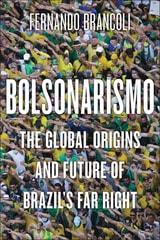
Bolsonarismo
The Global Origins and Future of Brazil’s Far RightFernando Brancoli
Rutgers University Press, 2024
Through interviews, archival research, and newly available public documents, this book presents a comprehensive and compelling portrait of the neo-evangelical pastors, military personnel, and meritocratic ideologues who are the actors behind the far-right movement. Adding to our understanding of Bolsonarismo's growth in Brazilian politics and the contributing factors behind it, the book also sheds light on the impact of Bolsonarismo on world politics. As a prominent leader of the far-right movement, Jair Bolsonaro's political views and policies have reverberated beyond Brazil's borders, influencing the discourse on issues such as climate change, democracy, and human rights around the world.
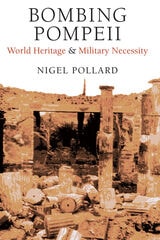
Bombing Pompeii
World Heritage and Military NecessityNigel Pollard
University of Michigan Press, 2020

Borges and Europe Revisited
Edited by Evelyn Fishburn
University of London Press, 1998
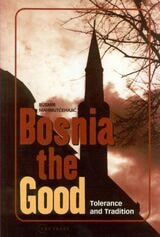
Bosnia the Good
Tolerance and TraditionRusmir Mahmutcehajic
Central European University Press, 2000
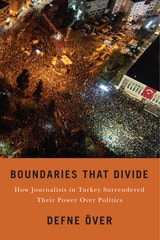
Boundaries That Divide
How Journalists in Turkey Surrendered Their Power over PoliticsDefne Över
Rutgers University Press, 2026
Turkey presents a striking example of the most recent wave of global authoritarian turns. The two-decade-long transition in the country’s political system also transformed its media environment. As mainstream journalists gradually yielded their places to sycophants, much more willing to praise the government in their news, the mainstream media that once oversaw—however imperfectly—political decisions started devoting its full service to cheerleading the government. Simultaneously, a new sphere of critical journalism began to emerge, with mainstream media journalists joining their fellows in the peripheries of the media. Considering the transformation of Turkey’s news media as the decay of a democratic institution, this book asks, How does the media break down under the rule of an elected government?
Drawing on fieldwork and in-depth interviews, the book traces the ruling AKP’s manipulation of social divides to consolidate power and journalists’ navigation of the resulting climate of fear, hope, doubt, and anger. The book shows how Turkey’s news media surrendered its power over politics as some journalists embraced disinformation as a path to heightened status, others turned to self-censorship for protection, and still others resisted capture through continuous but fragmented efforts.
The book portrays journalists as central actors in media decay, while also revealing that resilience to decay emerges where rising demand for “news” meets the contentious mobilization of journalists. Although focused on Turkey, the book’s insights extend far beyond, offering urgent lessons about the future of journalism in an age of populism, polarization, and institutional erosion.

Bourdieu and Historical Analysis
Philip S. Gorski, ed.
Duke University Press, 2012
The contributors to Bourdieu and Historical Analysis explore this expanded understanding of Bourdieu's thought and its potential contributions to analyses of large-scale social change and historical crisis. Their essays offer a primer on his concepts and methods and relate them to alternative approaches, including rational choice, Lacanian psychoanalysis, pragmatism, Latour's actor-network theory, and the "new" sociology of ideas. Several contributors examine Bourdieu's work on literature and sports. Others extend his thinking in new directions, applying it to nationalism and social policy. Taken together, the essays initiate an important conversation about Bourdieu's approach to sociohistorical change.
Contributors. Craig Calhoun, Charles Camic, Christophe Charle, Jacques Defrance, Mustafa Emirbayer, Ivan Ermakoff, Gil Eyal, Chad Alan Goldberg, Philip S. Gorski, Robert A. Nye, Erik Schneiderhan, Gisele Shapiro, George Steinmetz, David Swartz
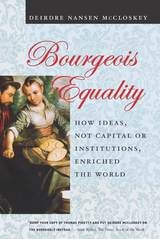
Bourgeois Equality
How Ideas, Not Capital or Institutions, Enriched the WorldDeirdre Nansen McCloskey
University of Chicago Press, 2016
Why? Most economists—from Adam Smith and Karl Marx to Thomas Piketty—say the Great Enrichment since 1800 came from accumulated capital. McCloskey disagrees, fiercely. “Our riches,” she argues, “were made not by piling brick on brick, bank balance on bank balance, but by piling idea on idea.” Capital was necessary, but so was the presence of oxygen. It was ideas, not matter, that drove “trade-tested betterment.” Nor were institutions the drivers. The World Bank orthodoxy of “add institutions and stir” doesn’t work, and didn’t. McCloskey builds a powerful case for the initiating role of ideas—ideas for electric motors and free elections, of course, but more deeply the bizarre and liberal ideas of equal liberty and dignity for ordinary folk. Liberalism arose from theological and political revolutions in northwest Europe, yielding a unique respect for betterment and its practitioners, and upending ancient hierarchies. Commoners were encouraged to have a go, and the bourgeoisie took up the Bourgeois Deal, and we were all enriched.
Few economists or historians write like McCloskey—her ability to invest the facts of economic history with the urgency of a novel, or of a leading case at law, is unmatched. She summarizes modern economics and modern economic history with verve and lucidity, yet sees through to the really big scientific conclusion. Not matter, but ideas. Big books don’t come any more ambitious, or captivating, than Bourgeois Equality.