Results by title
28167 books match the query 'History' and 1262 start with b
Black Patriots and Loyalists
Fighting for Emancipation in the War for IndependenceAlan Gilbert
University of Chicago Press, 2012
Black Pearls
Blues Queens of the 1920sDaphne Duval Harrison
Rutgers University Press, 1990
Blues music spawned legendary performers whose influence has been felt in many musical forms here and around the world. Until now the important role of the great women blues singers has largely gone unexplored. This book tells of the cultural and social impact of the blues during the 1920s when the genre was dominated by women, both on stage and on record. Harrison (Afro-American Studies Department, University of Maryland) writes with authority, focusing particularly on Sippie Wallace, Edith Wilson, Victoria Spivey, and Alberta Hunter as she analyzes the music and the collective black experience out of which it grew. A significant book, particularly for collections of music history, black studies, and women's studies. -- Library Journal

Black People in the British Empire
Peter Fryer
Pluto Press, 1988
Black People in the British Empire
Peter Fryer
Pluto Press, 2021
Black People in the British Empire is a challenge to the official version of British history. It tells the story of Britain's exploitation and oppression of its subject peoples in its colonies, and in particular the people of Africa, Asia and Australasia
Peter Fryer reveals how the ideology of racism was used as justification for acquiring and expanding the Empire; how the British Industrial Revolution developed out of profits from the slave trade; and how the colonies were deliberately de-industrialised to create a market for British manufacturers.
In describing the frequency and the scale of revolts by subject peoples against slavery and foreign domination - and the brutality used in crushing them - Peter Fryer exposes the true history of colonialism, and restores to Black people their central role in Britain's past.
Black People in the British Empire
Peter Fryer
Pluto Press, 2021
'Fantastic … the most important book on Black British history’ - Akala
Black People in the British Empire is a challenge to the official version of British history. It tells the story of Britain's exploitation and oppression of its subject peoples in its colonies, and in particular the people of Africa, Asia and Australasia
Peter Fryer reveals how the ideology of racism was used as justification for acquiring and expanding the Empire; how the British Industrial Revolution developed out of profits from the slave trade; and how the colonies were deliberately de-industrialised to create a market for British manufacturers.
In describing the frequency and the scale of revolts by subject peoples against slavery and foreign domination - and the brutality used in crushing them - Peter Fryer exposes the true history of colonialism, and restores to Black people their central role in Britain's past.
Black Pioneers
Images of the Black Experience on the North American FrontierJohn Ravage
University of Utah Press, 1997
Using public and private collections in every western state and in Canada, Ravage has gathered more than three hundred photographs, line drawings, lithographs, stereoviews, and other images. This new edition also adds sections on black entertainers and ranchers, a chapter on the dating of historic photographs and their genealogical significance, as well as an expanded bibliography. All aid understanding of the black frontier experience.
Ravage goes beyond the stereotypical photography of the era, which often reflected white fears and prejudices, to present the works of frontier photographers. Galveston’s Lucius Harper, Denver’s John Green, and the Northwest’s nomadic James Presley Ball all bring life to their subjects and meaning to their presence in the American West. Black Pioneers is a vibrant visual document of the profound influence blacks had on communal and frontier history.
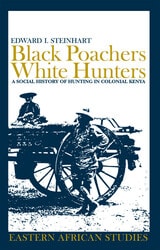
Black Poachers, White Hunters
A Social History of Hunting in Colonial KenyaEdward I. Steinhart
Ohio University Press, 2006
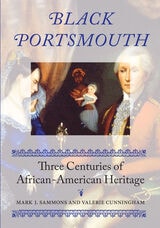
Black Portsmouth
Three Centuries of African-American HeritageMark J. Sammons
University of New Hampshire Press, 2004
Few people think of a rich Black heritage when they think of New England. In the pioneering book Black Portsmouth, Mark J. Sammons and Valerie Cunningham celebrate it, guiding the reader through more than three centuries of New England and Portsmouth social, political, economic, and cultural history as well as scores of personal and site-specific stories.
Here, we meet such Africans as the likely negro boys and girls from Gambia, who debarked at Portsmouth from a slave ship in 1758, and Prince Whipple, who fought in the American Revolution. We learn about their descendants, including the performer Richard Potter and John Tate of the People's Baptist Church, who overcame the tragedies and challenges of their ancestors' enslavement and subsequent marginalization to build communities and families, found institutions, and contribute to their city, region, state, and nation in many capacities. Individual entries speak to broader issues—the anti-slavery movement, American religion, and foodways, for example. We also learn about the extant historical sites important to Black Portsmouth—including the surprise revelation of an African burial ground in October 2003—as well as the extraordinary efforts being made to preserve remnants of the city's early Black heritage.
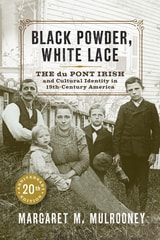
Black Powder, White Lace
The du Pont Irish and Cultural Identity in Nineteenth-Century AmericaMargaret M. Mulrooney
University of Delaware Press, 2023
Black Power Ideologies
An Essay in African American Political ThoughtJohn T. McCartney
Temple University Press, 1993
In a systematic survey of the manifestations and meaning of Black Power in America, John McCartney analyzes the ideology of the Black Power Movement in the 1960s and places it in the context of both African-American and Western political thought. He demonstrates, though an exploration of historic antecedents, how the Black Power versus black mainstream competition of the sixties was not unique in American history. Tracing the evolution of black social and political movements from the 18th century to the present, the author focuses on the ideas and actions of the leaders of each major approach.
Starting with the colonization efforts of the Pan-Negro Nationalist movement in the 18th century, McCartney contrasts the work of Bishop Turner with the opposing integrationist views of Frederick Douglass and his followers. McCartney examines the politics of accommodation espoused by Booker T. Washington; W.E.B. Du Bois's opposition to this apolitical stance; the formation of the NAACP, the Urban League, and other integrationist organizations; and Marcus Garvey's reawakening of the separatist ideal in the early 20th century. Focusing on the intense legal activity of the NAACP from the 1930s to the 1960s, McCartney gives extensive treatment to the moral and political leadership of Martin Luther King, Jr., and his challenge from the Black Power Movement in 1966.
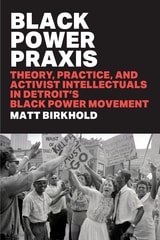
Black Power Praxis
Theory, Practice, and Activist Intellectuals in Detroit's Black Power MovementMatt Birkhold
University of Michigan Press, 2026
Black Power Praxis shows how four groups of activist-intellectuals—James and Grace Lee Boggs, Richard and Milton Henry, Reverend Albert Cleage, and a group of college students called Uhuru—shifted the consciousness and political perspectives of Black Detroiters in the 1960s and 1970s. By developing theories that they could unite with community-organizing practices, these activist-intellectuals turned the focus of the grassroots movement for racial equality from Civil Rights to Black Power. Following the 1967 Detroit Rebellion, these Black Power activist-intellectuals were already positioned to harness the energy that emerged from the uprising and directed it into the city’s first citywide Black Power organization, the Citywide Citizens Action Committee.
Even as Black Power theories became dominant over Detroit’s grassroots movement, their influence faltered when they failed to develop community organizing practices corresponding to the lived experiences of Black Detroiters. Black Power Praxis reveals how the relationships between ideas, practices, leadership, material reality, and consciousness drove the historical development of Black Power. Ideal for readers curious about social movements, Detroit history, African American history, and African American Studies, the book sheds light on how, why, and when Detroit’s activist-intellectual leaders successfully showed everyday people how their power might be used in transformative ways.
Black Power TV
Devorah Heitner
Duke University Press, 2013
Black Power in the Belly of the Beast
Edited by Judson L. Jeffries
University of Illinois Press, 2006
The volume’s twelve contributors include well-known scholars such as James A. Geschwender and Douglas Glasgow as well as prominent community activists Akbar Muhammad Ahmad, Floyd W. Hayes III, and Komozi Woodard. Each of their chapters explores a single Black Power organization including Us, the Black Panther Party, and the Deacons for Defense and Justice. Important but lesser-known Black Power organizations such as the Republic of New Afrika and Sons of Watts are paid equal attention, as contributors address issues including self-defense, Black identity, and the politics of class and gender. Throughout, authors emphasize the primary role that Black institutions and charismatic leaders played in the rise, development, and eventual decline of the overall movement.
Black Power on Campus
The University of Illinois, 1965-75Joy Ann Williamson
University of Illinois Press, 2003
Drawing on student publications of the late 1960s and early 1970s, as well as interviews with student activists, former administrators, and faculty, Williamson discusses the emergence of Black Power ideology, what constituted "blackness," and notions of self-advancement versus racial solidarity. Promoting an understanding of the role of black youth in protest movements, Black Power on Campus is an important contribution to the literature on African American liberation movements and the reform of American higher education.
Black Power, Jewish Politics
Reinventing the Alliance in the 1960sMarc Dollinger
Brandeis University Press, 2018

Black Property Owners in the South, 1790-1915
Loren Schweninger
University of Illinois Press, 1990
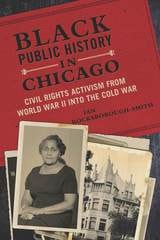
Black Public History in Chicago
Civil Rights Activism from World War II into the Cold WarIan Rocksborough-Smith
University of Illinois Press, 2018
Ian Rocksborough-Smith’s meticulous research and adept storytelling provide the first in-depth look at how these committed individuals leveraged Chicago’s black public history. Their goal: to engage with the struggle for racial equality. Rocksborough-Smith shows teachers working to advance curriculum reform in public schools, while well-known activists Margaret and Charles Burroughs pushed for greater recognition of black history by founding the DuSable Museum of African American History. Organizations like the Afro-American Heritage Association, meanwhile, used black public history work to connect radical politics and nationalism. Together, these people and their projects advanced important ideas about race, citizenship, education, and intellectual labor that paralleled the shifting terrain of mid-twentieth-century civil rights.
Black Pulp
Genre Fiction in the Shadow of Jim CrowBrooks E. Hefner
University of Minnesota Press, 2021
A deep dive into mid-century African American newspapers, exploring how Black pulp fiction reassembled genre formulas in the service of racial justice
In recent years, Jordan Peele’s Get Out, Marvel’s Black Panther, and HBO’s Watchmen have been lauded for the innovative ways they repurpose genre conventions to criticize white supremacy, celebrate Black resistance, and imagine a more racially just world—important progressive messages widely spread precisely because they are packaged in popular genres. But it turns out, such generic retooling for antiracist purposes is nothing new.
As Brooks E. Hefner’s Black Pulp shows, this tradition of antiracist genre revision begins even earlier than recent studies of Black superhero comics of the 1960s have revealed. Hefner traces it back to a phenomenon that began in the 1920s, to serialized (and sometimes syndicated) genre stories written by Black authors in Black newspapers with large circulations among middle- and working-class Black readers. From the pages of the Pittsburgh Courier and the Baltimore Afro-American, Hefner recovers a rich archive of African American genre fiction from the 1920s through the mid-1950s—spanning everything from romance, hero-adventure, and crime stories to westerns and science fiction. Reading these stories, Hefner explores how their authors deployed, critiqued, and reassembled genre formulas—and the pleasures they offer to readers—in the service of racial justice: to criticize Jim Crow segregation, racial capitalism, and the sexual exploitation of Black women; to imagine successful interracial romance and collective sociopolitical progress; and to cheer Black agency, even retributive violence in the face of white supremacy.
These popular stories differ significantly from contemporaneous, now-canonized African American protest novels that tend to represent Jim Crow America as a deterministic machine and its Black inhabitants as doomed victims. Widely consumed but since forgotten, these genre stories—and Hefner’s incisive analysis of them—offer a more vibrant understanding of African American literary history.
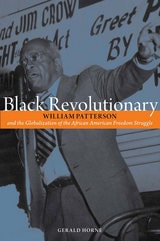
Black Revolutionary
William Patterson and the Globalization of the African American Freedom StruggleGerald Horne
University of Illinois Press, 2013
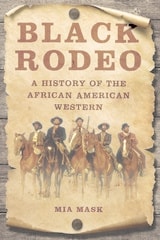
Black Rodeo
A History of the African American WesternMia Mask
University of Illinois Press, 2023
A first-of-its kind survey, Black Rodeo illuminates the figure of the Black cowboy while examining the intersection of African American film history and the western.
Black Savannah, 1788–1864
Whittington Johnson
University of Arkansas Press, 1999
Fourth in the University of Arkansas Press series in Black Community Studies, this examination of the black community of Savannah, Georgia, during the antebellum and the Civil War periods is a groundbreaker. It begins in 1788 with the founding of Savannah’s first black public institution, an independent church, and closes in 1864 with Gen. William Tecumseh Sherman’s capture of Savannah and the subsequent end to slavery.
Using a wide range of primary sources, including the little-used Southern Claims Case Files, and a vast number of secondary sources, Whittington Johnson gracefully elucidates the most important features of slave and free African-American life in this period. Johnson maintains that, unlike Charleston and New Orleans, Savannah had a comparatively small population of free blacks, containing only a slim majority of mulattoes and few large property owners, a demographic that greatly affected the contours of the black class structure. Among the most interesting groups that created Savannah’s community were “nominal slaves,” slaves in name only, who lived apart from their masters, seeking and finding their own employment.
Black Savannah focuses upon efforts of African Americans, free and slave, who worked together to establish and maintain a variety of religious, social, and cultural institutions; to carve out niches in the larger economy; and to form cohesive families. The result was an autonomous black community in a key city of the Old South.
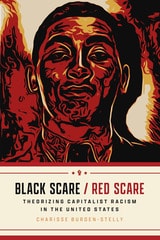
Black Scare / Red Scare
Theorizing Capitalist Racism in the United StatesCharisse Burden-Stelly
University of Chicago Press, 2023
In the early twentieth century, two panics emerged in the United States. The Black Scare was rooted in white Americans’ fear of Black Nationalism and dread at what social, economic, and political equality of Black people might entail. The Red Scare, sparked by communist uprisings abroad and subversion at home, established anticapitalism as a force capable of infiltrating and disrupting the American order. In Black Scare / Red Scare, Charisse Burden-Stelly meticulously outlines the conjoined nature of these state-sanctioned panics, revealing how they unfolded together as the United States pursued capitalist domination. Antiradical repression, she shows, is inseparable from anti-Black oppression, and vice versa.
Beginning her account in 1917—the year of the Bolshevik Revolution, the East St. Louis Race Riot, and the Espionage Act—Burden-Stelly traces the long duration of these intertwined and mutually reinforcing phenomena. She theorizes two bases of the Black Scare / Red Scare: US Capitalist Racist Society, a racially hierarchical political economy built on exploitative labor relationships, and Wall Street Imperialism, the violent processes by which businesses and the US government structured domestic and foreign policies to consolidate capital and racial domination. In opposition, Radical Blackness embodied the government’s fear of both Black insurrection and Red instigation. The state’s actions and rhetoric therefore characterized Black anticapitalists as foreign, alien, and undesirable. This reactionary response led to an ideology that Burden-Stelly calls True Americanism, the belief that the best things about America were absolutely not Red and not Black, which were interchangeable threats.
Black Scare / Red Scare illuminates the anticommunist nature of the US and its governance, but also shines a light on a misunderstood tradition of struggle for Black liberation. Burden-Stelly highlights the Black anticapitalist organizers working within and alongside the international communist movement and analyzes the ways the Black Scare/Red Scare reverberates through ongoing suppression of Black radical activism today. Drawing on a range of administrative, legal, and archival sources, Burden-Stelly incorporates emancipatory ideas from several disciplines to uncover novel insights into Black political minorities and their legacy.
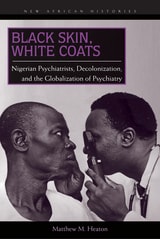
Black Skin, White Coats
Nigerian Psychiatrists, Decolonization, and the Globalization of PsychiatryMatthew M. Heaton
Ohio University Press, 2013
Black Skin, White Coats is a history of psychiatry in Nigeria from the 1950s to the 1980s. Working in the contexts of decolonization and anticolonial nationalism, Nigerian psychiatrists sought to replace racist colonial psychiatric theories about the psychological inferiority of Africans with a universal and egalitarian model focusing on broad psychological similarities across cultural and racial boundaries. Particular emphasis is placed on Dr. T. Adeoye Lambo, the first indigenous Nigerian to earn a specialty degree in psychiatry in the United Kingdom in 1954. Lambo returned to Nigeria to become the medical superintendent of the newly founded Aro Mental Hospital in Abeokuta, Nigeria’s first “modern” mental hospital. At Aro, Lambo began to revolutionize psychiatric research and clinical practice in Nigeria, working to integrate “modern” western medical theory and technologies with “traditional” cultural understandings of mental illness. Lambo’s research focused on deracializing psychiatric thinking and redefining mental illness in terms of a model of universal human similarities that crossed racial and cultural divides.
Black Skin, White Coats is the first work to focus primarily on black Africans as producers of psychiatric knowledge and as definers of mental illness in their own right. By examining the ways that Nigerian psychiatrists worked to integrate their psychiatric training with their indigenous backgrounds and cultural and civic nationalisms, Black Skin, White Coats provides a foil to Frantz Fanon’s widely publicized reactionary articulations of the relationship between colonialism and psychiatry. Black Skin, White Coats is also on the cutting edge of histories of psychiatry that are increasingly drawing connections between local and national developments in late-colonial and postcolonial settings and international scientific networks. Heaton argues that Nigerian psychiatrists were intimately aware of the need to engage in international discourses as part and parcel of the transformation of psychiatry at home.
Black Society in Spanish Florida
Jane Landers
University of Illinois Press, 1999
Blacks under Spanish rule in Florida lived in a more complex and international world that linked the Caribbean, Africa, and Europe with a powerful and diverse Indian hinterland. Jane Landers’s pioneering study of people of the African diaspora under Spain’s colonial rule rewrites Florida history and enriches our understanding of the powerful links between race relations and cultural custom.
As Landers shows, Spanish Florida was a sanctuary to Blacks fleeing enslavement on plantations. Castilian law, meanwhile, offered many avenues out of slavery. In St. Augustine and elsewhere, society accepted European-African unions, with families developing community connections through marriage, concubinage, and godparents. Assisted by Spanish traditions and ever-present geopolitical threats, people of African descent leveraged linguistic, military, diplomatic, and artisanal skills into citizenship and property rights. Landers details how Blacks became homesteaders, property owners, and entrepreneurs, and in the process enjoyed greater legal and social protection than in the two hundred years of Anglo history that followed.
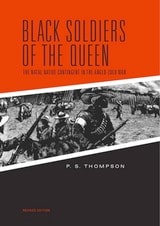
Black Soldiers of the Queen
The Natal Native Contingent in the Anglo-Zulu WarP. S. Thompson
University of Alabama Press, 2006
Africans who fought alongside the British against the Zulu king
Black Song
A Manifesto for Music and JusticeThe Singing Justice Collective
University of Michigan Press, 2026
Black Song: A Manifesto for Music and Justice centers acts of musical creation and performance that emerge from Black experiences, affirm Black humanity, and connect to Black communities. Written for scholars, performers, and music fans, the book shows that learning about Black Song and its creation is central to understanding both American music and Black American experiences. By providing a more inclusive, just, and accurate understanding of the art of Black Song, the authors disrupt and expand musical canons.
Black Song shines a spotlight on the response, resistance, and community building that occur in musical creation in Black spaces, past and present. The authors explore histories and performances across musical styles—from classical to country to hip-hop to opera to jazz to gospel to many others. They offer practical advice on how to perform, research, teach, and listen to this music. As they center Black Song in American history and music, they show that this music is a valuable tool for promoting productive and healing dialogues about race, justice, and history. Encouraging empathy and understanding, Black Song shows how to approach Black music and spaces with knowledge and respect.
Black Star, Crescent Moon
The Muslim International and Black Freedom beyond AmericaSohail Daulatzai
University of Minnesota Press, 2012
“The same rebellion, the same impatience, the same anger that exists in the hearts of the dark people in Africa and Asia,” Malcolm X declared in a 1962 speech, “is existing in the hearts and minds of 20 million black people in this country who have been just as thoroughly colonized as the people in Africa and Asia.” Four decades later, the hip-hop artist Talib Kweli gave voice to a similar Pan-African sentiment in the song “K.O.S. (Determination)”: “The African diaspora represents strength in numbers, a giant can't slumber forever.”
Linking discontent and unrest in Harlem and Los Angeles to anticolonial revolution in Algeria, Egypt, and elsewhere, Black leaders in the United States have frequently looked to the anti-imperialist movements and antiracist rhetoric of the Muslim Third World for inspiration. In Black Star, Crescent Moon, Sohail Daulatzai maps the rich, shared history between Black Muslims, Black radicals, and the Muslim Third World, showing how Black artists and activists imagined themselves not as national minorities but as part of a global majority, connected to larger communities of resistance. Daulatzai traces these interactions and alliances from the Civil Rights movement and the Black Power era to the “War on Terror,” placing them within a broader framework of American imperialism, Black identity, and the global nature of white oppression.
From Malcolm X and Muhammad Ali to contemporary artists and activists like Rakim and Mos Def, Black Star, Crescent Moon reveals how Muslim resistance to imperialism came to occupy a central position within the Black radical imagination, offering a new perspective on the political and cultural history of Black internationalism from the 1950s to the present.
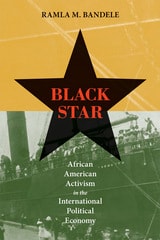
Black Star
African American Activism in the International Political EconomyRamla M. Bandele
University of Illinois Press, 2007
This book describes how the first African American mass political organization was able to gain support from throughout the African diaspora to finance the Black Star Line, a black merchant marine that would form the basis of an enclave economy after World War I. Ramla M. Bandele explores the concept of diaspora itself and how it has been applied to the study of émigré and other ethnic networks.
In characterizing the historical and political context of the Black Star Line, Bandele analyzes the international political economy during 1919-25 and considers the black politics of the era, focusing particularly on Marcus Garvey's Universal Negro Improvement Association for its creation of the Black Star Line. She offers an in-depth case study of the Black Star Line as an instance of the African diaspora attempting to link communities and carry out a transnational political and economic project. Arguing that ethnic networks can be legitimate actors in international politics and economics, Bandele also suggests, however, that activists in any given diaspora do not always function as a unit.
Black Star
Britain's Asian Youth MovementsAnandi Ramamurthy
Pluto Press, 2013
Black Star documents the vibrant Asian Youth Movements in 1970s and 80s Britain who struggled against the racism of the street and the state. Anandi Ramamurthy shows how they drew inspiration from Black Power movements as well as anti-imperialist and workers' struggles across the globe.
Drawing on her intimate knowledge and extensive research, Ramamurthy shows how the struggle to make Britain 'home' led to a broad-based identity where 'black' was a political colour inspiring unity amongst all those struggling against racism.
Ramamurthy documents how by the late 1980s this broad based black identity disintegrated as Islamophobia became a new form of racism. In the process the legacy of the Asian Youth Movements has been largely hidden. Black Star retrieves this history and demonstrates its importance for political struggles today.
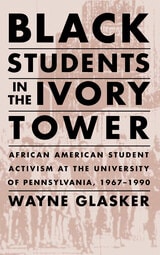
Black Students in the Ivory Tower
African American Student Activism at the University of Pennsylvania, 1967-1990Wayne C. Glasker
University of Massachusetts Press, 2002
Glasker begins his study in the late 1960s, when the university's expansion into a predominantly black Philadelphia neighborhood precipitated a massive sit-in and protest. In response, Penn accelerated the process of admitting more black students, doubling the number of black matriculants by September 1969. Many came from inner city public high schools with backgrounds, ideas, and interests far different from those of the affluent middle- and upper-class white students who constituted the majority of the undergraduate population. As a result, the next decade was marked by recurrent tension and conflict, as black students at Penn rejected assimilation and agitated successfully for the creation of a variety of institutions that recognized their needs. These included an Afro-American studies program, a residence for students interested in black culture, and a Black Student League. Following a 1978 sit-in, they won a demand for an Inter-cultural Center and formed the United Minorities Council, and in 1986 they joined with white activists to press the university to divest its holdings from companies doing business in South Africa.
Throughout the book Glasker interweaves two parallel stories: that of an Ivy League university wrestling with questions of diversity, compensatory education, and the meaning of merit and qualification; and that of black students grappling with issues of assimilation, separatism, and cultural pluralism. In the end, he argues, the students sought to preserve their own distinctive ethnic culture, identity, and heritage while pursuing economic upward mobility. Rather than separatism, they aspired to a form of biculturalism that involved economic empowerment without cultural assimilation.
Black Studies in Europe
An Anthology of Soil and SeedsNicole Grégoire, Sarah Fila-Bakabadio, and Jacinthe Mazzocchetti (eds.)
Northwestern University Press, 2025
Long absent from research in the humanities and social sciences, Black people in continental Europe have become the focus of a growing body of literature in the past two decades that addresses their unique history and social positioning. Black Studies in Europe: An Anthology of Soil and Seeds brings together essays and case studies by a collective of scholars, writers, and activists to offer a critical overview of the emerging field of Black European studies and a vital reflection on contemporary epistemologies of European Blackness. This collection addresses key questions: What is Blackness from a European standpoint? Which epistemologies and theoretical tools have been used to offer a better understanding of Black experiences in Europe? How is this knowledge being produced and by whom? Can we define a common European conceptual framework for Black studies? Related to this work is an even more urgent enterprise: forging an epistemological distinction between the study of Black people and “Black studies” as an emancipatory project.
Black Studies, Rap, and the Academy
Houston A. Baker Jr.
University of Chicago Press, 1993
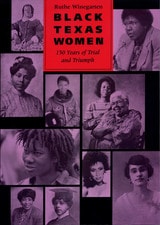
Black Texas Women
150 Years of Trial and TriumphBy Ruthe Winegarten, Janet G. Humphrey & Frieda Werden, consulting editors
University of Texas Press, 1994
Women of all colors have shaped families, communities, institutions, and societies throughout history, but only in recent decades have their contributions been widely recognized, described, and celebrated. This book presents the first comprehensive history of black Texas women, a previously neglected group whose 150 years of continued struggle and some successes against the oppression of racism and sexism deserve to be better known and understood.
Beginning with slave and free women of color during the Texas colonial period and concluding with contemporary women who serve in the Texas legislature and the United States Congress, Ruthe Winegarten organizes her history both chronologically and topically. Her narrative sparkles with the life stories of individual women and their contributions to the work force, education, religion, the club movement, community building, politics, civil rights, and culture. The product of extensive archival and oral research and illustrated with over 200 photographs, this groundbreaking work will be equally appealing to general readers and to scholars of women's history, black history, American studies, and Texas history.
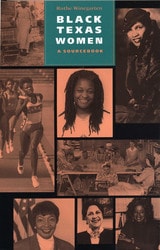
Black Texas Women
A SourcebookBy Ruthe Winegarten
University of Texas Press, 1994
When Black Texas Women: 150 Years of Trial and Triumph was published in 1995, it was acclaimed as the first comprehensive history of black women's struggles and achievements. This companion volume contains the original source materials that Ruthe Winegarten uncovered during her extensive research.
Like a time capsule of black women's history, A Sourcebook includes petitions from free women of color, lawsuits, slave testimonies, wills, plantation journals, club minutes, autobiographies, ads, congressional reports, contracts, prison records, college catalogues, newspaper clippings, protest letters, and much more.
In addition to the documents, a biographical section highlights the lives of women from various walks of life. The book concludes with a timeline that begins in 1777 and reaches to 1992. This wealth of original material will be a treasure trove for scholars and general readers interested in the emerging field of black women's history.
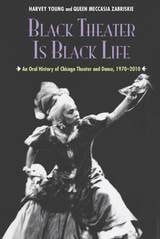
Black Theater Is Black Life
An Oral History of Chicago Theater and Dance, 1970-2010Harvey Young and Queen Meccasia Zabriskie
Northwestern University Press, 2013
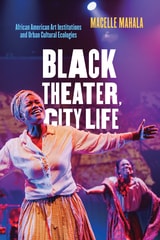
Black Theater, City Life
African American Art Institutions and Urban Cultural EcologiesMacelle Mahala
Northwestern University Press, 2022
Black Theater, City Life looks at Karamu House Theatre, the August Wilson African American Cultural Center, Pittsburgh Playwrights’ Theatre Company, the Lorraine Hansberry Theatre, the African American Shakespeare Company, the Atlanta Black Theatre Festival, and Kenny Leon’s True Colors Theatre Company to demonstrate how each organization articulates the cultural specificities, sociopolitical realities, and histories of African Americans. These companies have faced challenges that mirror the larger racial and economic disparities in arts funding and social practice in America, while their achievements exemplify such institutions’ vital role in enacting an artistic practice that reflects the cultural backgrounds of their local communities. Timely, significant, and deeply researched, this book spotlights the artistic and civic import of Black theaters in American cities.

Black Trans Feminism
Marquis Bey
Duke University Press, 2022
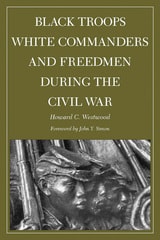
Black Troops, White Commanders and Freedmen during the Civil War
Howard C. Westwood
Southern Illinois University Press, 2008
Recounting the experiences of black soldiers in the Civil War
In the ten probing essays collected in this volume, Howard C. Westwood recounts the often bitter experiences of black men who were admitted to military service and the wrenching problems associated with the shifting status of African Americans during the Civil War.
Black Troops, White Commanders and Freedmen during the Civil War covers topics ranging from the roles played by Lincoln and Grant in beginning black soldiery to the sensitive issues that arose when black soldiers (and their white officers) were captured by the Confederates. The essays relate the exploits of black heroes such as Robert Smalls, who single-handedly captured a Confederate steamer, as well as the experiences of the ignoble Reverend Fountain Brown, who became the first person charged with violating the Emancipation Proclamation.
Although many thousands were enlisted as soldiers, blacks were barred from becoming commissioned officers and for a long time they were paid far less than their white counterparts. These and other blatant forms of discrimination understandably provoked discontent among black troops which, in turn, sparked friction with their white commanders. Westwood's fascinating account of the artillery company from Rhode Island amply demonstrates how frustrations among black soldiers came to be seen as "mutiny" by some white officers.

Black Undertow
Hugo ka Canham
Duke University Press, 2026
Black Utopias
Speculative Life and the Music of Other WorldsJayna Brown
Duke University Press, 2021
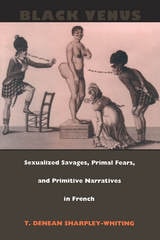
Black Venus
Sexualized Savages, Primal Fears, and Primitive Narratives in FrenchT. Denean Sharpley-Whiting
Duke University Press, 1999
The book opens with an exploration of scientific discourse on black females, using Sarah Bartmann, the so-called Hottentot Venus, and natural scientist Georges Cuvier as points of departure. To further show how the image of a savage was projected onto the bodies of black women, Sharpley-Whiting moves into popular culture with an analysis of an 1814 vaudeville caricature of Bartmann, then shifts onto the terrain of canonical French literature and colonial cinema, exploring the representation of black women by Baudelaire, Balzac, Zola, Maupassant, and Loti. After venturing into twentieth-century film with an analysis of Josephine Baker’s popular Princesse Tam Tam, the study concludes with a discussion of how black Francophone women writers and activists countered stereotypical representations of black female bodies during this period. A first-time translation of the vaudeville show The Hottentot Venus, or Hatred of Frenchwomen supplements this critique of the French male gaze of the nineteenth and early twentieth centuries.
Both intellectually rigorous and culturally intriguing, this study will appeal to students and scholars in the fields of nineteenth- and twentieth-century French literature, feminist and gender studies, black studies, and cultural studies.
Black Victorians / Black Victoriana
Edited by Gretchen Holbrook Gerzina
Rutgers University Press, 2003
The essays taken as a whole also highlight prevailing Victorian attitudes toward race by focusing on the ways in which empire building spawned a "subculture of blackness" consisting of caricature, exhibition, representation, and scientific racism absorbed by society at large. This misrepresentation made it difficult to be both black and British while at the same time it helped to construct British identity as a whole. Covering many topics that detail the life of blacks during this period, Black Victorians/Black Victoriana will be a landmark contribution to the emergent field of black history in England.
Black Victory
The Rise and Fall of the White Primary in TexasDarlene Clark Hine & Essays by Darlene Clark Hine, Steven F. Lawson, & Merline Pitre
University of Missouri Press, 2003
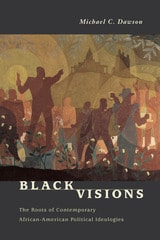
Black Visions
The Roots of Contemporary African-American Political IdeologiesMichael C. Dawson
University of Chicago Press, 2001
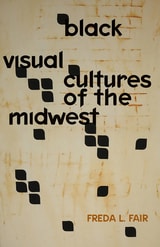
Black Visual Cultures of the Midwest
Freda L. Fair
University of Minnesota Press, 2027
Recentering black creativity and resistance in the history of the Midwest
African American creators have unsettled and upended racism in the Midwest region since as far back as 1787, and Black Visual Cultures of the Midwest examines the work of many such innovators, presenting an unruly, transgressive, and defiant vision of queer blackness that complicates fundamental American ideals of liberty, progress, life, and property.
Spanning the nineteenth century to the present, Freda L. Fair draws from a broad array of sources, including film, visual art, and even arrest records to examine concepts of freedom and resistance grounded in black cultural production in the Midwest. Through subjects such as Joshua Glover, who escaped slavery in Missouri and relocated to Wisconsin; sex workers in the Twin Cities; Ruth Ellis, a black lesbian elder in Detroit; and Nick Cave, who created Soundsuits in response to the police beating of Rodney King, Fair challenges monolithic formulations of blackness and black culture. Fair also queers Midwest history, engaging an LGBTQ lens to reexamine Wisconsin’s 1854 decision to declare the Fugitive Slave Act of 1850 unconstitutional, the Springfield Race Riot of 1908, and other historic moments.
Revealing how black visual cultures in the Midwest both illuminate black gendered and sexual difference and actively resist antiblackness, Fair shows that the region is a site that can advance freedom and social change.
Retail e-book files for this title are screen-reader friendly with images accompanied by short alt text and/or extended descriptions.

Black Wave
How Networks and Governance Shaped Japan’s 3/11 DisastersDaniel P. Aldrich
University of Chicago Press, 2019
Black Wave illuminates two critical factors that had a direct influence on why survival rates varied so much across the Tōhoku region following the 3/11 disasters and why the rebuilding process has also not moved in lockstep across the region. Individuals and communities with stronger networks and better governance, Daniel P. Aldrich shows, had higher survival rates and accelerated recoveries. Less-connected communities with fewer such ties faced harder recovery processes and lower survival rates. Beyond the individual and neighborhood levels of survival and recovery, the rebuilding process has varied greatly, as some towns and cities have sought to work independently on rebuilding plans, ignoring recommendations from the national government and moving quickly to institute their own visions, while others have followed the guidelines offered by Tokyo-based bureaucrats for economic development and rebuilding.
Black Women Directors
Christina N. Baker
Rutgers University Press, 2022
Black women have long recognized the power of film for storytelling. For far too long, however, the cultural and historical narratives about film have not accounted for the contributions of Black women directors. This book remedies this omission by highlighting the trajectory of the culturally significant work of Black women directors in the United States, from the under-examined pioneers of the silent era, to the documentarians who sought to highlight the voices and struggles of Black women, and the contemporary Black women directors in Hollywood. Applying a Black feminist perspective, this book examines the ways that Black women filmmakers have made a way for themselves and their work by resisting the dominant cultural expectations for Black women and for the medium of film, as a whole.
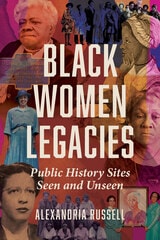
Black Women Legacies
Public History Sites Seen and UnseenAlexandria Russell
University of Illinois Press, 2024
Intersectional and original, Black Women Legacies explores the memorialization of African American women and its distinctive impact on physical and cultural landscapes throughout the United States.
Black Women in Latin America and the Caribbean
Critical Research and PerspectivesMelanie A. Medeiros
Rutgers University Press, 2023
Black Women’s Intellectual Traditions
Speaking Their MindsEdited by Kristin B. Waters and Carol B. Conaway
University Press of New England, 2007