Results by title
2706 books match the query 'European' and 85 start with b
Blank Darkness
Africanist Discourse in FrenchChristopher L. Miller
University of Chicago Press, 1986
Bleak Houses
Marital Violence in Victorian FictionLisa Surridge
Ohio University Press, 2005
The Offenses Against the Person Act of 1828 opened magistrates' courts to abused working-class wives. Newspapers in turn reported on these proceedings, and in this way the Victorian scrutiny of domestic conduct began. But how did popular fiction treat “private” family violence? Bleak Houses: Marital Violence in Victorian Fiction traces novelists' engagement with the wife-assault debates in the public press between 1828 and the turn of the century.
Lisa Surridge examines the early works of Charles Dickens and reads Dombey and Son and Anne Brontë's The Tenant of Wildfell Hall in the context of the intense debates on wife assault and manliness in the late 1840s and early 1850s. Surridge explores George Eliot's Janet's Repentance in light of the parliamentary debates on the 1857 Divorce Act. Marital cruelty trials provide the structure for both Wilkie Collins's The Woman in White and Anthony Trollope's He Knew He Was Right.
Locating the New Woman fiction of Mona Caird and the reassuring detective investigations of Sherlock Holmes in the context of late-Victorian feminism and the great marriage debate in the Daily Telegraph, Surridge illustrates how fin-de-siècle fiction brought male sexual violence and the viability of marriage itself under public scrutiny. Bleak Houses thus demonstrates how Victorian fiction was concerned about the wife-assault debates of the nineteenth century, debates which both constructed and invaded the privacy of the middle-class home.
Bleak Liberalism
Amanda Anderson
University of Chicago Press, 2016
Amanda Anderson examines canonical works of high realism, political novels from England and the United States, and modernist works to argue that liberalism has engaged sober and even stark views of historical development, political dynamics, and human and social psychology. From Charles Dickens’s Bleak House and Hard Times to E. M. Forster’s Howards End to Doris Lessing’s The Golden Notebook, this literature demonstrates that liberalism has inventive ways of balancing sociological critique and moral aspiration. A deft blend of intellectual history and literary analysis, Bleak Liberalism reveals a richer understanding of one of the most important political ideologies of the modern era.
Blind Date
Sex and PhilosophyAnne Dufourmantelle. Translated by Catherine Porter.
University of Illinois Press, 2007
Bringing sex and philosophy together on a blind date, Anne Dufourmantelle’s provocative study uses this analogy to uncover and examine philosophy’s blind spot. Delightful and startling comparisons spring from the date: both sex and philosophy are dangerous, both are socially subversive, and both are obsessions. Although sex and philosophy have much in common, however, they have scarcely known one another until now.
Socrates and Diogenes had little to say about sex, and although it was notoriously explored by the Marquis de Sade, this study explains why philosophy has never been fully sexualized nor sex really philosophized. Blind Date highlights the marked deletion of sexual topics and themes from philosophical works, while also opening doors for their union. Inviting readers to remember that thought does not require repressed desire, Dufourmantelle argues that sex is everywhere, and it affects all kinds of thinking.
Blood and Homeland
Eugenics and Racial Nationalism in Central and Southeast Europe, 1900-1940Paul J. Weindling
Central European University Press, 2007
Blood, Milk, Ink, Gold
Abundance and Excess in the French RenaissanceRebecca Zorach
University of Chicago Press, 2005
Throughout the book, abundance and excess flow in liquids-blood, milk, ink, and gold-that highlight the materiality of objects and the human body, and explore the value (and values) accorded to them. The arts of the lavish royal court at Fontainebleau and in urban centers are here explored in a vibrant tableau that illuminates our own contemporary relationship to excess and desire.
From marvelous works by Francois Clouet to oversexed ornamental prints to Benvenuto Cellini's golden saltcellar fashioned for Francis I, Blood, Milk, Ink, Gold covers an astounding range of subjects with precision and panache, producing the most lucid, well-rounded portrait of the cultural politics of the French Renaissance to date.
Bluestocking Feminism and British-German Cultural Transfer, 1750-1837
Alessa Johns
University of Michigan Press, 2014
Boccaccio's "Decameron"
Rewriting the Christian Middle Ages and the Lyric TraditionDino S. Cervigni
Arizona Center for Medieval and Renaissance Studies, 2021
This study develops a new interpretation of The Decameron, Giovanni Boccaccio’s masterpiece, which has found new popularity in the wake of COVID. Dino S. Cervigni offers an inclusive and novel reading of the collection, theorizing that the first ninety tales offer a parodic rewriting of the Christian Middle Age, while the last ten tales craft a reconstruction of society based on human and liberal principles such as generosity and sacrifice.
Still relevant to this day, The Decameron offers a notable description of the bubonic plague of 1348 which devastated Western Europe—drawing striking parallels with the current global pandemic. Furthermore, Boccaccio’s concluding message applies to all of us in the present moment, plunged as we are into a world of intellectual and ethical chaos, exhorting us to practice forgiveness, compassion, tolerance, mutual acceptance, and generous open-mindedness. No other book on The Decameron offers such a relevant, up-to-date reading of the classic work.
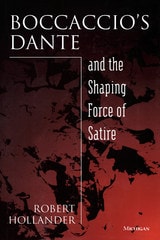
Boccaccio's Dante and the Shaping Force of Satire
Robert Hollander
University of Michigan Press, 1997
Among commentators, it had been an unexamined commonplace that the "young" Boccaccio either did not know well or did not understand sufficiently the texts of Dante (even though the "young" Boccaccio is construed as including the thirty-eight-year-old author of the Decameron.) In Boccaccio's Dante and the Shaping Force of Satire, Robert Hollander offers a valuable synthesis of new material and some previously published essays, addressing the question of Dante's influence on Boccaccio, particularly concerning the Commedia and the Decameron.
Hollander reveals that Boccaccio's writings are heavy with reminiscences of the Dante text, which he believed to be the greatest "modern" work. It was Boccaccio's belief that Dante was the only writer who had achieved a status similar to that reserved for the greatest writers of antiquity. Most of these essays try to show how carefully Boccaccio reflects the texts of Dante in the Decameron. Some essays also turn to the question of Boccaccio's allied reading of Ovid, especially the amatory work, as part of his strategy to base his work primarily on these two great authorities as he develops his own vernacular and satiric vision of human foolishness.
Boccaccio's Dante and the Shaping Force of Satire is a welcome addition to the field of Dante studies and to medieval studies in general.
Robert Hollander is Professor in European Literature and Chair, Department of Comparative Literature, Princeton University. He has received the city of Florence's gold medal for work advancing our understanding of Dante.
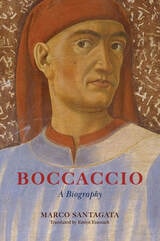
Boccaccio
A BiographyMarco Santagata
University of Chicago Press, 2025
Boccaccio (1313–75) stands with Dante and Petrarch as one of the “Three Crowns” of Italian letters, a trio of writers who shaped the history of humanism, literature, and poetry. In this book, Dante’s award-winning biographer, Marco Santagata, takes up the moving life and legacy of Boccaccio—whose unflinching story of a pandemic-era community (the Decameron) created new possibilities for vernacular Italian prose.
This landmark biography sheds new light on Boccaccio’s life—his family, friends, and foes, his aspirations, fears, and frustrations—and it shows how he was affected by transformations in Italian society. It also charts the influences that shaped Boccaccio’s understanding of literature: what kinds of stories it could tell and what kinds of characters it could depict; and, perhaps most importantly, what role art could play in a changing world. An insightful portrait of one of literature’s most important figures, this book promises to be the definitive biography of Boccaccio for many years to come.
Boccaccio
A Critical Guide to the Complete WorksEdited by Victoria Kirkham, Michael Sherberg, and Janet Levarie Smarr
University of Chicago Press, 2013
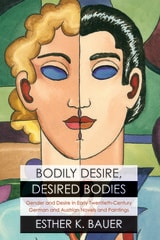
Bodily Desire, Desired Bodies
Gender and Desire in Early Twentieth-Century German and Austrian Novels and PaintingsEsther K. Bauer
Northwestern University Press, 2014
Bodily Desire, Desired Bodies examines the diverse ways that literary works and paintings can be read as screens onto which new images of masculinity and femininity are cast. Esther Bauer focuses on German and Austrian writers and artists from the 1910s and 1920s —specifically authors Franz Kafka, Vicki Baum, and Thomas Mann, and painters Otto Dix, Christian Schad, and Egon Schiele—who gave spectacular expression to shifting trends in male and female social roles and the organization of physical desire and the sexual body.
Bauer’s comparative approach reveals the ways in which artists and writers echoed one another in undermining the gender duality and highlighting sexuality and the body. As she points out, as sites of negotiation and innovation, these works reconfigured bodies of desire against prevailing notions of sexual difference and physical attraction and thus became instruments of social transformation.
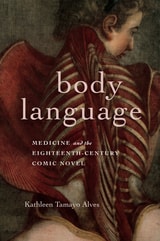
Body Language
Medicine and the Eighteenth-Century Comic NovelKathleen Tamayo Alves
Bucknell University Press, 2026
Body Language examines the complex intersections of British eighteenth-century comic fiction and medical discourse. By engaging medical writings of renowned and widely-read physicians of the Enlightenment such as John Freind, Thomas Sydenham, Albrecht von Haller, John Whytt, and William Cullen, with novels of humor by Henry Fielding, Tobias Smollett, Laurence Sterne, and Charlotte Lennox, Alves explains how medicine shaped comic language by dramatizing female-specific phenomena like menstruation, hysteria, nervous disorders, and pregnancy. In these novels, the medical belief that women are incapable of bodily self-regulation becomes an imperative for policing women’s bodies and highlights the enduring shortcomings of patriarchal systems. Ultimately, these comic representations offer a counternarrative of women’s bodies, agency, and selfhood, exposing masculine anxieties about the effectiveness of marriage to regulate women’s sexuality.
Published by Bucknell University Press. Distributed worldwide by Rutgers University Press.
Bohemia's Jews and Their Nineteenth Century
Texts, Contexts, ReassessmentsJindrich Toman
Karolinum Press, 2023
This book on Jewish culture and literature focuses on the “quiet” decades of the nineteenth century, a scarcely written-about period of time in Bohemian Jewish history. Using a myriad of sources, including travelers’ accounts, poems, essays, short stories, guides, and newspaper articles, the volume explores Jewish expression, Jewish-Czech relations, and the changing attitudes toward Jews between the 1820s and 1880s. It offers close readings of writers like Karel Havlíćek Borovský, Ján Kollár, Siegfried Kapper, and Jan Neruda, as well as lesser-known authors and sources. Combining skillful sustained analysis, judicious argumentation, and elegant writing, the book is a truly enriching reading experience.
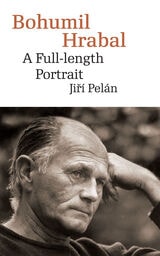
Bohumil Hrabal
A Full-Length PortraitJirí Pelán
Karolinum Press, 2019
Bold Conscience
Luther to Shakespeare to MiltonJoshua R. Held
University of Alabama Press, 2023
Traces how conscience—inner moral conviction—came to shape public life, fueling martyrdom, free speech, and political revolts
Bold Conscience: Luther to Shakespeare to Milton is a sweeping, original study of how conscience became one of the most powerful ideas in early modern England. Tracing the emergence of what Joshua R. Held calls the “bold conscience,” the book shows how inner moral conviction moved from the realm of private guilt to public action, fueling debates about authority, obedience, free speech, and resistance. By placing conscience at the center of literary, religious, and political conflict, Bold Conscience reveals a vital intellectual throughline linking the Reformation to the birth of modern ideas of liberty and toleration.
The book unfolds chronologically, beginning with Martin Luther and Henry VIII and moving through Shakespeare’s Hamlet and Henry VIII, John Donne’s court sermons, and John Milton’s polemical and poetic works, including Areopagitica and Paradise Lost. Each chapter combines close literary reading with historical and theological analysis, showing how conscience operates across genres—drama, sermon, pamphlet, and epic poetry. Joshua R. Held is a distinguished scholar of early modern literature whose work bridges literary criticism, intellectual history, and religious studies, bringing clarity and narrative energy to complex debates.
Bold Conscience will appeal to scholars and students of early modern literature, Shakespeare, Milton, and Reformation history, as well as readers interested in the origins of religious freedom and political dissent. It will also engage anyone concerned with how moral conviction shapes public life then and now.
Book Of The Incipit
Beginnings in the Fourteenth CenturyD. Vance Smith
University of Minnesota Press, 2001
An intriguing evaluation of the concept of beginnings in the medieval period.
Medieval Studies/Literary Theory
An intriguing evaluation of the concept of beginnings in the medieval period. In the first book to examine one of the most peculiar features of one of the greatest and most perplexing poems of England’s late Middle Ages-the successive attempts of Piers Plowman to begin, and to keep beginning-D. Vance Smith compels us to rethink beginning, as concept and practice, in both medieval and contemporary terms.The problem of beginning was invested with increasing urgency in the fourteenth century, imagined and grappled with in the courts, the churches, the universities, the workshops, the fields, and the streets of England. The Book of the Incipit reveals how Langland’s poem exemplifies a widespread interest in beginning in the thirteenth and fourteenth centuries, an interest that appears in such divergent fields as the physics of motion, the measurement of time, logic, grammar, rhetoric, theology, book production, and insurrection. Smith offers a theoretical understanding of beginning that departs from the structuralisms of Edward Said and the traditional formalisms of A. D. Nuttall and most medievalist and modernist treatments of closure. Instead, he conceives a work’s beginning as a figure of the beginning of the work itself, the inception of language as the problem of beginning to which we continue to return.ISBN 0-8166-3760-1 Cloth/jacket £24.50 $34.95x296 Pages 5 7/8 x 9 MayMedieval Cultures Series, volume 28Translation Inquiries: University of Minnesota Press
Books and My Food
Literary Quotations and Recipes for Every YearElisabeth L. Cary
University of Iowa Press, 1997

Border Crossings
An Introduction to East German ProseThomas C. Fox
University of Michigan Press, 1993
Border State
Tonu Onnepalu
Northwestern University Press, 2000
An immediate sensation upon its 1993 publication in Europe, already translated into more than a dozen languages, Border State is a brilliantly realized account of a man in the grip of Western excess, emotionally crippled by a world that is subsuming his own and inhabiting a West in which "all countries have become imaginary deserts of ruins where crowds of nomads roam from one attraction to the other." His tale, in which disillusion and murder become inextricably linked, is a compelling exploration of scarcity, longing, and madness.
Boredom
The Literary History of a State of MindPatricia Meyer Spacks
University of Chicago Press, 1994

Borges and Europe Revisited
Edited by Evelyn Fishburn
University of London Press, 1998
Bosnia the Good
Tolerance and TraditionRusmir Mahmutcehajic
Central European University Press, 2000
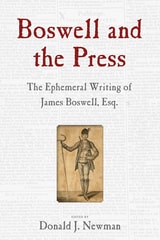
Boswell and the Press
Essays on the Ephemeral Writing of James BoswellDonald J. Newman
Bucknell University Press, 2021

Bread, Wine, and Money
The Windows of the Trades at Chartres CathedralJane Welch Williams
University of Chicago Press, 1993
Williams weaves a tight net of historical circumstances, iconographic traditions, exegetical implications, political motivations, and liturgical functions to explain the imagery in the windows of the trades. Her account of changing social relationships in thirteenth-century Chartres focuses on the bakers, tavern keepers, and money changers whose bread, wine, and money were used as means of exchange, tithing, and offering throughout medieval society. Drawing on a wide variety of original documents and scholarly work, this book makes important new contributions to our knowledge of one of the great monuments of Western culture.
Breaking Point
The UK Referendum on the EU and Its AftermathGary Gibbon
Haus Publishing, 2017
Examining official and off-the-record meetings with both senior politicians and ordinary voters, Gibbon addresses tough questions that are troubling the entire European continent: Now that the United Kingdom has voted for Brexit, to what extent can it truly “leave” a set of relationships that extend to the country’s doorstep? And will the decision be a lethal blow to the European Union, perhaps spurring on copycat secession movements?
Brexit and the British
Who Do We Think We Are?Stephen Green
Haus Publishing, 2017
In this short but powerful book, Stephen Green argues that it is time to acknowledge that underlying all the sound and fury of the Brexit debate were fundamental questions—whether or not fully recognized—about British identity. Are the British different, special, and capable of finding their own way in the world? Who are they, those who call themselves British? Is it all too easy to blame Brexit on post-industrial decline in the traditional heartlands of the Labor Party, or scaremongering by a band of deluded “Little Englanders”? Or is British identity more complex, deep-rooted—and perhaps, in some sense, troubling—than those of other European nations?
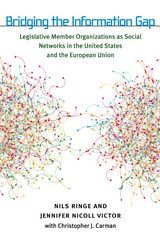
Bridging the Information Gap
Legislative Member Organizations as Social Networks in the United States and the European UnionNils Ringe and Jennifer Nicoll Victor with Christopher J. Carman
University of Michigan Press, 2013
Legislative member organizations (LMOs)—such as caucuses in the U.S. Congress and intergroups in the European Parliament—exist in lawmaking bodies around the world. Unlike parties and committees, LMOs play no obvious, predefined role in the legislative process. They provide legislators with opportunities to establish social networks with colleagues who share common interests. In turn, such networks offer valuable opportunities for the efficient exchange of policy-relevant—and sometimes otherwise unattainable—information between legislative offices. Building on classic insights from the study of social networks, the authors provide a comparative overview of LMOs across advanced, liberal democracies. In two nuanced case studies of LMOs in the European Parliament and the U.S. Congress, the authors rely on a mix of social network analysis, sophisticated statistical methods, and careful qualitative analysis of a large number of in-depth interviews.
British Literature and Technology, 1600-1830
Kristin M. Girten
Bucknell University Press, 2023
Enlightenment-era writers had not yet come to take technology for granted, but nonetheless were—as we are today—both attracted to and repelled by its potential. This volume registers the deep history of such ambivalence, examining technology’s influence on Enlightenment British literature, as well as the impact of literature on conceptions of, attitudes toward, and implementations of technology. Offering a counterbalance to the abundance of studies on literature and science in seventeenth- and eighteenth-century Britain, this volume’s focus encompasses approaches to literary history that help us understand technologies like the steam engine and the telegraph along with representations of technology in literature such as the “political machine.” Contributors ultimately show how literature across genres provided important sites for Enlightenment readers to recognize themselves as “chimeras”—“hybrids of machine and organism”—and to explore the modern self as “a creature of social reality as well as a creature of fiction.”
British Romanticism and Prison Reform
Jonas Cope
Bucknell University Press, 2025
In eighteenth-century Britain, criminals were routinely whipped, branded, hanged, or transported to America. Only in the last quarter of the century—with the War of American Independence and legal and sociopolitical challenges to capital punishment—did the criminal justice system change, resulting in the reformed prison, or penitentiary, meant to educate, rehabilitate, and spiritualize even hardened felons. This volume is the first to explore the relationship between historical penal reform and Romantic-era literary texts by luminaries such as Godwin, Keats, Byron, and Austen. The works examined here treat incarceration as ambiguous: prison walls oppress and reinforce the arbitrary power of legal structures but can also heighten meditation, intensify the imagination, and awaken the conscience. Jonas Cope skillfully traces the important ideological work these texts attempt: to reconcile a culture devoted to freedom with the birth of the modern prison system that presents punishment as a form of rehabilitation.
Published by Bucknell University Press. Distributed worldwide by Rutgers University Press.
British Women Writing Fiction
Abby H.P. Werlock
University of Alabama Press, 2000
British women in the second half of the 20th century have produced a body of work that is as diverse as it is entertaining. This book offers an informal, jargon-free introduction to the fiction of sixteen contemporary writers either brought up or now living in England, from Muriel Spark to Jeanette Winterson.
British Women Writing Fiction presents a balanced view comprising women writing since the 1950s and 1960s, those who attracted critical attention during the 1970s and 1980s, and those who have burst upon the literary scene more recently, including African-Caribbean and African women. The essays show how all of these writers treat British subjects and themes, sometimes from radically different perspectives, and how those who are daughters of immigrants see themselves as women writing on the margins of society.
Abby Werlock's introduction explores the historical and aesthetic factors that have contributed to the genre, showing how even those writers who began in a traditional vein have created experimental work. The contributors provide complete bibliographies of each writer's works and selected bibliographies of criticism. Exceptional both in its breadth of subjects covered and critical approaches taken, this book provides essential background that will enable readers to appreciate the singular merits of each writer. It offers an approach toward better understanding favorite authors and provides a way to become acquainted with new ones.
Broken Masculinities
Solitude, Alienation, and Frustration in Turkish Literature after 1970Cimen Günay-Erkol
Central European University Press, 2016
Broken Masculinities portrays the post-dictatorial novel of the 1970s in all its complexity, and introduces the reader to a 1968-era Turkey, a period which challenges Turkey’s now reinforced Islamic image by portraying the quest for sexual liberation and critical student uprisings. Günay-Erkol argues that the literature written after the 1971 coup in Turkey constitutes a coherent sub-genre and needs to be considered together. These novels share a common ground which is rich in images of men and women craving for power: general isolation, sexual-emotional frustration, and a traumatic sense of solitude and alienation.
This book is an original and significant contribution to two major fields of study: (1) gender and sexuality with respect to formation of subjectivity through literature, and (2) modern literature and history through the study of Turkish literature. The chief concern in this book is not only literature’s response to a particular period in Turkey, but also the role of literature in bearing witness to trauma and drastic political acts of violence—and coming to terms with them.B

Browning’s Beginnings
The Art of DisclosureHerbert F. Tucker Jr.
University of Minnesota Press, 1980
Browning's Beginnings was first published in 1980. Minnesota Archive Editions uses digital technology to make long-unavailable books once again accessible, and are published unaltered from the original University of Minnesota Press editions.
Browning's Beginnings offers a fresh approach to the poet who, among major Victorians, has proved at once the most congenial and most inscrutable to modern readers. Drawing on recent developments in literary theory and in the criticism of romantic poetry, Herbert
F. Tucker, Jr., argues that Browning's stylistic "obscurity" is the result of a principled poetics of evasion. This art of disclosure, in deferring formal and semantic finalities, constitutes an aesthetic counterpart to his open-ended moral philosophy of"incompleteness," Browning's poems, like his enormously productive career, find their motivation and sustenance in his optimistic love of the future—a love that is indistinguishable from his lifelong fear that there will be nothing left to say.The opening chapters trace the workings of Browning's art of disclosure with extensive and original interpretations of the unduly neglected early poems, Pauline, Paracelsus, and Sordello, and place special emphasis on Browning's attitudes toward poetic tradition and language. A chapter on Browning's attitudes toward poetic tradition and language. A chapter on Browning's plays identifies dynamics of representation in Pippa Passes, Strafford,and King Victor and King Charles. Tucker discusses the pervasive analogy between Browning's ideas about poetic representation and about representation in its erotic and religious aspects, and shows how the early poems and plays illustrate correlative developments in poetics and in the exploration and dramatic rendering of human psychology. The remaining chapters follow the poetic psychology of Browning to its culmination in the great poems of his middle years; exemplary readings of selected dramatic lyrics and monologues suggest that the ways of meaning in Browning's mature work variously bear out the sense of endlessness or perpetual initiation that is central to his poetic beginnings.
Tucker thus contends that the "romantic" and the "Victorian" Browning have more in common than is generally supposed, and his book should appeal to students of both periods. Its discussion of general literary issues - poetic influence, closure, representation, and meaning - in application to particular texts should further recommend Browning's Beginnings to the nonspecialist reader interested in poetry and poetic theory.
Building Romanticism
Literature and Architecture in Nineteenth-Century BritainNicole Reynolds
University of Michigan Press, 2010
Butterfly, the Bride
Essays on Law, Narrative, and the FamilyCarol Weisbrod
University of Michigan Press, 2004
Butterfly, the Bride looks at law from the outside, using narrative to provide a fresh perspective on the issues of law and social structure---and individual responses to law. This book thoroughly explores relationships between inner and public lives by examining what is ordinarily classified as the sphere of private life---the world of family relationships.