Results by title
932 books match the query 'Genres & Styles' and 108 start with b
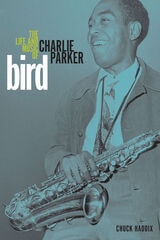
Bird
The Life and Music of Charlie ParkerChuck Haddix
University of Illinois Press, 2013
Birds of Fire
Jazz, Rock, Funk, and the Creation of FusionKevin Fellezs
Duke University Press, 2011
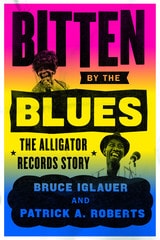
Bitten by the Blues
The Alligator Records StoryBruce Iglauer and Patrick A. Roberts
University of Chicago Press, 2018
Bitten by the Blues is Iglauer’s memoir of a life immersed in the blues—and the business of the blues. No one person was present at the creation of more great contemporary blues music than Iglauer: he produced albums by Koko Taylor, Albert Collins, Professor Longhair, Johnny Winter, Lonnie Mack, Son Seals, Roy Buchanan, Shemekia Copeland, and many other major figures. In this book, Iglauer takes us behind the scenes, offering unforgettable stories of those charismatic musicians and classic sessions, delivering an intimate and unvarnished look at what it’s like to work with the greats of the blues. It’s a vivid portrait of some of the extraordinary musicians and larger-than-life personalities who brought America’s music to life in the clubs of Chicago’s South and West Sides. Bitten by the Blues is also an expansive history of half a century of blues in Chicago and around the world, tracing the blues recording business through massive transitions, as a genre of music originally created by and for black southerners adapted to an influx of white fans and musicians and found a worldwide audience.
Most of the smoky bars and packed clubs that fostered the Chicago blues scene have long since disappeared. But their soul lives on, and so does their sound. As real and audacious as the music that shaped it, Bitten by the Blues is a raucous journey through the world of Genuine Houserockin’ Music.
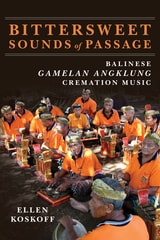
Bittersweet Sounds of Passage
Balinese Gamelan Angklung Cremation MusicEllen Koskoff
University of Illinois Press, 2025
Koskoff examines the history, cultural significance, and musical structures of contemporary gamelan angklung cremation music through the lens of three intertwined stories: existing scholarship on this music, written mostly by Western composers and scholars; the views of those performing and experiencing the music who regard it as dharma--ritual obligation, a basic concept in Balinese Hinduism; and the music itself, with a musical analysis focusing on changes in rasa--feeling, flavor and musical flow.
A journey inside a tradition, Bittersweet Sounds of Passage reveals the overlooked music of an important ritual in Balinese village life.
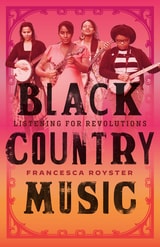
Black Country Music
Listening for RevolutionsFrancesca T. Royster
University of Texas Press, 2022
2023 Ralph J. Gleason Music Book Award, Rock & Roll Hall of Fame
2024 Woody Guthrie Book Award, International Association for the Study of Popular Music-US Branch (IASPM-US)
2023 Certificate of Merit, ARSC Awards for Excellence in Historical Recorded Sound Research, Association for Recorded Sound Collections
2023 The Judy Tsou Critical Race Studies Award, American Musicological Society
How Black musicians have changed the country music landscape and brought light to Black creativity and innovation.
After a century of racist whitewashing, country music is finally reckoning with its relationship to Black people. In this timely work—the first book on Black country music by a Black writer—Francesca Royster uncovers the Black performers and fans, including herself, who are exploring the pleasures and possibilities of the genre.
Informed by queer theory and Black feminist scholarship, Royster’s book elucidates the roots of the current moment found in records like Tina Turner’s first solo album, Tina Turns the Country On! She reckons with Black “bros” Charley Pride and Darius Rucker, then chases ghosts into the future with Valerie June. Indeed, it is the imagination of Royster and her artists that make this music so exciting for a genre that has long been obsessed with the past. The futures conjured by June and others can be melancholy, and are not free of racism, but by centering Black folk Royster begins to understand what her daughter hears in the banjo music of Our Native Daughters and the trap beat of Lil Nas X’s “Old Town Road.” A Black person claiming country music may still feel a bit like a queer person coming out, but, collectively, Black artists and fans are changing what country music looks and sounds like—and who gets to love it.
Black Diamond Queens
African American Women and Rock and RollMaureen Mahon
Duke University Press, 2020
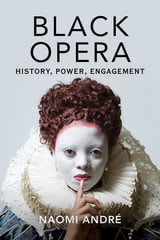
Black Opera
History, Power, EngagementNaomi Andre
University of Illinois Press, 2018
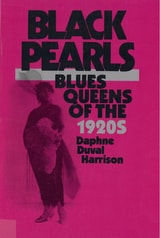
Black Pearls
Blues Queens of the 1920sDaphne Duval Harrison
Rutgers University Press, 1990
Blues music spawned legendary performers whose influence has been felt in many musical forms here and around the world. Until now the important role of the great women blues singers has largely gone unexplored. This book tells of the cultural and social impact of the blues during the 1920s when the genre was dominated by women, both on stage and on record. Harrison (Afro-American Studies Department, University of Maryland) writes with authority, focusing particularly on Sippie Wallace, Edith Wilson, Victoria Spivey, and Alberta Hunter as she analyzes the music and the collective black experience out of which it grew. A significant book, particularly for collections of music history, black studies, and women's studies. -- Library Journal
Black Space
Negotiating Race, Diversity, and Belonging in the Ivory TowerSherry L. Deckman
Rutgers University Press, 2022
Blackness in Opera
Edited by Naomi André, Karen M. Bryan, and Eric Saylor
University of Illinois Press, 2012
Blackstar Rising and the Purple Reign
The Sonic Afterlives of David Bowie and PrinceDaphne A. Brooks, editor
Duke University Press, 2026
Contributors: Christine Bacareza Balance, Emma Balázs, Victoria Broackes, Daphne A. Brooks, Daphne Carr, Andreana Clay, Ashon Crawley, Jonathan Flatley, Nicole R. Fleetwood, Lynell George, Farah Jasmine Griffin, Michelle Habell-Pallán, Jack Halberstam, Matthew Frye Jacobson, Kara Keeling, Jason King, Josh Kun, Kathryn Lofton, Emily J. Lordi, Eric Lott, Maureen Mahon, Greil Marcus, Geoffrey Marsh, Michaelangelo Matos, Tiffany Naiman, Tavia Nyong'o, Ann Powers, Sonnet Retman, Morgan Rhodes, Francesca T. Royster, Gustavus Stadler, Jacqueline Stewart, Greg Tate, Karen Tongson, Van My Truong, Alexandra T. Vazquez, Michael E. Veal, Shane Vogel, Gayle Wald, Oliver Wang, Alexander G. Weheliye, Richard Yarborough, Kristen Zschomler
Blood in the Tracks
The Minnesota Musicians behind Dylan's MasterpiecePaul Metsa
University of Minnesota Press, 2023
The story of the Minneapolis musicians who were unexpectedly summoned to re-record half of the songs on Bob Dylan's most acclaimed album
When Bob Dylan recorded Blood on the Tracks in New York in September 1974, it was a great album. But it was not the album now ranked by Rolling Stone as one of the ten best of all time. “When something’s not right, it’s wrong,” as Dylan puts it in “You’re Gonna Make Me Lonesome When You Go”—and something about that original recording led him to a studio in his native Minnesota to re-record five songs, including “Idiot Wind” and “Tangled Up in Blue.” Six Minnesota musicians participated in that two-night recording session at Sound 80, bringing their unique sound to some of Dylan’s best-known songs—only to have their names left off the album and their contribution unacknowledged for more than forty years. This book tells the story of those two nights in Minneapolis, introduces the musicians who gave the album so much of its ultimate form and sound, and describes their decades-long fight for recognition.
Blood in the Tracks takes readers behind the scenes with these “mystery” Minnesota musicians: twenty-one-year-old mandolin virtuoso Peter Ostroushko; drummer Bill Berg and bass player Billy Peterson, the house rhythm section at Sound 80; progressive rock keyboardist Gregg Inhofer; guitarist Chris Weber, who owned The Podium guitar shop in Dinkytown; and Kevin Odegard, whose own career as a singer-songwriter had paralleled Dylan’s until he had to take a job as a railroad brakeman to make ends meet. Through in-depth interviews and assiduous research, Paul Metsa and Rick Shefchik trace the twists of fate that brought these musicians together and then set them on different paths in its wake: their musical experiences leading up to the December 1974 recording session, the divergent careers that followed, and the painstaking work required to finally obtain the official credit that they were due.
A rare look at the making—or remaking—of an all-time great album, and a long overdue recognition of the musicians who made it happen, Blood in the Tracks brings to life a transformative moment in the history of rock and roll, for the first time in its true context and with its complete cast of players.
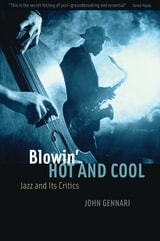
Blowin' Hot and Cool
Jazz and Its CriticsJohn Gennari
University of Chicago Press, 2006
In Blowin’ Hot and Cool, John Gennari provides a definitive history of jazz criticism from the 1920s to the present. The music itself is prominent in his account, as are the musicians—from Louis Armstrong and Duke Ellington to Charlie Parker, John Coltrane, Roscoe Mitchell, and beyond. But the work takes its shape from fascinating stories of the tradition’s key critics—Leonard Feather, Martin Williams, Whitney Balliett, Dan Morgenstern, Gary Giddins, and Stanley Crouch, among many others. Gennari is the first to show the many ways these critics have mediated the relationship between the musicians and the audience—not merely as writers, but in many cases as producers, broadcasters, concert organizers, and public intellectuals as well.
For Gennari, the jazz tradition is not so much a collection of recordings and performances as it is a rancorous debate—the dissonant noise clamoring in response to the sounds of jazz. Against the backdrop of racial strife, class and gender issues, war, and protest that has defined the past seventy-five years in America, Blowin’ Hot and Cool brings to the fore jazz’s most vital critics and the role they have played not only in defining the history of jazz but also in shaping jazz’s significance in American culture and life.
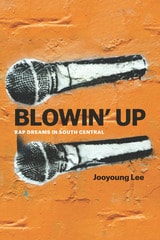
Blowin' Up
Rap Dreams in South CentralJooyoung Lee
University of Chicago Press, 2016
While most books on rap are written from the perspective of listeners and the market, Blowin’ Up looks specifically at the creative side of rappers. As Lee shows, learning how to rap involves a great deal of discipline, and it takes practice to acquire the necessary skills to put on a good show. Along with Lee—who is himself a pop-locker—we watch as the rappers at Project Blowed learn the basics, from how to hold a microphone to how to control their breath amid all those words. And we meet rappers like E. Crimsin, Nocando, VerBS, and Flawliss as they freestyle and battle with each other. For the men at Project Blowed, hip hop offers a creative alternative to the gang lifestyle, substituting verbal competition for physical violence, and provides an outlet for setting goals and working toward them.
Engagingly descriptive and chock-full of entertaining personalities and real-life vignettes, Blowin’ Up not only delivers a behind-the-scenes view of the underground world of hip hop, but also makes a strong case for supporting the creative aspirations of young, urban, black men, who are often growing up in the shadow of gang violence and dead-end jobs.
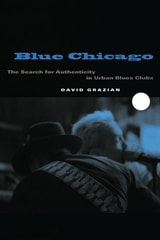
Blue Chicago
The Search for Authenticity in Urban Blues ClubsDavid Grazian
University of Chicago Press, 2003
For any music lover, that image captures the essence of an authentic experience of the blues. In Blue Chicago, David Grazian takes us inside the world of contemporary urban blues clubs to uncover how such images are manufactured and sold to music fans and audiences. Drawing on countless nights in dozens of blues clubs throughout Chicago, Grazian shows how this quest for authenticity has transformed the very shape of the blues experience. He explores the ways in which professional and amateur musicians, club owners, and city boosters define authenticity and dish it out to tourists and bar regulars. He also tracks the changing relations between race and the blues over the past several decades, including the increased frustrations of black musicians forced to slog through the same set of overplayed blues standards for mainly white audiences night after night. In the end, Grazian finds that authenticity lies in the eye of the beholder: a nocturnal fantasy to some, an essential way of life to others, and a frustrating burden to the rest.
From B.L.U.E.S. and the Checkerboard Lounge to the Chicago Blues Festival itself, Grazian's gritty and often sobering tour in Blue Chicago shows us not what the blues is all about, but why we care so much about that question.
Blue Nippon
Authenticating Jazz in JapanE. Taylor Atkins
Duke University Press, 2001
Engagingly told through the voices of many musicians, Blue Nippon explores the true and legitimate nature of Japanese jazz. Atkins peers into 1920s dancehalls to examine the Japanese Jazz Age and reveal the origins of urban modernism with its new set of social mores, gender relations, and consumer practices. He shows how the interwar jazz period then became a troubling symbol of Japan’s intimacy with the West—but how, even during the Pacific war, the roots of jazz had taken hold too deeply for the “total jazz ban” that some nationalists desired. While the allied occupation was a setback in the search for an indigenous jazz sound, Japanese musicians again sought American validation. Atkins closes out his cultural history with an examination of the contemporary jazz scene that rose up out of Japan’s spectacular economic prominence in the 1960s and 1970s but then leveled off by the 1990s, as tensions over authenticity and identity persisted.
With its depiction of jazz as a transforming global phenomenon, Blue Nippon will make enjoyable reading not only for jazz fans worldwide but also for ethnomusicologists, and students of cultural studies, Asian studies, and modernism.
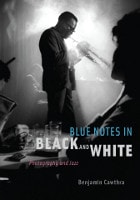
Blue Notes in Black and White
Photography and JazzBenjamin Cawthra
University of Chicago Press, 2011
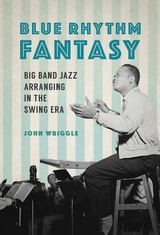
Blue Rhythm Fantasy
Big Band Jazz Arranging in the Swing EraJohn Wriggle
University of Illinois Press, 2016
Blue Rhythm Fantasy traces the extraordinary career of arranger Chappie Willet--a collaborator of Louis Armstrong, Cab Calloway, Duke Ellington, Gene Krupa, and many others--to revisit legendary Swing Era venues and performers from Harlem to Times Square. Wriggle's insightful music analyses of big band arranging techniques explore representations of cultural modernism, discourses on art and commercialism, conceptions of race and cultural identity, music industry marketing strategies, and stage entertainment variety genres.
Drawing on archives, obscure recordings, untapped sources in the African American press, and interviews with participants, Blue Rhythm Fantasy is a long-overdue study of the arranger during this dynamic era of American music history.
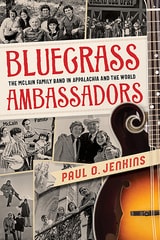
Bluegrass Ambassadors
The McLain Family Band in Appalachia and the WorldPaul O. Jenkins
West Virginia University Press, 2020
Interpreting the band’s diverse repertoire as both a source of its popularity and a reason for its exclusion from the bluegrass pantheon, Paul Jenkins advances subtle arguments about genre, criticism, and audience. Bluegrass Ambassadors analyzes the McLains’ compositions, recordings, and performances, and features a complete discography.
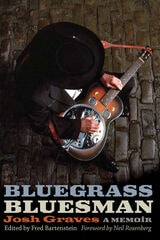
Bluegrass Bluesman
A MemoirJosh Graves; Edited by Fred Bartenstein; Foreword by Neil Rosenberg
University of Illinois Press, 2012
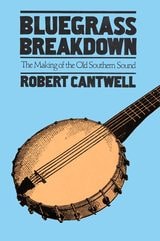
Bluegrass Breakdown
The Making of the Old Southern SoundRobert Cantwell
University of Illinois Press, 1984
Bluegrass Breakdown is an expansive foray into the makings of bluegrass. More than any other book of its kind, it gets to the roots of a uniquely American music that is deeply linked to working-class ideals and romanticism.
Robert Cantwell engages the historical background, commercial origins, internal workings, and cultural and social significance of popular, old-time music to provide a unique musicological and sociological perspective. Well-versed in the history of the tradition and equally as interested in those who listen to the music as in those who create it, Cantwell links bluegrass to its hillbilly roots in Appalachia and shows how the music was transformed by African American folk traditions, the influence of jazz, ragtime, blues, and country music, and the growth of radio and recording technology.
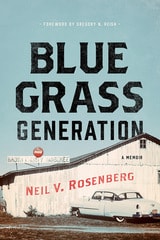
Bluegrass Generation
A MemoirNeil V Rosenberg
University of Illinois Press, 2018
Rosenberg's memoir shines a light on the changing bluegrass scene of the early 1960s. Already a fan and aspiring musician, his appetite for banjo music quickly put him on the Jamboree stage. Rosenberg eventually played with Monroe and spent four months managing the Jamboree. Those heights gave him an eyewitness view of nothing less than bluegrass's emergence from the shadow of country music into its own distinct art form. As the likes of Bill Keith and Del McCoury played, Rosenberg watched Monroe begin to share a personal link to the music that tied audiences to its history and his life--and helped turn him into bluegrass's foundational figure.
An intimate look at a transformative time, Bluegrass Generation tells the inside story of how an American musical tradition came to be.
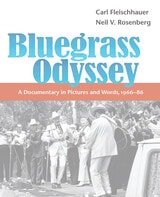
Bluegrass Odyssey
A Documentary in Pictures and Words, 1966-86Carl Fleischhauer and Neil V. Rosenberg
University of Illinois Press, 2006

Bluegrass
A HISTORY 20TH ANNIVERSARY EDITIONNeil V. Rosenberg
University of Illinois Press, 2005
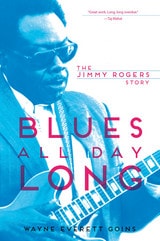
Blues All Day Long
The Jimmy Rogers StoryWayne Everett Goins, foreword by Kim Wilson
University of Illinois Press, 2014
In Blues All Day Long, Wayne Everett Goins mines seventy-five hours of interviews with Rogers' family, collaborators, and peers to follow a life spent in the blues. Goins' account takes Rogers from recording Chess classics and barnstorming across the South to a late-in-life renaissance that included new music, entry into the Blues Hall of Fame, and high profile tours with Eric Clapton and the Rolling Stones. Informed and definitive, Blues All Day Long fills a gap in twentieth century music history with the story of one of the blues' eminent figures and one of the genre's seminal bands.
Blues Before Sunrise 2
Interviews from the Chicago SceneSteve Cushing
University of Illinois Press, 2019
Blues Before Sunrise 3
Guitar Slingers and BackbeatersSteve Cushing. Introduction by Wayne Everett Goins
University of Illinois Press, 2025
Steve Cushing’s third volume of interviews from Blues Before Sunrise puts fans face-to-face with music legends and industry figures. The volume kicks off with a roundtable featuring drumming all-stars Earl Phillips, S.P. Leary, Odie Payne, Clifton James, and Fred Below discussing their lives and craft. Cushing segues to one-on-one interviews with Howlin’ Wolf sideman Phillips; Leary, a fellow Wolf alum and player with Sonny Boy Williamson II; Payne, known for his kick drum technique; longtime Muddy Waters drummer Willie “Big Eyes” Smith; next-generation standard bearer and session mainstay Casey Jones; and King Records house drummer Phillip Paul.
Interviews with guitarists include talks with Honeyboy Edwards, whose friendships with innumerable Chicago blues legends (and Robert Johnson) predated the Great Migration; jazz player turned bluesman Guitar Shorty; and figures like Texas native Roy Gaines, Johnny Heartsman of Oakland, and Memphis-born Floyd Murphy. A final section offers interviews with vocalists, record label founders, and other figures. Music scholar Wayne Everett Goins provides an introduction on blues history, blues style, and the careers of the featured artists.
Interviews: Joel Dorn, Honeyboy Edwards, Slim Gaillard, Roy Gaines, Johnny Heartsman, Franz Jackson, Casey Jones, S.P. Leary, Floyd Murphy, Jimmy “T-99” Nelson, Johnny Parth, Phillip Paul, Odie Payne, Earl Phillips, Art Sheridan, Guitar Shorty, Willie “Big Eyes” Smith, and Norvel Taborn
Blues Before Sunrise
The Radio InterviewsSteve Cushing, Foreword by Jim O'Neal
University of Illinois Press, 2010
This collection assembles the best interviews from Steve Cushing's long-running radio program Blues Before Sunrise, the nationally syndicated, award-winning program focusing on vintage blues and R&B. As both an observer and performer, Cushing has been involved with the blues scene in Chicago for decades. His candid, colorful interviews with prominent blues players, producers, and deejays reveal the behind-the-scenes world of the formative years of recorded blues. Many of these oral histories detail the careers of lesser-known but greatly influential blues performers and promoters.
The book focuses in particular on pre–World War II blues singers, performers active in 1950s Chicago, and nonperformers who contributed to the early blues world. Interviewees include Alberta Hunter, one of the earliest African American singers to transition from Chicago's Bronzeville nightlife to the international spotlight, and Ralph Bass, one of the greatest R&B producers of his era. Blues expert, writer, record producer, and cofounder of Living Blues Magazine Jim O'Neal provides the book's foreword.
Blues Legacy
Tradition and Innovation in ChicagoDavid Whiteis
University of Illinois Press, 2019
David Whiteis delves into how the current and upcoming Chicago blues generations carry on this legacy. Drawing on in-person interviews, Whiteis places the artists within the ongoing social and cultural reality their work reflects and helps create. Beginning with James Cotton, Eddie Shaw, and other bequeathers, he moves through an all-star council of elders like Otis Rush and Buddy Guy and on to inheritors and today's heirs apparent like Ronnie Baker Brooks, Shemekia Copeland, and Nellie "Tiger" Travis.
Insightful and wide-ranging, Blues Legacy reveals a constantly adapting art form that, whatever the challenges, maintains its links to a rich musical past.
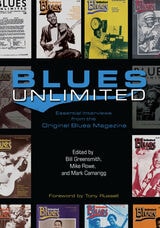
Blues Unlimited
Essential Interviews from the Original Blues MagazineEdited by Bill Greensmith, Mike Rowe, and Mark Camarigg
University of Illinois Press, 2015
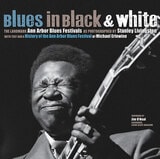
Blues in Black and White
The Landmark Ann Arbor Blues FestivalsAs photographed by Stanley Livingston with Text and a History of the Ann Arbor Blues Festival by Michael Erlewine
University of Michigan Press, 2010
"This was really the first time that blues music, especially Chicago/urban blues, was showcased in this way. Sadly, the festivals were not recorded professionally. So Mr. Livingston's photos are the best record of the festivals."
---Michael Jewett, longtime weekday afternoon host of 89.1 Jazz and host of "Blues & Some Uthuh Stuff"
"The photos are works of art. It is great to see photos of musicians such as Buddy Guy and James Cotton looking so young and vibrant. And it is great to see photos of blues legends such as John Lee Hooker, Roosevelt Sykes, Howlin' Wolf, and Son House, who have long since passed away."
---Peter Madcat Ruth, Grammy-winning blues harmonica player
"If Woodstock was one of the Fifty Moments That Changed Rock 'n' Roll History, as honored in Rolling Stone magazine, then the Ann Arbor Blues Festival was the coronation for the blues roots that sired rock to begin with. . . . finally we have this amazing book of Stanley Livingston's priceless images, along with Michael Erlewine's detailed chronology."
---From the foreword by Jim O'Neal, Cofounder, Living Blues Magazine
In 1969 and 1970, the first Ann Arbor Blues Festivals brought together the greatest-ever selection of blues performers---an enormous blues party that seemed to feature every big name in the world of blues.
The Ann Arbor Blues Festival was just that: a festival and celebration of city blues. It helped to mark the discovery of modern blues music (and the musicians who made that music) by a much larger audience. The festival, however, was something more than just a white audience discovering black music.
Never before had such a far-reaching list of performers been assembled, including the grandfathers of southern country blues and the hottest electric bands from Chicago. These groundbreaking festivals were the seed that grew into the Ann Arbor Blues and Jazz Festival, which was continued annually for many years. To name just a few of the dozens of artists who performed at the festival: Luther Allison, John Lee Hooker, Howlin' Wolf, B.B. King, Muddy Waters, Otis Rush, Hound Dog Taylor, Big Mama Thorton, T-Bone Walker, Sippie Wallace, Junior Wells, and Mighty Joe Young.
Stanley Livingston, a professional photographer from Ann Arbor, captured these legendary performances onstage---as well as the goings-on backstage. Livingston's thousands of photographs from these festivals, previously unpublished and known only to a few, are among the finest candid blues shots ever taken. Together with editor and archivist Michael Erlewine's text accompaniments, these photographs, reproduced here as high-quality duotones, comprise a visual history and important keepsake for blues aficionados everywhere.
Stanley Livingston was an award-winning photographer living and working in Ann Arbor until he passed away in 2010, after the book was released.
Michael Erlewine, also from Ann Arbor, is a renowned archivist of popular culture and founder of the All-Music Guide (allmusic.com) and editor of a number of books on blues and jazz.
Cover photo of B.B. King by Stanley Livingston
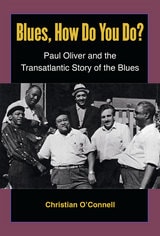
Blues, How Do You Do?
Paul Oliver and the Transatlantic Story of the BluesChristian O’Connell
University of Michigan Press, 2015

Blues, Ideology, and Afro-American Literature
A Vernacular TheoryHouston A. Baker Jr.
University of Chicago Press, 1987
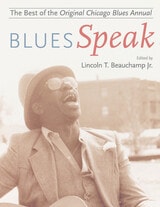
BluesSpeak
Best of the Original Chicago Blues AnnualLincoln T. Beauchamp, Jr.
University of Illinois Press, 2010
This incomparable anthology collects articles, interviews, fiction, and poetry from the Original Chicago Blues Annual, one of music history's most significant periodical blues publications. Founded and operated from 1989 to 1995 by African American musician and entrepreneur Lincoln T. Beauchamp Jr., OCBA gave voice to the blues community and often frankly addressed contentious issues within the blues such as race, identity, prejudice, wealth, gender, and inequity.
OCBA often expressed an explicitly black perspective, but its contributors were a mix of black and white, American and international. Likewise, although OCBA's roots and main focus were in Chicago, Beauchamp's vision for the publication (and his own activities as a blues performer and promoter) embraced an international dimension, reflecting a broad diversity of blues audiences and activities in locations as farflung as Iceland, Poland, France, Italy, and South Africa.
This volume includes key selections from OCBA's seven issues and features candid interviews with blues luminaries such as Koko Taylor, Eddie Boyd, Famoudou Don Moye, Big Daddy Kinsey, Lester Bowie, Junior Wells, Billy Boy Arnold, Herb Kent, Barry Dolins, and many more. Also featured are heartfelt memorials to bygone blues artists, insightful observations on the state of the blues in Chicago and beyond, and dozens of photographs of performers, promoters, and other participants in the worldwide blues scene.
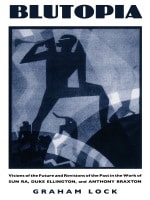
Blutopia
Visions of the Future and Revisions of the Past in the Work of Sun Ra, Duke Ellington, and Anthony BraxtonGraham Lock
Duke University Press, 2000
A century after Ellington’s birth, Lock reassesses his use of music as a form of black history and compares the different approaches of Ra, a band leader who focused on the future and cosmology, and Braxton, a contemporary composer whose work creates its own elaborate mythology. Arguing that the majority of writing on black music and musicians has—even if inadvertently—incorporated racial stereotypes, he explains how each artist reacted to criticism and sought to break free of categorical confines. Drawing on social history, musicology, biography, cultural theory, and, most of all, statements by the musicians themselves, Lock writes of their influential work.
Blutopia will be a welcome contribution to the literature on twentieth-century African American music and creativity. It will interest students of jazz, American music, African American studies, American culture, and cultural studies.
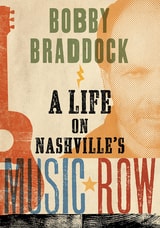
Bobby Braddock
A Life on Nashville’s Music RowBobby Braddock
Vanderbilt University Press, 2015
If you're looking for insight into Nashville, the life of music in this town, and the story of a force of nature on the Row to this day, Bobby Braddock will take you there.

Bonfire of Roadmaps
By Joe Ely
University of Texas Press, 2007
Since he first hitched a ride out of Lubbock, Texas, at the age of sixteen, singer-songwriter and Flatlanders band member Joe Ely has been a road warrior, traveling highways and back roads across America and Europe, playing music for "2 hours of ecstasy" out of "22 hours of misery." To stay sane on the road, Ely keeps a journal, penning verses that sometimes morph into songs, and other times remain "snapshots of what was flying by, just out of reach, so to savor at a later date when the wheels stop rolling, and the gears quit grinding, and the engines shut down."
In Bonfire of Roadmaps, Ely takes readers on the road with him. Using verse passages from his road journals and his own drawings, Ely authentically re-creates the experience of a musician's life on tour, from the hard goodbyes at home, to the long hours on the road, to the exhilaration of a great live show, to the exhaustion after weeks of touring. Ely's road trips begin as he rides the rails to Manhattan in 1972 and continue up through recent concert tours with fellow Flatlanders Jimmie Dale Gilmore and Butch Hancock.
While acknowledging that "it is not the nature of a gypsy to look in the rearview mirror," Joe Ely nevertheless offers his many fans a revelatory look back over the roads he's traveled and the wisdom he's won from his experiences. And for "those who want to venture beyond the horizon just to see what is there... to those, I hope these accounts will give a glint of inspiration..."
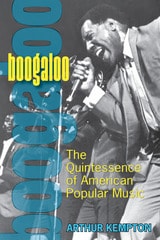
Boogaloo
The Quintessence of American Popular MusicArthur Kempton
University of Michigan Press, 2005
Praise for Boogaloo:
"From Thomas A. Dorsey and gospel to Sam Cooke and the classic age of boogaloo ('soul') to George Clinton and hip hop, this comprehensive analysis of African-American popular music is a deep and gorgeous meditation on its aesthetics and business."
---Henry Louis Gates, Jr., W.E.B. Du Bois Professor of the Humanities, Harvard
"Surpassingly sympathetic and probing. . . . a panoramic critical survey of black popular music over seventy-five years. . . .There is no book quite like it."
---New York Review of Books
". . . moving, dense, and fascinating. . . ."
---New Yorker
". . . a grand and sweeping survey of the history of soul music in America. . . . one of the best books of music journalism. . . ."
---Publisher's Weekly
". . . a fascinating and often original addition to the extensive literature. . . . an astute and witty account. . . . there is plenty in Boogaloo to set the mind and heart alight, as well as some flashes of brilliance and originality rare in music writing today."
---Times Literary Supplement
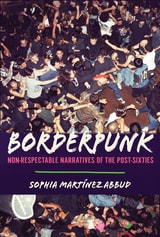
Borderpunk
Non-Respectable Narratives of the Post-SixtiesSophia Martínez Abbud
University of Arizona Press, 2027
The U.S.-Mexico border has long been a home to artists, poets, emos, and punks. In the clandestine undergrounds of borderlands cultural production, there lies an impulse to live below and beyond border surveillance technologies. This book is about the utopic stories that narrate this impulse and the punk literary scenes that facilitate these fabulations.
Using an innovative methodology of “scene-work”—a blend of literary analysis, queer theory, critical regionalism, and auto-ethnography—Borderpunk identifies, aggregates, and outlines the emergent genre of borderpunk cultural productions. Beginning with the post-1960s through the present, author Sophia Martínez Abbud examines how music, playlists, literature, art, and performance borderpunk narratives teach us to elide, undermine, and work against the border’s presumed authority. Through these narratives, readers become attuned to the anarchic sense of abjection that permeates the border regions and the kinds of punk subjectivities emerging from these sites of re-mediation.
Borderpunk offers scenes that refuse notions of respectability at different time periods, geographies, and scales. Following the mechanics of other narrative punk genres, such as cyberpunk or solarpunk, it sketches out the uses of “punk” as a way of being in border spaces—where abjection, relajo, and illegibility become useful tools that encourage us to divest from the norm, participate in horizontal community building, and imagine borders in radical new ways.
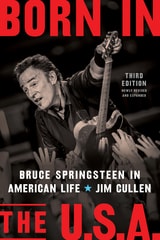
Born in the U.S.A.
Bruce Springsteen in American Life, 3rd edition, Revised and ExpandedJim Cullen
Rutgers University Press, 2024
This third edition of Born in the U.S.A. is fully revised and updated, incorporating discussion of Springsteen’s wide output in the 21st century. While addressing Springsteen’s responses to events like 9/11, it also considers the evolution of his attitudes towards religion, masculinity, and his relationship with his audience. Whether a serious Springsteen fan or simply an observer of American popular culture, Born in the U.S.A. will give you a new appreciation for The Boss.
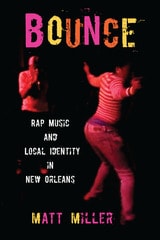
Bounce
Rap Music and Local Identity in New OrleansMatt Miller
University of Massachusetts Press, 2012
Over the course of the twentieth century, African Americans in New Orleans helped define the genres of jazz, rhythm and blues, soul, and funk. In recent decades, younger generations of New Orleanians have created a rich and dynamic local rap scene, which has revolved around a dance-oriented style called “bounce.”
Hip-hop has been the latest conduit for a “New Orleans sound” that lies at the heart of many of the city's best-known contributions to earlier popular music genres. Bounce, while globally connected and constantly evolving, reflects an enduring cultural continuity that reaches back and builds on the city's rich musical and cultural traditions.
In this book, the popular music scholar and filmmaker Matt Miller explores the ways in which participants in New Orleans's hip-hop scene have collectively established, contested, and revised a distinctive style of rap that exists at the intersection of deeply rooted vernacular music traditions and the modern, globalized economy of commercial popular music. Like other forms of grassroots expressive culture in the city, New Orleans rap is a site of intense aesthetic and economic competition that reflects the creativity and resilience of the city's poor and working-class African Americans.
Bound for America
Three British ComposersNicholas Temperley
University of Illinois Press, 2002
Brazilian Popular Music and Citizenship
Idelber Avelar and Christopher Dunn, eds.
Duke University Press, 2011
Contributors. Idelber Avelar, Christopher Dunn, João Freire Filho, Goli Guerreiro, Micael Herschmann, Ari Lima, Aaron Lorenz, Shanna Lorenz, Angélica Madeira, Malcolm K. McNee, Frederick Moehn, Flávio Oliveira, Adalberto Paranhos, Derek Pardue, Marco Aurélio Paz Tella, Osmundo Pinho, Carlos Sandroni, Daniel Sharp, Hermano Vianna, Wivian Weller

Breakout
Profiles in African RhythmGary Stewart
University of Chicago Press, 1992
Amid Africa's deepening economic and political crises of the last two decades, African musicians who developed these genres faced the need to cross cultural boundaries, or "break out," and achieve a hit in the international marketplace. Challenging conventional assumptions, Gary Stewart demonstrates for the first time the true dimensions of this struggle to create music that will qualify as both an authentic cultural expression and an export commodity. From accounts of the outrageous Fela, who snipes at African leaders and recounts his days with Isis in ancient Egypt, to S. E. Rogie, who lurches from the pinnacle of stardom in West Africa to delivering pizzas in California, to Olatunji, who finds new life with the Grateful Dead, these are the stories of Africans straddling traditional life and an encroaching modernity—and also the stories of third world musicians surmounting political and economic chaos at home and carrying their music to a world dominated by Western cultural and economic power.
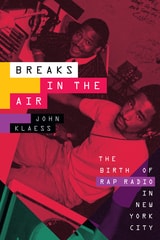
Breaks in the Air
The Birth of Rap Radio in New York CityJohn Klaess
Duke University Press, 2022
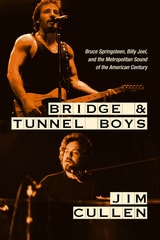
Bridge and Tunnel Boys
Bruce Springsteen, Billy Joel, and the Metropolitan Sound of the American CenturyJim Cullen
Rutgers University Press, 2024
Bridge and Tunnel Boys compares the life and work of Long Islander Joel and Asbury Park, New Jersey, native Springsteen, considering how each man forged a distinctive sound that derived from his unique position on the periphery of the Big Apple. Locating their music within a longer tradition of the New York metropolitan sound, dating back to the early 1900s, cultural historian Jim Cullen explores how each man drew from the city’s diverse racial and ethnic influences. His study explains how, despite frequently releasing songs that questioned the American dream, Springsteen and Joel were able to appeal to wide audiences during both the national uncertainty of the 1970s and the triumphalism of the Reagan era. By placing these two New York–area icons in a new context, Bridge and Tunnel Boys allows us to hear their most beloved songs with new appreciation.
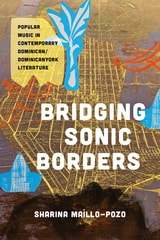
Bridging Sonic Borders
Popular Music in Contemporary Dominican/Dominicanyork LiteratureSharina Maíllo-Pozo
University of Texas Press, 2025
2026 Creative Research Medal, Office of Research at the University of Georgia
2026 Isis Duarte Book Prize, Haiti/Dominican Republic Section, Latin American Studies Association
How music depicted in literature shapes Dominican and Dominican New Yorkers’ identities and links the homeland to the diaspora.
Music has played a large role in recent Dominican literature, whether of the island or the diaspora. Bridging Sonic Borders explores this sonic connection linking the homeland and far-flung locales—especially New York, the center of Dominican cultural production in the United States. Sharina Maíllo-Pozo argues that literary representations of popular music delineate a shared aesthetic territory for US and Caribbean Dominicans, fostering an inclusive and transnational Dominicanidad.
Examining works written in Spanish, English, and Dominicanish, Maíllo-Pozo focuses on Dominican/Dominicanyork writings that have nurtured a borderless aesthetics through their shared investment in hip-hop, jazz, blues, pop, rock, and merengue. For Dominican writers, popular music has become a way of exploring memory and nostalgia and a means of centering people rejected from hegemonic identity formation—the working class, those of African descent, rural and queer people. For example, many works focused on the life of rocker Luis “Terror” Días have emphasized the in-between identity of being both Dominican and a New Yorker. Collectively, these writings have created a space in which boundaries of nation and diaspora are revealed for their fundamental porosity.
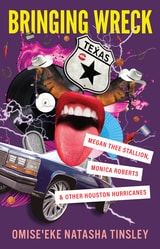
Bringing Wreck
Megan Thee Stallion, Monica Roberts, and Other Houston HurricanesOmise'eke Natasha Tinsley
University of Texas Press, 2026
A whirling exploration of how Megan Thee Stallion inspires Black women and femmes like the late Monica Roberts, framed by the storm-making work of both.
While rap megastar Megan Thee Stallion needs no introduction, fewer will be familiar with Monica Roberts, a Houston journalist, community historian, and trans activist with the popular blog TransGriot. Though the two women never met, their work has inspired Black LGBTQ+ activists to love, resist violence, speak truth to power, and dance like life depends on it. With a written energy that’s infectious, Omise’eke Tinsley highlights just how intertwined these artists are.
An incisive look at the impactful sisterhood between Black women and femmes, Bringing Wreck is a book of empowerment. From Megan’s first performance on Saturday Night Live calling to “Protect Black Women,” to Roberts’s use of Hurricane Hanna to poke fun at Donald Trump’s border wall, Tinsley digs into the world-changing power of disruption and joyful expression in the face of racial injustice, anti-trans and queer violence, mental health crises, and community disparities. Reveling in both women’s love of Houston, calling-out of gendered violence, penchant for political humor, and staunch mental health advocacy, Bringing Wreck is an ode to the Bayou City, Black music, and the difference that one woman’s voice can make when we listen carefully.

Brit Wits
A History of British Rock HumorIain Ellis
Intellect Books, 2012
The Sex Pistols. David Bowie. Pink Floyd. Rebel rockers and provokers of the public, vivid in our memories as much for their subversion of the mainstream as for their signature sounds. Yet what very few people realize is that a substantive part of the weaponry used by these rockers and their contemporaries was humor: outrageous onstage antics, coded cultural references, and clever lyrical constructs were all critical to expressions of youth rebellion that could still slip past the powers that be.
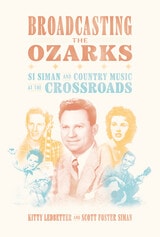
Broadcasting the Ozarks
Si Siman and Country Music at the CrossroadsKitty Ledbetter
University of Arkansas Press, 2024
“It’s good to see Si Siman and the Ozark Jubilee get their due in Broadcasting the Ozarks.”
—Willie Nelson
Broadcasting the Ozarks explores the vibrant country music scene that emerged in Springfield, Missouri, in the 1930s and thrived for half a century. Central to this history is the Ozark Jubilee (1955–60), the first regularly broadcast live country music show on network television. Dubbed the “king of the televised barn dances,” the show introduced the Ozarks to viewers across America and put Springfield in the running with Nashville for dominance of the country music industry—with the Jubilee’s producer, Si Siman, at the helm.
Siman’s life story is almost as remarkable as the show he produced. He was booking Tommy Dorsey, Ella Fitzgerald, and Glenn Miller during the mid-1930s while still a high school student and produced nationally syndicated country music radio shows in the decades that followed. Siman was a promotional genius with an ear for talent, a persuasive gift for gab, and the energy and persistence to make things happen for many future Country Music Hall of Famers, including Chet Atkins, Porter Wagoner, the Browns, and Brenda Lee. Following the Jubilee’s five-year run, Siman had a hand in some of the greatest hits of the twentieth century as a music publisher, collaborating with such songwriters as rockabilly legend and fellow Springfieldian Ronnie Self, who wrote Brenda Lee’s signature hit, “I’m Sorry,” and Wayne Carson, who wrote Willie Nelson’s “Always on My Mind.” Although Siman had numerous opportunities to find success in bigger cities, he chose to do it all from his hometown in the Ozarks.