Results by title
1947 books match the query 'Music' and 149 start with b

Bernhard Lang
Critical Guides to Contemporary ComposersChristine Dysers
Intellect Books, 2026
This introduction to a challenging contemporary composer delves into the theory and philosophy of repetition.
The work of Austrian composer Bernhard Lang eludes easy categorization. While rooted simultaneously in DJ culture, free jazz, pop culture, and the Austro-European new music scene, his oeuvre explicitly foregrounds repetition. He is, in his own words, a “repeat offender.”
Bernhard Lang serves as a critical guide to the composer’s music and traces the phenomenon of repetition throughout his oeuvre. To examine Lang’s repetitive aesthetics, Christine Dysers employs various philosophical methods, such as Gilles Deleuze’s differential ontology. Fusing critical musicology, aesthetic theory, poststructuralist thought, and music analysis, Bernhard Lang brings fresh insight to the work of an award-winning contemporary composer.
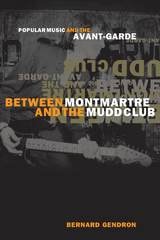
Between Montmartre and the Mudd Club
Popular Music and the Avant-GardeBernard Gendron
University of Chicago Press, 2002
When and how did popular music earn so much cultural capital? To find out, Bernard Gendron investigates five key historical moments when popular music and avant-garde art transgressed the rigid boundaries separating high and low culture to form friendly alliances. He begins at the end of the nineteenth century in Paris's Montmartre district, where cabarets showcased popular music alongside poetry readings in spaces decorated with modernist art works. Two decades later, Parisian poets and musicians "slumming" in jazz clubs assimilated jazz's aesthetics in their performances and compositions. In the bebop revolution in mid-1940s America, jazz returned the compliment by absorbing modernist devices and postures, in effect transforming itself into an avant-garde art form. Mid-1960s rock music, under the leadership of the Beatles, went from being reviled as vulgar music to being acclaimed as a cutting-edge art form. Finally, Gendron takes us to the Mudd Club in the late 1970s, where New York punk and new wave rockers were setting the aesthetic agenda for a new generation of artists.
Between Montmartre and the Mudd Club should be on the shelves of anyone interested in the intersections between high and low culture, art and music, or history and aesthetics.
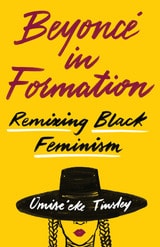
Beyoncé in Formation
Remixing Black FeminismBy Omise'eke Tinsley
University of Texas Press, 2018
Making headlines when it was launched in 2015, Omise’eke Tinsley’s undergraduate course “Beyoncé Feminism, Rihanna Womanism” has inspired students from all walks of life. In Beyoncé in Formation, Tinsley now takes her rich observations beyond the classroom, using the blockbuster album and video Lemonade as a soundtrack for vital new-millennium narratives.
Woven with candid observations about her life as a feminist scholar of African studies and a cisgender femme married to a trans spouse, Tinsley’s “Femme-onade” mixtape explores myriad facets of black women’s sexuality and gender. Turning to Beyoncé’s “Don’t Hurt Yourself,” Tinsley assesses black feminist critiques of marriage and then considers the models of motherhood offered in “Daddy Lessons,” interspersing these passages with memories from Tinsley’s multiracial family history. Her chapters on nontraditional bonds culminate in a discussion of contemporary LGBT politics through the lens of the internet-breaking video “Formation,” underscoring why Beyoncé’s black femme-inism isn’t only for ciswomen. From pleasure politics and the struggle for black women’s reproductive justice to the subtext of blues and country music traditions, the landscape in this tour is populated by activists and artists (including Loretta Lynn) and infused with vibrant interpretations of Queen Bey’s provocative, peerless imagery and lyrics.
In the tradition of Roxanne Gay’s Bad Feminist and Jill Lepore’s best-selling cultural histories, Beyoncé in Formation is the work of a daring intellectual who is poised to spark a new conversation about freedom and identity in America.
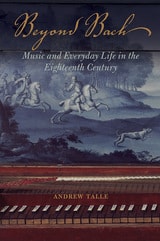
Beyond Bach
Music and Everyday Life in the Eighteenth CenturyAndrew Talle
University of Illinois Press, 2018
Eschewing the great composer style of music history, Andrew Talle takes us on a journey that looks at how ordinary people made music in Bach's Germany. Talle focuses in particular on the culture of keyboard playing as lived in public and private. As he ranges through a wealth of documents, instruments, diaries, account ledgers, and works of art, Talle brings a fascinating cast of characters to life. These individuals--amateur and professional performers, patrons, instrument builders, and listeners--inhabited a lost world, and Talle's deft expertise teases out the diverse roles music played in their lives and in their relationships with one another. At the same time, his nuanced re-creation of keyboard playing's social milieu illuminates the era's reception of Bach's immortal works.
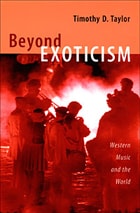
Beyond Exoticism
Western Music and the WorldTimothy D. Taylor
Duke University Press, 2007
Beginning with a focus on musical manifestations of colonialism and imperialism, Taylor discusses how the “discovery” of the New World and the development of an understanding of self as distinct from the other, of “here” as different from “there,” was implicated in the development of tonality, a musical system which effectively creates centers and margins. He describes how musical practices signifying nonwestern peoples entered the western European musical vocabulary and how Darwinian thought shaped the cultural conditions of early-twentieth-century music. In the era of globalization, new communication technologies and the explosion of marketing and consumption have accelerated the production and circulation of tropes of otherness. Considering western music produced under rubrics including multiculturalism, collaboration, hybridity, and world music, Taylor scrutinizes contemporary representations of difference. He argues that musical interpretations of the nonwestern other developed hundreds of years ago have not necessarily been discarded; rather they have been recycled and retooled.
Beyond Notation
The Music of Earle BrownRebecca Y. Kim, Editor
University of Michigan Press, 2017
Beyond the Bandstand
Paul Whiteman in American Musical CultureEdited by W. Anthony Sheppard
University of Illinois Press, 2024
The most successful bandleader of the 1920s, Paul Whiteman was an entertainment icon who played a major role in the mainstreaming of jazz. Whiteman and his band premiered Gershwin’s Rhapsody in Blue. Duke Ellington acknowledged his achievements. His astonishing ear for talent vaulted a who’s who of artists toward prominence. But Whiteman’s oversized presence eclipsed Black jazz musicians while his middlebrow music prompted later generations to jettison him from jazz history.
W. Anthony Sheppard’s collection of essays confronts the racial implications of Whiteman’s career. The contributors explore Whiteman’s broad impact on popular culture, tracking his work and influence in American marketing, animated films, the Black press, Hollywood, and the music publication industry, and following him behind the scenes with arrangers, into grand concert halls, across the Atlantic, into the courtroom, and on television.
Multifaceted and cutting-edge, Beyond the Bandstand explores the racial politics and artistic questions surrounding a controversial figure in popular music.
Contributors: Ryan Raul Bañagale, Stephanie Doktor, John Howland, Katherine M. Leo, Sarah Caissie Provost, W. Anthony Sheppard, Catherine Tackley, Elijah Wald, and Christi Jay Wells
Bhangra and Asian Underground
South Asian Music and the Politics of Belonging in BritainFalu Bakrania
Duke University Press, 2013

Bianca e Falliero, o sia Il Consiglio dei Tre
Melodramma in Two Acts by Felice RomaniGioachino Rossini
University of Chicago Press, 1996
Heavily butchered in later productions, Bianca e Falliero soon disappeared from the stage, but its finest pieces remained in concert repertory for half a century. The critical edition—the first publication of the full score—restores the original Milan version. An appendix offers Rossini's vocal variants for the two lead roles.
Biblical Families in Music
Conflict and Heterodoxy in Oratorios, 1670–1770Robert L. Kendrick
University of Chicago Press, 2025
Based to a great extent on the Old Testament, the largely Catholic musical-dramatic genre was popular in Italy, Austria, and southern Germany in the seventeenth and eighteenth centuries. Biblical Families in Music reveals how difficult stories of fratricide, child sacrifice, death, and forbidden love performed a didactic function in oratorios, teaching early modern audiences about piety and the rules of proper family life.
In the century after 1670, the heavily adapted tales of Abraham and Isaac, Cain and Abel, and the Egyptian slave Hagar and her son Ishmael were set to music by figures such as Alessandro Scarlatti and Antonio Sacchini and performed during Lent in churches and other sacred spaces for an audience of court nobility, clergy, and the urban patriciate. By examining the resonance of Catholic oratorios within predominantly upper-class social realities, the book broadens our cultural understanding of the early modern European family and underscores the centrality of family and familial relation to social position, devotional taste, and identity.
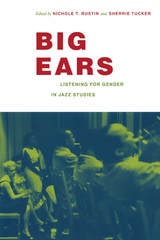
Big Ears
Listening for Gender in Jazz StudiesNichole T. Rustin and Sherrie Tucker, eds.
Duke University Press, 2008
Scholars of music, ethnomusicology, American studies, literature, anthropology, and cultural studies approach the question of gender in jazz from multiple perspectives. One contributor scrutinizes the tendency of jazz historiography to treat singing as subordinate to the predominantly male domain of instrumental music, while another reflects on her doubly inappropriate position as a female trumpet player and a white jazz musician and scholar. Other essays explore the composer George Russell’s Lydian Chromatic Concept as a critique of mid-twentieth-century discourses of embodiment, madness, and black masculinity; performances of “female hysteria” by Les Diaboliques, a feminist improvising trio; and the BBC radio broadcasts of Ivy Benson and Her Ladies’ Dance Orchestra during the Second World War. By incorporating gender analysis into jazz studies, Big Ears transforms ideas of who counts as a subject of study and even of what counts as jazz.
Contributors: Christina Baade, Jayna Brown, Farah Jasmine Griffin, Monica Hairston, Kristin McGee, Tracy McMullen, Ingrid Monson, Lara Pellegrinelli, Eric Porter, Nichole T. Rustin, Ursel Schlicht, Julie Dawn Smith, Jeffrey Taylor, Sherrie Tucker, João H. Costa Vargas
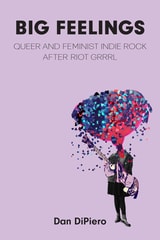
Big Feelings
Queer and Feminist Indie Rock After Riot GrrrlDan DiPiero
University of Michigan Press, 2025
By bringing listeners’ experiences into the analysis, DiPiero shows how indie rock feminisms have shifted since the 1990s, rejecting overt political messages in favor of sonic catharsis, and reflecting the complex, ambivalent feeling of being young while the world burns. In reprising the sounds of an alt-rock associated in public consciousness with white male pain, Big Feelings doubles down on the stereotypical association between femininity and emotionality to perform whole spectrums of feeling in varied states of overwhelm. In doing so, these artists draw attention to overlooked histories of women and queer musicians who have been forging indie rock all along, while also remaking how the music matters in the present.
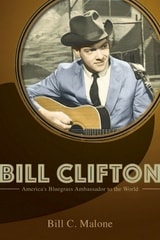
Bill Clifton
America's Bluegrass Ambassador to the WorldBill C Malone
University of Illinois Press, 2016
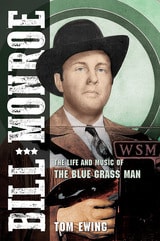
Bill Monroe
The Life and Music of the Blue Grass ManTom Ewing
University of Illinois Press, 2021
The Father of Bluegrass Music, Bill Monroe was a major star of the Grand Ole Opry for over fifty years; a member of the Country Music, Songwriters, and Rock and Roll Halls of Fame; and a legendary figure in American music. This authoritative biography sets out to examine his life in careful detail--to move beyond hearsay and sensationalism to explain how and why he accomplished so much.
Former Blue Grass Boy and longtime music journalist Tom Ewing draws on hundreds of interviews, his personal relationship with Monroe, and an immense personal archive of materials to separate the truth from longstanding myth. Ewing tells the story of the Monroe family's musical household and Bill's early career in the Monroe Brothers duo. He brings to life Monroe's 1940s heyday with the Classic Bluegrass Band, the renewed fervor for his music sparked by the folk revival of the 1960s, and his declining fortunes in the years that followed. Throughout, Ewing deftly captures Monroe's relationships and the personalities of an ever-shifting roster of band members while shedding light on his business dealings and his pioneering work with Bean Blossom and other music festivals.
Filled with a wealth of previously unknown details, Bill Monroe offers even the most devoted fan a deeper understanding of Monroe's towering achievements and timeless music.
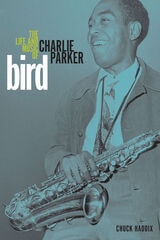
Bird
The Life and Music of Charlie ParkerChuck Haddix
University of Illinois Press, 2013
Birds of Fire
Jazz, Rock, Funk, and the Creation of FusionKevin Fellezs
Duke University Press, 2011
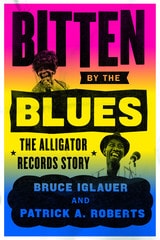
Bitten by the Blues
The Alligator Records StoryBruce Iglauer and Patrick A. Roberts
University of Chicago Press, 2018
Bitten by the Blues is Iglauer’s memoir of a life immersed in the blues—and the business of the blues. No one person was present at the creation of more great contemporary blues music than Iglauer: he produced albums by Koko Taylor, Albert Collins, Professor Longhair, Johnny Winter, Lonnie Mack, Son Seals, Roy Buchanan, Shemekia Copeland, and many other major figures. In this book, Iglauer takes us behind the scenes, offering unforgettable stories of those charismatic musicians and classic sessions, delivering an intimate and unvarnished look at what it’s like to work with the greats of the blues. It’s a vivid portrait of some of the extraordinary musicians and larger-than-life personalities who brought America’s music to life in the clubs of Chicago’s South and West Sides. Bitten by the Blues is also an expansive history of half a century of blues in Chicago and around the world, tracing the blues recording business through massive transitions, as a genre of music originally created by and for black southerners adapted to an influx of white fans and musicians and found a worldwide audience.
Most of the smoky bars and packed clubs that fostered the Chicago blues scene have long since disappeared. But their soul lives on, and so does their sound. As real and audacious as the music that shaped it, Bitten by the Blues is a raucous journey through the world of Genuine Houserockin’ Music.

Bitter Music
Collected Journals, Essays, Introductions, and LibrettosHarry Partch
University of Illinois Press, 1991
Bitter Music collects writings by one of the twentieth century's great musical iconoclasts. Rejecting the equal temperament and concert traditions that have dominated western music, Harry Partch adopted the pure intervals of just intonation and devised a 43-tone-to-the-octave scale, which in turn forced him into inventing numerous musical instruments. His compositions realize his ideal of a corporeal music that unites music, dance, and theater.
Winner of the ASCAP-Deems Taylor Award, Bitter Music includes two journals kept by Partch, one while wandering the West Coast during the Depression and the other as he hiked the rugged northern California coastline. It also includes Partch's essays on and discussions of his own compositions, as well as librettos and scenarios for six major narrative/dramatic works.
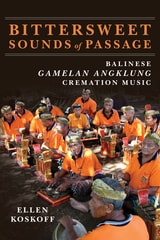
Bittersweet Sounds of Passage
Balinese Gamelan Angklung Cremation MusicEllen Koskoff
University of Illinois Press, 2025
Koskoff examines the history, cultural significance, and musical structures of contemporary gamelan angklung cremation music through the lens of three intertwined stories: existing scholarship on this music, written mostly by Western composers and scholars; the views of those performing and experiencing the music who regard it as dharma--ritual obligation, a basic concept in Balinese Hinduism; and the music itself, with a musical analysis focusing on changes in rasa--feeling, flavor and musical flow.
A journey inside a tradition, Bittersweet Sounds of Passage reveals the overlooked music of an important ritual in Balinese village life.
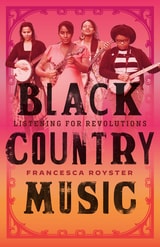
Black Country Music
Listening for RevolutionsFrancesca T. Royster
University of Texas Press, 2022
2023 Ralph J. Gleason Music Book Award, Rock & Roll Hall of Fame
2024 Woody Guthrie Book Award, International Association for the Study of Popular Music-US Branch (IASPM-US)
2023 Certificate of Merit, ARSC Awards for Excellence in Historical Recorded Sound Research, Association for Recorded Sound Collections
2023 The Judy Tsou Critical Race Studies Award, American Musicological Society
How Black musicians have changed the country music landscape and brought light to Black creativity and innovation.
After a century of racist whitewashing, country music is finally reckoning with its relationship to Black people. In this timely work—the first book on Black country music by a Black writer—Francesca Royster uncovers the Black performers and fans, including herself, who are exploring the pleasures and possibilities of the genre.
Informed by queer theory and Black feminist scholarship, Royster’s book elucidates the roots of the current moment found in records like Tina Turner’s first solo album, Tina Turns the Country On! She reckons with Black “bros” Charley Pride and Darius Rucker, then chases ghosts into the future with Valerie June. Indeed, it is the imagination of Royster and her artists that make this music so exciting for a genre that has long been obsessed with the past. The futures conjured by June and others can be melancholy, and are not free of racism, but by centering Black folk Royster begins to understand what her daughter hears in the banjo music of Our Native Daughters and the trap beat of Lil Nas X’s “Old Town Road.” A Black person claiming country music may still feel a bit like a queer person coming out, but, collectively, Black artists and fans are changing what country music looks and sounds like—and who gets to love it.
Black Diamond Queens
African American Women and Rock and RollMaureen Mahon
Duke University Press, 2020
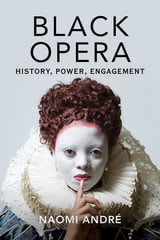
Black Opera
History, Power, EngagementNaomi Andre
University of Illinois Press, 2018
Black Pearls
Blues Queens of the 1920sDaphne Duval Harrison
Rutgers University Press, 1990
Blues music spawned legendary performers whose influence has been felt in many musical forms here and around the world. Until now the important role of the great women blues singers has largely gone unexplored. This book tells of the cultural and social impact of the blues during the 1920s when the genre was dominated by women, both on stage and on record. Harrison (Afro-American Studies Department, University of Maryland) writes with authority, focusing particularly on Sippie Wallace, Edith Wilson, Victoria Spivey, and Alberta Hunter as she analyzes the music and the collective black experience out of which it grew. A significant book, particularly for collections of music history, black studies, and women's studies. -- Library Journal
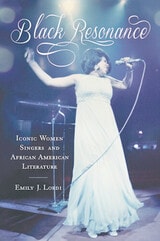
Black Resonance
Iconic Women Singers and African American LiteratureLordi, Emily J.
Rutgers University Press, 2013
Ever since Bessie Smith’s powerful voice conspired with the “race records” industry to make her a star in the 1920s, African American writers have memorialized the sounds and theorized the politics of black women’s singing. In Black Resonance, Emily J. Lordi analyzes writings by Richard Wright, Ralph Ellison, James Baldwin, Gayl Jones, and Nikki Giovanni that engage such iconic singers as Bessie Smith, Billie Holiday, Mahalia Jackson, and Aretha Franklin.
Focusing on two generations of artists from the 1920s to the 1970s, Black Resonance reveals a musical-literary tradition in which singers and writers, faced with similar challenges and harboring similar aims, developed comparable expressive techniques. Drawing together such seemingly disparate works as Bessie Smith’s blues and Richard Wright’s neglected film of Native Son, Mahalia Jackson’s gospel music and Ralph Ellison’s Invisible Man, each chapter pairs one writer with one singer to crystallize the artistic practice they share: lyricism, sincerity, understatement, haunting, and the creation of a signature voice. In the process, Lordi demonstrates that popular female singers are not passive muses with raw, natural, or ineffable talent. Rather, they are experimental artists who innovate black expressive possibilities right alongside their literary peers.
The first study of black music and literature to centralize the music of black women, Black Resonance offers new ways of reading and hearing some of the twentieth century’s most beloved and challenging voices.
Black Song
A Manifesto for Music and JusticeThe Singing Justice Collective
University of Michigan Press, 2026
Black Song: A Manifesto for Music and Justice centers acts of musical creation and performance that emerge from Black experiences, affirm Black humanity, and connect to Black communities. Written for scholars, performers, and music fans, the book shows that learning about Black Song and its creation is central to understanding both American music and Black American experiences. By providing a more inclusive, just, and accurate understanding of the art of Black Song, the authors disrupt and expand musical canons.
Black Song shines a spotlight on the response, resistance, and community building that occur in musical creation in Black spaces, past and present. The authors explore histories and performances across musical styles—from classical to country to hip-hop to opera to jazz to gospel to many others. They offer practical advice on how to perform, research, teach, and listen to this music. As they center Black Song in American history and music, they show that this music is a valuable tool for promoting productive and healing dialogues about race, justice, and history. Encouraging empathy and understanding, Black Song shows how to approach Black music and spaces with knowledge and respect.
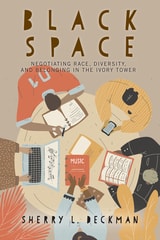
Black Space
Negotiating Race, Diversity, and Belonging in the Ivory TowerSherry L. Deckman
Rutgers University Press, 2022
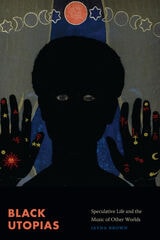
Black Utopias
Speculative Life and the Music of Other WorldsJayna Brown
Duke University Press, 2021
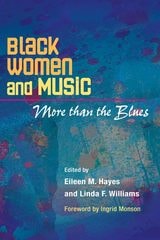
Black Women and Music
More Than the BluesEdited by Eileen M. Hayes and Linda F. Williams
University of Illinois Press, 2006
Individual essays concern the experiences of black women in classical music and in contemporary blues, the history of black female gospel-inflected voices in the Broadway musical, and "hip-hop feminism" and its complications. Focusing on under-examined contexts, authors introduce readers to the work of a prominent gospel announcer, women’s music festivals (predominantly lesbian), and to women’s involvement in an early avant-garde black music collective. In contradistinction to a compilation of biographies, this volume critically illuminates themes of black authenticity, sexual politics, access, racial uplift through music, and the challenges of writing (black) feminist biography. Black Women and Music is a strong reminder that black women have been and are both social actors and artists contributing to African American thought.
Black and Blur
Fred Moten
Duke University Press, 2017
In Black and Blur—the first volume in his sublime and compelling trilogy consent not to be a single being—Fred Moten engages in a capacious consideration of the place and force of blackness in African diaspora arts, politics, and life. In these interrelated essays, Moten attends to entanglement, the blurring of borders, and other practices that trouble notions of self-determination and sovereignty within political and aesthetic realms. Black and Blur is marked by unlikely juxtapositions: Althusser informs analyses of rappers Pras and Ol' Dirty Bastard; Shakespeare encounters Stokely Carmichael; thinkers like Kant, Adorno, and José Esteban Muñoz and artists and musicians including Thornton Dial and Cecil Taylor play off each other. Moten holds that blackness encompasses a range of social, aesthetic, and theoretical insurgencies that respond to a shared modernity founded upon the sociological catastrophe of the transatlantic slave trade and settler colonialism. In so doing, he unsettles normative ways of reading, hearing, and seeing, thereby reordering the senses to create new means of knowing.
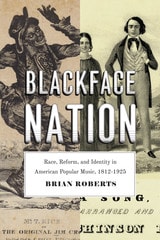
Blackface Nation
Race, Reform, and Identity in American Popular Music, 1812-1925Brian Roberts
University of Chicago Press, 2017
The Hutchinson Family Singers, the Northeast’s most popular middle-class singing group during the mid-nineteenth century, is perhaps the best example of the first strain of music. The group’s songs expressed an American identity rooted in communal values, with lyrics focusing on abolition, women’s rights, and socialism. Blackface minstrelsy, on the other hand, emerged out of an audience-based coalition of Northern business elites, Southern slaveholders, and young, white, working-class men, for whom blackface expressed an identity rooted in individual self-expression, anti-intellectualism, and white superiority. Its performers embodied the love-crime version of racism, in which vast swaths of the white public adored African Americans who fit blackface stereotypes even as they used those stereotypes to rationalize white supremacy. By the early twentieth century, the blackface version of the American identity had become a part of America’s consumer culture while the Hutchinsons’ songs were increasingly regarded as old-fashioned. Blackface Nation elucidates the central irony in America’s musical history: much of the music that has been interpreted as black, authentic, and expressive was invented, performed, and enjoyed by people who believed strongly in white superiority. At the same time, the music often depicted as white, repressed, and boringly bourgeois was often socially and racially inclusive, committed to reform, and devoted to challenging the immoralities at the heart of America’s capitalist order.
Blackness in Opera
Edited by Naomi André, Karen M. Bryan, and Eric Saylor
University of Illinois Press, 2012
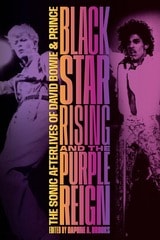
Blackstar Rising and the Purple Reign
The Sonic Afterlives of David Bowie and PrinceDaphne A. Brooks, editor
Duke University Press, 2026
Contributors: Christine Bacareza Balance, Emma Balázs, Victoria Broackes, Daphne A. Brooks, Daphne Carr, Andreana Clay, Ashon Crawley, Jonathan Flatley, Nicole R. Fleetwood, Lynell George, Farah Jasmine Griffin, Michelle Habell-Pallán, Jack Halberstam, Matthew Frye Jacobson, Kara Keeling, Jason King, Josh Kun, Kathryn Lofton, Emily J. Lordi, Eric Lott, Maureen Mahon, Greil Marcus, Geoffrey Marsh, Michaelangelo Matos, Tiffany Naiman, Tavia Nyong'o, Ann Powers, Sonnet Retman, Morgan Rhodes, Francesca T. Royster, Gustavus Stadler, Jacqueline Stewart, Greg Tate, Karen Tongson, Van My Truong, Alexandra T. Vazquez, Michael E. Veal, Shane Vogel, Gayle Wald, Oliver Wang, Alexander G. Weheliye, Richard Yarborough, Kristen Zschomler
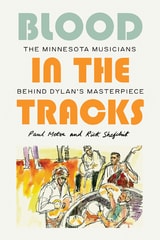
Blood in the Tracks
The Minnesota Musicians behind Dylan's MasterpiecePaul Metsa
University of Minnesota Press, 2023
The story of the Minneapolis musicians who were unexpectedly summoned to re-record half of the songs on Bob Dylan's most acclaimed album
When Bob Dylan recorded Blood on the Tracks in New York in September 1974, it was a great album. But it was not the album now ranked by Rolling Stone as one of the ten best of all time. “When something’s not right, it’s wrong,” as Dylan puts it in “You’re Gonna Make Me Lonesome When You Go”—and something about that original recording led him to a studio in his native Minnesota to re-record five songs, including “Idiot Wind” and “Tangled Up in Blue.” Six Minnesota musicians participated in that two-night recording session at Sound 80, bringing their unique sound to some of Dylan’s best-known songs—only to have their names left off the album and their contribution unacknowledged for more than forty years. This book tells the story of those two nights in Minneapolis, introduces the musicians who gave the album so much of its ultimate form and sound, and describes their decades-long fight for recognition.
Blood in the Tracks takes readers behind the scenes with these “mystery” Minnesota musicians: twenty-one-year-old mandolin virtuoso Peter Ostroushko; drummer Bill Berg and bass player Billy Peterson, the house rhythm section at Sound 80; progressive rock keyboardist Gregg Inhofer; guitarist Chris Weber, who owned The Podium guitar shop in Dinkytown; and Kevin Odegard, whose own career as a singer-songwriter had paralleled Dylan’s until he had to take a job as a railroad brakeman to make ends meet. Through in-depth interviews and assiduous research, Paul Metsa and Rick Shefchik trace the twists of fate that brought these musicians together and then set them on different paths in its wake: their musical experiences leading up to the December 1974 recording session, the divergent careers that followed, and the painstaking work required to finally obtain the official credit that they were due.
A rare look at the making—or remaking—of an all-time great album, and a long overdue recognition of the musicians who made it happen, Blood in the Tracks brings to life a transformative moment in the history of rock and roll, for the first time in its true context and with its complete cast of players.
Blow Yourself Up
A NovelAnkur Thakkar
Northwestern University Press, 2026
A story of first love across cities spanning the decade that transformed the internet
In the halls of an elite East Coast high school, Arjun and Payal fall in love as the world begins to tilt toward the digital. Over the next eight years, their trajectories diverge as sharply as the fractured internet itself. Payal ascends to the dizzying, dopamine-fueled heights of New York’s influencer economy, finding fame on Boost, a looping video app that is as rewarding as it is demanding. Meanwhile, in a cavernous office in Chicago, Arjun, a musician whose dreams have quieted, now cleans up the same platform’s debris, moderating the internet’s darkest videos. When a brutal act of political violence against a beloved musician goes viral, this rip in reality forces the pair to confront the motivations of the platforms they inhabit. A sharp exploration of creative ambition and the multifarious nature of identity, this is a story of love in the time of infinite scroll and a look at what we sacrifice to be seen.
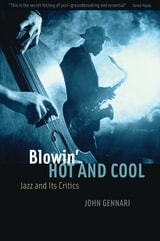
Blowin' Hot and Cool
Jazz and Its CriticsJohn Gennari
University of Chicago Press, 2006
In Blowin’ Hot and Cool, John Gennari provides a definitive history of jazz criticism from the 1920s to the present. The music itself is prominent in his account, as are the musicians—from Louis Armstrong and Duke Ellington to Charlie Parker, John Coltrane, Roscoe Mitchell, and beyond. But the work takes its shape from fascinating stories of the tradition’s key critics—Leonard Feather, Martin Williams, Whitney Balliett, Dan Morgenstern, Gary Giddins, and Stanley Crouch, among many others. Gennari is the first to show the many ways these critics have mediated the relationship between the musicians and the audience—not merely as writers, but in many cases as producers, broadcasters, concert organizers, and public intellectuals as well.
For Gennari, the jazz tradition is not so much a collection of recordings and performances as it is a rancorous debate—the dissonant noise clamoring in response to the sounds of jazz. Against the backdrop of racial strife, class and gender issues, war, and protest that has defined the past seventy-five years in America, Blowin’ Hot and Cool brings to the fore jazz’s most vital critics and the role they have played not only in defining the history of jazz but also in shaping jazz’s significance in American culture and life.
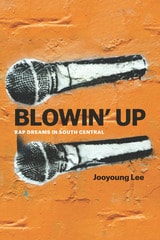
Blowin' Up
Rap Dreams in South CentralJooyoung Lee
University of Chicago Press, 2016
While most books on rap are written from the perspective of listeners and the market, Blowin’ Up looks specifically at the creative side of rappers. As Lee shows, learning how to rap involves a great deal of discipline, and it takes practice to acquire the necessary skills to put on a good show. Along with Lee—who is himself a pop-locker—we watch as the rappers at Project Blowed learn the basics, from how to hold a microphone to how to control their breath amid all those words. And we meet rappers like E. Crimsin, Nocando, VerBS, and Flawliss as they freestyle and battle with each other. For the men at Project Blowed, hip hop offers a creative alternative to the gang lifestyle, substituting verbal competition for physical violence, and provides an outlet for setting goals and working toward them.
Engagingly descriptive and chock-full of entertaining personalities and real-life vignettes, Blowin’ Up not only delivers a behind-the-scenes view of the underground world of hip hop, but also makes a strong case for supporting the creative aspirations of young, urban, black men, who are often growing up in the shadow of gang violence and dead-end jobs.
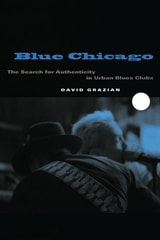
Blue Chicago
The Search for Authenticity in Urban Blues ClubsDavid Grazian
University of Chicago Press, 2003
For any music lover, that image captures the essence of an authentic experience of the blues. In Blue Chicago, David Grazian takes us inside the world of contemporary urban blues clubs to uncover how such images are manufactured and sold to music fans and audiences. Drawing on countless nights in dozens of blues clubs throughout Chicago, Grazian shows how this quest for authenticity has transformed the very shape of the blues experience. He explores the ways in which professional and amateur musicians, club owners, and city boosters define authenticity and dish it out to tourists and bar regulars. He also tracks the changing relations between race and the blues over the past several decades, including the increased frustrations of black musicians forced to slog through the same set of overplayed blues standards for mainly white audiences night after night. In the end, Grazian finds that authenticity lies in the eye of the beholder: a nocturnal fantasy to some, an essential way of life to others, and a frustrating burden to the rest.
From B.L.U.E.S. and the Checkerboard Lounge to the Chicago Blues Festival itself, Grazian's gritty and often sobering tour in Blue Chicago shows us not what the blues is all about, but why we care so much about that question.
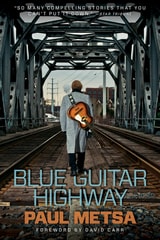
Blue Guitar Highway
Paul Metsa
University of Minnesota Press, 2011
This is a musician’s tale: the story of a boy growing up on the Iron Range, playing his guitar at family gatherings, coming of age in the psychedelic seventies, and honing his craft as a pro in Minneapolis, ground zero of American popular music in the mid-eighties. “There is a drop of blood behind every note I play and every word I write,” Paul Metsa says. And it’s easy to believe, as he conducts us on a musical journey across time and country, navigating switchbacks, detours, dead ends, and providing us the occasional glimpse of the promised land on the blue guitar highway.
His account captures the thrill of the Twin Cities when acts like the Replacements, Husker Dü, and Prince were remaking pop music. It takes us right onto the stages he shared with stars like Billy Bragg, Pete Seeger, and Bruce Springsteen. And it gives us a close-up, dizzying view of the roller-coaster ride that is the professional musician’s life, played out against the polarizing politics and intimate history of the past few decades of American culture. Written with a songwriter’s sense of detail and ear for poetry, Paul Metsa’s book conveys all the sweet absurdity, dry humor, and passion for the language of music that has made his story sing.
Blue Nippon
Authenticating Jazz in JapanE. Taylor Atkins
Duke University Press, 2001
Engagingly told through the voices of many musicians, Blue Nippon explores the true and legitimate nature of Japanese jazz. Atkins peers into 1920s dancehalls to examine the Japanese Jazz Age and reveal the origins of urban modernism with its new set of social mores, gender relations, and consumer practices. He shows how the interwar jazz period then became a troubling symbol of Japan’s intimacy with the West—but how, even during the Pacific war, the roots of jazz had taken hold too deeply for the “total jazz ban” that some nationalists desired. While the allied occupation was a setback in the search for an indigenous jazz sound, Japanese musicians again sought American validation. Atkins closes out his cultural history with an examination of the contemporary jazz scene that rose up out of Japan’s spectacular economic prominence in the 1960s and 1970s but then leveled off by the 1990s, as tensions over authenticity and identity persisted.
With its depiction of jazz as a transforming global phenomenon, Blue Nippon will make enjoyable reading not only for jazz fans worldwide but also for ethnomusicologists, and students of cultural studies, Asian studies, and modernism.
Blue Notes in Black and White
Photography and JazzBenjamin Cawthra
University of Chicago Press, 2011
Blue Rhythm Fantasy
Big Band Jazz Arranging in the Swing EraJohn Wriggle
University of Illinois Press, 2016
Blue Rhythm Fantasy traces the extraordinary career of arranger Chappie Willet--a collaborator of Louis Armstrong, Cab Calloway, Duke Ellington, Gene Krupa, and many others--to revisit legendary Swing Era venues and performers from Harlem to Times Square. Wriggle's insightful music analyses of big band arranging techniques explore representations of cultural modernism, discourses on art and commercialism, conceptions of race and cultural identity, music industry marketing strategies, and stage entertainment variety genres.
Drawing on archives, obscure recordings, untapped sources in the African American press, and interviews with participants, Blue Rhythm Fantasy is a long-overdue study of the arranger during this dynamic era of American music history.
Bluegrass Ambassadors
The McLain Family Band in Appalachia and the WorldPaul O. Jenkins
West Virginia University Press, 2020
Interpreting the band’s diverse repertoire as both a source of its popularity and a reason for its exclusion from the bluegrass pantheon, Paul Jenkins advances subtle arguments about genre, criticism, and audience. Bluegrass Ambassadors analyzes the McLains’ compositions, recordings, and performances, and features a complete discography.
Bluegrass Bluesman
A MemoirJosh Graves; Edited by Fred Bartenstein; Foreword by Neil Rosenberg
University of Illinois Press, 2012
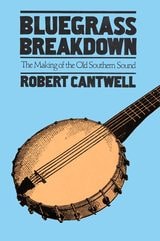
Bluegrass Breakdown
The Making of the Old Southern SoundRobert Cantwell
University of Illinois Press, 1984
Bluegrass Breakdown is an expansive foray into the makings of bluegrass. More than any other book of its kind, it gets to the roots of a uniquely American music that is deeply linked to working-class ideals and romanticism.
Robert Cantwell engages the historical background, commercial origins, internal workings, and cultural and social significance of popular, old-time music to provide a unique musicological and sociological perspective. Well-versed in the history of the tradition and equally as interested in those who listen to the music as in those who create it, Cantwell links bluegrass to its hillbilly roots in Appalachia and shows how the music was transformed by African American folk traditions, the influence of jazz, ragtime, blues, and country music, and the growth of radio and recording technology.
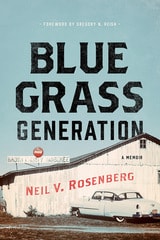
Bluegrass Generation
A MemoirNeil V Rosenberg
University of Illinois Press, 2018
Rosenberg's memoir shines a light on the changing bluegrass scene of the early 1960s. Already a fan and aspiring musician, his appetite for banjo music quickly put him on the Jamboree stage. Rosenberg eventually played with Monroe and spent four months managing the Jamboree. Those heights gave him an eyewitness view of nothing less than bluegrass's emergence from the shadow of country music into its own distinct art form. As the likes of Bill Keith and Del McCoury played, Rosenberg watched Monroe begin to share a personal link to the music that tied audiences to its history and his life--and helped turn him into bluegrass's foundational figure.
An intimate look at a transformative time, Bluegrass Generation tells the inside story of how an American musical tradition came to be.
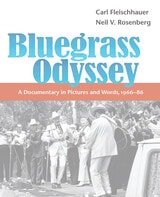
Bluegrass Odyssey
A Documentary in Pictures and Words, 1966-86Carl Fleischhauer and Neil V. Rosenberg
University of Illinois Press, 2006
Bluegrass
A HISTORY 20TH ANNIVERSARY EDITIONNeil V. Rosenberg
University of Illinois Press, 2005
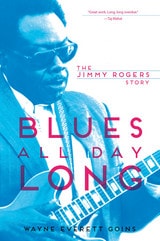
Blues All Day Long
The Jimmy Rogers StoryWayne Everett Goins, foreword by Kim Wilson
University of Illinois Press, 2014
In Blues All Day Long, Wayne Everett Goins mines seventy-five hours of interviews with Rogers' family, collaborators, and peers to follow a life spent in the blues. Goins' account takes Rogers from recording Chess classics and barnstorming across the South to a late-in-life renaissance that included new music, entry into the Blues Hall of Fame, and high profile tours with Eric Clapton and the Rolling Stones. Informed and definitive, Blues All Day Long fills a gap in twentieth century music history with the story of one of the blues' eminent figures and one of the genre's seminal bands.
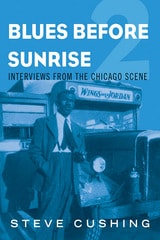
Blues Before Sunrise 2
Interviews from the Chicago SceneSteve Cushing
University of Illinois Press, 2019
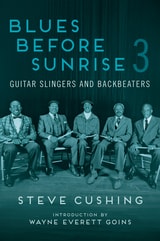
Blues Before Sunrise 3
Guitar Slingers and BackbeatersSteve Cushing. Introduction by Wayne Everett Goins
University of Illinois Press, 2025
Steve Cushing’s third volume of interviews from Blues Before Sunrise puts fans face-to-face with music legends and industry figures. The volume kicks off with a roundtable featuring drumming all-stars Earl Phillips, S.P. Leary, Odie Payne, Clifton James, and Fred Below discussing their lives and craft. Cushing segues to one-on-one interviews with Howlin’ Wolf sideman Phillips; Leary, a fellow Wolf alum and player with Sonny Boy Williamson II; Payne, known for his kick drum technique; longtime Muddy Waters drummer Willie “Big Eyes” Smith; next-generation standard bearer and session mainstay Casey Jones; and King Records house drummer Phillip Paul.
Interviews with guitarists include talks with Honeyboy Edwards, whose friendships with innumerable Chicago blues legends (and Robert Johnson) predated the Great Migration; jazz player turned bluesman Guitar Shorty; and figures like Texas native Roy Gaines, Johnny Heartsman of Oakland, and Memphis-born Floyd Murphy. A final section offers interviews with vocalists, record label founders, and other figures. Music scholar Wayne Everett Goins provides an introduction on blues history, blues style, and the careers of the featured artists.
Interviews: Joel Dorn, Honeyboy Edwards, Slim Gaillard, Roy Gaines, Johnny Heartsman, Franz Jackson, Casey Jones, S.P. Leary, Floyd Murphy, Jimmy “T-99” Nelson, Johnny Parth, Phillip Paul, Odie Payne, Earl Phillips, Art Sheridan, Guitar Shorty, Willie “Big Eyes” Smith, and Norvel Taborn