Results by title
1668 books match the query 'Popular culture' and 87 start with b
Blow the Candle Out
"Unprintable" Ozark Folksongs and Folklore, Volume II, Folk Rhymes and Other LoreVance Randolph
University of Arkansas Press, 1992
<em>Roll Me in Your Arms</em>, Volume I of “Unprintable” Ozark Folksongs and Folklore, includes 180 unexpurgated songs collected by Randolph with tunes transcribed from the original singers. Volume II, <em><a href="https://wordpressua.uark.edu/uapress/product/blow-the-candle-out/">Blow the Candle Out</a></em>, contains rhymes and songs without music as well as other unexpurgated Ozark folk materials, including children’s lore, elements in speech, graffiti, riddles, dance calls, and beliefs.
G. Legman’s painstaking and patient editing, annotating, and crossreferencing richly complement the Randolph collection. The result is a look into a previously neglected area in the study of folksong and folklore in the Ozarks and further evidence of Randolph’s preeminence in the field.
The late Vance Randolph lived in the Ozark Mountains from 1920 until his death in 1980. Although he taught folklore at the University of Arkansas in Fayetteville, he is best remembered for his many years of field research resulting in the national bestseller <em>Pissing in the Snow & Other Ozark Folktales</em> and more than a dozen other books on American folklore.
Blue Chicago
The Search for Authenticity in Urban Blues ClubsDavid Grazian
University of Chicago Press, 2003
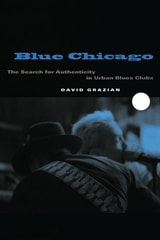
For any music lover, that image captures the essence of an authentic experience of the blues. In Blue Chicago, David Grazian takes us inside the world of contemporary urban blues clubs to uncover how such images are manufactured and sold to music fans and audiences. Drawing on countless nights in dozens of blues clubs throughout Chicago, Grazian shows how this quest for authenticity has transformed the very shape of the blues experience. He explores the ways in which professional and amateur musicians, club owners, and city boosters define authenticity and dish it out to tourists and bar regulars. He also tracks the changing relations between race and the blues over the past several decades, including the increased frustrations of black musicians forced to slog through the same set of overplayed blues standards for mainly white audiences night after night. In the end, Grazian finds that authenticity lies in the eye of the beholder: a nocturnal fantasy to some, an essential way of life to others, and a frustrating burden to the rest.
From B.L.U.E.S. and the Checkerboard Lounge to the Chicago Blues Festival itself, Grazian's gritty and often sobering tour in Blue Chicago shows us not what the blues is all about, but why we care so much about that question.
Bluegrass Odyssey
A Documentary in Pictures and Words, 1966-86Carl Fleischhauer and Neil V. Rosenberg
University of Illinois Press, 2006
Blues Music in the Sixties
A Story in Black and WhiteUlrich Adelt
Rutgers University Press, 2010
In the 1960s, within the larger context of the civil rights movement and the burgeoning counterculture, the blues changed from black to white in its production and reception, as audiences became increasingly white. Yet, while this was happening, blackness--especially black masculinity--remained a marker of authenticity. Crossing color lines and mixing the beats of B.B. King, Eric Clapton, and Janis Joplin; the Newport Folk Festival and the American Folk Blues Festival; and publications such as Living Blues, Ulrich Adelt discusses these developments, including the international aspects of the blues. He highlights the performers and venues that represented changing racial politics and addresses the impact and involvement of audiences and cultural brokers.
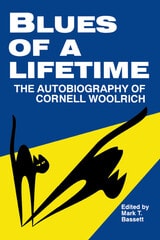
Blues of a Lifetime
Autobiography of Cornell WoolrichEdited by Mark T. Bassett
University of Wisconsin Press, 1991
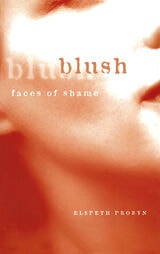
Blush
Faces of ShameElspeth Probyn
University of Minnesota Press, 2005
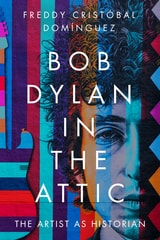
Bob Dylan in the Attic
The Artist as HistorianFreddy Cristóbal Domínguez
University of Massachusetts Press, 2022
Bob Dylan is an iconic American artist, whose music and performances have long reflected different musical genres and time periods. His songs tell tales of the Civil War, harken back to 1930s labor struggles, and address racial violence at the height of the civil rights movement, helping listeners to think about history, and history making, in new ways. While Dylan was warned by his early mentor, Dave Van Ronk, that, “You’re just going to be a history book writer if you do those things. An anachronism,” the musician has continued to traffic in history and engage with a range of source material—ancient and modern—over the course of his career.
In this beautifully crafted book, Freddy Cristóbal Domínguez makes a provocative case for Dylan as a historian, offering a deep consideration of the musician’s historical influences and practices. Utilizing interviews, speeches, and the close analysis of lyrics and live performances, Bob Dylan in the Attic is the first book to consider Dylan’s work from the point of view of historiography.
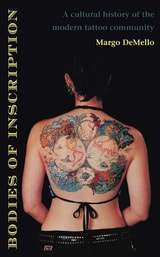
Bodies of Inscription
A Cultural History of the Modern Tattoo CommunityMargo DeMello
Duke University Press, 2004
Community publications, tattoo conventions, articles in popular magazines, and DeMello’s numerous interviews illustrate the interplay between class, culture, and history that orchestrated a shift from traditional Americana and biker tattoos to new forms using Celtic, tribal, and Japanese images. DeMello’s extensive interviews reveal the divergent yet overlapping communities formed by this class-based, American-style repackaging of the tattoo. After describing how the tattoo has moved from a mark of patriotism or rebellion to a symbol of exploration and status, the author returns to the predominantly middle-class movement that celebrates its skin art as spiritual, poetic, and self-empowering. Recognizing that the term “community” cannot capture the variations and class conflict that continue to thrive within the larger tattoo culture, DeMello finds in the discourse of tattooed people and their artists a new and particular sense of community and explores the unexpected relationship between this discourse and that of other social movements.
This ethnography of tattooing in America makes a substantive contribution to the history of tattooing in addition to relating how communities form around particular traditions and how the traditions themselves change with the introduction of new participants. Bodies of Inscription will have broad appeal and will be enjoyed by readers interested in cultural studies, American studies, sociology, popular culture, and body art.

Body Love
The Amazing Career of Bernarr MacfaddenWilliam R. Hunt
University of Wisconsin Press, 1989
Bernarr Macfadden (1868–1955) entertained and instructed Americans for decades. He championed physical exercise, fasting, and diet reform and was the relentless scourge of established doctors. He presented his views in Physical Culture, a popular magazine featuring photographs of strong men and healthy women and articles promoting the healthy life. While some critics derided him as a health nut, no one could dispute his genius as a magazine publisher. He established the world’s greatest magazine publishing empire through the innovation of such popular publications as True Story, the first confession magazine; True Detective; and many others.
Body Thoughts
Andrew J. Strathern
University of Michigan Press, 1996
Bold! Daring! Shocking! True!
A History of Exploitation Films, 1919-1959Eric Schaefer
Duke University Press, 1999
Bold! Daring! Shocking! True! is a meticulously researched, interdisciplinary study that is informed by a wide range of sources—including both mainstream and industry newspapers and periodicals, archival accounts, personal interviews, and the films themselves. Schaefer begins by exploring the unique mode of production of exploitation movies, their distribution, and the outrageous exhibition practices that were rooted in the traditions of sideshows and carnivals. His close analysis of dozens of films, such as The Road to Ruin, Modern Motherhood, One Way Ticket to Hell, and The Wages of Sin demonstrates that these films were more than simply “bad” movies. By situating exploitation films in a historical context and organizing them according to the social problems they addressed, Schaefer shows how they evolved during a period of forty years and how, during that time, they shaped public policies and attitudes. Finally, he focuses on the changes in the postwar American film industry that led to the decline of the classical exploitation film and set the stage for the rise of “sexploitation” in the 1960s.
Engagingly written, illustrated with rare photographs, posters, production stills, and ad slicks, and offering a full filmography, Bold! Daring! Shocking! True! reveals a forgotten side of film history and American culture. It will delight and inform those interested in film history, cultural studies, American studies and history, and the many fans of exploitation films.
Bollywood’s New Woman
Liberalization, Liberation, and Contested BodiesMegha Anwer
Rutgers University Press, 2021

Border Spaces
Visualizing the U.S.-Mexico FronteraEdited by Katherine G. Morrissey and John-Michael H. Warner
University of Arizona Press, 2018
In Border Spaces, Katherine G. Morrissey, John-Michael H. Warner, and other essayists build on the insights of border dwellers, or fronterizos, and draw on two interrelated fields—border art history and border studies. The editors engage in a conversation on the physical landscape of the border and its representations through time, art, and architecture.
The volume is divided into two linked sections—one on border histories of built environments and the second on border art histories. Each section begins with a “conversation” essay—co-authored by two leading interdisciplinary scholars in the relevant fields—that weaves together the book’s thematic questions with the ideas and essays to follow.
Border Spaces is prompted by art and grounded in an academy ready to consider the connections between art, land, and people in a binational region.
Contributors
Maribel Alvarez
Geraldo Luján Cadava
Amelia Malagamba-Ansótegui
Mary E. Mendoza
Sarah J. Moore
Katherine G. Morrissey
Margaret Regan
Rebecca M. Schreiber
Ila N. Sheren
Samuel Truett
John-Michael H. Warner
Borderless Fashion Practice
Contemporary Fashion in the Metamodern AgeVanessa Gerrie
Rutgers University Press, 2023
Boston Mass-Mediated
Urban Space and Culture in the Digital AgeStanley Corkin
University of Massachusetts Press, 2024
In the mid-nineteenth century, Boston fashioned itself as a global hub. By the early 1970s, it was barely a dot on the national picture. It had gained a reputation as a decaying city rife with crime and dysfunctional politics, as well as decidedly retrograde race relations, prominently exemplified by white resistance to school integration. Despite this historical ebb in its national and international presence, it still possessed the infrastructure—superb educational institutions such as Harvard and MIT, world-class sports teams like the Celtics and Red Sox, powerful media outlets like The Boston Globe, and extensive shipping capacity—required to eventually thrive in an age of global trade and mass communication.
In Boston Mass-Mediated, Stanley Corkin explores the power of mass media to define a place. He examines the tensions between the emergent and prosperous city of the late twentieth and early twenty-first centuries and its representation in a range of media genres such as news journalism, professional sports broadcasting, and popular films like Mystic River and The Departed. This mass media, with its ever-increasing digital reach, has emphasized a city restricted by tropes suggestive of an earlier Boston—racism, white ethnic crime, Catholicism, and a pre-modern insularity—even as it becomes increasingly international and multicultural. These tropes mediate our understanding and experience of the city. Using Boston as a case study, Corkin contends that our contemporary sense of place occurs through a media saturated world, a world created by the explosion of digital technology that is steeped in preconceptions.
Bounce
Rap Music and Local Identity in New OrleansMatt Miller
University of Massachusetts Press, 2012
Over the course of the twentieth century, African Americans in New Orleans helped define the genres of jazz, rhythm and blues, soul, and funk. In recent decades, younger generations of New Orleanians have created a rich and dynamic local rap scene, which has revolved around a dance-oriented style called “bounce.”
Hip-hop has been the latest conduit for a “New Orleans sound” that lies at the heart of many of the city's best-known contributions to earlier popular music genres. Bounce, while globally connected and constantly evolving, reflects an enduring cultural continuity that reaches back and builds on the city's rich musical and cultural traditions.
In this book, the popular music scholar and filmmaker Matt Miller explores the ways in which participants in New Orleans's hip-hop scene have collectively established, contested, and revised a distinctive style of rap that exists at the intersection of deeply rooted vernacular music traditions and the modern, globalized economy of commercial popular music. Like other forms of grassroots expressive culture in the city, New Orleans rap is a site of intense aesthetic and economic competition that reflects the creativity and resilience of the city's poor and working-class African Americans.
Boxed In
The Culture of TVMark Crispin Miller
Northwestern University Press, 1988
Boys From Grover Avenue
Ed Mcbain's 87th Precinct NovelsGeorge N. Dove
University of Wisconsin Press, 1985
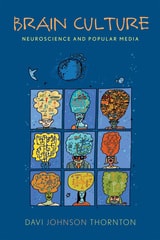
Brain Culture
Neuroscience and Popular MediaDavi Johnson Thornton
Rutgers University Press, 2011
Brain Culture investigates the American obsession with the health of the brain. The brain has become more than a bodily organ, acquiring a near-mystical status. The message that this organ is the key to everything is everywhere--in self-help books that tell us to work on our brains to achieve happiness and enlightenment, in drug advertisements that promise a few tweaks to our brain chemistry will cure us of our discontents, and in politicians' speeches that tell us that our brains are national resources essential to our economic prosperity.
Davi Johnson Thornton looks at these familiar messages, tracing the ways that brain science and colorful brain images produced by novel scientific technologies are taken up and distributed in popular media. She tracks the impact of the message that, "you are your brain" across multiple contemporary contexts, analyzing its influence on child development, family life, education, and public policy. Brain Culture shows that our fixation on the brain is not simply a reaction to scientific progress, but a cultural phenomenon deeply tied to social and political values of individualism and limitless achievement.
Brand Islam
The Marketing and Commodification of PietyBy Faegheh Shirazi
University of Texas Press, 2016
From food products to fashions and cosmetics to children’s toys, a wide range of commodities today are being marketed as “halal” (permitted, lawful) or “Islamic” to Muslim consumers both in the West and in Muslim-majority nations. However, many of these products are not authentically Islamic or halal, and their producers have not necessarily created them to honor religious practice or sentiment. Instead, most “halal” commodities are profit-driven, and they exploit the rise of a new Islamic economic paradigm, “Brand Islam,” as a clever marketing tool.
Brand Islam investigates the rise of this highly lucrative marketing strategy and the resulting growth in consumer loyalty to goods and services identified as Islamic. Faegheh Shirazi explores the reasons why consumers buy Islam-branded products, including conspicuous piety or a longing to identify with a larger Muslim community, especially for those Muslims who live in Western countries, and how this phenomenon is affecting the religious, cultural, and economic lives of Muslim consumers. She demonstrates that Brand Islam has actually enabled a new type of global networking, joining product and service sectors together in a huge conglomerate that some are referring to as the Interland. A timely and original contribution to Muslim cultural studies, Brand Islam reveals how and why the growth of consumerism, global communications, and the Westernization of many Islamic countries are all driving the commercialization of Islam.
Branding Black Womanhood
Media Citizenship from Black Power to Black Girl MagicTimeka N. Tounsel
Rutgers University Press, 2022
Beginning with the inception of the Essence brand in the late 1960s, Timeka N. Tounsel examines the individuals and institutions that have reconfigured Black women’s empowerment as a business enterprise. Ultimately, these commercial gatekeepers have constructed an image economy that operates as both a sacred space for Black women and an easy hunting ground for their dollars.
Branding Texas
Performing Culture in the Lone Star StateBy Leigh Clemons
University of Texas Press, 2008
Ask anyone to name an archetypal Texan, and you're likely to get a larger-than-life character from film or television (say John Wayne's Davy Crockett or J. R. Ewing of TV's Dallas) or a politician with that certain swagger (think LBJ or George W. Bush). That all of these figures are white and male and bursting with self-confidence is no accident, asserts Leigh Clemons. In this thoughtful study of what makes a "Texan," she reveals how Texan identity grew out of the history—and, even more, the myth—of the heroic deeds performed by Anglo men during the Texas Revolution and the years of the Republic and how this identity is constructed and maintained by theatre and other representational practices.
Clemons looks at a wide range of venues in which "Texanness" is performed, including historic sites such as the Alamo, the battlefield at Goliad, and the San Jacinto Monument; museums such as the Bob Bullock Texas State History Museum; seasonal outdoor dramas such as Texas! at Palo Duro Canyon; films such as John Wayne's The Alamo and the IMAX's Alamo: The Price of Freedom; plays and TV shows such as the Tuna trilogy, Dallas, and King of the Hill; and the Cavalcade of Texas performance at the 1936 Texas Centennial. She persuasively demonstrates that these performances have created a Texan identity that has become a brand, a commodity that can be sold to the public and even manipulated for political purposes.
Breaking Bad and Cinematic Television
Angelo Restivo
Duke University Press, 2019
Bridge and Tunnel Boys
Bruce Springsteen, Billy Joel, and the Metropolitan Sound of the American CenturyJim Cullen
Rutgers University Press, 2024
Bridge and Tunnel Boys compares the life and work of Long Islander Joel and Asbury Park, New Jersey, native Springsteen, considering how each man forged a distinctive sound that derived from his unique position on the periphery of the Big Apple. Locating their music within a longer tradition of the New York metropolitan sound, dating back to the early 1900s, cultural historian Jim Cullen explores how each man drew from the city’s diverse racial and ethnic influences. His study explains how, despite frequently releasing songs that questioned the American dream, Springsteen and Joel were able to appeal to wide audiences during both the national uncertainty of the 1970s and the triumphalism of the Reagan era. By placing these two New York–area icons in a new context, Bridge and Tunnel Boys allows us to hear their most beloved songs with new appreciation.
Bring on the Books for Everybody
How Literary Culture Became Popular CultureJim Collins
Duke University Press, 2010
Collins explores how digital technologies and the convergence of literary, visual, and consumer cultures have changed what counts as a “literary experience” in phenomena ranging from lush film adaptations such as The English Patient and Shakespeare in Love to the customer communities at Amazon. Central to Collins’s analysis and, he argues, to contemporary literary culture, is the notion that refined taste is now easily acquired; it is just a matter of knowing where to access it and whose advice to trust. Using recent novels, he shows that the redefined literary landscape has affected not just how books are being read, but also what sort of novels are being written for these passionate readers. Collins connects literary bestsellers from The Jane Austen Book Club and Literacy and Longing in L.A. to Saturday and The Line of Beauty, highlighting their depictions of fictional worlds filled with avid readers and their equations of reading with cultivated consumer taste.
Bringing It All Back Home
Essays on Cultural StudiesLawrence Grossberg
Duke University Press, 1997
The essays collected here recognize both the specificity of cultural studies, by locating it in a range of alternative critical perspectives and practices, and its breadth, by mapping the extent of its diversity. By discussing American scholars’ initial reception of cultural studies, its relation to communication studies, and its origins in leftist politics, Grossberg grounds the development of cultural studies in the United States in specific historical and theoretical context. His criticism of "easy" identification of cultural studies with the theories, models, and issues of communications and his challenge to some of cultural studies’ current directions and preoccupations indicates what may lie ahead for this dynamic field of study. Bringing together the Gramscian tradition of British cultural studies with the antimodernist philosophical positions of Foucault, Deleuze, and Guattari, Grossberg articulates an original and important vision of the role of the political intellectual in the contemporary world and offers an essential overview of the emerging field of cultural studies by one of its leading practitioners and theorists.
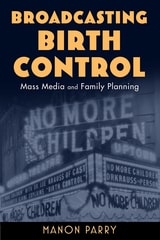
Broadcasting Birth Control
Mass Media and Family PlanningParry, Manon
Rutgers University Press, 2013
Mass media, Manon Parry contends, was critical to the birth control movement’s attempts to build support and later to publicize the idea of fertility control and the availability of contraceptive services in the United States and around the world. Though these public efforts in advertising and education were undertaken initially by leading advocates, including Margaret Sanger, increasingly a growing class of public communications experts took on the role, mimicking the efforts of commercial advertisers to promote health and contraception in short plays, cartoons, films, and soap operas. In this way, they made a private subject—fertility control—appropriate for public discussion.
Parry examines these trends to shed light on the contested nature of the motivations of birth control advocates. Acknowledging that supporters of contraception were not always motivated by the best interests of individual women, Parry concludes that family planning advocates were nonetheless convinced of women’s desire for contraception and highly aware of the ethical issues involved in the use of the media to inform and persuade.
Brother Is a Street Musician
Viewing the Landscape of Modernity Through Korean Popular MusicZhang Eujeong
Rutgers University Press, 2026
The history of the Korean popular music industry dates back a century before the beginnings of K-Pop, to when the Korean peninsula was still under Japanese rule. Though Koreans didn’t have an independent country, they were still able to use recorded music to assert a distinct cultural identity.
Brother Is a Street Musician chronicles the development of Korean popular music over the first half of the twentieth century, examining both industry trends and talented composers and performers like Nam Insu and Yi Nanyǒng. Drawing from rare archives of gramophone records and lyric books, musicologist Zhang Eujeong shows how Korean musicians drew from folk traditions to create totally new genres, ranging from comic songs to Western-influenced jazz records. She also includes English translations and detailed analyses of lyrics from some of the era’s most popular songs.
A landmark study of Korean music, now available in English for the first time, Brother Is a Street Musician tells the inspiring story of how a colonized people developed their own form of popular music, planting the seeds for an industry that would grow to export Korean culture around the world.

Brown Threat
Identification in the Security StateKumarini Silva
University of Minnesota Press, 2016
What is “brown” in—and beyond—the context of American identity politics? How has the concept changed since 9/11? In the most sustained examination of these questions to date, Kumarini Silva argues that “brown” is no longer conceived of solely as a cultural, ethnic, or political identity. Instead, after 9/11, the Patriot Act, and the wars in Iran, Iraq, and Afghanistan, it has also become a concept and, indeed, a strategy of identification—one rooted in xenophobic, imperialistic, and racist ideologies to target those who do not neatly fit or subscribe to ideas of nationhood.
Interweaving personal narratives, ethnographic research, analyses of popular events like the Miss America pageant, and films and TV shows such as the Harold and Kumar franchise and Black-ish, Silva maps junctures where the ideological, political, and mediated terrain intersect, resulting in an appetite for all things “brown” (especially South Asian brown) by U.S. consumers, while political and nationalist discourses and legal structures (immigration, emigration, migration, outsourcing, incarceration) conspire to control brown bodies both within and outside the United States.
Silva explores this contradictory relationship between representation and reality, arguing that the representation mediates and manages the anxieties that come from contemporary global realities, in which brown spaces, like India, Pakistan, and the Middle East pose key economic, security, and political challenges to the United States. While racism is hardly new, what makes this iteration of brown new is that anyone or any group, at any time, can be branded as deviant, as a threat.
Buckeye Schoolmaster
A Chronicle of Midwestern Rural Life, 1853–1865J. Merton England
University of Wisconsin Press, 1996
The journals and diaries of John M. Roberts provide an intimate view of the life and dthoughts of a young schoolmaster, miller, itenerant bookseller, and farmer in centreal Ohio in a time of rising sectional crisis and Civil War.
Budapest and New York
Studies in Metropolitan Transformation, 1870-1930Thomas Bender
Russell Sage Foundation, 1994
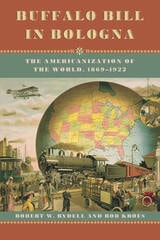
Buffalo Bill in Bologna
The Americanization of the World, 1869-1922Robert W. Rydell and Rob Kroes
University of Chicago Press, 2005
Buffalo Bill in Bologna reveals that the process of globalizing American mass culture began as early as the mid-nineteenth century. In fact, by the end of World War I, the United States already boasted an advanced network of culture industries that served to promote American values. Rydell and Kroes narrate how the circuses, amusement parks, vaudeville, mail-order catalogs, dime novels, and movies developed after the Civil War—tools central to hastening the reconstruction of the country—actually doubled as agents of American cultural diplomacy abroad. As symbols of America's version of the "good life," cultural products became a primary means for people around the world, especially in Europe, to reimagine both America and themselves in the context of America's growing global sphere of influence. Paying special attention to the role of the world's fairs, the exporting of Buffalo Bill's Wild West show to Europe, the release of The Birth of a Nation, and Woodrow Wilson's creation of the Committee on Public Information, Rydell and Kroes offer an absorbing tour through America's cultural expansion at the turn of the century. Buffalo Bill in Bologna is thus a tour de force that recasts what has been popularly understood about this period of American and global history.
Building Nineteenth-Century Latin America
Re-Rooted Cultures, Identities, and NationsWilliam Garrett Acree
Vanderbilt University Press, 2009

Bureaucratizing the Muse
Public Funds and the Cultural WorkerSteven C. Dubin
University of Chicago Press, 1987
Bureaucratizing the Muse is a study of the Chicago AIR program. By its very nature art is a nonrational process, even at times antirational, and the idea of organizing artists in this kind of work environment was an unusual one. Steven C. Dubin's account is a fascinating story of the tensions between struggling artists who need a paycheck but fear the compromise of their art and bureaucrats who need to produce measurable results.

Burek
A Culinary MetaphorJernej Mlekuz
Central European University Press, 2015
Burnt Cork
Traditions and Legacies of Blackface MinstrelsyStephen Johnson
University of Massachusetts Press, 2012
Beginning in the 1830s and continuing for more than a century, blackface minstrelsy—stage performances that claimed to represent the culture of black Americans—remained arguably the most popular entertainment in North America. A renewed scholarly interest in this contentious form of entertainment has produced studies treating a range of issues: its contradictory depictions of class, race, and gender; its role in the development of racial stereotyping; and its legacy in humor, dance, and music, and in live performance, film, and television. The style and substance of minstrelsy persist in popular music, tap and hip-hop dance, the language of the standup comic, and everyday rituals of contemporary culture. The blackface makeup all but disappeared for a time, though its influence never diminished—and recently, even the makeup has been making a comeback.
This collection of original essays brings together a group of prominent scholars of blackface performance to reflect on this complex and troublesome tradition. Essays consider the early relationship of the blackface performer with American politics and the antislavery movement; the relationship of minstrels to the commonplace compromises of the touring “show” business and to the mechanization of the industrial revolution; the exploration and exploitation of blackface in the mass media, by D. W. Griffith and Spike Lee, in early sound animation, and in reality television; and the recent reappropriation of the form at home and abroad.
In addition to the editor, contributors include Dale Cockrell, Catherine Cole, Louis Chude-Sokei, W. T. Lhamon, Alice Maurice, Nicholas Sammond, and Linda Williams.
Buyers Beware
Insurgency and Consumption in Caribbean Popular CulturePatricia Joan Saunders
Rutgers University Press, 2022