Results by title
4127 books match the query 'Science' and 162 start with b
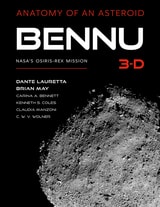
Bennu 3-D
Anatomy of an AsteroidDante Lauretta, Brian May, Carina A. Bennett, Kenneth S. Coles, Claudia Manzoni, and C. W. V. Wolner
University of Arizona Press, 2023
In 2020 the OSIRIS-REx spacecraft successfully landed on the surface of Bennu and collected pristine asteroid material for delivery to Earth in September 2023. Scientific studies of the samples, along with data collected during the rendezvous, promise to help find answers to some of humanity’s deepest questions: Where did we come from? What is our destiny in space?
This book, the world’s first complete (and stereoscopic) atlas of an asteroid, is the result of a unique collaboration between OSIRIS-REx mission leader Dante Lauretta and Brian May’s London Stereoscopic Company. Lauretta’s colleagues include Carina Bennett, Kenneth Coles, and Cat Wolner, as well as Brian May and Claudia Manzoni, who became part of the ultimately successful effort to find a safe landing site for sampling. The text details the data collected by the mission so far, and the stereo images have been meticulously created by Manzoni and May from original images collected by the OSIRIS-REx cameras.
Betting the Farm on a Drought
Stories from the Front Lines of Climate ChangeBy Seamus McGraw
University of Texas Press, 2015
Climate change has become one of the most polarizing issues of our time. Extremists on the left regularly issue hyperbolic jeremiads about the impending destruction of the environment, while extremists on the right counter with crass, tortured denials. But out in the vast middle are ordinary people dealing with stronger storms and more intense droughts than they’ve ever known. This middle ground is the focus of Betting the Farm on a Drought, a lively, thought-provoking book that lays out the whole story of climate change—the science, the math, and most importantly, the human stories of people fighting both the climate and their own deeply held beliefs to find creative solutions to a host of environmental challenges.
Seamus McGraw takes us on a trip along America’s culturally fractured back roads and listens to farmers and ranchers and fishermen, many of them people who are not ideologically, politically, or in some cases even religiously inclined to believe in man-made global climate change. He shows us how they are already being affected and the risks they are already taking on a personal level to deal with extreme weather and its very real consequences for their livelihoods. McGraw also speaks to scientists and policymakers who are trying to harness that most renewable of American resources, a sense of hope and self-reliance that remains strong in the face of daunting challenges. By bringing these voices together, Betting the Farm on a Drought ultimately becomes a model for how we all might have a pragmatic, reasoned conversation about our changing climate.
Between Raphael and Galileo
Mutio Oddi and the Mathematical Culture of Late Renaissance ItalyAlexander Marr
University of Chicago Press, 2011
Although largely unknown today, during his lifetime Mutio Oddi of Urbino (1569–1639) was a highly esteemed scholar, teacher, and practitioner of a wide range of disciplines related to mathematics. A prime example of the artisan-scholar so prevalent in the late Renaissance, Oddi was also accomplished in the fields of civil and military architecture and the design and retail of mathematical instruments, as well as writing and publishing.
In Between Raphael and Galileo, Alexander Marr resurrects the career and achievements of Oddi in order to examine the ways in which mathematics, material culture, and the book shaped knowledge, society, and the visual arts in late Renaissance Italy. Marr scrutinizes the extensive archive of Oddi papers, documenting Oddi’s collaboration with prominent intellectuals and officials and shedding new light on the practice of science and art during his day. What becomes clear is that Oddi, precisely because he was not spectacularly innovative and did not attain the status of a hero in modern science, is characteristic of the majority of scientific practitioners and educators active in this formative age, particularly those whose energetic popularization of mathematics laid the foundations for the Scientific Revolution. Marr also demonstrates that scientific change in this era was multivalent and contested, governed as much by friendship as by principle and determined as much by places as by purpose.
Plunging the reader into Oddi’s world, Between Raphael and Galileo is a finely wrought and meticulously researched tale of science, art, commerce, and society in the late sixteenth and early seventeenth century. It will become required reading for any scholar interested in the history of science, visual art, and print culture of the Early Modern period.
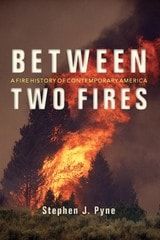
Between Two Fires
A Fire History of Contemporary AmericaStephen J. Pyne
University of Arizona Press, 2015
Pyne is uniquely qualified to tell America’s fire story. The author of more than a score of books, he has told fire’s history in the United States, Australia, Canada, Europe, and the Earth overall. In his earlier life, he spent fifteen seasons with the North Rim Longshots at Grand Canyon National Park.
In Between Two Fires, Pyne recounts how, after the Great Fires of 1910, a policy of fire suppression spread from America’s founding corps of foresters into a national policy that manifested itself as a costly all-out war on fire. After fifty years of attempted fire suppression, a revolution in thinking led to a more pluralistic strategy for fire’s restoration. The revolution succeeded in displacing suppression as a sole strategy, but it has failed to fully integrate fire and land management and has fallen short of its goals.
Today, the nation’s backcountry and increasingly its exurban fringe are threatened by larger and more damaging burns, fire agencies are scrambling for funds, firefighters continue to die, and the country seems unable to come to grips with the fundamentals behind a rising tide of megafires. Pyne has once again constructed a history of record that will shape our next century of fire management. Between Two Fires is a story of ideas, institutions, and fires. It’s America’s story told through the nation’s flames.
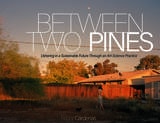
Between Two Pines
Ushering in a Sustainable Future Through an Art-Science PracticeEdgar Cardenas
Michigan Publishing Services, 2019
“I am truly thankful that Dr. Edgar Cardenas’s thoughtful research is now available in this beautiful book. I have recommended his work to more people, both in my personal and professional spheres of my life, than I can count, and I’m glad to have this provocative and elegant publication to put into people’s hands. Cardenas shows us how each of us really can make a difference.”
“Between Two Pines anticipates and leads the discussion of scholarship around questions of land and landscape. This work brilliantly and ethically refocuses our vision, from distanced scrutiny to connection and proximity, rooted in daily care-taking and ecological efforts. Thoughtfully imaged, the photographs offer an aesthetic that is based in balanced, enduring reflection, rather than on the grand view. These beautiful images reveal discoveries that bridge the arts, ecology, and sociology, and will serve to reconnect every reader with the world in their backyard and beyond.”
“Drawing from a long photographic tradition of examining the relationship between humans and their environment, Edgar Cardenas has found a voice that is as compassionate as it is poignant. Yet he is not content for his photographs to be mere observations, recording the relationship. Between Two Pines is a call to action – a platform by which we might imagine together, with all of the tools in our tool kit, a sustainable future.”
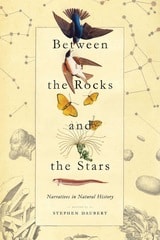
Between the Rocks and the Stars
Narratives in Natural HistoryStephen Daubert
Vanderbilt University Press, 2020
These stories take readers where they cannot go, be it out into space, back in time, deep under the ocean, down to microscopic scales, or out onto the geologic overview.
Squid turn themselves inside-out when disturbed by predators hunting through the darkness with sonar. Beneficial microbes spend their summer living in nectar and being transferred between blooms by the bees, then spend the winter living within those bees. Ecological stories are seen through the eyes of squirrels, birds, fish, ants, butterflies, and beetles.
Between the Rocks and the Stars dives deep into the relationships that shape the natural world. The book presents a collection of vignettes from the wild, each of which describes the natural advantage of a particular organism. These true-to-life accounts are then posed in particular circumstances that illustrate the principles—commensalism, speciation—that shape the place of these organisms in their living environment. Some stories cover topics in geology and cosmology, describing the physical world context in which natural history progresses across the eons.
Underlying themes in the book include the network of connections that link all these organisms together and the adaptations they make to the physical world in which they must find themselves a home.
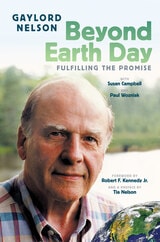
Beyond Earth Day
Fulfilling the PromiseGaylord Nelson; With Susan Campbell and Paul Wozniak; Foreword by Robert F. Kennedy Jr.; Preface by Tia Nelson
University of Wisconsin Press, 2002
Gaylord Nelson’s legacy is known and respected throughout the world. He was a founding father of the modern environmental movement and creator of one of the most influential public awareness campaigns ever undertaken on behalf of global environmental stewardship: Earth Day.
Nelson died in 2005, but his message in this book is still timely and urgent, delivered with the same eloquence with which he articulated the nation’s environmental ills throughout the decades. He details the planet’s most critical concerns—from species and habitat losses to global climate change and population growth. In outlining strategies for planetary health, Nelson inspires citizens to reassert environmentalism as a national priority. Included in this reprint is a new preface by Gaylord Nelson’s daughter, Tia Nelson.
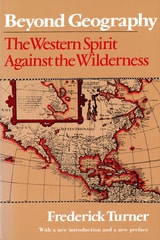
Beyond Geography
The Western Spirit Against the WildernessFrederick Turner
Rutgers University Press, 1992
First published in 1980, Beyond Geography continues to influence and impress its readers. This new edition, prepared for the Columbus quincentennial, includes a new introduction by T. H. Watkins and a new preface by the author. As the public debates Columbus's legacy, it is important for us to learn of the spiritual background of European domination of the Americas, for the Europeans who conquered the Americas substituted history for myth as a way of understanding life.
Beyond Matter
Why Science Needs MetaphysicsRoger Trigg
Templeton Press, 2016
Does science have all the answers? Can it even deal with abstract reasoning beyond the world we experience? How can we ensure that the physical world is sufficiently ordered to be intelligible to humans? How can mathematics, a product of human minds, unlock the secrets of the physical universe? Should all such questions be considered inadmissible if science cannot settle them?
Metaphysics has traditionally been understood as reasoning beyond the reach of science, sometimes even claiming realities beyond its grasp. Because of this, metaphysics is often contemptuously dismissed by scientists and philosophers who wish to remain within the bounds of what can be scientifically proven. Yet scientists at the frontiers of physics unwittingly engage in metaphysics, as they are now happy to contemplate whole universes that are, in principle, beyond human reach.
Roger Trigg challenges those who deny that science needs philosophical assumptions. Trigg claims that the foundations of science themselves have to lie beyond science. It takes reasoning apart from experience to discover what is not yet known and this metaphysical reasoning to imagine realities beyond what can be accessed.
“In Beyond Matter, Roger Trigg advances a powerful, persuasive, fair-minded argument that the sciences require a philosophical, metaphysical foundation. This is a brilliant book for newcomers to the philosophy of science and experts alike.” —Charles Taliaferro, professor of philosophy, St. Olaf College
Beyond Preservation
Restoring and Inventing LandscapesDwight Baldwin
University of Minnesota Press, 1994
Beyond Preservation was first published in 1993. Minnesota Archive Editions uses digital technology to make long-unavailable books once again accessible, and are published unaltered from the original University of Minnesota Press editions.
Addressing current ecological issues, from the philosophical to the practical, Frederick Turner and William R. Jordan III Here offer a new paradigm for understanding the relationship between the humans and nature. Challenging the idea that preserving nature is the only solution to environmental problems, they advocate going beyond preservation to restoration and actual construction of our landscape. Fifteen respondents reflect on the implications and consequences of Turner’s and Jordan’s bold proposals.“Ecological restoration is the most helpful and provocative contribution to our thinking about nature to come along in many years, and Beyond Preservation is without a doubt the best book on the subject to date.” Michael Polan, Harper’sContributors include Gary W. Barrett, Ann Cline, David L. Gorchov, William Jordan III, G. Stanley Kane, Jack Temple Kirby, Dora G. Lodwick, Orie L. Loucks, Kimberly E. Medley, Constance Pierce, Ellen Price, Frederick Turner, John E. Wierwille, and Gene E. Willeke.
Beyond Sputnik
U.S. Science Policy in the Twenty-First CenturyHomer A. Neal, Tobin L. Smith, and Jennifer B. McCormick
University of Michigan Press, 2008
Science and technology are responsible for almost every advance in our modern quality of life. Yet science isn't just about laboratories, telescopes and particle accelerators. Public policy exerts a huge impact on how the scientific community conducts its work. Beyond Sputnik is a comprehensive survey of the field for use as an introductory textbook in courses and a reference guide for legislators, scientists, journalists, and advocates seeking to understand the science policy-making process. Detailed case studies---on topics from cloning and stem cell research to homeland security and science education---offer readers the opportunity to study real instances of policymaking at work. Authors and experts Homer A. Neal, Tobin L. Smith, and Jennifer B. McCormick propose practical ways to implement sound public policy in science and technology and highlight how these policies will guide the results of scientific discovery for years to come.
Homer A. Neal is the Samuel A. Goudsmit Distinguished University Professor of Physics, Interim President Emeritus, and Vice President for Research Emeritus at the University of Michigan, and is a former member of the U.S. National Science Board.
Tobin L. Smith is Associate Vice President for Federal Relations at the Association of American Universities. He was formerly Assistant Director of the University of Michigan and MIT Washington, DC, offices.
Jennifer B. McCormick is an Assistant Professor of Biomedical Ethics in the Division of General Internal Medicine at the Mayo College of Medicine in Rochester, Minnesota, and is the Associate Director of the Research Ethics Resource, part of the Mayo Clinic's NIH Clinical Translational Science Award research programs.
GO BEYOND SPUTNIK ONLINE--Visit www.science-policy.net for the latest news, teaching resources, learning guides, and internship opportunities in the 21st-Century field of science policy.
Beyond Sun and Sand
Caribbean EnvironmentalismsEdited by Sherrie L. Baver and Barbara Deutsch Lynch
Rutgers University Press, 2006
In both versions, the image of the exotic landscape overshadows the rich island cultures that are both linguistically and politically diverse, but trapped in a global economy that offers few options for development. Popular depictions also overlook the reality that the region is fraught with environmental problems, including water and air pollution, solid waste mismanagement, destruction of ecosystems, deforestation, and the transition from agriculture to ranching.
Bringing together ten essays by social scientists and activists, Beyond Sun and Sand provides the most comprehensive exploration to date of the range of environmental issues facing the region and the social movements that have developed to deal with them. The authors consider the role that global and regional political economies play in this process and provide valuable insight into Caribbean environmentalism. Many of the essays by prominent Caribbean analysts are made available for the first time in English.
Beyond Weird
Why Everything You Thought You Knew about Quantum Physics Is DifferentPhilip Ball
University of Chicago Press, 2018
Since Niels Bohr said this many years ago, quantum mechanics has only been getting more shocking. We now realize that it’s not really telling us that “weird” things happen out of sight, on the tiniest level, in the atomic world: rather, everything is quantum. But if quantum mechanics is correct, what seems obvious and right in our everyday world is built on foundations that don’t seem obvious or right at all—or even possible.
An exhilarating tour of the contemporary quantum landscape, Beyond Weird is a book about what quantum physics really means—and what it doesn’t. Science writer Philip Ball offers an up-to-date, accessible account of the quest to come to grips with the most fundamental theory of physical reality, and to explain how its counterintuitive principles underpin the world we experience. Over the past decade it has become clear that quantum physics is less a theory about particles and waves, uncertainty and fuzziness, than a theory about information and knowledge—about what can be known, and how we can know it. Discoveries and experiments over the past few decades have called into question the meanings and limits of space and time, cause and effect, and, ultimately, of knowledge itself. The quantum world Ball shows us isn’t a different world. It is our world, and if anything deserves to be called “weird,” it’s us.

Beyond the Breast-Bottle Controversy
Penny Van Esterik
Rutgers University Press, 1989
--from the Foreword by Michael C. Latham, Cornell University
Penny Van Esterik takes the reader beyond the Nestle boycott and the activist campaigns against infant-formula manufacturers to the issues underlying the controversy. She shows how the controversy is embedded in the problem of urban poverty, the empowerment of women, the medicalization of infant feeding, and the commoditization of infant foods. She argues that the choice between bottle feeding and breast feeding has significant implications for developing countries. Beyond the Breast-Bottle Controversy raises a host of important questions: why has there been no consistent feminist position? How did infant feeding become medicalized in developing and developed countries? What mechanisms encourage the technology and taste transfer necessary for the expansion of bottle feeding? These questions are examined using documentary sources and interdisciplinary research in Thailand, Indonesia, Kenya, and Columbia.
For Van Esterik, the infant-formula controversy is a valuable case study for understanding the relations between women, the environment, and sustainable development. From this perspective, breast feeding has no long-term negative consequences. It depends on renewable resources, works on the principle that as demand increases so does supply, reduces the dependency of women on consumer products and multinational corporations, and puts pressure on governments to improve the health of mothers. On the other hand, the author argues that bottle feeding has definite long-term negative consequences. Her goal is not to have every woman breast-feed her child, but to create living and working conditions so that every woman can do so if she chooses.

Beyond the European Left
Ideology and Political Action in the Belgian EcologyHerbert Kitschelt and Staf Hellemans
Duke University Press, 1990
The authors employ a new research methodology—surveying party militants—that is better adapted to the study of micropolitics than are expert interviews. Herbert Kitschelt and Staf Hallemans show that European Green party activists express an egalitarian and libertarian vision of a desirable social order that builds on, but radically transforms, ideas of the traditional socialist European left. The authors then examine the debates and disagreements among militants on political objectives and the consequences of conflicting views for party organization and strategy. Their findings illuminate the unique dynamics of left-libertarian politics in a number of Western European countries with obvious relevance to current developments in Eastern Europe.
Beyond the Laboratory
Scientists as Political Activists in 1930s AmericaPeter J. Kuznick
University of Chicago Press, 1987
Beyond the Laboratory
Scientists as Political Activists in 1930s AmericaPeter J. Kuznick
University of Chicago Press, 1987
Beyond the Map
Unruly Enclaves, Ghostly Places, Emerging Lands and Our Search for New UtopiasAlastair Bonnett
University of Chicago Press, 2018
In Beyond the Map, Bonnett presents stories of the world’s most extraordinary spaces—many unmarked on any official map—all of which challenge our assumptions about what we know—or think we know—about our world. As cultural, religious and political boundaries ebb and flow with each passing day, traditional maps unravel and fragment. With the same adventurous spirit he effused in the acclaimed Unruly Places, Bonnett takes us to thirty-nine incredible spots around the globe to explore these changing boundaries and stimulate our geographical imagination. Some are tied to disruptive contemporary political turbulence, such as the rise of ISIL, Russia’s incursions into Ukraine and the Brexit vote in the United Kingdom. Others explore the secret places not shown on Google Earth or reflect fast-changing landscapes.
Beyond the Map journeys out into a world of mysterious, daunting and magical spaces. It is a world of hidden cultures and ghostly memories, of uncountable new islands and curious stabs at paradise. From the phantom tunnels of the Tokyo subway to a stunning movie-set re-creation of 1950s-era Moscow; from the caliphate of the Islamic State to virtual cybertopias—this book serves as an imaginative guide to the farthest fringes of geography.
Beyond the Meme
Development and Structure in Cultural EvolutionAlan C. Love
University of Minnesota Press, 2019
Interdisciplinary perspectives on cultural evolution that reject meme theory in favor of a complex understanding of dynamic change over time
How do cultures change? In recent decades, the concept of the meme, posited as a basic unit of culture analogous to the gene, has been central to debates about cultural transformation. Despite the appeal of meme theory, its simplification of complex interactions and other inadequacies as an explanatory framework raise more questions about cultural evolution than it answers.
In Beyond the Meme, William C. Wimsatt and Alan C. Love assemble interdisciplinary perspectives on cultural evolution, providing a nuanced understanding of it as a process in which dynamic structures interact on different scales of size and time. By focusing on the full range of evolutionary processes across distinct contexts, from rice farming to scientific reasoning, this volume demonstrates how a thick understanding of change in culture emerges from multiple disciplinary vantage points, each of which is required to understand cultural evolution in all its complexity. The editors provide an extensive introductory essay to contextualize the volume, and Wimsatt contributes a separate chapter that systematically organizes the conceptual geography of cultural processes and phenomena.
Any adequate account of the transmission, elaboration, and evolution of culture must, this volume argues, recognize the central roles that cognitive and social development play in cultural change and the complex interplay of technological, organizational, and institutional structures needed to enable and coordinate these processes.
Contributors: Marshall Abrams, U of Alabama at Birmingham; Claes Andersson, Chalmers U of Technology; Mark A. Bedau, Reed College; James A. Evans, U of Chicago; Jacob G. Foster, U of California, Los Angeles; Michel Janssen, U of Minnesota; Sabina Leonelli, U of Exeter; Massimo Maiocchi, U of Chicago; Joseph D. Martin, U of Cambridge; Salikoko S. Mufwene, U of Chicago; Nancy J. Nersessian, Georgia Institute of Technology and Harvard U; Paul E. Smaldino, U of California, Merced; Anton Törnberg, U of Gothenburg; Petter Törnberg, U of Amsterdam; Gilbert B. Tostevin, U of Minnesota.
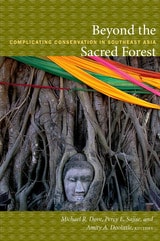
Beyond the Sacred Forest
Complicating Conservation in Southeast AsiaMichael R. Dove, Percy E. Sajise, and Amity A. Doolittle, eds.
Duke University Press, 2011
Contributors. Upik Djalins, Amity A. Doolittle, Michael R. Dove, Levita Duhaylungsod, Emily E. Harwell, Jeyamalar Kathirithamby-Wells, Lye Tuck-Po, Percy E. Sajise, Endah Sulistyawati, Yunita T. Winarto
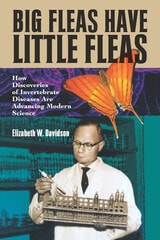
Big Fleas Have Little Fleas
How Discoveries of Invertebrate Diseases Are Advancing Modern ScienceElizabeth W. Davidson
University of Arizona Press, 2006
In this book, Elizabeth Davidson shares amazing stories about diseases of insects and other invertebrates important to people—and about the scientists who learned to use those diseases to control pests and create products beneficial to humans. Focusing on insect-microbial interactions crucial to public health, she tells detective stories ranging across global history, from the silkworm farms of nineteenth-century Japan to the research labs of modern America. In these fascinating accounts, Davidson shows us how human health often comes down to a contest of bug against bug. Even habitats seething with bacteria, such as the runoff from cattle farms or sewage treatment plants, are also teeming with invertebrate life—animals that, like ourselves, have ways of fighting infection.
Scientific curiosity about what allows creatures as simple as water fleas to survive in such polluted environments has led to the discovery of chemicals with remarkable properties and potential usefulness to humankind. From diseases of shellfish to parasites of bees, Davidson opens a window on a world most of us never stop to consider—but which matters to all of us more than we might ever imagine. In our present era of pandemic scares, Big Fleas Have Little Fleas is a sweeping historical review that’s as timely as tomorrow’s headlines, showing us that the most exciting discoveries can emerge from the smallest sources.
Big Game in Alaska
A History of Wildlife and PeopleMorgan Sherwood
University of Alaska Press, 2008
In concise and clear prose, Sherwood charts the history of this environmental and political conflict, examining the creation of the Alaska Game Commission in the early 1930s, the use of distorted science and menacing technologies, the antipathy of farmers and fishermen toward animals, and the prevailing belief in man’s right to shoot wild animals at will. An incisive historical study of the flawed attempts to govern big game predation, Big Game in Alaska will be essential reading for historians and environmentalists alike.
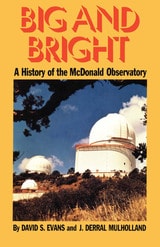
Big and Bright
A History of the McDonald ObservatoryBy David S. Evans and J. Derral Mulholland
University of Texas Press, 1986
By day, every year over 40,000 visitors pour in. Across the Rio Grande, a hundred miles away, Mexican mountaineers use the white domes as landmarks. By night, perched almost 7,000 feet above the sleeping, earthbound world, astronomers probe the secrets of the night sky. This is the University of Texas McDonald Observatory, one of the world's largest university-operated astronomical installations.
Big and Bright: A History of the McDonald Observatory is the story of a remarkable collaboration between two major universities, one a prestigious private school, the other a growing southwestern state institution. The University of Chicago had astronomers, but its Yerkes Observatory was aging and underfunded; the University of Texas had money for an observatory but no working astronomer to staff it. Out of their mutual need, they formed a thirty-year compact for a joint venture. Unusual in its day, the Yerkes-McDonald connection presaged the future. In this arrangement, one can see some of the beginnings of today's consortium "big science."
Now the McDonald Observatory's early history can be put in proper perspective. Blessed with a gifted and driving founding director, the world's (then) second-largest telescope, and an isolation that permitted it to be virtually the only major astronomical observatory that continued operations throughout World War II, the staff of McDonald Observatory helped lay the foundations of modern astrophysics during the 1940s. For over a decade after the war, a lonely mountaintop in West Texas was the mecca that drew nearly all the most important astronomers from all over the world.
Based on personal reminiscences and archival material, as well as published historical sources, Big and Bright is one of the few histories of a major observatory, unique in its focus on the human side of the story.
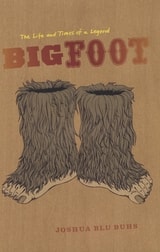
Bigfoot
The Life and Times of a LegendJoshua Blu Buhs
University of Chicago Press, 2009
Last August, two men in rural Georgia announced that they had killed Bigfoot. The claim drew instant, feverish attention, leading to more than 1,000 news stories worldwide—despite the fact that nearly everyone knew it was a hoax. Though Bigfoot may not exist, there’s no denying Bigfoot mania.
With Bigfoot, Joshua Blu Buhs traces the wild and wooly story of America’s favorite homegrown monster. He begins with nineteenth-century accounts of wildmen roaming the forests of America, treks to the Himalayas to reckon with the Abominable Snowman, then takes us to northern California in 1958, when reports of a hairy hominid loping through remote woodlands marked Bigfoot’s emergence as a modern marvel. Buhs delves deeply into the trove of lore and misinformation that has sprung up around Bigfoot in the ensuing half century. We meet charlatans, pseudo-scientists, and dedicated hunters of the beast—and with Buhs as our guide, the focus is always less on evaluating their claims than on understanding why Bigfoot has inspired all this drama and devotion in the first place. What does our fascination with this monster say about our modern relationship to wilderness, individuality, class, consumerism, and the media?
Writing with a scientist’s skepticism but an enthusiast’s deep engagement, Buhs invests the story of Bigfoot with the detail and power of a novel, offering the definitive take on this elusive beast.
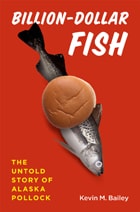
Billion-Dollar Fish
The Untold Story of Alaska PollockKevin M. Bailey
University of Chicago Press, 2013
In Billion-Dollar Fish, Kevin M. Bailey combines his years of firsthand pollock research with a remarkable talent for storytelling to offer the first natural history of Alaska pollock. Crucial to understanding the pollock fishery, he shows, is recognizing what aspects of its natural history make pollock so very desirable to fish, while at the same time making it resilient, yet highly vulnerable to overfishing. Bailey delves into the science, politics, and economics surrounding Alaska pollock in the Bering Sea, detailing the development of the fishery, the various political machinations that have led to its current management, and, perhaps most important, its impending demise. He approaches his subject from multiple angles, bringing in the perspectives of fishermen, politicians, environmentalists, and biologists, and drawing on revealing interviews with players who range from Greenpeace activists to fishing industry lawyers.
Seamlessly weaving the biology and ecology of pollock with the history and politics of the fishery, as well as Bailey’s own often raucous tales about life at sea, Billion-Dollar Fish is a book for every person interested in the troubled relationship between fish and humans, from the depths of the sea to the dinner plate.
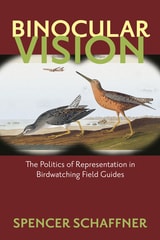
Binocular Vision
The Politics of Representation in Birdwatching Field GuidesSpencer Schaffner
University of Massachusetts Press, 2011
From meadows to marshlands, seashores to suburbs, field guides help us identify many of the things we find outdoors: plants, insects, mammals, birds. In these texts, nature is typically represented, both in words and images, as ordered, clean, and untouched by human technology and development. This preoccupation with species identification, however, has produced an increasingly narrow view of nature, a “binocular vision,” that separates the study of individual elements from a range of larger, interconnected environmental issues. In this book, Spencer Schaffner reconsiders this approach to nature study by focusing on how birds are presented in field guides.
Starting with popular books from the late nineteenth century and moving ultimately to the electronic guides of the current day, Binocular Vision contextualizes birdwatching field guides historically, culturally, and in terms of a wide range of important environmental issues. Schaffner questions the assumptions found in field guides to tease out their ideological workings. He argues that the sanitized world represented in these guides misleads readers by omitting industrial landscapes and so-called nuisance birds, leaving users of the guides disconnected from environmental degradation and its impact on bird populations.
By putting field guides into direct conversation with concerns about species conservation, environmental management, the human alteration of the environment, and the problem of toxic pollution, Binocular Vision is a field guide to field guides that takes a novel perspective on how we think about and interact with the world around us.
Bio-Imperialism
Disease, Terror, and the Construction of National FragilityGwen Shuni D'Arcangelis
Rutgers University Press, 2021
Bioaesthetics
Making Sense of Life in Science and the ArtsCarsten Strathausen
University of Minnesota Press, 2017
In recent years, bioaesthetics has used the latest discoveries in evolutionary studies and neuroscience to provide new ways of looking at art and aesthetics. Carsten Strathausen’s remarkable exploration of this emerging field is the first comprehensive account of its ideas, as well as a timely critique of its limitations.
Strathausen familiarizes readers with the basics of bioaesthetics, grounding them in its philosophical underpinnings while articulating its key components. Importantly, he delves into the longstanding problem of the “two cultures” that separate the arts and the sciences. Seeking to make bioaesthetics a more robust way of thinking, Strathausen then critiques it for failing to account for science’s historical and cultural assumptions. At its worst, he says, biologism reduces artworks to mere automatons that rubber-stamp pre-established scientific truths.
Written with a sensitive understanding of science’s strengths, and willing to refute its best arguments, Bioaesthetics helps readers separate the sensible from the specious. At a time when humanities departments are shrinking—and when STEM education is on the rise—Bioaesthetics makes vital points about the limitations of science, while lodging a robust defense of the importance of the humanities.
Biocosmism
Vitality and the Utopian Imagination in Postrevolutionary MexicoJorge Quintana Navarrete
Vanderbilt University Press, 2024
Most scholars study postrevolutionary Mexico as a period in which cultural production significantly shaped national identity through murals, novels, essays, and other artifacts that registered the changing political and social realities in the wake of the Revolution. In Biocosmism, Jorge Quintana Navarrete shifts the focus to examine how a group of scientists, artists, and philosophers conceived the manifold relations of the human species with cosmological forces and nonhuman entities (animals, plants, inorganic matter, and celestial bodies, among others).
Drawing from recent theoretical trends in new materialisms, biopolitics, and posthumanism, this book traces for the first time the intellectual constellation of biocosmism or biocosmic thought: the study of universal life understood as the vital vibrancy that animates everything in the cosmos from inorganic matter to living organisms to outer space. It combines both analysis of unexplored areas—such as Alfonso L. Herrera’s plasmogeny—and innovative readings of canonical texts like Vasconcelos’s La raza cósmica to examine how biocosmism produced a wide array of utopian projects and theorizations that continue to challenge anthropocentric, biopolitical frameworks.
Biocultural Creatures
Toward a New Theory of the HumanSamantha Frost
Duke University Press, 2016
Biogeography of Reptiles and Amphibians in the Gomez Farias Region, Tamaulipas, Mexico
Paul S. Martin
University of Michigan Press, 1958
Biographies of Scientific Objects
Edited by Lorraine Daston
University of Chicago Press, 2000
Addressing such questions, Biographies of Scientific Objects is about how whole domains of phenomena—dreams, atoms, monsters, culture, society, mortality, centers of gravity, value, cytoplasmic particles, the self, tuberculosis—come into being and sometimes pass away as objects of scientific study. With examples drawn from both the natural and social sciences, and ranging from the sixteenth to the twentieth centuries, this book explores the ways in which scientific objects are both real and historical. Whether discovered or invented, these objects of inquiry broaden and deepen in meaning—growing more "real"—as they become entangled in webs of cultural significance, material practices, and theoretical derivations. Thus their biographies will matter to anyone concerned with the formation of scientific knowledge.
Contributors are Jed Z. Buchwald, Lorraine Daston, Rivka Feldhay, Jan Goldstein, Gerard Jorland, Doris Kauffman, Bruno Latour, Theodore M. Porter, Hans-Jörg Rheinberger, Marshall Sahlins, and Peter Wagner.

Biohackers
The Politics of Open ScienceAlessandro Delfanti
Pluto Press, 2013
Biohackers explores fundamental changes occuring in the circulation and ownership of scientific information. Alessandro Delfanti argues that the combination of the ethos of 20th century science, the hacker movement and the free software movement is producing an open science culture which redefines the relationship between researchers, scientific institutions and commercial companies.
Biohackers looks at the emergence of the citizen biology community ‘DIYbio’, the shift to open access by the American biologist Craig Venter and the rebellion of the Italian virologist Ilaria Capua against WHO data-sharing policies.
Delfanti argues that these biologists and many others are involved in a transformation of both life sciences and information systems, using open access tools and claiming independence from both academic and corporate institutions.
Bioinsecurities
Disease Interventions, Empire, and the Government of SpeciesNeel Ahuja
Duke University Press, 2016
Biological Individuality
Integrating Scientific, Philosophical, and Historical PerspectivesEdited by Scott Lidgard and Lynn K. Nyhart
University of Chicago Press, 2017
Bringing together biologists, historians, and philosophers, this book provides a multifaceted exploration of biological individuality that identifies leading and less familiar perceptions of individuality both past and present, what they are good for, and in what contexts. Biological practice and theory recognize individuals at myriad levels of organization, from genes to organisms to symbiotic systems. We depend on these notions of individuality to address theoretical questions about multilevel natural selection and Darwinian fitness; to illuminate empirical questions about development, function, and ecology; to ground philosophical questions about the nature of organisms and causation; and to probe historical and cultural circumstances that resonate with parallel questions about the nature of society. Charting an interdisciplinary research agenda that broadens the frameworks in which biological individuality is discussed, this book makes clear that in the realm of the individual, there is not and should not be a direct path from biological paradigms based on model organisms through to philosophical generalization and historical reification.
Biology Takes Form
Animal Morphology and the German Universities, 1800-1900Lynn K. Nyhart
University of Chicago Press, 1995
Although there were neither professors of morphology nor a morphologists' society, morphologists achieved influence by "colonizing" niches in a variety of disciplines. Scientists in anatomy, zoology, natural history, and physiology considered their work morphological, and the term encompassed research that today might be classified as embryology, systematics, functional morphology, comparative physiology, ecology, behavior, evolutionary theory, or histology. Nyhart draws on research notes, correspondence, and other archival material to examine how these scientists responded to new ideas and to the work of colleagues. She examines the intertwined histories of morphology and the broader biological enterprise, demonstrating that the study of form was central to investigations of such issues as the relationships between an animal's structure and function, between an organism and its environment, and between living species and their ancestors.
Biology and Ideology from Descartes to Dawkins
Edited by Denis R. Alexander and Ronald L. Numbers
University of Chicago Press, 2010
Over the course of human history, the sciences, and biology in particular, have often been manipulated to cause immense human suffering. For example, biology has been used to justify eugenic programs, forced sterilization, human experimentation, and death camps—all in an attempt to support notions of racial superiority. By investigating the past, the contributors to Biology and Ideology from Descartes to Dawkins hope to better prepare us to discern ideological abuse of science when it occurs in the future.
Denis R. Alexander and Ronald L. Numbers bring together fourteen experts to examine the varied ways science has been used and abused for nonscientific purposes from the fifteenth century to the present day. Featuring an essay on eugenics from Edward J. Larson and an examination of the progress of evolution by Michael J. Ruse, Biology and Ideology examines uses both benign and sinister, ultimately reminding us that ideological extrapolation continues today. An accessible survey, this collection will enlighten historians of science, their students, practicing scientists, and anyone interested in the relationship between science and culture.

Biology and Management of Noxious Rangeland Weeds
Roger L. Sheley
Oregon State University Press, 1999
Biology at Work
Rethinking Sexual EqualityKingsley R. Browne
Rutgers University Press, 2002
Does biology help explain why women, on average, earn less money than men? Is there any evolutionary basis for the scarcity of female CEOs in Fortune 500 companies? According to Kingsley Browne, the answer may be yes.
Biology at Work brings an evolutionary perspective to bear on issues of women in the workplace: the "glass ceiling," the "gender gap" in pay, sexual harassment, and occupational segregation. While acknowledging the role of discrimination and sexist socialization, Browne suggests that until we factor real biological differences between men and women into the equation, the explanation remains incomplete.
Browne looks at behavioral differences between men and women as products of different evolutionary pressures facing them throughout human history. Womens biological investment in their offspring has led them to be on average more nurturing and risk averse, and to value relationships over competition. Men have been biologically rewarded, over human history, for displays of strength and skill, risk taking, and status acquisition. These behavioral differences have numerous workplace consequences. Not surprisingly, sex differences in the drive for status lead to sex differences in the achievement of status.
Browne argues that decision makers should recognize that policies based on the assumption of a single androgynous human nature are unlikely to be successful. Simply removing barriers to inequality will not achieve equality, as women and men typically value different things in the workplace and will make different workplace choices based on their different preferences.
Rather than simply putting forward the "nature" side of the debate, Browne suggests that dichotomies such as nature/nurture have impeded our understanding of the origins of human behavior. Through evolutionary biology we can understand not only how natural selection has created predispositions toward certain types of behavior but also how the social environment interacts with these predispositions to produce observed behavioral patterns.
Biology's First Law
The Tendency for Diversity and Complexity to Increase in Evolutionary SystemsDaniel W. McShea and Robert N. Brandon
University of Chicago Press, 2010
Life on earth is characterized by three striking phenomena that demand explanation: adaptation—the marvelous fit between organism and environment; diversity—the great variety of organisms; and complexity—the enormous intricacy of their internal structure. Natural selection explains adaptation. But what explains diversity and complexity? Daniel W. McShea and Robert N. Brandon argue that there exists in evolution a spontaneous tendency toward increased diversity and complexity, one that acts whether natural selection is present or not. They call this tendency a biological law—the Zero-Force Evolutionary Law, or ZFEL. This law unifies the principles and data of biology under a single framework and invites a reconceptualization of the field of the same sort that Newton’s First Law brought to physics.
Biology’s First Law shows how the ZFEL can be applied to the study of diversity and complexity and examines its wider implications for biology. Intended for evolutionary biologists, paleontologists, and other scientists studying complex systems, and written in a concise and engaging format that speaks to students and interdisciplinary practitioners alike, this book will also find an appreciative audience in the philosophy of science.
Biomechanics
An Approach to Vertebrate BiologyCarl Gans
University of Michigan Press, 1980
Biomedicalization
Technoscience, Health, and Illness in the U.S.Adele E. Clarke, Laura Mamo, Jennifer Ruth Fosket, Jennifer R. Fishman, and Janet K. Shim, eds.
Duke University Press, 2010
Contributors. Natalie Boero, Adele E. Clarke, Jennifer R. Fishman, Jennifer Ruth Fosket, Kelly Joyce, Jonathan Kahn, Laura Mamo, Jackie Orr, Elianne Riska, Janet K. Shim, Sara Shostak
Biophysical Models and Applications in Ecosystem Analysis
Chen, Jiquan
Michigan State University Press, 2021
Biosemiotics
An Examination into the Signs of Life and the Life of SignsJesper Hoffmeyer
University of Scranton Press, 2008
Biostratigraphic and Geological Significance of Planktonic Foraminifera
Marcelle K. BouDagher-Fadel
University College London, 2015

Biotechnology and Society
An IntroductionHallam Stevens
University of Chicago Press, 2016
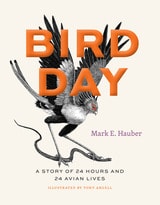
Bird Day
A Story of 24 Hours and 24 Avian LivesMark E. Hauber
University of Chicago Press, 2023
From morning to night and from the Antarctic to the equator, birds have busy days. In this short book, ornithologist Mark E. Hauber shows readers exactly how birds spend their time. Each chapter covers a single bird during a single hour, highlighting twenty-four different bird species from around the globe, from the tropics through the temperate zones to the polar regions. We encounter owls and nightjars hunting at night and kiwis and petrels finding their way in the dark. As the sun rises, we witness the beautiful songs of the “dawn chorus.” At eleven o’clock in the morning, we float alongside a common pochard, a duck resting with one eye open to avoid predators. At eight that evening, we spot a hawk swallowing bats whole, gorging on up to fifteen in rapid succession before retreating into the darkness.
For each chapter, award-winning artist Tony Angell has depicted these scenes with his signature pen and ink illustrations, which grow increasingly light and then dark as our bird day passes. Working closely together to narrate and illustrate these unique moments in time, Hauber and Angell have created an engaging read that is a perfect way to spend an hour or two—and a true gift for readers, amateur scientists, and birdwatchers.
Bird Watch
A Survey of Planet Earth's Changing EcosystemsMartin Walters
University of Chicago Press, 2011
From the tufted puffin in the Pacific Northwest to the hook-billed hermit in the Brazilian rainforest, birds suffer from the effects of climate change in every corner of the globe. Scientists have found declines of up to 90 percent in some troubled bird populations and unprecedented reproductive failure in others. The most recent studies suggest dire prospects: 1,227 avian species are threatened with extinction and an additional 838 near-threatened species are urgent priorities for conservation action.
As much an indispensable guide as a timely call to action, Bird Watch is an illustrated tour of these endangered birds and their habitats. Encyclopedic in scope, this book features all 1,227 species on the International Union for Conservation of Nature (IUCN) Red List, thoroughly detailing the environmental pressures and conservation prescriptions that hold their futures in the balance. After introducing readers to the main threats to birds and regions at high risk, Bird Watch presents a visually stunning and scientifically accurate flight over the major bird habitats, including tropical forests; temperate and northern forests; deserts; mountains; grasslands; and Mediterranean, marine, freshwater, and oceanic islands. The volume concludes with an overview of bird species by region—categorized by family within each region, and a guide to the world’s best birding sites. Produced in cooperation with BirdLife International, Bird Watch is a celebration of the beauty and diversity of birds and their habitats—and a warning of the dangers they face around the world.
Birds of the Great Basin
A Natural HistoryFred A. Ryser
University of Nevada Press, 1985
Birds of the Lower Colorado River Valley
Kenneth V. Rosenberg, Robert D. Ohmart, William C. Hunter, and Bertin W. Anderson
University of Arizona Press, 1991
"A tremendous amount of information is included in this book for banders, birders, and people working to restore the 'Nile of the American Southwest.'" —North American Bird Bander
"A report on several years of scientific research undertaken to investigate the ecological relationships among desert riparian wildlife. . . . Well writen and very informative book." —The Canadian Field Naturalist
"This work is a great achievment." —Birding