Results by title
18284 books match the query 'United States' and 902 start with b
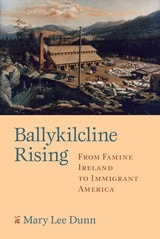
Ballykilcline Rising
From Famine Ireland to Immigrant AmericaMary Lee Dunn Maguire
University of Massachusetts Press, 2008
In 1847, in the third year of Ireland's Great Famine and the thirteenth year of their rent strike against the Crown, hundreds of tenant farmers in Ballykilcline, County Roscommon, were evicted by the Queen's agents and shipped to New York. Mary Lee Dunn tells their story in this meticulously researched book. Using numerous Irish and U.S. sources and with descendants' help, she traces dozens of the evictees to Rutland, Vermont, as railroads and marble quarries transformed the local economy. She follows the immigrants up to 1870 and learns not only what happened to them but also what light American experience and records cast on their Irish “rebellion.”
Dunn begins with Ireland's pre-Famine social and political landscape as context for the Ballykilcline strike. The tenants had rented earlier from the Mahons of Strokestown, whose former property now houses Ireland's Famine Museum. In 1847, landlord Denis Mahon evicted and sent nearly a thousand tenants to Quebec, where half died before or just after reaching the Grosse Ile quarantine station. Mahon was gunned down months later. His murder provoked an international controversy involving the Vatican. An early suspect in the case was a man from Ballykilcline.
In the United States, many of the immigrants resettled in clusters in several locations, including Vermont, Illinois, Iowa, Maryland, and New York. In Vermont they found jobs in the marble quarries, but some of them lost their homes again in quarry labor actions after 1859. Others prospered in their new lives. A number of Ballykilcline families who stopped in Rutland later moved west; one had a son kidnapped by Indians in Minnesota. Readers who have Irish Famine roots will gain a sense of their own “back story” from this account of Ireland and the native Irish, and scholars in the field of immigration studies will find it particularly useful.
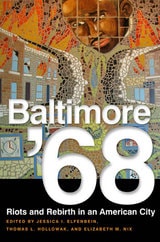
Baltimore '68
Riots and Rebirth in an American CityEdited by Jessica I. Elfenbein, Thomas L. Hollowak and Elizabeth M. Nix
Temple University Press, 2011
In 1968, Baltimore was home to a variety of ethnic, religious, and racial communities that, like those in other American cities, were confronting a quickly declining industrial base. In April of that year, disturbances broke the urban landscape along lines of race and class.
This book offers chapters on events leading up to the turmoil, the riots, and the aftermath as well as four rigorously edited and annotated oral histories of members of the Baltimore community. The combination of new scholarship and first-person accounts provides a comprehensive case study of this period of civil unrest four decades later.
This engaging, broad-based public history lays bare the diverse experiences of 1968 and their effects, emphasizing the role of specific human actions. By reflecting on the stories and analysis presented in this anthology, readers may feel empowered to pursue informed, responsible civic action of their own.
Baltimore '68 is the book component of a larger public history project, "Baltimore '68 Riots: Riots and Rebirth." The project's companion website (http://archives.ubalt.edu/bsr/index.html ) offers many more oral histories plus photos, art, and links to archival sources. The book and the website together make up an invaluable teaching resource on cities, social unrest, and racial politics in the 1960s. The project was the corecipient of the 2009 Outstanding Public History Project Award from the National Council on Public History.
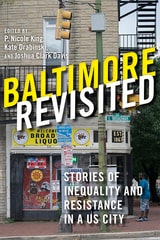
Baltimore Revisited
Stories of Inequality and Resistance in a U.S. CityEdited by P. Nicole King, Kate Drabinski, and Joshua Clark Davis
Rutgers University Press, 2019
To help untangle these apparent paradoxes, the editors of Baltimore Revisited have assembled a collection of over thirty experts from inside and outside academia. Together, they reveal that Baltimore has been ground zero for a slew of neoliberal policies, a place where inequality has increased as corporate interests have eagerly privatized public goods and services to maximize profits. But they also uncover how community members resist and reveal a long tradition of Baltimoreans who have fought for social justice.
The essays in this collection take readers on a tour through the city’s diverse neighborhoods, from the Lumbee Indian community in East Baltimore to the crusade for environmental justice in South Baltimore. Baltimore Revisited examines the city’s past, reflects upon the city’s present, and envisions the city’s future.

Baltimore Sports
Stories from Charm CityDaniel A. Nathan
University of Arkansas Press, 2016
To read a sample chapter, visit www.uapress.com.
Baltimore is the birthplace of Francis Scott Key’s “The Star-Spangled Banner,” the incomparable Babe Ruth, and the gold medalist Michael Phelps. It’s a one-of-a-kind town with singular stories, well-publicized challenges, and also a rich sporting history. Baltimore Sports: Stories from Charm City chronicles the many ways that sports are an integral part of Baltimore’s history and identity and part of what makes the city unique, interesting, and, for some people, loveable.
Wide ranging and eclectic, the essays included here cover not only the Orioles and the Ravens, but also lesser-known Baltimore athletes and teams. Toots Barger, known as the “Queen of the Duckpins,” makes an appearance. So do the Dunbar Poets, considered by some to be the greatest high-school basketball team ever.
Bringing together the work of both historians and journalists, including Michael Olesker, former Baltimore Sun columnist, and Rafael Alvarez, who was named Baltimore’s Best Writer by Baltimore Magazine in 2014, Baltimore Sports illuminates Charm City through this fascinating exploration of its teams, fans, and athletes.
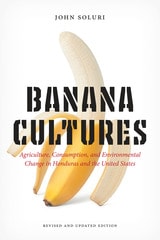
Banana Cultures
Agriculture, Consumption, and Environmental Change in Honduras and the United StatesBy John Soluri
University of Texas Press, 2021
Bananas, the most frequently consumed fresh fruit in the United States, have been linked to Miss Chiquita and Carmen Miranda, "banana republics," and Banana Republic clothing stores—everything from exotic kitsch, to Third World dictatorships, to middle-class fashion. But how did the rise in banana consumption in the United States affect the banana-growing regions of Central America? In this lively, interdisciplinary study, John Soluri integrates agroecology, anthropology, political economy, and history to trace the symbiotic growth of the export banana industry in Honduras and the consumer mass market in the United States.
Beginning in the 1870s, when bananas first appeared in the U.S. marketplace, Soluri examines the tensions between the small-scale growers, who dominated the trade in the early years, and the shippers. He then shows how rising demand led to changes in production that resulted in the formation of major agribusinesses, spawned international migrations, and transformed great swaths of the Honduran environment into monocultures susceptible to plant disease epidemics that in turn changed Central American livelihoods. Soluri also looks at labor practices and workers' lives, changing gender roles on the banana plantations, the effects of pesticides on the Honduran environment and people, and the mass marketing of bananas to consumers in the United States. His multifaceted account of a century of banana production and consumption adds an important chapter to the history of Honduras, as well as to the larger history of globalization and its effects on rural peoples, local economies, and biodiversity.
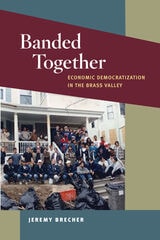
Banded Together
Economic Democratization in the Brass ValleyJeremy Brecher
University of Illinois Press, 2011
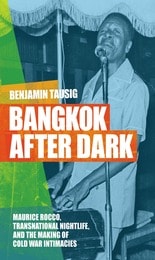
Bangkok after Dark
Maurice Rocco, Transnational Nightlife, and the Making of Cold War IntimaciesBenjamin Tausig
Duke University Press, 2025
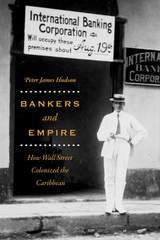
Bankers and Empire
How Wall Street Colonized the CaribbeanPeter James Hudson
University of Chicago Press, 2017
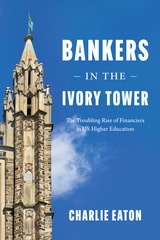
Bankers in the Ivory Tower
The Troubling Rise of Financiers in US Higher EducationCharlie Eaton
University of Chicago Press, 2022
Exposes the intimate relationship between big finance and higher education inequality in America.
Elite colleges have long played a crucial role in maintaining social and class status in America, while public universities have offered a major stepping stone to new economic opportunities. However, as Charlie Eaton reveals in Bankers in the Ivory Tower, finance has played a central role in the widening inequality in recent decades, both in American higher education and in American society at large.
With federal and state funding falling short, the US higher education system has become increasingly dependent on financial markets and the financiers that mediate them. Beginning in the 1980s, the government, colleges, students, and their families took on multiple new roles as financial investors, borrowers, and brokers. The turn to finance, however, has yielded wildly unequal results. At the top, ties to Wall Street help the most elite private schools achieve the greatest endowment growth through hedge fund investments and the support of wealthy donors. At the bottom, takeovers by private equity transform for-profit colleges into predatory organizations that leave disadvantaged students with massive loan debt and few educational benefits. And in the middle, public universities are squeezed between incentives to increase tuition and pressures to maintain access and affordability. Eaton chronicles these transformations, making clear for the first time just how tight the links are between powerful financiers and America’s unequal system of higher education.

Banking On It
Inside Baseball, Hardball Politics, and Building the Best Era in Phillies HistoryPaul Hagen with Kevin Cooney
Temple University Press, 2027
When Citizens Bank Park opened on April 3, 2024, it was the result of twelve years (and many false starts) of maneuvering for the venue to replace Veterans Stadium as the home to the Philadelphia Phillies. Banking On It describes the politicking that took place, from conflicts between the Phillies and the Philadelphia Eagles resulting from sharing a venue, to decisions about where to build the new ballpark, who would pay for it, and where the outfield fences would be placed.
Paul Hagen and Kevin Cooney recount the setbacks, frustrations, missteps, political machinations, and angst the team surmounted as the process played out. But Banking On It also details the benefits of all these efforts—the Phillies became a powerhouse franchise after settling into their new home. The new stadium helped the team elevate its game by generating money to attract and keep better players, including Jim Thome, Ryan Howard, and Kyle Schwarber taking advantage of groundwork laid by scouts and managers. The Phillies have had their most successful two decades in franchise history playing at Citizens Bank Park.
Banking On It celebrates the game, the team, and the stadium that helped create a championship era.
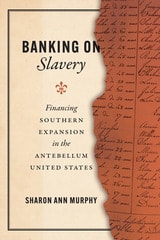
Banking on Slavery
Financing Southern Expansion in the Antebellum United StatesSharon Ann Murphy
University of Chicago Press, 2023
It’s now widely understood that the fullest expression of nineteenth-century American capitalism was found in the structures of chattel slavery. It’s also understood that almost every other institution and aspect of life then was at least entangled with—and often profited from—slavery’s perpetuation. Yet as Sharon Ann Murphy shows in her powerful and unprecedented book, the centrality of enslaved labor to banking in the antebellum United States is far greater than previously thought.
Banking on Slavery sheds light on precisely how the financial relationships between banks and slaveholders worked across the nineteenth-century South. Murphy argues that the rapid spread of slavery in the South during the 1820s and ’30s depended significantly upon southern banks’ willingness to financialize enslaved lives, with the use of enslaved individuals as loan collateral proving central to these financial relationships. She makes clear how southern banks were ready—and, in some cases, even eager—to alter time-honored banking practices to meet the needs of slaveholders. In the end, many of these banks sacrificed themselves in their efforts to stabilize the slave economy. Murphy also details how banks and slaveholders transformed enslaved lives from physical bodies into abstract capital assets. Her book provides an essential examination of how our nation’s financial history is more intimately intertwined with the dehumanizing institution of slavery than scholars have previously thought.
Banking on Slavery
Financing Southern Expansion in the Antebellum United StatesSharon Ann Murphy
University of Chicago Press, 2023
A sobering excavation of how deeply nineteenth-century American banks were entwined with the institution of slavery.
It’s now widely understood that the fullest expression of nineteenth-century American capitalism was found in the structures of chattel slavery. It’s also understood that almost every other institution and aspect of life then was at least entangled with—and often profited from—slavery’s perpetuation. Yet as Sharon Ann Murphy shows in her powerful and unprecedented book, the centrality of enslaved labor to banking in the antebellum United States is far greater than previously thought.
Banking on Slavery sheds light on precisely how the financial relationships between banks and slaveholders worked across the nineteenth-century South. Murphy argues that the rapid spread of slavery in the South during the 1820s and ’30s depended significantly upon southern banks’ willingness to financialize enslaved lives, with the use of enslaved individuals as loan collateral proving central to these financial relationships. She makes clear how southern banks were ready—and, in some cases, even eager—to alter time-honored banking practices to meet the needs of slaveholders. In the end, many of these banks sacrificed themselves in their efforts to stabilize the slave economy. Murphy also details how banks and slaveholders transformed enslaved lives from physical bodies into abstract capital assets. Her book provides an essential examination of how our nation’s financial history is more intimately intertwined with the dehumanizing institution of slavery than scholars have previously thought.
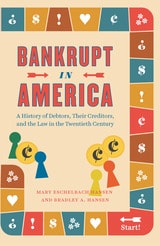
Bankrupt in America
A History of Debtors, Their Creditors, and the Law in the Twentieth CenturyMary Eschelbach Hansen and Bradley A. Hansen
University of Chicago Press, 2020
Interweaving careful legal history and rigorous economic analysis, Bankrupt in America is the first work to trace how bankruptcy was transformed from an intermittently used constitutional provision, to an indispensable tool for business, to a central element of the social safety net for ordinary Americans. To do this, the authors track federal bankruptcy law, as well as related state and federal laws, examining the interaction between changes in the laws and changes in how people in each state used the bankruptcy law. In this thorough investigation, Hansen and Hansen reach novel conclusions about the causes and consequences of bankruptcy, adding nuance to the discussion of the relationship between bankruptcy rates and economic performance.
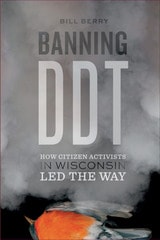
Banning DDT
How Citizen Activists in Wisconsin Led the WayBill Berry
Wisconsin Historical Society Press, 2014
On a December day in 1968, DDT went on trial in Madison, Wisconsin. In Banning DDT: How Citizen Activists in Wisconsin Led the Way, Bill Berry details how the citizens, scientists, reporters, and traditional conservationists drew attention to the harmful effects of “the miracle pesticide” DDT, which was being used to control Dutch elm disease.
Berry tells of the hunters and fishers, bird-watchers, and garden-club ladies like Lorrie Otto, who dropped off twenty-eight dead robins at the Bayside village offices. He tells of university professors and scientists like Joseph Hickey, a professor and researcher in the Department of Wildlife Management in at the University of Wisconsin–Madison, who, years after the fact, wept about the suppression of some of his early DDT research. And he tells of activists like Senator Gaylord Nelson and members of the state’s Citizens Natural Resources who rallied the cause.
The Madison trial was one of the first for the Environmental Defense Fund. The National Audubon Society helped secure the more than $52,000 in donations that offset the environmentalists’ costs associated with the hearing. Today, virtually every reference to the history of DDT mentions the impact of Wisconsin’s battles.
The six-month-long DDT hearing was one of the first chapters in citizen activism in the modern environmental era. Banning DDT is a compelling story of how citizen activism, science, and law merged in Wisconsin’s DDT battles to forge a new way to accomplish public policy. These citizen activists were motivated by the belief that we all deserve a voice on the health of the land and water that sustain us.
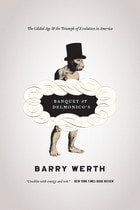
Banquet at Delmonico's
The Gilded Age and the Triumph of Evolution in AmericaBarry Werth
University of Chicago Press, 2011
In Banquet at Delmonico’s, Barry Werth draws readers inside the circle of intellectuals, scientists, politicians, businessmen, and clergymen who brought Charles Darwin’s controversial ideas to post-Civil-War America. Each chapter is dedicated to a crucial intellectual encounter, culminating with an exclusive farewell dinner held in English philosopher Herbert Spencer’s honor at the venerable New York restaurant Delmonico’s in 1882. In this thought-provoking and nuanced account, Werth firmly situates social Darwinism in the context of the Gilded Age. Banquet at Delmonico’s is social history at its finest.
Baptist Battles
Social Change and Religious Conflict in the Southern Baptist ConventionNancy Tatom Ammerman
Rutgers University Press, 1990
Since 1979 Southern Baptists have been noisily struggling to agree on symbols, beliefs, and practices as they attempt to make sense of their changing social world. Nancy Ammerman has carefully documented their struggle. She tells the story of the Baptist reversal from a moderate to a fundamentalist outlook and speculates on the future of the denomination.
Ammerman places change among the Southern Baptists in the context of the cultural and economic changes that have transformed the South from its rural past into an urbanizing, culturally diverse region. Not only did the South change; Southern Baptists did as well. Reflecting this diversity, the Southern Baptist bureaucracy was relatively progressive. During the 1960s and 1970s, moderate sentiments prevailed, while fundamentalists remained on the margins. These two were, however, becoming increasingly divergent in what they considered important about being a Baptist, in their views about the Bible, in their attitudes on the origination of women, on Christian morals, and on national politics.
Late in the 1970s, a fundamentalist coalition emerged, followed by unsuccessful efforts by moderates to oppose it. The battles escalated until 1985, when 45,000 Baptists gathered in Dallas to decide between contending presidential candidates. That dramatic event illustrated the extent to which organized political resources were determining the course of the conflict. Ammerman studies these strategies and resources as well.
Examining how this tension affected Baptists, Ammerman begins with case studies of the change it is producing in Baptist agencies. But she also brings us back to the local churches and individual believers who are renegotiating their relationships within their denomination. She asks whether the denomination’s polity can accommodate an increasingly diverse group of Baptists, of whether the only way dissidents can have a voice is through schism.

Bar Yarns and Manic-Depressive Mixtapes
Jim Walsh on Music from Minneapolis to the Outer LimitsJim Walsh
University of Minnesota Press, 2016
Bar Yarns and Manic Depressive Mix Tapes distills thirty delirious, jam-packed years of some of the best music writing ever to come out of the Twin Cities. As a writer and musician, the ever-curious Jim Walsh has lived a life immersed in music, and it all makes its way into his columns and feature articles, interviews and reviews, including personal essays on life, love, music, family, death, and, yes, the manic-depressive highs and lows that come with being an obsessive music lover and listener.
From Minneapolis’s own Prince to such far-flung acts as David Bowie, the Waterboys, Lucinda Williams, Parliament-Funkadelic, L7, the Rolling Stones, the Ramones, U2, Hank Williams, Britney Spears, Elvis Presley and Nirvana, Walsh’s work treats us to a chorus of the voices and sounds that have made the music scene over the past three decades. The big names are here, from Rosanne Cash to Bruce Springsteen to Bob Marley and Jackson Browne, but so are those a little shy of superstardom, like the Tin Star Sisters and Uncle Tupelo, Son Volt, the Gear Daddies, Semisonic, and The Belfast Cowboys.
The book is also a tour (de force) of the Twin Cities' most celebrated music venues past and present, from the Prom Ballroom to Paisley Park to Duffy's. When Walsh isn't celebrating the sheer magic of live music or dreaming to tunes blasting from the car console, he might be surveying the scene with the Hamm's Bear at Grumpy's or the Double Deuce or singing the last night at the Uptown Bar blues. Whether he's dishing dirt with Yoko Ono or digging the Replacements' roots, giving an old rocker a spin or offering a mic to the latest upstart, Jim Walsh reminds us that in the land of a thousand lakes there are a thousand dances, and the music never dies.
Capturing the pure notes and character of the sound of the Twin Cities and beyond, with a keen eye for trends and the telling detail, his book truly is a mix tape of thirty years of unforgettable music.
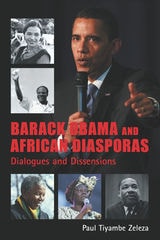
Barack Obama and African Diasporas
Dialogues and DissensionsPaul Tiyambe Zeleza
Ohio University Press, 2009
In the title essay, Zeleza analyzes the significance of the election of a member of the African diaspora to the presidency of the United States. He also addresses Africa’s urgent political concerns: China’s role in Africa, South Africa's difficulties in making the transition to a postapartheid society, the agony of Zimbabwe, and a discussion of Pan-Africanism, its history and contemporary challenges. Other posts introduce the reader to the rhythms of daily life, including football and other leisure activities, in capturing the different aspects of Africa.
An original and respected voice, Zeleza engages the reader in a series of passionate public conversations on issues and events of utmost importance to the globalized world. He deserves a wide readership.
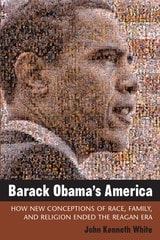
Barack Obama's America
How New Conceptions of Race, Family, and Religion Ended the Reagan EraJohn Kenneth White
University of Michigan Press, 2009
"White's Barack Obama's America eloquently captures both the important nuances of the current political scene and its long-term consequences."
---Richard Wirthlin, former pollster for Ronald Reagan
"This delightfully written and accessible book is the best available account of the changes in culture, society, and politics that have given us Barack Obama's America."
---Stan Greenberg, pollster for Bill Clinton and Chairman and CEO of Greenberg Quinlan Rosner Research
"From one of the nation's foremost experts on how values shape our politics, a clear and compelling account of the dramatic shifts in social attitudes that are transforming American political culture. White's masterful blend of narrative and data illuminates the arc of electoral history from Reagan to Obama, making a powerful case for why we are entering a new progressive political era."
---Matthew R. Kerbel, Professor of Political Science, Villanova University, and author of Netroots
"John Kenneth White is bold. He asks the big questions . . . Who are we? What do we claim to believe? How do we actually live? What are our politics? John Kenneth White writes compellingly about religion and the role it played in making Barack Obama president. White's keen insight into America's many faiths clarifies why Barack Obama succeeded against all odds. It is a fascinating description of religion and politics in twenty-first-century America---a must-read."
---Kathleen Kennedy Townsend, former Lieutenant Governor of Maryland and author of Failing America's Faithful
"In Barack Obama's America, John Kenneth White has written the political equivalent of Baedeker or Michelin, the definitive guide to and through the new, uncharted political landscape of our world. White captures and explains what America means---and what it means to be an American---in the twenty-first century."
---Mark Shields, nationally syndicated columnist and political commentator for PBS NewsHour
"John White has always caught important trends in American politics that others missed. With his shrewd analysis of why Barack Obama won, he's done it again."
---E. J. Dionne, Jr., Senior Fellow, Brookings Institution, and University Professor in the Foundations of Democracy and Culture at Georgetown University
The election of Barack Obama to the presidency marks a conclusive end to the Reagan era, writes John Kenneth White in Barack Obama's America. Reagan symbolized a 1950s and 1960s America, largely white and suburban, with married couples and kids at home, who attended church more often than not.
Obama's election marks a new era, the author writes. Whites will be a minority by 2042. Marriage is at an all-time low. Cohabitation has increased from a half-million couples in 1960 to more than 5 million in 2000 to even more this year. Gay marriages and civil unions are redefining what it means to be a family. And organized religions are suffering, even as Americans continue to think of themselves as a religious people. Obama's inauguration was a defining moment in the political destiny of this country, based largely on demographic shifts, as described in Barack Obama's America.
John Kenneth White is Professor of Politics at the Catholic University of America in Washington, D.C.
Cover image: "Out of many, we are one: Dare to Hope: Faces from 2008 Obama Rallies" by Anne C. Savage, view and buy full image at http://revolutionaryviews.com/obama_poster.html.
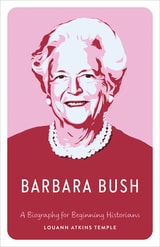
Barbara Bush
A Biography for Beginning HistoriansLouann Atkins Temple
University of Texas Press, 2025
A brief biography of Barbara Bush for young readers.
Louann Temple is a lifelong Texan with a personal passion for arts and education who believes that biography, with its emphasis on personalities, is ideal for introducing young people to history, with its focus on events. Temple is uniquely situated to write this biography for young readers, as she has been personally acquainted with many important people in presidential history, First Lady Barbara Bush included, and she has mentored countless middle and high school students, preparing them for college admission.
Barbara Bush highlights the key events in the life of the First Lady; explores the life lessons afforded by her legacy; and reflects on the broad historical issues during her time in the White House from 1989 to 1993. Married to the forty-first president, George H. W. Bush, Barbara Bush spent her time as First Lady dedicated to charity work and helping the American people, notably supporting Americans during the AIDS crisis. Enhanced with a carefully curated selection of black and white photographs from three presidential libraries, this biography for beginning historians is poised to bring the best of biography and history to a new generation of readers.
Barbara F. Vucanovich
From Nevada to Congress, and Back AgainBarbara F. Vucanovich
University of Nevada Press, 2014
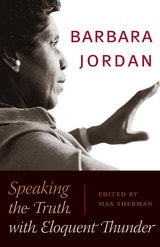
Barbara Jordan
Speaking the Truth with Eloquent ThunderEdited by Max Sherman
University of Texas Press, 2007
Revered by Americans across the political spectrum, Barbara Jordan was "the most outspoken moral voice of the American political system," in the words of former President Bill Clinton, who awarded her the Presidential Medal of Freedom in 1994. Throughout her career as a Texas senator, U.S. congresswoman, and distinguished professor at the Lyndon B. Johnson School of Public Affairs, Barbara Jordan lived by a simple creed: "Ethical behavior means being honest, telling the truth, and doing what you said you were going to do." Her strong stand for ethics in government, civil liberties, and democratic values still provides a standard around which the nation can unite in the twenty-first century.
This volume brings together several major political speeches that articulate Barbara Jordan's most deeply held values. They include:
- "Erosion of Civil Liberties," a commencement address delivered at Howard University on May 12, 1974, in which Jordan warned that "tyranny in America is possible"
- "The Constitutional Basis for Impeachment," Jordan's ringing defense of the U.S. Constitution before the House Judiciary Committee investigating the Watergate break-in
- Keynote addresses to the Democratic National Conventions of 1976 and 1992, in which Jordan set forth her vision of the Democratic Party as an advocate for the common good and a catalyst of change
- Testimony in the U.S. Congress on the confirmation of Supreme Court nominee Robert Bork and on immigration reform
- Meditations on faith and politics from two National Prayer Breakfasts
- Acceptance speech for the 1995 Sylvanus Thayer Award presented by the Association of Graduates of the United States Military Academy, in which Jordan challenged the military to uphold the values of "duty, honor, country"
Accompanying the speeches are context-setting introductions by volume editor Max Sherman. The book concludes with the eloquent eulogy that Bill Moyers delivered at Barbara Jordan's memorial service in 1996, in which he summed up Jordan's remarkable life and career by saying, "Just when we despaired of finding a hero, she showed up, to give the sign of democracy.... This is no small thing. This, my friends, this is grace. And for it we are thankful."

Barbaric Intercourse
Caricature and the Culture of Conduct, 1841-1936Martha Banta
University of Chicago Press, 2003
Banta also deals extensively with London's Punch, a sharp critic of American nationalism, and draws from images and writings in magazines as diverse as Puck,The Crisis,Harper's Weekly, and The International Socialist Review. Orchestrating a wealth of material, including reproductions of rarely seen political cartoons, she offers a richly layered account of the cultural struggles of the age, from contests over immigration and the role of the New Negro in American society, to debates over Wall Street greed, women's suffrage, and the moral consequences of Western expansionism.
Barbecue
The History of an American InstitutionRobert F. Moss
University of Alabama Press, 2010
The history of barbecue in the United States has until now remained virtually untold. Barbecue has a long, rich history—a history that could be found only through scattered references in old letters, journals, newspapers, diaries, and travel narratives until this book was written.
Barbecue
The History of an American Institution, Revised and Expanded Second EditionRobert F. Moss
University of Alabama Press, 2020
The definitive history of an iconic American food, with new chapters, sidebars, and updated historical accounts.
Expert Robert F. Moss researched hundreds of sources—newspapers, letters, journals, diaries, and travel narratives—to document the origins and evolution of barbecue from its origins among Native Americans to its present status as an icon of American culture. In this definitive guide, he maps out the development of the rich array of regional barbecue styles, chronicles the rise of barbecue restaurants, and profiles the famed pitmasters who made the tradition what it is today.
Barbecue is the story not just of a dish but also of a social institution that helped shape many regional cultures of the United States. The history begins with British colonists’ adoption of barbecuing techniques from Native Americans in the 17th and 18th centuries, moves to barbecue’s establishment as the preeminent form of public celebration in the 19th century, and is carried through to barbecue’s ubiquitous standing today.
From the very beginning, barbecues were powerful social magnets, drawing together people from a wide range of classes and geographic backgrounds. Barbecue played a key role in three centuries of American history, both reflecting and influencing the direction of an evolving society. By tracing the story of barbecue from its origins to today, Barbecue: The History of an American Institution traces the very thread of American social history.
Moss has made significant updates in this new edition, offering a wealth of new historical research, sources, illustrations, and anecdotes.
Barbed Voices
Oral History, Resistance, and the World War II Japanese American Social DisasterArthur A. Hansen
University Press of Colorado, 2021
What historically was benignly termed the “Japanese American Evacuation” was in fact a social disaster, which, unlike a natural disaster, is man-made. Examining the emotional implications of targeted systemic incarceration, Hansen highlights the psychological traumas that transformed Japanese American identity and culture for generations after the war. While many accounts of Japanese American incarceration rely heavily on government documents and analytic texts, Hansen’s focus on first-person Nikkei testimonies gathered through powerful oral history interviews gives expression to the resistance to this social disaster.
Analyzing the evolving historical memory of the effects of wartime incarceration, Barbed Voices presents a new scholarly framework of enduring value. It will be of interest to students and scholars of oral history, US history, public history, and ethnic studies as well as the general public interested in the WWII experience and civil rights.

Barbie's Queer Accessories
Erica Rand
Duke University Press, 1995
Rand begins by focusing on the production and marketing of Barbie, starting in 1959, including Mattel’s numerous tie-ins and spin-offs. These variations, which include the much-promoted multiethnic Barbies and the controversial Earring Magic Ken, helped make the doll one of the most profitable toys on the market. In lively chapters based on extensive interviews, the author discusses adult testimony from both Barbie "survivors" and enthusiasts and explores how memories of the doll fit into women’s lives. Finally, Rand looks at cultural reappropriations of Barbie by artists, collectors, and especially lesbians and gay men, and considers resistance to Barbie as a form of social and political activism.
Illustrated with photographs of various interpretations and alterations of Barbie, this book encompasses both Barbie glorification and abjection as it testifies to the irrefutably compelling qualities of this bestselling toy. Anyone who has played with Barbie—or, more importantly, thought or worried about playing with Barbie—will find this book fascinating.

Bare Bones Young Adult Services
Tips for Public Library GeneralistsAmerican Library Association, 2000

Barn Quilts and the American Quilt Trail Movement
Suzi Parron
Ohio University Press, 2012
The story of the American Quilt Trail, featuring the colorful patterns of quilt squares painted large on barns throughout North America, is the story of one of the fastest-growing grassroots public arts movements in the United States and Canada. In Barn Quilts and the American Quilt Trail Movement Suzi Parron takes us to twenty-five states as well as Canada to visit the people and places that have put this movement on America’s tourist and folk art map.
Through dozens of interviews with barn quilt artists, committee members, and barn owners, Parron documents a journey that began in 2001 with the founder of the movement, Donna Sue Groves. Groves’s desire to honor her mother with a quilt square painted on their barn became a group effort that eventually grew into a county-wide project. Today, quilt squares form a long imaginary clothesline, appearing on more than three thousand barns scattered along one hundred and twenty driving trails.
With more than eighty full-color photographs, Parron documents here a movement that combines rural economic development with an American folk art phenomenon.
Barney Frank
The Story of America's Only Left-Handed, Gay, Jewish CongressmanStuart Weisberg
University of Massachusetts Press, 2009
Based on interviews with over 150 people, including more than thirty hours with Frank himself, this biography reconstructs for the first time his life and career, from his working-class childhood in Bayonne, New Jersey, to his years at Harvard and in Boston politics, through his rise to national prominence. Stuart Weisberg captures Frank in all his quirkiness, irreverence, and complexity. He also examines his less appealing side—his gruff exterior, his legendary impatience, his aversion to wasting time. Weisberg reveals the pressure Frank has felt as the most prominent openly gay politician in the United States, one whose career was nearly derailed by a highly publicized sex scandal involving a male prostitute.
Above all, this book shows Frank to be a superb legislator—a pragmatic politician who has dedicated his career to pursuing an unabashedly liberal agenda and whose depth of intellect and sense of humor have made him one of the most influential and colorful figures in Washington.
Barns of Wisconsin (Revised Edition)
Jerry Apps
Wisconsin Historical Society Press, 2010
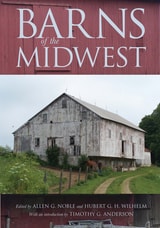
Barns of the Midwest
Allen G. Noble
Ohio University Press, 2018
Originally published in 1995, Barns of the Midwest is a masterful example of material cultural history. It arrived at a critical moment for the agricultural landscape. The 1980s were marked by farm foreclosures, rural bank failures, the continued rise of industrialized agriculture, and severe floods and droughts. These waves of disaster hastened the erosion of the idea of a pastoral Heartland knit together with small farms and rural values. And it wasn’t just an idea that was eroded; material artifacts such as the iconic Midwestern barn were also rapidly wearing away.
It was against this background that editors Noble and Wilhelm gathered noted experts in history and architecture to write on the nature and meaning of Midwestern barns, explaining why certain barns were built as they were, what types of barns appeared where, and what their functions were. Featuring a new introduction by Timothy G. Anderson, Barns of the Midwest is the definitive work on this ubiquitous but little studied architectural symbol of a region and its history.
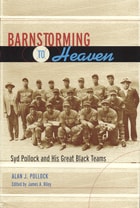
Barnstorming to Heaven
Syd Pollock and His Great Black TeamsAlan J. Pollock
University of Alabama Press, 2006
The Indianapolis Clowns were a black touring baseball team that featured an entertaining mix of comedy, showmanship, and skill. Sometimes referred to as the Harlem Globetrotters of baseball—though many of the Globetrotters’ routines were borrowed directly from the Clowns—they captured the affection of Americans of all ethnicities and classes. Author Alan Pollock was the son of the Clowns' owner Syd Pollock, who owned a series of black barnstorming teams that crisscrossed the country from the late 1920s until the mid-1960s. They played every venue imaginable, from little league fields to Yankee Stadium, and toured the South, the Northeast, the Midwest, the Canadian Rockies, the Dakotas, the Southwest, the Far West—anywhere there was a crowd willing to shell out a few dollars for an unforgettable evening.
Alan grew up around the team and describes in vivid detail the comedy routines of Richard “King Tut” King, “Spec Bebob” Bell, Reece “Goose” Tatum; the “warpaint” and outlandish costumes worn by players in the early days; and the crowd-pleasing displays of amazing skill known as pepperball and shadowball. These men were entertainers, but they were also among the most gifted athletes of their day, making a living in sports the only way a black man could. They played to win.
More than just a baseball story, these recollections tell the story of great societal changes in America from the roaring twenties, through the years of the Great Depression and World War II, and into the Civil Rights era.
Barons of Labor
The San Francisco Building Trades and Union Power in the Progressive EraMichael Kazin
University of Illinois Press, 1989

Barrier of a Common Language
An American Looks at Contemporary British PoetryDana Gioia
University of Michigan Press, 2003
Barriers to Reentry?
The Labor Market for Released Prisoners in Post-Industrial AmericaShawn D. Bushway
Russell Sage Foundation, 2007

Barry Goldwater and the Remaking of the American Political Landscape
Edited by Elizabeth Tandy Shermer
University of Arizona Press, 2013
Since Goldwater’s death in 1998, politicians, pundits, and academics have been assessing his achievements and his shortcomings. The twelve essays in this volume thoroughly examine the life, times, and impact of “Mr. Conservative.” Scrutinizing the transformation of a Phoenix department store owner into a politician, de facto political philosopher, and five-time US senator, contributors highlight the importance of power, showcasing the relationship between the nascent conservative movement’s cadre of elite businessmen, newsmen, and intellectuals and their followers at the grassroots—or sagebrush—level.
Goldwater, who was born in the Arizona Territory in 1909, was deeply influenced by his Western upbringing. With his appearance on the national stage in 1964, he not only articulated a new brand of conservatism but gave a voice to many Americans who were not enamored with the social and political changes of the era. He may have lost the battle for the presidency, but he energized a coalition of journalists, publishers, women’s groups, and Southerners to band together in a movement that reshaped the nation.
Baseball In 1889
Players vs. OwnersDaniel M. Pearson
University of Wisconsin Press, 1993

Baseball and Country Music
Don Cusic
University of Wisconsin Press, 2003
Baseball and Memory
Winning, Losing, and the Remembrance of Things PastLee Congdon
St. Augustine's Press, 2011

Baseball and Rhetorics of Purity
The National Pastime and American Identity During the War on TerrorMichael L. Butterworth
University of Alabama Press, 2010
An investigation into the culture and mythology of baseball, a study of its limits and failures, and an invitation to remake the game in a more democratic way.
Baseball has long been considered America’s “national pastime,” touted variously as a healthy diversion, a symbol of national unity, and a model of democratic inclusion. But, according to Michael Butterworth, such favorable rhetoric belies baseball’s complicity in the rhetorical construction of a world defined by good and evil.
Baseball and Rhetorics of Purity is an investigation into the culture and mythology of baseball, a study of its limits and failures, and an invitation to remake the game in a more democratic way. It pays special attention to baseball’s role in the reconstruction of American identity after September 11, 2001. This study is framed by a discussion that links the development of baseball to the discourses of innocence and purity in 19th-century America. From there, it examines ritual performances at baseball games; a traveling museum exhibit sponsored by the National Baseball Hall of Fame and Museum; the recent debate about the use of performance-enhancing drugs; the return of Major League Baseball to Washington, D.C., in 2005; and the advent of the World Baseball Classic in 2006.
Butterworth argues that by promoting myths of citizenship and purity, post-9/11 discourse concerning baseball ironically threatens the health of the democratic system and that baseball cannot be viewed as an innocent diversion or escape. Instead, Butterworth highlights how the game on the field reflects a more complex and diverse worldview, and makes a plea for the game’s recovery, both as a national pastime and as a site for celebrating the best of who we are and who we can be.
Baseball as Mediated Latinidad
Race, Masculinity, Nationalism, and Performances of IdentityJennifer Domino Rudolph
The Ohio State University Press, 2020
Baseball on Trial
The Origin of Baseball's Antitrust ExemptionNathaniel Grow
University of Illinois Press, 2014
Currently a billion dollar enterprise, professional baseball teams crisscross the country while the games are broadcast via radio, television, and internet coast to coast. The sheer scope of this activity would seem to embody the phrase "interstate commerce." Yet baseball is the only professional sport--indeed the sole industry--in the United States that currently benefits from a judicially constructed antitrust immunity. How could this be?
Drawing upon recently released documents from the National Baseball Hall of Fame, Grow analyzes how the Supreme Court reached this seemingly peculiar result by tracing the Federal Baseball litigation from its roots in 1914 to its resolution in 1922, in the process uncovering significant new details about the proceedings. Grow observes that while interstate commerce was measured at the time by the exchange of tangible goods, baseball teams in the 1910s merely provided live entertainment to their fans, while radio was a fledgling technology that had little impact on the sport. The book ultimately concludes that, despite the frequent criticism of the opinion, the Supreme Court's decision was consistent with the conditions and legal climate of the early twentieth century.
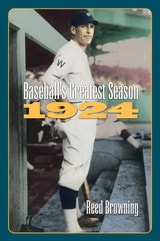
Baseball's Greatest Season, 1924
Reed Browning
University of Massachusetts Press, 2003
On the eve of the return of major league baseball to Washington, D.C., Baseball's Greatest Season recovers the memory of the one and only time when the championship of the national pastime resided in the nation's capital.

Baseball's Greatest Series
Yankees, Mariners, and the 1995 Matchup That Changed HistoryDonnelly, Chris
Rutgers University Press, 2010
This division series was not simply about two teams playing five postseason games. It was about Ken Griffey Jr., Lou Piniella, Buck Showalter, Gene Michael, Jim Leyritz, Randy Johnson, Wade Boggs, Tony Fernandez, Pat Kelly, Dion James, Darryl Strawberryùand many others who changed the course of baseball history . . .
A team playing to keep baseball alive in the Pacific Northwest
A manager who was literally managing for his job
A New York sports icon who for one week reminded everybody of the dominating player he had been a decade earlier
Chris Donnelly's replay of this entire season reminds readers that it was a time when grown men cried their eyes out after defeat, and others, just a few hundred feet away, poured beer and champagne over one another while 57,000 people in Seattle's Kingdome celebrated. Five games they were. Five games that reminded people, after the devastating players' strike in 1994, how great a game baseball is because comebacks are always possible, no matter how great the obstacles may seem.
From Don Mattingly's only postseason home run, which caused a near riot, to Edgar Martinez's legendary eleventh inning series-clinching double, Donnelly chronicles the earlier struggles of both teams during the 1980s, their mid-1990s resurgence, all five heart-stopping games of the series, and the dramatic and long-lasting effects of Seattle's victory. Simply stated, Baseball's Greatest Series hits a home run.
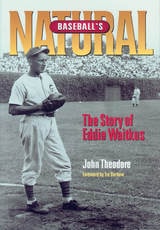
Baseball's Natural
The Story of Eddie WaitkusJohn Theodore. Foreword by Ira Berkow
Southern Illinois University Press, 2002
Baseball’s Natural: The Story of Eddie Waitkus is John Theodore’s true account of the slick-fielding first baseman who played for the Cubs and Phillies in the 1940s and became an immortalized figure in baseball lore as the inspiration for Roy Hobbs in Bernard Malamud’s The Natural.
The son of Lithuanian immigrants, Edward Stephen Waitkus (1919–1972) grew up in Boston and served in the Pacific during World War II. His army service in some of the war’s bloodiest combat earned him four Bronze Stars. Following the war, Waitkus became one of the most popular players of his era. As a rookie he led the Cubs in hitting in 1946 and quickly established himself as one of the best first basemen in the National League. To the disappointment of fans, the Cubs traded Waitkus to the Phillies in December of 1948. When he returned to Chicago in a Philadelphia uniform in June of the following year, he was hitting .306 and seemed destined for the All Star team.
On the night of June 14 at the Edgewater Beach Hotel, Waitkus’s bright career took an infamously tragic turn. He received a cryptic note summoning him to meet a young fan, Ruth Steinhagen. When Waitkus entered her hotel room, she proclaimed, “I have a surprise for you,” and then she just as quickly shot him in the chest. Steinhagen, then only nineteen, was one of the many young women—called “Baseball Annies”–who were fanatic about the game and its players, though her obsession proved more dangerous than most. A criminal court indicted Steinhagen and confined her to a state mental hospital for nearly three years.
Waitkus survived the shooting, made an inspirational return to baseball in 1950, and led the Phillies to the World Series. While Waitkus triumphed over his assault, he could not conquer his private demons. Depression stemming from the attack led to a severe problem with alcohol, a failed marriage, and a nervous breakdown. Waitkus found some happiness in his final summers working with youngsters at the Ted Williams baseball camp. Cancer claimed him in 1972, just days after his fifty-third birthday.
Through interviews with Waitkus’s family, fellow servicemen, former ballplayers, and childhood friends, and aided by fifteen photographs, Theodore chronicles Waitkus’s remarkable comeback as well as the difficult years following his eleven-year major league career.
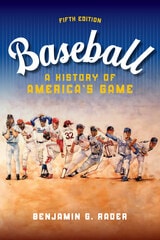
Baseball
A HIstory of America's GameBenjamin G. Rader
University of Illinois Press, 2025
Analytics, technology, and the most ambitious rewrite of the rulebook in fifty years have reshaped baseball. Benjamin G. Rader’s account of the American pastime moves from diamonds scratched out of commons and corn fields to the multimedia theme parks doubling as today’s baseball stadiums. The fifth edition follows the long arc of the game’s history into the third decade of the twenty-first century, an era rich in innovation but even richer from revenue streams undreamt-of by the plutocrats of old. Rader brings readers up to date with looks at the Astros cheating scandal, on-the-field changes from power pitchers to ghost runners, data-driven player development and career rebirth, and the one-of-a-kind Shohei Ohtani.
Engrossing and complete, Baseball, Fifth Edition, offers a comprehensive tour of the game and its place within American society and culture.
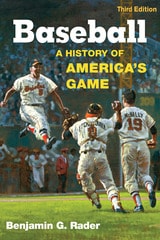
Baseball
A History of America's GameBenjamin G. Rader
University of Illinois Press, 2007
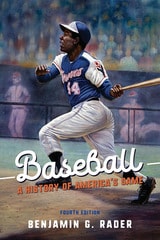
Baseball
A History of America's GameBenjamin G. Rader
University of Illinois Press, 2018

Basketball Trafficking
Stolen Black Panamanian DreamsJavier Wallace
Duke University Press, 2025