Results by title
28167 books match the query 'History' and 1262 start with b
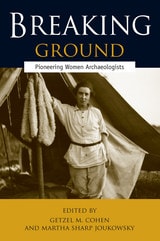
Breaking Ground
Pioneering Women ArchaeologistsGetzel M. Cohen and Martha Sharp Joukowsky, Editors
University of Michigan Press, 2004
-Claire Lyons, The Getty Museum
"Behind these pioneering women lie a wide range of fascinating and inspiring life stories. Though each of their tales is unique, they were all formidable scholars whose important contributions changed the field of archaeology. Kudos to the authors for making their stories and accomplishments known to us all!"
-Jodi Magness, University of North Carolina, Chapel Hill
This book presents twelve fascinating women whose contributions to the development and progress of Old World archaeology---in an area ranging from Italy to Mesopotamia---have been immeasurable. Each essay in this collection examines the life of a pioneer archaeologist in the early days of the discipline, tracing her path from education in the classics to travel and exploration and eventual international recognition in the field of archaeology. The lives of these women may serve as models both for those interested in gender studies and the history of archaeology because in fact, they broke ground both as women and as archaeologists.
The interest inherent in these biographies will reach well beyond defined disciplines and subdisciplines, for the life of each of these exciting and accomplished individuals is an adventure story in itself

Breaking Ice for Arctic Oil
The Epic Voyage of the SS Manhattan through the Northwest PassageRoss Coen
University of Alaska Press, 2012
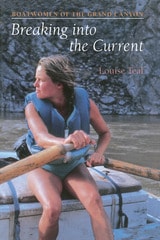
Breaking Into the Current
Boatwomen of the Grand CanyonLouise Teal
University of Arizona Press, 1994
Breaking Into the Current is a story of romance between women and a place. Each woman tells a part of every Canyon boatwoman's story: when Marilyn Sayre talks about leaving the Canyon, when Ellen Tibbets speaks of crew camaraderie, or when Martha Clark recalls the thrill of white water, each tells how all were involved in the same romance.
All the boatwomen have stories to tell of how they first came to the Canyon and why they stayed. Some speak of how they balanced their passion for being in the Canyon against the frustration of working in a traditionally male-oriented occupation, where today women account for about fifteen percent of the Canyon's commercial river guides.
As river guides in love with the Canyon and their work, these women have followed their hearts. "I've done a lot," says Becca Lawton, "but there's been nothing like holding those oars in my hands and putting my boat exactly where I wanted it. Nothing."
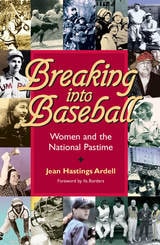
Breaking into Baseball
Women and the National PastimeJean Hastings Ardell. Foreword by Ila Borders
Southern Illinois University Press, 2005
While baseball is traditionally perceived as a game to be played, enjoyed, and reported from a masculine perspective, it has long been beloved among women—more so than any other spectator sport. Breaking into Baseball: Women and the National Pastime upends baseball’s accepted history to at last reveal just how involved women are, and have always been, in the American game.
Through provocative interviews and deft research, Jean Hastings Ardell devotes a detailed chapter to each of the seven ways women participate in the game—from the stands as fans, on the field as professionals or as amateur players, behind the plate as umpires, in the front office as executives, in the press box as sportswriters and reporters, or in the shadows as Baseball Annies. From these revelatory vantage points, Ardell invites overdue appreciation for the affinity and talent women bring to baseball at all levels and shows us our national game anew.
From its ancient origins in spring fertility rituals through contemporary marketing efforts geared toward an ever-increasing female fan base, baseball has always had a feminine side, and generations of women have sought—and been sought after—to participate in the sport, even when doing so meant challenging the cultural mores of their era. In that regard, women have been breaking into baseball from the very beginning. But recent decades have witnessed great strides in legitimizing women’s roles on the diamond as players and umpires as well as in vital management and media roles. In her thoughtfully organized and engagingly written survey, Ardell offers a chance for sports enthusiasts and historians of both genders to better appreciate the storied and complex relationship women have so long shared with the game and to glimpse the future of women in baseball.
Breaking into Baseball is augmented by twenty-four illustrations and a foreword from Ila Borders, the first woman to play more than three seasons of men’s professional baseball.
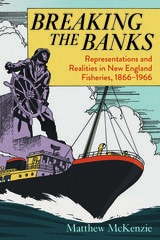
Breaking the Banks
Representations and Realities in New England Fisheries, 1866-1966Matthew McKenzie
University of Massachusetts Press, 2018
Books, films, and the media have long portrayed the Yankee fisherman's hard-scrabble existence, as he faced brutal weather on the open seas and unnecessary governmental restrictions. As McKenzie contends, this simplistic view has long betrayed commercial fisheries' sophisticated legislative campaigns in Washington, DC, as they sought federal subsidies and relief and, eventually, fewer constricting regulations. This clash between fisheries' representation and their reality still grips fishing communities today as they struggle to navigate age-old trends of fleet consolidation, stock decline, and intense competition.
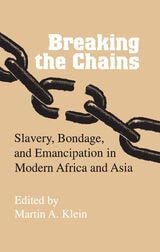
Breaking the Chains
Slavery, Bondage, and Emancipation in Modern Africa and AsiaMartin A. Klein
University of Wisconsin Press, 1993
“Martin Klein has brought together recent work on the abolition of slavery, from Ottoman Turkey to Thailand and from South India to West Africa. This anthology builds on the recent scholarship on both slavery in Asia and Africa and the end of slavery as a world-wide historical phenomenon. Whereas other anthologies have tended to focus on either Africa or Asia, this project brings together in one volume case studies and methodological approaches concerning both regions. Breaking the Chains will be an important part of the relatively sparse literature on emancipation in comparative and global context.”—Richard Roberts, Stanford University
Because the American history of slavery and emancipation tends to be foremost in Western minds, few realize that traditional forms of servitude still exist in a variety of places around the world: children are sold on the streets of Bangkok, bondage persists in India despite official efforts to abolish it, and until 1980 slavery was legal in Mauritania.
Breaking the Chains deals with emancipation in African and Asian societies which were either colonized or came under the domination of European powers in the nineteenth century. In these societies, emancipation involved the imposition on non-European societies of an explicitly European discourse on slavery, and, in most cases, a free labor ideology. Most of the slave masters described in these essays were not European and found European ideas on emancipation difficult to accept.
Against this backdrop, the essayists (many of whom contribute their own non-Western perspective) focus on the transition from slavery (or other forms of bondage) to emancipation. They show that in each case the process involved pressure from European abolition movements, the extension of capitalist relations of production, the concerns and perceptions of the colonial state, and the efforts of non-Western elites to modernize their cultures.
Martin A. Klein argues that the Asian and African experience has much in common with the American experience, particularly in efforts to control labor and family life. The struggle to control the labor of former slaves has often been intense and, he suggests, has had a continuing impact on the social order in former slave societies.
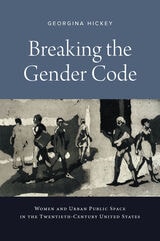
Breaking the Gender Code
Women and Urban Public Space in the Twentieth-Century United StatesGeorgina Hickey
University of Texas Press, 2023
A history of the activism that made public spaces in American cities more accessible to women.
From the closing years of the nineteenth century, women received subtle—and not so subtle—messages that they shouldn’t be in public. Or, if they were, that they were not safe. Breaking the Gender Code tells the story of both this danger narrative and the resistance to it.
Historian Georgina Hickey investigates challenges to the code of urban gender segregation in the twentieth century, focusing on organized advocacy to make the public spaces of American cities accessible to women. She traces waves of activism from the Progressive Era, with its calls for public restrooms, safe and accessible transportation, and public accommodations, through and beyond second-wave feminism, and its focus on the creation of alternative, women-only spaces and extensive anti-violence efforts. In doing so, Hickey explores how gender segregation intertwined with other systems of social control, as well as how class, race, and sexuality shaped activists' agendas and women's experiences of urban space. Drawing connections between the vulnerability of women in public spaces, real and presumed, and contemporary debates surrounding rape culture, bathroom bills, and domestic violence, Hickey unveils both the strikingly successful and the incomplete initiatives of activists who worked to open up public space to women.

Breaking the Land
The Transformation of Cotton, Tobacco, and Rice Cultures since 1880Pete Daniel
University of Illinois Press, 1985
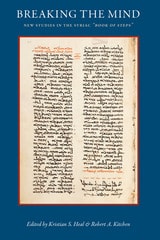
Breaking the Mind
Kristian S. Heal
Catholic University of America Press, 2014
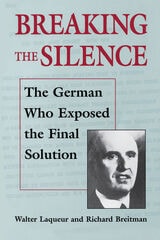
Breaking the Silence
The German Who Exposed the Final Solution.Walter Laqueur and Richard Breitman
Brandeis University Press, 1994
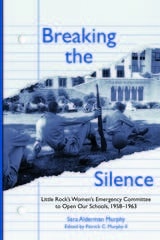
Breaking the Silence
The Little Rock Women's Emergency Committee to Open Our Schools, 1958–1963Sara Murphy
University of Arkansas Press, 1997
The Little Rock Central High School integration crisis did not end in1957 when President Eisenhower sent a portion of the first Airborne Division to protect nine black students. The turmoil was entering its second year in 1958 when Arkansas governor Orval Faubus invoked a hastily passed state law to close the high schools rather than obey the federal court orders that would integrate them.
A group of respectable, middle-class white women, faced with the prospect of no schools as well as the further loss of their city’s good name, turned militant. Led by Adolphine Fletcher Terry, a prominent, “old family” civic leader in her seventies, the women quickly put together the Women’s Emergency Committee to Open Our Schools (WEC), a highly effective organization that bombarded the city with ads, fliers, and statements challenging Faubus’s action. At peak membership, the WEC mustered two thousand to their cause. Largely inexperienced in politics when they joined the WEC, these women became articulate, confident promoters of public schools and helped others to understand that those schools must be fully integrated.
Forty years later, Sara Murphy, a key member of the WEC, recounts the rarely told sto1y of these courageous women who formed a resistance movement. With passion and sensitivity, she reconstructs the challenges and triumphs of that battle, which issued from the mutual link Southern white women shared with disfranchised African Americans in their common goal for full citizenship.

Breaking the South Slav Dream
The Rise and Fall of YugoslaviaKate Hudson
Pluto Press, 2003

Breaks in the Air
The Birth of Rap Radio in New York CityJohn Klaess
Duke University Press, 2022

Breathless Days, 1959-1960
Serge Guilbaut and John O'Brien, editors
Duke University Press, 2017

Breeding Bio Insecurity
How U.S. Biodefense Is Exporting Fear, Globalizing Risk, and Making Us All Less SecureLynn C. Klotz and Edward J. Sylvester
University of Chicago Press, 2009
In the years since the 9/11 attacks—and the subsequent lethal anthrax letters—the United States has spent billions of dollars on measures to defend the population against the threat of biological weapons. But as Lynn C. Klotz and Edward J. Sylvester argue forcefully in Breeding Bio Insecurity, all that money and effort hasn’t made us any safer—in fact, it has made us more vulnerable.
Breeding Bio Insecurity reveals the mistakes made to this point and lays out the necessary steps to set us on the path toward true biosecurity. The fundamental problem with the current approach, according to the authors, is the danger caused by the sheer size and secrecy of our biodefense effort. Thousands of scientists spread throughout hundreds of locations are now working with lethal bioweapons agents—but their inability to make their work public causes suspicion among our enemies and allies alike, even as the enormous number of laboratories greatly multiplies the inherent risk of deadly accidents or theft. Meanwhile, vital public health needs go unmet because of this new biodefense focus. True biosecurity, the authors argue, will require a multipronged effort based in an understanding of the complexity of the issue, guided by scientific ethics, and watched over by a vigilant citizenry attentive to the difference between fear mongering and true analysis of risk.
An impassioned warning that never loses sight of political and scientific reality, Breeding Bio Insecurity is a crucial first step toward meeting the evolving threats of the twenty-first century.
Breeding Contempt
The History of Coerced Sterilization in the United StatesMark A. Largent
Rutgers University Press, 2007
Most closely associated with the Nazis and World War II atrocities, eugenics is sometimes described as a government-orchestrated breeding program, other times as a pseudo-science, and often as the first step leading to genocide. Less frequently it is recognized as a movement having links to theUnited States. But eugenics does have a history in this country, and Mark A. Largent tells that story by exploring one of its most disturbing aspects, the compulsory sterilization of more than 64,000 Americans.
The book begins in the mid-nineteenth century, when American medical doctors began advocating the sterilization of citizens they deemed degenerate. By the turn of the twentieth century, physicians, biologists, and social scientists championed the cause, and lawmakers in two-thirds of the United States enacted laws that required the sterilization of various criminals, mental health patients, epileptics, and syphilitics. The movement lasted well into the latter half of the century, and Largent shows how even today the sentiments that motivated coerced sterilization persist as certain public figures advocate compulsory birth control—such as progesterone shots for male criminals or female welfare recipients—based on the same assumptions and motivations that had brought about thousands of coerced sterilizations decades ago.
Breeds of Empire
The Invention of the Horse in Southeast Asia and Southern Africa 1500-1950Edited by Greg Bankoff and Sandra Swart
National University of Singapore Press, 2007

Brethren of the Net
American Entomology, 1840-1880W. Conner Sorensen
University of Alabama Press, 1995
Draws together information from diverse sources to illuminate an important chapter in the history of American science
Sorensen asks how it came about that, within the span of forty years, the American entomological community developed from a few gentlemen naturalists with primary links to Europe to a thriving scientific community exercising world leadership in entomological science. He investigates the relationship between American and European entomology, the background of American entomologists, the implications of entomological theory, and the specific links between 19th-century American society and the rapid institutional growth and advances in theoretical and applied entomology.
By the 1880s the entomologists constituted the largest single group of American zoologists and the largest group of ecologists in the world. While rooted in the British natural history tradition, these individuals developed a distinctive American style of entomological investigation. Inspired by the concept of the balance of nature, they excelled in field investigations of North American insects with special emphasis on insect pests that threatened crop production in a market-oriented agriculture. During this period, entomologists described over ten times as many North American insect species as had been previously named, and they consolidated their findings in definitive collections. Employing evolutionary theory, they contributed to the growing understanding of insect migration, mimicry, seasonal dimorphism, and the symbiotic relationship of plant and animal species. Americans also led in the revision of insect taxonomy according to the new principles. Their employment of entomological findings in the practical control of agricultural pests set new standards worldwide. Initially ridiculed as eccentric bug hunters, American entomologists eventually achieved stature as agricultural advisers and as investigators into the origin and nature of life.
Based primarily on the correspondence of American entomologists, Brethren of the Net draws together information from diverse sources to illuminate an important chapter in the history of American science.
Breve historia de la lengua española
Segunda edición revisadaDavid A. Pharies
University of Chicago Press, 2015
La Breve historia de la lengua española se concentra en los cambios más importantes de la evolución de la lengua, evitando la jerga académica ininteligible y favoreciendo la claridad en las explicaciones. Por el camino, intenta dar respuesta a muchas de las preguntas que con frecuencia desconciertan a los hablantes nativos y no nativos: ¿Por qué se utiliza tú en algunos lugares y vos en otros? ¿Cómo surgió la pronunciación como fricativa interdental de la zeta castellana? ¿Por qué se dice la mesa pero el agua con un artículo que parece masculino?
David A. Pharies es un experto en el estudio de la historia y evolución del español, que goza de un reconocido prestigio en la escena internacional. Para actualizar esta segunda edición ha revisado en profundidad todos los aspectos de la evolución del español, incluido su desarrollo demográfico. El libro va dirigido a quienes tienen un conocimiento básico del español y desean aprender más sobre sus orígenes. También constituye una base ideal para emprender el estudio de cualquier aspecto de la lingüística histórica española y de la literatura medieval. Entretenida y accesible, la Breve historia de la lengua española es un gran viaje de descubrimiento en una presentación amena y sucinta.
Since its publication in 2007, A Brief History of the Spanish Language has become the leading introduction to the history of one of the world’s most widely spoken languages. Moving from the language’s Latin roots to its present-day forms, this concise book offers readers insights into the origin and evolution of Spanish, the historical and cultural changes that shaped it, and its spread around the world.
A Brief History of the Spanish Language focuses on the most important aspects of the development of the Spanish language, eschewing technical jargon in favor of straightforward explanations. Along the way, it answers many of the common questions that puzzle native and nonnative speakers alike, such as: Why do some regions use tú while others use vos? How did the th sound develop in Castilian? And why is it la mesa but el agua?
David A. Pharies, an internationally recognized expert on the history and development of Spanish, has updated this edition with new research on all aspects of the evolution of Spanish while adding current demographic information as well. This book is perfect for anyone with a basic understanding of Spanish and a desire to further explore its roots. It also provides an ideal foundation for further study in any area of historical Spanish linguistics and early Spanish literature. Both absorbing and accessible, A Brief History of the Spanish Language is a grand journey of discovery in a beautifully compact format.
Breve historia de la lengua española
Spanish editionDavid A. Pharies
University of Chicago Press, 2007
Después de los capítulos introductorios de lo que significa el estudio de la historia de una lengua, el concepto del cambio lingüístico y de la naturaleza de las familias lingüísticas, Pharies hace un seguimiento al desarrollo del español desde sus raíces latinas, todo ello con una mínima cantidad de lenguaje técnico posible. En las secciones centrales del libro, los lectores son llevados por una presentación sucinta, comprometedora y admirable, de la genealogía y desarrollo de la lengua incluyendo explicaciones de las estructuras y peculiaridades del latín, los eventos históricos y culturales que influenciaron profundamente la forma del lenguaje, la naturaleza del español medieval, los mitos lingüísticos formando parte del español y el desarrollo de la lengua más allá de la península ibérica, en particular, en el continente americano. Centrándose en las más importantes facetas de la evolución de la lengua, esta obra concisa hace que la historia del español sea accesible a todos, con una comprensión del mismo y una disposición para entender los conceptos básicos del lenguaje.
Disponible en ambas ediciones, inglés y español, Una Breve Historia de la Lengua Española, nos brinda una extraordinaria introducción a la fascinante historia de una de las más importantes lenguas del mundo.
Spanish is the fourth most widely spoken language in the world and a language of ever-increasing importance in the United States. In what will likely become the introduction to the history of the Spanish language, David Pharies clearly and concisely charts the evolution of Spanish from its Indo-European roots to its present form. An internationally recognized expert on the history and development of this language, Pharies brings to his subject a precise sense of what students of Spanish linguistics need to know.
After introductory chapters on what it means to study the history of a language, the concept of linguistic change, and the nature of language families, Pharies traces the development of Spanish from its Latin roots, all with the minimum amount of technical language possible. In the core sections of the book, readers are treated to an engaging and remarkably succinct presentation of the genealogy and development of the language, including accounts of the structures and peculiarities of Latin, the historical and cultural events that deeply influenced the shaping of the language, the nature of Medieval Spanish, the language myths that have become attached to Spanish, and the development of the language beyond the Iberian Peninsula, especially in the Americas. Focusing on the most important facets of the language’s evolution, this compact work makes the history of Spanish accessible to anyone with a knowledge of Spanish and a readiness to grasp basic linguistic concepts.
Available in both English and Spanish editions, A Brief History of the Spanish Language provides a truly outstanding introduction to the exciting story of one of the world’s great languages.

Breweries of Wisconsin
Jerry Apps
University of Wisconsin Press, 2005
The story of the Dairy State’s other major industry—beer! From the immigrants who started brewing here during territorial days to the modern industrial giants, this is the history, the folklore, the architecture, the advertising, and the characters that made Wisconsin the nation’s brewing leader. Updated with the latest trends on the Wisconsin brewing scene.
"Apps adeptly combines diligent scholarship with fascinating anecdotes, vividly portraying brewmasters, beer barons, saloonkeepers, and corporate raiders. All this plus color reproductions of popular beer labels and a detailed recipe for home brew."—Wisconsin Magazine of History
"In a highly readable style Apps links together ethnic influence, agriculture, geography, natural resources, meteorology, changing technology, and transportation to explore some of the mystique, romance and folklore associated with beer from antiquity to the present day in Wisconsin."—The Brewers Bulletin

Brewing Arizona
A Century of Beer in the Grand Canyon StateEd Sipos
University of Arizona Press, 2013
Since 1864, the state’s breweries have had a history as colorful as the state. With an eye like a historian, the good taste of a connoisseur, and the tenacity of a dedicated collector, author Ed Sipos serves up beer history with gusto. Brewing Arizona is the first book of Arizona beer. It includes every brewery known to have operated in the state, from the first to the latest, from crude brews to craft brews, from mass beer to microbrews. This eye-opening chronicle is encyclopedic in scope but smooth in its delivery. Like a fine beer, the contents are deep and rich, with a little froth on top.
With more than 250 photographs—200 in full color—Brewing Arizona is as beautiful as it is tasty. So put up your feet, grab a cold one, and sip to your heart’s delight.
Brewster Buffalo
Nico Braas
Amsterdam University Press, 2023
This book presents an overview of the development and operational use of the Buffalo with many photos including a number not published before.

Brewtown Tales
More Stories from Milwaukee and BeyondJohn Gurda
Wisconsin Historical Society Press, 2022

Brexit and the British
Who Do We Think We Are?Stephen Green
Haus Publishing, 2017
In this short but powerful book, Stephen Green argues that it is time to acknowledge that underlying all the sound and fury of the Brexit debate were fundamental questions—whether or not fully recognized—about British identity. Are the British different, special, and capable of finding their own way in the world? Who are they, those who call themselves British? Is it all too easy to blame Brexit on post-industrial decline in the traditional heartlands of the Labor Party, or scaremongering by a band of deluded “Little Englanders”? Or is British identity more complex, deep-rooted—and perhaps, in some sense, troubling—than those of other European nations?
Brian Simon and the Struggle for Education
Gary McCulloch, Antonio Canales, and Hsiao-Yuh Ku
University College London, 2023
Using documentary sources that have only recently become publicly available, this book reveals the remarkably broad range of Brian Simon’s life as a student, soldier, schoolteacher, Communist Party activist, educational academic, campaigner, and reformer. In a sympathetic biography that retains critical distance, the authors analyze Simon’s contribution to Marxism and the Communist Party, explore the influence of both on his work as a historian of education, and trace the significance of his Marxist beliefs, political associations, and historical approaches to the cause of educational reform.
In so doing, they consider the full nature and limitations of Simon’s achievements in his struggle for education. Unlike many Marxist scholars, he remained loyal to the Communist Party in the 1950s, which damaged his reputation as a public intellectual. Nevertheless, his support for comprehensive education helped to promote egalitarian educational reforms in Britain, although he was later unable to provide sufficient resistance to the 1988 Education Reform Act and to a decline in the position of comprehensive schools.
In all this, the significance of Simon’s family, and especially his relationship with his wife Joan, is brought to the fore. Joan and Brian forged a formidable sixty-year partnership in politics and the Communist Party as well as in life, a partnership that lasted until Brian’s death in January 2002.

Brick City Vanguard
Amiri Baraka, Black Music, Black ModernityJames Smethurst
University of Massachusetts Press, 2020
Amiri Baraka is unquestionably the most recognized leader of the Black Arts Movement of the 1960s and 1970s, and one of the key literary and cultural figures of the postwar United States. While Baraka's political and aesthetic stances changed considerably over the course of his career, Brick City Vanguard demonstrates the continuity in his thinking about the meaning of black music in the material, psychic, and ideological development of black people. Drawing on primary texts, paratexts (including album liner notes), audio and visual recordings, and archival sources, James Smethurst takes a new look at how Baraka's writing on and performance of music envisioned the creation of an African American people or nation, as well as the growth and consolidation of a black working class within that nation, that resonates to this day. This vision also provides a way of understanding the encounter of black people with what has been called “the urban crisis” and a projection of a liberated black future beyond that crisis.
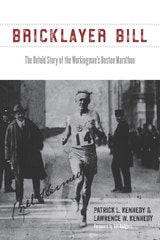
Bricklayer Bill
The Untold Story of the Workingman's Boston MarathonPatrick L. Kennedy and Lawrence W. Kennedy
University of Massachusetts Press, 2017
Two weeks after the United States officially entered World War I, Irish American “Bricklayer Bill” Kennedy won the Boston Marathon wearing his stars-and-stripes bandana, rallying the crowd of patriotic spectators. Kennedy became an American hero and, with outrageous stories of his riding the rails and sleeping on pool tables, a racing legend whose name has since appeared in almost every book written on the Boston Marathon.
When journalist Patrick Kennedy and historian Lawrence Kennedy unearthed their uncle's unpublished memoir, they discovered a colorful character who lived a tumultuous life, beyond his multiple marathons. The bricklayer survived typhoid fever, a five-story fall, auto and train accidents, World War action, Depression-era bankruptcy, decades of back-breaking work, and his own tendency to tipple. In many ways, Bill typified the colorful, newly emerging culture and working-class ethic of competitive long-distance running before it became a professionalized sport. Bricklayer Bill takes us back to another time, when bricklayers, plumbers, and printers could take the stage as star athletes.
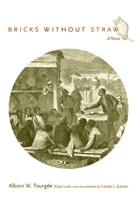
Bricks Without Straw
A NovelAlbion W. Tourgée
Duke University Press, 2009
Bricks Without Straw is Tourgée’s fictionalized account of how Reconstruction was sabotaged. It is a chilling picture of violence against African Americans condoned, civil rights abrogated, constitutional amendments subverted, and electoral fraud institutionalized. Its plot revolves around a group of North Carolina freedpeople who strive to build new lives for themselves by buying land, marketing their own crops, setting up a church and school, and voting for politicians sympathetic to their interests, until Klan terrorism and the ascendancy of a white supremacist government reduce them to neo-slavery. This edition of Bricks Without Straw is enhanced by Carolyn L. Karcher’s introduction, which sets the novel in historical context and provides an overview of Albion W. Tourgée’s career, a chronology of the significant events of both the Reconstruction era and Tourgée’s life, and explanatory notes identifying actual events fictionalized in the novel.
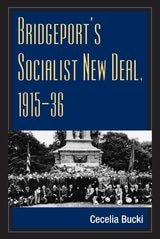
Bridgeport's Socialist New Deal, 1915-36
Cecelia Bucki
University of Illinois Press, 2001
In November 1933, the Socialist Party of Bridgeport, Connecticut put slate roofer Jasper McLevy in the mayor's seat and nearly won control of the city council. Cecelia Bucki explores how labor gained first a foothold and then a stronghold in local politics as broad debates pitted previously unengaged working-class citizens against local business leaders and traditional party elites.
In the heat of the Great Depression, the skilled union craftsmen who made up the bulk of the city's Socialist Party filled a political void created by the crumbling of mainstream parties, the disintegration of traditional modes of ethnic politics, and the city's acute fiscal crisis. In time, however, legislative measures and compromise politics blunted the progressive agenda. The local party split from the Socialist Party of America and became narrowly focused and reformist while still serving as the voice of the working class.
A portrait of a stunning moment in American politics, Bridgeport's Socialist New Deal, 1915-36 offers a fascinating look at the volatility of politics in the early years of the Great Depression.

Bridges Over the Delaware River
A History of CrossingsFrank T. Dale
Rutgers University Press, 2003
When Washington made his famous crossing of the Delaware River, it is a shame he couldn't have invited local historian Frank T. Dale along for the ride. Dale could have suggested the easiest crossing points.
Fortunately for contemporary readers, Dale has written a fascinating book chronicling thirty-five of the most historic bridges crossing the Delaware, some of which have served the residents of New Jersey, Pennsylvania, and New York for almost two centuries. Many of us take these bridges for granted as we speed across, impatient to reach our destination, but their histories are too interesting to ignore.
Dale brings us the stories behind each bridge, covering design, engineering, ownership, finances, and politics. He chronicles the life of each, from the original construction, through modifications, and, sometimes, through the bridges' multiple destructions and reconstructions. Along the way, Dale recounts the history of the area surrounding each bridge, including the demise of ferry services, reasons why each bridge was built, politics surrounding construction, debates over public versus privately owned bridges, and stories of the floods and fires that threatened not only the bridges, but the local residents. Dozens of rare photos give readers a captivating window back into the past.
These fine old structures have become integral parts of Delaware River life and have an exciting past of their own. Bridges over the Delaware River will ensure that their legacies endure.
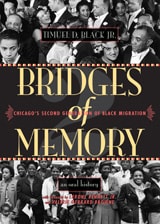
Bridges of Memory Volume 2
Chicago's Second Generation of Black MigrationTimuel Black
Northwestern University Press, 2008
In the second volume of Bridges of Memory, historian Timuel D. Black Jr. continues his conversations with African-Americans who migrated to Chicago from the South in search of economic, social, and cultural opportunities. With his trademark gift for interviewing, Black-himself the son of first-generation migrants to Chicago-guides these individual discussions with ease, resulting in first-person narratives that are informative and entertaining.
Picking up where the first book left off, volume 2 introduces the reader to more members of the first wave of migration and also members of the second generation, the children of those who came in the first wave. In telling their stories, the interviewees paint a vivid picture of the thriving and tight-knit Chicago community formerly known as the Black Belt—today's historic Bronzeville neighborhood. They bring to life the role of family, religion, business, music, and, most of all, the hopes, dreams, and perseverance that enabled a group of people to establish a successful community within a larger society that seemed determined to keep them from success. The experiences of these diverse and vivid personalities often illustrate the role that racial prejudice has played in shaping the specific arcs of their lives. But personal histories such as these are not just chronicles of frustration and despair; more important these narratives reveal an unwavering dedication to breaking the color line and a tireless pursuit of their right to the promise of America.
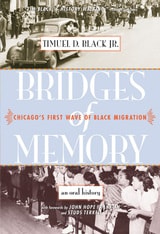
Bridges of Memory
Chicago's First Wave of Black MigrationTimuel D. Black Jr.
Northwestern University Press, 2005
Co-published with the DuSable Museum of African American History
Recipient of 2007 The Hyde Park Historical Society Paul Cornell Award
A collection of interviews with African Americans who came to Chicago from the South. In their first great migration to Chicago that began during World War I, African Americans came from the South seeking a better life--and fleeing a Jim Crow system of racial prejudice, discrimination, and segregation. What they found was much less than what they'd hoped for, but it was much better than what they'd come from--and in the process they set in motion vast changes not only in Chicago but also in the whole fabric of American society. This book, the first of three volumes, revisits this momentous chapter in American history with those who lived it.
Oral history of the first order, Bridges of Memory lets us hear the voices of those who left social, political, and economic oppression for political freedom and opportunity such as they'd never known--and for new forms of prejudice and segregation. These children and grandchildren of ex-slaves found work in the stockyards and steel mills of Chicago, settled and started small businesses in the "Black Belt" on the South Side, and brought forth the jazz, blues, and gospel music that the city is now known for. Historian Timuel D. Black, Jr., himself the son of first-generation migrants to Chicago, interviews a wide cross-section of African Americans whose remarks and reflections touch on issues ranging from fascism to Jim Crow segregation to the origin of the blues. Their recollections comprise a vivid record of a neighborhood, a city, a society, and a people undergoing dramatic and unprecedented changes.
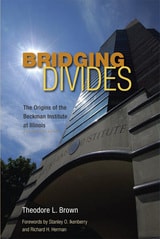
Bridging Divides
The Origins of the Beckman Institute at IllinoisTheodore L. Brown. Forewords by Stanley O. Ikenberry and Richard H. Herman.
University of Illinois Press, 2009

Bridging Enigma
Cubans on Cuba, Volume 96Ambrosio Fornet
Duke University Press, 0
Fostered by both caution and audacity, in a climate of both trust and tension, and in the face of sustained North American hostility through nearly four decades, Cuban artists and writers have succeeded in building bridges between domestic and foreign cultural institutions, partly offsetting the profound material deprivations under which they have labored. The work collected in this volume introduces a group of writers, artists, and filmmakers who provide a window on Cuban life, illuminating this enigmatic island and bridging the troubled waters it shares with its continental neighbor to the north.
Contributors. Arturo Arango, Emilio Bejel, Rosa Ileana Boudet, Roberto Fernández Retamar, Ambrosio Fornet, Rafael Hernández, Francisco López Sacha, Humberto Manduley López, Vivian Martínez Tabares, Margarita Mateo Palmer, Miguel Mejides, Reinaldo Montero, Lisandro Otero, Graziella Pogolotti, Magda Resik, Cintio Vitier
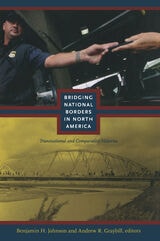
Bridging National Borders in North America
Transnational and Comparative HistoriesBenjamin H. Johnson and Andrew R. Graybill, eds.
Duke University Press, 2010
The contributors engage topics such as how mixed-race groups living on the peripheries of national societies dealt with the creation of borders in the nineteenth century, how medical inspections and public-health knowledge came to be used to differentiate among bodies, and how practices designed to channel livestock and prevent cattle smuggling became the model for regulating the movement of narcotics and undocumented people. They explore the ways that U.S. immigration authorities mediated between the desires for unimpeded boundary-crossings for day laborers, tourists, casual visitors, and businessmen, and the restrictions imposed by measures such as the Chinese Exclusion Act of 1882 and the 1924 Immigration Act. Turning to the realm of culture, they analyze the history of tourist travel to Mexico from the United States and depictions of the borderlands in early-twentieth-century Hollywood movies. The concluding essay suggests that historians have obscured non-national forms of territoriality and community that preceded the creation of national borders and sometimes persisted afterwards. This collection signals new directions for continental dialogue about issues such as state-building, national expansion, territoriality, and migration.
Contributors: Dominique Brégent-Heald, Catherine Cocks, Andrea Geiger, Miguel Ángel González Quiroga, Andrew R. Graybill, Michel Hogue, Benjamin H. Johnson, S. Deborah Kang, Carolyn Podruchny, Bethel Saler, Jennifer Seltz, Rachel St. John, Lissa Wadewitz
Published in cooperation with the William P. Clements Center for Southwest Studies, Southern Methodist University.
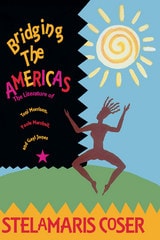
Bridging The Americas
The Literature of Paule Marshall, Toni Morrison, and Gayl JonesStelamaris Coser
Temple University Press, 1994
A literary study of three important black women writers, this book examines the "inter-American" characteristics in the work of Marshall, Morrison, and Jones, including detailed discussions of Morrison's Song of Solomon and Tar Baby, Jones's Corregidora and Song of Anninho, and Marshall's The Chose Place, The Timeless People.
Coser defines the inter-American characteristics in these authors' novels as a connection based on a common African heritage and a shared legacy of colonialism and racism. These three authors redefine the boundaries between the Americas, bridging the "extended Caribbean" that stretches from the U.S. Atlantic coast to Brazil. Their work reinterprets ethnic and sexual identity. Issues of race, class, and nationality overlap. History and identity are reinvented.
To explore the collective forms of resistance and cultural processes in Brazil, the Caribbean, and the United States, Coser also makes provocative connections between the visibility of black women writers and the popularity of male Latin American novelists like Carlos Fuentes and Gabriel Garcia Marquéz.
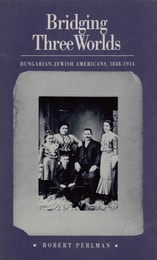
Bridging Three Worlds
Hungarian-Jewish Americans, 1848-1914Robert Perlman
University of Massachusetts Press, 1991
Between 1848 and 1914, approximately 100,000 Jews emigrated from Hungary to the United States. They came in two waves. The first group, catalyzed by the 1848 revolutions against the Austrian monarchy, consisted mainly of political dissidents and well educated, cosmopolitan, middle-class Jews seeking greater personal, religious, and political freedoms in the New World. The second and much larger group, which began to arrive around 1880, consisted primarily of unskilled laborers and lower-middle-class artisans and tradespeople, beckoned to America by the promise of vast economic opportunity.
In the abundant literature on Jewish immigration to the United States, virtually nothing has been written specifically about the Hungarian-Jewish experience, which differed in many respects from that of other Jewish national groups. Bridging Three Worlds offers such a chronicle, relating the immigrants’ history from their political and cultural roots in the Old Country to their acculturation as citizens in a newly adopted land. Based on primary archival materials, oral histories, and secondary sources, the book is also informed by the author’s own experiences as an American of Hungarian-Jewish origins.
Bridging a Great Divide
The Battle for the Columbia River GorgeKathie Durbin
Oregon State University Press, 2013
In Bridging a Great Divide, award-winning environmental journalist Kathie Durbin draws on interviews, correspondence, and extensive research to tell the story of the major shifts in the Gorge since the Act’s passage. Sweeping change has altered the Gorge’s landscape: upscale tourism and outdoor recreation, gentrification, the end of logging in national forests, the closing of aluminum plants, wind farms, and a population explosion in the metropolitan area to its west. Yet, to the casual observer, the Gorge looks much the same as it did twenty-five years ago.
How can we measure the success of the Columbia River Gorge National Scenic Area Act? In this insightful and revealing history, Durbin suggests that the answer depends on who you are: a small business owner, an environmental watchdog group, a chamber of commerce. The story of the Columbia River Gorge National Scenic Area is the story of the Pacific Northwest in microcosm, as the region shifts from a natural-resource-based economy to one based on recreation, technology, and quality of life.

Bridging the Distance
Common Issues of the Rural WestDavid B. Danbom
University of Utah Press, 2015
The essays in Bridging the Distance are fresh, informative, and insightful examinations of the complex problems facing the rural West. This is a book that will spur both conversations and the search for solutions.
Bridging the Divide
My LifeEdward W. Brooke
Rutgers University Press, 2006
President Lyndon Johnson never understood it. Neither did President Richard Nixon. How could a black man, a Republican no less, be elected to the United States Senate from liberal, Democratic Massachusetts-a state with an African American population of only 2 percent?
The mystery of Senator Edward Brooke's meteoric rise from Boston lawyer to Massachusetts attorney general to the first popularly elected African American U.S. senator with some of the highest favorable ratings of any Massachusetts politician confounded many of the best political minds of the day. After winning a name for himself as the first black man to be elected a state's attorney general, as a crime fighter, and as the organizer of the Boston Strangler Task Force, this articulate and charismatic man burst on the national scene in 1966 when he ran for the Senate.
In two terms in the Senate during some of the most racially tormented years of the twentieth century, Brooke, through tact, personality, charm, and determination, became a highly regarded member of "the most exclusive club in the world." The only African American senator ever to be elected to a second term, Brooke established a reputation for independent thinking and challenged the powerbrokers and presidents of the day in defense of the poor and disenfranchised.
In this autobiography, Brooke details the challenges that confronted African American men of his generation and reveals his desire to be measured not as a black man in a white society but as an individual in a multiracial society. Chided by some in the white community as being "too black to be white" and in the black community as "too white to be black," Brooke sought only to represent the people of Massachusetts and the national interest.
His story encompasses the turbulent post-World War II years, from the gains of the civil rights movement, through the riotous 1960s, to the dark days of Watergate, with stories of his relationships with the Kennedys, Martin Luther King Jr., Lyndon Johnson, Richard Nixon, Henry Kissinger, Colin Powell, and future senator Hillary Clinton. Brooke also speaks candidly of his personal struggles, including his bitter divorce from his first wife and, most recently, his fight against cancer.
A dramatic, compelling, and inspirational account, Brooke's life story demonstrates the triumph of the human spirit, offering lessons about politics, life, reconciliation, and love.
Bridging the Gaps
Integrating Archaeology and History in Oaxaca, Mexico; A Volume in Memory of Bruce E. BylandDanny Zborover
University Press of Colorado, 2015
Bridging the Gaps: Integrating Archaeology and History in Oaxaca, Mexico does just that: it bridges the gap between archaeology and history of the Precolumbian, Colonial, and Republican eras of the state of Oaxaca, Mexico, a cultural area encompassing several of the longest-enduring literate societies in the world.
Fourteen case studies from an interdisciplinary group of archaeologists, anthropologists, ethnohistorians, and art historians consciously compare and contrast changes and continuities in material culture before and after the Spanish conquest, in Prehispanic and Colonial documents, and in oral traditions rooted in the present but reflecting upon the deep past. Contributors consider both indigenous and European perspectives while exposing and addressing the difficulties that arise from the application of this conjunctive approach.
Inspired by the late Dr. Bruce E. Byland’s work in the Mixteca, which exemplified the union of archaeological and historical evidence and inspired new generations of scholars, Bridging the Gaps promotes the practice of integrative studies to explore the complex intersections between social organization and political alliances, religion and sacred landscape, ethnic identity and mobility, colonialism and resistance, and territoriality and economic resources.
Bridging the Interpretive Abyss
Reading the New Testament after the Cultural Studies TurnLuis Menéndez-Antuña
SBL Press, 2025

Brigham Young University
A House of FaithGary James Bergera
Signature Books, 1985
The purpose of Brigham Young University: A House of Faith is to outline the struggle the Mormon church has encountered in trying to blend academics and faith and in reconciling church standards with norms at other American universites, not to produce a comprehensive, chronological history of BYU. Instead, a selective approach has been taken–a thematic introduction to events, incidents, and statements, both published and private, in selected areas where tensions between scholarship and faith, freedom and regimentation have been the most pronounced. Examples include the development of a religious curriculum, the honor code, the controversy surrounding organic evolution, politics, student life, athletics, the arts, and faculty research. We hope that this approach will help readers appreciate the religious and intellectual dilemma facing educators and church leaders, as well as the fundamental sincerity of those involved in trying to establish academic rigor within religious parameters or to prevent moral deterioration when traditional restraints are left unchecked. Whatever the particular issue under discussion, an attempt has been made to keep the presentation balanced and impartial, yet sympathetic. While some readers may question the descriptive, largely noninterpretive approach, it is hoped that most will, through this approach, at least gain a greater understanding of the complex challenges involved in successfully integrating religion and academics.
We especially hope that Brigham Young University: A House of Faith will be of use to those who appreciate more than a cursory history of Mormonism–in this case, the Mormon concept of education–and who relish the rich fabric of pluralism. Brigham Young University has an engaging past, which, we believe, deserves more than a superficial treatment. Perhaps this book can be a springboard for more thorough investigations into other areas of the school’s past. There have been so many noteworthy accomplishments, discouraging defeats, moving religious experiences, humorous accounts of human foibles, and undocumented daily routine, that much remains in describing all that has gone into making the university founded more than a century ago by Brigham Young.
In presenting the sources cited in this work, we have followed the recommendations of the 1982 edition of The Chicago Manual of Style, with slight modifications. Readers will notice, for example, our incorporation of Chicago’s “down style” approach to capitalization. In order to facilitate future research, complete source citations are included as endnotes. To avoid a cumbersome and ultimately unworkable linking of each sentence with its corresponding source and bibliographic reference, we have instead referenced each paragraph and [p. xiii]cited sources in the endnotes section in the order in which material is presented in the paragraph indicated. Where the reader would otherwise encounter difficulty in identifying the specific source of a given piece of information, or where the source is considered especially important, it is provided in the text in an abbreviated form within parentheses.
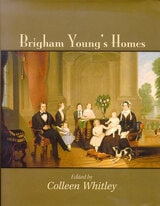
Brigham Young's Homes
Colleen K. Whitley
Utah State University Press, 2003
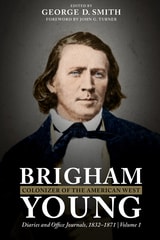
Brigham Young, Colonizer of the American West
Diaries and Office Journals, 1832–1871George D. Smith
Signature Books, 2019
Thus, by 1877, some 400 Mormon settlements spanned the western frontier from Salt Lake City to outposts in Idaho, Nevada, Arizona, Wyoming, and California. As prophet of the LDS Church and governor of the proposed State of Deseret, Young led several campaigns for Utah statehood while defending polygamy and local sovereignty. His skillful and authoritarian leadership led historian Bernard de Voto to classify him as an “American genius,” responsible for turning Joseph Smith’s visions “into the seed of life.”
Young’s diaries and journals reveal a man dedicated to his church, defensive of his spiritual and temporal claims to authority, and determined to create a modern Zion within the Utah desert. Editor George D. Smith’s careful organization and annotation of Young’s personal writings provide insights into the mind of Mormonism’s dynamic church leader and frontier statesman.
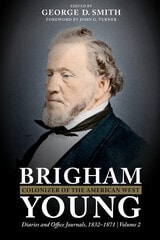
Brigham Young, Colonizer of the American West
Diaries and Office Journals, 1832–1871: Volume 2George D. Smith
Signature Books, 2021
Thus, by 1877, some 400 Mormon settlements spanned the western frontier from Salt Lake City to outposts in Idaho, Nevada, Arizona, Wyoming, and California. As prophet of the LDS Church and governor of the proposed State of Deseret, Young led several campaigns for Utah statehood while defending polygamy and local sovereignty. His skillful and authoritarian leadership led historian Bernard de Voto to classify him as an “American genius,” responsible for turning Joseph Smith’s visions “into the seed of life.”
Young’s diaries and journals reveal a man dedicated to his church, defensive of his spiritual and temporal claims to authority, and determined to create a modern Zion within the Utah desert. Editor George D. Smith’s careful organization and annotation of Young’s personal writings provide insights into the mind of Mormonism’s dynamic church leader and frontier statesman.
Brigham Young, the Quorum of the Twelve, and the Latter-Day Saint Investigation of the Mountain Meadows Massacre
Arrington Lecture No. TwelveThomas G. Alexander
Utah State University Press, 2007
In this 12th volume of the Arrington Lecture Series, Thomas Alexander (Lemuel Redd Professor of Western American History, Emeritus, at Brigham Young University), asserts that Brigham Young and the LDS Church’s governing Quorum of Twelve made timely and diligent efforts to investigate the massacre and encouraged legal proceedings but were hindered by federal territorial officials and lied to by massacre participant John D. Lee, preventing Young from learning the full truth for many years.

Bright Earth
Art and the Invention of ColorPhilip Ball
University of Chicago Press, 2003
Finalist for the 2002 National Book Critics Circle Award.
Bright Lights in the Desert
The Latter-day Saints of Las VegasFred E Woods
University of Nevada Press, 2023
Bright Lights in the Desert explores the history of how members of the Church of Jesus Christ of Latter-day Saints in Las Vegas have improved the regions’ neighborhoods, inspired educational institutions, brought integrity to the marketplace, and provided wholesome entertainment and cultural refinement. The LDS influence has helped shape the metropolitan city because of its members’ focus on family values and community service.
Woods discusses how, through their beliefs and work ethics, they have impacted the growth of the area from the time of their first efforts to establish a mission in 1855 through the present day. Bright Lights in the Desert reveals Las Vegas as more than just a tourist destination and shows the LDS community’s commitment to making it a place of deep religious faith and devotion to family.