Results by title
3576 books match the query 'American' and 147 start with b
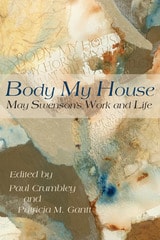
Body My House
May Swenson's Work and Lifeedited by Paul Crumbley and Patricia M. Gantt
Utah State University Press, 2000
The first collection of critical essays on May Swenson and her literary universe, Body My House initiates an academic conversation about an unquestionably major poet of the middle and late twentienth century. Includes many previously unpublished Swenson poems.
Essays here address the breadth of Swenson's literary corpus and offer varied scholarly approaches to it. They reference Swenson manuscripts---poems, letters, diaries, and other prose---some of which have not been widely available before. Chapters focus on Swenson's work as a nature writer; the literary and social contexts of her writing; her national and international acclaim; her work as a translator; associations with other poets and writers (Bishop, Moore, and others); her creative process; and her profound explorations of gender and sexuality. The first full volume of scholarship on May Swenson, Body My House suggests an ambitious agenda for further work.
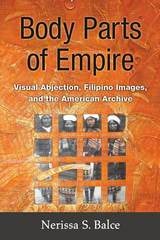
Body Parts of Empire
Visual Abjection, Filipino Images, and the American ArchiveNerissa S. Balce
University of Michigan Press, 2016
Rather than focusing on canonical American authors who wrote at the time of U.S. imperialism, this book examines abject texts—images of naked savages, corpses, clothed native elites, and uniformed American soldiers—as well as bodies of writing that document the goodwill and violence of American expansion in the Philippine colony. Contributing to the fields of American studies, Asian American studies, and gender studies, the book analyzes the actual archive of the Philippine-American War and how the racialization and sexualization of the Filipino colonial native have always been part of the cultures of America and U.S. imperialism. By focusing on the Filipino native as an abject body of the American imperial imaginary, this study offers a historical materialist optic for reading the cultures of Filipino America.
Body and Soul
Essays on PoetryMark Jarman
University of Michigan Press, 2002
The essays "Where Poems Take Place" and "A Shared Humanity" consider the relation between setting or situation and representation. The psychological roots of narrative are considered in "The Primal Storyteller." But the main interest of these essays is how and why narrative is used as a form. The influence of Robinson Jeffers's style of narrative is argued in "Slip, Shift, and Speed Up: The Influence of Robinson Jeffers's Narrative Syntax." In "The Trace of a Story Line" an argument is made that the poets Philip Levine and Charles Wright employ narration or storytelling in their poetry as a mode of meaning. Other essays consider Donald Davie, Philip Larkin, Herbert Lomas, Louis Simpson, Lyn Hejinian, Tess Gallagher, and Ellen Bryant Voigt.
Mark Jarman's poetry has appeared in many publications, including the American Poetry Review and the New Yorker. He has won the Lenore Marshall/Nation Prize of the Academy of American Poets, a Guggenheim fellowship, and multiple grants from the National Endowment for the Arts. He is Professor of English, Vanderbilt University.

Bohemians
The Glamorous OutcastsElizabeth Wilson
Rutgers University Press, 2000
Since the early nineteenth century, the bohemian has been the protagonist of the story the West has wanted to hear about its artists-a story of genius, glamour, and doom. The bohemian takes on many guises: the artist dying in poverty like Modigliani or an outrageous entertainer like Josephine Baker. Elizabeth Wilson's enjoyable book is a quest for the many shifting meanings that constitute the bohemian and bohemia.
She tells unforgettable stories of the artists, intellectuals, radicals, and hangers-on who populated the salons, bars, and cafs of Paris, London, New York, Los Angeles, and San Francisco, including Djuna Barnes, Juliette Greco, Allen Ginsberg, William Burroughs, Jack Kerouac, Amiri Baraka, Andy Warhol, and Jackson Pollock. Bohemians also follows the women who contributed to the myth, including the wives and mistresses, the muses, lesbians, and independent artists. Wilson explores the bohemians' eccentric use of dress, the role of sex and erotic love, the bohemian search for excess, and the intransigent politics of many.
As a new millennium begins, Wilson shows how notions of bohemianism remain at the core of heated cultural debates about the role of art and artists in an increasingly commodified and technological world.
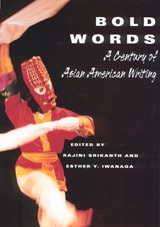
Bold Words
A Century of Asian American WritingEdited by Rajini Srikanth
Rutgers University Press, 2001
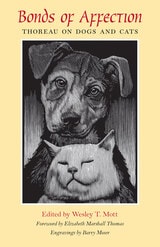
Bonds of Affection
Thoreau on Dogs and CatsWesley T. Mott
University of Massachusetts Press, 2005
Henry David Thoreau is celebrated as one of America's greatest nature writers, yet few readers are aware of the tender, perceptive, and often humorous attention he gave to the animals closest to human domestic life. Bonds of Affection: Thoreau on Dogs and Cats gathers the finest of Thoreau's own writings in which he turns his unflinching powers of observation and his characteristic philosophical wit toward our oldest animal companions.
In these pages, Thoreau emerges not merely as a solitary sojourner in the wild, but as a keen and affectionate chronicler of the relationships between people and the animals who share their lives. Whether tracking the behavior of a neighborhood dog, or meditating on the inscrutable self-possession of a cat, Thoreau reveals the depth of feeling and moral seriousness he believed we owe to all living creatures. His observations are sometimes wry, sometimes lyrical, and always charged with his conviction that an attentive life demands that we see the world through eyes other than our own.
Beautifully complemented by original engravings from celebrated artist Barry Moser and framed by a foreword from bestselling animal author Elizabeth Marshall Thomas, this elegantly produced volume is both a delight for lovers of Thoreau and an essential companion for anyone who has ever shared their home—and their heart—with a dog or a cat.
Published in cooperation with the Thoreau Society, Bonds of Affection introduces readers to a Thoreau who is at once familiar and surprising: playful and profound, grounded in the everyday, and alive to the wonder of the natural and domestic world alike.
Bone & Juice
Adrian C. Louis
Northwestern University Press, 2001
Bone Dance
New and Selected Poems, 1965-1993Wendy Rose
University of Arizona Press, 1994
"Rich in poems which enhance our awareness of the human complexity of our social and moral dilemmas." —Book Review Digest
"There is a whisper in the wind among the chapters . . . and a singing rain beyond the window." —American Indian Culture Research Journal
Book of Appassionata
The Collected PoemsDavid Citino
The Ohio State University Press, 1998
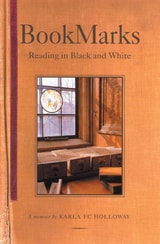
Bookmarks
Reading in Black and White, First Paperback EditionKarla F. Holloway
Rutgers University Press, 2006
"BookMarks is a moving and revelatory memoir... a work of fiercely intelligent scholarship." - Susan Larson,
"Erudite and emotional in turns, [BookMarks] is full of truths that appeal to the head and the heart." - Charlotte News Observer"
What are you reading? What books have been important to you? Whether you are interviewing for a job, chatting with a friend or colleague, or making small talk, these questions arise almost unfailingly. Some of us have stock responses, which may or may not be a fiction of our own making. Others gauge their answers according to who is asking the question. Either way, the replies that we give are thoughtfully crafted to suggest the intelligence, worldliness, political agenda, or good humor that we are hoping to convey. We form our answers carefully because we know that our responses say a lot.
But what exactly do our answers say? In BookMarks, Karla FC Holloway explores the public side of reading, and specifically how books and booklists form a public image of African Americans. Revealing her own love of books and her quirky passion for their locations in libraries and on bookshelves, Holloway reflects on the ways that her parents guided her reading when she was young and her bittersweet memories of reading to her children. She takes us on a personal and candid journey that considers the histories of reading in children’s rooms, prison libraries, and “Negro” libraries of the early twentieth century, and that finally reveals how her identity as a scholar, a parent, and an African American woman has been subject to judgments that public cultures make about race and our habits of reading.
Holloway is the first to call our attention to a remarkable trend of many prominent African American writers—including Maya Angelou, W.E.B. Du Bois, Henry Louis Gates, Malcolm X, and Zora Neale Hurston. Their autobiographies and memoirs are consistently marked with booklists—records of their own habits of reading. She examines these lists, along with the trends of selection in Oprah Winfrey’s popular book club, raising the questions: What does it mean for prominent African Americans to associate themselves with European learning and culture? How do books by black authors fare in the inevitable hierarchy of a booklist?
BookMarks provides a unique window into the ways that African Americans negotiate between black and white cultures. This compelling rumination on reading is a book that everyone should add to their personal collections and proudly carry “cover out.”
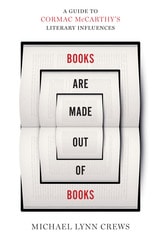
Books Are Made Out of Books
A Guide to Cormac McCarthy's Literary InfluencesBy Michael Lynn Crews
University of Texas Press, 2017
Cormac McCarthy told an interviewer for the New York Times Magazine that “books are made out of books,” but he has been famously unwilling to discuss how his own writing draws on the works of other writers. Yet his novels and plays masterfully appropriate and allude to an extensive range of literary works, demonstrating that McCarthy is well aware of literary tradition, respectful of the canon, and deliberately situating himself in a knowing relationship to precursors.
The Wittliff Collection at Texas State University acquired McCarthy’s literary archive in 2007. In Books Are Made Out of Books, Michael Lynn Crews thoroughly mines the archive to identify nearly 150 writers and thinkers that McCarthy himself references in early drafts, marginalia, notes, and correspondence. Crews organizes the references into chapters devoted to McCarthy’s published works, the unpublished screenplay Whales and Men, and McCarthy’s correspondence. For each work, Crews identifies the authors, artists, or other cultural figures that McCarthy references; gives the source of the reference in McCarthy’s papers; provides context for the reference as it appears in the archives; and explains the significance of the reference to the novel or play that McCarthy was working on. This groundbreaking exploration of McCarthy’s literary influences—impossible to undertake before the opening of the archive—vastly expands our understanding of how one of America’s foremost authors has engaged with the ideas, images, metaphors, and language of other thinkers and made them his own.
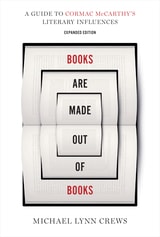
Books Are Made Out of Books
A Guide to Cormac McCarthy's Literary InfluencesMichael Lynn Crews
University of Texas Press, 2024
Cormac McCarthy told an interviewer for the New York Times Magazine that “books are made out of books,” but he was famously unwilling to discuss how his own writing draws on the works of other writers. Yet his novels and plays masterfully appropriate and allude to an extensive range of literary works, demonstrating that McCarthy was well aware of literary tradition and deliberately situating himself in a knowing relationship to precursors.
In Books Are Made Out of Books, Michael Lynn Crews thoroughly mines McCarthy’s literary archive to identify over 150 writers and thinkers that McCarthy referenced in early drafts, marginalia, notes, and correspondence. Crews organizes the references into chapters devoted to McCarthy’s published works, the unpublished screenplay Whales and Men, and McCarthy’s correspondence. This updated edition now examines McCarthy’s final publications: the novel The Passenger and its play-like coda Stella Maris.
For each work, Crews identifies authors, artists, or other cultural figures that McCarthy referenced; gives the source of the reference in McCarthy’s papers; provides context for the reference as it appears in the archives; and explains the significance of the reference to the novel or play that McCarthy was working on. This groundbreaking exploration of McCarthy’s literary influences vastly expands our understanding of how one of America’s foremost authors engaged with the ideas, images, metaphors, and language of other thinkers and made them his own.
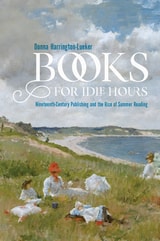
Books for Idle Hours
Nineteenth-Century Publishing and the Rise of Summer ReadingDonna Harrington-Lueker
University of Massachusetts Press, 2019
Drawing on publishing records, book reviews, readers' diaries, and popular novels of the period, Donna Harrington-Lueker explores the beginning of summer reading and the backlash against it. Countering fears about the dangers of leisurely reading—especially for young women—publishers framed summer reading not as a disreputable habit but as a respectable pastime and welcome respite. Books for Idle Hours sheds new light on an ongoing seasonal publishing tradition.
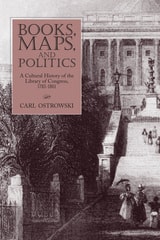
Books, Maps, and Politics
A Cultural History of the Library of Congress, 1783-1861Carl Ostrowski
University of Massachusetts Press, 2004
The author explores the relationship between the Library and the period's expanding print culture. He identifies the books that legislators required to be placed in the Library and establishes how these volumes were used. His analysis of the earliest printed catalogs of the Library reveals that law, politics, economics, geography, and history were the subjects most assiduously collected. These books provided government officials with practical guidance in domestic legislation and foreign affairs, including disputes with European powers over territorial boundaries.
Ostrowski also discusses a number of secondary functions of the Library, one of which was to provide reading material for the entertainment and instruction of government officials and their families. As a result, the richness of America's burgeoning literary culture from the 1830s to the 1860s was amply represented on the Library's shelves. For those with access to its Capitol rooms, the Library served an important social function, providing a space for interaction and the display and appreciation of American works of art.
Ostrowski skillfully demonstrates that the history of the Library of Congress offers a lens through which we can view changing American attitudes toward books, literature, and the relationship between the federal government and the world of arts and letters.
Borderland Apocrypha
Anthony Cody
Omnidawn, 2019
Rather than a proposal for re-imagining the US/Mexico border, Cody’s collection is an avant-garde examination of how borderlands have remained occupied spaces, and of the necessity of liberation to usher the earth and its people toward healing. Part auto-historia, part docu-poetic, part visual monument, part myth-making, Borderland Apocrypha unearths history in order to work toward survival, reckoning, and the building of a future that both acknowledges and moves on from tragedies of the past.
Borderland Apocrypha won Omnidawn's 2018 1st/2nd Book Prize.
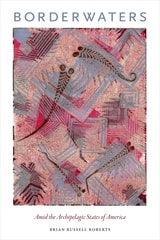
Borderwaters
Amid the Archipelagic States of AmericaBrian Russell Roberts
Duke University Press, 2021

Borealis
Jeff Humphries
University of Minnesota Press, 2002
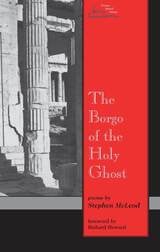
Borgo Of The Holy Ghost
Stephen McLeod foreword by Richard Howard
Utah State University Press, 2002
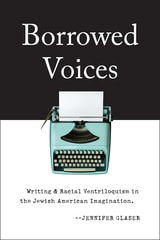
Borrowed Voices
Writing and Racial Ventriloquism in the Jewish American ImaginationGlaser, Jennifer
Rutgers University Press, 2016
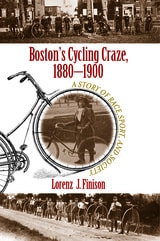
Boston's Cycling Craze, 1880-1900
A Story of Race, Sport, and SocietyLorenz J. Finison
University of Massachusetts Press, 2014
Lorenz J. Finison explores the remarkable rise of Boston cycling through the lives of several participants, including Kittie Knox, a biracial twenty-year-old seamstress who challenged the color line; Mary Sargent Hopkins, a self-proclaimed expert on women's cycling and publisher of The Wheelwoman; and Abbot Bassett, a longtime secretary of the League of American Wheelman and a vocal cycling advocate for forty years. Finison shows how these riders and others interacted on the road and in their cycling clubhouses, often constrained by issues of race, class, religion, and gender. He reveals the challenges facing these riders, whether cycling for recreation or racing, in a time of segregation, increased immigration, and debates about the rights of women.
Boston
Voices and VisionsShaun O'Connell
University of Massachusetts Press, 2010
“New England was founded consciously, and in no fit of absence of mind,” observed historian Samuel Eliot Morison on the establishment of the Bay Colony in 1630 on the narrow, mountainous Shawmut peninsula of what became Massachusetts. That self-conscious presence of mind has endured for four centuries. Boston has been shaped and sustained by observation, imagination, and interpretation. As a result, the evolving vision of Boston has yielded a compelling literary record.
In this wide-ranging anthology, Shaun O'Connell includes a generous sampling of those who have recorded, revised, and redefined the vision of Boston. Anne Bradstreet, Nathaniel Hawthorne, Henry James, W. E. B. Du Bois, Mary Antin, Edwin O'Connor, John Updike, and many others eloquently evoke and explain Boston in these pages.
From John Winthrop's “city upon a hill” sermon, delivered aboard the Arbella before his followers landed in 1630 in the place they would call Boston, to Robert Lowell's “For the Union Dead,” a poem delivered in Boston's Public Garden in 1960, writers have continued to invoke the high purposes for which the city was founded, sometimes in praise of the city, but often in what Robert Frost named a “lover's quarrel,” in works that called attention to the city's failures to fulfill its promises. In the twenty-first century some writers continue to celebrate or to castigate the city, while others look back to Boston's origins to reassess its founders and renew its covenant of high purpose.
This is an interpretive anthology—one that includes commentary as well as writings. Section introductions provide historical and biographical context, offer analysis that stresses the thematic relevance of each selection, and explore the pattern of their relations. Rather than present a random array of writers who happen to have been Greater Bostonians, O'Connell focuses on those authors who possessed a commitment to the sense of place, those who addressed Boston not only as a geographical, social, and political entity but as an image, idea, and site of symbolic values.
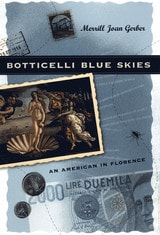
Botticelli Blue Skies
An American in FlorenceMerrill Joan Gerber
University of Wisconsin Press, 2002
When writer Merrill Joan Gerber is invited to join her husband, a history professor, as he takes a class of American college students to study in Florence, Italy, she feels terrified at the idea of leaving her comforts, her friends, and her aged mother in California. Her husband tries to assure her that her fear of Italy—and her lack of knowledge of the Italian language—will be offset by the discoveries of travel. "I can’t tell you exactly what will happen, but something will. And it will all be new and interesting." Botticelli Blue Skies is the tale of a woman who readily admits to fear of travel, a fear that many experience but are embarrassed to admit. When finally she plunges into the new adventure, she describes her experiences in Florence with wit, humor, and energy.
Instead of sticking to the conventional tourist path, Gerber follows her instincts. She makes discoveries without tour guides droning in her ear and reclaims the travel experience as her own, taking time to shop in a thrift shop, eat in a Chinese restaurant that serves "Dragon chips," make friends with her landlady who turns out to be a Countess, and visit the class of a professor at the university. She discovers a Florence that is not all museums and wine. With newfound patience and growing confidence, Gerber makes her way around Florence, Venice, and Rome. She visits famous places and discovers obscure ones—in the end embracing all that is Italian. Botticelli Blue Skies (accompanied by the author’s own photographs) is an honest, lyrical, touching account of the sometimes exhausting, often threatening, but always enriching physical and emotional challenge that is travel.
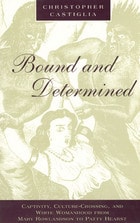
Bound and Determined
Captivity, Culture-Crossing, and White Womanhood from Mary Rowlandson to Patty HearstChristopher Castiglia
University of Chicago Press, 1996
Examining more than sixty accounts by women captives, as well as novels ranging from Susanna Rowson's eighteenth-century classic Rueben and Rachel to today's mass-market romances, Castiglia investigates paradoxes central to the genre. In captivity, women often find freedom from stereotypical roles as helpless, dependent, sexually vulnerable, and xenophobic. In their condemnations of their non-white captors, they defy assumptions about race that undergird their own societies. Castiglia questions critical conceptions of captivity stories as primarily an appeal to racism and misogyny, and instead finds in them an appeal of a much different nature: as all-too-rare stories of imaginative challenges to rigid gender roles and racial ideologies.
Whether the women of these stories resist or escape captivity, endure until they are released, or eventually choose to live among their captors, they end up with the power to be critical of both cultures. Castiglia shows that these compelling narratives, with their boundary crossings and persistent explorations of cultural divisions and differences, have significant implications for current critical investigations into the construction of gender, race, and nation.
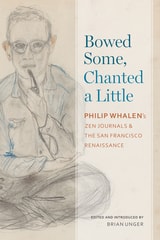
Bowed Some, Chanted a Little
Philip Whalen's Zen Journals and the San Francisco RenaissanceEdited and Introduced by Brian Unger
University of Alabama Press, 2023
The literary journals of a key figure in both the Beat and San Francisco Renaissance movements of the New American Poetry, and an ordained Zen Buddhist priest
Philip Whalen (1923–2002) authored twenty collections of verse, more than twenty broadsides, two novels, a huge assemblage of autobiographical literary journals, nine or ten experimental prose works, and dozens of critical essays, lectures, commentaries, introductions, prefaces, and interviews. But he came to regard his literary journals as his most important prose legacy.
Whalen’s literary work represents a significant turn in American letters, as he and his closest colleagues immersed themselves in East Asian literature and religion, reinvigorating strikingly new linguistic and aesthetic paths for North American writers and artists. However, until now Whalen’s forty-plus years of journals—sixty small eight-by-six-inch notebooks—have been largely inaccessible, archived in the rare book and manuscript library at the University of California, Berkeley, undigitized and unavailable online. Thus, the publication of a critical scholarly edition of Whalen’s journals and notebooks constitutes an important literary event and an invaluable resource for scholars, teachers, poets, and lay readers who follow twentieth-century North American poetry.
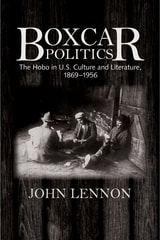
Boxcar Politics
The Hobo in U.S. Culture and Literature, 1869-1956John Lennon
University of Massachusetts Press, 2014
John Lennon maps the rise and demise of the political hobo from the nineteenth-century introduction of the transcontinental railroad to the Federal Aid Highway Act of 1956. Intertwining literary, historical, and theoretical representations of the hobo, he explores how riders and writers imagined alternative ways that working-class people could use mobility to create powerful dissenting voices outside of fixed hierarchal political organizations. Placing portrayals of hobos in the works of Jack London, Jim Tully, John Dos Passos, and Jack Kerouac alongside the lived reality of people hopping trains (including hobos of the IWW, the Scottsboro Boys, and those found in numerous long-forgotten memoirs), Lennon investigates how these marginalized individuals exerted collective political voices through subcultural practices.
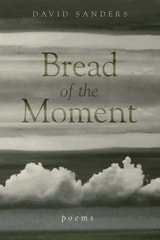
Bread of the Moment
PoemsDavid Sanders
Ohio University Press, 2021
A collection of poems about time, solitude, and wisdom that leads readers to hover between acceptance of and alienation from our fragility.
Bread of the Moment, the follow-up to David Sanders' Compass and Clock (Swallow Press, 2016), devotes keen attention to the porous nature of the past and how the unbidden evidence of ordinary life pervades the world, provoking a spectrum of moments from which to draw meaning and find solace. These poems, characterized by a mix of free and formal verse, depict quiet days at home or in nature, as well as close calls and brushes with death: chronic illness, a house fire, a car crushed by a boulder.
In this way, these poems amplify the fragility of the commonplace, a mystery from which we are, amid the noise of our everyday lives, sometimes estranged. Through this exploration, Sanders constructs a precarious balance between alienation and acceptance, striking a note at once recognizable and new.
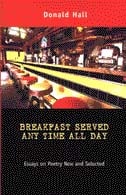
Breakfast Served Any Time All Day
Essays on Poetry New and SelectedDonald Hall
University of Michigan Press, 2004
Praise for Breakfast Served:
". . . the essays in this book are engaging, passionate, strange, and unified. Hall has been around a long time, and you can trace the concerns of a generation through the mind of this one man: questions about the diminished scope of poetry, the diminished ambitions of poets, how a poem 'means,' etc. . . . . Criticism . . . is an exercise in sanity, of which these essays are a splendid and useful example."
-Poetry
"A luminous and essential volume about the sensuality of language, its pleasures and sounds."
-Ploughshares
"It is in this merger of a poet's biography and a poem's body that Hall does his best work. . . . [Breakfast Served Any Time All Day] has an undeniably infectious quality to it. Finishing it, you cannot help but want to return to your bookshelf, and read-again or for the first time-the great forgotten poems of our past."
-Nathan Greenwood Thompson, Rain Taxi
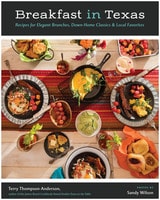
Breakfast in Texas
Recipes for Elegant Brunches, Down-Home Classics, and Local FavoritesBy Terry Thompson-Anderson, with photos by Sandy Wilson
University of Texas Press, 2017
Texans love the morning meal, whether it’s bacon and eggs (often eaten in a breakfast taco) or something as distinctively nontraditional as saag paneer omelets, pon haus, or goat curry. A Lone Star breakfast can be a time for eating healthy, or for indulging in decadent food and drink. And with Texas’s rich regional and cultural diversity, an amazing variety of dishes graces the state’s breakfast and brunch tables. The first Texas cookbook dedicated exclusively to the morning meal, Breakfast in Texas gathers nearly one hundred recipes that range from perfectly prepared classics to the breakfast foods of our regional cuisines (Southern, Mexican, German, Czech, Indian, and Asian among them) to stand-out dishes from the state’s established and rising chefs and restaurants.
Terry Thompson-Anderson organizes the book into sections that cover breakfast and brunch libations (with and without alcohol); simple, classic, and fancy egg presentations; pancakes, French toast, and waffles; meat lover’s dishes; seafood and shellfish; vegan dishes and sides; and pastries. The recipes reference locally sourced ingredients whenever possible, and Thompson-Anderson provides enjoyable notes about the chefs who created them or the cultural history they represent. She also offers an expert primer on cooking eggs, featuring an encounter with Julia Child, as well as a selection of theme brunches (the boozy brunch, the make-ahead brunch, New Year’s Day brunch, Mother’s Day brunch with seasonal ingredients, teenage daughter’s post-slumber party breakfast, and more). Sandy Wilson’s color photographs of many of the dishes and the chefs and restaurants who serve them provide a lovely visual counterpoint to the appetizing text.
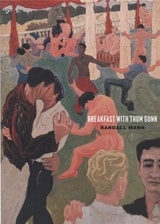
Breakfast with Thom Gunn
Randall Mann
University of Chicago Press, 2009
Aubade
Those who lack a talent for love have come
to walk the long Pier 7. Here at the end
of the imagined world are three low-flying gulls
like lies on the surface; the slow red
of a pilot’s boat; the groan
of a fisherman hacking a small shark—
and our speech like the icy water, a poor
translation that will not carry us across.
What brought us west, anyway? A hunger.
But ours is no Donner Party, we who feed
only on scenery, the safest form
of obfuscation: see how the bay is a gray
deepening into gray, the color of heartbreak.
Randall Mann’s Breakfast with Thom Gunn is a work both direct and unsettling. Haunted by the afterlife of Thom Gunn (1929–2004), one of the most beloved gay literary icons of the twentieth century, the poems are moored in Florida and California, but the backdrop is “pitiless,” the trees “thin and bloodless,” the words “like the icy water” of the San Francisco Bay. Mann, fiercely intelligent, open yet elusive, draws on the “graceful erosion” of both landscape and the body, on the beauty that lies in unbeauty. With audacity, anxiety, and unbridled desire, this gifted lyric poet grapples with dilemmas of the gay self embroiled in—and aroused by—a glittering, unforgiving subculture. Breakfast with Thom Gunnis at once formal and free, forging a sublime integrity in the fire of wit, intensity, and betrayal.
Praise for Complaint in the Garden
“We have before us a skillful, witty, passionate young poet. . . . Randall Mann is both attuned to and at odds with the natural world; he articulates the passions and predicaments of a self inside a massive, arousing, but sometimes brutal culture. And he accomplishes these things with buoyant lyric sensibilities and rejuvenating skills.”—Kenyon Review

Breaking Boundaries
Women'S Regional WritingSherrie A. Inness
University of Iowa Press, 1997
These lively essays reveal the generational continuum of women's regional literature, which has always offered a voice to women and their concerns. By exploring the multiplicity of connections between women and regional writing and the subversive potential of regional writing to put forth social criticisms and correctives, Breaking Boundaries charts some of the major ways in which this literary genre is of particular importance to today's writers.
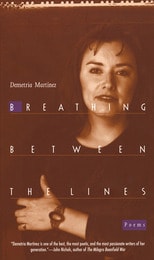
Breathing Between the Lines
PoemsDemetria Martínez
University of Arizona Press, 1997
Weaving together threads of love and family, social conviction and activism, loss and renewal, Breathing between the Lines carries the reader deep inside the head and heart of a talented Chicana writer. Page by page, the journey is an exhilarating one. What we find at the end is up to us.
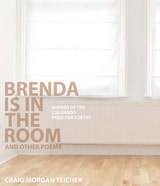
Brenda Is in the Room and Other Poems
Craig Morgan Teicher
University Press of Colorado, 2007
Published by the Center for Literary Publishing at Colorado State University
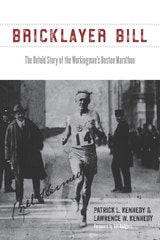
Bricklayer Bill
The Untold Story of the Workingman's Boston MarathonPatrick L. Kennedy and Lawrence W. Kennedy
University of Massachusetts Press, 2017
Two weeks after the United States officially entered World War I, Irish American “Bricklayer Bill” Kennedy won the Boston Marathon wearing his stars-and-stripes bandana, rallying the crowd of patriotic spectators. Kennedy became an American hero and, with outrageous stories of his riding the rails and sleeping on pool tables, a racing legend whose name has since appeared in almost every book written on the Boston Marathon.
When journalist Patrick Kennedy and historian Lawrence Kennedy unearthed their uncle's unpublished memoir, they discovered a colorful character who lived a tumultuous life, beyond his multiple marathons. The bricklayer survived typhoid fever, a five-story fall, auto and train accidents, World War action, Depression-era bankruptcy, decades of back-breaking work, and his own tendency to tipple. In many ways, Bill typified the colorful, newly emerging culture and working-class ethic of competitive long-distance running before it became a professionalized sport. Bricklayer Bill takes us back to another time, when bricklayers, plumbers, and printers could take the stage as star athletes.
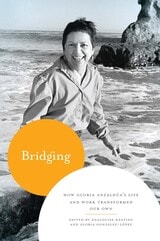
Bridging
How Gloria Anzaldúa's Life and Work Transformed Our OwnEdited by AnaLouise Keating and Gloria González-López
University of Texas Press, 2011
The inspirational writings of cultural theorist and social justice activist Gloria Anzaldúa have empowered generations of women and men throughout the world. Charting the multiplicity of Anzaldúa's impact within and beyond academic disciplines, community trenches, and international borders, Bridging presents more than thirty reflections on her work and her life, examining vibrant facets in surprising new ways and inviting readers to engage with these intimate, heartfelt contributions.
Bridging is divided into five sections: The New Mestizas: "transitions and transformations"; Exposing the Wounds: "You gave me permission to fly in the dark"; Border Crossings: Inner Struggles, Outer Change; Bridging Theories: Intellectual Activism with/in Borders; and "Todas somos nos/otras": Toward a "politics of openness." Contributors, who include Norma Elia Cantú, Elisa Facio, Shelley Fisher Fishkin, Aída Hurtado, Andrea Lunsford, Denise Segura, Gloria Steinem, and Mohammad Tamdgidi, represent a broad range of generations, professions, academic disciplines, and national backgrounds. Critically engaging with Anzaldúa's theories and building on her work, they use virtual diaries, transformational theory, poetry, empirical research, autobiographical narrative, and other genres to creatively explore and boldly enact future directions for Anzaldúan studies.
A book whose form and content reflect Anzaldúa's diverse audience, Bridging perpetuates Anzaldúa's spirit through groundbreaking praxis and visionary insights into culture, gender, sexuality, religion, aesthetics, and politics. This is a collection whose span is as broad and dazzling as Anzaldúa herself.
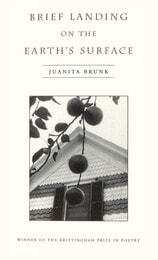
Brief Landing on the Earth's Surface
Juanita Brunk
University of Wisconsin Press, 1996
In Brief Landing on the Earth’s Surface, even the most ordinary moments are infused with an awareness of the lost past and a kind of prescience of the future. From one setting to another—Tidewater Virginia, rural Pennsylvania, Greece, New York City—these poems give voice to the human longing for permanence, home, and connection in the face of a constantly changing reality.
Bringing the Devil to His Knees
The Craft of Fiction and the Writing LifeCharles Baxter and Peter Turchi, Editors
University of Michigan Press, 2001
Each of the contributors is a current or former lecturer at the Warren Wilson College MFA Program for Writers, one of the most highly respected writing programs in the country. Included are essays by Charles Baxter, Robert Boswell, Karen Brennan, Judith Grossman, Ehud Havazelet, C. J. Hribal, Margot Livesey, Michael Martone, Kevin McIlvoy, Pablo Medina, Antonya Nelson, Susan Neville, Richard Russo, Steven Schwartz, Jim Shepard, Joan Silber, Debra Spark, Peter Turchi, and Chuck Wachtel.
Rich with masterful examples and personal anecdotes, these imaginative essays provide hard-earned insight into a writer's work. The book will interest not only those seeking inspiration and guidance to become stronger writers, but also readers of contemporary literary fiction, who will find a number of surprising and original approaches to the writer's work by award-winning practitioners adept at teaching others what they know.
Charles Baxter is author of several novels, including The Feast of Love, Shadow Play, and First Light. and collections of stories including Believers and A Relative Stranger. He teaches writing at the University of Michigan. Peter Turchi is author of the novel The Girls Next Door, a collection of stories, Magician, and a book of non-fiction, The Pirate Prince. He is Director of the MFA Program for Writers, Warren Wilson College.
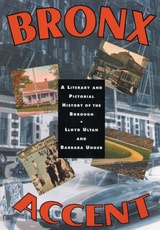
Bronx Accent
A Literary and Pictorial History of the BoroughUltan, Lloyd
Rutgers University Press, 2000
Bringing together a variety of past literary figures as well as emerging talents, this comprehensive book captures the Zeitgeist of the neighborhood through the eyes of its writers. Included are selections from the writings of Jack Kerouac, Mark Twain, James Baldwin, James Fenimore Cooper, Tom Wolfe, Herman Wouk, Theodore Dreiser, Washington Irving, Clifford Odets, Cynthia Ozick, Grace Paley, Edgar Allan Poe, Chaim Potok, Kate Simon, Leon Trotsky, and Sholem Aleichem.
Lloyd Ultan and Barbara Unger place the literature of these and other writers in historical context and reproduce one hundred vintage photographs that bring the writings to life. Filtered through the imaginations of authors of different times, ethnic groups, social classes, and literary styles, the borough of The Bronx emerges not only as a shaper of destinies and lives, but as an important literary mecca.
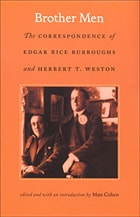
Brother Men
The Correspondence of Edgar Rice Burroughs and Herbert T. WestonEdgar Rice Burroughs and Herbert T. Weston
Duke University Press, 2005
The Burroughs-Weston letters trace a fascinating personal and business relationship that evolved as the two men and their wives embarked on joint capital ventures, traveled frequently, and navigated the difficult waters of child-rearing, divorce, and aging. Brother Men includes never-before-published images, annotations, and a critical introduction in which Cohen explores the significance of the sustained, emotional male friendship evident in the letters. Rich with insights related to visual culture and media technologies, consumerism, the history of the family, the history of authorship and readership, and the development of the West, these letters make it clear that Tarzan was only one small part of Edgar Rice Burroughs’s broad engagement with modern culture.
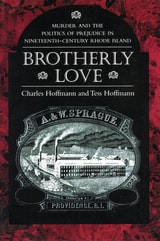
Brotherly Love
Murder and the Politics of Prejudice in Nineteenth-Century Rhode IslandCharles Hoffmann
University of Massachusetts Press, 1993
Brotherly Love is a graphic reconstruction of the crime, its social and economic background, and the subsequent trials. The story reveals the antagonism between native-born Yankees, who commanded great power, and the growing number of Irish Catholic immigrants, most of whom worked in the textile mills. Indeed, the economic, political, and religious dimensions of the conflict are all evident in the trials.
The authors argue persuasively that the Gordons were victims of bigotry and circumstantial evidence, serving as convenient scapegoats to appease a community outraged over the murder of its wealthiest citizen. In telling the story of this notorious case, Brotherly Love reveals the politics of prejudice in nineteenth-century New England as played out in community and courtroom.
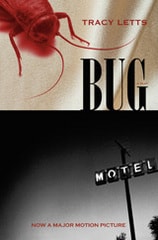
Bug
A PlayTracy Letts
Northwestern University Press, 2007
Tracy Letts's tale of love, paranoia, and government conspiracy is a thought-provoking psycho-thriller that mixes terror and laughter at a fever pitch.
This dark comedy takes place in a seedy motel room outside Oklahoma City, where Agnes, a drug-addled cocktail waitress, is hiding from her ex-con ex-husband. Her lesbian biker friend R.C. introduces her to Peter, a handsome drifter who might be an AWOL Gulf War veteran. They soon begin a relationship that takes place almost entirely within the increasingly claustrophobic confines of her motel room. Peter begins to rant about the war in Iraq, UFOs, the Oklahoma City bombings, cult suicides, and then secret government experiment on soldiers, of which he believes he is a victim. His delusions infect Agnes and the tension mounts as mysterious strangers appear at their door, past events haunt them at every turn and they are attacked by real bugs.
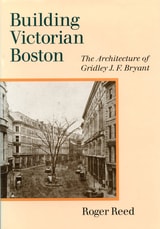
Building Victorian Boston
The Architecture of Gridley J.F. BryantRoger G. Reed
University of Massachusetts Press, 2007
In Building Victorian Boston, Roger Reed focuses on representative projects by Bryant, presenting them in a chronological narrative that both illuminates the trajectory of his career and creates a portrait of the profession of architecture during a defining period of New England history. Bryant designed more major buildings in Boston from 1840 to 1880 than any other architect. He also undertook commissions throughout New
England, especially in towns linked to Boston by newly constructed railroad lines. In many ways, his practice presaged aspects of modern architectural firms. His ability to work with a variety of designers, his expertise in construction management, and his exceptional talent for self-promotion all contributed to his success. Although by the time of his death his work was no longer fashionable, newspaper accounts noted the passing of the "Famed Bostonian" and "Great Builder" whose career had had such a dramatic impact on the face of the city.
For this volume, Reed has tracked down hundreds of Bryant's drawings as well as specifications, letters, newspaper articles, published renderings, and historical photographs. These materials are amply represented in this book, the definitive study of a quintessential Victorian architect.
Burnt Mountain
Emily Wilson
University of Iowa Press, 2025
But She Is Also Jane
Laura Read
University of Massachusetts Press, 2023
Conversational, irreverent, and disarmingly honest, the poems of But She Is Also Jane follow the everyday contours of women’s lives and the expectations they grapple with. As our speaker approaches middle age, she copes with the loss of loved ones, the realities of an emptying nest, the routine indignities of sexism, and nostalgia for the past. Laura Read’s third poetry collection balances discussions of Degas, Vermeer, and Marie Curie with reflections on Sammy Hagar, a troubling outing to a male revue, and memories of watching Mork and Mindy on the night of her mother’s hysterectomy.
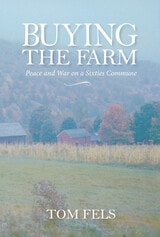
Buying the Farm
Peace and War on a Sixties CommuneTom Fels
University of Massachusetts Press, 2012
With deft individual portraits, Fels reveals the social dynamics of the group and explores the ongoing difficulties faced by a commune that was founded in idealism and sought to operate on the model of a leaderless democracy. He draws on a large body of farm-family and 1960s-related writing and the notes of community members to present a variety of points of view. The result is an absorbing narrative that chronicles the positive aspects of Montague Farm while documenting the many challenges and disruptions that marked its history.
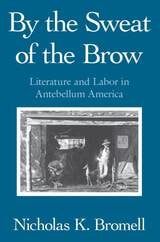
By the Sweat of the Brow
Literature and Labor in Antebellum AmericaNicholas K. Bromell
University of Chicago Press, 1993
In chapters on Thoreau, Melville, Hawthorne, Rebecca Harding Davis, Susan Warner, Harriet Beecher Stowe, and Frederick Douglass, Nicholas Bromell argues that American writers generally sensed a deep affinity between the mental labor of writing and such bodily labors as blacksmithing, house building, housework, mothering, and farming. Combining literary and social history, canonical and noncanonical texts, primary source material, and contemporary theory, Bromell establishes work as an important subject of cultural criticism.
bodys
Vanessa Roveto
University of Iowa Press, 2016
Roveto’s sentences hurtle forward with withering disjunctive energy, laying down traps of wordplay, tacking toward and veering away from syntactical targets, trying-on and sloughing-off pronoun positions with abandon. Yet for all its postmodern bravado—and irreverence, and frequent scary hilarity—bodys remains abidingly attached to exploring the problem of a human speaker addressing itself to another, and colliding with its own otherness along the way. It is the same problem—articulation as disarticulation—that animates the great Renaissance sonnet sequences, from which bodys is affectionately, and perversely, descended. What is bodys—what are bodys—anyway? A dysfunction in the body’s ability to multiply itself? A dysmorphic take on the body’s sense of its reality? A dystopian vision of a world in which boundaries between selves and others have been overwhelmed by commerce, surveillance, medical technology, nihilistic agitprop? “Last night one of the girls asked about the relationship between a body and nobody,” Roveto writes. “It was the beautiful question.”
boy
Consuelo Wise
Omnidawn, 2024
In this hybrid of lyric poetry and essay, Consuelo Wise utilizes repetition, fragmentation, and syntax to construct a form that repeatedly falls apart. Breaks in lines and fragmented stanzas are followed by accumulative rushes, slashes, brackets, and words pushed together.
Throughout this book-length poem, Wise composes a meditation and an investigation into loss and identity. Moving between sound and image, aggression and subtlety, b o y pries open memories that resist understanding but also refuse to be forgotten. Wise peels back layers of mourning, considering how it can be experienced as a personal, inherited, environmental, social, and historical phenomenon. Throughout, the protagonist in b o y reenvisions ways to process a great loss, listening closely and searching for words while “the earth is shaking and the silence pressing down.”