Results by title
1947 books match the query 'Music' and 149 start with b
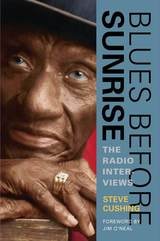
Blues Before Sunrise
The Radio InterviewsSteve Cushing, Foreword by Jim O'Neal
University of Illinois Press, 2010
This collection assembles the best interviews from Steve Cushing's long-running radio program Blues Before Sunrise, the nationally syndicated, award-winning program focusing on vintage blues and R&B. As both an observer and performer, Cushing has been involved with the blues scene in Chicago for decades. His candid, colorful interviews with prominent blues players, producers, and deejays reveal the behind-the-scenes world of the formative years of recorded blues. Many of these oral histories detail the careers of lesser-known but greatly influential blues performers and promoters.
The book focuses in particular on pre–World War II blues singers, performers active in 1950s Chicago, and nonperformers who contributed to the early blues world. Interviewees include Alberta Hunter, one of the earliest African American singers to transition from Chicago's Bronzeville nightlife to the international spotlight, and Ralph Bass, one of the greatest R&B producers of his era. Blues expert, writer, record producer, and cofounder of Living Blues Magazine Jim O'Neal provides the book's foreword.
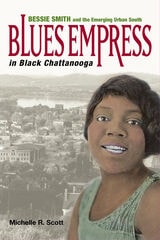
Blues Empress in Black Chattanooga
Bessie Smith and the Emerging Urban SouthMichelle R. Scott
University of Illinois Press, 2007
As one of the first African American vocalists to be recorded, Bessie Smith is a prominent figure in American popular culture and African American history. Michelle R. Scott uses Smith's life as a lens to investigate broad issues in history, including industrialization, Southern rural to urban migration, black community development in the post-emancipation era, and black working-class gender conventions.
Arguing that the rise of blues culture and the success of female blues artists like Bessie Smith are connected to the rapid migration and industrialization in the late nineteenth and early twentieth centuries, Scott focuses her analysis on Chattanooga, Tennessee, the large industrial and transportation center where Smith was born. This study explores how the expansion of the Southern railroads and the development of iron foundries, steel mills, and sawmills created vast employment opportunities in the postbellum era. Chronicling the growth and development of the African American Chattanooga community, Scott examines the Smith family's migration to Chattanooga and the popular music of black Chattanooga during the first decade of the twentieth century, and culminates by delving into Smith's early years on the vaudeville circuit.
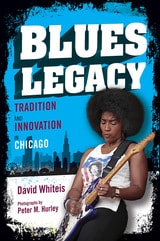
Blues Legacy
Tradition and Innovation in ChicagoDavid Whiteis
University of Illinois Press, 2019
David Whiteis delves into how the current and upcoming Chicago blues generations carry on this legacy. Drawing on in-person interviews, Whiteis places the artists within the ongoing social and cultural reality their work reflects and helps create. Beginning with James Cotton, Eddie Shaw, and other bequeathers, he moves through an all-star council of elders like Otis Rush and Buddy Guy and on to inheritors and today's heirs apparent like Ronnie Baker Brooks, Shemekia Copeland, and Nellie "Tiger" Travis.
Insightful and wide-ranging, Blues Legacy reveals a constantly adapting art form that, whatever the challenges, maintains its links to a rich musical past.
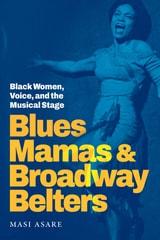
Blues Mamas and Broadway Belters
Black Women, Voice, and the Musical StageMasi Asare
Duke University Press, 2024
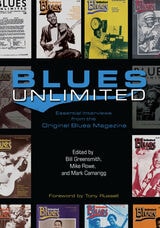
Blues Unlimited
Essential Interviews from the Original Blues MagazineEdited by Bill Greensmith, Mike Rowe, and Mark Camarigg
University of Illinois Press, 2015
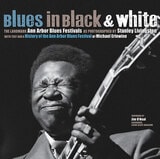
Blues in Black and White
The Landmark Ann Arbor Blues FestivalsAs photographed by Stanley Livingston with Text and a History of the Ann Arbor Blues Festival by Michael Erlewine
University of Michigan Press, 2010
"This was really the first time that blues music, especially Chicago/urban blues, was showcased in this way. Sadly, the festivals were not recorded professionally. So Mr. Livingston's photos are the best record of the festivals."
---Michael Jewett, longtime weekday afternoon host of 89.1 Jazz and host of "Blues & Some Uthuh Stuff"
"The photos are works of art. It is great to see photos of musicians such as Buddy Guy and James Cotton looking so young and vibrant. And it is great to see photos of blues legends such as John Lee Hooker, Roosevelt Sykes, Howlin' Wolf, and Son House, who have long since passed away."
---Peter Madcat Ruth, Grammy-winning blues harmonica player
"If Woodstock was one of the Fifty Moments That Changed Rock 'n' Roll History, as honored in Rolling Stone magazine, then the Ann Arbor Blues Festival was the coronation for the blues roots that sired rock to begin with. . . . finally we have this amazing book of Stanley Livingston's priceless images, along with Michael Erlewine's detailed chronology."
---From the foreword by Jim O'Neal, Cofounder, Living Blues Magazine
In 1969 and 1970, the first Ann Arbor Blues Festivals brought together the greatest-ever selection of blues performers---an enormous blues party that seemed to feature every big name in the world of blues.
The Ann Arbor Blues Festival was just that: a festival and celebration of city blues. It helped to mark the discovery of modern blues music (and the musicians who made that music) by a much larger audience. The festival, however, was something more than just a white audience discovering black music.
Never before had such a far-reaching list of performers been assembled, including the grandfathers of southern country blues and the hottest electric bands from Chicago. These groundbreaking festivals were the seed that grew into the Ann Arbor Blues and Jazz Festival, which was continued annually for many years. To name just a few of the dozens of artists who performed at the festival: Luther Allison, John Lee Hooker, Howlin' Wolf, B.B. King, Muddy Waters, Otis Rush, Hound Dog Taylor, Big Mama Thorton, T-Bone Walker, Sippie Wallace, Junior Wells, and Mighty Joe Young.
Stanley Livingston, a professional photographer from Ann Arbor, captured these legendary performances onstage---as well as the goings-on backstage. Livingston's thousands of photographs from these festivals, previously unpublished and known only to a few, are among the finest candid blues shots ever taken. Together with editor and archivist Michael Erlewine's text accompaniments, these photographs, reproduced here as high-quality duotones, comprise a visual history and important keepsake for blues aficionados everywhere.
Stanley Livingston was an award-winning photographer living and working in Ann Arbor until he passed away in 2010, after the book was released.
Michael Erlewine, also from Ann Arbor, is a renowned archivist of popular culture and founder of the All-Music Guide (allmusic.com) and editor of a number of books on blues and jazz.
Cover photo of B.B. King by Stanley Livingston
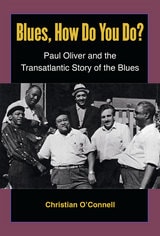
Blues, How Do You Do?
Paul Oliver and the Transatlantic Story of the BluesChristian O’Connell
University of Michigan Press, 2015

Blues, Ideology, and Afro-American Literature
A Vernacular TheoryHouston A. Baker Jr.
University of Chicago Press, 1987
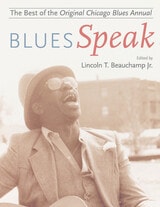
BluesSpeak
Best of the Original Chicago Blues AnnualLincoln T. Beauchamp, Jr.
University of Illinois Press, 2010
This incomparable anthology collects articles, interviews, fiction, and poetry from the Original Chicago Blues Annual, one of music history's most significant periodical blues publications. Founded and operated from 1989 to 1995 by African American musician and entrepreneur Lincoln T. Beauchamp Jr., OCBA gave voice to the blues community and often frankly addressed contentious issues within the blues such as race, identity, prejudice, wealth, gender, and inequity.
OCBA often expressed an explicitly black perspective, but its contributors were a mix of black and white, American and international. Likewise, although OCBA's roots and main focus were in Chicago, Beauchamp's vision for the publication (and his own activities as a blues performer and promoter) embraced an international dimension, reflecting a broad diversity of blues audiences and activities in locations as farflung as Iceland, Poland, France, Italy, and South Africa.
This volume includes key selections from OCBA's seven issues and features candid interviews with blues luminaries such as Koko Taylor, Eddie Boyd, Famoudou Don Moye, Big Daddy Kinsey, Lester Bowie, Junior Wells, Billy Boy Arnold, Herb Kent, Barry Dolins, and many more. Also featured are heartfelt memorials to bygone blues artists, insightful observations on the state of the blues in Chicago and beyond, and dozens of photographs of performers, promoters, and other participants in the worldwide blues scene.
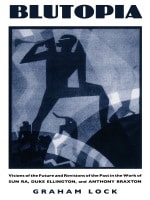
Blutopia
Visions of the Future and Revisions of the Past in the Work of Sun Ra, Duke Ellington, and Anthony BraxtonGraham Lock
Duke University Press, 2000
A century after Ellington’s birth, Lock reassesses his use of music as a form of black history and compares the different approaches of Ra, a band leader who focused on the future and cosmology, and Braxton, a contemporary composer whose work creates its own elaborate mythology. Arguing that the majority of writing on black music and musicians has—even if inadvertently—incorporated racial stereotypes, he explains how each artist reacted to criticism and sought to break free of categorical confines. Drawing on social history, musicology, biography, cultural theory, and, most of all, statements by the musicians themselves, Lock writes of their influential work.
Blutopia will be a welcome contribution to the literature on twentieth-century African American music and creativity. It will interest students of jazz, American music, African American studies, American culture, and cultural studies.
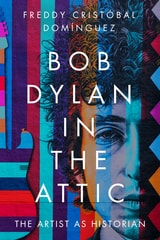
Bob Dylan in the Attic
The Artist as HistorianFreddy Cristóbal Domínguez
University of Massachusetts Press, 2022
Bob Dylan is an iconic American artist, whose music and performances have long reflected different musical genres and time periods. His songs tell tales of the Civil War, harken back to 1930s labor struggles, and address racial violence at the height of the civil rights movement, helping listeners to think about history, and history making, in new ways. While Dylan was warned by his early mentor, Dave Van Ronk, that, “You’re just going to be a history book writer if you do those things. An anachronism,” the musician has continued to traffic in history and engage with a range of source material—ancient and modern—over the course of his career.
In this beautifully crafted book, Freddy Cristóbal Domínguez makes a provocative case for Dylan as a historian, offering a deep consideration of the musician’s historical influences and practices. Utilizing interviews, speeches, and the close analysis of lyrics and live performances, Bob Dylan in the Attic is the first book to consider Dylan’s work from the point of view of historiography.
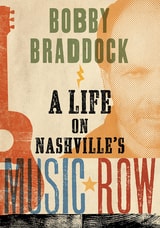
Bobby Braddock
A Life on Nashville’s Music RowBobby Braddock
Vanderbilt University Press, 2015
If you're looking for insight into Nashville, the life of music in this town, and the story of a force of nature on the Row to this day, Bobby Braddock will take you there.
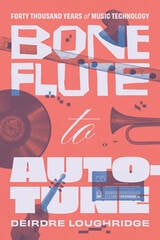
Bone Flute to Auto-Tune
Forty Thousand Years of Music TechnologyDeirdre Loughridge
University of Chicago Press, 2026
An accessible history of music technology from the earliest days to the present.
For more than forty thousand years, humans have been using technologies simple and complex to fashion instruments for making music, the earliest surviving examples being simple bone flutes. The first book to offer a history of western music through the lens of tools, Bone Flute to Auto-Tune explores the relationship between music and technology from the Paleolithic Age to the present day. Taking an expansive view of music technology, Deirdre Loughridge develops critical perspectives on on the ways the past is built into the present, the affordances and constraints of tools, and the trade-offs made in adopting one tool rather than another. By examining music-technological transitions from across history, including the violin, piano, cymbal, electric guitar, and synthesizer, Bone Flute to Auto-Tune shows how earlier eras have been built into later technologies, influencing not only the sound of our music but also how our tools can both help and hinder us.
The result is a music history attuned to the possibilities that new technologies open up or reveal and those they foreclose or conceal, and that considers what is gained and lost in the transition from one technology to another. By identifying turning points and trade-offs, a long historical perspective enables us to see alternate paths along which music technologies might have developed, and to grapple with our own moment in the ongoing interplay between technological change and the enduring human need for music.

Bonfire of Roadmaps
By Joe Ely
University of Texas Press, 2007
Since he first hitched a ride out of Lubbock, Texas, at the age of sixteen, singer-songwriter and Flatlanders band member Joe Ely has been a road warrior, traveling highways and back roads across America and Europe, playing music for "2 hours of ecstasy" out of "22 hours of misery." To stay sane on the road, Ely keeps a journal, penning verses that sometimes morph into songs, and other times remain "snapshots of what was flying by, just out of reach, so to savor at a later date when the wheels stop rolling, and the gears quit grinding, and the engines shut down."
In Bonfire of Roadmaps, Ely takes readers on the road with him. Using verse passages from his road journals and his own drawings, Ely authentically re-creates the experience of a musician's life on tour, from the hard goodbyes at home, to the long hours on the road, to the exhilaration of a great live show, to the exhaustion after weeks of touring. Ely's road trips begin as he rides the rails to Manhattan in 1972 and continue up through recent concert tours with fellow Flatlanders Jimmie Dale Gilmore and Butch Hancock.
While acknowledging that "it is not the nature of a gypsy to look in the rearview mirror," Joe Ely nevertheless offers his many fans a revelatory look back over the roads he's traveled and the wisdom he's won from his experiences. And for "those who want to venture beyond the horizon just to see what is there... to those, I hope these accounts will give a glint of inspiration..."
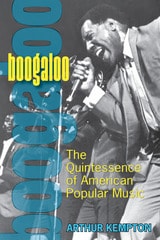
Boogaloo
The Quintessence of American Popular MusicArthur Kempton
University of Michigan Press, 2005
Praise for Boogaloo:
"From Thomas A. Dorsey and gospel to Sam Cooke and the classic age of boogaloo ('soul') to George Clinton and hip hop, this comprehensive analysis of African-American popular music is a deep and gorgeous meditation on its aesthetics and business."
---Henry Louis Gates, Jr., W.E.B. Du Bois Professor of the Humanities, Harvard
"Surpassingly sympathetic and probing. . . . a panoramic critical survey of black popular music over seventy-five years. . . .There is no book quite like it."
---New York Review of Books
". . . moving, dense, and fascinating. . . ."
---New Yorker
". . . a grand and sweeping survey of the history of soul music in America. . . . one of the best books of music journalism. . . ."
---Publisher's Weekly
". . . a fascinating and often original addition to the extensive literature. . . . an astute and witty account. . . . there is plenty in Boogaloo to set the mind and heart alight, as well as some flashes of brilliance and originality rare in music writing today."
---Times Literary Supplement
Book Reports
A Music Critic on His First Love, Which Was ReadingRobert Christgau
Duke University Press, 2019
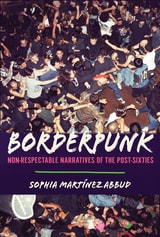
Borderpunk
Non-Respectable Narratives of the Post-SixtiesSophia Martínez Abbud
University of Arizona Press, 2027
The U.S.-Mexico border has long been a home to artists, poets, emos, and punks. In the clandestine undergrounds of borderlands cultural production, there lies an impulse to live below and beyond border surveillance technologies. This book is about the utopic stories that narrate this impulse and the punk literary scenes that facilitate these fabulations.
Using an innovative methodology of “scene-work”—a blend of literary analysis, queer theory, critical regionalism, and auto-ethnography—Borderpunk identifies, aggregates, and outlines the emergent genre of borderpunk cultural productions. Beginning with the post-1960s through the present, author Sophia Martínez Abbud examines how music, playlists, literature, art, and performance borderpunk narratives teach us to elide, undermine, and work against the border’s presumed authority. Through these narratives, readers become attuned to the anarchic sense of abjection that permeates the border regions and the kinds of punk subjectivities emerging from these sites of re-mediation.
Borderpunk offers scenes that refuse notions of respectability at different time periods, geographies, and scales. Following the mechanics of other narrative punk genres, such as cyberpunk or solarpunk, it sketches out the uses of “punk” as a way of being in border spaces—where abjection, relajo, and illegibility become useful tools that encourage us to divest from the norm, participate in horizontal community building, and imagine borders in radical new ways.
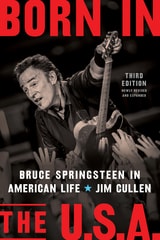
Born in the U.S.A.
Bruce Springsteen in American Life, 3rd edition, Revised and ExpandedJim Cullen
Rutgers University Press, 2024
This third edition of Born in the U.S.A. is fully revised and updated, incorporating discussion of Springsteen’s wide output in the 21st century. While addressing Springsteen’s responses to events like 9/11, it also considers the evolution of his attitudes towards religion, masculinity, and his relationship with his audience. Whether a serious Springsteen fan or simply an observer of American popular culture, Born in the U.S.A. will give you a new appreciation for The Boss.
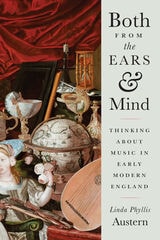
Both from the Ears and Mind
Thinking about Music in Early Modern EnglandLinda Phyllis Austern
University of Chicago Press, 2020
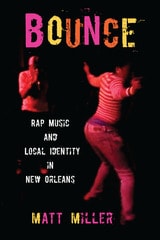
Bounce
Rap Music and Local Identity in New OrleansMatt Miller
University of Massachusetts Press, 2012
Over the course of the twentieth century, African Americans in New Orleans helped define the genres of jazz, rhythm and blues, soul, and funk. In recent decades, younger generations of New Orleanians have created a rich and dynamic local rap scene, which has revolved around a dance-oriented style called “bounce.”
Hip-hop has been the latest conduit for a “New Orleans sound” that lies at the heart of many of the city's best-known contributions to earlier popular music genres. Bounce, while globally connected and constantly evolving, reflects an enduring cultural continuity that reaches back and builds on the city's rich musical and cultural traditions.
In this book, the popular music scholar and filmmaker Matt Miller explores the ways in which participants in New Orleans's hip-hop scene have collectively established, contested, and revised a distinctive style of rap that exists at the intersection of deeply rooted vernacular music traditions and the modern, globalized economy of commercial popular music. Like other forms of grassroots expressive culture in the city, New Orleans rap is a site of intense aesthetic and economic competition that reflects the creativity and resilience of the city's poor and working-class African Americans.
Bound for America
Three British ComposersNicholas Temperley
University of Illinois Press, 2002
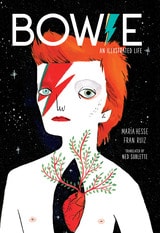
Bowie
An Illustrated LifeBy María Hesse and Fran Ruiz; translated by Ned Sublette
University of Texas Press, 2019
David Bowie was a master of artifice and reinvention. In that same spirit, illustrator María Hesse and writer Fran Ruiz have created a vivid retelling of the life of David Robert Jones, from his working-class childhood to glam rock success to superstardom, concluding with the final recording sessions after his cancer diagnosis.
Narrated from the rock star’s point of view, Bowie colorfully renders both the personal and the professional turning points in a life marked by evolution and innovation. We see Bowie facing the sorrow of his brother’s mental illness, kicking a cocaine habit while other musicians succumbed to deadly overdoses, contending with a tumultuous love life, and radiating joy as a father. Along the way, he describes how he shattered the boundaries of song and society with a counterculture cast that included Iggy Pop, Brian Eno, and Freddie Mercury—as well as his own creations, Ziggy Stardust and the Thin White Duke.
Evocatively illustrated from start to finish, Bowie is a stellar tribute to an inimitable star.
Brazilian Popular Music and Citizenship
Idelber Avelar and Christopher Dunn, eds.
Duke University Press, 2011
Contributors. Idelber Avelar, Christopher Dunn, João Freire Filho, Goli Guerreiro, Micael Herschmann, Ari Lima, Aaron Lorenz, Shanna Lorenz, Angélica Madeira, Malcolm K. McNee, Frederick Moehn, Flávio Oliveira, Adalberto Paranhos, Derek Pardue, Marco Aurélio Paz Tella, Osmundo Pinho, Carlos Sandroni, Daniel Sharp, Hermano Vianna, Wivian Weller

Breakout
Profiles in African RhythmGary Stewart
University of Chicago Press, 1992
Amid Africa's deepening economic and political crises of the last two decades, African musicians who developed these genres faced the need to cross cultural boundaries, or "break out," and achieve a hit in the international marketplace. Challenging conventional assumptions, Gary Stewart demonstrates for the first time the true dimensions of this struggle to create music that will qualify as both an authentic cultural expression and an export commodity. From accounts of the outrageous Fela, who snipes at African leaders and recounts his days with Isis in ancient Egypt, to S. E. Rogie, who lurches from the pinnacle of stardom in West Africa to delivering pizzas in California, to Olatunji, who finds new life with the Grateful Dead, these are the stories of Africans straddling traditional life and an encroaching modernity—and also the stories of third world musicians surmounting political and economic chaos at home and carrying their music to a world dominated by Western cultural and economic power.
Breaks in the Air
The Birth of Rap Radio in New York CityJohn Klaess
Duke University Press, 2022

Brian Ferneyhough
Lois Fitch
Intellect Books, 2013
Brick City Vanguard
Amiri Baraka, Black Music, Black ModernityJames Smethurst
University of Massachusetts Press, 2020
Amiri Baraka is unquestionably the most recognized leader of the Black Arts Movement of the 1960s and 1970s, and one of the key literary and cultural figures of the postwar United States. While Baraka's political and aesthetic stances changed considerably over the course of his career, Brick City Vanguard demonstrates the continuity in his thinking about the meaning of black music in the material, psychic, and ideological development of black people. Drawing on primary texts, paratexts (including album liner notes), audio and visual recordings, and archival sources, James Smethurst takes a new look at how Baraka's writing on and performance of music envisioned the creation of an African American people or nation, as well as the growth and consolidation of a black working class within that nation, that resonates to this day. This vision also provides a way of understanding the encounter of black people with what has been called “the urban crisis” and a projection of a liberated black future beyond that crisis.
Bridge and Tunnel Boys
Bruce Springsteen, Billy Joel, and the Metropolitan Sound of the American CenturyJim Cullen
Rutgers University Press, 2024
Bridge and Tunnel Boys compares the life and work of Long Islander Joel and Asbury Park, New Jersey, native Springsteen, considering how each man forged a distinctive sound that derived from his unique position on the periphery of the Big Apple. Locating their music within a longer tradition of the New York metropolitan sound, dating back to the early 1900s, cultural historian Jim Cullen explores how each man drew from the city’s diverse racial and ethnic influences. His study explains how, despite frequently releasing songs that questioned the American dream, Springsteen and Joel were able to appeal to wide audiences during both the national uncertainty of the 1970s and the triumphalism of the Reagan era. By placing these two New York–area icons in a new context, Bridge and Tunnel Boys allows us to hear their most beloved songs with new appreciation.
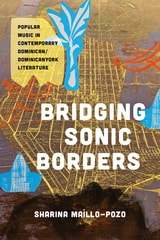
Bridging Sonic Borders
Popular Music in Contemporary Dominican/Dominicanyork LiteratureSharina Maíllo-Pozo
University of Texas Press, 2025
2026 Creative Research Medal, Office of Research at the University of Georgia
2026 Isis Duarte Book Prize, Haiti/Dominican Republic Section, Latin American Studies Association
How music depicted in literature shapes Dominican and Dominican New Yorkers’ identities and links the homeland to the diaspora.
Music has played a large role in recent Dominican literature, whether of the island or the diaspora. Bridging Sonic Borders explores this sonic connection linking the homeland and far-flung locales—especially New York, the center of Dominican cultural production in the United States. Sharina Maíllo-Pozo argues that literary representations of popular music delineate a shared aesthetic territory for US and Caribbean Dominicans, fostering an inclusive and transnational Dominicanidad.
Examining works written in Spanish, English, and Dominicanish, Maíllo-Pozo focuses on Dominican/Dominicanyork writings that have nurtured a borderless aesthetics through their shared investment in hip-hop, jazz, blues, pop, rock, and merengue. For Dominican writers, popular music has become a way of exploring memory and nostalgia and a means of centering people rejected from hegemonic identity formation—the working class, those of African descent, rural and queer people. For example, many works focused on the life of rocker Luis “Terror” Días have emphasized the in-between identity of being both Dominican and a New Yorker. Collectively, these writings have created a space in which boundaries of nation and diaspora are revealed for their fundamental porosity.
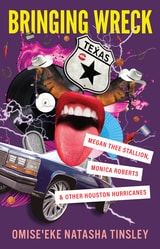
Bringing Wreck
Megan Thee Stallion, Monica Roberts, and Other Houston HurricanesOmise'eke Natasha Tinsley
University of Texas Press, 2026
A whirling exploration of how Megan Thee Stallion inspires Black women and femmes like the late Monica Roberts, framed by the storm-making work of both.
While rap megastar Megan Thee Stallion needs no introduction, fewer will be familiar with Monica Roberts, a Houston journalist, community historian, and trans activist with the popular blog TransGriot. Though the two women never met, their work has inspired Black LGBTQ+ activists to love, resist violence, speak truth to power, and dance like life depends on it. With a written energy that’s infectious, Omise’eke Tinsley highlights just how intertwined these artists are.
An incisive look at the impactful sisterhood between Black women and femmes, Bringing Wreck is a book of empowerment. From Megan’s first performance on Saturday Night Live calling to “Protect Black Women,” to Roberts’s use of Hurricane Hanna to poke fun at Donald Trump’s border wall, Tinsley digs into the world-changing power of disruption and joyful expression in the face of racial injustice, anti-trans and queer violence, mental health crises, and community disparities. Reveling in both women’s love of Houston, calling-out of gendered violence, penchant for political humor, and staunch mental health advocacy, Bringing Wreck is an ode to the Bayou City, Black music, and the difference that one woman’s voice can make when we listen carefully.
Brit Wits
A History of British Rock HumorIain Ellis
Intellect Books, 2012
The Sex Pistols. David Bowie. Pink Floyd. Rebel rockers and provokers of the public, vivid in our memories as much for their subversion of the mainstream as for their signature sounds. Yet what very few people realize is that a substantive part of the weaponry used by these rockers and their contemporaries was humor: outrageous onstage antics, coded cultural references, and clever lyrical constructs were all critical to expressions of youth rebellion that could still slip past the powers that be.
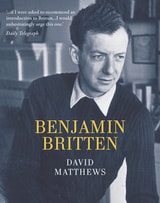
Britten
Centenary EditionDavid Matthews
Haus Publishing, 2013
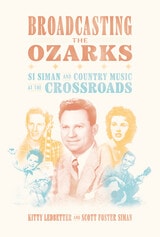
Broadcasting the Ozarks
Si Siman and Country Music at the CrossroadsKitty Ledbetter
University of Arkansas Press, 2024
“It’s good to see Si Siman and the Ozark Jubilee get their due in Broadcasting the Ozarks.”
—Willie Nelson
Broadcasting the Ozarks explores the vibrant country music scene that emerged in Springfield, Missouri, in the 1930s and thrived for half a century. Central to this history is the Ozark Jubilee (1955–60), the first regularly broadcast live country music show on network television. Dubbed the “king of the televised barn dances,” the show introduced the Ozarks to viewers across America and put Springfield in the running with Nashville for dominance of the country music industry—with the Jubilee’s producer, Si Siman, at the helm.
Siman’s life story is almost as remarkable as the show he produced. He was booking Tommy Dorsey, Ella Fitzgerald, and Glenn Miller during the mid-1930s while still a high school student and produced nationally syndicated country music radio shows in the decades that followed. Siman was a promotional genius with an ear for talent, a persuasive gift for gab, and the energy and persistence to make things happen for many future Country Music Hall of Famers, including Chet Atkins, Porter Wagoner, the Browns, and Brenda Lee. Following the Jubilee’s five-year run, Siman had a hand in some of the greatest hits of the twentieth century as a music publisher, collaborating with such songwriters as rockabilly legend and fellow Springfieldian Ronnie Self, who wrote Brenda Lee’s signature hit, “I’m Sorry,” and Wayne Carson, who wrote Willie Nelson’s “Always on My Mind.” Although Siman had numerous opportunities to find success in bigger cities, he chose to do it all from his hometown in the Ozarks.
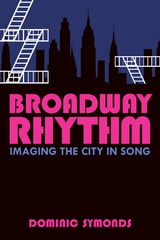
Broadway Rhythm
Imaging the City in SongDominic Symonds
University of Michigan Press, 2017
Through musicological analyses of works by Gershwin, Bernstein, Copland, Sondheim and others, the author proposes that performance cartography is a versatile methodology for urban theory, and establishes a methodological approach that uses the idea of the map in three ways: as an impetus, a metaphor, and a tool for exploring the city.

Bronislava Nijinska
Early MemoirsIrina Nijinska, Jean Rawlinson, eds. and trans.
Duke University Press, 1992
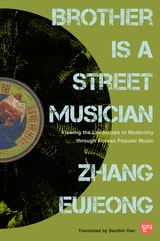
Brother Is a Street Musician
Viewing the Landscape of Modernity Through Korean Popular MusicZhang Eujeong
Rutgers University Press, 2026
The history of the Korean popular music industry dates back a century before the beginnings of K-Pop, to when the Korean peninsula was still under Japanese rule. Though Koreans didn’t have an independent country, they were still able to use recorded music to assert a distinct cultural identity.
Brother Is a Street Musician chronicles the development of Korean popular music over the first half of the twentieth century, examining both industry trends and talented composers and performers like Nam Insu and Yi Nanyǒng. Drawing from rare archives of gramophone records and lyric books, musicologist Zhang Eujeong shows how Korean musicians drew from folk traditions to create totally new genres, ranging from comic songs to Western-influenced jazz records. She also includes English translations and detailed analyses of lyrics from some of the era’s most popular songs.
A landmark study of Korean music, now available in English for the first time, Brother Is a Street Musician tells the inspiring story of how a colonized people developed their own form of popular music, planting the seeds for an industry that would grow to export Korean culture around the world.
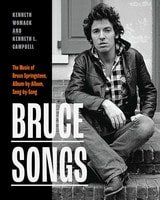
Bruce Songs
The Music of Bruce Springsteen, Album-by-Album, Song-by-SongKenneth Womack
Rutgers University Press, 2024
Bruce Songs is an authoritative guide that offers an in-depth exploration of Bruce Springsteen's musical legacy. Covering Springsteen's entire discography, from Greetings from Asbury Park, N.J. to Only the Strong Survive, this unique book combines historical context, literary analysis, and meticulous research.
Unlike any other resource, it provides detailed analyses of each album, essays on their historical significance, and a chronological examination of every studio song. Discover the stories behind the recordings and gain insight into Springsteen's creative process.
Rich with contemporary reviews, insider accounts, photographs, and special sections highlighting pivotal moments and key figures, Bruce Songs is an indispensable companion for fans and scholars. It offers an immersive journey through the music of the Boss, making it an essential read for anyone captivated by Springsteen's enduring musical legacy.
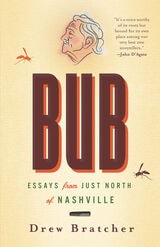
Bub
Essays from Just North of NashvilleDrew Bratcher
University of Iowa Press, 2022
Seamlessly blending memoir and arts criticism and aiming at both the heart and the head, this is a book about listening closely to stories and songs, about leaving home in order to find home, and about how the melodies and memories absorbed along the way become “a living music that advances and prevails upon us at formative moments, corralling chaos into the simple, liberating stockade of verse, chorus, verse.”

Budapest
City of MusicNicholas Clapton
Haus Publishing, 2017
With rich musical traditions, both classical and folk, and possessing a language like almost no other, Hungary is in the process of abandoning the trappings of its communist past while attempting to preserve its culture from creeping globalization. Clapton delights in the fact that certain old-fashioned attitudes of courtesy, at times stemming from the very structures of the Magyar tongue, are still deeply ingrained in Hungarian society. At the same time, despite its association with world-famous composers such as Bartók, Liszt, and Kodály, music is far from an activity enjoyed only by the elite. Including plenty of tips on food, drink, and sites of interest, Budapest describes the capital in uniquely melodic terms and will delight lovers of travel and music alike.
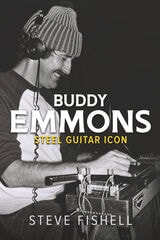
Buddy Emmons
Steel Guitar IconSteve Fishell
University of Illinois Press, 2022
The acknowledged maestro of the pedal steel guitar, Buddy Emmons lent his unparalleled virtuosity to over five decades of hit recordings and set standards that remain the benchmark for musicians today.
Steve Fishell’s merger of biography and memoir draws extensively on in-depth interviews with Emmons and the artist's autobiographical writings. Emmons went from playing strip clubs to a Grand Ole Opry debut with Little Jimmy Dickens at age 18. His restless experimentation led to work with Ernest Tubb and Ray Price--and established him in a career that saw him play alongside a who’s who of American music. Fishell weaves in stories and anecdotes from Willie Nelson, Brenda Lee, Linda Ronstadt, Pat Martino, and many others to provide a fascinating musical and personal portrait of an innovator whose peerless playing and countless recordings recognized no boundaries.
A one-of-a-kind life story, Buddy Emmons expands our view of a groundbreaking artist and his impact on country music, jazz, and beyond.
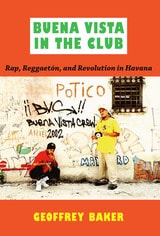
Buena Vista in the Club
Rap, Reggaetón, and Revolution in HavanaGeoffrey Baker
Duke University Press, 2011
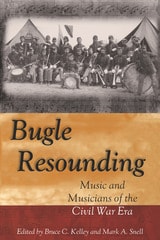
Bugle Resounding
Music and Musicians of the Civil War EraEdited by Bruce C. Kelley & Mark A. Snell
University of Missouri Press, 2004
Although numerous academic resources examine the music and musicians of the Civil War era, the research is spread across a variety of disciplines and is found in a wide array of scholarly journals, books, and papers. It is difficult to assimilate this diverse body of research, and few sources are dedicated solely to a rigorous and comprehensive investigation of the music and the musicians of this era. This anthology, which grew out of the first two National Conferences on Music of the Civil War Era, is an initial attempt to address that need.
Those conferences established the first academic setting solely devoted to exploring the effects of the Civil War on music and musicians. Bridging musicology and history, these essays represent the forefront of scholarship in music of the Civil War era. Each one makes a significant contribution to research in the music of this era and will ultimately encourage more interdisciplinary research on a subject that has relevance both for its own time and for ours. The result is a readable, understandable volume on one of the few understudied—yet fascinating—aspects of the Civil War era.
Building Community Choirs in the Twenty-First Century
Re-imagining Identity through Singing in Northern IrelandSarah-Jane Gibson
Intellect Books, 2026
Building Community Choirs explores the under-researched practice of community choral singing in Northern Ireland. Sarah-Jane Gibson conducted ethnographic research with five choirs in various locations over the course of five years and illustrates how choirs reimagine identity through the ways they organize, rehearse, and perform. By actively rethinking conceptions of identities within their groups, Gibson’s study shows how gender, age, religious faith, and ethnic diversity can both influence structures of community in the region and be influenced by them.
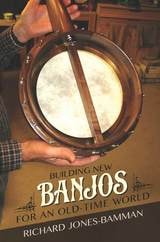
Building New Banjos for an Old-Time World
Richard Jones-Bamman
University of Illinois Press, 2017

Bulbs for Warm Climates
By Thad M. Howard
University of Texas Press, 2001
Bulb gardening in the southwestern and southern United States presents challenges unknown in cooler climates. Bulbs that turn Holland into a kaleidoscope of color droop and fade in our mild winters, hot summers, and uncertain rainfall. Yet hundreds of native and naturalized species of bulbs thrive in these same conditions and offer as many colors, shapes, and fragrances as even the most demanding gardener desires. These are the bulbs that Thad Howard describes in this comprehensive guide to bulbs that will grow in USDA gardening zones 8 and 9.
Writing from more than forty-five years' experience in collecting and cultivating bulbs, Howard offers expert advice about hundreds of little-known, hybrid, and common species and varieties that grow well in warm climates. His species accounts, which are grouped by family, describe each plant and its growing requirements and often include interesting stories from his collecting expeditions. Lovely color photos illustrate many of the species.
Howard also gives reliable information about refrigerating bulbs, using them in the landscape and in containers, choosing scented ones, making potpourri, buying, collecting, cultivating, and hybridizing bulbs, and dealing with pests and diseases. He concludes with lists of plant societies and suppliers and a helpful glossary and bibliography.
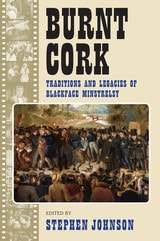
Burnt Cork
Traditions and Legacies of Blackface MinstrelsyStephen Johnson
University of Massachusetts Press, 2012
Beginning in the 1830s and continuing for more than a century, blackface minstrelsy—stage performances that claimed to represent the culture of black Americans—remained arguably the most popular entertainment in North America. A renewed scholarly interest in this contentious form of entertainment has produced studies treating a range of issues: its contradictory depictions of class, race, and gender; its role in the development of racial stereotyping; and its legacy in humor, dance, and music, and in live performance, film, and television. The style and substance of minstrelsy persist in popular music, tap and hip-hop dance, the language of the standup comic, and everyday rituals of contemporary culture. The blackface makeup all but disappeared for a time, though its influence never diminished—and recently, even the makeup has been making a comeback.
This collection of original essays brings together a group of prominent scholars of blackface performance to reflect on this complex and troublesome tradition. Essays consider the early relationship of the blackface performer with American politics and the antislavery movement; the relationship of minstrels to the commonplace compromises of the touring “show” business and to the mechanization of the industrial revolution; the exploration and exploitation of blackface in the mass media, by D. W. Griffith and Spike Lee, in early sound animation, and in reality television; and the recent reappropriation of the form at home and abroad.
In addition to the editor, contributors include Dale Cockrell, Catherine Cole, Louis Chude-Sokei, W. T. Lhamon, Alice Maurice, Nicholas Sammond, and Linda Williams.
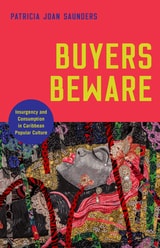
Buyers Beware
Insurgency and Consumption in Caribbean Popular CulturePatricia Joan Saunders
Rutgers University Press, 2022
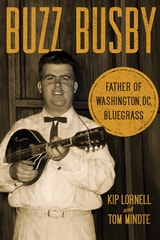
Buzz Busby
Father of Washington, DC, BluegrassKip Lornell and Tom Mindte
University of Illinois Press, 2026
Buzz Busby’s move to Washington, D.C., in 1951 helped launch bluegrass in the nation’s capital while the intensity of his mandolin playing drew raves for its unrelenting pace and innovative style. His high lonesome singing rivaled that of Bill Monroe. Kip Lornell and Tom Mindte draw on interviews and some fifty hours of Busby speaking about his life to tell the story of a largely forgotten bluegrass virtuoso.
Busby and his band the Bayou Boys stood front and center on a mid-1950s D.C.-area TV show that, though short-lived, catalyzed the formation of the city’s bluegrass community. Time with the Louisiana Hayride and classic if little-heard bluegrass sides like “Lonesome Wind” seemed to promise a bright future. But a devastating car wreck and a host of legal and personal troubles triggered a long decline into drug and alcohol abuse that undermined Busby’s career and led him to sum up, “I started at the top and diligently worked my way to the bottom.”
Entertaining and vivid, Buzz Busby tells the story of a musician’s musician and his hardscrabble life in bluegrass.
Bytes and Backbeats
Repurposing Music in the Digital AgeSteve Savage
University of Michigan Press, 2013
From Attali's "cold social silence" to Baudrillard's hallucinatory reality, reproduced music has long been the target of critical attack. In Bytes and Backbeats, however, Steve Savage deploys an innovative combination of designed recording projects, ethnographic studies of contemporary music practice, and critical analysis to challenge many of these traditional attitudes about the creation and reception of music. Savage adopts the notion of "repurposing" as central to understanding how every aspect of musical activity, from creation to reception, has been transformed, arguing that the tension within production between a naturalizing "art" and a self-conscious "artifice" reflects and feeds into our evolving notions of creativity, authenticity, and community.
At the core of the book are three original audio projects, drawing from rock & roll, jazz, and traditional African music, through which Savage is able to target areas of contemporary practice that are particularly significant in the cultural evolution of the musical experience. Each audio project includes a studio study providing context for the social and cultural analysis that follows. This work stems from Savage's experience as a professional recording engineer and record producer.