Results by title
3258 books match the query 'Performing Arts' and 148 start with b
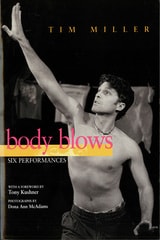
Body Blows
Six PerformancesTim Miller
University of Wisconsin Press, 2002
Hailed for his humor and passion, the internationally acclaimed performance artist Tim Miller has delighted, shocked, and emboldened audiences all over the world. Body Blows gathers six of Miller’s best-known performances that chart the sexual, spiritual, and political topography of his identity as a gay man: Some Golden States, Stretch Marks, My Queer Body, Naked Breath, Fruit Cocktail, and Glory Box. In Body Blows, Tim Miller leaps from the stage to the page, as each performance script is illustrated with striking photographs and accompanied by Miller’s notes and comment.
This book explores the tangible body blows—taken and given—of Miller’s life and times as explored in his performances: the queer-basher’s blow, the sweet blowing breath of a lover, the below-the-belt blow of HIV/AIDS, the psychic blows from a society that disrespects the humanity of lesbian and gay relationships. Miller’s performances are full of the put-up-your-dukes and stand-your-ground of such day-to-day blows that make up being gay in America
Body Double
The Author Incarnate in the CinemaLucy Fischer
Rutgers University Press, 2013
Body Double explores the myriad ways that film artists have represented the creative process. In this highly innovative work, Lucy Fischer draws on a neglected element of auteur studies to show that filmmakers frequently raise questions about the paradoxes of authorship by portraying the onscreen writer. Dealing with such varied topics as the icon of the typewriter, the case of the writer/director, the authoress, and the omnipresent infirm author, she probes the ways in which films can tell a plausible story while contemplating the conditions and theories of their making.
By examining many forms of cinema, from Hollywood and the international art cinema to the avant-garde, Fischer considers the gender, age, and mental or physical health of fictionalized writers; the dramatized interaction between artists and their audiences and critics; and the formal play of written words and nonverbal images.
By analyzing such movies as Adaptation,Diary of a Country Priest, Naked Lunch, American Splendor, and Irezumi, Fischer tracks the parallels between film author and character, looking not for the creative figure who stands outside the text, but for the one who stands within it as corporeal presence and alter-ego.

Body and Mind in Motion
Dance and Neuroscience in ConversationGlenna Batson with Margaret Wilson
Intellect Books, 2014
Bold! Daring! Shocking! True!
A History of Exploitation Films, 1919-1959Eric Schaefer
Duke University Press, 1999
Bold! Daring! Shocking! True! is a meticulously researched, interdisciplinary study that is informed by a wide range of sources—including both mainstream and industry newspapers and periodicals, archival accounts, personal interviews, and the films themselves. Schaefer begins by exploring the unique mode of production of exploitation movies, their distribution, and the outrageous exhibition practices that were rooted in the traditions of sideshows and carnivals. His close analysis of dozens of films, such as The Road to Ruin, Modern Motherhood, One Way Ticket to Hell, and The Wages of Sin demonstrates that these films were more than simply “bad” movies. By situating exploitation films in a historical context and organizing them according to the social problems they addressed, Schaefer shows how they evolved during a period of forty years and how, during that time, they shaped public policies and attitudes. Finally, he focuses on the changes in the postwar American film industry that led to the decline of the classical exploitation film and set the stage for the rise of “sexploitation” in the 1960s.
Engagingly written, illustrated with rare photographs, posters, production stills, and ad slicks, and offering a full filmography, Bold! Daring! Shocking! True! reveals a forgotten side of film history and American culture. It will delight and inform those interested in film history, cultural studies, American studies and history, and the many fans of exploitation films.
Bollywood’s New Woman
Liberalization, Liberation, and Contested BodiesMegha Anwer
Rutgers University Press, 2021
Bombay Cinema
An Archive of the CityRanjani Mazumdar
University of Minnesota Press, 2007
In this analysis of the cinematic city, Mazumdar reveals a complex postnationalist world, convulsed by the social crisis of the 1970s and transformed by the experience of globalization in the 1990s. She argues that the upheaval of postcolonial nationalism led to Bombay cinema’s articulation of urban life in entirely new terms. Specifically, the place of the village in the imaginary constitution of anticolonial nationalism gave way to a greater acknowledgment, even centrality, of urban space. Bombay Cinema takes the reader on an inventive journey through a cinematic city of mass crowds, violence, fashion, architectural fantasies, and subcultural identities. Moving through the world of gangsters and vamps, families and drifters, and heroes and villains, Bombay Cinema explores an urban landscape marked by industrial decline, civic crisis, working-class disenchantment, and diverse street life.Combining the anecdotal with the theoretical, the philosophical with the political, and the textual with the historical, Bombay Cinema leads the reader into the heart of the urban labyrinth in India, revising and deepening our understanding of both the city and the cinema.
"A landmark study—carefully researched, well organized and offering refreshingly uncondescending and strikingly insightful discussions of mainstream films—that deserves to be read by anyone interested in India's popular cinema or its contemporary urban life." —Journal of Asian Studies
"Bombay Cinema is an exciting and important contribution to a field that has, to date, been under researched and under theorized. Lively, provocative and richly suggestive, it will also serve as a surefire incentive to watch those films all over again." —Screen
"Here, at last, is a book length study on Cinema in India that does not get locked into a dance of hermetic closure between what transpires on screen and a set of stock off screen textual and cultural references, but more importantly, walks the streets where the films are set, looks at shop windows, publicity material, costumes, fashion, architecture, telecommunications and the concrete materiality that surrounds the film object." —Seminar
"Bombay Cinema is lucid, provocative, stylish and substantial. It is an illuminating scholarly study that spares no effort to bring Bombay cinema out of the academic closet." —The Book Review India
"Departing from the obsession that Film Studies in India has displayed with the idea of cinema as a national allegory, the book convincingly argues for the need to examine the city's hidden archive as one that cannot be subsumed within the sign of the national." —Biblio
"Mazumdar has a great capacity to discuss Indian cinema, with a brilliant grasp of its political, historical, and aesthetic developments, but equally she is well attuned to the interests and ruptures in the academic discourse of film and cinema studies."—Film International
"Mazumdar's experience as a filmmaker allowed her to offer significant readings of not just the narratives and character development in the films, but of the cinematography, mise-en-scene, and other technical and performance aspects of production." —Journal of Popular Culture
"At once about Hindi films, spatial practices, urban modernity and globalization . . . the strength of Bombay Cinema lies in bringing all of them together in a productive conversation.” —Economic and Political Weekly
"Bombay Cinema is methodologically challenging in its deployment of moments rather than discursiveformations of film as text. The book also refuses to read film alone, but interprets the medium alongside the detailed insights of people involved in making them, and with the recent history of Bombay, within which the film industry is located. In Mazumdar's evocative reading of the films she engages with, the cinematic city becomes the space of critique of the nation, the site of the ruin of the modern nationalist project." —Contemporary South Asia
Bondhu
My Father, My FriendKunal Sen
Seagull Books, 2023
“No one remembers when and why I started calling my father Bondhu. It was a strange way to address a father, as the word means ‘friend’ in Bengali. . . . As I got older, I became very self-conscious about such an odd name . . . and yet I cannot explain why I could not switch to the more acceptable Baba or something similar.”
Just as Kunal Sen, son of actor Gita Sen and filmmaker Mrinal Sen, was approaching adolescence, his father’s cinematic celebrity was reaching new heights. In this memoir, Kunal reflects on growing up in a middle-class household in South Calcutta, where his father’s Marxist beliefs and unrelenting urge “to be challenged and contradicted” often collided with the practical challenges of making a living. Through it all, what emerges is a picture of a family’s unyielding commitment to the craft of cinema, the risks each of its members took, and their endearing sense of humor. Celebrating Mrinal Sen’s birth centenary in 2023, Bondhu takes us on an intimate journey of a son attempting to reconcile his father’s public and private selves.
Bong Joon Ho
Joseph Jonghyun Jeon
University of Illinois Press, 2024
Insightful and engaging, Bong Joon Ho offers an up-to-date analysis of the genre-bending international director.
Boo-Tickle Tales
Not-So-Scary Stories for Ages 4-9Lynette Ford & Sherry Norfolk
Parkhurst Brothers, Inc., 2016
The attraction of scary stories begins very early in childhood, but the fortitude to be truly scared comes later. So where are the scary stories for young children? Educators and storytellers, Ford and Norfolk deliver a silly and gently spooky collection of jumps, laughs, interactive moments, and mostly happy endings to satisfy the curious-for-creepy Pre-K through Grade 4 set. Their weirdly funny and gently scary collection of adapted folktales, original stories, and verses will delight those who enjoy being surprised more than being scared.
This book is for:
Parents, grandparents, and other mentors who work with children developmentally aged 4 to 9
Educators, librarians and others serving young listeners, who like silly and creepy stories, but may not like very scary material
Audiences ages 4-9, who like creepy but not-too-scary stories.
Twelve pen-and-ink drawings based on folktale motifs complement the fanciful tone of the book.
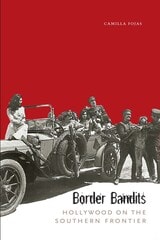
Border Bandits
Hollywood on the Southern FrontierBy Camilla Fojas
University of Texas Press, 2008
The southern frontier is one of the most emotionally charged zones in the United States, second only to its historical predecessor and partner, the western frontier. Though they span many genres, border films share common themes, trace the mood swings of public policy, and shape our cultural agenda.
In this examination, Camilla Fojas studies how major Hollywood films exploit the border between Mexico and the United States to tell a story about U.S. dominance in the American hemisphere. She charts the shift from the mythos of the open western frontier to that of the embattled southern frontier by offering in-depth analyses of particular border films, from post-World War II Westerns to drug-trafficking films to contemporary Latino/a cinema, within their historical and political contexts.
Fojas argues that Hollywood border films do important social work by offering a cinematic space through which viewers can manage traumatic and undesirable histories and ultimately reaffirm core "American" values. At the same time, these border narratives delineate opposing values and ideas.
Latino border films offer a critical vantage onto these topics; they challenge the presumptions of U.S. nationalism and subsequent cultural attitudes about immigrants and immigration, and often critically reconstruct their Hollywood kin.
By analyzing films such as Duel in the Sun, The Wild Bunch, El Norte, The Border, Traffic, and Brokeback Mountain, Fojas demands that we reexamine the powerful mythology of the Hollywood borderlands. This detailed scrutiny recognizes that these films are part of a national narrative comprised of many texts and symbols that create the myth of the United States as capital of the Americas.
Border Cinema
Reimagining Identity through AestheticsEdited by Monica Hanna and Rebecca A. Sheehan
Rutgers University Press, 2019
Border Mediascapes
Cinematic Itineraries at the Edge of EuropeFrancesco Zucconi
University of Minnesota Press, 2026
How the cinematic gaze reveals the hidden operations of border zones
Examining a variety of documentary films made along the borders of Europe since the turn of the twenty-first century, Border Mediascapes takes a cinematic eye to the technologies employed in governing spatial movement. Working at the intersections of social sciences, political theory, contemporary media, and cinema aesthetics, this book expands our understanding of the border as not just a static political boundary inscribed on a map but a complex, dynamic network of human and nonhuman agents.
Francesco Zucconi asserts that contemporary borders are environments defined by media: a perpetually shifting set of interactions between physical bodies and sensors, surveillance cameras, satellites, mapping programs, digital signage, and cellular devices. Analyzing documentaries filmed by or in collaboration with migrants, Border Mediascapes demonstrates how cinema can be used to reveal the otherwise unseen apparatuses that facilitate systematized practices of recognition, expulsion, and erasure.
As he details the ways specific border technologies measure and identify individuals as part of the larger project of territorial control, Zucconi illustrates the effectiveness of cinema for capturing the entanglement of geopolitics and biopolitics. Viewing the cinematic perspective as simultaneously analytical, critical, and complicit with the new technological frontier, Zucconi shows how the medium can deepen our understanding of borders as sites of power, resistance, and resilience.
Retail e-book files for this title are screen-reader friendly with images accompanied by short alt text and/or extended descriptions.
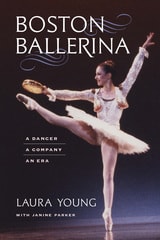
Boston Ballerina
A Dancer, a Company, an EraLaura Young and Janine Parker
University Press of New England, 2017
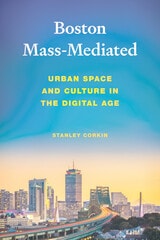
Boston Mass-Mediated
Urban Space and Culture in the Digital AgeStanley Corkin
University of Massachusetts Press, 2024
In the mid-nineteenth century, Boston fashioned itself as a global hub. By the early 1970s, it was barely a dot on the national picture. It had gained a reputation as a decaying city rife with crime and dysfunctional politics, as well as decidedly retrograde race relations, prominently exemplified by white resistance to school integration. Despite this historical ebb in its national and international presence, it still possessed the infrastructure—superb educational institutions such as Harvard and MIT, world-class sports teams like the Celtics and Red Sox, powerful media outlets like The Boston Globe, and extensive shipping capacity—required to eventually thrive in an age of global trade and mass communication.
In Boston Mass-Mediated, Stanley Corkin explores the power of mass media to define a place. He examines the tensions between the emergent and prosperous city of the late twentieth and early twenty-first centuries and its representation in a range of media genres such as news journalism, professional sports broadcasting, and popular films like Mystic River and The Departed. This mass media, with its ever-increasing digital reach, has emphasized a city restricted by tropes suggestive of an earlier Boston—racism, white ethnic crime, Catholicism, and a pre-modern insularity—even as it becomes increasingly international and multicultural. These tropes mediate our understanding and experience of the city. Using Boston as a case study, Corkin contends that our contemporary sense of place occurs through a media saturated world, a world created by the explosion of digital technology that is steeped in preconceptions.
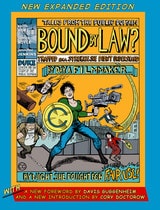
Bound by Law?
Tales from the Public Domain, New Expanded EditionKeith Aoki, James Boyle, and Jennifer Jenkins
Duke University Press, 2008
Boundaries of the Text
Epic Performances in South and Southeast AsiaJoyce Burkhalter Flueckiger and Laurie Sears, Editors
University of Michigan Press, 1991
Brain Is The Screen
Deleuze and the Philosophy of CinemaGregory Flaxman
University of Minnesota Press, 2000
Branded Eye
Bunuel’s Un Chien andalouJenaro Talens
University of Minnesota Press, 1993
Branding Texas
Performing Culture in the Lone Star StateBy Leigh Clemons
University of Texas Press, 2008
Ask anyone to name an archetypal Texan, and you're likely to get a larger-than-life character from film or television (say John Wayne's Davy Crockett or J. R. Ewing of TV's Dallas) or a politician with that certain swagger (think LBJ or George W. Bush). That all of these figures are white and male and bursting with self-confidence is no accident, asserts Leigh Clemons. In this thoughtful study of what makes a "Texan," she reveals how Texan identity grew out of the history—and, even more, the myth—of the heroic deeds performed by Anglo men during the Texas Revolution and the years of the Republic and how this identity is constructed and maintained by theatre and other representational practices.
Clemons looks at a wide range of venues in which "Texanness" is performed, including historic sites such as the Alamo, the battlefield at Goliad, and the San Jacinto Monument; museums such as the Bob Bullock Texas State History Museum; seasonal outdoor dramas such as Texas! at Palo Duro Canyon; films such as John Wayne's The Alamo and the IMAX's Alamo: The Price of Freedom; plays and TV shows such as the Tuna trilogy, Dallas, and King of the Hill; and the Cavalcade of Texas performance at the 1936 Texas Centennial. She persuasively demonstrates that these performances have created a Texan identity that has become a brand, a commodity that can be sold to the public and even manipulated for political purposes.
Brazilian Women's Filmmaking
From Dictatorship to DemocracyLeslie Marsh
University of Illinois Press, 2012
At most recent count, there are no fewer than forty-five women in Brazil directing or codirecting feature-length fiction or documentary films. In the early 1990s, women filmmakers in Brazil were credited for being at the forefront of the rebirth of filmmaking, or retomada, after the abolition of the state film agency and subsequent standstill of film production. Despite their numbers and success, films by Brazilian women directors are generally absent from discussions of Latin American film and published scholarly works.
Breaking Bad and Cinematic Television
Angelo Restivo
Duke University Press, 2019
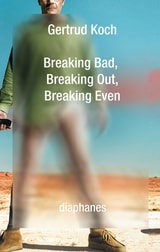
Breaking Bad, Breaking Out, Breaking Even
Gertrud Koch
Diaphanes, 2017
Hoping to cultivate a deeper understanding of the series, Breaking Bad, Breaking Out, Breaking Even offers a new way of approaching the program though its complex treatment of time. With its grotesque portrayal of life on the brink of death, argues Gertrud Koch, we can best view Breaking Bad as a black comedy between Chaplin’s Monsieur Verdoux and film noir. Koch takes readers through the ways in which this is accomplished through the show’s various visual elements and masterful temporal and narrative structuring. Full of fascinating insights, the book will appeal to the show’s many fans, as well as anyone interested in film studies, media studies, or popular culture.
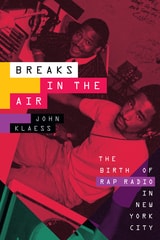
Breaks in the Air
The Birth of Rap Radio in New York CityJohn Klaess
Duke University Press, 2022
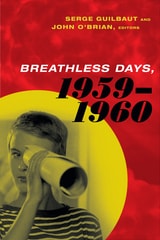
Breathless Days, 1959-1960
Serge Guilbaut and John O'Brien, editors
Duke University Press, 2017
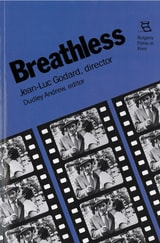
Breathless
Jean-Luc Godard, DirectorDudley Andrew
Rutgers University Press, 1988
In his introduction, Dudley Andrew brilliantly explains what Godard set out to accomplish in Breathless. He illuminates the intertextual and cultural references of the film and the tensions within it between tradition and innovation. This volume also features, for the first time in English, the complete and accurate continuity script of Breathless, together with Francois Truffaut's surprisingly detailed original treatment. Also included are an in-depth selection of reviews and criticism in French and English; a brief biographical sketch of the director's life that covers the development of his career, as well as a filmography and selected bibliography.
Brecht in L.A.
Rick Mitchell
Intellect Books, 1995
Additionally, Brecht in L.A., winner of the 2002 SWTA National New Play Contest (US), is already a critically acclaimed play, which suggests that the work has the potential to be widely (and successfully) produced. And such productions will enhance the marketability of the book. A play influenced by Brecht is, in itself, not unique, since many leading, contemporary dramatists--such as Caryl Churchill, Edward Bond, Tony Kushner, Heiner Muller, and Howard Barker--have been affected by Brechtian dramaturgy. But a Brechtian-influenced play with Brecht as the lead character is unique. The play represents the only dramatic work in English which features Brecht himself as the title character.
Brecht in L.A., centering on Brecht while adapting/critiquing Brechtian dramatic form, also provides a unique opportunity for the instructor who is teaching Brechtian theatre since--with just one text (which will includes endnotes and appendices)--the instructor can cover epic theatre, the "Brecht debate," Brecht's biography, and contradictions between Brecht's theatrical practices and his everyday life.
The book's wide-ranging audience will include theatre artists; playgoers; students of drama, theatre, English, and performance studies; scholars; and readers interested in Brecht, Hollywood, and/or biography. Brecht in L.A. will also be an important addition to the considerable collections of books about Brecht which are carried by countless libraries.
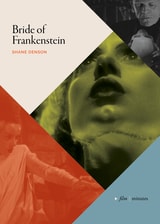
Bride of Frankenstein
Shane Denson
Lever Press, 2025
Volumes in the film|minutes series cut up films into segments of exactly one minute and transform each minute into an innovative tool for thinking with the film. Each volume works rigorously with the concept of “the minute” as a non-cinematic scale/quantity, a means to zoom in on (dis)orderly fragments that do not necessarily respect the confinements of cinematic form or meaning. As a critical practice, the focus on minutes causes disruptions and displacement that create novel connections and perspectives, and uncovers hidden traces, making it possible to watch each film anew.
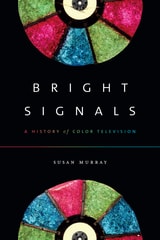
Bright Signals
A History of Color TelevisionSusan Murray
Duke University Press, 2018
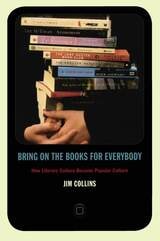
Bring on the Books for Everybody
How Literary Culture Became Popular CultureJim Collins
Duke University Press, 2010
Collins explores how digital technologies and the convergence of literary, visual, and consumer cultures have changed what counts as a “literary experience” in phenomena ranging from lush film adaptations such as The English Patient and Shakespeare in Love to the customer communities at Amazon. Central to Collins’s analysis and, he argues, to contemporary literary culture, is the notion that refined taste is now easily acquired; it is just a matter of knowing where to access it and whose advice to trust. Using recent novels, he shows that the redefined literary landscape has affected not just how books are being read, but also what sort of novels are being written for these passionate readers. Collins connects literary bestsellers from The Jane Austen Book Club and Literacy and Longing in L.A. to Saturday and The Line of Beauty, highlighting their depictions of fictional worlds filled with avid readers and their equations of reading with cultivated consumer taste.
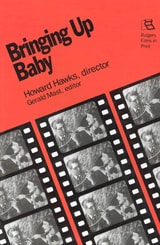
Bringing Up Baby
Howard Hawks, DirectorMast, Gerald
Rutgers University Press, 1988
British Television Intellectuals
Unusual Kinds of StarJohn Tulloch
Intellect Books, 2026
Offering a pioneering exploration of one of Britain’s most significant yet often overlooked television phenomena, this book traces the rise and development of the TV intellectual as a distinct presence over the past sixty-five years. Situated within the framework of public intellectual theory, it explores several of Britain’s most notable and influential cultural figures, revealing how these unusual kinds of stars have combined creativity and intellect to engage wide international audiences.
At the heart of these intellectuals’ work lies a profound engagement with the concept of civilization—ranging from early concerns about its survival to critical reflections on colonialism and its legacies. The book shows how these influential figures, together with the television medium itself, have explored civilization in all its complexities, including thoughtful considerations of its future.
Blending historical analysis with cultural critique, this book will appeal to students and scholars in media and cultural studies, offering a compelling study of the intellectual and creative forces shaping British television across decades.
British and French Television Drama
Innovation and Change in the 1950s and 1960sJoy Leman
Intellect Books, 2026
The era after World War II marked a formative moment for television drama in France and Britain—a time of technological change, social transformation, and new possibilities for innovation in communication systems. Although the two countries developed distinct broadcasting cultures, this book reveals striking similarities in the intentions and achievements of socially conscious communication practitioners.
Drawing on cross-boundary comparison, the book uncovers the internal struggles within the French and British institutions that controlled broadcasting. It shows how creative initiatives with a social class perspective were able to break through the dense fabric of institutional control before bureaucratic structures fully solidified. The study offers a unique view of the active engagement and political judgment of writers, editors, producers, and directors who, though facing managerial skepticism and at times direct interference, persisted in reaching rapidly expanding audiences.
Combining historical contextual research, detailed case studies, and first-hand practitioner insights, the book illuminates the personal and political dimensions of television drama production in both nations. In doing so, it also speaks to contemporary debates, addressing current threats to public broadcasting from political and commercial pressures worldwide.
Broadcasting Hollywood
The Struggle over Feature Films on Early TVJennifer Porst
Rutgers University Press, 2021
Broadcasting Modernity
Cuban Commercial Television, 1950-1960Yeidy M. Rivero
Duke University Press, 2015
Broadcasting the Civil War in El Salvador
A Memoir of Guerrilla RadioBy Carlos Henriquez Consalvi ("Santiago")
University of Texas Press, 2010
During the 1980s war in El Salvador, Radio Venceremos was the main news outlet for the Frente Farabundo Martí para la Liberación Nacional (FMLN), the guerrilla organization that challenged the government. The broadcast provided a vital link between combatants in the mountains and the outside world, as well as an alternative to mainstream media reporting. In this first-person account, "Santiago," the legend behind Radio Venceremos, tells the story of the early years of that conflict, a rebellion of poor peasants against the Salvadoran government and its benefactor, the United States.
Originally published as La Terquedad del Izote, this memoir also addresses the broader story of a nationwide rebellion and its international context, particularly the intensifying Cold War and heavy U.S. involvement in it under President Reagan. By the war's end in 1992, more than 75,000 were dead and 350,000 wounded—in a country the size of Massachusetts. Although outnumbered and outfinanced, the rebels fought the Salvadoran Army to a draw and brought enough bargaining power to the negotiating table to achieve some of their key objectives, including democratic reforms and an overhaul of the security forces.
Broadcasting the Civil War in El Salvador is a riveting account from the rebels' point of view that lends immediacy to the Salvadoran conflict. It should appeal to all who are interested in historic memory and human rights, U.S. policy toward Central America, and the role the media can play in wartime.
Broadway Rhythm
Imaging the City in SongDominic Symonds
University of Michigan Press, 2017
Through musicological analyses of works by Gershwin, Bernstein, Copland, Sondheim and others, the author proposes that performance cartography is a versatile methodology for urban theory, and establishes a methodological approach that uses the idea of the map in three ways: as an impetus, a metaphor, and a tool for exploring the city.
Bronze Screen
Chicana and Chicano Film CultureRosa Linda Fregoso
University of Minnesota Press, 1993
Rosa Linda Fregoso’s The Bronze Screen opens the way for international debate on the new critical field of Chicano/a cinema. Fregoso provides an incisive articulation of the ways in which narrative codes in film can telescope complex versions of Mexican and American culture and history. The often violent impact of ‘first’ (U.S.) and ‘third’ (Mexico) world cultures and geographies is channeled through the very term Chicano/a as well as its cinematic representation. Fregoso’s masterful critique brings out with great clarity the irony, paradox, and contradictions of such historical collisions. --Norma Alarcón, University of California, Berkeley
Brought to You By
Postwar Television Advertising and the American DreamBy Lawrence R. Samuel
University of Texas Press, 2002
Brutal Beauty
Aesthetics and Aspiration in Urban IndiaJisha Menon
Northwestern University Press, 2022
Jisha Menon conveys the affective life of the city through multiple aesthetic projects that express a range of urban feelings, including aspiration, panic, and obsolescence. As developers and policymakers remodel the city through tumultuous construction projects, urban beautification, privatization, and other templated features of “world‑class cities,” urban citizens are also changing—transformed by nostalgia, narcissism, shame, and the spaces where they dwell and work. Sketching out scenes of urban aspiration and its dark underbelly, Menon delineates the creative and destructive potential of India’s lurch into contemporary capitalism, uncovering the interconnectedness of local and global power structures as well as art’s capacity to absorb and critique liberalization’s discontents. She argues that neoliberalism isn’t just an economic, social, and political phenomenon; neoliberalism is also a profoundly aesthetic project.
Building Character
The Art and Science of CastingAmy Cook
University of Michigan Press, 2018
Building Successful and Sustainable Film and Television Businesses
A Cross-National PerspectiveEdited by Eva Bakoy, Roel Puijk, and Andrew Spicer
Intellect Books, 2017
Building Successful and Sustainable Film and Television Businesses provides a truly cross-national, comparative dialogue that is vital to the field of media industry studies today.
Building Your Play
Theory and Practice for the Beginning PlaywrightDavid Rush
Southern Illinois University Press, 2010
David Rush takes beginning playwrights through the first draft of a play and deep into the revision process. Drawing on examples from such classics as Othello and The Glass Menagerie, Rush provides detailed models for writers to evaluate their work for weaknesses and focus on the in-depth development of their plays.
Rush encourages writers to make sure their plays are clear and focused. He shows how to keep plays dramatically compelling and offers ways to avoid common mistakes that make them dull, confusing, or ineffective. He then distills the essence of traditional revision into key questions and discusses frequently overlooked tools, terms, and strategies that go beyond established methods of evaluation.
Bulldaggers, Pansies, and Chocolate Babies
Performance, Race, and Sexuality in the Harlem RenaissanceJames F. Wilson
University of Michigan Press, 2011
—David Krasner, author of A Beautiful Pageant: African American Theatre, Drama, and Performance in the Harlem Renaissance, 1910-1927
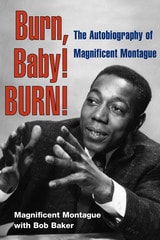
Burn, Baby! BURN!
The Autobiography of Magnificent MontagueMagnificent Montague with Bob Baker
University of Illinois Press, 2009
Like many black disc jockeys of his day, Montague played a role in his community beyond simply spreading the music of James Brown, Otis Redding, Aretha Franklin, and other prominent artists. Montague served as an unofficial spokesman for his black listeners, reflecting their beliefs and acting as a sounding board for their concerns.
Montague was based in Los Angeles in 1965 when the Watts rioters seized on his incendiary slogan, turning the shout of musical appreciation into a rallying cry for racial violence. In Burn, Baby! BURN! Montague recalls these tumultuous times, including the personal struggle he faced over whether to remain true to his listeners or bend to political pressure and stop shouting his suddenly controversial slogan.
Since the mid-1950s Montague had also expressed his passion for African American culture by becoming a zealous collector of artifacts of black history. He has built a monumental collection, taking time out from his collecting to become only the second African American to build his own radio station literally from the ground up.
A compelling account of a rich and varied life, Burn, Baby! BURN! gives an insider's view of half a century of black history, told with on-the-air zest by the DJ/historian who was there to see it unfold.
Business Plans for Filmmakers
John W. Cones
Southern Illinois University Press, 2010
The practical and legal aspects of writing a business plan for a film venture can be daunting to navigate without a firm grasp of know-how. With this in mind, John W. Cones's Business Plans for Filmmakers arms independent movie-makers and students with everything they need to successfully tackle the confusing intersection of law, business, and art when creating a business plan for a movie. This pragmatic volume offers plenty of examples and strategies for success, sharing straightforward insight into some of the toughest challenges independent filmmakers face when encountering these documents.
With simple yet thorough detail and clarity, Cones outlines the legal requirements affecting movie proposals, including ways to evaluate the necessity for a business plan or a securities disclosure document, as well as the legal definition of "an active investor." Also addressed are the numerous subjects filmmakers and students must consider before a film offering, including the efficacy of a business plan to fund the development, production, and distribution phases of a film; common elements of fraud of which fledgling filmmakers should beware; the intricacies of revenue sharing; and how to render financial projections. Cones also imparts useful distinctions between such industry terms as "company financing" versus "project financing," along with many others.
This bookalso includes in-depth guidance through the murky paths of investor analysis and key strategies to find and attract parties interested in financing film. Drawing upon his many years as a securities and entertainment attorney, and his experiences advising independent film producers, Cones offers the tools necessary not only to understand investors' motivations but also to use that knowledge to the filmmaker's advantage. Also provided are perceptive studies of the investment vehicles commonly used in business plans seeking investors, with analysis of each method's pros and cons. Throughout the volume, Cones uses sample plans to offer a real-world grasp of the intricacies of the business.
In the business of this art, knowledge is power. Business Plans for Filmmakers dispels the myths and misinformation circulating among filmmakers to provide accurate and useful advice.
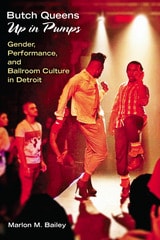
Butch Queens Up in Pumps
Gender, Performance, and Ballroom Culture in DetroitMarlon M. Bailey
University of Michigan Press, 2013
Butch Queens Up in Pumpsexamines Ballroom culture, in which inner-city LGBT individuals dress, dance, and vogue to compete for prizes and trophies. Participants are affiliated with a house, an alternative family structure typically named after haute couture designers and providing support to this diverse community. Marlon M. Bailey’s rich first-person performance ethnography of the Ballroom scene in Detroit examines Ballroom as a queer cultural formation that upsets dominant notions of gender, sexuality, kinship, and community.
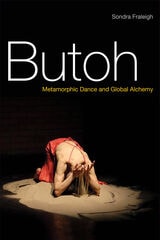
Butoh
Metamorphic Dance and Global AlchemySondra Fraleigh
University of Illinois Press, 2010
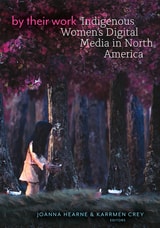
By Their Work
Indigenous Women's Digital Media in North AmericaJoanna Hearne
University of Minnesota Press, 2025
A first-of-its-kind collection to transform our understanding of digital media from Indigenous women creators
Indigenous women form a vital force in digital media production now and have over the past several decades—in fact, nearly three quarters of the projects at the 2017 imagineNATIVE Film and Media Arts Festival were created by women. By Their Work highlights the prismatic nature of Indigenous women’s digital media, connecting the digital arts with their creative labor and adaptive activism.
Joanna Hearne and Karrmen Crey bring together a collection of essays and interviews to highlight the voices of powerful and important media makers, from Indigenous video game creators to animators to social media influencers and from theorists of early Indigenous digital media to current practitioners, including trans and nonbinary creators often left out of public narratives about the digital. Creating a space to hear critical voices on Indigenous media history, theory, and production, the contributors share stories, genealogies, and practices behind Indigenous women’s power and presence in the digital world.
Focusing on the history of digital media as a whole, this collection presents a compelling case for Indigenous women’s crucial roles across the history of digital forms and platforms. In doing so, By Their Work transforms digital Indigenous studies in the twenty-first century.
Contributors: Nanobah Becker; Reilley Bishop-Stall, McGill U; Meagan Byrne; Tawny Trottier Cale; Dana Claxton; Crystal Harrison Collin; Elizabeth Day; Kristin L. Dowell, Florida State U; Miranda Due; Heid E. Erdrich; Marcella Ernest, U of New Mexico; Marisa Erven; David Gaertner, U of British Columbia; Carol Geddes; Faye Ginsburg, New York U; Patuk N. Glenn; Lisa Jackson; Jacqueline Land, William Jewell College; Jason Edward Lewis, Concordia University, Montreal; Joshua D. Miner, U of Kansas; Salma Monani, Gettysburg College; Jas M. Morgan, Simon Fraser U; Archer Pechawis, York U; Mikhel Proulx, Queen’s U Canada; Ryan Rice; Jolene Rickard, Cornell U; Channette Romero, U of Georgia; Wendi Sierra, Texas Christian U; Skawennati.