Results by title
3785 books match the query 'Poetry' and 173 start with b
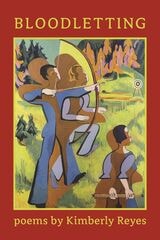
Bloodletting
Kimberly Reyes
Omnidawn, 2025
This is a collection of poems about how we find and cultivate love amid wars, including wars that often go ignored. Throughout Bloodletting, Kimberly Reyes considers how we define love and who gets to experience it, paying special attention to the ways that race and sex influence how we are perceived and valued by society. Through the voice of a Black woman coming to terms with her own perspectives on relationship-building, Reyes shows the damage that contemporary culture can do to women, and Black women in particular. Resisting passivity, Reyes’s poetry cuts through pervasive doom scrolling, virtue signaling, and parasocial relationships, inviting readers to remember what care is really supposed to feel like.
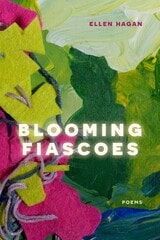
Blooming Fiascoes
PoemsEllen Hagan
Northwestern University Press, 2021
Blooming Fiascoes is a collective of verse that deconstructs identity. We are beautiful and monstrous. We live in a beautiful and monstrous world. Ellen Hagan poetically mirrors these metaphoric adversaries, drawing on her experiences as a woman, an artist, a mother, a transplanted southerner, and above all, a human being. She plumbs origins in history, body, and living to question how we reckon our whole selves in the catacombs of a world gone mad:
We mourn, we bless, / we blow, we wail, we / wind—down, we sip, / we spin, we blind, we / bend, bow & hem. We / hip, we blend, we bind, / we shake, we shine, / shine. We lips & we / teeth, we praise & protest.
In these poems, Assyrian, Italian, and Irish lines seep deeper into a body that is growing older but remains engaged with unruly encounters: the experience of raising daughters, sexual freedom, and squaring body image against the body’s prohibitions. This is a work where the legacy is still evolving and always asking questions in real time. Blooming Fiascos spindles poetry that is not afraid to see itself and the lives it inhabits.
Blow the Candle Out
"Unprintable" Ozark Folksongs and Folklore, Volume II, Folk Rhymes and Other LoreVance Randolph
University of Arkansas Press, 1992
<em>Roll Me in Your Arms</em>, Volume I of “Unprintable” Ozark Folksongs and Folklore, includes 180 unexpurgated songs collected by Randolph with tunes transcribed from the original singers. Volume II, <em><a href="https://wordpressua.uark.edu/uapress/product/blow-the-candle-out/">Blow the Candle Out</a></em>, contains rhymes and songs without music as well as other unexpurgated Ozark folk materials, including children’s lore, elements in speech, graffiti, riddles, dance calls, and beliefs.
G. Legman’s painstaking and patient editing, annotating, and crossreferencing richly complement the Randolph collection. The result is a look into a previously neglected area in the study of folksong and folklore in the Ozarks and further evidence of Randolph’s preeminence in the field.
The late Vance Randolph lived in the Ozark Mountains from 1920 until his death in 1980. Although he taught folklore at the University of Arkansas in Fayetteville, he is best remembered for his many years of field research resulting in the national bestseller <em>Pissing in the Snow & Other Ozark Folktales</em> and more than a dozen other books on American folklore.
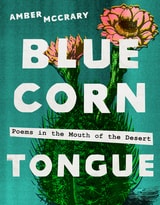
Blue Corn Tongue
Poems in the Mouth of the DesertAmber McCrary
University of Arizona Press, 2025
In a voice that is jubilant, irreverent, sometimes scouring, sometimes heartfelt, and always unmistakably her own, Amber McCrary remaps the deserts of Arizona through the blue corn story of a young Diné woman figuring out love and life with an O’odham man. Reflecting experiences of Indigenous joy, pain, and family, these shapeshifting poems celebrate the love between two Native partners, a love that flourishes alongside the traumas they face in the present and the past. From her ethereal connection with her saguaro muse, Hosh, to the intricate tapestry of her relationships with Diné relatives and her awakening to the complex world of toxic masculinity, McCrary brings together DIY zine aesthetics, life forms of juniper and mountains, and the beauty of Diné Bizaad to tell of the enduring bonds between people and place.
Journeying from the Colorado Plateau to the Sonoran Desert and back again, Blue Corn Tongue invokes the places, plants, and people of Diné Bikéyah and O’odham jeweḍ in a deeply honest exploration of love, memory, and intimacy confronting the legacy of land violence in these desert homelands.
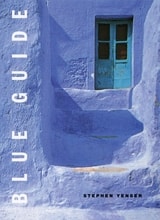
Blue Guide
Stephen Yenser
University of Chicago Press, 2006
Inspired by the miraculously mercurial potential of words, Stephen Yenser takes readers on a heady trip through a world full of promise yet compromised by human weakness. Set in sunny southern California and Greece, the poems of Blue Guide cast the shadow of mortality, and the tones are elegiac. This combination of the deadly serious and the exuberant is natural, Yenser notes; after all, work and orgy share the same etymological root, as do travail and travel, pledge and play.
Using various poetic modes, Yenser offers here a quatrain written to name a painting by Dorothea Tanning; a sequence of poems for his daughter; an excursive poem at once about Los Angeles and Baghdad and his father and a petty criminal; a group of prose poems set in penumbral bars; some postcards to a dead friend; and a meditation prompted by a sojourn on a remote Aegean island. The most unexpected work is an assemblage of quotations and glosses in the tradition of the commonplace book, except that in Yenser's hands these entries are densely interrelated
.
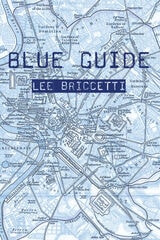
Blue Guide
Lee Briccetti
Four Way Books, 2018
Blue Heron
Elizabeth Robinson
University Press of Colorado, 2013
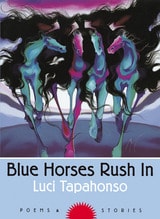
Blue Horses Rush In
Poems and StoriesLuci Tapahonso
University of Arizona Press, 1997
Blue Horses Rush In takes its title from a poem about the birth of her granddaughter Chamisa, whose heart "pounded quickly and we recognized / the sound of horses running: / the thundering of hooves on the desert floor." Through such personal insights, this collection follows the cycle of a woman's life and underlines what it means to be Navajo in the late twentieth century. The book marks a major accomplishment in American literature for its successful blending of Navajo cultural values and forms with the English language, while at the same time retaining the Navajo character. Here, Luci Tapahonso walks slowly through an ancient Hohokam village, recalling stories passed down from generation to generation. Later in the book, she may tell a funny story about a friend, then, within a few pages, describe family rituals like roasting green chiles or baking bread in an outside oven. Throughout, Tapahonso shares with readers her belief in the power of pollen and prayer feathers and sacred songs.
Many of these stories were originally told in Navajo, taking no longer than ten minutes in the telling. "Yet, in recreating them, it is necessary to describe the land, the sky, the light, and other details of time and place," writes Tapahonso. "In this way, I attempt to create and convey the setting for the oral text. In writing, I revisit the place or places concerned and try to bring the reader to them, thereby enabling myself and other Navajos to sojourn mentally and emotionally in our home, Dinétah."
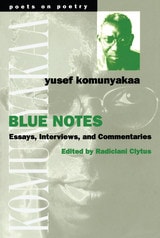
Blue Notes
Essays, Interviews, and CommentariesYusef Komunyakaa
University of Michigan Press, 2000
As editor Radiclani Clytus makes clear in the volume's introductory essay, although Komunyakaa's poetry has its roots in the stylistic innovations of early twentieth-century American modernists, his writing often reflects his understanding that a "black" experience should not particularize the presentation of one's art. This volume, according to the editor, is an attempt to understand Komunyakaa's critical eclecticism within the context of his own words.
Yusef Komunyakaa's books of poetry include I Apologize for the Eyes in My Head, Magic City, Thieves of Paradise, and Neon Vernacular, for which he received the Pulitzer Prize and the Kingsley Tufts Poetry Award in 1994.
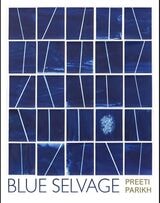
Blue Selvage
Preeti Parikh
Tupelo Press, 2026
Blue Selvage reminds us that a revolutionary message often requires new forms of discourse.
The poems in Blue Selvage weave lyric, essay, documentary fragments, and historical reckoning into an exploration of skin, cloth, color, and form as living archives—where the gendered, racialized, and colonial histories inscribed on the body are continually exposed, resisted, and re-stitched through memory, touch, and language itself.
Preeti Parikh’s debut poetry collection is a mapping of boundaries, a (re)framing of fractured interiority, a text(ile) unfurling across shifting homelands. In this deeply embodied, formally daring meditation, the corpus is both archive and threshold, a site where “what’s felt becomes the body, what’s draped becomes form.” Here, passion for indigo, a medical-science informed perspective, fascination with the materiality of cloth and skin, and a journeying towards reclamation interlace with feminist inquiries and cultural examination to conceptualize the poems’ multivalent inhabitances.
Expansive in its rhetorical modes and landscapes, Blue Selvage is unified by a remarkable singularity of voice and vision through which Parikh skillfully invokes form as metaphor, performance, dramatization, and content. Throughout the book, recurrent vocabularies and silences—integument, selvage, gaze—operate as warp and weft, binding personal experience to collective striving, devotion, and survival. Meanwhile, on the page, multilingual textures and typographic openness resist closure, offering apertures for looking within and without. What emerges is a capacious field of attention, where intimacy and history press against one another, and where writing itself becomes an act of unstitching and re-making—an ethical, sensuous practice of staying with what the body remembers and what culture would prefer to erase.
Blue Studios
Poetry and Its Cultural WorkRachel Blau DuPlessis
University of Alabama Press, 2006
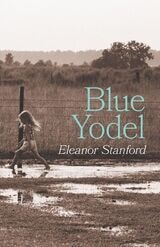
Blue Yodel
Eleanor Stanford
Carnegie Mellon University Press, 2024
These poems take the reader from Mexico City to West Philadelphia to Karachi. The works wade into the difficult joys of mothering, self-exploration, and romantic entanglement in midlife. Throughout, Eleanor Stanford embraces the mysticism of Hildegard of Bingen, the abjection of Tammy Wynette, and the wry self-appraisal of Sylvia Plath, fashioning it all into something entirely its own.
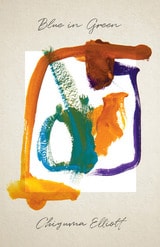
Blue in Green
Chiyuma Elliott
University of Chicago Press, 2021
Collaboration runs through the heart of this collection. Human relationships—particularly in families—shape the poems in Blue in Green, as they consider how the question of what we expect from one another evolves into a question of what we owe. When cancer overshadows the ordinary—engrossing the labor of love, work, and friendship—disease becomes a collaborator and proposes new rules of exchange.
The forms of Elliott’s works highlight reciprocity. Here you’ll find ekphrastic poems that describe modern jazz songs, letters and letter fragments, and free verse poems in wildly variable line lengths. “When I was a wave,” the speaker repeats, each time telling a different story about intimacy and risk. Blue in Green moves through the struggle of processing the damaging interpersonal reverberations of racism, sexism, and environmental damage, while navigating intertwined personal and political incarnations of care. While a slow-growing disease burns its way through the speaker’s body, these poems reveal the feeling of perpetually existing in the shadow of catastrophe and document the slow and strange process of coming to terms with that way of living.
Blueprints
Bringing Poetry into CommunitiesKatharine Coles
University of Utah Press, 2011
How does one bring poetry to a community? And who is going to make it happen? In response to these questions posed by the Harriet Monroe Poetry Institute, Katharine Coles and a cadre of poets and artists provide this essential guide and inspiration. Blueprints creates for poets and arts organizers the sense that they are part of a larger, noble endeavor based in shared values and commitment to poetry. The first three sections include essays by a dozen poets and artists about the ways they have brought poetry into different kinds of communities. These essays demonstrate what has been done and what can be done and will inspire others to bring poetry into their own communities. The final section provides a practical "toolkit" loaded with experience-based advice and the tools and strategies necessary to acocmplish those endeavors.
Essayists:
Elizabeth Alexander
Sherwin Bitsui
Lee Briccetti
Alison Hawthorne Deming
Dana Gioia
Robert Hass
Bas Kwakman
Thomas Lux
Christopher Merrill
Luis Rodriguez
Anna Deavere Smith
Patricia Smith
Contributors to the Toolkit:
Elizabeth Allen
Susan Boskoff
Katharine Coles
Tree Swenson
Orlando White
Blues and Roots/Rue and Bluets
A Garland for the Southern AppalachiansJonathan Williams
Duke University Press, 1985
Blues for Unemployed Secret Police
Poems by Doug AndersonDoug Anderson
Northwestern University Press, 2000
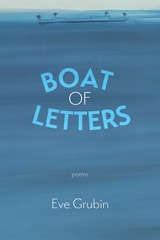
Boat of Letters
Eve Grubin
Four Way Books, 2025
In her much anticipated second full-length collection of poems, Eve Grubin conjures an "inky swamp, wild and warm, / where leaves hang down like muted lamps." Grubin navigates wild waters in a "boat of letters" she constructs, with poems narrating a daughter in mourning for her mother in adulthood's half-light; a wife in the middle of life's existential marathon; a mother raising two children in the terrifying present; an American living in London; a Jewish woman following religious tradition in what can feel like a faithless world. Grubin shapes language and silences into a bridge that holds us between longing and understanding, between effort and the holy ground of that unattainable destination. "The Poetics of Reticence" describes hovering above the waters where "there is no vessel; there are no oars," just the "sounds of a boat creaking," a material contradiction in the hushed void. "Silence is praise: words cannot touch glory," Grubin writes, but she also demonstrates what wonders our speech makes possible. In one poem, the narrator looks back at her wedding and considers how little she knew about marriage, and thinking in the context of her husband's area of expertise, palaeography, she reflects, "I didn't know that when two graphemes join / in a single glyph there is potential for stylistic re-imaginings, / for inventive, elegant variations." All is preordained, she seems to say, while paradoxically, we re-imagine and invent. And even as we create our future, we embrace the beauty of all that we cannot know: "Yesterday, we talked about the shade / of a certain blue mentioned in the Torah. / Was it the blue of our son's lips after a bath? // Or the blue of redemption? // Or the dark blue of the sky / the night we walked across the sands, the seas all around us."

Boat
PoemsChristopher Merrill
Tupelo Press, 2013
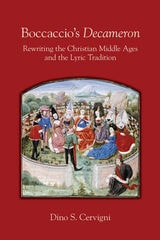
Boccaccio's "Decameron"
Rewriting the Christian Middle Ages and the Lyric TraditionDino S. Cervigni
Arizona Center for Medieval and Renaissance Studies, 2021
This study develops a new interpretation of The Decameron, Giovanni Boccaccio’s masterpiece, which has found new popularity in the wake of COVID. Dino S. Cervigni offers an inclusive and novel reading of the collection, theorizing that the first ninety tales offer a parodic rewriting of the Christian Middle Age, while the last ten tales craft a reconstruction of society based on human and liberal principles such as generosity and sacrifice.
Still relevant to this day, The Decameron offers a notable description of the bubonic plague of 1348 which devastated Western Europe—drawing striking parallels with the current global pandemic. Furthermore, Boccaccio’s concluding message applies to all of us in the present moment, plunged as we are into a world of intellectual and ethical chaos, exhorting us to practice forgiveness, compassion, tolerance, mutual acceptance, and generous open-mindedness. No other book on The Decameron offers such a relevant, up-to-date reading of the classic work.
Bodies on the Line
Performance and the Sixties Poetry ReadingRaphael Allison
University of Iowa Press, 2014
By comparing these two dominant styles of reading, Allison argues that attention to sixties poetry readings reveals poets struggling between the kind of immediacy and presence that readings suggested and a private retreat from such performance-based publicity, one centered on the text itself. Recordings of Robert Frost, Charles Olson, Gwendolyn Brooks, Larry Eigner, and William Carlos Williams—all of whom emphasized voice, breath, and spoken language and who were inveterate professional readers in the sixties—expose this struggle in often surprising ways. In deconstructing assertions about the role and importance of the poetry reading during this period, Allison reveals just how dramatic, political, and contentious poetry readings could be. By discussing how to "hear" as well as "read" poetry, Bodies on the Line offers startling new vantage points from which to understand American poetry since the 1960s as both performance and text.
Body My House
May Swenson's Work and Lifeedited by Paul Crumbley and Patricia M. Gantt
Utah State University Press, 2000
The first collection of critical essays on May Swenson and her literary universe, Body My House initiates an academic conversation about an unquestionably major poet of the middle and late twentienth century. Includes many previously unpublished Swenson poems.
Essays here address the breadth of Swenson's literary corpus and offer varied scholarly approaches to it. They reference Swenson manuscripts---poems, letters, diaries, and other prose---some of which have not been widely available before. Chapters focus on Swenson's work as a nature writer; the literary and social contexts of her writing; her national and international acclaim; her work as a translator; associations with other poets and writers (Bishop, Moore, and others); her creative process; and her profound explorations of gender and sexuality. The first full volume of scholarship on May Swenson, Body My House suggests an ambitious agenda for further work.
Body Thesaurus
Jennifer Militello
Tupelo Press, 2013
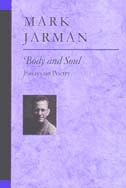
Body and Soul
Essays on PoetryMark Jarman
University of Michigan Press, 2002
The essays "Where Poems Take Place" and "A Shared Humanity" consider the relation between setting or situation and representation. The psychological roots of narrative are considered in "The Primal Storyteller." But the main interest of these essays is how and why narrative is used as a form. The influence of Robinson Jeffers's style of narrative is argued in "Slip, Shift, and Speed Up: The Influence of Robinson Jeffers's Narrative Syntax." In "The Trace of a Story Line" an argument is made that the poets Philip Levine and Charles Wright employ narration or storytelling in their poetry as a mode of meaning. Other essays consider Donald Davie, Philip Larkin, Herbert Lomas, Louis Simpson, Lyn Hejinian, Tess Gallagher, and Ellen Bryant Voigt.
Mark Jarman's poetry has appeared in many publications, including the American Poetry Review and the New Yorker. He has won the Lenore Marshall/Nation Prize of the Academy of American Poets, a Guggenheim fellowship, and multiple grants from the National Endowment for the Arts. He is Professor of English, Vanderbilt University.
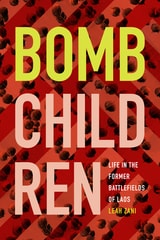
Bomb Children
Life in the Former Battlefields of LaosLeah Zani
Duke University Press, 2019
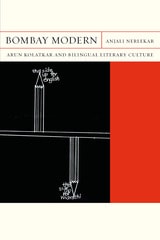
Bombay Modern
Arun Kolatkar and Bilingual Literary CultureAnjali Nerlekar
Northwestern University Press, 2016
Bombay Modern uncovers an alternative and provincial modernism through poetry, a genre that is marginal to postcolonial studies, and through bilingual scholarship across English and Marathi texts, a methodology that is currently peripheral at best to both modernist studies and postcolonial literary criticism in India. Eschewing any attempt to define an overarching or universal modernism, Bombay Modern delimits its sphere of study to "Bombay" and to the "post-1960" (the sathottari period) in an attempt to examine at close range the specific way in which this poetry redeployed the regional, the national, and the international to create a very tangible yet transient local.
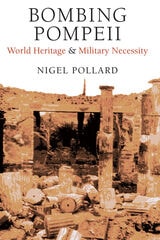
Bombing Pompeii
World Heritage and Military NecessityNigel Pollard
University of Michigan Press, 2020
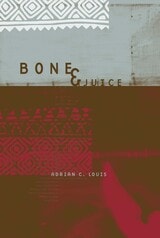
Bone & Juice
Adrian C. Louis
Northwestern University Press, 2001
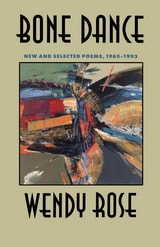
Bone Dance
New and Selected Poems, 1965-1993Wendy Rose
University of Arizona Press, 1994
"Rich in poems which enhance our awareness of the human complexity of our social and moral dilemmas." —Book Review Digest
"There is a whisper in the wind among the chapters . . . and a singing rain beyond the window." —American Indian Culture Research Journal
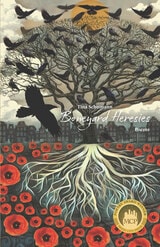
Boneyard Heresies
PoetryTina Schumann
Moon City Press, 2025
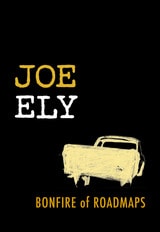
Bonfire of Roadmaps
By Joe Ely
University of Texas Press, 2007
Since he first hitched a ride out of Lubbock, Texas, at the age of sixteen, singer-songwriter and Flatlanders band member Joe Ely has been a road warrior, traveling highways and back roads across America and Europe, playing music for "2 hours of ecstasy" out of "22 hours of misery." To stay sane on the road, Ely keeps a journal, penning verses that sometimes morph into songs, and other times remain "snapshots of what was flying by, just out of reach, so to savor at a later date when the wheels stop rolling, and the gears quit grinding, and the engines shut down."
In Bonfire of Roadmaps, Ely takes readers on the road with him. Using verse passages from his road journals and his own drawings, Ely authentically re-creates the experience of a musician's life on tour, from the hard goodbyes at home, to the long hours on the road, to the exhilaration of a great live show, to the exhaustion after weeks of touring. Ely's road trips begin as he rides the rails to Manhattan in 1972 and continue up through recent concert tours with fellow Flatlanders Jimmie Dale Gilmore and Butch Hancock.
While acknowledging that "it is not the nature of a gypsy to look in the rearview mirror," Joe Ely nevertheless offers his many fans a revelatory look back over the roads he's traveled and the wisdom he's won from his experiences. And for "those who want to venture beyond the horizon just to see what is there... to those, I hope these accounts will give a glint of inspiration..."
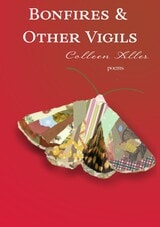
Bonfires & Other Vigils
PoemsColleen Alles
University of Alabama Press, 2024
Any event can be a vigil: a walk by a river, a flu shot at Walgreens, an hour spent by a bird feeder attracting mostly cardinals. A vigil means you are keeping watch, and these poems are watching the world around them—and the worlds beneath those worlds, too. The poems in this collection pull from dreams and apparitions as much as they do reality: a woman in a house, a coffee mug, a book of matches, a load of unfolded laundry, a goldfish won at a county fair. All is fair game. Bonfires & Other Vigils celebrates the watching in unconventional ways. Readers can expect to revel in the elusive wonder of haziness, otherworldliness, and wildness of examining life through lenses of vigilant dreaming.
Book Of The Incipit
Beginnings in the Fourteenth CenturyD. Vance Smith
University of Minnesota Press, 2001
An intriguing evaluation of the concept of beginnings in the medieval period.
Medieval Studies/Literary Theory
An intriguing evaluation of the concept of beginnings in the medieval period. In the first book to examine one of the most peculiar features of one of the greatest and most perplexing poems of England’s late Middle Ages-the successive attempts of Piers Plowman to begin, and to keep beginning-D. Vance Smith compels us to rethink beginning, as concept and practice, in both medieval and contemporary terms.The problem of beginning was invested with increasing urgency in the fourteenth century, imagined and grappled with in the courts, the churches, the universities, the workshops, the fields, and the streets of England. The Book of the Incipit reveals how Langland’s poem exemplifies a widespread interest in beginning in the thirteenth and fourteenth centuries, an interest that appears in such divergent fields as the physics of motion, the measurement of time, logic, grammar, rhetoric, theology, book production, and insurrection. Smith offers a theoretical understanding of beginning that departs from the structuralisms of Edward Said and the traditional formalisms of A. D. Nuttall and most medievalist and modernist treatments of closure. Instead, he conceives a work’s beginning as a figure of the beginning of the work itself, the inception of language as the problem of beginning to which we continue to return.ISBN 0-8166-3760-1 Cloth/jacket £24.50 $34.95x296 Pages 5 7/8 x 9 MayMedieval Cultures Series, volume 28Translation Inquiries: University of Minnesota Press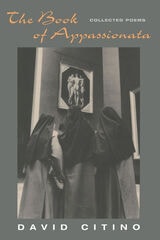
Book of Appassionata
The Collected PoemsDavid Citino
The Ohio State University Press, 1998
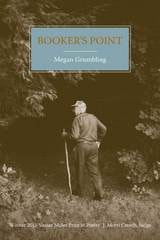
Booker's Point
Megan Grumbling
University of North Texas Press, 2016

Boomer Girls
Poems by Women from the Baby Boom GenerationPamela Gemin
University of Iowa Press, 1999
Where were you between Betty Crocker and Gloria Steinem? With that question in mind poets Pamela Gemin and Paula Sergi began collecting the poems in Boomer Girls, an anthology of coming-of-age poems written by women born between 1945 and 1964, give or take a few years on either side. The answers to that question fill this volume with the energy, passion, heartbreak, and giddiness of women's lives from childhood to adolescence to middle age.
The poems in Boomer Girls are by unknown, emerging, and established writers, women who participated in the second wave of feminism. From Sandra Cisneros' "My Wicked Wicked Ways" to Barbara Crooker's "Nearing Menopause, I Run into Elvis at Shoprite," from Wendy Mnookin's "Polio Summer" to Kyoko Mori's "Barbie Says Math Is Hard," these poems call for us to celebrate (in the words of poet Diane Seuss-Brakeman) "glances, romances, beauty and guilt, regret, remorse, rebates and rejuvenations."
Boomer Girls share a common culture, bound by their generation's political history, by pop icons like Barbie—that pedestaled Boomer Girl who's just turned forty—and by the music that's never stopped playing: Janis Joplin, Marvin Gaye, Jimi Hendrix, the Ronettes, Van Morrison, Patsy Cline, John Lennon. The Boomer poets in this feisty anthology speak with diverse voices and embody a wide range of experiences, yet their generation's universal images—the hula hoops, TV shows, finned automobiles, and other household gods of their youth—unite them in ways both hilarious and tender.
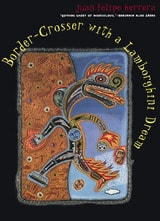
Border-Crosser with a Lamborghini Dream
Juan Felipe Herrera
University of Arizona Press, 1999
To the rhythm of “The Blue Eyed Mambo that Unveils My Lover’s Belly”and the sounds of the Last Mayan Acid rock band, Herrera races through the hallucinations of a nation that remains just outside of paradise. With dazzling poems that roar from the darkest corners of our minds toward an ecstatic celebration of the lushness of language, Border-Crosser with a Lamborghini Dream is a celebration of a world that is both sacred and cruel, a world of “Poesy Chicano style undone wild” by one of the most daring poets of our time.
Borderland Apocrypha
Anthony Cody
Omnidawn, 2019
Rather than a proposal for re-imagining the US/Mexico border, Cody’s collection is an avant-garde examination of how borderlands have remained occupied spaces, and of the necessity of liberation to usher the earth and its people toward healing. Part auto-historia, part docu-poetic, part visual monument, part myth-making, Borderland Apocrypha unearths history in order to work toward survival, reckoning, and the building of a future that both acknowledges and moves on from tragedies of the past.
Borderland Apocrypha won Omnidawn's 2018 1st/2nd Book Prize.

Borealis
Jeff Humphries
University of Minnesota Press, 2002
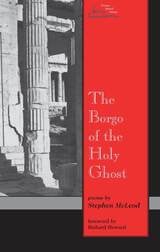
Borgo Of The Holy Ghost
Stephen McLeod foreword by Richard Howard
Utah State University Press, 2002

Born Palestinian, Born Black
& The Gaza SuiteSuheir Hammad
UpSet Press, 2012
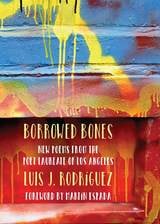
Borrowed Bones
New Poems from the Poet Laureate of Los AngelesLuis J. Rodriguez
Northwestern University Press, 2016
Foreword by Martín Espada
This chapbook collection offers new poems from the prolific career of a community leader, activist, and healer. Luis J. Rodríguez’s work asks profound questions of us as readers and fellow humans, such as, "If society cooperates, can we nurture the full / and healthy development of everyone?" In his introductory remarks, Martín Espada describes the poet as a man engaged in people and places: "Luis Rodríguez is a poet of many tongues, befitting a city of many tongues. He speaks English, Spanish, ‘Hip Hop,’ ‘the Blues,’ and ‘cool jazz.’ He speaks in ‘mad solos.’ He speaks in ‘People’s Sonnets.’ He speaks in the language of protest. He speaks in the language of praise."

Both, Apollo
Mary Wilson
Omnidawn, 2022
Mary Wilson’s Both, Apollo speaks from inside the bodies and binaries that so often act as constraints. It sometimes tries to negotiate its way out. It laments, celebrates, reasons, jokes, and occasionally begs. It runs into a wall and hugs it, offers it pizza, and speeds through grammars and cities until dizziness catapults it from the grid. It tries to queer the echoes of its language in the hope that a rhyme might break the logic of “either/or” and give rise to “both/and.”
Both, Apollo is a love poem to whatever has the grace to appear, quietly finding hope. Moments of humor and tenderness accompany the speaker with each act of crossing and circling back. The poems in Both, Apollo are constantly in flux, and Wilson’s lyricism acts as a teaching tool for using both the real and the imagination to guide us in moment-by-moment navigation of our world.
Both, Apollo won the Omnidawn Chapbook contest, selected by Victoria Chang.
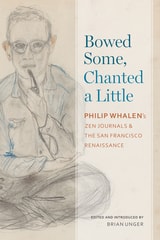
Bowed Some, Chanted a Little
Philip Whalen's Zen Journals and the San Francisco RenaissanceEdited and Introduced by Brian Unger
University of Alabama Press, 2023
The literary journals of a key figure in both the Beat and San Francisco Renaissance movements of the New American Poetry, and an ordained Zen Buddhist priest
Philip Whalen (1923–2002) authored twenty collections of verse, more than twenty broadsides, two novels, a huge assemblage of autobiographical literary journals, nine or ten experimental prose works, and dozens of critical essays, lectures, commentaries, introductions, prefaces, and interviews. But he came to regard his literary journals as his most important prose legacy.
Whalen’s literary work represents a significant turn in American letters, as he and his closest colleagues immersed themselves in East Asian literature and religion, reinvigorating strikingly new linguistic and aesthetic paths for North American writers and artists. However, until now Whalen’s forty-plus years of journals—sixty small eight-by-six-inch notebooks—have been largely inaccessible, archived in the rare book and manuscript library at the University of California, Berkeley, undigitized and unavailable online. Thus, the publication of a critical scholarly edition of Whalen’s journals and notebooks constitutes an important literary event and an invaluable resource for scholars, teachers, poets, and lay readers who follow twentieth-century North American poetry.

Boy
Tracy Youngblom
CavanKerry Press, 2023
The death of a youngest child. An alcoholic and distant father. A grief-stricken family. A tentative faith. These are the building blocks of Boy, a sequence of poems that explores how death and loss color memory and influence the ways family members relate to each other and to their shared history.
Inspired by the death of her own younger brother, Tracy Youngblom has written a poetry collection that serves as a companion to grief. This book is for those who love poetry and those who are intimidated by it, those interested in the way childhood experience shapes life, and those interested in the psychology of addiction.
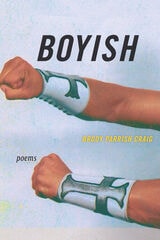
Boyish
PoemsBrody Parrish Craig
Omnidawn, 2021
Each page builds tension that then shatters, bringing us into the interior of a story. Brody Parrish Craig invites us to carve out a space and to find ourselves carried over the gravel along the creek. Moving through the subconscious and embodied desire, these poems are rich with formal play, twisting language in dense sonnets. Landscapes of the city’s dystopia meet the queer pastoral, where conservation often means knowing what must be burned down.
Boysgirls
Katie Farris
Tupelo Press, 2019
Bramble
Susan Stewart
University of Chicago Press, 2026
A finalist for the 2026 National Book Award for Poetry, this seventh collection by acclaimed poet Susan Stewart offers a meditation on difficulty and the powers of nature.
In the biblical book of Judges, the bramble is a figure of destructive leadership, thwarting the lives of trees. In ballads and fairy tales, roses grow “‘round the briar” in tragic contrast to heroines who are enveloped by the thorns. One of the oldest English words and an even older symbol, “bramble” reminds us of the entangled and unending struggle that comes with living in time and searching beyond appearances. The rough thicket presents impediments, yet it also bears fruit and delicate flowers.
With Bramble, Susan Stewart has composed a book of many forms, including satires, elegies, meditations, and songs. Bramble is also an exploration of the act of making such forms. The book’s three sections—“Mirror,” “Briar,” and “Channel”—link lyric time to our lives as they are situated in history and nature. Reflecting upon illness, grief, and change, the poems follow the progress of day and night, the movement of the seasons, and the path of water from springs to the sea.
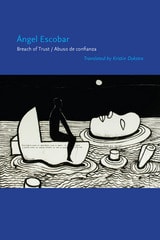
Breach of Trust/Abuso de confianza
Ángel Escobar with Translation by Kristin Dykstra
University of Alabama Press, 2016
The best-known work by acclaimed Cuban poet Ángel Escobar
Ángel Escobar’s Breach of Trust / Abuso de confianza is known by many as the most devastating book of his poetic generation. It is his first to be offered to an English-speaking audience. Merging personal and collective meditations, these twenty-three poems perform an indictment of violence. Escobar’s poetry delineates lacerations etched on bodies and minds by the sanguinary twentieth century, which unfolded out of a longer modernity spanning the Americas.
Breach of Trust / Abuso de confianza outlived its author, who took his own life in 1997. Brief and implicit appeals for justice and love offset the book’s abject theatricality. Escobar’s tragic masterpiece deftly interweaves themes into a striking synthesis offered in the spirit of survival.
Award-winning translator Kristin Dykstra introduces this collection with a comprehensive examination of Escobar’s life, work, and the times within which he wrote. Dykstra situates Escobar’s poetic abjection as his drive to confront thingification face to (non)face.
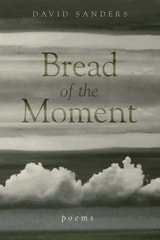
Bread of the Moment
PoemsDavid Sanders
Ohio University Press, 2021
A collection of poems about time, solitude, and wisdom that leads readers to hover between acceptance of and alienation from our fragility.
Bread of the Moment, the follow-up to David Sanders' Compass and Clock (Swallow Press, 2016), devotes keen attention to the porous nature of the past and how the unbidden evidence of ordinary life pervades the world, provoking a spectrum of moments from which to draw meaning and find solace. These poems, characterized by a mix of free and formal verse, depict quiet days at home or in nature, as well as close calls and brushes with death: chronic illness, a house fire, a car crushed by a boulder.
In this way, these poems amplify the fragility of the commonplace, a mystery from which we are, amid the noise of our everyday lives, sometimes estranged. Through this exploration, Sanders constructs a precarious balance between alienation and acceptance, striking a note at once recognizable and new.
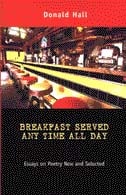
Breakfast Served Any Time All Day
Essays on Poetry New and SelectedDonald Hall
University of Michigan Press, 2004
Praise for Breakfast Served:
". . . the essays in this book are engaging, passionate, strange, and unified. Hall has been around a long time, and you can trace the concerns of a generation through the mind of this one man: questions about the diminished scope of poetry, the diminished ambitions of poets, how a poem 'means,' etc. . . . . Criticism . . . is an exercise in sanity, of which these essays are a splendid and useful example."
-Poetry
"A luminous and essential volume about the sensuality of language, its pleasures and sounds."
-Ploughshares
"It is in this merger of a poet's biography and a poem's body that Hall does his best work. . . . [Breakfast Served Any Time All Day] has an undeniably infectious quality to it. Finishing it, you cannot help but want to return to your bookshelf, and read-again or for the first time-the great forgotten poems of our past."
-Nathan Greenwood Thompson, Rain Taxi