Results by title
18293 books match the query 'United States' and 902 start with b
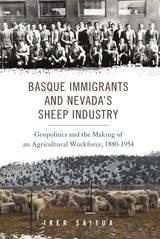
Basque Immigrants and Nevada's Sheep Industry
Geopolitics and the Making of an Agricultural Workforce, 1880-1954Iker Saitua
University of Nevada Press, 2019
Between the 1880s and the 1950s, the western open-range sheep industry was the original economic attraction for Basque immigrants. This engaging study tracks the development of the Basque presence in the American West, providing deep detail about the sheepherders’ history, native and local culture, the challenges they faced, and the changing conditions under which the Basques lived and worked. Saitua also shows how Basque immigrant sheepherders went from being a marginalized labor group to a desirable, high-priced workforce in response to the constant demand for their labor power.
As the twentieth century progressed, the geopolitical tide in America began to change. In 1924, the Restrictive Immigration Act resulted in a truncated labor supply from the Basque Country in Spain. During the Great Depression and the Second World War, the labor shortage became acute. In response, Senator Patrick McCarran from Nevada lobbied on behalf of his wool-growing constituency to open immigration doors for Basques, the most desirable laborers for tending sheep in remote places. Subsequently, Cold War international tensions offered opportunities for a reconciliation between the United States and Francisco Franco, despite Spain’s previous sympathy with the Axis powers.
This fresh portrayal shows how Basque immigrants became the backbone of the sheep industry in Nevada. It also contributes to a wider understanding of the significance of Basque immigration by exploring the role of Basque agricultural labor in the United States, the economic interests of Western ranchers, and McCarran’s diplomacy as catalysts that eventually helped bring Spain into the orbit of western democracies.
Basques of the American West
New and Collected Essays on History and EthnicityRichard W. Etulain
University of Nevada Press, 2026
This collection offers readers a thoughtful and engaging look at the enduring presence and influence of Basques across the cultural and historical landscape of the American West.
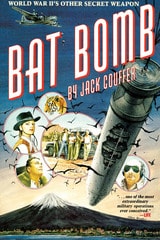
Bat Bomb
World War II's Other Secret WeaponBy Jack Couffer
University of Texas Press, 1992
It was a crazy way to win World War II in the Pacific—
All the United States had to do was to attach small incendiary bombs to millions of bats and release them over Japan's major cities. As the bats went to roost, a million fires would flare up in remote crannies of the wood and paper buildings common throughout Japan. When their cities were reduced to ashes, the Japanese would surely capitulate...
The plan made sense to a handful of eccentric promoters and researchers, who convinced top military brass and even President Roosevelt to back the scheme. It might have worked, except that another secret weapon—something to do with atoms—was chosen to end the war.
Told here by the youngest member of the team, this is the story of the bat bomb project, or Project X-Ray, as it was officially known. In scenes worthy of a Capra or Hawks comedy, Jack Couffer recounts the unorthodox experiments carried out in the secrecy of Bandera, Texas; Carlsbad, New Mexico; and El Centro, California, in 1942-1943 by "Doc" Adams' private army. This oddball cast of characters included an eccentric inventor, a distinguished Harvard scientist, a biologist with a chip on his shoulder, a movie star, a Texas guano collector, a crusty Marine Corps colonel, a Maine lobster fisherman, an ex-mobster, and a tiger.
Not to be defeated by minor logistical hurdles, the bat bomb researchers risked life and limb to explore uncharted bat caves and "recruit" thousands of bats to serve their country. Through months of personality conflicts, military snafus, and technical failures the team pressed on, certain that bats could end the war with Japan. And they might have—in their first airborne test, the bat bombers burned an entire brand-new military airfield to the ground.
For everyone who relishes true tales of action and adventure, Bat Bomb is a must-read. Bat enthusiasts will also discover the beginnings of the scientific study of bats.
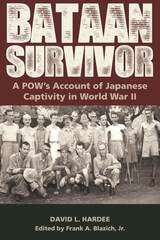
Bataan Survivor
A POW’s Account of Japanese Captivity in World War IIDavid L. Hardee, Edited by Frank A. Blazich, Jr.
University of Missouri Press, 2026
A forgotten account, written in the immediate aftermath of World War II, which vividly portrays the valor, sacrifice, suffering, and liberation of the defenders of Bataan and Corregidor through the eyes of one survivor.
The personal memoir of Colonel David L. Hardee, first drafted at sea from April-May 1945 following his liberation from Japanese captivity, is a thorough treatment of his time in the Philippines. A career infantry officer, Hardee fought during the Battle of Bataan as executive officer of the Provisional Air Corps Regiment. Captured in April 1942 after the American surrender on Bataan, Hardee survived the Bataan Death March and proceeded to endure a series of squalid prison camps. A debilitating hernia left Hardee too ill to travel to Japan in 1944, making him one of the few lieutenant colonels to remain in the Philippines and subsequently survive the war. As a primary account written almost immediately after his liberation, Hardee’s memoir is fresh, vivid, and devoid of decades of faded memories or contemporary influences associated with memoirs written years after an experience. This once-forgotten memoir has been carefully edited, illustrated and annotated to unlock the true depths of Hardee’s experience as a soldier, prisoner, and liberated survivor of the Pacific War.
Bath Massacre, New Edition
America's First School BombingArnie Bernstein
University of Michigan Press, 2022
On May 18, 1927, the small town of Bath, Michigan, was forever changed when Andrew Kehoe set off a cache of explosives concealed in the basement of the local school. Thirty-eight children and six adults were dead, among them Kehoe, who had literally blown himself to bits by setting off a dynamite charge in his car. The next day, on Kehoe's farm, what was left of his wife—burned beyond recognition after Kehoe set his property and buildings ablaze—was found tied to a handcart, her skull crushed. With seemingly endless stories of school violence and suicide bombers filling today's headlines, Bath Massacre serves as a reminder that terrorism and large-scale murder are nothing new.
Bath Massacre
America's First School BombingArnie Bernstein
University of Michigan Press, 2009
---Gregg Olsen, New York Times best-selling author of Starvation Heights
"A chilling and historic character study of the unfathomable suffering that desperation and fury, once unleashed inside a twisted mind, can wreak on a small town. Contemporary mass murderers Timothy McVeigh, Columbine's Dylan Klebold, and Virginia Tech's Seung-Hui Cho can each trace their horrific genealogy of terror to one man: Bath school bomber Andrew Kehoe."
---Mardi Link, author of When Evil Came to Good Hart
Batman Saves the Congo
How Celebrities Disrupt the Politics of DevelopmentAlexandra Cosima Budabin
University of Minnesota Press, 2021
How celebrity strategic partnerships are disrupting humanitarian space
Can a celebrity be a “disrupter,” promoting strategic partnerships to bring new ideas and funding to revitalize the development field—or are celebrities just charismatic ambassadors for big business? Examining the role of the rich and famous in development and humanitarianism, Batman Saves the Congo argues that celebrities do both, and that understanding why and how yields insight into the realities of neoliberal development.
In 2010, entertainer Ben Affleck, known for his superhero performance as Batman, launched the Eastern Congo Initiative to bring a new approach to the region’s development. This case study is central to Batman Saves the Congo. Affleck’s organization operates with special access, diversified funding, and significant support of elites within political, philanthropic, development, and humanitarian circuits. This sets it apart from other development organizations. With his convening power, Affleck has built partnerships with those inside and outside development, staking bipartisan political ground that is neither charity nor aid but “good business.” Such visible and recognizable celebrity humanitarians are occupying the public domain yet not engaging meaningfully with any public, argues Batman Saves the Congo. They are an unruly bunch of new players in development who amplify business solutions.
As elite political participants, celebrities shape development practices through strategic partnerships that are both an innovative way to raise awareness and funding for neglected causes and a troubling trend of unaccountable elite leadership in North–South relations. Batman Saves the Congo helps illuminate the power of celebritized business solutions and the development contexts they create.

Battered Women In The Courtroom
The Power of Judicial ResponsesUniversity Press of New England, 1999

Batting Cleanup Bill Conlin
Kevin Kerrane
Temple University Press, 1997
In making the selections for this volume, editor Kevin Kerrane reveals how Conlin's playfulness with language and ideas has led to creative nicknames -- like "The Lowly Grim Giant" for Georgetown basketball coach John Thompson -- and tho entire stories based on outrageous premises. Who else would report a baseball game from the viewpoint of a space alien? Who else would interview God to find out what He really thinks about Randall Cunningham?
Conlin's columns deal with just about everything. Or maybe it just seems that way because he brings just about everything to bear on a topic that interests him: lessons from military history, characters from Shakespeare, personal experiences, persistent reporting, amusing one-liners, and laugh-out-loud jokes. His "King of the World" columns offer a fantasy of poetic justice in which fools and knaves are skewered, but with humor rather than heavy-handed moralizing. This humor, insight, keen intelligence, and a true love of sport has made Conlin a cult figure among sports fans. Kerrane explains such admiration this way: "It's not just because of Conlin's fierce honesty, or broad curiosity, or Irish wit, it's also because of his deep feeling for the values of sport -- which baseball, in his telling, crystallizes so beautifully.
Battle for the BIA
G. E. E. Lindquist and the Missionary Crusade against John CollierDavid W. Daily
University of Arizona Press, 2004
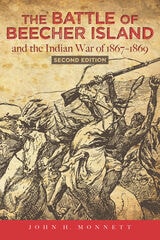
Battle of Beecher Island and the Indian War of 1867-1869
Second EditionJohn Monnett
University Press of Colorado, 2021
Monnett’s compelling study, a finalist for the Western Writers of America’s Spur Award in 1993, was the first to examine the Beecher Island battle and its relationship to the overall conflict between American Indians and Euroamericans on the central plains of Colorado and Kansas during the late 1860s. Focusing on the struggle of the Cheyenne Dog Men warrior society to defend the lands between the Republican River valley and the Smoky Hill River valley from Euroamerican encroachment, Monnett presents original reminiscences of American Indian and Euroamerican participants.
Since its original release several developments and an important original source document have come to light and offer new information. The second edition presents and examines these new discoveries and developments that moderate the original interpretive causes and more modern effects of this historical episode. Scholars and general readers alike interested in this important episode in the post–Civil War conflicts on the Great Plains and western history will find this new edition of The Battle of Beecher Island and the Indian War of 1867–1869 illuminating, surprising, and perhaps even controversial.
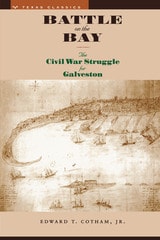
Battle on the Bay
The Civil War Struggle for GalvestonBy Edward T. Cotham, Jr.
University of Texas Press, 1998
The Civil War history of Galveston is one of the last untold stories from America's bloodiest war, despite the fact that Galveston was a focal point of hostilities throughout the conflict. As other Southern ports fell to the Union, Galveston emerged as one of the Confederacy's only lifelines to the outside world. When the war ended in 1865, Galveston was the only major port still in Confederate hands.
In this beautifully written narrative history, Ed Cotham draws upon years of archival and on-site research, as well as rare historical photographs, drawings, and maps, to chronicle the Civil War years in Galveston. His story encompasses all the military engagements that took place in the city and on Galveston Bay, including the dramatic Battle of Galveston, in which Confederate forces retook the city on New Year's Day, 1863.
Cotham sets the events in Galveston within the overall conduct of the war, revealing how the city's loss was a great strategic impediment to the North. Through his pages pass major figures of the era, as well as ordinary soldiers, sailors, and citizens of Galveston, whose courage in the face of privation and danger adds an inspiring dimension to the story.
Battle
The Nature and Consequences of Civil War CombatEdited by Kent Gramm
University of Alabama Press, 2008
A critical, multidisciplinary examination of Civil War combat that interrogates the technological, medical, psychological, and cultural forces shaping battlefield experience and its enduring national legacy.
“In our youth, our hearts were touched with fire,” wrote Oliver Wendell Holmes of his generation’s Civil War days. Through the ages, war stories have gleamed with romantic glory, and American memories of the cataclysmic Civil War inspire pageantry and poetry even today.
The essays in Battle form a corrective to such celebratory histories by examining the lethal realities of Civil War combat—Enlightenment science applied to the creation of weapons that maimed and killed, which far outpaced advances in diet, sanitation, and medical treatment. The book reveals that behind the drums and trumpets, sashes and swords, the armies of the Union and Confederacy alike were haunted by fear, pain, and death.
The collection includes an introduction and afterword by editor Kent Gramm, who also contributes an essay titled “Numbers” that reveals the war in statistics. Paul Fussell contributes a powerful essay titled “The Culture of War.” D. Scott Hartwig examines the face of battle at Gettysburg. Bruce A. Evans discusses medical technology in “Wounds, Death, and Medical Care in the Civil War.” Eric T. Dean challenges the meanings and consequences of combat in “The Awful Shock and Rage of Battle.” The collection is rounded out by Alan T. Nolan’s masterful review of the national consequences of battle and the resultant myth of the Confederacy’s Lost Cause.

Battlefield Pennsylvania
A Guide to the Keystone State's Most Sacred GroundBrady J. Crytzer
Westholme Publishing, 2018
Pennsylvania is a battlefield. Fort Necessity. Brandywine. Gettysburg. The Homestead Strike. Flight 93. In many ways battlefields are like scars on the landscape. They remind us that history is real, and their effects stay with us forever. In Battlefield Pennsylvania: A Guide to the Keystone State’s Most Sacred Ground, award-winning historian Brady J. Crytzer takes the reader on a fascinating tour of over three hundred years of Pennsylvania history through twenty-nine of the state’s most significant battlegrounds, based on his popular Pennsylvania Cable Network television program. The author shows that debates and neighborly disputes have been present throughout the history of William Penn’s “Peaceable Kingdom,” but that battles are not the natural resolution of these conflicts; they are a failure of the system. Understanding how these systems break down and descend into violence and chaos is one of the most important purposes of this book. When the forces of Britain and France met on the battleground of North America, they each waged war in the name of a vision—a defense of the future, not merely the present. The same can be said for the Indian warriors and settlers of the backcountry, and the striking workers of the industrial age. When the young men of the American Civil War era donned the Butternut and Blue, they were not just fighting over a hill or a railroad junction, but for an American future. Illustrated with maps and period and contemporary images, Battlefield Pennsylvania presents each event through background information, a description of the battle itself, the legacy of the battle, and what a visitor can see today. Rather than viewing preserved battlefields as a hollow tribute to days gone by, the author demonstrates that these sites are a great inheritance provided by past generations, and just as they entrusted them to us, we will entrust them to future generations as well.
Battleground 1948
Truman, Stevenson, Douglas, and the Most Surprising Election in Illinois HistoryRobert E. Hartley
Southern Illinois University Press, 2013
The election year of 1948 remains to this day one of the most astonishing in U.S. political history. During this first general election after World War II, Americans looked to their governments for change. As the battle for the nation’s highest office came to a head in Illinois, the state was embroiled in its own partisan showdowns—elections that would prove critical in the course of state and national history.
In Battleground 1948, Robert E. Hartley offers the first comprehensive chronicle of this historic election year and its consequences, which still resonate today. Focusing on the races that ushered Adlai Stevenson, Paul Douglas, and Harry Truman into office—the last by the slimmest of margins—Battleground 1948 details the pivotal events that played out in the state of Illinois, from the newspaper wars in Chicago to tragedy in the mine at Centralia.
In addition to in-depth revelations on the saga of the American election machine in 1948, Hartley probes the dark underbelly of Illinois politics in the 1930s and 1940s to set the stage, spotlight key party players, and expose the behind-the-scenes influences of media, money, corruption, and crime. In doing so, he draws powerful parallels between the politics of the past and those of the present. Above all, Battleground 1948 tells the story of grassroots change writ large on the American political landscape—change that helped a nation move past an era of conflict and depression, and forever transformed Illinois and the U.S. government.
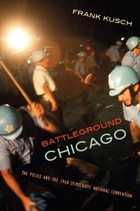
Battleground Chicago
The Police and the 1968 Democratic National ConventionFrank Kusch
University of Chicago Press, 2008
Working from interviews with eighty former Chicago police officers who were on the scene, Frank Kusch uncovers the other side of the story of ’68, deepening our understanding of a turbulent decade.
“Frank Kusch’s compelling account of the clash between Mayor Richard Daley’s men in blue and anti-war rebels reveals why the 1960s was such a painful era for many Americans. . . . to his great credit, [Kusch] allows ‘the pigs’ to speak up for themselves.”—Michael Kazin
“Kusch’s history of white Chicago policemen and the 1968 Democratic National Convention is a solid addition to a growing literature on the cultural sensibility and political perspective of the conservative white working class in the last third of the twentieth century.”—David Farber, Journal of American History
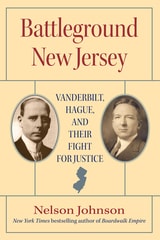
Battleground New Jersey
Vanderbilt, Hague, and Their Fight for JusticeJohnson, Nelson
Rutgers University Press, 2014
Vanderbilt’s power came through mastering the law, serving as dean of New York University Law School, preaching court reform as president of the American Bar Association, and organizing suburban voters before other politicians recognized their importance. Hague, a remarkably successful sixth-grade dropout, amassed his power by exploiting people’s foibles, crushing his rivals, accumulating a fortune through extortion, subverting the law, and taking care of business in his own backyard. They were different ethnically, culturally, and temperamentally, but they shared the goals of power.
Battles and Leaders of the Civil War, Volume 5
Edited by Peter Cozzens
University of Illinois Press, 2001
Indispensable must-reads for all Civil War buffs and historians, bringing together little-known and never before gathered first-hand accounts, articles, maps, and illustrations
The first four volumes of Battles and Leaders of the Civil War, published in the late nineteenth century, became the best-selling and most frequently cited works ever published on the Civil War. Volume 5, assembled by the acclaimed military historian Peter Cozzens, carries on the tradition of its namesake, offering a dazzling new collection of fresh material written by military and civilian leaders, North and South, on a broad array of war-related topics. Featured articles include General Grant on the second battle of Bull Run, General Beauregard on the Shiloh campaign, General Sherman on the conference at City Point, Joshua Chamberlain on the Fredericksburg campaign, and many more. Also presented are dozens of maps and more than one hundred illustrations.
Battles and Leaders of the Civil War, Volume 6
Edited by Peter Cozzens
University of Illinois Press, 2001
Bayard Rustin and the Civil Rights Movement
Levine, Daniel
Rutgers University Press, 1999
Rustin's long activist career began with his association with A. Phillip Randolph of the Brotherhood of Sleeping Car Porters. Then, as a member of A. J. Muste's Fellowship of Reconciliation, he participated in the "Journey of Reconciliation" (an early version of the "Freedom Rides" of 1961). He was a close associate of Martin Luther King in Montgomery and Atlanta and rose to prominence as organizer of the 1963 March on Washington. Rustin played a key role in applying nonviolent direct action to American race relations while rejecting the separatism of movements like Black Power in the 1960s, even at the risk of his being marginalized by the younger generation of civil rights activists. In his later years he tried to hold the civil rights coalition together and to fight for the economic changes he thought were necessary to decrease racism.
Daniel Levine has written the first scholarly biography that examines Rustin's public as well as private persona in light of his struggles as a gay black man and as an activist who followed his own principles and convictions. The result is a rich portrait of a complex, indomitable advocate for justice in American society.
Bayard Rustin
The Invisible ActivistJacqueline Houtman
QuakerPress, 2014
Bayou Salado
The Story of South Park, Revised EditionVirginia McConnell Simmons
University Press of Colorado, 2002

Be Not Afraid
A Southern Journey Through Law, Liberty, and Civil RightsJack Drake
University of Alabama Press, 2026
A civil rights attorney’s unflinching memoir about the fight against segregation and systemic racism through landmark legal battles in Alabama
Be Not Afraid: A Southern Journey Through Law, Liberty, and Civil Rights is a timely and unflinching memoir from civil rights attorney Jack Drake, who has spent decades on the front lines of Alabama’s legal battles for racial justice. Raised in a segregated community in Gardendale, Alabama, Drake came of age during the civil rights movement and became a pivotal figure in cases that reshaped the state’s legal and moral landscape.
Drake helped reform Alabama’s grossly inadequate mental health system and supported voting rights efforts throughout Alabama. His career underscores the crucial role private attorneys and grassroots advocates played in enforcing civil rights laws long after their passage.
Through vivid recollections of courtroom battles, civil rights alliances, and personal transformation, Be Not Afraid offers an intimate view into the persistence and courage required to challenge systemic injustice. At a time when debates over equity and democracy remain pressing, Drake’s story is both a powerful reflection on the past and a call to action for the present. It speaks to the enduring importance of legal advocacy and community solidarity in the fight for a more just society, making it essential reading for those engaged in civil rights history, law, or social change.
Beaches, Bays, and Barrens
A Natural History of the Jersey ShoreEric G. Bolen
Rutgers University Press, 2024
Beaches, Bays, and Barrens introduces readers to the natural wonders of the Jersey Shore, revealing its unique ecology and fascinating history. The journey begins with the contributions and discoveries of early naturalists who visited the region and an overview of endangered species and natural history, followed by chapters that explore different facets of the shore’s environments. These start with sandy beaches and dunes and culminate in the engaging Pine Barrens, the vital watershed for much of the state’s varied coastline. Along the way, readers will also learn about whaling, decoy carvers, an extinct duck, and the cultivation of wild blueberries.
Including over seventy color photographs, the book also features twenty-three infoboxes that go deep into areas of ecological or historical interest, such as the Forsythe National Wildlife Refuge or the Jaws-like shark attacks of 1916. From Cape May to Sandy Hook, biologist Eric G. Bolen takes you on a guided tour of the Jersey Shore’s rich ecological heritage.
Bean Blossom
The Brown County Jamboree and Bill Monroe's Bluegrass FestivalsThomas A. Adler
University of Illinois Press, 2011
Bear County, Michigan
StoriesJohn Counts
Northwestern University Press, 2025
Following desperate characters in desperate circumstances in the rural Midwest
In these colorful, darkly comic stories, veteran journalist and crime reporter John Counts takes readers to an often-ignored part of the country: a fictional Great Lakes coastal town in northern Michigan defined by beauty and bleakness. The cast of characters in these connected stories ranges from addicts to backwoods misfits to ruined lumber families, all bound together by their desire to obtain something just out of reach. Big Frank breaks out of a rehab facility trying to outrun grief. The women in the village of Brotherhood grapple with sterility resulting from an environmental calamity. A local politician must convince her mother to leave a nudist colony. And in the final, sweeping story, a splinter group from the local tribe attempts to reclaim its ancestral land by force. The people of Bear County and their predicaments encompass the wildly original and yet totally ordinary truths about American life off the beaten track.
Bear With Me
A Cultural History of Famous Bears in AmericaDaniel Horowitz
Duke University Press, 2025
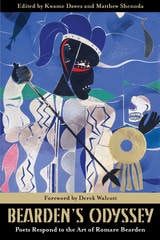
Bearden's Odyssey
Poets Respond to the Art of Romare BeardenEdited by Kwame Dawes and Matthew Shenoda, Foreword by Derek Walcott
Northwestern University Press, 2017
Borrowing from Romare Bearden’s aesthetic palette and inspired by his Odysseus series, Bearden’s Odyssey gathers, for the first time, poems from thirty-five of the most revered African diaspora poets in the United States. Poetic echoes come forth in themes of inspiration with historical intersections of one of the greatest visual artists of the twentieth century.
The award-winning editors, Kwame Dawes and Matthew Shenoda, assemble an esteemed literary congregation, with original poems by Chris Abani, Rita Dove, Lyrae Van Clief-Stefanon, Ed Roberson, Aracelis Girmay, Yusef Komunyakaa, and more. With a powerful foreword by Nobel laureate Derek Walcott and stunning visual reproductions of select Bearden masterpieces, this anthology fuses art and literature, standing as a testament to Romare Bearden’s power and influence in the contemporary artistic world.

Bearing Witness against Sin
The Evangelical Birth of the American Social MovementMichael P. Young
University of Chicago Press, 2007
During the 1830s the United States experienced a wave of movements for social change over temperance, the abolition of slavery, anti-vice activism, and a host of other moral reforms. Michael Young argues for the first time in Bearing Witness against Sin that together they represented a distinctive new style of mobilization—one that prefigured contemporary forms of social protest by underscoring the role of national religious structures and cultural schemas.
In this book, Young identifies a new strain of protest that challenged antebellum Americans to take personal responsibility for reforming social problems.In this period activists demanded that social problems like drinking and slaveholding be recognized as national sins unsurpassed in their evil and immorality. This newly awakened consciousness undergirded by a confessional style of protest, seized the American imagination and galvanized thousands of people. Such a phenomenon, Young argues, helps explain the lives of charismatic reformers such as William Lloyd Garrison and the Grimké sisters, among others.
Marshalling lively historical materials, including letters and life histories of reformers, Bearing Witness against Sin is a revelatory account of how religion lay at the heart of social reform.
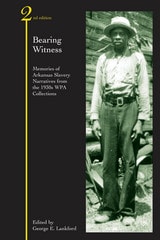
Bearing Witness
Memories of Arkansas SlaveryGeorge E. Lankford
University of Arkansas Press, 2006

Bearing the Bad News
Contemporary American Literature and CultureSanford Pinsker
University of Iowa Press, 1990
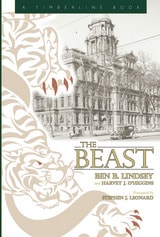
Beast
Benjamin B. Lindsey
University Press of Colorado, 2009
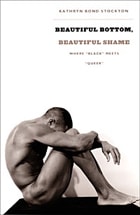
Beautiful Bottom, Beautiful Shame
Where "Black" Meets "Queer"Kathryn Bond Stockton
Duke University Press, 2006
Stockton engages the domains of African American studies, queer theory, psychoanalysis, film theory, photography, semiotics, and gender studies. She brings together thinkers rarely, if ever, read together in a single study—James Baldwin, Radclyffe Hall, Jean Genet, Toni Morrison, Robert Mapplethorpe, Eldridge Cleaver, Todd Haynes, Norman Mailer, Leslie Feinberg, David Fincher, and Quentin Tarantino—and reads them with and against major theorists, including Georges Bataille, Sigmund Freud, Eve Kosofsky Sedgwick, Jacques Lacan, Roland Barthes, and Leo Bersani. Stockton asserts that there is no clear, mirrored relation between the terms “black” and “queer”; rather, seemingly definitive associations attached to each are often taken up or crossed through by the other. Stockton explores dramatic switchpoints between these terms: the stigmatized “skin” of some queers’ clothes, the description of blacks as an “economic bottom,” the visual force of interracial homosexual rape, the complicated logic of so-called same-sex miscegenation, and the ways in which a famous depiction of slavery (namely, Morrison’s Beloved) seems bound up with depictions of AIDS. All of the thinkers Stockton considers scrutinize the social nature of shame as they examine the structures that make debasements possible, bearable, pleasurable, and creative, even in their darkness.
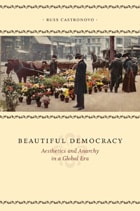
Beautiful Democracy
Aesthetics and Anarchy in a Global EraRuss Castronovo
University of Chicago Press, 2007
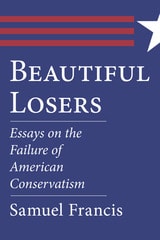
Beautiful Losers
Essays on the Failure of American ConservatismSamuel Francis
University of Missouri Press, 1994
The 1992 presidential election campaign showed just how deep were the divisions within the Republican party. In Beautiful Losers, Samuel Francis argues that the victory of the Democratic party marks not only the end of the Reagan-Bush era, but the failure of the American conservatism.

Beautiful Mystery
Living in a Wordless WorldDanilyn Rutherford
Duke University Press, 2025
Now in her twenties, Millie has never been able to express herself verbally, but she has a thriving social environment rooted in the people around her and in things her companions and family can see, hear, smell, and feel. Life in Millie’s world is far richer than might be immediately evident to those who think and communicate in conventional ways.
Beautiful Mystery explores what it means to be a person in the spaces between what we can and cannot say, and how we can fight to care for those we love when they don’t have the language to fight for themselves. Through her unique lens as a mother and an anthropologist, Rutherford tells the story of arriving in Millie’s world, what she found there, and how Millie showed her that words aren’t always what makes us human. Enlightening and deeply felt, Beautiful Mystery proves that you don’t have to understand someone to love them—a lesson that, if we all learned it, might allow us to live together in a fractured world.
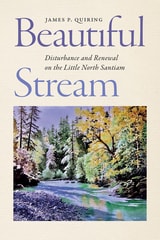
Beautiful Stream
Disturbance and Renewal on the Little North SantiamJames P. Quiring
Oregon State University Press, 2026
Through personal reflection and historic events, Beautiful Stream chronicles the natural and human story of Oregon’s Little North Santiam River, sentimentally referred to as the North Fork. James Quiring showcases this remote community’s love of the land, resilience, and dedication to conservation alongside his own memories of his family’s retreat in the mountains. By conducting nearly one hundred interviews and combing through homestead-era journals, historic newspapers, and other sources, Quiring shares the canyon’s history, including the 2020 Beachie Creek Fire, the decades-long political battle for Opal Creek, and the timeless stories of neighbors coming together through challenging times.
In Beautiful Stream, Quiring shares the remarkable history of those who have encountered the North Fork: the Native Kalapuyan and Molallan peoples, the early homesteaders of Elkhorn, and turn-of-the-century settlers. Many cherished the land and took actions to protect it. In 1893 the upper North Fork received its first official conservation protection, which helped preserve the natural qualities of this special place. Quiring parallels the story of the North Fork with his own, writing, “my early years along the North Fork gave me the footing to move out to the path of my career, and then my career experiences steered me right back to the North Fork to learn and share its story.” Upon retirement, Quiring returned to the remote canyon and reflects on this place and people with fondness and keen insight. It’s with this affection that the recollections, records, and stories gathered in Beautiful Stream tell a moving history of a place and its people.
Beautiful Struggle
How One American High School Took on Systemic RacismSharon M. Chubbuck and Cynthia M. Ellwood
University of Chicago Press, 2026
An in-depth look at how one high school addressed racial inequality head-on.
The new superintendent stood before the faculty of “Oakmont High,” a large, diverse public school, and spoke a cold truth about American education. He described seeing the vibrant mix of students in the school’s hallways disperse into racially segregated classrooms when the bell rang. The fact was that students were sorted into tracks—supposedly race-neutral, “ability-based” pathways—that led to sharply unequal experiences and opportunities throughout high school and often their whole lives. “Why is it fair for white kids to have a better education than Black kids?” the superintendent asked his faculty. “It’s racism pure and simple, and it’s going to stop!”
Racial inequality persists because racism is systemic, baked into countless interlacing beliefs, practices, and structures that make up the way we do school. Tracking is one of many such practices. In Beautiful Struggle, Sharon M. Chubbuck and Cynthia M. Ellwood examine eleven years of transformation by administrators, teachers, students, and others as they tackled systemic racism head-on, starting with tracking. The people of OHS encountered intense resistance and made extraordinary inroads. They fought inequality with hard conversations and concrete steps. They dramatically increased Black and brown students’ access to rich, rigorous learning from the moment students entered as freshmen. They questioned and restructured the interconnected web of policy and practices in every aspect of the school. Students themselves propelled major changes in academic opportunity and the very culture of the school.
Chubbuck and Ellwood argue that taking on racial inequality requires an unrelenting focus on racial justice, challenging systems on every front, broad collective leadership across race and role, and the will to navigate difference and conflict. The story within Beautiful Struggle offers a hopeful though sobering path forward.
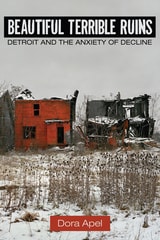
Beautiful Terrible Ruins
Detroit and the Anxiety of DeclineApel, Dora
Rutgers University Press, 2015
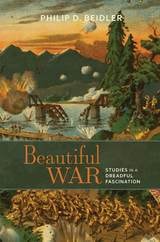
Beautiful War
Studies in a Dreadful FascinationPhilip D. Beidler
University of Alabama Press, 2016
Beautiful War: Studies in a Dreadful Fascination is a wide-ranging exploration of armed conflict as depicted in art that illustrates the constant presence of war in our everyday lives. Philip D. Beidler investigates the unending assimilation and pervasive presence of the idea of war in popular culture, the impulses behind the making of art out of war, and the unending and debatably aimless trajectories of war itself.
Beidler’s critical scope spans from Shakespeare’s plays, through the Victorian battle paintings of Lady Butler, into the post-World War I writings of F. Scott Fitzgerald and Virginia Woolf, and up to twenty-first-century films such as The Hurt Locker and Extremely Loud and Incredibly Close. As these works of art have become ubiquitous in contemporary culture, the many faces of war clearly spill over into our art and media, and Beidler argues that these portrayals in turn shift the perception of war from a savage truth to a concept.
Beautiful War argues that the representation of war in the arts has always been, and continues to be, an incredibly powerful force. Incorporating painting, music, photography, literature, and film, Beidler traces a disturbing but fundamental truth: that war has always provided an aesthetic inspiration while serving ends as various and complex as ideological or geopolitical history, public memory, and mass entertainment.
Beautiful War is a bold and vivid account of the role of war and military conflict as a subject of art that offers much of value to literary and cultural critics, historians, veterans, students of art history and communication studies, and those interested in expanding their understanding of art and media’s influence on contemporary values and memories of the past.
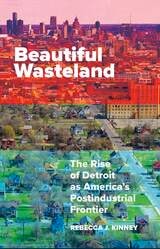
Beautiful Wasteland
The Rise of Detroit as America's Postindustrial FrontierRebecca J. Kinney
University of Minnesota Press, 2016
According to popular media and scholarship, Detroit, the once-vibrant city that crumbled with the departure of the auto industry, is where dreams can be reborn. It is a place that, like America itself, is gritty and determined. It has faced the worst kind of adversity, and supposedly now it’s back. But what does this narrative of “new Detroit” leave out? Beautiful Wasteland reveals that the contemporary story of Detroit’s rebirth is an upcycled version of the American Dream, which has long imagined access to work, home, and upward mobility as race-neutral projects. They’re not. As Rebecca J. Kinney shows, the narratives of Detroit’s rise, decline, and potential to rise again are deeply steeped in material and ideological investments in whiteness.
By remapping the narratives of contemporary Detroit through an extension of America’s frontier mythology, Kinney analyzes a cross-section of twentieth and twenty-first century cultural locations—an Internet forum, ruin photography, advertising, documentary film, and print and online media. She illuminates how the stories we tell about Detroit as a frontier of possibility enable the erasure of white privilege and systemic racism. By situating Detroit as a “beautiful wasteland,” both desirable and distressed, this shows how the narrative of ruin and possibility form a mutually constituted relationship: the city is possible precisely because of its perceived ruin.
Beautiful Wasteland tackles the key questions about the future of postindustrial America. As cities around the country reckon with their own postindustrial landscapes, Rebecca Kinney cautions that development that elides considerations of race and class will only continue to replicate uneven access to the city for the poor, working class, and people of color.

Beautiful Work
A Meditation on PainSharon Cameron
Duke University Press, 2000
In order to understand the nature of pain, Anna undertakes a meditation practice. We tend to think of pain as self-absorbing and exclusively our own ("my pain," "I am in pain"). In distinction, Sharon Cameron’s Anna comes to explore pain as common property, and as the basis for a radically reconceived selfhood. Resisting the limitations of memoir, Beautiful Work speaks from experience and simultaneously releases it from the closed shell of personal ownership. Outside of the not quite inevitable stories we tell about it, experience is less protected, less compromised, and more vivid than could be supposed.
Beautiful Work brings to bear the same interest in consciousness and intersubjectivity that characterizes Cameron’s other work.
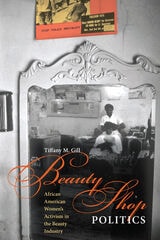
Beauty Shop Politics
African American Women's Activism in the Beauty IndustryTiffany M. Gill
University of Illinois Press, 2010
Looking through the lens of black business history, Beauty Shop Politics shows how black beauticians in the Jim Crow era parlayed their economic independence and access to a public community space into platforms for activism. Tiffany M. Gill argues that the beauty industry played a crucial role in the creation of the modern black female identity and that the seemingly frivolous space of a beauty salon actually has stimulated social, political, and economic change.
From the founding of the National Negro Business League in 1900 and onward, African Americans have embraced the entrepreneurial spirit by starting their own businesses, but black women's forays into the business world were overshadowed by those of black men. With a broad scope that encompasses the role of gossip in salons, ethnic beauty products, and the social meanings of African American hair textures, Gill shows how African American beauty entrepreneurs built and sustained a vibrant culture of activism in beauty salons and schools. Enhanced by lucid portrayals of black beauticians and drawing on archival research and oral histories, Beauty Shop Politics conveys the everyday operations and rich culture of black beauty salons as well as their role in building community.
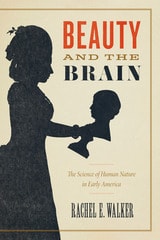
Beauty and the Brain
The Science of Human Nature in Early AmericaRachel E. Walker
University of Chicago Press, 2023
Between the 1770s and the 1860s, people all across the globe relied on physiognomy and phrenology to evaluate human worth. These once-popular but now-discredited disciplines were based on a deceptively simple premise: that facial features or skull shape could reveal a person’s intelligence, character, and personality. In the United States, these were culturally ubiquitous sciences that both elite thinkers and ordinary people used to understand human nature.
While the modern world dismisses phrenology and physiognomy as silly and debunked disciplines, Beauty and the Brain shows why they must be taken seriously: they were the intellectual tools that a diverse group of Americans used to debate questions of race, gender, and social justice. While prominent intellectuals and political thinkers invoked these sciences to justify hierarchy, marginalized people and progressive activists deployed them for their own political aims, creatively interpreting human minds and bodies as they fought for racial justice and gender equality. Ultimately, though, physiognomy and phrenology were as dangerous as they were popular. In addition to validating the idea that external beauty was a sign of internal worth, these disciplines often appealed to the very people who were damaged by their prejudicial doctrines. In taking physiognomy and phrenology seriously, Beauty and the Brain recovers a vibrant—if largely forgotten—cultural and intellectual universe, showing how popular sciences shaped some of the greatest political debates of the American past.

Beauty and the Brain
The Science of Human Nature in Early AmericaRachel E. Walker
University of Chicago Press, 2023
Examining the history of phrenology and physiognomy, Beauty and the Brain proposes a bold new way of understanding the connection between science, politics, and popular culture in early America.
Between the 1770s and the 1860s, people all across the globe relied on physiognomy and phrenology to evaluate human worth. These once-popular but now discredited disciplines were based on a deceptively simple premise: that facial features or skull shape could reveal a person’s intelligence, character, and personality. In the United States, these were culturally ubiquitous sciences that both elite thinkers and ordinary people used to understand human nature.
While the modern world dismisses phrenology and physiognomy as silly and debunked disciplines, Beauty and the Brain shows why they must be taken seriously: they were the intellectual tools that a diverse group of Americans used to debate questions of race, gender, and social justice. While prominent intellectuals and political thinkers invoked these sciences to justify hierarchy, marginalized people and progressive activists deployed them for their own political aims, creatively interpreting human minds and bodies as they fought for racial justice and gender equality. Ultimately, though, physiognomy and phrenology were as dangerous as they were popular. In addition to validating the idea that external beauty was a sign of internal worth, these disciplines often appealed to the very people who were damaged by their prejudicial doctrines. In taking physiognomy and phrenology seriously, Beauty and the Brain recovers a vibrant—if largely forgotten—cultural and intellectual universe, showing how popular sciences shaped some of the greatest political debates of the American past.
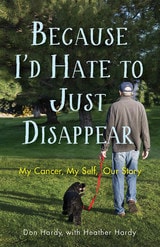
Because I'd Hate to Just Disappear
My Cancer, My Self, Our StoryDon Hardy
University of Nevada Press, 2018
Because I’d Hate to Just Disappear is a portrait of a husband and wife, Don and Heather Hardy, thrown into the physical and emotional machinery of Don being diagnosed with leukemia and going through chemotherapy and treatment over a period of close to two years.
In this thoughtful and exquisite account, Don and Heather narrate Don’s struggle in real-time. Disarmingly honest, they recount each intimate stage of a couple living through cancer together, the mental and physical struggles, the humor and visceral emotion to reveal how two very different personalities shape—and are shaped by—the experience of cancer and its treatment. Through these moments emerge a constant flow of human kindness and discovery that lifts them each day.
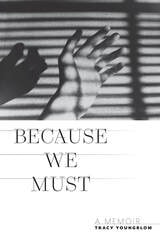
Because We Must
A MemoirTracy Youngblom
University of Massachusetts Press, 2025
A breathtaking memoir navigating caregiving, motherhood, and letting go after a tragic accident
On March 16th, 2015, Tracy Youngblom was rushing to finish last-minute preparations for a class she would teach the next day when there was an unexpected knock at her door. Grudgingly, she answered it to find a uniformed officer standing on her front porch. Youngblom realized then that her youngest son Elias should have been arriving home from a trip to Fargo where he was visiting friends at North Dakota State University. The officer told her that Elias had been in an accident and was in the hospital. Later, she learned that his car had been struck nearly head on by a drunk driver going 70 miles per hour. Denial and shock took over as she made the long drive from their home in Coon Rapids, Minnesota. When she saw Elias in the ICU—swollen beyond recognition, covered in stitches, with a myriad of tubes attached to him—the full gravity of the situation descended.
On the day of the crash, Elias had been driving back to Coon Rapids to celebrate National Ice Cream Day with friends. An avid lover of music, he’d been working as a conductor while wrapping up his degree, moving toward his dream of becoming a marching band director. After the accident, Elias begins his long journey of recovery, which is set back when doctors announce that his optic nerves are dead. Despite it all, Elias never wavers, approaching each challenge with resilience, grace, and humor.
Alongside Elias, Youngblom faces her own challenges, staying by his side in the ICU for weeks, coordinating with other family members and friends, and never flagging in her care of her severely injured son, yet all the while coping with her own emotions, fears, and trauma. She struggles to support Elias, heal her self, and let him go on with his life. In this riveting memoir, Youngblom traverses her family’s lives before and after the accident, capturing the complications of grief, recovery, and the strength it takes to move forward—because we must.
Becoming American Becoming Ethnic
edited by Thomas Dublin
Temple University Press, 1996
More than at any time since the 1920's the issues of immigration and ethnicity have become central to discussions of American society and identity. Becoming American, Becoming Ethnic addresses this contemporary debate, bringing together essays written over the past eighteen years by college students exploring their ethnic roots—from the experiences of their forbears to the place of ethnicity in their lives.
The students range from descendants of Europeans whose families immigrated several generations ago to Asian and Latin American immigrants of more recent decades to African-Americans and Hispanics—some have more than one ethnic heritage to grapple with, while others have migrated from one place to another within the United States. Together their voices create a dialogue about the interplay of ethnic traditions and values with American culture.
These are moving personal reflections on the continuities and changes in the ethnic experience in the United States and on the evolving meaning of ethnicity over time and across generations. Despite vocal concerns in recent years about ethnic divisiveness, these student writings show how much many young Americans share even in their differences.
In the series Critical Perspectives on the Past, edited by Susan Porter Benson, Stephen Brier, and Roy Rosenzweig.
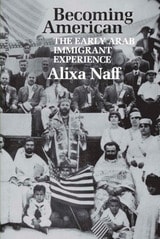
Becoming American
The Early Arab Immigrant ExperienceAlixa Naff
Southern Illinois University Press, 1993
A unique study in American immigration and assimilation history that also provides a special view of one of the smaller ethnic groups in American society.
Naff focuses on the pre-World War I pioneering generation of Arabic-speaking immigrants, the generation that set the patterns for settlement and assimilation. Unlike many immigrants who were drawn to the United States by dreams of industrial jobs or to escape religious or economic persecution, most of these artisans and owners of small, disconnected plots of land came to America to engage in the enterprise of peddling. Most planned to stay two or three years and return to their homelands.
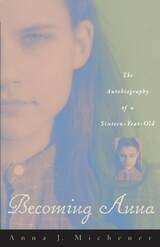
Becoming Anna
Anna J. Michener
University of Chicago Press, 1998
"A teen's raw, in-your-face chronicle of events almost as they were happening. As such, it's unforgettable. . . . Michener's story gives voice to the thousands of children and adolescents trapped in 'the system,' biding their time until their 18th birthdays. A candid and unstinting tell-all."—Kirkus Reviews
"Extraordinary. . . . Michener's expressive writing does justice to a topic that is clearly very disturbing to her personally and communicates a profoundly important message on behalf of all abused and neglected children."—Booklist
"An important book, painful to read, but essential if other children in similar situations are to be saved."—Library Journal
"An innocent child's account of 16 years in hell and of the terrible wrongs inflicted on children who are without rights or caring advocates."—Choice
"[Michener] emerges as a compelling and courageous advocate for children and their welfare—she's a young writer with an extraordinary voice."Feminist Bookstore News
"Quite simply one of the best, most compelling, well-written autobiographies published in years. . . . Remember the name. We have not heard the last of Anna Michener."—Myree Whitfield, Melbourne Herald-Sun, cover story