Results by title
5159 books match the query 'Biography' and 297 start with b
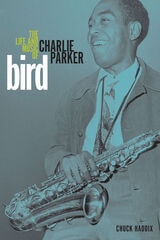
Bird
The Life and Music of Charlie ParkerChuck Haddix
University of Illinois Press, 2013
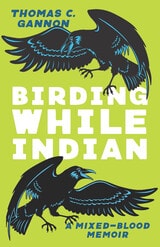
Birding While Indian
A Mixed-Blood MemoirThomas C. Gannon
The Ohio State University Press, 2023
Birmingham's Rabbi
Morris Newfield and Alabama, 1895-1940Mark Cowett
University of Alabama Press, 1986
Taking a multidimensional approach, Cowett places Newfield's early life in the context of his Hungarian childhood and also relates Newfield’s career to those of fellow Hebrew Union College graduates and to national Reform Jewish history. The reader is made aware constantly of changing conditions in Birmingham, in Alabama, and in the south and how those changes affected Newfield’s congregants. Cowett illuminates Newfield’s efforts to help Jews maintain a sense of religious identity in a predominately Southern and Christian environment.
Based upon essential sources including interviews, newspapers, and manuscript collections in Alabama and at the American Jewish Archives in Cincinnati, Cowett shows Newfield’s struggle to support social welfare efforts in Alabama during the Progressive Era. He recognized the need for Jews to develop bonds with other American ethnic groups. Cowett portrays him as a mediator between not only Jew and Christian but also black and white, labor and capital, liberal and conservative—in short, within the full spectrum of political and social exchange in an industrial city of the New South.

Birthmark
Stephen Clingman
University of Massachusetts Press, 2016
Not only was the operation unsuccessful, it affected his vision, and his eyes came to see differently from each other. Birthmark explores the questions raised by living with divided vision in a divided world—the world of South Africa under apartheid, where every view was governed by the markings of birth, the accidents of color, race, and skin. But what were the effects on the mind? Clingman's book engages a number of questions. How, in such circumstances, can we come to a deeper kind of vision? How can we achieve wholeness and acceptance? How can we find our place in the midst of turmoil and change?
In a beguiling narrative set on three continents, this is a story that is personal, painful, comic, and ultimately uplifting: a book not so much of the coming of age but the coming of perspective.

Bismarck and His Times
George O. Kent
Southern Illinois University Press, 1978
A new account of the life and policies of the first German chancellor, Otto von Bismarck, this concise historical-biography reflects, for the first time in English, the historical shift in emphasis from the traditional political-economic approach to the more complex social-economic one of post—World War II scholarship.
Since the middle of the 1950s, much new material on Bismarck and nineteenth-century Germany and new interpretations of existing material have been published in Germany, Great Britain, and the United States. Professor George O. Kent’s brilliant synthesis, drawing on this mass of material, examines changes in emphasis in post—World War II scholarship. The book, particularly in the historiographical notes and bibliographical essay, provides the serious student with an invaluable guide to the intricacies of recent Bismarckian scholarship. For the general reader, the main text presents a picture of the man, the issues, and the age in the light of modern scholarship.
The major shift in historical emphasis described in this new account is the importance scholars give to the period 1877–79, the years of change from free trade to protectionism, rather than to 1870–71 the founding of the Reich. Bismarck’s political machinations, particularly his willingness to explore the possibilities of a coup d’état, are more fully discussed here than in any other book.

Biting through the Skin
An Indian Kitchen in America's HeartlandNina Mukerjee Furstenau
University of Iowa Press, 2013
As a girl and a young woman, Nina traveled to her ancestral India as well as to college and to Peace Corps service in Tunisia. Through her journeys and her marriage to an American man whose grandparents hailed from Germany and Sweden, she learned that her family was not alone in being a small pocket of culture sheltered from the larger world. Biting through the Skin shows how we maintain our differences as well as how we come together through what and how we cook and eat. In mourning the partial loss of her heritage, the author finds that, ultimately, heritage always finds other ways of coming to meet us. In effect, it can be reduced to a 4 x 6-inch recipe card, something that can fit into a shirt pocket. It’s on just such tiny details of life that belonging rests.
In this book, the author shares her shirt-pocket recipes and a great deal more, inviting readers to join her on her journey toward herself and toward a vital sense of food as culture and the mortar of community.

Bitter Music
Collected Journals, Essays, Introductions, and LibrettosHarry Partch
University of Illinois Press, 1991
Bitter Music collects writings by one of the twentieth century's great musical iconoclasts. Rejecting the equal temperament and concert traditions that have dominated western music, Harry Partch adopted the pure intervals of just intonation and devised a 43-tone-to-the-octave scale, which in turn forced him into inventing numerous musical instruments. His compositions realize his ideal of a corporeal music that unites music, dance, and theater.
Winner of the ASCAP-Deems Taylor Award, Bitter Music includes two journals kept by Partch, one while wandering the West Coast during the Depression and the other as he hiked the rugged northern California coastline. It also includes Partch's essays on and discussions of his own compositions, as well as librettos and scenarios for six major narrative/dramatic works.
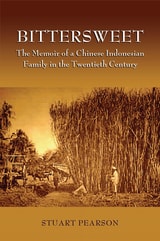
BitterSweet
The Memoir of a Chinese Indonesian Family in the Twentieth CenturyStuart Pearson
National University of Singapore Press, 2013
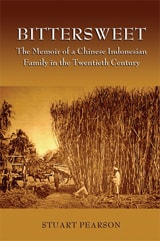
BitterSweet
The Memoir of a Chinese-Indonesian Family in the Twentieth CenturyStuart Pearson
Ohio University Press, 2008
BitterSweet is the account of one Chinese-Indonesian family whose story stretches over the generations as their fortunes waxed and waned through revolution, riots, war, depression, occupation, and finally emigration to yet another country—Australia.
BitterSweet offers a unique insight into a world rarely seen before. An Sudibjo’s memoir, written from a woman’s perspective, is a valuable resource for anyone studying Indonesian history or the Chinese Diaspora.
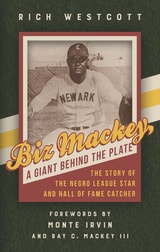
Biz Mackey, a Giant behind the Plate
The Story of the Negro League Star and Hall of Fame CatcherRich Westcott
Temple University Press, 2020
“The best all-around catcher in black baseball history”—Cumberland Posey, Owner of the Homestead Grays
National Baseball Hall of Fame catcher James Raleigh “Biz” Mackey’s professional career spanned nearly three decades in the Negro Leagues and elsewhere. He distinguished himself as a defensive catcher who also had an impressive batting average and later worked as a manager of the Newark Eagles and the Baltimore Elite Giants.
Using archival materials and interviews with former Negro League players, baseball historian Rich Westcott chronicles the catcher’s life and remarkable career in Biz Mackey, a Giant behind the Plate as well as providing an in-depth look at Philadelphia Negro League history. Westcott traces Mackey’s childhood in Texas as the son of sharecroppers to his success on the baseball diamond where he displayed extraordinary defensive skills and an exceptional ability to hit and to handle pitchers. Mackey spent one third of his career playing in Philadelphia, winning championships with the Hilldale Daisies and the Philadelphia Stars. Mackey also mentored famed catcher Roy Campanella and had an unlikely role in the story of baseball’s development in Japan.
A celebrated ballplayer before African Americans were permitted to join Major League Baseball, Biz Mackey ranks as one of the top catchers ever to play the game. With Biz Mackey, he finally gets the biography he deserves.
Bjarki, Not Bjarki
On Floorboards, Love, and Irreconcilable DifferencesMatthew J. C. Clark
University of Iowa Press, 2023
These are the words of Bjarki Thor Gunnarsson, the young man who manufactures the widest, purest, most metaphorical pine floorboards on the planet.
As Matthew Clark—a carpenter by trade—begins researching a magazine-style essay about Bjarki and his American Dream Boards, he comes to discover that nothing is quite as it seems. Santa Claus arrives by helicopter. A wedding diamond disappears. A dead coyote jumps to its feet. And then, at a Thai restaurant in central Maine, Bjarki is transformed into an eggplant.
In Bjarki, Not Bjarki, Clark wants nothing less than to understand everything, to make the world a better place, for you and him to love each other, and to be okay. He desires all of this sincerely, desperately even, and at the same time he proceeds with a light heart, playfully, with humor and awe. As Clark reports on the people and processes that transform the forest into your floor, he also ruminates on gift cards, crab rangoon, and Jean Claude Van Damme. He considers North American colonization, masculinity, the definition of disgusting, his own uncertain certainty. When the boards beneath our feet are so unstable, always expanding and cupping and contracting, how can we make sense of the world? What does it mean to know another person and to connect with them, especially in an increasingly polarized America?
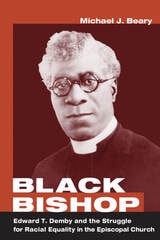
Black Bishop
Edward T. Demby and the Struggle for Racial Equality in the Episcopal ChurchMichael J. Beary
University of Illinois Press, 2001
America’s first Black bishop and his struggle to rebuild the African American presence inside the Episcopal Church
In 1918, the Right Reverend Edward T. Demby took up the reins as Suffragan (assistant) Bishop for Colored Work in Arkansas and the Province of the Southwest, an area encompassing Arkansas, Texas, Kansas, Oklahoma, Missouri, and New Mexico. Set within the context of a series of experiments in black leadership conducted by the Episcopal Diocese of Arkansas in the early decades of the twentieth century, Demby's tenure in a segregated ministry illuminates the larger American experience of segregation disguised as a social good.
Intent on demonstrating the industry and self-reliance of black Episcopalians to the church at large, Demby set about securing black priests for the diocese, baptizing and confirming communicants, and building schools and other institutions of community service. A gifted leader and a committed Episcopalian, Demby recognized that black service institutions, such as schools, hospitals, and orphanages, would be the means to draw African Americans back to the Episcopal Church, which they had abandoned in droves after emancipation as the church of their former masters.
For more than twenty years, hamstrung by white apathy, lack of funds, jurisdictional ambiguity, and the Great Depression, Demby doggedly tried to establish the credibility of a ministry that was as ill-conceived as it was well intended. Michael J. Beary skillfully narrates the shifting alliances within the Episcopal Church and shows how race was but one aspect of a more elemental struggle for power. He demonstrates how Demby's steadiness of purpose and non-confrontational manner gathered allies on both sides of the color line and how, ultimately, his judgment and the weight of his experience carried the church past its segregationist experiment.
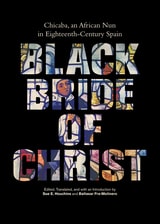
Black Bride of Christ
Chicaba, an African Nun in Eighteenth-Century SpainSue E. Houchins
Vanderbilt University Press, 2018
This volume, the first English translation of the Compendio, is a hagiography, an example of a biographical genre that recounts the lives and describes the spiritual practices of saints officially canonized by the Church, respected ecclesiastical leaders, or holy people informally recognized by local devotees. The effort to have Chicaba canonized continues today, as Fra-Molinero and Houchins explore in their introduction to the volume.
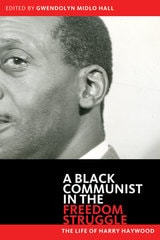
Black Communist in the Freedom Struggle
The Life of Harry HaywoodHarry Haywood
University of Minnesota Press, 2012
Mustering out of the U.S. army in 1919, Harry Haywood stepped into a battle that was to last the rest of his life. Within months, he found himself in the middle of one of the bloodiest race riots in U.S. history and realized that he’d been fighting the wrong war—the real enemy was right here at home. This book is Haywood’s eloquent account of coming of age as a black man in twentieth-century America and of his political awakening in the Communist Party.
For all its cultural and historical interest, Harry Haywood’s story is also noteworthy for its considerable narrative drama. The son of parents born into slavery, Haywood tells how he grew up in Omaha, Nebraska, found his first job as a shoeshine boy in Minneapolis, then went on to work as a waiter on trains and in restaurants in Chicago. After fighting in France during the war, he studied how to make revolutions in Moscow during the 1920s, led the Communist Party’s move into the Deep South in 1931, helped to organize the campaign to free the Scottsboro Boys, worked with the Sharecroppers’ Union, supported protests in Chicago against Mussolini’s invasion of Ethiopia, fought with the International Brigades in Spain, served in the Merchant Marines during World War II, and continued to fight for the right of self-determination for the Afro-American nation in the United States until his death in 1985.
This new edition of his classic autobiography, Black Bolshevik, introduces American readers to the little-known story of a brilliant thinker, writer, and activist whose life encapsulates the struggle for freedom against all odds of the New Negro generation that came of age during and after World War I.
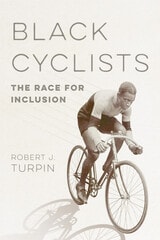
Black Cyclists
The Race for InclusionRobert J. Turpin
University of Illinois Press, 2024
Eye-opening and long overdue, Black Cyclists uses race, technology, and mobility to explore a forgotten chapter in cycling history.
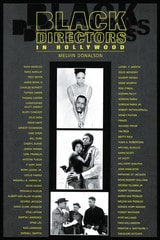
Black Directors in Hollywood
By Melvin Donalson
University of Texas Press, 2003
Hollywood film directors are some of the world's most powerful storytellers, shaping the fantasies and aspirations of people around the globe. Since the 1960s, African Americans have increasingly joined their ranks, bringing fresh insights to movie characterizations, plots, and themes and depicting areas of African American culture that were previously absent from mainstream films. Today, black directors are making films in all popular genres, while inventing new ones to speak directly from and to the black experience.
This book offers a first comprehensive look at the work of black directors in Hollywood, from pioneers such as Gordon Parks, Melvin Van Peebles, and Ossie Davis to current talents including Spike Lee, John Singleton, Kasi Lemmons, and Carl Franklin. Discussing 67 individuals and over 135 films, Melvin Donalson thoroughly explores how black directors' storytelling skills and film techniques have widened both the thematic focus and visual style of American cinema. Assessing the meanings and messages in their films, he convincingly demonstrates that black directors are balancing Hollywood's demand for box office success with artistic achievement and responsibility to ethnic, cultural, and gender issues.
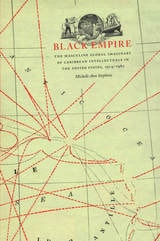
Black Empire
The Masculine Global Imaginary of Caribbean Intellectuals in the United States, 1914–1962Michelle Ann Stephens
Duke University Press, 2005
Stephens argues that the global black political consciousness she identifies was constituted by both radical and reactionary impulses. On the one hand, Garvey, McKay, and James saw freedom of movement as the basis of black transnationalism. The Caribbean archipelago—a geographic space ideally suited to the free movement of black subjects across national boundaries—became the metaphoric heart of their vision. On the other hand, these three writers were deeply influenced by the ideas of militarism, empire, and male sovereignty that shaped global political discourse in the early twentieth century. As such, their vision of transnational blackness excluded women’s political subjectivities. Drawing together insights from American, African American, Caribbean, and gender studies, Black Empire is a major contribution to ongoing conversations about nation and diaspora.

Black Eye
Escaping a Marriage, Writing a LifeJudith Strasser
University of Wisconsin Press, 2004
Black Eye includes excerpts from a journal Strasser kept from 1985 to1986, the year she made the decision to leave her marriage, and present-day commentary on the journal passages and her family history. Strasser works like a detective investigating her own life, drawing clarity and power from journal passages, dreams, and memories that originally emerged from confusion and despair. With language that is both insightful and poetic, she reveals the psychological and social circumstances that led a "strong" woman, an intelligent and politically active feminist, to become an emotionally dependent, abused wife.
Not coincidentally, the same year that Strasser finally found the courage to leave her husband, she also reclaimed her creative voice. Newly empowered and energized by this enormous life change, Strasser began writing again after twenty-five silent years dominated by her mother’s illness and death, her own cancer, and her painful, fearful marriage. Black Eye is one of the fruits of this creative reawakening. Strasser’s writing is refreshingly honest and instantly engrossing. Not shy of wretchedness or beauty, Strasser’s story is bitterly personal, ultimately triumphant, and inspiring to all who deal with the adversity that is part of human life.
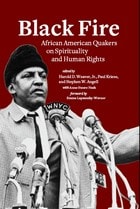
Black Fire
African American Quakers on Spirituality and Human RightsHarold D. Weaver, Jr.
QuakerPress, 2011
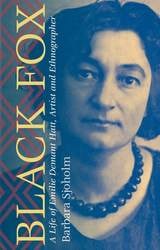
Black Fox
A Life of Emilie Demant Hatt, Artist and EthnographerBarbara Sjoholm
University of Wisconsin Press, 2017
In recounting Demant Hatt's fascinating life, Barbara Sjoholm investigates the boundaries and influences between ethnographers and sources, the nature of authorship and visual representation, and the state of anthropology, racial biology, and politics in Scandinavia during the first half of the twentieth century.
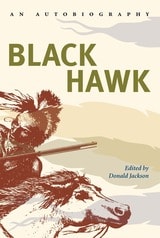
Black Hawk
An AutobiographyBlack Hawk
University of Illinois Press, 1955
A foundational document, Black Hawk: An Autobiography is both an unsparing record of America's genocide against Native American peoples and the moving self-portrait of an extraordinary man.
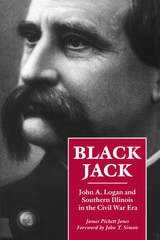
Black Jack
John A. Logan and Southern Illinois in the Civil War EraJames Pickett Jones. Foreword by John Y. Simon
Southern Illinois University Press, 1995
John A. Logan, called "Black Jack" by the men he led in Civil War battles from the Henry-Donelson campaign to Vicksburg, Chattanooga, and on to Atlanta, was one of the Union Army’s most colorful generals.
James Pickett Jones places Logan in his southern Illinois surroundings as he examines the role of the political soldier in the Civil War. When Logan altered his stance on national issues, so did the southern part of the state. Although secession, civil strife, Copperheadism, and the new attitudes created by the war contributed to this change of position in southern Illinois, Logan’s role as political and military leader was important in the region’s swing to strong support of the war against the Confederacy, to the policies of Lincoln, and eventually, to the Republican party.

Black Lawyers, White Courts
The Soul of South African LawKenneth S. Broun
Ohio University Press, 2000
In the struggle against apartheid, one often overlooked group of crusaders was the coterie of black lawyers who overcame the Byzantine system that the government established oftentimes explicitly to block the paths of its black citizens from achieving justice.
Now, in their own voices, we have the narratives of many of those lawyers as recounted in a series of oral interviews. Black Lawyers, White Courts is their story and the anti-apartheid story that has before now gone untold.
Professor Kenneth Broun conducted interviews with twenty-seven black South African lawyers. They were asked to tell about their lives, including their family backgrounds, education, careers, and their visions for the future. In many instances they also discussed their years in prison or exile, or under house arrest. Most told of both education and careers interrupted because of the ongoing struggle.
The story of the professional achievements of black lawyers in South Africa—indeed their very survival—provides an example of the triumph of individuals and, ultimately, of the law. Black Lawyers, White Courts is about South Africa, and about black professionals in that country, but the lessons its protagonists teach extend far beyond circumstances, geography, or race.
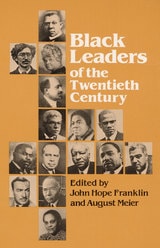
Black Leaders of the Twentieth Century
Edited by John Hope Franklin and August Meier
University of Illinois Press, 1982
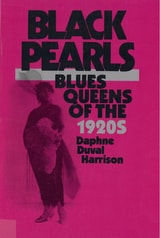
Black Pearls
Blues Queens of the 1920sDaphne Duval Harrison
Rutgers University Press, 1990
Blues music spawned legendary performers whose influence has been felt in many musical forms here and around the world. Until now the important role of the great women blues singers has largely gone unexplored. This book tells of the cultural and social impact of the blues during the 1920s when the genre was dominated by women, both on stage and on record. Harrison (Afro-American Studies Department, University of Maryland) writes with authority, focusing particularly on Sippie Wallace, Edith Wilson, Victoria Spivey, and Alberta Hunter as she analyzes the music and the collective black experience out of which it grew. A significant book, particularly for collections of music history, black studies, and women's studies. -- Library Journal
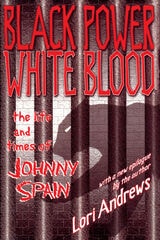
Black Power White Blood
Lori Andrews
Temple University Press, 1999
At six years old, already the target of name-calling children and threatening adults, he could not attend school with his older brother. Only decades later would he be told why the Armstrongs sent him to live with a black family in Los Angeles. As Johnny came of age, he thought of himself as having been rejected by his white family as well as by his black peers. His erratic, destructive behavior put him on a collision course with the penal system; he was only seventeen when convicted of murder and sent to Soledad.
Drawn into the black power movement and the Black Panther Party by fellow inmate, the charismatic George Jackson, Spain became a dynamic force for uniting prisoners once divided by racial hatred. He committed himself to the cause of prisoners' rights, impressing inmates, prison officials, and politicians with his intelligence and passion. Nevertheless, among the San Quentin Six, only he was convicted of conspiracy after Jackson's failed escape attempt.
Lori Andrews, a professor of law, vividly portrays the dehumanizing conditions in the prisons, the pervasive abuses in the criminal justice system, and the case for overturning Spain's conspiracy conviction. Spain's personal transformation is the heart of the book, but Andrews frames it within an indictment of intolerance and injustice that gives this individual's story broad significance.
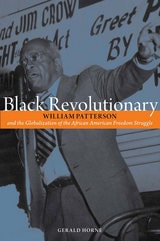
Black Revolutionary
William Patterson and the Globalization of the African American Freedom StruggleGerald Horne
University of Illinois Press, 2013
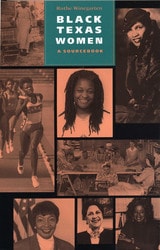
Black Texas Women
A SourcebookBy Ruthe Winegarten
University of Texas Press, 1994
When Black Texas Women: 150 Years of Trial and Triumph was published in 1995, it was acclaimed as the first comprehensive history of black women's struggles and achievements. This companion volume contains the original source materials that Ruthe Winegarten uncovered during her extensive research.
Like a time capsule of black women's history, A Sourcebook includes petitions from free women of color, lawsuits, slave testimonies, wills, plantation journals, club minutes, autobiographies, ads, congressional reports, contracts, prison records, college catalogues, newspaper clippings, protest letters, and much more.
In addition to the documents, a biographical section highlights the lives of women from various walks of life. The book concludes with a timeline that begins in 1777 and reaches to 1992. This wealth of original material will be a treasure trove for scholars and general readers interested in the emerging field of black women's history.
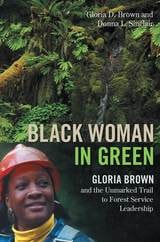
Black Woman in Green
Gloria Brown and the Unmarked Trail to Forest Service LeadershipGloria D. Brown
Oregon State University Press, 2020
As scholars awaken to the racist history of public land management and the ways that people of color have been excluded from contemporary notions of nature and wilderness, Brown’s story provides valuable insight into the roles that African Americans have carved out in the outdoors generally and in the field of environmental policy and public lands management specifically. Drawing on her powerful communication and listening skills, her sense of humor, and her willingness to believe in the basic goodness of humanity, Brown conducted civil rights trainings and shattered glass ceilings, all while raising her children alone.
Written in an engaging and accessible style with historian Donna Sinclair, Brown’s story provides a fascinating case study for public administration and contributes to a deeper understanding of the environmental and civil rights movements of the twentieth century, particularly the role that racial discrimination has played in national forests, parks, and other wilderness spaces. It also highlights issues of representation in the federal government, women’s history, the history of the American West, and literature associated with African American experiences in predominately white societies.
Black Women Directors
Christina N. Baker
Rutgers University Press, 2022
Black women have long recognized the power of film for storytelling. For far too long, however, the cultural and historical narratives about film have not accounted for the contributions of Black women directors. This book remedies this omission by highlighting the trajectory of the culturally significant work of Black women directors in the United States, from the under-examined pioneers of the silent era, to the documentarians who sought to highlight the voices and struggles of Black women, and the contemporary Black women directors in Hollywood. Applying a Black feminist perspective, this book examines the ways that Black women filmmakers have made a way for themselves and their work by resisting the dominant cultural expectations for Black women and for the medium of film, as a whole.
Black Women Writing Autobiography
A Tradition Within a TraditionJoanne Braxton
Temple University Press, 1990
Black Women’s Intellectual Traditions
Speaking Their MindsEdited by Kristin B. Waters and Carol B. Conaway
University Press of New England, 2007
Black Women’s Intellectual Traditions
Speaking Their MindsEdited by Kristin Waters and Carol B. Conaway
Brandeis University Press, 2022
An astonishing wealth of literary and intellectual work by nineteenth-century Black women is being rediscovered and restored to print in scholarly and popular editions. In Kristin Waters’s and Carol B. Conaway’s landmark edited collection, Black Women’s Intellectual Traditions: Speaking Their Minds, sophisticated commentary on this rich body of work chronicles a powerful and interwoven legacy of activism based in social and political theories that helped shape the history of North America. The book meticulously reclaims this American legacy, providing a collection of critical analyses of the primary sources and their vital traditions. Written by leading scholars, Black Women’s Intellectual Traditions is particularly powerful in its exploration of the pioneering thought and action of the nineteenth-century Black woman lecturer and essayist Maria W. Stewart, abolitionist Sojourner Truth, novelist and poet Frances Ellen Watkins Harper, educator Anna Julia Cooper, newspaper editor Mary Ann Shadd Cary, and activist Ida B. Wells. The distinguished contributors are Hazel V. Carby, Patricia Hill Collins, Karen Baker-Fletcher, Kristin Waters, R. Dianne Bartlow, Carol B. Conaway, Olga Idriss Davis, Vanessa Holford Diana, Evelyn Simien, Janice W. Fernheimer, Michelle N. Garfield, Joy James, Valerie Palmer-Mehta, Carla L. Peterson, Marilyn Richardson, Evelyn M. Simien, Ebony A. Utley, Mary Helen Washington, Melina Abdullah, and Lena Ampadu. The volume will interest scholars and readers of African-American and women’s studies, history, rhetoric, literature, poetry, sociology, political science, and philosophy. This updated edition features a new preface by the editors in the light of new developments in current scholarship.
Black in Selma
The Uncommon Life of J. L. Chestnut Jr.J. L. Chestnut
University of Alabama Press, 2007
One man’s fight for justice. One town’s reckoning with history.
Born in Selma in 1930, J. L. Chestnut left home to study law at Howard University in Washington, DC. Returning to Selma, Chestnut was the town’s first and only African American attorney in the late 1950s. As the turbulent struggle for civil rights spread across the South, Chestnut became an active and ardent promoter of social and legal equality in his hometown. A key player on the local and state fronts, Chestnut accrued deep insights into the racial tensions in his community and deftly opened paths toward a more equitable future.
Though intimately involved in many events that took place in Selma, Chestnut was nevertheless often identified in history books simply as “a local attorney.” Black in Selma reveals his powerful yet little-known story.
In the 2014 film Selma, director Ava DuVernay takes audiences to the climactic confrontation between civil rights advocates and the state’s security forces of March 1965. Readers looking for a deeper understanding of the events that preceded that epic moment, as well as how racial integration unfolded in Selma in the decades that followed, will find Chestnut’s story and memories both a vital primary source and an inspiration.
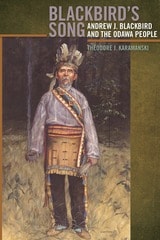
Blackbird's Song
Andrew J. Blackbird and the Odawa PeopleTheodore J. Karamanski
Michigan State University Press, 2012
For much of U.S. history, the story of native people has been written by historians and anthropologists relying on the often biased accounts of European-American observers. Though we have become well acquainted with war chiefs like Pontiac and Crazy Horse, it has been at the expense of better knowing civic-minded intellectuals like Andrew J. Blackbird, who sought in 1887 to give a voice to his people through his landmark book History of the Ottawa and Chippewa People. Blackbird chronicled the numerous ways in which these Great Lakes people fought to retain their land and culture, first with military resistance and later by claiming the tools of citizenship. This stirring account reflects on the lived experience of the Odawa people and the work of one of their greatest advocates.
Blacks, Reds, and Russians
Sojourners in Search of the Soviet PromiseJoy Gleason Carew
Rutgers University Press, 2010
In Blacks, Reds, and Russians, Joy Gleason Carew offers insight into the political strategies that often underlie relationships between different peoples and countries. She draws on the autobiographies of key sojourners, including Harry Haywood and Robert Robinson, in addition to the writings of Claude McKay, W.E.B. Du Bois, and Langston Hughes. Interviews with the descendents of figures such as Paul Robeson and Oliver Golden offer rare personal insights into the story of a group of emigrants who, confronted by the daunting challenges of making a life for themselves in a racist United States, found unprecedented opportunities in communist Russia.

Blair
Mick Temple
Haus Publishing, 2006

Blanche Lazzell
The Life and Work of an American ModernistROBERT C. BRIDGES
West Virginia University Press, 2004
Blanche Lazzell went from Maidsville, West Virginia, to the leading edge of twentieth-century American art. A member of the prominent art communities of Paris and Provincetown, MA during the '20s and '30s, Lazzell was always on the fringe of important developments in the modern art world. Her studies in Paris led her to adopt the techniques of modernism as well as other emerging styles. Among her groundbreaking works were some of the first examples of abstraction in America. Blanche Lazzell: The Life and Work of an American Modernist is a significant contribution to the history of twentieth-century American art.
Know primarily as a Provincetown printmaker, Lazzell’s full life and career are presented here, generously accompanied by color reproductions of her work, showing the breadth of her accomplishment in painting, printmaking, and hooked rugs. Lazzell's true contribution to American art history was never fully appreciated during her lifetime. A renewed interest in the artist has developed over the past fifteen years, due mostly to the critical appreciation of her color wood block prints. She is worth remembering not only for her own work, but also for her role as a translator of the achievements of the European modernists for her colleagues in America. In Blanche Lazzell: The Life and Work of an American Modernist, nine essays and hundreds of full-color illustrations bring this incredibly talented and influential artist's work to life.

Bleeder
A MemoirShelby Smoak
Michigan State University Press, 2013
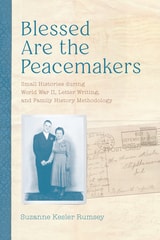
Blessed Are the Peacemakers
Small Histories during World War II, Letter Writing, and Family History MethodologySuzanne Kesler Rumsey
University of Alabama Press, 2021
Where family letters become history, and ordinary lives reveal the untold story of World War II.
In the summer of 2013, Suzanne Kesler Rumsey discovered hundreds of letters exchanged between her late grandparents, Miriam and Benjamin Kesler. The letters, written between 1941 and 1946, were filled with typical wartime sentiments: love and longing, anguish at being apart, uncertainty about the war and the country’s future, and attempts at humor to keep their spirits up. What is unusual about their story is that Ben Kesler was not writing from a theater of war. Instead, Ben, a member of the Dunkard Brethren Church, was a conscientious objector. He, along with about 12,000 other men, opted to join the Civilian Public Service (CPS) and contribute to “work of national importance” at one of the 218 CPS camps around the country.
In Blessed Are the Peacemakers: Small Histories during World War II, Letter Writing, and Family History Methodology, Rumsey has mined not only her grandparents’ letters but also archival research on CPS camps and historical data from several Mennonite and Brethren archives to recapture the narrative of Ben’s service at two different camps and of Miriam’s struggle to support herself and her husband financially at the young age of seventeen. Ben and Miriam’s life during the war was extraordinarily ordinary, spanning six years of unrecognized and humble work for their country. Ben was not compensated for his work in the camps, and Miriam stayed home and worked as a day laborer, as a live-in maid, as a farmhand, and in the family butcher shop in order to earn enough money to support them both. Small histories like that of her grandparents, Rumsey argues, provide a unique perspective on significant political and historical moments.
Blessed Are the Peacemakers also explores the rhetorical functions of letter writing as well as the methodology of family history writing. Ben and Miriam’s letters provide an apt backdrop to examine the genre, a relatively understudied mode of literacy. Rumsey situates the young couple’s correspondence within ars dictaminis, the art of letter writing, granting new insights into the genre and how personal accounts shape our understanding of historical events.
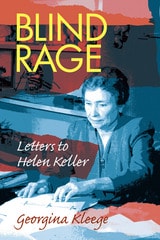
Blind Rage
Letters to Helen KellerGeorgina Kleege
Gallaudet University Press, 2006
As a young blind girl, Georgina Kleege repeatedly heard the refrain, “Why can’t you be more like Helen Keller?” Kleege’s resentment culminates in her book Blind Rage: Letters to Helen Keller, an ingenious examination of the life of this renowned international figure using 21st-century sensibilities. Kleege’s absorption with Keller originated as an angry response to the ideal of a secular saint, which no real blind or deaf person could ever emulate. However, her investigation into the genuine person revealed that a much more complex set of characters and circumstances shaped Keller’s life.
Blind Rage employs an adroit form of creative nonfiction to review the critical junctures in Keller’s life. The simple facts about Helen Keller are well-known: how Anne Sullivan taught her deaf-blind pupil to communicate and learn; her impressive career as a Radcliffe graduate and author; her countless public appearances in various venues, from cinema to vaudeville, to campaigns for the American Foundation for the Blind. But Kleege delves below the surface to question the perfection of this image. Through the device of her letters, she challenges Keller to reveal her actual emotions, the real nature of her long relationship with Sullivan, with Sullivan’s husband, and her brief engagement to Peter Fagan. Kleege’s imaginative dramatization, distinguished by her depiction of Keller’s command of abstract sensations, gradually shifts in perspective from anger to admiration. Blind Rage criticizes the Helen Keller myth for prolonging an unrealistic model for blind people, yet it appreciates the individual who found a practical way to live despite the restrictions of her myth.
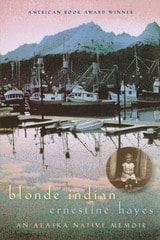
Blonde Indian
An Alaska Native MemoirErnestine Hayes
University of Arizona Press, 2006
Told in eloquent layers that blend Native stories and metaphor with social and spiritual journeys, this enchanting memoir traces the author’s life from her difficult childhood growing up in the Tlingit community, through her adulthood, during which she lived for some time in Seattle and San Francisco, and eventually to her return home. Neither fully Native American nor Euro-American, Hayes encounters a unique sense of alienation from both her Native community and the dominant culture. We witness her struggles alongside other Tlingit men and women—many of whom never left their Native community but wrestle with their own challenges, including unemployment, prejudice, alcoholism, and poverty.
The author’s personal journey, the symbolic stories of contemporary Natives, and the tales and legends that have circulated among the Tlingit people for centuries are all woven together, making Blonde Indian much more than the story of one woman’s life. Filled with anecdotes, descriptions, and histories that are unique to the Tlingit community, this book is a document of cultural heritage, a tribute to the Alaskan landscape, and a moving testament to how going back—in nature and in life—allows movement forward.
Blood Loss
A Love Story of AIDS, Activism, and ArtKeiko Lane
Duke University Press, 2024
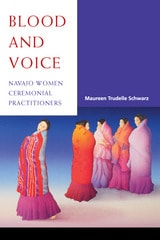
Blood and Voice
Navajo Women Ceremonial PractitionersMaureen Trudelle Schwarz
University of Arizona Press, 2003
The maintenance of the latter tradition has long been held to be the function of the Navajo singer, a role usually viewed as male. But despite this longstanding assumption, women can and do fill this role. Drawing on interviews with seventeen Navajo women practitioners and five apprentices, Maureen Trudelle Schwarz explicates women's role as ceremonial practitioners and shows that it is more complex than has previously been thought. She examines gender differences dictated by the Navajo origin story, details how women came to be practitioners, and reveals their experiences and the strategies they use to negotiate being both woman and singer.
Women who choose careers as singers face complex challenges, since some rules prohibit menstruating women from conducting ceremonies and others regarding sexual continence can strain marital relationships. Additionally, oral history places men in charge of all ceremonial matters. Schwarz focuses on how the reproductive life courses of Navajo women influence their apprenticeships and practices to demonstrate how they navigate these issues to preserve time-honored traditions. Through the words of actual practitioners, she shows how each woman brings her own unique life experience to the role. While differing among individuals, these experiences represent a commitment to shared cultural symbols and result in a consensus that sustains social cohesion.
By showing the differences and similarities between the apprenticeship, initiation, and practice of men and women singers, Blood and Voice offers a better understanding of the role of Navajo women in a profession usually viewed as a male activity—and of the symbolic construction of the self in Navajo culture. It also addresses classic questions concerning the sexual division of labor, menstrual taboos, gender stereotypes, and the tension between tradition and change that will enlighten students of other cultures.
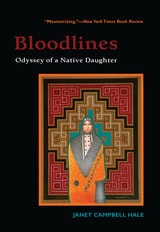
Bloodlines
Odyssey of a Native DaughterJanet Campbell Hale
University of Arizona Press, 1998
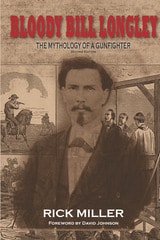
Bloody Bill Longley
The Mythology of a Gunfighter, Second EditionRick Miller
University of North Texas Press, 2011
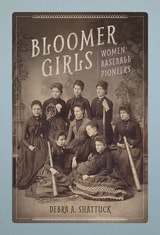
Bloomer Girls
Women Baseball PioneersDebra A Shattuck
University of Illinois Press, 2017
Debra A. Shattuck pulls from newspaper accounts and hard-to-find club archives to reconstruct a forgotten era in baseball history. Her fascinating social history tracks women players who organized baseball clubs for their own enjoyment and even found roster spots on men's teams. Entrepreneurs, meanwhile, packaged women's teams as entertainment, organizing leagues and barnstorming tours. If the women faced financial exploitation and indignities like playing against men in women's clothing, they and countless ballplayers like them nonetheless staked a claim to the nascent national pastime. Shattuck explores how the determination to take their turn at bat thrust female players into narratives of the women's rights movement and transformed perceptions of women's physical and mental capacity.
Vivid and eye-opening, Bloomer Girls is a first-of-its-kind portrait of America, its women, and its game.
Blue Daughter of the Red Sea
A MemoirMeti Birabiro
University of Wisconsin Press, 2004
Born into a life of constant financial, physical, and moral threat, Meti Birabiro takes refuge in literature and the fantastic. Blue Daughter of the Red Sea is Birabiro’s poetic account of the harsh reality of her young life spread across three continents. Her voice is a fresh mélange of child and adult perspectives, at once brutally honest and wise beyond her years. Through her journey from Ethiopia to Italy and finally to the United States, we encounter Birabiro’s relatives, friends, and enemies—relationships so intense that these people become her vampires, devils, angels, and saints. These characterizations always lead her back to the truth, helping her to decipher what is fair and good, to understand what she must cherish and what she must rage against.

Blue Guitar Highway
Paul Metsa
University of Minnesota Press, 2011
This is a musician’s tale: the story of a boy growing up on the Iron Range, playing his guitar at family gatherings, coming of age in the psychedelic seventies, and honing his craft as a pro in Minneapolis, ground zero of American popular music in the mid-eighties. “There is a drop of blood behind every note I play and every word I write,” Paul Metsa says. And it’s easy to believe, as he conducts us on a musical journey across time and country, navigating switchbacks, detours, dead ends, and providing us the occasional glimpse of the promised land on the blue guitar highway.
His account captures the thrill of the Twin Cities when acts like the Replacements, Husker Dü, and Prince were remaking pop music. It takes us right onto the stages he shared with stars like Billy Bragg, Pete Seeger, and Bruce Springsteen. And it gives us a close-up, dizzying view of the roller-coaster ride that is the professional musician’s life, played out against the polarizing politics and intimate history of the past few decades of American culture. Written with a songwriter’s sense of detail and ear for poetry, Paul Metsa’s book conveys all the sweet absurdity, dry humor, and passion for the language of music that has made his story sing.
Blue Jenkins
Working for WorkersJulia Pferdehirt
Wisconsin Historical Society Press, 2011