Results by title
28167 books match the query 'History' and 1262 start with b
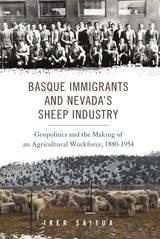
Basque Immigrants and Nevada's Sheep Industry
Geopolitics and the Making of an Agricultural Workforce, 1880-1954Iker Saitua
University of Nevada Press, 2019
Between the 1880s and the 1950s, the western open-range sheep industry was the original economic attraction for Basque immigrants. This engaging study tracks the development of the Basque presence in the American West, providing deep detail about the sheepherders’ history, native and local culture, the challenges they faced, and the changing conditions under which the Basques lived and worked. Saitua also shows how Basque immigrant sheepherders went from being a marginalized labor group to a desirable, high-priced workforce in response to the constant demand for their labor power.
As the twentieth century progressed, the geopolitical tide in America began to change. In 1924, the Restrictive Immigration Act resulted in a truncated labor supply from the Basque Country in Spain. During the Great Depression and the Second World War, the labor shortage became acute. In response, Senator Patrick McCarran from Nevada lobbied on behalf of his wool-growing constituency to open immigration doors for Basques, the most desirable laborers for tending sheep in remote places. Subsequently, Cold War international tensions offered opportunities for a reconciliation between the United States and Francisco Franco, despite Spain’s previous sympathy with the Axis powers.
This fresh portrayal shows how Basque immigrants became the backbone of the sheep industry in Nevada. It also contributes to a wider understanding of the significance of Basque immigration by exploring the role of Basque agricultural labor in the United States, the economic interests of Western ranchers, and McCarran’s diplomacy as catalysts that eventually helped bring Spain into the orbit of western democracies.
Basque Nationalism and the Spanish State
Andre Lecours
University of Nevada Press, 2016
An examination of Basque nationalism from a historical perspective. Basque nationalism has been extensively examined from the perspectives of Basque culture and internal conditions in the Basque Country, but André Lecours is among the first to demonstrate how Basque nationalism was shaped by the many forms and historical phases of the Spanish state. His discussion employs one of the most debated approaches in the social sciences—historical institutionalism—and it includes an up-to-date examination of the circumstances for, and consequences of, recent events such as ETA's announcement in 2006 of a permanent cease-fire. Lecours also analyzes other aspects of Basque nationalism, including the international relations of the Basque Autonomous Government, as well as the responses of the contemporary Spanish state and how it deploys its own brand of nationalism. Finally, the book offers a comparative discussion of Basque, Catalan, Scottish, Flemish, and Quebecois nationalist movements, suggesting that nationalism in the Basque Country, despite the historical presence of violence, is in many ways similar to nationalism in other industrialized democracies. Basque Nationalism and the Spanish State is an original and provocative discussion that is essential reading for anyone interested in the Basques or in the development of modern nationalist movements.
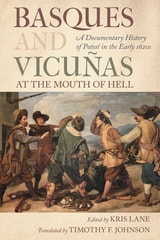
Basques and Vicuñas at the Mouth of Hell
A Documentary History of Potosí in the Early 1620sKris Lane
University of Nevada Press, 2024
As mines flooded and Indigenous workers died or fled, the city descended into a maelstrom of swordfights, gun battles, ambushes, sniper attacks, and summary executions. Though its roots were economic, the Basque-Vicuña conflict strained the sinews of Habsburg global governance even as it exposed festering local tensions, only some of which were unique to Potosí.
This rich collection of original sources, all of them archival documents housed in Bolivia, Spain, the United Kingdom, and the United States, consists of contemporary eyewitness accounts from several perspectives, allowing readers to play historian. All sources have been expertly translated and carefully annotated in a manner that will engage students and scholars alike. Basques and Vicuñas at the Mouth of Hell includes an extensive introduction, seven vital documents in translation, and appendices on everyday life in 1620s Potosí and on the historiography of this watershed episode of colonial violence.
Basques in the Philippines
Marciano R. De Borja
University of Nevada Press, 2012
The Basques played a remarkably influential role in the creation and maintenance of Spain’s colonial establishment in the Philippines. Their skills as shipbuilders and businessmen, their evangelical zeal, and their ethnic cohesion and work-oriented culture made them successful as explorers, colonial administrators, missionaries, merchants, and settlers. They continued to play prominent roles in the governance and economy of the archipelago until the end of Spanish sovereignty, and their descendants still contribute in significant ways to the culture and economy of the contemporary Philippines. This book offers important new information about a little-known aspect of Philippine history and the influence of Basque immigration in the Spanish Empire, and it fills an important void in the literature of the Basque diaspora.
Basques of the American West
New and Collected Essays on History and EthnicityRichard W. Etulain
University of Nevada Press, 2026
This collection offers readers a thoughtful and engaging look at the enduring presence and influence of Basques across the cultural and historical landscape of the American West.

Bastion by the Bay
The Presidio of San Francisco, from Outpost of Empire to Magnificent ParkJohn P. Langellier
University of North Texas Press, 2026
Bat Bomb
World War II's Other Secret WeaponBy Jack Couffer
University of Texas Press, 1992
It was a crazy way to win World War II in the Pacific—
All the United States had to do was to attach small incendiary bombs to millions of bats and release them over Japan's major cities. As the bats went to roost, a million fires would flare up in remote crannies of the wood and paper buildings common throughout Japan. When their cities were reduced to ashes, the Japanese would surely capitulate...
The plan made sense to a handful of eccentric promoters and researchers, who convinced top military brass and even President Roosevelt to back the scheme. It might have worked, except that another secret weapon—something to do with atoms—was chosen to end the war.
Told here by the youngest member of the team, this is the story of the bat bomb project, or Project X-Ray, as it was officially known. In scenes worthy of a Capra or Hawks comedy, Jack Couffer recounts the unorthodox experiments carried out in the secrecy of Bandera, Texas; Carlsbad, New Mexico; and El Centro, California, in 1942-1943 by "Doc" Adams' private army. This oddball cast of characters included an eccentric inventor, a distinguished Harvard scientist, a biologist with a chip on his shoulder, a movie star, a Texas guano collector, a crusty Marine Corps colonel, a Maine lobster fisherman, an ex-mobster, and a tiger.
Not to be defeated by minor logistical hurdles, the bat bomb researchers risked life and limb to explore uncharted bat caves and "recruit" thousands of bats to serve their country. Through months of personality conflicts, military snafus, and technical failures the team pressed on, certain that bats could end the war with Japan. And they might have—in their first airborne test, the bat bombers burned an entire brand-new military airfield to the ground.
For everyone who relishes true tales of action and adventure, Bat Bomb is a must-read. Bat enthusiasts will also discover the beginnings of the scientific study of bats.
Bataan Survivor
A POW’s Account of Japanese Captivity in World War IIDavid L. Hardee, Edited by Frank A. Blazich, Jr.
University of Missouri Press, 2026
A forgotten account, written in the immediate aftermath of World War II, which vividly portrays the valor, sacrifice, suffering, and liberation of the defenders of Bataan and Corregidor through the eyes of one survivor.
The personal memoir of Colonel David L. Hardee, first drafted at sea from April-May 1945 following his liberation from Japanese captivity, is a thorough treatment of his time in the Philippines. A career infantry officer, Hardee fought during the Battle of Bataan as executive officer of the Provisional Air Corps Regiment. Captured in April 1942 after the American surrender on Bataan, Hardee survived the Bataan Death March and proceeded to endure a series of squalid prison camps. A debilitating hernia left Hardee too ill to travel to Japan in 1944, making him one of the few lieutenant colonels to remain in the Philippines and subsequently survive the war. As a primary account written almost immediately after his liberation, Hardee’s memoir is fresh, vivid, and devoid of decades of faded memories or contemporary influences associated with memoirs written years after an experience. This once-forgotten memoir has been carefully edited, illustrated and annotated to unlock the true depths of Hardee’s experience as a soldier, prisoner, and liberated survivor of the Pacific War.

Bath Massacre, New Edition
America's First School BombingArnie Bernstein
University of Michigan Press, 2022
On May 18, 1927, the small town of Bath, Michigan, was forever changed when Andrew Kehoe set off a cache of explosives concealed in the basement of the local school. Thirty-eight children and six adults were dead, among them Kehoe, who had literally blown himself to bits by setting off a dynamite charge in his car. The next day, on Kehoe's farm, what was left of his wife—burned beyond recognition after Kehoe set his property and buildings ablaze—was found tied to a handcart, her skull crushed. With seemingly endless stories of school violence and suicide bombers filling today's headlines, Bath Massacre serves as a reminder that terrorism and large-scale murder are nothing new.
Bath Massacre
America's First School BombingArnie Bernstein
University of Michigan Press, 2009
---Gregg Olsen, New York Times best-selling author of Starvation Heights
"A chilling and historic character study of the unfathomable suffering that desperation and fury, once unleashed inside a twisted mind, can wreak on a small town. Contemporary mass murderers Timothy McVeigh, Columbine's Dylan Klebold, and Virginia Tech's Seung-Hui Cho can each trace their horrific genealogy of terror to one man: Bath school bomber Andrew Kehoe."
---Mardi Link, author of When Evil Came to Good Hart
Battle for the BIA
G. E. E. Lindquist and the Missionary Crusade against John CollierDavid W. Daily
University of Arizona Press, 2004
Battle for the Soul
Mètis Children Encounter Evangelical Protestants at Mackinaw Mission, 1823-1837Keith R. Widder
Michigan State University Press, 1999
In 1823 William and Amanda Ferry opened a boarding school for Métis children on Mackinac Island, Michigan Territory, setting in motion an intense spiritual battle to win the souls and change the lives of the children, their parents, and all others living at Mackinac. Battle for the Soul demonstrates how a group of enthusiastic missionaries, empowered by an uncompromising religious motivation, served as agents of Americanization. The Ferrys' high hopes crumbled, however, as they watched their work bring about a revival of Catholicism and their students refuse to abandon the fur trade as a way of life. The story of the Mackinaw Mission is that of people who held differing world views negotiating to create a "middle-ground," a society with room for all.
Widder's study is a welcome addition to the literature on American frontier missions. Using Richard White's "middle ground" paradigm, it focuses on the cultural interaction between French, British, American, and various native groups at the Mackinac mission in Michigan during the early 19th century. The author draws on materials from the American Board of Commissioners for Foreign Missions archives, as well as other manuscript sources, to trace not only the missionaries' efforts to Christianize and Americanize the native peoples, but the religious, social, and cultural conflicts between Protestant missionaries and Catholic priests in the region. Much attention has been given to the missionaries to the Indians in other areas of the US, but little to this region.

Battle in the Mind Fields
John A. Goldsmith and Bernard Laks
University of Chicago Press, 2019
Taking note of this phenomenon, John Goldsmith and Bernard Laks embark on a uniquely interdisciplinary history of the genesis of linguistics, from nineteenth-century currents of thought in the mind sciences through to the origins of structuralism and the ruptures, both political and intellectual, in the years leading up to World War II. Seeking to explain where contemporary ideas in linguistics come from and how they have been justified, Battle in the Mind Fields investigates the porous interplay of concepts between psychology, philosophy, mathematical logic, and linguistics. Goldsmith and Laks trace theories of thought, self-consciousness, and language from the machine age obsession with mind and matter to the development of analytic philosophy, behaviorism, Gestalt psychology, positivism, and structural linguistics, emphasizing throughout the synthesis and continuity that has brought about progress in our understanding of the human mind. Arguing that it is impossible to understand the history of any of these fields in isolation, Goldsmith and Laks suggest that the ruptures between them arose chiefly from social and institutional circumstances rather than a fundamental disparity of ideas.
Battle of Beecher Island and the Indian War of 1867-1869
Second EditionJohn Monnett
University Press of Colorado, 2021
Monnett’s compelling study, a finalist for the Western Writers of America’s Spur Award in 1993, was the first to examine the Beecher Island battle and its relationship to the overall conflict between American Indians and Euroamericans on the central plains of Colorado and Kansas during the late 1860s. Focusing on the struggle of the Cheyenne Dog Men warrior society to defend the lands between the Republican River valley and the Smoky Hill River valley from Euroamerican encroachment, Monnett presents original reminiscences of American Indian and Euroamerican participants.
Since its original release several developments and an important original source document have come to light and offer new information. The second edition presents and examines these new discoveries and developments that moderate the original interpretive causes and more modern effects of this historical episode. Scholars and general readers alike interested in this important episode in the post–Civil War conflicts on the Great Plains and western history will find this new edition of The Battle of Beecher Island and the Indian War of 1867–1869 illuminating, surprising, and perhaps even controversial.
Battle of Valle Giulia
Oral History and the Art of DialogueAlessandro Portelli
University of Wisconsin Press, 1997
In The Battle of Valle Giulia—the title comes from an Italian student protest of the 1960s—Portelli reflects on how to connect personal memories with history, how to fittingly collect and represent the complexity of memory. Crossing cultures, classes, and generations, he records the private and singular experiences of Italian steelworkers and Kentucky coal miners, veterans and refugees of World War II, soldiers who fought in Vietnam, Italian resistance fighters and Nazis, and members of student movements from Berkeley to Rome. By listening to those whom others presume are "without historical memory"—such as youthful protesters, or the rural Tuscan women who saw every father, son, and brother killed by Nazi soldiers—Portelli clarifies the process by which narratives come into being as oral history, and he illustrates the differences and distances between story-telling and history-telling.
Portelli's articulate discussion of dialogue, representation, narrative and genre link historical analysis with literary and linguistic theory and with the concerns of contemporary anthropology.

Battle of the Big Bang
The New Tales of Our Cosmic OriginsNiayesh Afshordi and Phil Halper
University of Chicago Press, 2025
“Excellent.”—Steven Poole, The Wall Street Journal • “Terrific.”—Liz Else, New Scientist (Best Popular Science Books of 2025 So Far) • “A brilliant overview of the state of modern cosmology.”—Alex O'Connor, alexoconnor.com • “This will expand readers’ minds.”—Publishers Weekly • One of Smithsonian's Ten Best Science Books of 2025
“An intellectual feast.”—Carlo Rovelli • “A must-read.”—Sabine Hossenfelder • “Wonderfully broad and open-minded.”—Roger Penrose • “Remarkable.”—Brian Keating
A thrilling exploration of competing cosmological origin stories, comparing new scientific ideas that upend our very notions of space, time, and reality.
By most popular accounts, the universe started with a bang some 13.8 billion years ago. But what happened before the Big Bang? And how do we know it happened at all? Here prominent cosmologist Niayesh Afshordi and science communicator Phil Halper offer a tour of the peculiar possibilities: bouncing and cyclic universes, time loops, creations from nothing, multiverses, black hole births, string theories, and holograms. Along the way, they offer both a call for new physics and a riveting story of scientific debate.
Incorporating insights from Afshordi’s cutting-edge research and Halper’s original interviews with scientists like Stephen Hawking, Roger Penrose, and Alan Guth, Battle of the Big Bang compares these models for the origin of our origins, showing each theory’s strengths and weaknesses and explaining new attempts to test these notions. Battle of the Big Bang is a tale of rivalries and intrigue, of clashes of ideas that have raged from Greek antiquity to the present day over whether the universe is eternal or had a beginning, whether it is unique or one of many. But most of all, Afshordi and Halper show that this search is filled with wonder, discovery, and community—all essential for remembering a forgotten cosmic past.
Battle on the Bay
The Civil War Struggle for GalvestonBy Edward T. Cotham, Jr.
University of Texas Press, 1998
The Civil War history of Galveston is one of the last untold stories from America's bloodiest war, despite the fact that Galveston was a focal point of hostilities throughout the conflict. As other Southern ports fell to the Union, Galveston emerged as one of the Confederacy's only lifelines to the outside world. When the war ended in 1865, Galveston was the only major port still in Confederate hands.
In this beautifully written narrative history, Ed Cotham draws upon years of archival and on-site research, as well as rare historical photographs, drawings, and maps, to chronicle the Civil War years in Galveston. His story encompasses all the military engagements that took place in the city and on Galveston Bay, including the dramatic Battle of Galveston, in which Confederate forces retook the city on New Year's Day, 1863.
Cotham sets the events in Galveston within the overall conduct of the war, revealing how the city's loss was a great strategic impediment to the North. Through his pages pass major figures of the era, as well as ordinary soldiers, sailors, and citizens of Galveston, whose courage in the face of privation and danger adds an inspiring dimension to the story.
Battle
The Nature and Consequences of Civil War CombatEdited by Kent Gramm
University of Alabama Press, 2008
A critical, multidisciplinary examination of Civil War combat that interrogates the technological, medical, psychological, and cultural forces shaping battlefield experience and its enduring national legacy.
“In our youth, our hearts were touched with fire,” wrote Oliver Wendell Holmes of his generation’s Civil War days. Through the ages, war stories have gleamed with romantic glory, and American memories of the cataclysmic Civil War inspire pageantry and poetry even today.
The essays in Battle form a corrective to such celebratory histories by examining the lethal realities of Civil War combat—Enlightenment science applied to the creation of weapons that maimed and killed, which far outpaced advances in diet, sanitation, and medical treatment. The book reveals that behind the drums and trumpets, sashes and swords, the armies of the Union and Confederacy alike were haunted by fear, pain, and death.
The collection includes an introduction and afterword by editor Kent Gramm, who also contributes an essay titled “Numbers” that reveals the war in statistics. Paul Fussell contributes a powerful essay titled “The Culture of War.” D. Scott Hartwig examines the face of battle at Gettysburg. Bruce A. Evans discusses medical technology in “Wounds, Death, and Medical Care in the Civil War.” Eric T. Dean challenges the meanings and consequences of combat in “The Awful Shock and Rage of Battle.” The collection is rounded out by Alan T. Nolan’s masterful review of the national consequences of battle and the resultant myth of the Confederacy’s Lost Cause.
Battlefield Medicine
A History of the Military Ambulance from the Napoleonic Wars through World War IJohn S. Haller, Jr.
Southern Illinois University Press, 1992
In this first history of the military ambulance, historian John S. Haller Jr. documents the development of medical technologies for treating and transporting wounded soldiers on the battlefield. Noting that the word ambulance has been used to refer to both a mobile medical support system and a mode of transport, Haller takes readers back to the origins of the modern ambulance, covering their evolution in depth from the late eighteenth century through World War I.
The rising nationalism, economic and imperial competition, and military alliances and arms races of the nineteenth and early twentieth centuries figure prominently in this history of the military ambulance, which focuses mainly on British and American technological advancements. Beginning with changes introduced by Dominique-Jean Larrey during the Napoleonic Wars, the book traces the organizational and technological challenges faced by opposing armies in the Crimean War, the American Civil War, the Franco-Prussian War, and the Philippines Insurrection, then climaxes with the trench warfare that defined World War I. The operative word is "challenges" of medical care and evacuation because while some things learned in a conflict are carried into the next, too often, the spasms of war force its participants to repeat the errors of the past before acquiring much needed insight.
More than a history of medical evacuation systems and vehicles, this exhaustively researched and richly illustrated volume tells a fascinating story, giving readers a unique perspective of the changing nature of warfare in the nineteenth and early twentieth centuries.

Battlefield Pennsylvania
A Guide to the Keystone State's Most Sacred GroundBrady J. Crytzer
Westholme Publishing, 2018
Pennsylvania is a battlefield. Fort Necessity. Brandywine. Gettysburg. The Homestead Strike. Flight 93. In many ways battlefields are like scars on the landscape. They remind us that history is real, and their effects stay with us forever. In Battlefield Pennsylvania: A Guide to the Keystone State’s Most Sacred Ground, award-winning historian Brady J. Crytzer takes the reader on a fascinating tour of over three hundred years of Pennsylvania history through twenty-nine of the state’s most significant battlegrounds, based on his popular Pennsylvania Cable Network television program. The author shows that debates and neighborly disputes have been present throughout the history of William Penn’s “Peaceable Kingdom,” but that battles are not the natural resolution of these conflicts; they are a failure of the system. Understanding how these systems break down and descend into violence and chaos is one of the most important purposes of this book. When the forces of Britain and France met on the battleground of North America, they each waged war in the name of a vision—a defense of the future, not merely the present. The same can be said for the Indian warriors and settlers of the backcountry, and the striking workers of the industrial age. When the young men of the American Civil War era donned the Butternut and Blue, they were not just fighting over a hill or a railroad junction, but for an American future. Illustrated with maps and period and contemporary images, Battlefield Pennsylvania presents each event through background information, a description of the battle itself, the legacy of the battle, and what a visitor can see today. Rather than viewing preserved battlefields as a hollow tribute to days gone by, the author demonstrates that these sites are a great inheritance provided by past generations, and just as they entrusted them to us, we will entrust them to future generations as well.
Battleground 1948
Truman, Stevenson, Douglas, and the Most Surprising Election in Illinois HistoryRobert E. Hartley
Southern Illinois University Press, 2013
The election year of 1948 remains to this day one of the most astonishing in U.S. political history. During this first general election after World War II, Americans looked to their governments for change. As the battle for the nation’s highest office came to a head in Illinois, the state was embroiled in its own partisan showdowns—elections that would prove critical in the course of state and national history.
In Battleground 1948, Robert E. Hartley offers the first comprehensive chronicle of this historic election year and its consequences, which still resonate today. Focusing on the races that ushered Adlai Stevenson, Paul Douglas, and Harry Truman into office—the last by the slimmest of margins—Battleground 1948 details the pivotal events that played out in the state of Illinois, from the newspaper wars in Chicago to tragedy in the mine at Centralia.
In addition to in-depth revelations on the saga of the American election machine in 1948, Hartley probes the dark underbelly of Illinois politics in the 1930s and 1940s to set the stage, spotlight key party players, and expose the behind-the-scenes influences of media, money, corruption, and crime. In doing so, he draws powerful parallels between the politics of the past and those of the present. Above all, Battleground 1948 tells the story of grassroots change writ large on the American political landscape—change that helped a nation move past an era of conflict and depression, and forever transformed Illinois and the U.S. government.
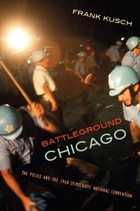
Battleground Chicago
The Police and the 1968 Democratic National ConventionFrank Kusch
University of Chicago Press, 2008
Working from interviews with eighty former Chicago police officers who were on the scene, Frank Kusch uncovers the other side of the story of ’68, deepening our understanding of a turbulent decade.
“Frank Kusch’s compelling account of the clash between Mayor Richard Daley’s men in blue and anti-war rebels reveals why the 1960s was such a painful era for many Americans. . . . to his great credit, [Kusch] allows ‘the pigs’ to speak up for themselves.”—Michael Kazin
“Kusch’s history of white Chicago policemen and the 1968 Democratic National Convention is a solid addition to a growing literature on the cultural sensibility and political perspective of the conservative white working class in the last third of the twentieth century.”—David Farber, Journal of American History
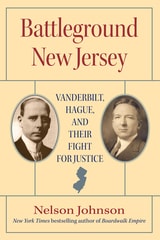
Battleground New Jersey
Vanderbilt, Hague, and Their Fight for JusticeJohnson, Nelson
Rutgers University Press, 2014
Vanderbilt’s power came through mastering the law, serving as dean of New York University Law School, preaching court reform as president of the American Bar Association, and organizing suburban voters before other politicians recognized their importance. Hague, a remarkably successful sixth-grade dropout, amassed his power by exploiting people’s foibles, crushing his rivals, accumulating a fortune through extortion, subverting the law, and taking care of business in his own backyard. They were different ethnically, culturally, and temperamentally, but they shared the goals of power.
Battles and Leaders of the Civil War, Volume 5
Edited by Peter Cozzens
University of Illinois Press, 2001
Indispensable must-reads for all Civil War buffs and historians, bringing together little-known and never before gathered first-hand accounts, articles, maps, and illustrations
The first four volumes of Battles and Leaders of the Civil War, published in the late nineteenth century, became the best-selling and most frequently cited works ever published on the Civil War. Volume 5, assembled by the acclaimed military historian Peter Cozzens, carries on the tradition of its namesake, offering a dazzling new collection of fresh material written by military and civilian leaders, North and South, on a broad array of war-related topics. Featured articles include General Grant on the second battle of Bull Run, General Beauregard on the Shiloh campaign, General Sherman on the conference at City Point, Joshua Chamberlain on the Fredericksburg campaign, and many more. Also presented are dozens of maps and more than one hundred illustrations.
Battles and Leaders of the Civil War, Volume 6
Edited by Peter Cozzens
University of Illinois Press, 2001

Battles of the North Country
Wilderness Politics and Recreational Development in the Adirondack State Park, 1920-1980Jonathan D. Anzalone
University of Massachusetts Press, 2018
Through a series of case studies, historian Jonathan D. Anzalone highlights the role of public and private interests in the region and shows how partnerships frayed and realigned in the course of several key developments: the rise of camping in the 1920s and 1930s; the 1932 Lake Placid Olympics; the construction of a highway to the top of Whiteface Mountain; the postwar rise of downhill skiing; the completion of I-87 and the resulting demand for second homes; and the 1980 Lake Placid Olympics. Battles of the North Country reveals how class, economic self-interest, state power, and a wide range of environmental concerns have shaped modern politics in the Adirondacks and beyond.
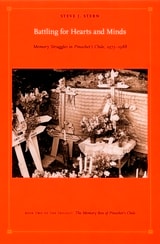
Battling for Hearts and Minds
Memory Struggles in Pinochet's Chile, 1973–1988Steve J. Stern
Duke University Press, 2006
In the 1970s, Chilean dissidents were lonely “voices in the wilderness” insisting that state terror and its victims be recognized and remembered. By the 1980s, the dissent had spread, catalyzing a mass movement of individuals who revived public dialogue by taking to the streets, creating alternative media, and demanding democracy and human rights. Despite long odds and discouraging defeats, people of conscience—victims of the dictatorship, priests, youth, women, workers, and others—overcame fear and succeeded in creating truthful public memories of state atrocities. Recounting both their efforts and those of the regime’s supporters to win the battle for Chileans’ hearts and minds, Stern shows how profoundly the struggle to create memories, to tell history, matters.
Battling for Hearts and Minds is the second volume in the trilogy The Memory Box of Pinochet’s Chile. The third book will examine Chileans’ efforts to achieve democracy while reckoning with Pinochet’s legacy.
Battling over the Balkans
Historiographical Questions and ControversiesJohn R. Lampe
Central European University Press, 2020
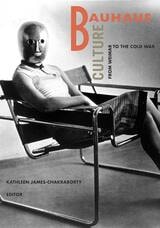
Bauhaus Culture
From Weimar To The Cold WarKathleen James-Chakraborty
University of Minnesota Press, 2006
In this book, editor Kathleen James-Chakraborty and seven other scholars analyze the accomplishments and dispel the myths of the Bauhaus, placing it firmly in a historical context from before the formation of the Weimar Republic through Nazi ascendancy and World War II into the cold war. Together, they investigate its professors’ and students’ interactions with mass culture; establish the complexity of its relationship with Wilhelmine, Nazi, and postwar German politics; and challenge the claim that its architects greatly influenced American architecture in the 1930s.
Their most explosive conclusions address the degree to which some aspects of Bauhaus design continued to flourish during the Third Reich before becoming one of the cold war’s most enduring emblems of artistic freedom. In doing so, Bauhaus Culture calls into question the degree to which this influential school should continue to symbolize an uncomplicated relationship between art, modern technology, and progressive politics.
Contributors: Greg Castillo, Juliet Koss, Rose-Carol Washton Long, John V. Maciuika, Wallis Miller, Winifried Nerdinger, Frederic J. Schwartz.
Kathleen James-Chakraborty is associate professor of architecture at the University of California, Berkeley, and author of German Architecture for a Mass Audience and Erich Mendelsohn and the Architecture of German Modernism.
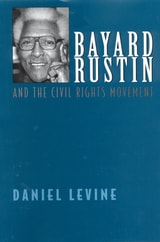
Bayard Rustin and the Civil Rights Movement
Levine, Daniel
Rutgers University Press, 1999
Rustin's long activist career began with his association with A. Phillip Randolph of the Brotherhood of Sleeping Car Porters. Then, as a member of A. J. Muste's Fellowship of Reconciliation, he participated in the "Journey of Reconciliation" (an early version of the "Freedom Rides" of 1961). He was a close associate of Martin Luther King in Montgomery and Atlanta and rose to prominence as organizer of the 1963 March on Washington. Rustin played a key role in applying nonviolent direct action to American race relations while rejecting the separatism of movements like Black Power in the 1960s, even at the risk of his being marginalized by the younger generation of civil rights activists. In his later years he tried to hold the civil rights coalition together and to fight for the economic changes he thought were necessary to decrease racism.
Daniel Levine has written the first scholarly biography that examines Rustin's public as well as private persona in light of his struggles as a gay black man and as an activist who followed his own principles and convictions. The result is a rich portrait of a complex, indomitable advocate for justice in American society.
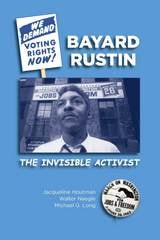
Bayard Rustin
The Invisible ActivistJacqueline Houtman
QuakerPress, 2014
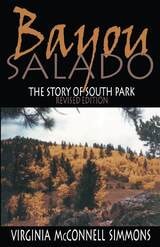
Bayou Salado
The Story of South Park, Revised EditionVirginia McConnell Simmons
University Press of Colorado, 2002

Bazhanov and the Damnation of Stalin
Boris Bazhanov
Ohio University Press, 1990
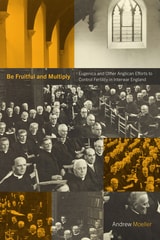
Be Fruitful and Multiply
Eugenics and Other Anglican Efforts to Control Fertility in Interwar EnglandAndrew Moeller
Rutgers University Press, 2027
Be Fruitful and Multiply examines the moral justification offered by Anglican leaders for their support for eugenic, pronatalist, and neo-Malthusian schemes in the United Kingdom during the interwar period. These religious leaders often comprehended their efforts to control fertility within the context of a broader struggle over competing conceptions of human purpose in English society, and regularly justified their efforts on the grounds that fertility-manipulation schemes served to align procreative behaviors with “Christian” conceptions of human purpose. The shared moral logic of Anglican leaders helps to explain the pervasive interest in birthrate patterns, along with the enduring appeal of fertility-manipulation schemes, amongst middle- and upper-classes during the first half of the twentieth century. This book also sheds light on how population concerns led to the liberalization of church positions on marriage and sexuality, and illuminates how Anglican leaders sought to maintain moral influence in the face of the perceived large-scale rejection of Christian moral teachings.
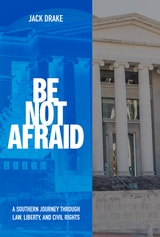
Be Not Afraid
A Southern Journey Through Law, Liberty, and Civil RightsJack Drake
University of Alabama Press, 2026
A civil rights attorney’s unflinching memoir about the fight against segregation and systemic racism through landmark legal battles in Alabama
Be Not Afraid: A Southern Journey Through Law, Liberty, and Civil Rights is a timely and unflinching memoir from civil rights attorney Jack Drake, who has spent decades on the front lines of Alabama’s legal battles for racial justice. Raised in a segregated community in Gardendale, Alabama, Drake came of age during the civil rights movement and became a pivotal figure in cases that reshaped the state’s legal and moral landscape.
Drake helped reform Alabama’s grossly inadequate mental health system and supported voting rights efforts throughout Alabama. His career underscores the crucial role private attorneys and grassroots advocates played in enforcing civil rights laws long after their passage.
Through vivid recollections of courtroom battles, civil rights alliances, and personal transformation, Be Not Afraid offers an intimate view into the persistence and courage required to challenge systemic injustice. At a time when debates over equity and democracy remain pressing, Drake’s story is both a powerful reflection on the past and a call to action for the present. It speaks to the enduring importance of legal advocacy and community solidarity in the fight for a more just society, making it essential reading for those engaged in civil rights history, law, or social change.
Be Opened! The Catholic Church and Deaf Culture
Lana Portolano
Catholic University of America Press, 2021
Be Water
Collective Improvisation in Hong Kong's Anti-Extradition ProtestsMing-sho Ho
Temple University Press, 2025
In Be Water, Ming-sho Ho examines the dynamics of the city-wide uprising from the perspective of agency power. He seeks to understand how numerous and anonymous Hongkongers contributed to this epoch-making campaign as well as how they responded to the full-scale state repression that enveloped them. Ho praises and questions the durability of the inventive Be Water Revolution and how the activists encouraged protests spontaneously, through interpersonal networks and by voluntarily collaborating with strangers at great personal risk.
Ho posits a new concept of “collective improvisation” to make sense of such a decentralized yet creative way of protesting. Be Water seeks to understand the rise and long afterlife of this movement and illustrate its efficacy. As Ho shows, these dynamics of collective improvisation have implications for contemporary protest movements around the world.
Beaches, Bays, and Barrens
A Natural History of the Jersey ShoreEric G. Bolen
Rutgers University Press, 2024
Beaches, Bays, and Barrens introduces readers to the natural wonders of the Jersey Shore, revealing its unique ecology and fascinating history. The journey begins with the contributions and discoveries of early naturalists who visited the region and an overview of endangered species and natural history, followed by chapters that explore different facets of the shore’s environments. These start with sandy beaches and dunes and culminate in the engaging Pine Barrens, the vital watershed for much of the state’s varied coastline. Along the way, readers will also learn about whaling, decoy carvers, an extinct duck, and the cultivation of wild blueberries.
Including over seventy color photographs, the book also features twenty-three infoboxes that go deep into areas of ecological or historical interest, such as the Forsythe National Wildlife Refuge or the Jaws-like shark attacks of 1916. From Cape May to Sandy Hook, biologist Eric G. Bolen takes you on a guided tour of the Jersey Shore’s rich ecological heritage.
Bean Blossom
The Brown County Jamboree and Bill Monroe's Bluegrass FestivalsThomas A. Adler
University of Illinois Press, 2011

Bear River
Last Chance to Change CourseCraig Denton
Utah State University Press, 2007
Craig Denton's documentary takes on these questions. He tells the story of the river and the people, of many sorts, with diverse purposes, who live and depend on it. Bear River begins in alpine snowfields, lakes, and creeks in the Uinta Mountains, flows north through Wyoming, loops south in Idaho, and enters the inland sea by way of the an environmentally critical bird refuge. Along the way it has many uses: habitat, farms, electricity, recreation, lawns and homes. Denton researches the natural and human history of the river, photographed it, interviewed many stakeholders, and tried to capture the river perspective. His photographs, printed as crisp duotones, carry us downstream, ultimately to big questions, begging to be answered soon, about what we should and can make of the Bear River. Denton writes,
Gravity my engine,
Water my soul.
I am the teller of life and deep time.
You would measure me.
Sever me.
Own me.
In your name.
Let me flow
In your imagination
That I may speak.
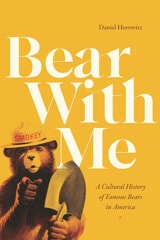
Bear With Me
A Cultural History of Famous Bears in AmericaDaniel Horowitz
Duke University Press, 2025
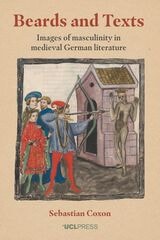
Beards and Texts
Images of Masculinity in Medieval German LiteratureSebastian Coxon
University College London, 2021
Beards make frequent appearances in medieval German poetry—as esteemed markers of majestic wisdom or as hilarious props for undignified manhandling. In Beards and Texts, Sebastian Coxon traces this preeminent symbol of masculinity through four major poetic traditions across the twelfth and sixteenth centuries—Pfaffe Konrad’s Rolandslied, Wolfram von Eschenbach’s Willehalm, ‘Sangspruchdichtung’, and Heinrich Wittenwiler’s Ring. By attending to this hairy trope, Beards and Texts sheds new light on the construction of both poetic form and masculinity in the Middle Ages.
Bearing False Witness
Debunking Centuries of Anti-Catholic HistoryRodney Stark
Templeton Press, 2016
As we all know and as many of our well-established textbooks have argued for decades, the Inquisition was one of the most frightening and bloody chapters in Western history; Pope Pius XII was anti-Semitic and rightfully called “Hitler’s Pope,” the Dark Ages were stunting the progress of knowledge to be redeemed only by the secular spirit of the Enlightenment. The religious Crusades were an early example of the rapacious Western thirst for riches and power. But what if these long held beliefs were all wrong?
In this stunning, powerful, and ultimately persuasive book, Rodney Stark, one of the most highly regarded sociologists of religion and bestselling author of The Rise of Christianity (HarperSanFrancisco 1997), argues that some of our most firmly held ideas about history, ideas that paint the Catholic Church in the least favorable light are, in fact, fiction. Why have we held these wrongheaded ideas so firmly and for so long? And if our beliefs are wrong, what is the truth?
In each chapter, Stark takes on a well-established anti-Catholic myth, gives a fascinating history of how each myth became conventional wisdom and presents a startling picture of the real truth. For example, instead of the Spanish Inquisition being an anomaly of torture and murder of innocent people persecuted for “imaginary” crimes such as witchcraft and blasphemy, Stark argues that not only did the Spanish Inquisition spill very little blood, but it was a major force in support of moderation and justice.
Stark dispels the myth of Pope Pius XII being apathetic or even helpful to the Nazi movement, such as to merit the title “Hitler’s Pope,” and instead shows that the campaign to link Pope Pius XII to Hitler was initiated by the Soviet Union, presumably in hopes of neutralizing the Vatican in post-World War II affairs. Many praised Pope Pius XIIs vigorous and devoted efforts to saving Jewish lives during the war.
Instead of understanding the Dark Ages as a millennium of ignorance and backwardness inspired by the Catholic Church’s power, Stark argues that the whole notion of the “Dark Ages” was an act of pride perpetuated by anti-religious intellectuals who were determined to claim that theirs was the era of “Enlightenment.”
In the end, readers of Bearing False Witness will have a more accurate history of the Catholic Church and will also understand why it became unfairly maligned for so long. Bearing False Witness is a compelling and sobering account of how egotism and ideology often work together to give us a false truth.

Bearing Witness against Sin
The Evangelical Birth of the American Social MovementMichael P. Young
University of Chicago Press, 2007
During the 1830s the United States experienced a wave of movements for social change over temperance, the abolition of slavery, anti-vice activism, and a host of other moral reforms. Michael Young argues for the first time in Bearing Witness against Sin that together they represented a distinctive new style of mobilization—one that prefigured contemporary forms of social protest by underscoring the role of national religious structures and cultural schemas.
In this book, Young identifies a new strain of protest that challenged antebellum Americans to take personal responsibility for reforming social problems.In this period activists demanded that social problems like drinking and slaveholding be recognized as national sins unsurpassed in their evil and immorality. This newly awakened consciousness undergirded by a confessional style of protest, seized the American imagination and galvanized thousands of people. Such a phenomenon, Young argues, helps explain the lives of charismatic reformers such as William Lloyd Garrison and the Grimké sisters, among others.
Marshalling lively historical materials, including letters and life histories of reformers, Bearing Witness against Sin is a revelatory account of how religion lay at the heart of social reform.
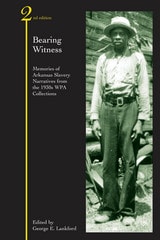
Bearing Witness
Memories of Arkansas SlaveryGeorge E. Lankford
University of Arkansas Press, 2006

Bearing the Bad News
Contemporary American Literature and CultureSanford Pinsker
University of Iowa Press, 1990
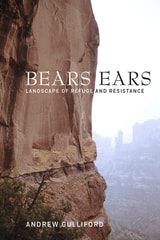
Bears Ears
Landscape of Refuge and ResistanceAndrew Gulliford
University of Utah Press, 2022
Gulliford’s engaging narrative explains prehistoric Pueblo villages and cliff dwellings, Navajo and Ute history, stories of Mormon families who arrived by wagon train in 1880, impacts of the Atomic Age, uranium mining, and the pothunting and looting of Native graves that inspired the passage of the Antiquities Act over a century ago. The book describes how the national monument came about and its deep significance to five native tribes.
Bears Ears National Monument is a bellwether for public land issues in the American West. Its recognition will be relevant for years to come.
Beast
Benjamin B. Lindsey
University Press of Colorado, 2009
Beautiful Data
A History of Vision and Reason since 1945Orit Halpern
Duke University Press, 2015
Beautiful Democracy
Aesthetics and Anarchy in a Global EraRuss Castronovo
University of Chicago Press, 2007