Results by title
8113 books match the query 'Literary Criticism' and 307 start with b

Black Regions of the Imagination
African American Writers between the Nation and the WorldEve Dunbar
Temple University Press, 2012
Zora Neale Hurston, Richard Wright, James Baldwin, and Chester Himes were all pressured by critics and publishers to enlighten mainstream (white) audiences about race and African American culture. Focusing on fiction and non-fiction they produced between the Harlem Renaissance and the Black Arts Movement, Eve Dunbar’s important book, Black Regions of the Imagination, examines how these African American writers—who lived and traveled outside the United States—both document and re-imagine their “homegrown” racial experiences within a worldly framework.
From Hurston’s participant-observational accounts and Wright’s travel writing to Baldwin’s Another Country and Himes’ detective fiction, these writers helped develop the concept of a “region” of blackness that resists boundaries of genre and geography. Each writer represents—and signifies—blackness in new ways and within the larger context of the world. As they negotiated issues of “belonging,” these writers were more critical of social segregation in America as well as increasingly resistant to their expected roles as cultural “translators.”
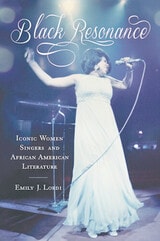
Black Resonance
Iconic Women Singers and African American LiteratureLordi, Emily J.
Rutgers University Press, 2013
Ever since Bessie Smith’s powerful voice conspired with the “race records” industry to make her a star in the 1920s, African American writers have memorialized the sounds and theorized the politics of black women’s singing. In Black Resonance, Emily J. Lordi analyzes writings by Richard Wright, Ralph Ellison, James Baldwin, Gayl Jones, and Nikki Giovanni that engage such iconic singers as Bessie Smith, Billie Holiday, Mahalia Jackson, and Aretha Franklin.
Focusing on two generations of artists from the 1920s to the 1970s, Black Resonance reveals a musical-literary tradition in which singers and writers, faced with similar challenges and harboring similar aims, developed comparable expressive techniques. Drawing together such seemingly disparate works as Bessie Smith’s blues and Richard Wright’s neglected film of Native Son, Mahalia Jackson’s gospel music and Ralph Ellison’s Invisible Man, each chapter pairs one writer with one singer to crystallize the artistic practice they share: lyricism, sincerity, understatement, haunting, and the creation of a signature voice. In the process, Lordi demonstrates that popular female singers are not passive muses with raw, natural, or ineffable talent. Rather, they are experimental artists who innovate black expressive possibilities right alongside their literary peers.
The first study of black music and literature to centralize the music of black women, Black Resonance offers new ways of reading and hearing some of the twentieth century’s most beloved and challenging voices.
Black Speculative Feminisms
Memory and Liberated Futures in Black Women's FictionCassandra L. Jones
The Ohio State University Press, 2024

Black Unhappiness
The Philosophy of W. E. B. Du BoisGrant Farred
Duke University Press, 2027
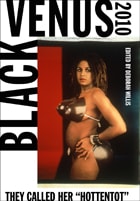
Black Venus 2010
They Called Her "Hottentot"Edited by Deborah Willis
Temple University Press, 2010
As a young South African woman of about twenty, Saartjie Baartman, the so-called “Hottentot Venus,” was brought to London and placed on exhibit in 1810. Clad in the Victorian equivalent of a body stocking, and paraded through the streets and on stage in a cage she became a human spectacle in London and Paris. Baartman’s distinctive physique became the object of ridicule, curiosity, scientific inquiry, and desire until and after her premature death. The figure of Sarah Baartman was reduced to her sexual parts.
Black Venus 2010 traces Baartman’s memory in our collective histories, as well as her symbolic history in the construction and identity of black women as artists, performers, and icons. The wide-ranging essays, poems, and images in Black Venus 2010 represent some of the most compelling responses to Baartman. Each one grapples with the enduring legacy of this young African woman who forever remains a touchstone for black women.
Contributors include: Elizabeth Alexander, Holly Bass, Petrushka A Bazin, William Jelani Cobb, Lisa Gail Collins, Renée Cox, J. Yolande Daniels, Carole Boyce Davies, Leon de Wailly, Manthia Diawara, Diana Ferrus, Cheryl Finley, Nikky Finney, Kianga K. Ford, Terri Francis, Sander Gilman, Renée Green, Joy Gregory, Lyle Ashton Harris, Michael D. Harris, Linda Susan Jackson, Kellie Jones, Roshini Kempadoo, Simone Leigh, Zine Magubane, E. Ethelbert Miller, Robin Mitchell, Charmaine Nelson, Tracey Rose, Radcliffe Roye, Bernadette Searle, Lorna Simpson, Debra S. Singer, Penny Siopis, Hank Willis Thomas, Kara Walker, Michele Wallace, Carla Williams, Carrie Mae Weems, J. T. Zealy, and the editor.
Black Victorians / Black Victoriana
Edited by Gretchen Holbrook Gerzina
Rutgers University Press, 2003
The essays taken as a whole also highlight prevailing Victorian attitudes toward race by focusing on the ways in which empire building spawned a "subculture of blackness" consisting of caricature, exhibition, representation, and scientific racism absorbed by society at large. This misrepresentation made it difficult to be both black and British while at the same time it helped to construct British identity as a whole. Covering many topics that detail the life of blacks during this period, Black Victorians/Black Victoriana will be a landmark contribution to the emergent field of black history in England.
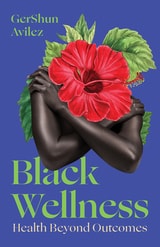
Black Wellness
Health Beyond OutcomesGerShun Avilez
University of Minnesota Press, 2027
Revealing how contemporary Black creatives explore personal and collective wellness within anti-Black societies
Black Wellness tracks how Black artists, writers, poets, and other cultural producers explore Black health as feeling good while attending to underlying physical and mental exhaustion resulting from racism, homophobia, and sexism. Considering depictions of and discourse about pain, HIV/AIDS, Covid-19, cancer, and diabetes, GerShun Avilez moves beyond pathologies of Black illness and the outcome-motivated medical field to delineate the nature of Black wellness as the basis for artistic experiments, envisioning manifold expressions of health.
Responding to the history and impact of racial health disparities, Avilez locates a complex interplay between pain and care, stigma and pleasure, self-management and blame, and isolation and contact. In Black Wellness, he delves into innovative literary writing and digital projects: poetry by Danez Smith, Claudia Rankine, and Bettina Judd; personal reflections by Zadie Smith, Audre Lorde, and Yohanes Godanna Gatiso; novels by Toni Cade Bambara and Masande Ntshanga; and video, theatrical, and multimedia projects by Faithe Daye, Seth E. Davis, and Robbie McCauley.
Reading and thinking across borders to analyze African diasporic artists originating from the United States, Jamaica, South Africa, Ethiopia, and the United Kingdom, Avilez highlights how interconnected histories of racialization, minoritization, and colonization contextualize the lived experiences of Black wellness and illness. By deemphasizing—but not discounting—health outcomes, Black Wellness argues that cultural acts of envisioning and communicating Black health are always double pronged, simultaneously attending to states of debility and vitality in Black bodies.
Retail e-book files for this title are screen-reader friendly.
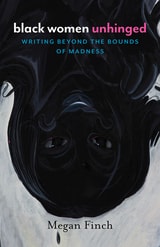
Black Women Unhinged
Writing Beyond the Bounds of MadnessMegan Finch
University of Minnesota Press, 2027
Rethinking the theoretical and political deployment of madness in the late twentieth century through the critical work of black women novelists
Black Women Unhinged revisits the “black women’s literary renaissance” to offer new terms at the intersection of gender, race, and madness before and beyond its crystallization into discourses of mental health and disability. Reconstructing the cultural zeitgeist of the 1960s–1980s, when madness emerged as a radical position in the work of Michel Foucault, Gilles Deleuze, Luce Irigaray, and David Cooper, and in the politics of feminists and Black Power activists, Black Women Unhinged reassesses black women’s overlooked contributions to this politics of madness. Megan Finch reads this renaissance’s catalogue of ostensibly mad literary characters—schizophrenic girls, infanticidal and drug-addicted mothers, castrating murderesses, and suicidal revolutionaries—beyond madness’s philosophical and political bounds.
Centering the relationship between Reason and the multiple forms of unReason central to modern politics, Finch traces the deployment of madness by the Black Power/Art’s movements and second-wave feminists to fortify black men’s and white women’s civic inclusion while dismissing black women’s politics as irremediable folly. Finch argues that black women’s novels of the period—including Toni Morrison’s The Bluest Eye and Beloved, Gayl Jones’s Corregidora and Eva’s Man, Toni Cade Bambara’s The Salt Eaters, and Nettie Jones’s Fish Tales—depict characters who exceed the category of madness and are unhinged from the curative politics of inclusion purchased through another’s abjection. Black Women Unhinged reckons with black women’s literary and theoretical contributions to the politics of madness and their attempts, past and present, to move beyond them to something akin to freedom.
Retail e-book files for this title are screen-reader friendly.
Black Women, Identity, and Cultural Theory
(Un)Becoming the SubjectKevin Everod Quashie
Rutgers University Press, 2004
In Black Women, Identity, and Cultural Theory, Kevin Everod Quashie explores the metaphor of the “girlfriend” as a new way of understanding three central concepts of cultural studies: self, memory, and language. He considers how the work of writers such as Toni Morrison, Ama Ata Aidoo, Dionne Brand, photographer Lorna Simpson, and many others, inform debates over the concept of identity. Quashie argues that these authors and artists replace the notion of a stable, singular identity with the concept of the self developing in a process both communal and perpetually fluid, a relationship that functions in much the same way that an adult woman negotiates with her girlfriend(s). He suggests that memory itself is corporeal, a literal body that is crucial to the process of becoming. Quashie also explores the problem language poses for the black woman artist and her commitment to a mastery that neither colonizes nor excludes.
The analysis throughout interacts with schools of thought such as psychoanalysis, postmodernism, and post-colonialism, but ultimately moves beyond these to propose a new cultural aesthetic, one that ultimately aims to center black women and their philosophies.

Black Women’s Health in the Age of Hip Hop and HIV/AIDS
A Narrative RemixNghana tamu Lewis
The Ohio State University Press, 2025
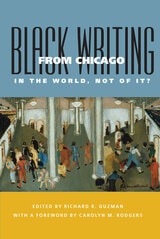
Black Writing from Chicago
In the World, Not of It?Edited by Richard R. Guzman. Foreword by Carolyn M. Rodgers
Southern Illinois University Press, 2006
Black Writing from Chicago: In the World, Not of It? takes readers on a cultural trip through Chicago’s literary history. Editor Richard R. Guzman compiles the first comprehensive collection of the works of Chicago’s black writers from 1861 to the present day. The anthology, which includes works from newspaper writing, poetry, fiction, drama, essays, and historical and social commentary, seeks not only to represent a broad range of writings but also to focus tightly on such themes as hope and despair, racism and equality, spirituality and religion. More than sixty writers, from the anonymous “J. W. M. (Colored)” to Ken Green, unfold a story that reflects the literary periods in black American history. Each author’s selection is preceded by a biographical and a bibliographical introduction. Readers interested in Chicago, race relations, and literature, as well as scholars of history, sociology, urban studies, and cultural studies, will find the collection invaluable.
Black Writing, Culture, and the State in Latin America
Jerome C. Branche
Vanderbilt University Press, 2015
All too often, the disciplines of film studies, literary criticism, and art history ignore the opportunity to collaborate in a dialogue. Branche and his contributors present a unified approach, however, suggesting that cultural production should not be viewed narrowly, especially when studying the achievements of the Afro-Latin world.
Black Yankees
The Development of an Afro-American Subculture in Eighteenth-Century New EnglandWilliam D. Piersen
University of Massachusetts Press, 1988
On the face of it, the master class called the tunes and slaves danced the beat. Blacks who were taken into New England's bondage were clearly engulfed in a pervasive, narrow-minded Euro-American society that had no interest in fostering Afro-American autonomy. The New England experience was often cruel, and the numbers alone suggest it was among the most unequal of black/white cultural contacts in the New World. Nonetheless, despite the strictures of bondage, the black Yankees of eighteenth-century New England created a sustaining folk culture of their own.
Black and Blur
Fred Moten
Duke University Press, 2017
In Black and Blur—the first volume in his sublime and compelling trilogy consent not to be a single being—Fred Moten engages in a capacious consideration of the place and force of blackness in African diaspora arts, politics, and life. In these interrelated essays, Moten attends to entanglement, the blurring of borders, and other practices that trouble notions of self-determination and sovereignty within political and aesthetic realms. Black and Blur is marked by unlikely juxtapositions: Althusser informs analyses of rappers Pras and Ol' Dirty Bastard; Shakespeare encounters Stokely Carmichael; thinkers like Kant, Adorno, and José Esteban Muñoz and artists and musicians including Thornton Dial and Cecil Taylor play off each other. Moten holds that blackness encompasses a range of social, aesthetic, and theoretical insurgencies that respond to a shared modernity founded upon the sociological catastrophe of the transatlantic slave trade and settler colonialism. In so doing, he unsettles normative ways of reading, hearing, and seeing, thereby reordering the senses to create new means of knowing.

Black and White Strangers
Race and American Literary RealismKenneth W. Warren
University of Chicago Press, 1993
Black and White in Colour
African History on ScreenVivian Bickford-Smith
Ohio University Press, 2007
Black and White in Colour: African History on Screen considers how the African past has been represented in a wide range of historical films. Written by a team of eminent international scholars, the volume provides extensive coverage of both place and time and deals with major issues in the written history of Africa. Themes include the slave trade, imperialism and colonialism, racism, and anticolonial resistance. Many of the films will be familiar to readers: they include Out of Africa, Hotel Rwanda, Breaker Morant, Cry Freedom, The Battle of Algiers, and Chocolat.
This collection of essays is a highly original and useful contribution to African historiography, as well as a significant addition to the growing body of work within the emerging subdiscipline of “film and history.” It will appeal to those interested in African history and the ways in which films use the past to raise questions about the present.
Contributors: Mahir Saul, Ralph A. Austen, Robert Baum, Robert Harms, Nigel Worden, Carolyn Hamilton and Litheko Modisane, Richard Mendelsohn, Shamil Jeppie, Bill Nasson, Nigel Penn, Ruth Watson, Patrick Harries, David Moore, Teresa Barnes, Vivian Bickford-Smith, Mohamed Adhikari, and David Philips.
Black devil and iron angel
the railway in nineteenth-century German realismPaul A. Youngman
Catholic University of America Press, 2005
Black, White, and Huckleberry Finn
Re-imagining the American DreamElaine Mensh
University of Alabama Press, 2001
Takes a hard, systematic look at the depiction of blacks, whites, and race relations in Mark Twain's classic novel, raising questions about its canonical status in American literature
Huckleberry Finn, one of the most widely taught novels in American literature, has long been the subject of ongoing debates over issues ranging from immorality to racism. Here, Elaine Mensh and Harry Mensh enter the debate with a careful and thoughtful examination of racial messages imbedded in the tale of Huck and Jim.Using as a gauge for analysis the historical record left by both slaves and slaveholders, the Menshes compare Twain's depiction with historical reality, attempting to determine where the book either undermines or upholds traditional racial attitudes. Surveying the opinions of fellow critics, they challenge the current consensus that Huckleberry Finn fosters rapport between blacks and whites, arguing that the book does not subvert ingrained beliefs about race, and demonstrating that the argument over black-white relations in the novel is also an argument over non-fictional racial relations and conflicting perceptions of racial harmony.
Reading the novel in its historical context, the Menshes conclude that Twain, in the character of Huck, never questions the institution of slavery, and even supports it in both thought and action. In response to student and parent challenges to the inclusion of the book in literature classes, they suggest that it should remain in school libraries but not be required reading.Of importance to scholars of Mark Twain and American literature, African American cultural studies, or anyone interested in issues of literature and race, this book adds a strong voice to the long-ranging debate over Huckleberry Finn.
Black, White, and in Color
Essays on American Literature and CultureHortense J. Spillers
University of Chicago Press, 2003
Black, White, and in Color offers a long-awaited collection of major essays by Hortense Spillers, one of the most influential and inspiring black critics of the past twenty years. Spanning her work from the early 1980s, in which she pioneered a broadly poststructuralist approach to African American literature, and extending through her turn to cultural studies in the 1990s, these essays display her passionate commitment to reading as a fundamentally political act-one pivotal to rewriting the humanist project.
Spillers is best known for her race-centered revision of psychoanalytic theory and for her subtle account of the relationships between race and gender. She has also given literary criticism some of its most powerful readings of individual authors, represented here in seminal essays on Ralph Ellison, Gwendolyn Brooks, and William Faulkner. Ultimately, the essays collected in Black, White, and in Color all share Spillers's signature style: heady, eclectic, and astonishingly productive of new ideas. Anyone interested in African American culture and literature will want to read them.
Blake, Nationalism, and the Politics of Alienation
Julia M. Wright
Ohio University Press, 2027
William Blake’s reputation as a staunch individualist is based in large measure on his repeated attacks on institutions and belief systems that constrain the individual’s imagination. Blake, however, rarely represents isolation positively, suggesting that the individual’s absolute freedom from communal pressures is not the ideal. Instead, as Julia Wright argues in her award-winning study Blake, Nationalism, and the Politics of Alienation, Blake’s concern lies with the kind of community that is being established. Moreover, writing at the moment of the emergence of modern nationalism, Blake reveals a concern with the national community in particular.
Beginning with a discussion of the priority of national narrative in late-eighteenth-century art theory and antiquarianism, Blake, Nationalism, and the Politics of Alienation traces its relevance in Blake’s printed works, from The Poetical Sketches and the Lambeth Prophecies to The Laocoön. Professor Wright then turns to Europe, America, and Visions of the Daughters of Albion, focusing on Blake’s portrayals of particular characters’ alienation from the groups and ideologies represented in the texts. The book closes by arguing that Blake’s major printed works, Milton and Jerusalem, are explicit and extensive engagements with the question of nation—and empire.
Although nationalism existed in various forms during the Romantic period, Blake’s contemporaries generally assumed that nations should progress continuously, producing a clear narrative line from an auspicious origin to the perfect fulfillment of that promise. Wright argues that these mutually determining constructs of national character and national narrative inform Blake’s handling of the problem of the individual-within-a-community.
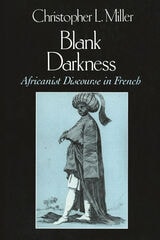
Blank Darkness
Africanist Discourse in FrenchChristopher L. Miller
University of Chicago Press, 1986
Blank Verse
A Guide to Its History and UseRobert B. Shaw
Ohio University Press, 2007
With its compact but inclusive survey of more than four centuries of poetry, Blank Verse is filled with practical advice for poets of our own day who may wish to attempt the form or enhance their mastery of it. Enriched with numerous examples, Shaw’s discussions of verse technique are lively and accessible, inviting not only to apprentice poets but to all readers of poetry.
Shaw’s approach should reassure those who find prosody intimidating, while encouraging specialists to think more broadly about how traditional poetic forms can be taught, learned, practiced, and appreciated in the twenty-first century. Besides filling a conspicuous gap in literary history, Blank Verse points the way ahead for poets interested in exploring blank verse and its multitude of uses.
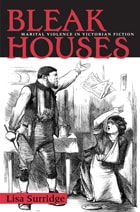
Bleak Houses
Marital Violence in Victorian FictionLisa Surridge
Ohio University Press, 2005
The Offenses Against the Person Act of 1828 opened magistrates' courts to abused working-class wives. Newspapers in turn reported on these proceedings, and in this way the Victorian scrutiny of domestic conduct began. But how did popular fiction treat “private” family violence? Bleak Houses: Marital Violence in Victorian Fiction traces novelists' engagement with the wife-assault debates in the public press between 1828 and the turn of the century.
Lisa Surridge examines the early works of Charles Dickens and reads Dombey and Son and Anne Brontë's The Tenant of Wildfell Hall in the context of the intense debates on wife assault and manliness in the late 1840s and early 1850s. Surridge explores George Eliot's Janet's Repentance in light of the parliamentary debates on the 1857 Divorce Act. Marital cruelty trials provide the structure for both Wilkie Collins's The Woman in White and Anthony Trollope's He Knew He Was Right.
Locating the New Woman fiction of Mona Caird and the reassuring detective investigations of Sherlock Holmes in the context of late-Victorian feminism and the great marriage debate in the Daily Telegraph, Surridge illustrates how fin-de-siècle fiction brought male sexual violence and the viability of marriage itself under public scrutiny. Bleak Houses thus demonstrates how Victorian fiction was concerned about the wife-assault debates of the nineteenth century, debates which both constructed and invaded the privacy of the middle-class home.
Bleak Liberalism
Amanda Anderson
University of Chicago Press, 2016
Amanda Anderson examines canonical works of high realism, political novels from England and the United States, and modernist works to argue that liberalism has engaged sober and even stark views of historical development, political dynamics, and human and social psychology. From Charles Dickens’s Bleak House and Hard Times to E. M. Forster’s Howards End to Doris Lessing’s The Golden Notebook, this literature demonstrates that liberalism has inventive ways of balancing sociological critique and moral aspiration. A deft blend of intellectual history and literary analysis, Bleak Liberalism reveals a richer understanding of one of the most important political ideologies of the modern era.

Blind Date
Sex and PhilosophyAnne Dufourmantelle. Translated by Catherine Porter.
University of Illinois Press, 2007
Bringing sex and philosophy together on a blind date, Anne Dufourmantelle’s provocative study uses this analogy to uncover and examine philosophy’s blind spot. Delightful and startling comparisons spring from the date: both sex and philosophy are dangerous, both are socially subversive, and both are obsessions. Although sex and philosophy have much in common, however, they have scarcely known one another until now.
Socrates and Diogenes had little to say about sex, and although it was notoriously explored by the Marquis de Sade, this study explains why philosophy has never been fully sexualized nor sex really philosophized. Blind Date highlights the marked deletion of sexual topics and themes from philosophical works, while also opening doors for their union. Inviting readers to remember that thought does not require repressed desire, Dufourmantelle argues that sex is everywhere, and it affects all kinds of thinking.
Blindness and Insight
Essays in the Rhetoric of Contemporary CriticismPaul De Man
University of Minnesota Press, 1983
Blood Lines
Myth, Indigenism, and Chicana/o LiteratureBy Sheila Marie Contreras
University of Texas Press, 2008
2009 — Runner-up, Modern Language Association Prize in United States Latina and Latino and Chicana and Chicano Literary and Cultural Studies
Blood Lines: Myth, Indigenism, and Chicana/o Literature examines a broad array of texts that have contributed to the formation of an indigenous strand of Chicano cultural politics. In particular, this book exposes the ethnographic and poetic discourses that shaped the aesthetics and stylistics of Chicano nationalism and Chicana feminism. Contreras offers original perspectives on writers ranging from Alurista and Gloria Anzaldúa to Lorna Dee Cervantes and Alma Luz Villanueva, effectively marking the invocation of a Chicano indigeneity whose foundations and formulations can be linked to U.S. and British modernist writing.
By highlighting intertextualities such as those between Anzaldúa and D. H. Lawrence, Contreras critiques the resilience of primitivism in the Mexican borderlands. She questions established cultural perspectives on "the native," which paradoxically challenge and reaffirm racialized representations of Indians in the Americas. In doing so, Blood Lines brings a new understanding to the contradictory and richly textured literary relationship that links the projects of European modernism and Anglo-American authors, on the one hand, and the imaginary of the post-revolutionary Mexican state and Chicano/a writers, on the other hand.
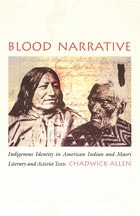
Blood Narrative
Indigenous Identity in American Indian and Maori Literary and Activist TextsChadwick Allen
Duke University Press, 2002
Allen shows how both Maori and Native Americans resisted the assimilationist tide rising out of World War II and how, in the 1960s and 1970s, they each experienced a renaissance of political and cultural activism and literary production that culminated in the formation of the first general assembly of the World Council of Indigenous Peoples. He focuses his comparison on two fronts: first, the blood/land/memory complex that refers to these groups' struggles to define indigeneity and to be freed from the definitions of authenticity imposed by dominant settler cultures. Allen's second focus is on the discourse of treaties between American Indians and the U.S. government and between Maori and Great Britain, which he contends offers strong legal and moral bases from which these indigenous minorities can argue land and resource rights as well as cultural and identity politics.
With its implicit critique of multiculturalism and of postcolonial studies that have tended to neglect the colonized status of indigenous First World minorities, Blood Narrative will appeal to students and scholars of literature, American and European history, multiculturalism, postcolonialism, and comparative cultural studies.
Blood Relations
Christian and Jew in The Merchant of VeniceJanet Adelman
University of Chicago Press, 2008
Adelman locates the promise—or threat—of Jewish conversion as a particular site of tension in the play. Drawing on a variety of cultural materials, she demonstrates that, despite the triumph of its Christians, The Merchant of Venice reflects Christian anxiety and guilt about its simultaneous dependence on and disavowal of Judaism. In this startling psycho-theological analysis, both the insistence that Shylock’s daughter Jessica remain racially bound to her father after her conversion and the depiction of Shylock as a bloody-minded monster are understood as antidotes to Christian uneasiness about a Judaism it can neither own nor disown.
In taking seriously the religious discourse of The Merchant of Venice, Adelman offers in Blood Relations an indispensable book on the play and on the fascinating question of Jews and Judaism in Renaissance England and beyond.
Blood Talk
American Race Melodrama and the Culture of the OccultSusan Gillman
University of Chicago Press, 2003
Blood Talk shows how race melodrama emerged from abolitionist works such as Uncle Tom's Cabin and surprisingly manifested itself in a set of more aesthetically and politically varied works, such as historical romances, sentimental novels, the travel literature of Mark Twain, the regional fiction of Kate Chopin and George Washington Cable, and the work of W. E. B. Du Bois. Gillman then uses the race melodrama to show how racial discourses in the United States have been entangled with occultist phenomena, from the rituals of the Ku Klux Klan and the concept of messianic second-sight to the production of conspiracy theories and studies of dreams and trances.
Blood and Ink
The Barbary Archive in Early American Literary HistoryJacob Crane
University of Massachusetts Press, 2023
In the late eighteenth and early nineteenth centuries, Algerian piracy in the Mediterranean loomed large in the American imagination. An estimated seven hundred American citizens, sailors, and naval officers were taken captive over the course of the Barbary Crises (1784–1815), and this overseas danger threatened to grow and irreparably harm the young republic.
Blood and Ink reconstructs the largely forgotten influence of these early American conflicts with North Africa on notions of publicity, print culture, and racial and national identity from independence to the Civil War. Exploring the extensive archive of texts inspired by the conflicts—from captivity narratives, novels, plays, and poems to broadsides, travel narratives, children’s literature, newspaper articles, and visual ephemera—Jacob Crane connects anxieties surrounding North African piracy and white slavery to both the development of American abolitionism and representations of transatlantic African and Jewish identities in the early national and antebellum periods.
Bloodtaking and Peacemaking
Feud, Law, and Society in Saga IcelandWilliam Ian Miller
University of Chicago Press, 1990
People in the saga world negotiated a maze of violent possibility, with strategies that frequently put life and limb in the balance. But there was a paradox in striking the balance—one could not get even without going one better. Miller shows how blood vengeance, law, and peacemaking were inextricably bound together in the feuding process.
This book offers fascinating insights into the politics of a stateless society, its methods of social control, and the role that a uniquely sophisticated and self-conscious law played in the construction of Icelandic society.
"Illuminating."—Rory McTurk, Times Literary Supplement
"An impressive achievement in ethnohistory; it is an amalgam of historical research with legal and anthropological interpretation. What is more, and rarer, is that it is a pleasure to read due to the inclusion of narrative case material from the sagas themselves."—Dan Bauer, Journal of Interdisciplinary History

Blooming through the Ashes
An International Anthology on Violence and the Human SpiritEdited by Clifford Chanin and Aili McConnon
Rutgers University Press, 2008
The twentieth century is frequently characterized in terms of its unprecedented levels of bloodshed. More human beings were killed or allowed to die by human cause than ever before in history. The impact of the century’s carnage does not end with the lives that were taken; the atrocities continue to take their toll on those who survived, on those who bore witness, and on succeeding generations.
Blooming through the Ashes features over sixty writings about this historic violence and its aftermath in a global anthology that brings together the work of Nobel laureates Seamus Heaney, Toni Morrison, Czeslaw Milosz, Wole Soyinka, Elie Wiesel, Imre Kertesz, Alexandr Solzhenitsyn, Eugenio Montale, and Pablo Neruda. In non-fiction and fiction, these writers and others reflect on the litany of man-made violence that marred the twentieth century and that shadows the twenty-first, including the Holocaust, the Gulag, the Chinese Cultural Revolution, apartheid, repression in Latin America, genocides in Rwanda, Cambodia, and the attacks of 9/11.
The texts are arranged thematically, rather than by event, in order to highlight the shared themes of memory expressed across culture and geography. Starting with visceral reactions to a violent event, chapters proceed through recognitions of loss, and move into statements of public remembrance through which future generations attempt to understand the impact of past violence.
Blue Notes
Essays, Interviews, and CommentariesYusef Komunyakaa
University of Michigan Press, 2000
As editor Radiclani Clytus makes clear in the volume's introductory essay, although Komunyakaa's poetry has its roots in the stylistic innovations of early twentieth-century American modernists, his writing often reflects his understanding that a "black" experience should not particularize the presentation of one's art. This volume, according to the editor, is an attempt to understand Komunyakaa's critical eclecticism within the context of his own words.
Yusef Komunyakaa's books of poetry include I Apologize for the Eyes in My Head, Magic City, Thieves of Paradise, and Neon Vernacular, for which he received the Pulitzer Prize and the Kingsley Tufts Poetry Award in 1994.
Blue Roses
Tennessee Williams, Memory, and the Queer ArchiveDaniel Ciba
University of Iowa Press, 2026
Blue Song
St. Louis in the Life and Work of Tennessee WilliamsHenry I. Schvey
University of Missouri Press, 2022
The question of this paradox lies at the heart of this book, an attempt not so much to correct the record about Williams’s well-chronicled dislike of the city, but rather to reveal how the city was absolutely indispensable to his formation and development both as a person and artist. Unlike the prevailing scholarly narrative that suggests that Williams discovered himself artistically and sexually in the deep South and New Orleans, Blue Song reveals that Williams remained emotionally tethered to St. Louis for a host of reasons for the rest of his life.
Blue Studios
Poetry and Its Cultural WorkRachel Blau DuPlessis
University of Alabama Press, 2006

Blue Venom and Forbidden Incense
Two NovellasSyed Shamsul Haq
Seagull Books, 2018

Blues, Ideology, and Afro-American Literature
A Vernacular TheoryHouston A. Baker Jr.
University of Chicago Press, 1987

Bluestocking Feminism and British-German Cultural Transfer, 1750-1837
Alessa Johns
University of Michigan Press, 2014
Boarding Out
Inhabiting the American Urban Literary Imagination, 1840-1860David Faflik
Northwestern University Press, 2012
Boccaccio's "Decameron"
Rewriting the Christian Middle Ages and the Lyric TraditionDino S. Cervigni
Arizona Center for Medieval and Renaissance Studies, 2021
This study develops a new interpretation of The Decameron, Giovanni Boccaccio’s masterpiece, which has found new popularity in the wake of COVID. Dino S. Cervigni offers an inclusive and novel reading of the collection, theorizing that the first ninety tales offer a parodic rewriting of the Christian Middle Age, while the last ten tales craft a reconstruction of society based on human and liberal principles such as generosity and sacrifice.
Still relevant to this day, The Decameron offers a notable description of the bubonic plague of 1348 which devastated Western Europe—drawing striking parallels with the current global pandemic. Furthermore, Boccaccio’s concluding message applies to all of us in the present moment, plunged as we are into a world of intellectual and ethical chaos, exhorting us to practice forgiveness, compassion, tolerance, mutual acceptance, and generous open-mindedness. No other book on The Decameron offers such a relevant, up-to-date reading of the classic work.
Boccaccio's Dante and the Shaping Force of Satire
Robert Hollander
University of Michigan Press, 1997
Among commentators, it had been an unexamined commonplace that the "young" Boccaccio either did not know well or did not understand sufficiently the texts of Dante (even though the "young" Boccaccio is construed as including the thirty-eight-year-old author of the Decameron.) In Boccaccio's Dante and the Shaping Force of Satire, Robert Hollander offers a valuable synthesis of new material and some previously published essays, addressing the question of Dante's influence on Boccaccio, particularly concerning the Commedia and the Decameron.
Hollander reveals that Boccaccio's writings are heavy with reminiscences of the Dante text, which he believed to be the greatest "modern" work. It was Boccaccio's belief that Dante was the only writer who had achieved a status similar to that reserved for the greatest writers of antiquity. Most of these essays try to show how carefully Boccaccio reflects the texts of Dante in the Decameron. Some essays also turn to the question of Boccaccio's allied reading of Ovid, especially the amatory work, as part of his strategy to base his work primarily on these two great authorities as he develops his own vernacular and satiric vision of human foolishness.
Boccaccio's Dante and the Shaping Force of Satire is a welcome addition to the field of Dante studies and to medieval studies in general.
Robert Hollander is Professor in European Literature and Chair, Department of Comparative Literature, Princeton University. He has received the city of Florence's gold medal for work advancing our understanding of Dante.
Boccaccio
A BiographyMarco Santagata
University of Chicago Press, 2025
Boccaccio (1313–75) stands with Dante and Petrarch as one of the “Three Crowns” of Italian letters, a trio of writers who shaped the history of humanism, literature, and poetry. In this book, Dante’s award-winning biographer, Marco Santagata, takes up the moving life and legacy of Boccaccio—whose unflinching story of a pandemic-era community (the Decameron) created new possibilities for vernacular Italian prose.
This landmark biography sheds new light on Boccaccio’s life—his family, friends, and foes, his aspirations, fears, and frustrations—and it shows how he was affected by transformations in Italian society. It also charts the influences that shaped Boccaccio’s understanding of literature: what kinds of stories it could tell and what kinds of characters it could depict; and, perhaps most importantly, what role art could play in a changing world. An insightful portrait of one of literature’s most important figures, this book promises to be the definitive biography of Boccaccio for many years to come.
Boccaccio
A Critical Guide to the Complete WorksEdited by Victoria Kirkham, Michael Sherberg, and Janet Levarie Smarr
University of Chicago Press, 2013

Bodies at War
Genealogies of Militarism in Chicana Literature and CultureBelinda Linn Rincón
University of Arizona Press, 2017
Bodies at War examines the rise of neoliberal militarism from the early 1970s to the present and its transformation of political, economic, and social relations. It charts neoliberal militarism’s impact on democratic practices, economic policies, notions of citizenship, race relations, and gender norms by focusing on how these changes affect the Chicana/o community and, more specifically, on how it shapes and is shaped by Chicana bodies. The book raises important questions about the cultural legacies of war and the gendering of violence—topics that reach across multiple disciplinary fields of inquiry, including cultural and media studies. It draws attention to the relationship between war and society, to neoliberal militarism’s destructive social impact, and to the future of Latina soldiering. Through Chicana art, activism, and writing, Rincón offers a visionary foundation for an antiwar feminist politic.
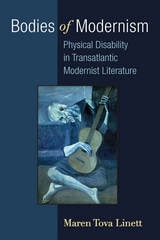
Bodies of Modernism
Physical Disability in Transatlantic Modernist LiteratureMaren Tova Linett
University of Michigan Press, 2016
Bodies on the Line
Performance and the Sixties Poetry ReadingRaphael Allison
University of Iowa Press, 2014
By comparing these two dominant styles of reading, Allison argues that attention to sixties poetry readings reveals poets struggling between the kind of immediacy and presence that readings suggested and a private retreat from such performance-based publicity, one centered on the text itself. Recordings of Robert Frost, Charles Olson, Gwendolyn Brooks, Larry Eigner, and William Carlos Williams—all of whom emphasized voice, breath, and spoken language and who were inveterate professional readers in the sixties—expose this struggle in often surprising ways. In deconstructing assertions about the role and importance of the poetry reading during this period, Allison reveals just how dramatic, political, and contentious poetry readings could be. By discussing how to "hear" as well as "read" poetry, Bodies on the Line offers startling new vantage points from which to understand American poetry since the 1960s as both performance and text.
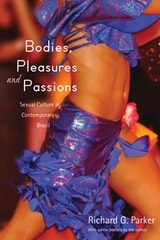
Bodies, Pleasures, and Passions
Sexual Culture in Contemporary Brazil, Second EditionRichard G. Parker
Vanderbilt University Press, 2009
Originally published in the early 1990s, Bodies, Pleasures, and Passions quickly became a classic ethnographic study of the social, cultural and historical construction of sexuality and sexual diversity. Drawing on extensive field research and interviews, together with the analysis of historical and literary texts, anthropologist Richard Parker mapped out the multiple cultural systems that structure gender, sexuality, and erotic practices in Brazil, and helped to open up a new wave of social science research on sexuality.
Using ethnographic methods focusing on sexual meanings as an alternative to traditional surveys of sexual behavior, Parker argues that sexual life can only be fully understood through an analysis of the cultural logics that shape experience. Drawing on the tradition of interpretive anthropology, he focuses on the diverse sexual scripts that have been articulated in Brazilian culture and examines the often contradictory ways in which these scripts shape the sexual experience of different individuals. He highlights the sexual socialization of children and young people, and the changing sexual realities of adults living in a rapidly changing world. He underlines the ways in which complex cultural forms such as carnaval can be understood as stories that Brazilians tell themselves about themselves and about the meaning of sexuality in contemporary Brazilian life.
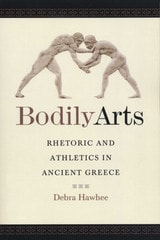
Bodily Arts
Rhetoric and Athletics in Ancient GreeceBy Debra Hawhee
University of Texas Press, 2005
The role of athletics in ancient Greece extended well beyond the realms of kinesiology, competition, and entertainment. In teaching and philosophy, athletic practices overlapped with rhetorical ones and formed a shared mode of knowledge production. Bodily Arts examines this intriguing intersection, offering an important context for understanding the attitudes of ancient Greeks toward themselves and their environment.
In classical society, rhetoric was an activity, one that was in essence "performed." Detailing how athletics came to be rhetoric's "twin art" in the bodily aspects of learning and performance, Bodily Arts draws on diverse orators and philosophers such as Isocrates, Demosthenes, and Plato, as well as medical treatises and a wealth of artifacts from the time, including statues and vases.
Debra Hawhee's insightful study spotlights the notion of a classical gymnasium as the location for a habitual "mingling" of athletic and rhetorical performances, and the use of ancient athletic instruction to create rhetorical training based on rhythm, repetition, and response. Presenting her data against the backdrop of a broad cultural perspective rather than a narrow disciplinary one, Hawhee presents a pioneering interpretation of Greek civilization from the sixth, fifth, and fourth centuries BCE by observing its citizens in action.