Results by title
8812 books match the query 'Political Science' and 358 start with b
Beyond the Laboratory
Scientists as Political Activists in 1930s AmericaPeter J. Kuznick
University of Chicago Press, 1987

Beyond the Laboratory
Scientists as Political Activists in 1930s AmericaPeter J. Kuznick
University of Chicago Press, 1987
Beyond the Pale
Dutch Extreme Violence in the Indonesian War of Independence, 1945-1949Kon. Inst. v. Taal-, Land- en Volkenkunde (KITLV)
Amsterdam University Press, 2022
In 2005, the Dutch government declared that the Netherlands should never have waged the war. The government’s 1969 position on the violence used by the Dutch armed forces during the war remained unchanged, however: although there had been ‘excesses’, on the whole the armed forces had behaved ‘correctly’. As the indications of Dutch extreme violence mounted, this official position proved increasingly difficult to maintain. In 2016, the Dutch government therefore decided to fund a broad study on the dynamics of the violence. The most important conclusions of that research programme are summarized in this book. The authors show that the Dutch armed forces used extreme violence on a structural basis, and that this was concealed both at the time and for many years after the war by the Dutch government and by society more broadly. All of this – like the entire colonial history – is at odds with the rose-tinted self-image of the Netherlands.
Beyond the Rebel Girl
Women and the Industrial Workers of the World in the Pacific Northwest, 1905-1924Heather Mayer
Oregon State University Press, 2018
In Beyond the Rebel Girl, historian Heather Mayer questions the well-worn vision of Wobblies as young, single, male, itinerant workers. While such workers formed a large portion of the membership, they weren’t the whole picture. In small towns across the Northwest, and in the larger cities of Seattle, Portland, and Spokane, women played an integral role in Wobbly life. Single women, but also families—husband and wife Wobbly teams—played important roles in some of the biggest fights for justice. IWW halls in these Northwest cities often functioned as community centers, with family-friendly events and entertainment.
Women were drawn to the IWW for its radical vision, inclusionary policies, birth control advocacy, and emphasis on freedom of choice in marriage. The IWW also offered women an avenue for activism that wasn’t focused primarily on the fight for suffrage. Beyond the Rebel Girl deepens our understanding of how the IWW functioned and how the union supported women in their fight for birth control, sexual emancipation, and better labor conditions, all while facing persecution at the local, state, and federal levels.

Beyond the Veil of Knowledge
Triangulating Security, Democracy, and Academic ScholarshipPiki Ish-Shalom
University of Michigan Press, 2019

Beyond the Wall
Writing a Path through PalestineBidisha
Seagull Books, 2012

Beyond the Wall
Writing a Path through PalestineBidisha
Seagull Books, 2025
Their voices come from Bethlehem and Hebron. You can hear them from Jerusalem to Nazareth, and witness their protests in Gaza and Ramallah. From the refugee camps in the West Bank, you can hear the voices of the Palestinian people call out to demand self-determination and a better quality of life. But outside of Israel and the occupied territories, these individual voices are rarely heard—until now.
In Beyond the Wall: Writing a Path through Palestine, internationally renowned feminist critic and writer Bidisha collects the testimonies of an occupied people—ordinary citizens, activists, and children—alongside those of international aid workers and foreign visitors for a revelatory look at a population on the margins.
Called “beautifully belligerent, [and] fiercely intelligent” by The Independent and a “dazzlingly creative writer” by the London Times, Bidisha amplifies the voices of the Palestinian people in this book and lends them her own considerable strength.

Beyond the Wire
Former Prisoners and Conflict Transformation in Northern IrelandPeter Shirlow and Kieran McEvoy
Pluto Press, 2008
This book provides the first detailed examination of the role played by former loyalist and republican prisoners in grass roots conflict transformation work in the Northern Ireland peace process. It challenges the assumed passivity of former prisoners and ex-combatants. Instead, it suggests that such individuals and the groups which they formed have been key agents of conflict transformation. They have provided leadership in challenging cultures of violence, developed practical methods of resolving inter-communal conflict and found ways for communities to explore their troubled past. In analysing this, the authors challenge the sterile demonisation of former prisoners and the processes that maintain their exclusion from normal civic and social life.
The book is a constructive reminder of the need for full participation of both former combatants and victims in post-conflict transformation. It also lays out a new agenda for reconciliation which suggests that conflict transformation can and should begin ‘from the extremes’.
The book will be of interest to students of criminology, peace and conflict studies, law and politics, geography and sociology as well as those with a particular interest in the Northern Ireland conflict.
Beyond the World Bank Agenda
An Institutional Approach to DevelopmentHoward Stein
University of Chicago Press, 2008
Drawing on the examples of Africa, Asia, Latin America, and transitional European economies, this revolutionary volume proposes an alternative vision of institutional development with chapter-length applications to finance, state formation, and health care to provide a holistic, contextualized solution to the problems of developing nations. Beyond the World Bank Agenda will be essential reading for anyone concerned with forging a new strategy for sustainable development.

Biblical Judgments
New Legal Readings in the Hebrew BibleDaphne Barak-Erez
University of Michigan Press, 2024
Rather than offering a historical study, Barak-Erez draws upon famous court decisions from around the world to root her analysis in modern law. Organized by subject matter, Biblical Judgments analyzes how the themes of law and government, judging and judges, human rights and social justice, criminal law, private law, and family and inheritance law are presented through a number of different stories. In recounting the compelling narratives of the Hebrew Bible, Biblical Judgments exposes their inherent legal tensions and what we can learn about legal dilemmas today.

Bidding for the 1968 Olympic Games
International Sport's Cold War Battle with NATOHeather L. Dichter
University of Massachusetts Press, 2021
During the Cold War, political tensions associated with the division of Germany came to influence the world of competitive sport. In the 1950s, West Germany and its NATO allies refused to recognize the communist East German state and barred its national teams from sporting competitions. The construction of the Berlin Wall in 1961 further exacerbated these pressures, with East German teams denied travel to several world championships. These tensions would only intensify in the run-up to the 1968 Olympics.
In Bidding for the 1968 Olympic Games, Heather L. Dichter considers how NATO and its member states used sport as a diplomatic arena during the height of the Cold War, and how international sport responded to political interference. Drawing on archival materials from NATO, foreign ministries, domestic and international sport functionaries, and newspapers, Dichter examines controversies surrounding the 1968 Summer and Winter Olympic Games, particularly the bidding process between countries to host the events. As she demonstrates, during the Cold War sport and politics became so intertwined that they had the power to fundamentally transform each other.

Big Bend National Park
Mexico, the United States, and a Borderland EcosystemMichael Welsh
University of Nevada Press, 2021
Big Bend National Park explores the cultural and diplomatic history of this transborder region that was designated a national park on the US side and the site of a long-hoped-for “international peace park” on the other. Michael Welsh demonstrates the challenges faced and lessons learned by both the US and Mexico as they struggled against political and environmental vicissitudes in their attempts to realize the creation of a shared frontier.
Geopolitical and environmental conflicts such as Cold War fears, immigration, the war on drugs, international water rights, and more stringent American border security measures after 9/11 all hindered relations between the two countries. But more recently, renewed cooperation and ongoing diplomatic relations have led to new developments. Mexican park personnel began assisting American officials with efforts to re-wild the American side of the river with animal species that had been eliminated, and the Obama administration relaxed some post-9/11 restrictions, allowing American visitors to cross over to the Mexican park and its nearby towns.
The ambition of developing a park for peace has yet to materialize, even as individuals and their governments continue to work toward an accord. Big Bend National Park provides a greater understanding of this complex borderland and hopes to help fulfill the aspiration of creating a shared ecosystem and the dream of a park for peace.

Big Bill Thompson, Chicago, and the Politics of Image
Douglas Bukowski
University of Illinois Press, 1998
A brilliant chameleon of a politician, Thompson could move from pro- to anti-prohibition, from opposing the Chicago Teachers Federation to opposing a superintendent hostile to it, from being anti-Catholic to winning, in huge numbers, the Catholic vote. Shape-shifter extraordinaire, Thompson stayed in power by repeatedly altering his political image. In Big Bill Thompson, Chicago, and the Politics of Image, Douglas Bukowski captures the essence of this wily urban politico as no other biographer or historian has. Using materials accessible only thanks to the Freedom of Information Act, Bukowski has fashioned an unforgettable story of a volatile Chicago leader and his era. And he does it with such grace and in such an irresistible style that readers will yearn to visit the local speakeasy and lift a glass to colorful politicians gone by.
Big Brother and the Grim Reaper
Political Life After DeathBenjamin Ginsberg
Michigan State University Press, 2024
Big Money Unleashed
The Campaign to Deregulate Election SpendingAnn Southworth
University of Chicago Press, 2023
The story of how the First Amendment became an obstacle to campaign finance regulation—a history that began much earlier than most imagine.
Americans across party lines believe that public policy is rigged in favor of those who wield big money in elections. Yet, legislators are restricted in addressing these concerns by a series of Supreme Court decisions finding that campaign finance regulations violate the First Amendment.
Big Money Unleashed argues that our current impasse is the result of a long-term process involving many players. Naturally, the justices played critical roles—but so did the attorneys who hatched the theories necessary to support the legal doctrine, the legal advocacy groups that advanced those arguments, the wealthy patrons who financed these efforts, and the networks through which they coordinated strategy and held the Court accountable.
Drawing from interviews, public records, and archival materials, Big Money Unleashed chronicles how these players borrowed a litigation strategy pioneered by the NAACP to dismantle racial segregation and used it to advance a very different type of cause.
Bill Clinton on Stump, State, and Stage
The Rhetorical Road to the White HouseStephen A. Smith
University of Arkansas Press, 1994
Bill and Hillary
The Politics of the PersonalWilliam H. Chafe
Duke University Press, 2012
Billionaires and Stealth Politics
Benjamin I. Page, Jason Seawright, and Matthew J. Lacombe
University of Chicago Press, 2018
Page, Seawright, and Lacombe argue that while political contributions offer a window onto billionaires’ influence, especially on economic policy, they do not present a full picture of policy preferences and political actions. That is because on some of the most important issues, including taxation, immigration, and Social Security, billionaires have chosen to engage in “stealth politics.” They try hard to influence public policy, making large contributions to political parties and policy-focused causes, leading policy-advocacy organizations, holding political fundraisers, and bundling others’ contributions—all while rarely talking about public policy to the media. This means that their influence is not only unequal but also largely unaccountable to and unchallengeable by the American people. Stealth politics makes it difficult for ordinary citizens to know what billionaires are doing or mobilize against it. The book closes with remedies citizens can pursue if they wish to make wealthy Americans more politically accountable, such as public financing of political campaigns and easier voting procedures, and notes the broader types of reforms, such as a more progressive income tax system, that would be needed to increase political equality and reinvigorate majoritarian democracy in the United States.
Binational Commons
Institutional Development and Governance on the U.S.-Mexico BorderEdited by Tony Payan and Pamela L. Cruz
University of Arizona Press, 2020
This volume addresses the most pertinent binational issues and how they are dealt with by both countries. In this important and timely volume, experts tackle the important problem of cross-border governance by an examination of formal and informal institutions, networks, processes, and mechanisms. Contributors also discuss various social, political, and economic actors and agencies that make up the increasingly complex governance space that is the U.S.-Mexico border.
Binational Commons focuses on whether the institutions that presently govern the U.S.-Mexico transborder space are effective in providing solutions to difficult binational problems as they manifest themselves in the borderlands. Critical for policy-making now and into the future, this volume addresses key binational issues. It explores where there are strong levels of institutional governance development, where it is failing, how governance mechanisms have evolved over time, and what can be done to improve it to meet the needs of the U.S.-Mexico borderlands in the next decades.
Contributors
Silvia M. Chavez-Baray
Kimberly Collins
Irasema Coronado
Guadalupe Correa-Cabrera
Pamela L. Cruz
Adrián Duhalt
James Gerber
Manuel A. Gutiérrez
Víctor Daniel Jurado Flores
Evan D. McCormick
Jorge Eduardo Mendoza Cota
Miriam S. Monroy
Eva M. Moya
Stephen Mumme
Tony Payan
Carla Pederzini Villarreal
Sergio Peña
Octavio Rodríguez Ferreira
Cecilia Sarabia Ríos
Kathleen Staudt

Bio-Imperialism
Disease, Terror, and the Construction of National FragilityGwen Shuni D'Arcangelis
Rutgers University Press, 2021
Biopolitics from Below
Crisis, Conjuncture, RuptureRanabir Samaddar
Central European University Press, 2025
The current social turmoil enveloping the world has produced knee jerk reactions and a plethora of policy declarations. At the same time, the scenario is marked with response of those with low socioeconomic status to the worldwide chaos and precarious living conditions. In this context, how do we make sense of what is being described variously as a breakdown of democracy, its exhaustion, and the new challenges in the form of an alternative politics of life or a phenomenon that we may term as “biopolitics from below”?
The theme of the book is crisis, conjuncture, and rupture. It relates to the question of correlation of social and political forces in the emergence of certain events, presents certain events as illustrations, and takes a historiographical-analytical route to argue why certain things happen in the way they happen. Usually, crisis is the explanatory factor. This book seeks to go deeper and find out why some crises and not all produce unexpected outcomes. Or, as this book puts it differently, the essential gradient of a crisis is the correlation of forces at a particular time - and thus the question of conjuncture. The book seeks to open up to new adventures in thought, imagining new openings, and creating exits from the situation we find ourselves in.
Biopolitics of the More-Than-Human
Forensic Ecologies of ViolenceJoseph Pugliese
Duke University Press, 2020

Biopower in Putin’s Russia
From Taking Care to Taking LivesSergei Medvedev
Central European University Press, 2024
In this book, Makarychev and Medvedev examine the importance of biopolitics in fueling Russia’s confrontation with the West. In their view, the development of Putin’s illiberal authoritarianism was largely triggered by what they call a biopolitical turn. This shift is exemplified by the use of an increasing number of regulatory mechanisms to discipline and constrain the human body. Such political practices concern issues of sexuality, reproductive behavior, adoption, fertility, family planning, public hygiene, and demography. This turn created a new disciplinary framework for the population and the elite. Bans and restrictions of a biopolitical nature, became one of the main tools for articulating the rules of belonging in the political community and drawing its political boundaries. Biopolitical discourses have taken up the core of the Russian identity formation, which contrasts a positive “conservative Russia” with a supposedly vicious “liberal West.”
The presentation of the political genealogy of the body-centric structures of power and hegemony in Russia implies their transformation from bio- to necropolitics. Necropolitical (repressive and life-depriving) components are inscribed in the biopolitical regimes of power: they form the core of Putin’s rule over Russia and are a key factor behind the war against Ukraine.
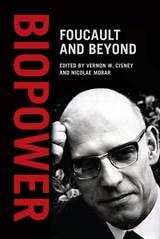
Biopower
Foucault and BeyondEdited by Vernon W. Cisney and Nicolae Morar
University of Chicago Press, 2015
Situating biopower as a radical alternative to traditional conceptions of power—what Foucault called “sovereign power”—the contributors examine a host of matters centered on life, the body, and the subject as a living citizen. Altogether, they pay testament to the lasting relevance of biopower in some of our most important contemporary debates on issues ranging from health care rights to immigration laws, HIV prevention discourse, genomics medicine, and many other topics.
Birth of Hegemony
Crisis, Financial Revolution, and Emerging Global NetworksAndrew C. Sobel
University of Chicago Press, 2012

Birthmark
Stephen Clingman
University of Massachusetts Press, 2016
Not only was the operation unsuccessful, it affected his vision, and his eyes came to see differently from each other. Birthmark explores the questions raised by living with divided vision in a divided world—the world of South Africa under apartheid, where every view was governed by the markings of birth, the accidents of color, race, and skin. But what were the effects on the mind? Clingman's book engages a number of questions. How, in such circumstances, can we come to a deeper kind of vision? How can we achieve wholeness and acceptance? How can we find our place in the midst of turmoil and change?
In a beguiling narrative set on three continents, this is a story that is personal, painful, comic, and ultimately uplifting: a book not so much of the coming of age but the coming of perspective.
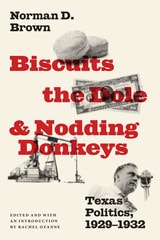
Biscuits, the Dole, and Nodding Donkeys
Texas Politics, 1929-1932By Norman D. Brown, edited and with an introduction by Rachel Ozanne
University of Texas Press, 2019
When the venerable historian Norman D. Brown published Hood, Bonnet, and Little Brown Jug in 1984, he earned national acclaim for revealing the audacious tactics at play in Texas politics during the Roaring Twenties, detailing the effects of the Ku Klux Klan, newly enfranchised women, and Prohibition. Shortly before his death in 2015, Brown completed Biscuits, the Dole, and Nodding Donkeys, which picks up just as the Democratic Party was poised for a bruising fight in the 1930 primary. Charting the governorships of Dan Moody, Ross Sterling, Miriam “Ma” Ferguson in her second term, and James V. Allred, this engrossing sequel takes its title from the notion that Texas politicians should give voters what they want (“When you cease to deliver the biscuits they will not be for you any longer,” said Jim “Pa” Ferguson) while remaining wary of federal assistance (the dole) in a state where the economy is fueled by oil pump jacks (nodding donkeys).
Taking readers to an era when a self-serving group of Texas politicians operated in a system that was closed to anyone outside the state’s white, wealthy echelons, Brown unearths a riveting, little-known history whose impact continues to ripple at the capitol.
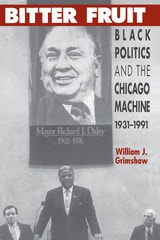
Bitter Fruit
Black Politics and the Chicago Machine, 1931-1991William J. Grimshaw
University of Chicago Press, 1992
Black Baltimore
A New Theory of CommunityHarold Mcdougall
Temple University Press, 1993
Through extensive neighborhood interviews and a compelling assessment of the problems of unraveling communities in urban America, Harold McDougall reveals how, in sections of Baltimore, a "New Community" is developing. Relying more on vernacular culture, personal networking, and mutual support than on private wealth or public subsidy, the communities of black Baltimore provide an example of self-help and civic action that could and should be occurring in other inner-city areas. In this political history of Old West Baltimore, McDougall describes how "base communities"—small peer groups that share similar views, circumstances, and objectives—have helped neighborhoods respond to the failure of both government and the market to create conditions for a decent quality of life for all.
Arguing for the primacy of church leadership within the black community, the author describes how these small, flexible groups are creating the foundation of what he calls a New Community, where community-spirited organizers, clergy, public interest advocates, business people, and government workers interact and build relationships through which Baltimore's urban agenda is being developed.
Black Bodies, Black Rights
The Politics of Quilombolismo in Contemporary BrazilBy Elizabeth Farfán-Santos
University of Texas Press, 2016
Under a provision in the Brazilian constitution, rural black communities identified as the modern descendants of quilombos—runaway slave communities—are promised land rights as a form of reparations for the historic exclusion of blacks from land ownership. The quilombo provision has been hailed as a success for black rights; however, rights for quilombolas are highly controversial and, in many cases, have led to violent land conflicts. Although thousands of rural black communities have been legally recognized, only a handful have received the rights they were promised. Conflict over quilombola rights is widespread and carries important consequences for race relations and political representations of blackness in twenty-first century Brazil.
Drawing on a year of field research in a quilombola community, Elizabeth Farfán-Santos explores how quilombo recognition has significantly affected the everyday lives of those who experience the often-complicated political process. Questions of identity, race, and entitlement play out against a community’s struggle to prove its historical authenticity—and to gain the land and rights they need to survive. This work not only demonstrates the lived experience of a new, particular form of blackness in Brazil, but also shows how blackness is being mobilized and reimagined to gain social rights and political recognition. Black Bodies, Black Rights thus represents an important contribution to the rapidly growing interdisciplinary field of Afro-Latino studies.
Black Critics and Kings
The Hermeneutics of Power in Yoruba SocietyAndrew Apter
University of Chicago Press, 1992
Documenting the development of a Yoruba kingdom from its nineteenth-century genesis to Nigeria's 1983 elections and subsequent military coup, Apter identifies the central role of ritual in reconfiguring power relations both internally and in relation to wider political arenas. What emerges is an ethnography of an interpretive vision that has broadened the horizons of local knowledge to embrace Christianity, colonialism, class formation, and the contemporary Nigerian state. In this capacity, Yoruba òrìsà worship remains a critical site of response to hegemonic interventions.
With sustained theoretical argument and empirical rigor, Apter answers critical anthropologists who interrogate the possibility of ethnography. He reveals how an indigenous hermeneutics of power is put into ritual practice—-with multiple voices, self-reflexive awareness, and concrete political results. Black Critics and Kings eloquently illustrates the ethnographic value of listening to the voice of the other, with implications extending beyond anthropology to engage leading debates in black critical theory.
Black Earth, White Bread
A Technopolitical History of Russian Agriculture and FoodSusanne A. Wengle
University of Wisconsin Press, 2023
Examining governance, production, consumption, nature, and the ensuing vulnerabilities of the agrifood system, Wengle reveals the intended and unintended consequences of Russian agricultural policies since 1917. Ultimately, Black Earth, White Bread calls attention to Russian technopolitics and how macro systems of government impact life on a daily, quotidian level.
Black Elected Officials
Study of Black Americans Holding Government OfficeJames Conyers
Russell Sage Foundation, 1976
Black Enlightenment
Surya Parekh
Duke University Press, 2023

Black Environmentalisms
Cajetan Iheka and Jonathan Howard, editors
Duke University Press, 2027
Black Fathers in Contemporary American Society
Strengths, Weaknesses, and Strategies for ChangeObie Clayton
Russell Sage Foundation, 2003
Black Feminist Anthropology
Theory, Politics, Praxis, and PoeticsMcClaurin, Irma
Rutgers University Press, 2001
In this volume, Irma McClaurin has collected-for the first time-essays that explore the role and contributions of black feminist anthropologists. She has asked her contributors to disclose how their experiences as black women have influenced their anthropological practice in Africa, the Caribbean, and the United States, and how anthropology has influenced their development as black feminists. Every chapter is a unique journey that enables the reader to see how scholars are made. The writers present material from their own fieldwork to demonstrate how these experiences were shaped by their identities. Finally, each essay suggests how the author's field experiences have influenced the theoretical and methodological choices she has made throughout her career.
Not since Diane Wolf's Feminist Dilemmas in the Field or Hortense Powdermaker's Stranger and Friend have we had such a breadth of women anthropologists discussing the critical (and personal) issues that emerge when doing ethnographic research.
Black Flag Boricuas
Anarchism, Antiauthoritarianism, and th eLeft in Puerto Rico, 1897-1921Kirwin R. Shaffer
University of Illinois Press, 2013
Black Food Matters
Racial Justice in the Wake of Food JusticeHanna Garth
University of Minnesota Press, 2020
An in-depth look at Black food and the challenges it faces today
For Black Americans, the food system is broken. When it comes to nutrition, Black consumers experience an unjust and inequitable distribution of resources. Black Food Matters examines these issues through in-depth essays that analyze how Blackness is contested through food, differing ideas of what makes our sustenance “healthy,” and Black individuals’ own beliefs about what their cuisine should be.
Primarily written by nonwhite scholars, and framed through a focus on Black agency instead of deprivation, the essays here showcase Black communities fighting for the survival of their food culture. The book takes readers into the real world of Black sustenance, examining animal husbandry practices in South Carolina, the work done by the Black Panthers to ensure food equality, and Black women who are pioneering urban agriculture. These essays also explore individual and community values, the influence of history, and the ongoing struggle to meet needs and affirm Black life.
A comprehensive look at Black food culture and the various forms of violence that threaten the future of this cuisine, Black Food Matters centers Blackness in a field that has too often framed Black issues through a white-centric lens, offering new ways to think about access, privilege, equity, and justice.
Contributors: Adam Bledsoe, U of Minnesota; Billy Hall; Analena Hope Hassberg, California State Polytechnic U, Pomona; Yuson Jung, Wayne State U; Kimberly Kasper, Rhodes College; Tyler McCreary, Florida State U; Andrew Newman, Wayne State U; Gillian Richards-Greaves, Coastal Carolina U; Monica M. White, U of Wisconsin–Madison; Brian Williams, Mississippi State U; Judith Williams, Florida International U; Psyche Williams-Forson, U of Maryland, College Park; Willie J. Wright, Rutgers U.

Black Identity
Rhetoric, Ideology, and Nineteenth-Century Black NationalismDexter B. Gordon
Southern Illinois University Press, 2006
Exploring the role of rhetoric in African American identity and political discourse
Dexter B. Gordon’s Black Identity: Rhetoric, Ideology, and Nineteenth-Century Black Nationalism explores the problem of racial alienation and the importance of rhetoric in the formation of black identity in the United States. Faced with alienation and disenfranchisement as a part of their daily experience, African Americans developed collective practices of empowerment that cohere as a constitutive rhetoric of black ideology. Exploring the origins of that rhetoric, Gordon reveals how the ideology of black nationalism functions in contemporary African American political discourse.
Rooting his study in the words and works of nineteenth-century black abolitionists such as Maria Stewart, David Walker, and Henry Garnet, Gordon explores the rapprochement between rhetorical theory, race, alienation, and the role of public memory in identity formation. He argues that abolitionists used language in their speeches, pamphlets, letters, petitions, and broadsides that established black identity in ways that would foster liberation and empowerment. The arguments presented here constitute the only sustained treatment of nineteenth-century black activists from a rhetorical perspective.
Gordon demonstrates the pivotal role of rhetoric in African American efforts to create a viable public voice. Understanding nineteenth-century black alienation—and its intersection with twentieth-century racism—is crucial to understanding the continued sense of alienation that African Americans express about their American experience. Gordon explains how the ideology of black nationalism disciplines and describes African American life for its own ends, exposing a central piece of the ideological struggle for the soul of America. The book is both a platform for further discussion and an invitation for more voices to join the discourse as we search for ways to comprehend the sense of alienation experienced and expressed by African Americans in contemporary society.

Black Lawyers, White Courts
The Soul of South African LawKenneth S. Broun
Ohio University Press, 2000
In the struggle against apartheid, one often overlooked group of crusaders was the coterie of black lawyers who overcame the Byzantine system that the government established oftentimes explicitly to block the paths of its black citizens from achieving justice.
Now, in their own voices, we have the narratives of many of those lawyers as recounted in a series of oral interviews. Black Lawyers, White Courts is their story and the anti-apartheid story that has before now gone untold.
Professor Kenneth Broun conducted interviews with twenty-seven black South African lawyers. They were asked to tell about their lives, including their family backgrounds, education, careers, and their visions for the future. In many instances they also discussed their years in prison or exile, or under house arrest. Most told of both education and careers interrupted because of the ongoing struggle.
The story of the professional achievements of black lawyers in South Africa—indeed their very survival—provides an example of the triumph of individuals and, ultimately, of the law. Black Lawyers, White Courts is about South Africa, and about black professionals in that country, but the lessons its protagonists teach extend far beyond circumstances, geography, or race.
Black Milwaukee
The Making of an Industrial Proletariat, 1915-45Joe William Trotter, Jr.
University of Illinois Press, 2006
Praise for the first edition: “Trotter has written a valuable, provocative book that opens new areas for certain--and heated--debate.”--Journal of American Ethnic History
Other historians have tended to treat black urban life mainly in relation to the ghetto experience, but in Black Milwaukee, Joe William Trotter Jr. offers a new perspective that complements yet also goes well beyond that approach. The blacks in Black Milwaukee were not only ghetto dwellers; they were also industrial workers. The process by which they achieved this status is the subject of Trotter’s ground-breaking study.
This second edition features a new preface and acknowledgments, an essay on African American urban history since 1985, a prologue on the antebellum and Civil War roots of Milwaukee’s black community, and an epilogue on the post-World War II years and the impact of deindustrialization, all by the author. Brief essays by four of Trotter’s colleagues--William P. Jones, Earl Lewis, Alison Isenberg, and Kimberly L. Phillips--assess the impact of the original Black Milwaukee on the study of African American urban history over the past twenty years.
Black Nationalism
The Search for an IdentityE. U. Essien-Udom
University of Chicago Press, 1995
"An excellent standard treatment of black nationalist belief and practice in the 50's."—Michael Eric Dyson, New York Times Book Review
"This is an absorbing exercise in first class reporting. . . . In the light of his scrupulous fairness, the book is another illustration of how the press prejudges a story. And most provocatively, Essien-Udom has emphasized that even after the current campaigns for wide-scale integration are won, there will be an even wider chasm between the 'liberated' Negro middle class and the rootless Negro poor."—Nat Hentoff,Commonweal
Black People in the British Empire
Peter Fryer
Pluto Press, 2021
Black People in the British Empire is a challenge to the official version of British history. It tells the story of Britain's exploitation and oppression of its subject peoples in its colonies, and in particular the people of Africa, Asia and Australasia
Peter Fryer reveals how the ideology of racism was used as justification for acquiring and expanding the Empire; how the British Industrial Revolution developed out of profits from the slave trade; and how the colonies were deliberately de-industrialised to create a market for British manufacturers.
In describing the frequency and the scale of revolts by subject peoples against slavery and foreign domination - and the brutality used in crushing them - Peter Fryer exposes the true history of colonialism, and restores to Black people their central role in Britain's past.
Black People in the British Empire
Peter Fryer
Pluto Press, 2021
'Fantastic … the most important book on Black British history’ - Akala
Black People in the British Empire is a challenge to the official version of British history. It tells the story of Britain's exploitation and oppression of its subject peoples in its colonies, and in particular the people of Africa, Asia and Australasia
Peter Fryer reveals how the ideology of racism was used as justification for acquiring and expanding the Empire; how the British Industrial Revolution developed out of profits from the slave trade; and how the colonies were deliberately de-industrialised to create a market for British manufacturers.
In describing the frequency and the scale of revolts by subject peoples against slavery and foreign domination - and the brutality used in crushing them - Peter Fryer exposes the true history of colonialism, and restores to Black people their central role in Britain's past.
Black Political Organizations in the Post-Civil Rights Era
Edited by Ollie A. Johnson III, Karin L. Stanford
Rutgers University Press, 2002
We know a great deal about civil rights organizations during the 1960s, but relatively little about black political organizations since that decade. Questions of focus, accountability, structure, and relevance have surrounded these groups since the modern Civil Rights Movement ended in 1968. Political scientists Ollie A. Johnson III and Karin L. Stanford have assembled a group of scholars who examine the leadership, membership, structure, goals, ideology, activities, accountability, and impact of contemporary black political organizations and their leaders. Questions considered are: How have these organizations adapted to the changing sociopolitical and economic environment? What ideological shifts, if any, have occurred within each one? What issues are considered important to black political groups and what strategies are used to implement their agendas? The contributors also investigate how these organizations have adapted to changes within the black community and American society as a whole.
Organizations covered include well-known ones such as the NAACP, Rainbow/PUSH Coalition, the Southern Christian Leadership Conference, the Urban League, and the Congress of Racial Equality, as well as organizations such as the National Association of Colored Women’s Clubs. Religious groups, including black churches and the Nation of Islam, are also considered.
Black Power Ideologies
An Essay in African American Political ThoughtJohn T. McCartney
Temple University Press, 1993
In a systematic survey of the manifestations and meaning of Black Power in America, John McCartney analyzes the ideology of the Black Power Movement in the 1960s and places it in the context of both African-American and Western political thought. He demonstrates, though an exploration of historic antecedents, how the Black Power versus black mainstream competition of the sixties was not unique in American history. Tracing the evolution of black social and political movements from the 18th century to the present, the author focuses on the ideas and actions of the leaders of each major approach.
Starting with the colonization efforts of the Pan-Negro Nationalist movement in the 18th century, McCartney contrasts the work of Bishop Turner with the opposing integrationist views of Frederick Douglass and his followers. McCartney examines the politics of accommodation espoused by Booker T. Washington; W.E.B. Du Bois's opposition to this apolitical stance; the formation of the NAACP, the Urban League, and other integrationist organizations; and Marcus Garvey's reawakening of the separatist ideal in the early 20th century. Focusing on the intense legal activity of the NAACP from the 1930s to the 1960s, McCartney gives extensive treatment to the moral and political leadership of Martin Luther King, Jr., and his challenge from the Black Power Movement in 1966.
Black Power in the Belly of the Beast
Edited by Judson L. Jeffries
University of Illinois Press, 2006
The volume’s twelve contributors include well-known scholars such as James A. Geschwender and Douglas Glasgow as well as prominent community activists Akbar Muhammad Ahmad, Floyd W. Hayes III, and Komozi Woodard. Each of their chapters explores a single Black Power organization including Us, the Black Panther Party, and the Deacons for Defense and Justice. Important but lesser-known Black Power organizations such as the Republic of New Afrika and Sons of Watts are paid equal attention, as contributors address issues including self-defense, Black identity, and the politics of class and gender. Throughout, authors emphasize the primary role that Black institutions and charismatic leaders played in the rise, development, and eventual decline of the overall movement.
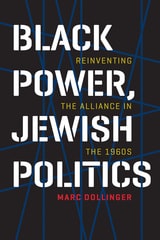
Black Power, Jewish Politics
Reinventing the Alliance in the 1960sMarc Dollinger
Brandeis University Press, 2018

Black Representation and Urban Policy
Albert Karnig and Susan Welch
University of Chicago Press, 1981
In exploring the factors that underlie the election of blacks to public office, the authors found that the resources of the black community itself—the size as well as the education and income of the black population—are the best predictors of blacks' winning political office. The authors' assessment of the impact of black elected officials on urban policy constitutes perhaps their most profoundly important finding. Cities with black mayors have had greater increases in social welfare expenditures than have similar communities without black mayors. The authors point out that election of blacks to mayoral posts, then, can have more than symbolic consequences for public policy.