Results by title
4155 books match the query 'State & Local' and 229 start with b

Bonelight
Ruin And Grace In The New SouthwestMary Sojourner
University of Nevada Press, 2004
Bones of Texas
Photos and Stories from Bygone PlacesMorgan Page and Dustin Rice
University of Texas Press, 2026
Boojoo!
An Introduction to Wisconsin WalloonKelly Biers
University of Wisconsin Press, 2026
Walloon is a language still spoken by a minority population in its home country of Belgium. It can also still be found among a few sparse communities descended from Belgian immigrants in northeastern Wisconsin. Although spoken by a small number of people, the language plays a vital role in the ethnic heritage of the state and is audible in local words like “booyah” and “trippe.”
This book is the first to introduce the language without recourse to French, of which Walloon is sometimes mistakenly described as a variant or dialect. With this text, English-language speakers will need nothing more than interest to pick up basic conversational Walloon, thanks to Kelly Biers’s clear guidance for pronunciation, vocabulary, and grammar. Additionally, readers will learn about how this minority language arrived in the Upper Midwest, the history of Belgian American immigration and settlement, and the language’s linguistic features.
Boojoo and welcome to Wisconsin Walloon!
Books, Bluster, and Bounty
Local Politics and Carnegie Library Building Grants in the Intermountain West, 1890-1920Susan H. Swetnam
Utah State University Press, 2012
Books, Bluster, and Bounty examines a cross-section of Carnegie library applications to determine how local support was mustered for cultural institutions in the late nineteenth and early twentieth century West. This comparative study considers the entire region between the Rockies and the Cascades/Sierras, including all of Idaho, Utah, Nevada, and Arizona; western Montana, Wyoming, and Colorado; eastern Oregon and Washington; and small parts of California and New Mexico. The author's purpose is to address not only the how of the process but also the variable why. Although virtually all citizens and communities in the West who sought Carnegie libraries expected tangible benefits for themselves that were only tangentially related to books, what they specifically wanted varied in correlation with the diverse nature of western communities. By looking at the detailed records of the Carnegie library campaigns, the author is able to provide an alternative lens through which to perceive and map the social-cultural makeup and town building of western communities at the turn of the century.
Boomtown Blues
Colorado Oil Shale, Revised EditionAndrew Gulliford
University Press of Colorado, 2011
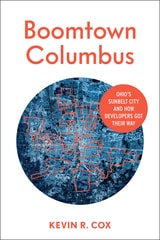
Boomtown Columbus
Ohio’s Sunbelt City and How Developers Got Their WayKevin R. Cox
The Ohio State University Press, 2021
How have development interests become entwined with government? How has a policy of annexation reformed the city’s map? Why have airline service and major league prestige lagged behind its status as a regional center? And what, if anything, makes this city with a reputation for being average stand apart? In Boomtown Columbus, Cox applies both scholarly expertise and his personal experience as a long-time resident of the city to look at the real-life costs of policy. The resulting narrative will fascinate not only locals but anyone with a stake in understanding American cities and a path toward urban livability for all.
Boomtown Saloons
Archaeology And History In Virginia CityKelly J. Dixon
University of Nevada Press, 2006
The image of Old West saloons as sites of violence and raucous entertainment has been perpetuated by film and legend, but the true story of such establishments is far more complex. In Boomtown Saloons, archaeologist Kelly J. Dixon recounts the excavation of four historic saloon sites in Nevada’s Virginia City, one of the West’s most important boomtowns, and shows how the physical traces of this handful of disparate drinking places offer a new perspective on authentic life in the mining West. During the second half of the nineteenth century, the Comstock Lode’s mineral wealth attracted people from all over the world. At its peak, Virginia City had a cosmopolitan population of over 20,000 people. Like people everywhere, they sought to pass their leisure time in congenial company, often in one or another of the four saloons studied here. Dixon’s account of the role these four establishments played in the social and economic life of Virginia City offers keen insight into the businesses and people who made up the backdrop of a mining boomtown. The saloons in this study were quieter than legend would have us believe; they served relatively distinct groups and offered their customers a place of refuge, solidarity, and social contact with peers in a city where few people had longtime ties or initially any close contacts. Boomtown Saloons also offers an equally vivid portrait of the modern historical archaeologist who combines time-honored digging, reconstruction, and analysis methods with such cutting-edge technology as DNA analysis of saliva traces on a 150-year-old pipestem and chemical analysis of the residue in discarded condiment bottles. The book is illustrated with historical photographs and maps, as well as photographs of artifacts uncovered during the excavations of the four sites. Dixon’s sparkling text and thoughtful interpretation of evidence reveal an unknown aspect of daily life in one of the West’s most storied boomtowns and demonstrate that, contrary to legend, the traditional western saloon served an vital and complex social role in its community. Available in hardcover and paperback.
Boots, Bikes, and Bombers
Adventures of Alaska Conservationist Ginny Hill WoodEdited by Karen Brewster
University of Alaska Press, 2012
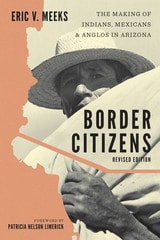
Border Citizens
The Making of Indians, Mexicans, and Anglos in ArizonaBy Eric V. Meeks; foreword by Patricia Nelson Limerick
University of Texas Press, 2007
In Border Citizens, historian Eric V. Meeks explores how the racial classification and identities of the diverse indigenous, mestizo, and Euro-American residents of Arizona’s borderlands evolved as the region was politically and economically incorporated into the United States. First published in 2007, the book examines the complex relationship between racial subordination and resistance over the course of a century. On the one hand, Meeks links the construction of multiple racial categories to the process of nation-state building and capitalist integration. On the other, he explores how the region’s diverse communities altered the blueprint drawn up by government officials and members of the Anglo majority for their assimilation or exclusion while redefining citizenship and national belonging.
The revised edition of this highly praised and influential study features dozens of new images, an introductory essay by historian Patricia Nelson Limerick, and a chapter-length afterword by the author. In his afterword, Meeks details and contextualizes Arizona’s aggressive response to undocumented immigration and ethnic studies in the decade after Border Citizens was first published, demonstrating that the broad-based movement against these measures had ramifications well beyond Arizona. He also revisits the Yaqui and Tohono O’odham nations on both sides of the Sonora-Arizona border, focusing on their efforts to retain, extend, and enrich their connections to one another in the face of increasingly stringent border enforcement.
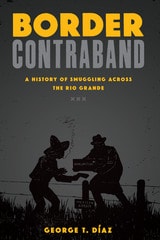
Border Contraband
A History of Smuggling across the Rio GrandeBy George T. Díaz
University of Texas Press, 2015
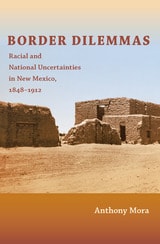
Border Dilemmas
Racial and National Uncertainties in New Mexico, 1848–1912Anthony Mora
Duke University Press, 2011
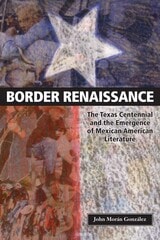
Border Renaissance
The Texas Centennial and the Emergence of Mexican American LiteratureBy John Morán González
University of Texas Press, 2009
The Texas Centennial of 1936, commemorated by statewide celebrations of independence from Mexico, proved to be a powerful catalyst for the formation of a distinctly Mexican American identity. Confronted by a media frenzy that vilified "Meskins" as the antithesis of Texan liberty, Mexican Americans created literary responses that critiqued these racialized representations while forging a new bilingual, bicultural community within the United States. The development of a modern Tejana identity, controversies surrounding bicultural nationalism, and other conflictual aspects of the transformation from mexicano to Mexican American are explored in this study. Capturing this fascinating aesthetic and political rebirth, Border Renaissance presents innovative readings of important novels by María Elena Zamora O'Shea, Américo Paredes, and Jovita González. In addition, the previously overlooked literary texts by members of the League of United Latin American Citizens (LULAC) are given their first detailed consideration in this compelling work of intellectual and literary history.
Drawing on extensive archival research in the English and Spanish languages, John Morán González revisits the 1930s as a crucial decade for the vibrant Mexican American reclamation of Texas history. Border Renaissance pays tribute to this vital turning point in the Mexican American struggle for civil rights.
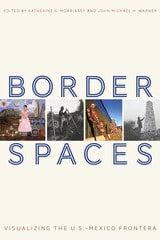
Border Spaces
Visualizing the U.S.-Mexico FronteraEdited by Katherine G. Morrissey and John-Michael H. Warner
University of Arizona Press, 2018
In Border Spaces, Katherine G. Morrissey, John-Michael H. Warner, and other essayists build on the insights of border dwellers, or fronterizos, and draw on two interrelated fields—border art history and border studies. The editors engage in a conversation on the physical landscape of the border and its representations through time, art, and architecture.
The volume is divided into two linked sections—one on border histories of built environments and the second on border art histories. Each section begins with a “conversation” essay—co-authored by two leading interdisciplinary scholars in the relevant fields—that weaves together the book’s thematic questions with the ideas and essays to follow.
Border Spaces is prompted by art and grounded in an academy ready to consider the connections between art, land, and people in a binational region.
Contributors
Maribel Alvarez
Geraldo Luján Cadava
Amelia Malagamba-Ansótegui
Mary E. Mendoza
Sarah J. Moore
Katherine G. Morrissey
Margaret Regan
Rebecca M. Schreiber
Ila N. Sheren
Samuel Truett
John-Michael H. Warner
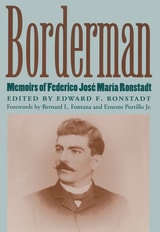
Borderman
Memoirs of Federico José María RonstadtEdited by Edward F. Ronstadt; Forewords by Bernard L. Fontana and Ernesto Portillo, Jr.
University of Arizona Press, 2003
Writing proudly of his Mexican and American heritages, Ronstadt offers readers an extraordinary portrait of the Arizona-Mexico borderlands during the late nineteenth century. His memoirs provide a richness of detail and insight unmatched by traditional histories, relating such scenarios as the hardships of Yaqui hardrock miners working under primitive conditions, the travails of pearl divers in the Gulf of California, and the insurrection of Francisco Serna in 1875 Sonora. They also depict the simple activities of childhood, with its schooling and musical training, its games and mischief. Ronstadt relates his apprenticeship to a wagon- and carriage-maker in Tucson, recalling labor relations in the shop, the establishment of his own business, and the joys and anguish of his personal life. He tells of how he drew on talents nurtured in childhood to become a musician and bandleader, playing weekly concerts with Club Filarmónica Tucsonense for nine years—musical talents that were eventually passed on to his children, his grandchildren (including Linda), and great-grandchildren.
Through Ronstadt's memories, we are better able to understand the sense of independence and self-reliance found today among many lifelong residents of Sonora and Baja California—people isolated from major supply sources and centers of power—and to appreciate a different view of Tucson's past. Enhanced by 22 historical photos, Borderman is a treasure trove of historical source material that will enlighten all readers interested in borderlands history.
Born in the Delta
Reflections on the Making of a Southern White SensibilityMargaret Bolsterli
University of Arkansas Press, 2000

Born to Pull
The Glory of Sled DogsBob Cary
University of Minnesota Press, 1999
Boss Cox’s Cincinnati
Urban Politics in the Progressive EraZane L. Miller
The Ohio State University Press, 2000
In documenting the changes Cincinnati experienced during the Progressive Era, Zane L. Miller provides a clear perspective on the processes of urbanization that transformed the American city. His focus is political because politics provided continuity amid the diversity of city life. The most important aspect of political continuity in Cincinnati and in other cities was "bossism," often depicted as an example of corruption, but which was in many cities part of the quest for a new urban order. In Cincinnati, Boss George B. Cox's machine was a response to the disorder of the times; interestingly, the machine actually helped to control disorder, paving the way for later reforms. Miller carefully explores both the nature and the significance of bossism, showing how it and municipal reform were both essential components of the modern urban political system.
Originally published in 1968, Boss Cox's Cincinnati is considered a classic in the field of urban studies.
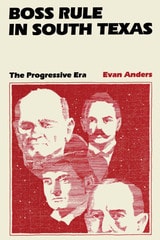
Boss Rule in South Texas
The Progressive EraBy Evan Anders
University of Texas Press, 1982
Four men played leading roles in the political drama that unfolded in South Texas during the first decades of this century:
- James B. Wells, who ruled as boss of Cameron County and served as leading conservative spokesman of the Democratic Party in Texas;
- Archer (Archie) Parr, whose ruthless tactics and misuse of public funds in Duval County established him as one of the most notoriously corrupt politicians in Texas history;
- Manuel Guerra, Mexican American rancher and merchant whose domination of Starr County mirrored the rule of his Anglo counterparts in the border region;
- John Nance Garner, who served the interests of these bosses of South Texas as he set forth on the road that would lead him to the United States vice-presidency.
Evan Anders's Boss Rule in South Texas tells the story of these men and the county rings they shaped in South Texas during the Progressive Era.
Power was the byword of the bosses of the Lower Rio Grande Valley, and Anders explores the sources of that power. These politicos did not shirk from using corrupt and even violent means to attain their goals, but Anders demonstrates that their keen sensitivity to the needs of their diverse constituency was key to their long-term success. Patronage and other political services were their lifeblood, and the allies gained by these ranged from developers and businessmen to ranchers and Mexican Americans, wealthy and poor.
Besides examining the workings of the Democratic machines of four South Texas counties, Anders explores the role of the Hispanic populace in shaping the politics of the border region, the economic development of the Lower Rio Grande Valley and its political repercussions, the emergence and nature of progressive movements at both local and state levels, and the part played by the Texas Rangers in supporting bossism in South Texas.
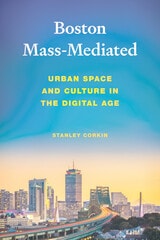
Boston Mass-Mediated
Urban Space and Culture in the Digital AgeStanley Corkin
University of Massachusetts Press, 2024
In the mid-nineteenth century, Boston fashioned itself as a global hub. By the early 1970s, it was barely a dot on the national picture. It had gained a reputation as a decaying city rife with crime and dysfunctional politics, as well as decidedly retrograde race relations, prominently exemplified by white resistance to school integration. Despite this historical ebb in its national and international presence, it still possessed the infrastructure—superb educational institutions such as Harvard and MIT, world-class sports teams like the Celtics and Red Sox, powerful media outlets like The Boston Globe, and extensive shipping capacity—required to eventually thrive in an age of global trade and mass communication.
In Boston Mass-Mediated, Stanley Corkin explores the power of mass media to define a place. He examines the tensions between the emergent and prosperous city of the late twentieth and early twenty-first centuries and its representation in a range of media genres such as news journalism, professional sports broadcasting, and popular films like Mystic River and The Departed. This mass media, with its ever-increasing digital reach, has emphasized a city restricted by tropes suggestive of an earlier Boston—racism, white ethnic crime, Catholicism, and a pre-modern insularity—even as it becomes increasingly international and multicultural. These tropes mediate our understanding and experience of the city. Using Boston as a case study, Corkin contends that our contemporary sense of place occurs through a media saturated world, a world created by the explosion of digital technology that is steeped in preconceptions.
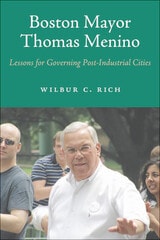
Boston Mayor Thomas Menino
Lessons for Governing Post-Industrial CitiesWilbur C. Rich
University of Massachusetts Press, 2023
Hailed as one of Boston’s most beloved mayors and its longest serving, Thomas Menino (1942–2014) deftly managed the city’s finances and transformed Boston into the hub of innovation that it is today. During his time in office, Boston embraced modern industrial growth and moved forward with noteworthy developments that altered neighborhoods, while also facing ongoing racial strife, challenges of unaffordable housing, and significant public union negotiations.
Mayors in modern American cities occupy unique positions as government leaders who need to remain active parts of their communities in addition to being tasked with fixing neighborhood issues, managing crises, and keeping schools and public infrastructure on course. Situating news coverage alongside interviews with the mayor and his administration, political scientist Wilbur C. Rich chronicles Menino’s time in office while also considering his personal and professional background, his larger-than-life personality, and his ambitions. Menino’s approach to these challenges and opportunities offers enduring lessons to anyone interested in urban government and political leadership.

Boston Strong
A City's Triumph over TragedyCasey Sherman and Dave Wedge
University Press of New England, 2015
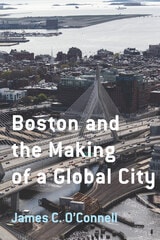
Boston and the Making of a Global City
James C. O’Connell
University of Massachusetts Press, 2025
In the late twentieth century the American and global economy shifted from manufacturing toward a knowledge industry. Following an economic low point several decades earlier, the city of Boston took advantage of the new era of globalization, fueled by dramatic advances in telecommunications, computer power, and air and sea travel, as well as its own impressive intellectual capital.
Boston and the Making of a Global City pulls together scholarship, media stories, personal interviews, and city planning documents to tell the story of Boston’s historical trajectory, as it quickly became a competitive global hub. Starting with its role as a colonial port and nineteenth-century maritime power, but moving quickly forward, the book describes how Boston capitalized on its strengths in higher education and such innovation sectors as life sciences, healthcare, information technology, and finance. Author James O’Connell traces the historical sweep of global flows—trade and supply chains, innovation and the dissemination of knowledge, investment, transportation, tourism, telecommunications, and immigration—that have shaped the city and region’s development. This volume also addresses the economic, social, and environmental challenges that Boston currently faces and how it is strategically positioned to confront them going forward.
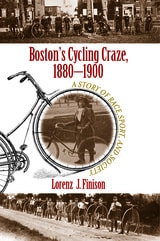
Boston's Cycling Craze, 1880-1900
A Story of Race, Sport, and SocietyLorenz J. Finison
University of Massachusetts Press, 2014
Lorenz J. Finison explores the remarkable rise of Boston cycling through the lives of several participants, including Kittie Knox, a biracial twenty-year-old seamstress who challenged the color line; Mary Sargent Hopkins, a self-proclaimed expert on women's cycling and publisher of The Wheelwoman; and Abbot Bassett, a longtime secretary of the League of American Wheelman and a vocal cycling advocate for forty years. Finison shows how these riders and others interacted on the road and in their cycling clubhouses, often constrained by issues of race, class, religion, and gender. He reveals the challenges facing these riders, whether cycling for recreation or racing, in a time of segregation, increased immigration, and debates about the rights of women.
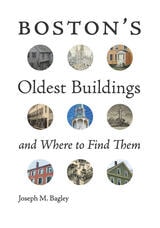
Boston's Oldest Buildings and Where to Find Them
Joseph M. Bagley
Brandeis University Press, 2021
As Boston approaches its four-hundredth anniversary, it is remarkable that it still maintains its historic character despite constant development. The fifty buildings featured in this book all pre-date 1800 and illustrate Boston’s early history. This is the first book to survey Boston’s fifty oldest buildings and does so through an approachable narrative which will appeal to nonarchitects and those new to historic preservation. Beginning with a map of the buildings’ locations and an overview of the historic preservation movement in Boston, the book looks at the fifty buildings in order from oldest to most recent. Geographically, the majority of the buildings are located within the downtown area of Boston along the Freedom Trail and within easy walking distance from the core of the city. This makes the book an ideal guide for tourists, and residents of the city will also find it interesting as it includes numerous properties in the surrounding neighborhoods. The buildings span multiple uses from homes to churches and warehouses to restaurants. Each chapter features a building, a narrative focusing on its historical significance, and the efforts made to preserve it over time. Full color photos and historical drawings illustrate each building and area. Boston’s Oldest Buildings and Where to Find Them presents the ideals of historic preservation in an approachable and easy-to-read manner appropriate for the broadest audience. Perfect for history lovers, architectural enthusiasts, and tourists alike.
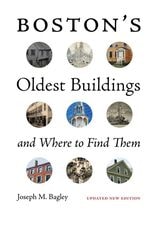
Boston's Oldest Buildings and Where to Find Them
Joseph M. Bagley
Brandeis University Press, 2025
As Boston fast approaches its four-hundredth anniversary, the city’s architecture plays an important role in preserving its historic character. This book introduces readers to the city’s early history through fifty buildings, which all pre-date 1800. Employing an approachable narrative that will appeal to non-architects and those new to historic preservation, Joseph M. Bagley guides readers through an overview of the historic preservation movement in Boston before explaining the historical significance of these structures, which include homes, churches, warehouses, and restaurants.
The book begins with a map of the buildings’ locations and organizes entries from the oldest to the most recent. The majority of the properties are located within Boston’s downtown area, along the Freedom Trail, and within easy walking distance from the core of the city. While this makes the book an ideal guide for tourists, Boston residents will also discover buildings in the surrounding neighborhoods. Each chapter features a building, a story about its history, and the efforts made to preserve it over time. Fullcolor photos and historical drawings illustrate each structure and area.
Boston’s Oldest Buildings and Where to Find Them presents the ideals of historic preservation in an easy-to-read manner appropriate for the broadest audience. Perfect for history lovers, architectural enthusiasts, locals, and visitors alike.
This new edition features a foreword by Robert Allison, professor of history, language, and global culture at Suffolk University, and includes three new buildings identified by the author as being amongst the oldest in the city, which illustrates the dynamic nature of archaeology.
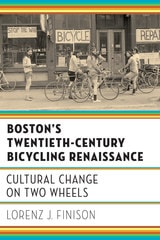
Boston's Twentieth-Century Bicycling Renaissance
Cultural Change on Two WheelsLorenz J. Finison
University of Massachusetts Press, 2019
Finison traces the city's cycling history, chronicling the activities of environmental and social justice activists, stories of women breaking into male-dominated professions by becoming bike messengers and mechanics, and challenges faced by African American cyclists. Making use of newspaper archives, newly discovered records of local biking organizations, and interviews with Boston-area bicyclists and bike builders, Boston's Twentieth-Century Bicycling Renaissance brings these voices and battles back to life.
Boston
Voices and VisionsShaun O'Connell
University of Massachusetts Press, 2010
“New England was founded consciously, and in no fit of absence of mind,” observed historian Samuel Eliot Morison on the establishment of the Bay Colony in 1630 on the narrow, mountainous Shawmut peninsula of what became Massachusetts. That self-conscious presence of mind has endured for four centuries. Boston has been shaped and sustained by observation, imagination, and interpretation. As a result, the evolving vision of Boston has yielded a compelling literary record.
In this wide-ranging anthology, Shaun O'Connell includes a generous sampling of those who have recorded, revised, and redefined the vision of Boston. Anne Bradstreet, Nathaniel Hawthorne, Henry James, W. E. B. Du Bois, Mary Antin, Edwin O'Connor, John Updike, and many others eloquently evoke and explain Boston in these pages.
From John Winthrop's “city upon a hill” sermon, delivered aboard the Arbella before his followers landed in 1630 in the place they would call Boston, to Robert Lowell's “For the Union Dead,” a poem delivered in Boston's Public Garden in 1960, writers have continued to invoke the high purposes for which the city was founded, sometimes in praise of the city, but often in what Robert Frost named a “lover's quarrel,” in works that called attention to the city's failures to fulfill its promises. In the twenty-first century some writers continue to celebrate or to castigate the city, while others look back to Boston's origins to reassess its founders and renew its covenant of high purpose.
This is an interpretive anthology—one that includes commentary as well as writings. Section introductions provide historical and biographical context, offer analysis that stresses the thematic relevance of each selection, and explore the pattern of their relations. Rather than present a random array of writers who happen to have been Greater Bostonians, O'Connell focuses on those authors who possessed a commitment to the sense of place, those who addressed Boston not only as a geographical, social, and political entity but as an image, idea, and site of symbolic values.
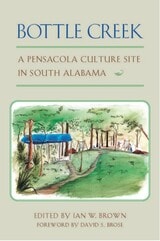
Bottle Creek
A Pensacola Culture Site in South AlabamaEdited by Ian W. Brown, with a foreword by David S. Brose
University of Alabama Press, 2002
The first comprehensive study and analysis of the most important Mississippian mound site on the north-central Gulf coast
Consisting of 18 earthen mounds and numerous additional habitation areas dating to A.D. 1250-1550, the Bottle Creek site was first professionally investigated in 1932 when David L. DeJarnette of the Alabama Museum of Natural History began work there to determine if the site had a cultural relationship with Moundville, connected to the north by a river system. Although partially mapped in the 1880s, Bottle Creek's location in the vast Mobile-Tensaw Delta of Baldwin County completely surrounded by swamp made it inaccessible and protected it from most of the plunder experienced by similar sites in the Southeast.
This volume builds on earlier investigations to present extensive recent data from major excavations conducted from 1991 to 1994 and supported in part by an NEH grant. Ten anthropologists examine various aspects of the site, including mound architecture, prehistoric diet, pottery classification, vessel forms, textiles used to make pottery impressions, a microlithic stone tool industry, water travel, the persistence of mound use into historic times, and the position of Bottle Creek in the protohistoric world.
The site is concluded to be the best remaining example of Pensacola culture, an archaeological variant of the widespread Mississippian tradition identified by a shell-tempered pottery complex and by its geographic association with the north-central coast of the Gulf of Mexico. Occupied for three centuries by a thriving native culture, Bottle Creek is an important remnant of North American peoples and as such is designated a National Historic Landmark. This published compilation of the research data should establish a base for future scholarly investigation and interpretation.
A Dan Josselyn Memorial Publication
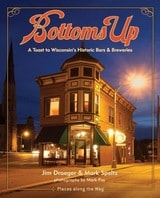
Bottoms Up
A Toast to Wisconsin's Historic Bars and BreweriesJim Draeger
Wisconsin Historical Society Press, 2017
Bottoms Up celebrates Wisconsin’s taverns and the breweries that fueled them. Beginning with inns and saloons, the book explores the rise of taverns and breweries, the effects of temperance and Prohibition, and attitudes about gender, ethnicity, and morality. It traces the development of the megabreweries, dominance of the giants, and the emergence of microbreweries. Contemporary photographs of unusual and distinctive bars and breweries of all eras, historical photos, postcards, advertisements, and breweriana illustrate the story of how Wisconsin came to dominate brewing—and the place that bars and beer hold in our social and cultural history.
Seventy featured taverns and breweries represent diverse architectural styles, from the open-air Tom’s Burned Down Cafe on Madeline Island to the Art Moderne Casino in La Crosse, and from Club 10, a 1930s roadhouse in Stevens Point, to the well-known Wolski’s Tavern in Milwaukee. There are bars in barns and basements and brewpubs in former ice cream factories and railroad depots. Bottoms Up also includes a heady mix of such beer-related topics as ice harvesting, barrel making, bar games, Old-Fashioneds, bar fixtures, and the queen of the bootleggers. Now in paperback for the first time!
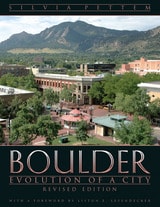
Boulder
Evolution of a City, Revised EditionSilvia Pettem
University Press of Colorado, 2006
Pettem devotes the first chapter to an introduction of the early photographers whose work appears throughout the book. Moving outward from the central business district as development did, each subsequent chapter focuses on a particular area in Boulder, with an introductory essay followed by historic and contemporary photographs with detailed captions.
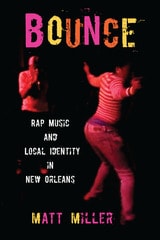
Bounce
Rap Music and Local Identity in New OrleansMatt Miller
University of Massachusetts Press, 2012
Over the course of the twentieth century, African Americans in New Orleans helped define the genres of jazz, rhythm and blues, soul, and funk. In recent decades, younger generations of New Orleanians have created a rich and dynamic local rap scene, which has revolved around a dance-oriented style called “bounce.”
Hip-hop has been the latest conduit for a “New Orleans sound” that lies at the heart of many of the city's best-known contributions to earlier popular music genres. Bounce, while globally connected and constantly evolving, reflects an enduring cultural continuity that reaches back and builds on the city's rich musical and cultural traditions.
In this book, the popular music scholar and filmmaker Matt Miller explores the ways in which participants in New Orleans's hip-hop scene have collectively established, contested, and revised a distinctive style of rap that exists at the intersection of deeply rooted vernacular music traditions and the modern, globalized economy of commercial popular music. Like other forms of grassroots expressive culture in the city, New Orleans rap is a site of intense aesthetic and economic competition that reflects the creativity and resilience of the city's poor and working-class African Americans.
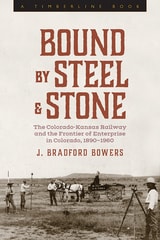
Bound by Steel and Stone
The Colorado-Kansas Railway and the Frontier of Enterprise in Colorado, 1890-1960J. Bradford Bowers
University Press of Colorado, 2022
Offering the Colorado-Kansas Railway as an example of how shortline railroads helped to integrate the rural landscape with the larger urban and economic world, Bowers reveals the constant adaptations driven by changing economic forces and conditions. He puts the railway in context of the wider environmental and political landscapes, the growing quarrying and mining business, the expansion of agriculture and irrigation, Progressive-era political reforms, and land development. In the new frontier of enterprise in the early twentieth-century American West, the railroad highlights the successes and failures of the men inspired to pursue these new opportunities as well as the story of one woman who held these fragile industries together well into the second half of the twentieth century.
Bound by Steel and Stone is an insightful addition to the history of industrialization and economic development in Colorado and the American West.
Bourbon Democracy in Alabama, 1874–1890
Allen Johnston Going
University of Alabama Press, 1951
A definitive study of the political forces that reshaped Alabama after Reconstruction.
In Bourbon Democracy in Alabama, 1874-1890, historian Johnston Allen Going offers a seminal examination of the political transformation of Alabama during the years following Reconstruction. Focusing on the rise of Bourbon Democratic leadership, Going explores how a new political elite consolidated power, reshaped state institutions, and directed Alabama's economic and social development during a pivotal period in Southern history.
Drawing on extensive historical research, the book traces the efforts of Democratic leaders to restore political control after Reconstruction while promoting policies associated with the emerging New South. Going analyzes the complex interplay of political ideology, economic modernization, class interests, and racial dynamics that influenced governance and public life between 1874 and 1890. Through detailed accounts of elections, legislative initiatives, and political struggles, the study reveals how Alabama's leaders sought to balance progress, stability, and authority in a rapidly changing society.
A landmark contribution to both Alabama history and the broader study of the post-Reconstruction South, Bourbon Democracy in Alabama provides critical insight into the forces that shaped regional politics and helped define the course of Southern development in the late nineteenth century. Essential for understanding the origins of modern Alabama politics, this book is a valuable resource for historians, students, political scientists, genealogists, and anyone interested in Southern history and government.
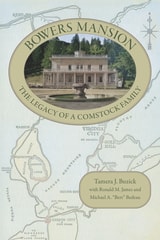
Bowers Mansion
The Legacy of a Comstock FamilyTamera J. Buzick
University of Nevada Press, 2026
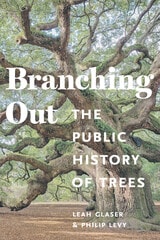
Branching Out
The Public History of TreesEdited by Leah S. Glaser and Philip Levy
University of Massachusetts Press, 2025
Trees are not just natural resources; they are also cultural ones that present unique challenges and opportunities for public historians. Trees can serve as important objects of memory, recalling past triumphs or tragedies. They can be the last living witness to important events or community stories. Trees can also be objects of preservation, sometimes as individuals, other times as stands or even forests, all of which can take on historical significance for people, sites, and institutions. But as living entities they defy the kind of permanent legal preservation applicable to buildings and other non-living historical objects. Furthermore, their organic fragility can actually make them significant problems for historical sites and local preservation activities. For example, communities have had to cope with extensive tree loss from storm and fire damage, and dying trees can drop limbs or topple over, creating considerable danger to people and resources. Climate-change-driven increasing storm intensity has also highlighted the ways that trees—however historical or beloved—can become considerable threats.
The fourteen new essays in this volume explore the many ways that trees are an integral part of public history practice and sites. The authors draw on a range of approaches and historiographies to look at how memories of race-based hate, patriotic stories, community identities, and changed places have all centered on trees. In addition to contributions from the volume editors, this collection features scholarship by Sonja Dümpelmann Andrew Hurley, Carolyn M. Barske Crawford, Brian Dempsey, Liz Sargent, Sasha Coles, Mariaelena DiBenigno, Evan Haefeli, Krista McCracken, Alena Pirok, Christian Kosmas Mayer Alaina Scapicchio, and David Glassberg.
Branding Texas
Performing Culture in the Lone Star StateBy Leigh Clemons
University of Texas Press, 2008
Ask anyone to name an archetypal Texan, and you're likely to get a larger-than-life character from film or television (say John Wayne's Davy Crockett or J. R. Ewing of TV's Dallas) or a politician with that certain swagger (think LBJ or George W. Bush). That all of these figures are white and male and bursting with self-confidence is no accident, asserts Leigh Clemons. In this thoughtful study of what makes a "Texan," she reveals how Texan identity grew out of the history—and, even more, the myth—of the heroic deeds performed by Anglo men during the Texas Revolution and the years of the Republic and how this identity is constructed and maintained by theatre and other representational practices.
Clemons looks at a wide range of venues in which "Texanness" is performed, including historic sites such as the Alamo, the battlefield at Goliad, and the San Jacinto Monument; museums such as the Bob Bullock Texas State History Museum; seasonal outdoor dramas such as Texas! at Palo Duro Canyon; films such as John Wayne's The Alamo and the IMAX's Alamo: The Price of Freedom; plays and TV shows such as the Tuna trilogy, Dallas, and King of the Hill; and the Cavalcade of Texas performance at the 1936 Texas Centennial. She persuasively demonstrates that these performances have created a Texan identity that has become a brand, a commodity that can be sold to the public and even manipulated for political purposes.
Break Point
Two Minnesota Athletes and the Road to Title IXSheri Brenden
University of Minnesota Press, 2022
How two teenage girls in Minnesota jump-started a revolution in high school athletics
Peggy Brenden, a senior, played tennis. Toni St. Pierre, a junior, was a cross country runner and skier. All these two talented teenagers wanted was a chance to compete on their high school sports teams. But in Minnesota in 1972 the only way on the field with the boys ran through a federal court—so that was where the girls went. Break Point tells the story, for the first time, of how two teenagers took on the unequal system of high school athletics, setting a legal precedent for schools nationwide before the passage of Title IX.
As Peggy’s younger sister, author Sheri Brenden is uniquely positioned to convey the human drama of the case, the stakes, and the consequences for two young women facing the legal machinery of the state, in court and in school. In an account that begins with Peggy painstakingly typing her appeal to the Minnesota Civil Liberties Union and concludes with a long view of what Brenden v. Independent School District 742 set in motion, Sheri Brenden summons the salient details of this landmark case as it makes its way through the courts. Peggy and Toni, coaches, administrators, and experts testify before Judge Miles Lord, whose decision, upheld in a precedent-setting appeal, would change these girls’ lives and open up athletic opportunities for innumerable others.
Grounded in newspaper coverage, court records, and interviews, Brenden’s deeply researched, scrupulously reported book is at heart the story of two talented teenage girls whose pluck and determination—and, often, heartache—led to a victory much greater than any high school championship.
Breaking America
The Radical Abolitionists of Quincy, IllinoisTerrell Dempsey
University of Missouri Press, 2026
In this engaging new work, Terrell Dempsey and Patrick Hotle draw from newly discovered and underutilized primary sources to craft a detailed narrative history of the rise of a group of radical abolitionists in Quincy, Illinois, and the outsized, if mostly overlooked, influence they had on the dissolution of the Union.
The story begins with the 1830 arrival in Marion County, Missouri, of Dr. David Nelson, a Presbyterian minister and supporter of the American Colonization Society. After hearing a speech by Theodore B. Weld, Nelson was converted to the abolitionist cause and went on to recruit Elijah Lovejoy into the region’s nascent anti-slavery movement. Nelson’s activities resulted in the creation of an active anti-abolitionist organization in Northeast Missouri that ended up running him out of the state and across the river to Quincy, Illinois, at the same time Lovejoy sought shelter in Alton, Illinois.
In Quincy, Nelson and a group of like-minded moderate anti-slavery activists opened a manual labor school called the Mission Institute. Following the murder of Lovejoy by a pro-slavery mob, a small band of abolitionists at the Mission Institute became radicalized and decided to aid enslaved people in their quest for freedom. After three of these abolitionists were captured in Missouri and sentenced to twelve years in prison, others at the Mission Institute published a call for the Illinois Anti-Slavery Society to organize an underground railroad in Illinois. The Society officially committed to assisting enslaved people to escape slavery in May of 1842, which triggered a hostile reaction from enslavers in Missouri who went on to organize patrols, seek stricter state laws, and attempt to sabotage the underground railroad in neighboring Illinois.
In Breaking America, Dempsey and Hotle demonstrate the impact of the Quincy abolitionists on the later Dred Scott cases. The authors trace a sequence of revivals, public meetings, daring escapes, over-reactions, judicial decisions, and violence, providing a roadmap for how Missouri judicial opinion changed from “once free, always free” to “once a slave, always a slave” under Missouri Law. Breaking America is an important new addition to the history of abolitionism, the Dred Scott decision, and the eventual dissolution of the Union.
Breaking Chains
Slavery on Trial in the Oregon TerritoryR. Gregory Nokes
Oregon State University Press, 2013
In Breaking Chains, R. Gregory Nokes tells the story of the only slavery case adjudicated in Oregon’s pre-Civil War courts—Holmes v. Ford. Through the lens of this landmark case, Nokes explores the historical context of racism in Oregon and the West, reminding readers that there actually were slaves in Oregon, though relatively few in number.
Drawing on the court record, Nokes offers an intimate account of the relationship between a slave and his master from the slave’s point of view. He also explores the experiences of other slaves in early Oregon, examining attitudes toward race and revealing contradictions in the state’s history. Oregon was the only free state admitted to the union with a voter-approved constitutional clause banning African Americans and, despite the prohibition of slavery in the state, many in Oregon tolerated it and supported politicians who advocated for slavery, including Oregon’s first territorial governor.
Breaking Chains sheds light on a somber part of Oregon’s history, bringing the story of slavery in Oregon to a broader audience. The book will appeal to readers interested in Pacific Northwest history and in the history of slavery in the United States.

Breaking the Banks
Representations and Realities in New England Fisheries, 1866-1966Matthew McKenzie
University of Massachusetts Press, 2018
Books, films, and the media have long portrayed the Yankee fisherman's hard-scrabble existence, as he faced brutal weather on the open seas and unnecessary governmental restrictions. As McKenzie contends, this simplistic view has long betrayed commercial fisheries' sophisticated legislative campaigns in Washington, DC, as they sought federal subsidies and relief and, eventually, fewer constricting regulations. This clash between fisheries' representation and their reality still grips fishing communities today as they struggle to navigate age-old trends of fleet consolidation, stock decline, and intense competition.
Breaking the Silence
The Little Rock Women's Emergency Committee to Open Our Schools, 1958–1963Sara Murphy
University of Arkansas Press, 1997
The Little Rock Central High School integration crisis did not end in1957 when President Eisenhower sent a portion of the first Airborne Division to protect nine black students. The turmoil was entering its second year in 1958 when Arkansas governor Orval Faubus invoked a hastily passed state law to close the high schools rather than obey the federal court orders that would integrate them.
A group of respectable, middle-class white women, faced with the prospect of no schools as well as the further loss of their city’s good name, turned militant. Led by Adolphine Fletcher Terry, a prominent, “old family” civic leader in her seventies, the women quickly put together the Women’s Emergency Committee to Open Our Schools (WEC), a highly effective organization that bombarded the city with ads, fliers, and statements challenging Faubus’s action. At peak membership, the WEC mustered two thousand to their cause. Largely inexperienced in politics when they joined the WEC, these women became articulate, confident promoters of public schools and helped others to understand that those schools must be fully integrated.
Forty years later, Sara Murphy, a key member of the WEC, recounts the rarely told sto1y of these courageous women who formed a resistance movement. With passion and sensitivity, she reconstructs the challenges and triumphs of that battle, which issued from the mutual link Southern white women shared with disfranchised African Americans in their common goal for full citizenship.
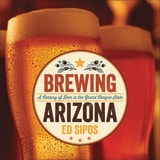
Brewing Arizona
A Century of Beer in the Grand Canyon StateEd Sipos
University of Arizona Press, 2013
Since 1864, the state’s breweries have had a history as colorful as the state. With an eye like a historian, the good taste of a connoisseur, and the tenacity of a dedicated collector, author Ed Sipos serves up beer history with gusto. Brewing Arizona is the first book of Arizona beer. It includes every brewery known to have operated in the state, from the first to the latest, from crude brews to craft brews, from mass beer to microbrews. This eye-opening chronicle is encyclopedic in scope but smooth in its delivery. Like a fine beer, the contents are deep and rich, with a little froth on top.
With more than 250 photographs—200 in full color—Brewing Arizona is as beautiful as it is tasty. So put up your feet, grab a cold one, and sip to your heart’s delight.
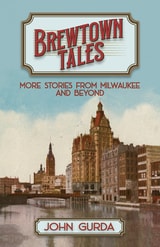
Brewtown Tales
More Stories from Milwaukee and BeyondJohn Gurda
Wisconsin Historical Society Press, 2022

Bridges Over the Delaware River
A History of CrossingsFrank T. Dale
Rutgers University Press, 2003
When Washington made his famous crossing of the Delaware River, it is a shame he couldn't have invited local historian Frank T. Dale along for the ride. Dale could have suggested the easiest crossing points.
Fortunately for contemporary readers, Dale has written a fascinating book chronicling thirty-five of the most historic bridges crossing the Delaware, some of which have served the residents of New Jersey, Pennsylvania, and New York for almost two centuries. Many of us take these bridges for granted as we speed across, impatient to reach our destination, but their histories are too interesting to ignore.
Dale brings us the stories behind each bridge, covering design, engineering, ownership, finances, and politics. He chronicles the life of each, from the original construction, through modifications, and, sometimes, through the bridges' multiple destructions and reconstructions. Along the way, Dale recounts the history of the area surrounding each bridge, including the demise of ferry services, reasons why each bridge was built, politics surrounding construction, debates over public versus privately owned bridges, and stories of the floods and fires that threatened not only the bridges, but the local residents. Dozens of rare photos give readers a captivating window back into the past.
These fine old structures have become integral parts of Delaware River life and have an exciting past of their own. Bridges over the Delaware River will ensure that their legacies endure.
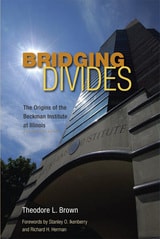
Bridging Divides
The Origins of the Beckman Institute at IllinoisTheodore L. Brown. Forewords by Stanley O. Ikenberry and Richard H. Herman.
University of Illinois Press, 2009
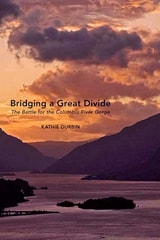
Bridging a Great Divide
The Battle for the Columbia River GorgeKathie Durbin
Oregon State University Press, 2013
In Bridging a Great Divide, award-winning environmental journalist Kathie Durbin draws on interviews, correspondence, and extensive research to tell the story of the major shifts in the Gorge since the Act’s passage. Sweeping change has altered the Gorge’s landscape: upscale tourism and outdoor recreation, gentrification, the end of logging in national forests, the closing of aluminum plants, wind farms, and a population explosion in the metropolitan area to its west. Yet, to the casual observer, the Gorge looks much the same as it did twenty-five years ago.
How can we measure the success of the Columbia River Gorge National Scenic Area Act? In this insightful and revealing history, Durbin suggests that the answer depends on who you are: a small business owner, an environmental watchdog group, a chamber of commerce. The story of the Columbia River Gorge National Scenic Area is the story of the Pacific Northwest in microcosm, as the region shifts from a natural-resource-based economy to one based on recreation, technology, and quality of life.

Bridging the Distance
Common Issues of the Rural WestDavid B. Danbom
University of Utah Press, 2015
The essays in Bridging the Distance are fresh, informative, and insightful examinations of the complex problems facing the rural West. This is a book that will spur both conversations and the search for solutions.

Brigham Young University
A House of FaithGary James Bergera
Signature Books, 1985
The purpose of Brigham Young University: A House of Faith is to outline the struggle the Mormon church has encountered in trying to blend academics and faith and in reconciling church standards with norms at other American universites, not to produce a comprehensive, chronological history of BYU. Instead, a selective approach has been taken–a thematic introduction to events, incidents, and statements, both published and private, in selected areas where tensions between scholarship and faith, freedom and regimentation have been the most pronounced. Examples include the development of a religious curriculum, the honor code, the controversy surrounding organic evolution, politics, student life, athletics, the arts, and faculty research. We hope that this approach will help readers appreciate the religious and intellectual dilemma facing educators and church leaders, as well as the fundamental sincerity of those involved in trying to establish academic rigor within religious parameters or to prevent moral deterioration when traditional restraints are left unchecked. Whatever the particular issue under discussion, an attempt has been made to keep the presentation balanced and impartial, yet sympathetic. While some readers may question the descriptive, largely noninterpretive approach, it is hoped that most will, through this approach, at least gain a greater understanding of the complex challenges involved in successfully integrating religion and academics.
We especially hope that Brigham Young University: A House of Faith will be of use to those who appreciate more than a cursory history of Mormonism–in this case, the Mormon concept of education–and who relish the rich fabric of pluralism. Brigham Young University has an engaging past, which, we believe, deserves more than a superficial treatment. Perhaps this book can be a springboard for more thorough investigations into other areas of the school’s past. There have been so many noteworthy accomplishments, discouraging defeats, moving religious experiences, humorous accounts of human foibles, and undocumented daily routine, that much remains in describing all that has gone into making the university founded more than a century ago by Brigham Young.
In presenting the sources cited in this work, we have followed the recommendations of the 1982 edition of The Chicago Manual of Style, with slight modifications. Readers will notice, for example, our incorporation of Chicago’s “down style” approach to capitalization. In order to facilitate future research, complete source citations are included as endnotes. To avoid a cumbersome and ultimately unworkable linking of each sentence with its corresponding source and bibliographic reference, we have instead referenced each paragraph and [p. xiii]cited sources in the endnotes section in the order in which material is presented in the paragraph indicated. Where the reader would otherwise encounter difficulty in identifying the specific source of a given piece of information, or where the source is considered especially important, it is provided in the text in an abbreviated form within parentheses.
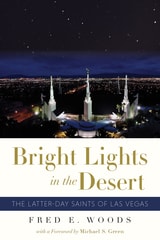
Bright Lights in the Desert
The Latter-day Saints of Las VegasFred E Woods
University of Nevada Press, 2023
Bright Lights in the Desert explores the history of how members of the Church of Jesus Christ of Latter-day Saints in Las Vegas have improved the regions’ neighborhoods, inspired educational institutions, brought integrity to the marketplace, and provided wholesome entertainment and cultural refinement. The LDS influence has helped shape the metropolitan city because of its members’ focus on family values and community service.
Woods discusses how, through their beliefs and work ethics, they have impacted the growth of the area from the time of their first efforts to establish a mission in 1855 through the present day. Bright Lights in the Desert reveals Las Vegas as more than just a tourist destination and shows the LDS community’s commitment to making it a place of deep religious faith and devotion to family.
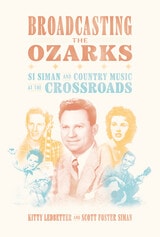
Broadcasting the Ozarks
Si Siman and Country Music at the CrossroadsKitty Ledbetter
University of Arkansas Press, 2024
“It’s good to see Si Siman and the Ozark Jubilee get their due in Broadcasting the Ozarks.”
—Willie Nelson
Broadcasting the Ozarks explores the vibrant country music scene that emerged in Springfield, Missouri, in the 1930s and thrived for half a century. Central to this history is the Ozark Jubilee (1955–60), the first regularly broadcast live country music show on network television. Dubbed the “king of the televised barn dances,” the show introduced the Ozarks to viewers across America and put Springfield in the running with Nashville for dominance of the country music industry—with the Jubilee’s producer, Si Siman, at the helm.
Siman’s life story is almost as remarkable as the show he produced. He was booking Tommy Dorsey, Ella Fitzgerald, and Glenn Miller during the mid-1930s while still a high school student and produced nationally syndicated country music radio shows in the decades that followed. Siman was a promotional genius with an ear for talent, a persuasive gift for gab, and the energy and persistence to make things happen for many future Country Music Hall of Famers, including Chet Atkins, Porter Wagoner, the Browns, and Brenda Lee. Following the Jubilee’s five-year run, Siman had a hand in some of the greatest hits of the twentieth century as a music publisher, collaborating with such songwriters as rockabilly legend and fellow Springfieldian Ronnie Self, who wrote Brenda Lee’s signature hit, “I’m Sorry,” and Wayne Carson, who wrote Willie Nelson’s “Always on My Mind.” Although Siman had numerous opportunities to find success in bigger cities, he chose to do it all from his hometown in the Ozarks.