22279 books match the query 'Social Science' and 1147 start with b
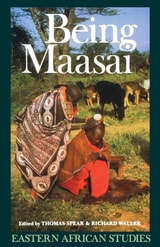
cover of Being Maasai: Ethnicity and Identity In East Africa

Being Maasai

Ethnicity and Identity In East Africa

Thomas Spear

Ohio University Press, 1993

Everyone “knows” the Maasai as proud pastoralists who once dominated the Rift Valley from northern Kenya to central Tanzania.

But many people who identity themselves as Maasai, or who speak Maa, are not pastoralist at all, but farmers and hunters. Over time many different people have “become” something else. And what it means to be Maasai has changed radically over the past several centuries and is still changing today.

This collection by historians, archaeologists, anthropologists and linguists examines how Maasai identity has been created, evoked, contested, and transformed from the time of their earliest settlement in Kenya to the present, as well as raising questions about the nature of ethnicity generally.
[more]
cover of Being Miss America: Behind the Rhinestone Curtain

Being Miss America

Behind the Rhinestone Curtain

By Kate Shindle

University of Texas Press, 2014

For nearly a hundred years, young women have competed for the title of Miss America—although what it means to wear the crown and be our “ideal” has changed dramatically over time. The Miss America Pageant began as a bathing beauty contest in 1920s Atlantic City, New Jersey, sponsored by businessmen trying to extend the tourist season beyond Labor Day. In the post–World War II years, the pageant evolved into a national coronation of an idealized “girl next door,” as pretty and decorous as she was rarely likely to speak her mind on issues of substance. Since the cultural upheavals of the 1960s, the pageant has struggled to find a balance between beauty and brains as it tries to remain relevant to women who aspire to become leaders in the community, not hot babes in swimsuits.

In Being Miss America, Kate Shindle interweaves an engrossing, witty memoir of her year as Miss America 1998 with a fascinating and insightful history of the pageant. She explores what it means to take on the mantle of America’s “ideal,” especially considering the evolution of the American female identity since the pageant’s inception. Shindle profiles winners and organization leaders and recounts important moments in the pageant’s story, with a special focus on Miss America’s iconoclasts, including Bess Myerson (1945), the only Jewish Miss America; Yolande Betbeze (1951), who crusaded against the pageant’s pinup image; and Kaye Lani Rae Rafko (1987), a working-class woman from Michigan who wanted to merge her famous title with her work as an oncology nurse. Shindle’s own account of her work as an AIDS activist—and finding ways to circumvent the “gown and crown” stereotypes of Miss America in order to talk honestly with high school students about safer sex—illuminates both the challenges and the opportunities that keep young women competing to become Miss America.
[more]
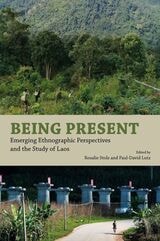
cover of Being Present: Emerging Ethnographic Perspectives and the Study of Laos

Being Present

Emerging Ethnographic Perspectives and the Study of Laos

Edited by Rosalie Stolz and Paul-David Lutz

National University of Singapore Press, 2026

As Laos navigates development and globalization, Being Present examines the shifting role of ethnography in capturing the country’s changing realities.

Ethnography has long called on researchers to immerse themselves in the worlds they study—but what does it mean to “be present” in the field today? Being Present investigates this question through innovative research on Laos, a country rapidly changing at the crossroads of Southeast Asia and China. This volume brings together a new generation of scholars to explore Chinese-built railways, shifting farmlands, urban mourning rituals, and changing aspirations in Laos.

Covering infrastructure, health, trade, and spirituality, these studies challenge assumptions about ethnography. They show how immersion and reflexivity remain essential in a connected world. Being Present offers a fresh look at contemporary Laos and a timely reflection on ethnographic practice.

[more]
cover of Being Rita Hayworth: Labor, Identity, and Hollywood Stardom

Being Rita Hayworth

Labor, Identity, and Hollywood Stardom

McLean, Adrienne L

Rutgers University Press, 2004

Who was Rita Hayworth? Born Margarita Carmen Cansino, she spent her life subjected to others' definitions of her, no matter how hard she worked to claim her own identity. Although there have been many "revelations" about her life and career, Adrienne McLean's book is the first to show that such disclosures were part of a constructed image from the outset.

McLean explores Hayworth's participation in the creation of her star persona, particularly through her work as a dancer-a subject ignored by most film scholars. The passive love goddess, as it turns out, had a unique appeal to other women who, like her, found it extraordinarily difficult to negotiate the competing demands of family, domesticity, and professional work outside the home. Being Rita Hayworth also considers the ways in which the actress has been treated by film scholarship over the years to accomplish its own goals, sometimes at her expense. Several of Hayworth's best-known star vehicles-among them Gilda (1946), Down to Earth (1947), The Lady from Shanghai (1948), and Affair in Trinidad (1952)- are discussed in depth.
[more]
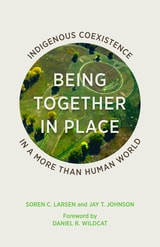
cover of Being Together in Place: Indigenous Coexistence in a More Than Human World

Being Together in Place

Indigenous Coexistence in a More Than Human World

Soren C. Larsen

University of Minnesota Press, 2017

Being Together in Place explores the landscapes that convene Native and non-Native people into sustained and difficult negotiations over their radically different interests and concerns. Grounded in three sites—the Cheslatta-Carrier traditional territory in British Columbia; the Wakarusa Wetlands in northeastern Kansas; and the Waitangi Treaty Grounds in Aotearoa/New Zealand—this book highlights the challenging, tentative, and provisional work of coexistence around such contested spaces as wetlands, treaty grounds, fishing spots, recreation areas, cemeteries, heritage trails, and traditional village sites. At these sites, activists learn how to articulate and defend their intrinsic and life-supportive ways of being, particularly to those who are intent on damaging or destroying these places. 

Using ethnographic research and a geographic perspective, Soren C. Larsen and Jay T. Johnson show how the communities in these regions challenge the power relations that structure the ongoing (post)colonial encounter in liberal democratic settler-states. Emerging from their conversations with activists was a distinctive sense that the places for which they cared had agency, a “call” that pulled them into dialogue, relationships, and action with human and nonhuman others. This being-together-in-place, they find, speaks in a powerful way to the vitalities of coexistence: where humans and nonhumans are working to decolonize their relationships; where reciprocal guardianship is being stitched back together in new and unanticipated ways; and where a new kind of “place thinking” is emerging on the borders of colonial power.

[more]
cover of Being and Belonging: Muslims in the United States since 9/11

Being and Belonging

Muslims in the United States since 9/11

Katherine Pratt Ewing

Russell Sage Foundation, 2008
The terrorist attacks of September 11, 2001, instantly transformed many ordinary Muslim and Arab Americans into suspected terrorists. In the weeks and months following the attacks, Muslims in the United States faced a frighteningly altered social climate consisting of heightened surveillance, interrogation, and harassment. In the long run, however, the backlash has been more complicated. In Being and Belonging, Katherine Pratt Ewing leads a group of anthropologists, sociologists, and cultural studies experts in exploring how the events of September 11th have affected the quest for belonging and identity among Muslims in America—for better and for worse. From Chicago to Detroit to San Francisco, Being and Belonging takes readers on an extensive tour of Muslim America—inside mosques, through high school hallways, and along inner city streets.  Jen'nan Ghazal Read compares the experiences of Arab Muslims and Arab Christians in Houston and finds that the events of 9/11 created a "cultural wedge" dividing Arab Americans along religious lines. While Arab Christians highlighted their religious affiliation as a means of distancing themselves from the perceived terrorist sympathies of Islam, Muslims quickly found that their religious affiliation served as a barrier, rather than a bridge, to social and political integration. Katherine Pratt Ewing and Marguerite Hoyler document the way South Asian Muslim youth in Raleigh, North Carolina, actively contested the prevailing notion that one cannot be both Muslim and American by asserting their religious identities more powerfully than they might have before the terrorist acts, while still identifying themselves as fully American. Sally Howell and Amaney Jamal distinguish between national and local responses to terrorism. In striking contrast to the erosion of civil rights, ethnic profiling, and surveillance set into motion by the federal government, well-established Muslim community leaders in Detroit used their influence in law enforcement, media, and social services to empower the community and protect civil rights. Craig Joseph and Barnaby Riedel analyze how an Islamic private school in Chicago responded to both September 11 and the increasing ethnic diversity of its student body by adopting a secular character education program to instruct children in universal values rather than religious doctrine. In a series of poignant interviews, the school's students articulate a clear understanding that while 9/11 left deep wounds on their community, it also created a valuable opportunity to teach the nation about Islam. The rich ethnographies in this volume link 9/11 and its effects to the experiences of a group that was struggling to be included in the American mainstream long before that fateful day. Many Muslim communities never had a chance to tell their stories after September 11. In Being and Belonging, they get that chance.
[more]
cover of Being and Hearing: Making Intelligible Worlds in Deaf Kathmandu

Being and Hearing

Making Intelligible Worlds in Deaf Kathmandu

Peter Graif

HAU, 2018

How do deaf people in different societies perceive and conceive the world around them?  Drawing on three years of anthropological fieldwork in Nepali deaf communities, Being and Hearing shows how questions of cultural difference are profoundly shaped by local habits of perception. Beginning with the premise that philosophy and cultural intuition are separated only by genre and pedigree, Peter Graif argues that Nepali deaf communities—in their social sensibilities, political projects, and aesthetics of expression—present innovative answers to the very old question of what it means to be different.
 
From pranks and protests, to diverse acts of love and resistance, to renewed distinctions between material and immaterial, deaf communities in Nepal have crafted ways to foreground the habits of perception that shape both their own experiences and how they are experienced by the hearing people around them. By exploring these often overlooked strategies, Being and Hearing makes a unique contribution to ethnography and comparative philosophy.
[more]
cover of Belfast: Segregation, Violence and the City

Belfast

Segregation, Violence and the City

Peter Shirlow and Brendan Murtagh

Pluto Press, 2006

It is a commonly held view that the city of Belfast is emerging out of conflict and into a new era of tolerance and transformation. This book challenges this viewpoint. The authors pinpoint how international peace accords, such as the Belfast Agreement, are gradually eroded as conflict shifts into a stale and repetitive pattern of ethnically-divided competition over resources.


The book offers a vivid portrait of the human drama and brutality of the conflict in Belfast. The authors argue that the control of place remains the most important weapon in the politicization of communities and the reproduction of political violence. Segregation provides the laboratory within which sectarianism continues to grow. Examining the implications of these social divisions, the authors draw upon a wide international literature and provide insights that will be useful to students of geography, planning, politics, sociology and peace studies.
[more]
cover of Beliefs and Holy Places: A Spiritual Geography of the Pimería Alta

Beliefs and Holy Places

A Spiritual Geography of the Pimería Alta

James S. Griffith

University of Arizona Press, 1992

The region once known as Pimería Alta—now southern Arizona and northern Sonora—has for more than three centuries been a melting pot for the beliefs of native Tohono O'odham and immigrant Yaquis and those of colonizing Spaniards and Mexicans. One need look no further than the roadside crosses along desert highways or the diversity of local celebrations to sense the richness of this cultural commingling.

Folklorist Jim Griffith has lived in the Pimería Alta for more than thirty years, visiting its holy places and attending its fiestas, and has uncovered a background of belief, tradition, and history lying beneath the surface of these cultural expressions. In Beliefs and Holy Places, he reveals some of the supernaturally sanctioned relationships that tie people to places within that region, describing the cultural and religious meanings of locations and showing how bonds between people and places have in turn created relationships between places, a spiritual geography undetectable on physical maps.

Throughout the book, Griffith shows how culture moves from legend to art to belief to practice, all the while serving as a dynamic link between past and future. Now as the desert gives way to newcomers, Griffith's book offers visitors and residents alike a rare opportunity to share in these rich traditions.

[more]
cover of Beliefs and Rituals in Archaic Eastern North America: An Interpretive Guide

Beliefs and Rituals in Archaic Eastern North America

An Interpretive Guide

Cheryl Claassen

University of Alabama Press, 2015

A comprehensive and essential field reference, Beliefs and Rituals in Archaic Eastern North America reveals the spiritual landscape in the American Archaic period.

Beliefs and Rituals in Archaic Eastern North America describes, illustrates, and offers nondogmatic interpretations of rituals and beliefs in Archaic America. In compiling a wealth of detailed entries, author Cheryl Claassen has created both an exhaustive reference as well as an opening into new archaeological taxonomies, connections, and understandings of Native American culture.

The material is presented in an introductory essay about Archaic rituals followed by two sections of entries that incorporate reports and articles discussing archaeological sites; studies of relevant practices of ritual and belief; data related to geologic features, artifact attributes, and burial settings; ethnographies; and pilgrimages to specific sites. Claassen’s work focuses on the American Archaic period (marked by the end of the Ice Age approximately 11,000 years ago) and a geographic area bounded by the edge of the Great Plains, Newfoundland, and southern Florida. This period and region share specific beliefs and practices such as human sacrifice, dirt mound burial, and oyster shell middens.

This interpretive guide serves as a platform for new interpretations and theories on this period. For example, Claassen connects rituals to topographic features and posits the Pleistocene-Holocene transition as a major stimulus to Archaic beliefs. She also expands the interpretation of existing data previously understood in economic or environmental terms to include how this same data may also reveal spiritual and symbolic practices. Similarly, Claassen interprets Archaic culture in terms of human agency and social constraint, bringing ritual acts into focus as drivers of social transformation and ethnogenesis.
 
Richly annotated and cross-referenced for ease of use, Beliefs and Rituals in Archaic Eastern North America will benefit scholars and students of archaeology and Native American culture. Claassen’s overview of the archaeological record should encourage the development of original archaeological and historical connections and patterns. Such an approach, Claassen suggests, may reveal patterns of influence extending from early eastern Americans to the Aztec and Maya.
[more]
cover of Beliefs, Behaviors, and Alcoholic Beverages: A Cross-Cultural Survey

Beliefs, Behaviors, and Alcoholic Beverages

A Cross-Cultural Survey

Mac Marshall, Editor

University of Michigan Press, 1979

Beliefs, Behaviors, and Alcoholic Beverages: A Cross-Cultural Survey, edited by Mac Marshall, delves into the diverse ways that alcohol is woven into cultural, social, and religious contexts worldwide. This anthropological collection examines drinking customs, rituals, and social behaviors across different societies, highlighting the symbolic meanings, spiritual roles, and societal functions of alcoholic beverages. By exploring cross-cultural perspectives, the book reveals how alcohol consumption is not merely a personal act, but a complex social phenomenon tied to identity, community, and cultural values.  The chapters, contributed by various scholars, investigate topics such as ceremonial drinking, indigenous brews, and the role of alcohol in shaping group dynamics and social boundaries. Each case study demonstrates how alcohol can reinforce cultural norms, solidify social bonds, and act as a means of expression within a community. By comparing different drinking traditions and beliefs, the book provides a broad understanding of the anthropological significance of alcohol in human life. This work serves as a valuable resource for students and researchers in anthropology, sociology, and cultural studies, as well as anyone interested in the ways alcohol influences cultural practices, societal roles, and human relationships across the globe.
[more]
cover of Believable Impossibilities: Race, Testimony, and the Horror Film

Believable Impossibilities

Race, Testimony, and the Horror Film

Christopher Bracken

University of Chicago Press, 2026

A gripping exploration of belief in the impossible through horror film, informed by philosophy, history, and anthropology.

What if aliens crash-landed at an old mine? What if you discovered your spouse is protecting you from witchcraft? What if you received messages from the dead? You wouldn’t believe it, of course—but you might investigate. As Christopher Bracken shows through this gripping exploration of the horror film, this is the first step toward believing the impossible.

In Believable Impossibilities, Bracken examines the genre in which we are most frequently called on to believe something seemingly impossible has unsettled our ordinary lives—the horror story. Whether on the page or on screen, horror draws us into narratives in which a community of nonbelievers are suddenly confronted with the challenge of believing in events and experiences that radically break with expectation. As Bracken argues, questions of belief often intersect with issues of race and Indigeneity because, historically, belief in the impossible has been racially coded as a trait of “primitive” thought. Drawing on philosophy, anthropology, and psychoanalysis, Bracken explores the fictional spaces in which the paranormal and supernatural challenge and defy our social bonds.

[more]
cover of Believing in South Central: Everyday Islam in the City of Angels

Believing in South Central

Everyday Islam in the City of Angels

Pamela J. Prickett

University of Chicago Press, 2021

The area of Los Angeles known as South Central is often overshadowed by dismal stereotypes, problematic racial stigmas, and its status as the home to some of the city’s poorest and most violent neighborhoods. Amid South Central’s shifting demographics and its struggles with poverty, sociologist Pamela J. Prickett takes a closer look, focusing on the members of an African American Muslim community and exploring how they help each other combat poverty, job scarcity, violence, and racial injustice. Prickett’s engaging ethnography relates how believers in this longstanding religious community see Islam as a way of life, a comprehensive blueprint for individual and collective action, guiding how to interact with others, conduct business, strive for progress, and cultivate faith.

Prickett offers deep insights into the day-to-day lived religion of the Muslims who call this community home, showing how the mosque provides a system of social support and how believers deepen their spiritual practice not in spite of, but through, conditions of poverty. Prickett breaks past the stigmas of urban poverty, revealing a complex and vibrant community by telling the stories of longstanding residents of South Central—like Sister Ava, who offers food to the local unhoused people and finds the sacred in her extensive DVD collection. In addition to her portraits of everyday life among Muslims in South Central, Prickett also provides vivid and accessible descriptions of Ramadan and histories of the mosque, situates this community within the larger story of the Nation of Islam, explores gender issues, and unpacks the interaction between African American Muslims and South Asian and Arab American Muslims, revealing both the global and local significance of this religious tradition.
 
[more]
cover of Belmont Castle: The Excavation of a Crusader Stronghold in the Kingdom of Jerusalem

Belmont Castle

The Excavation of a Crusader Stronghold in the Kingdom of Jerusalem

Richard Harper

Council for British Research in the Levant, 2000

This is the final publication of excavations conducted by the British School of Archaeology in Jerusalem on the Crusader castle of Belmont (Suba) between 1986 and 1989. The account of the excavation is accompanied by specialist reports and concludes with a discussion of the castle's architecture, its military functions, and its economic role.


Library of Congress subject headings for this publication:
Belmont Castle Site (West Bank)
Excavations (Archaeology) -- West Bank.
West Bank -- Antiquities.
Jerusalem -- History -- Latin Kingdom, 1099-1244.
[more]
cover of Belo: From Newspapers to New Media

Belo

From Newspapers to New Media

By Judith Garrett Segura

University of Texas Press, 2008

Founded in Galveston in 1842 with the launch of the Daily News, the Belo Corporation entered the twenty-first century as a powerhouse conglomerate, owning four daily newspapers (including the Dallas Morning News), twenty-six television and cable stations, and over thirty interactive Web sites. The first comprehensive work to bring to life this remarkable success story, Belo blends biography with a history of corporate strategies.

Drawing on company archives and private papers of key figures, including A. H. Belo and G. B. Dealey, former company archivist Judith Garrett Segura brings to life important chapters in the cultural life of Texas, from Galveston's days as the largest and most vibrant town in the Republic of Texas, through the wars that followed statehood, periods of economic hardship, and the effects of sweeping social change. Turning points in the company's history, such as the sale of its Galveston paper when company revenues were dramatically affected by candid reporting of Ku Klux Klan activities in the 1920s, highlight crucial elements of the press's role in the life of a community. Segura also charts technological advances, from the telegraph and the typographers' union to the dawn of the Information Age. Finally, she includes the most complete portrait of the Dallas Times Herald Company to date, documenting the rise and fall of Belo's chief rival.

This is a story of frontier survival and futuristic thinking, marketing genius and historic reporting, nurtured by a family of mavericks.

[more]
[more]
cover of Belonging in an Adopted World: Race, Identity, and Transnational Adoption

Belonging in an Adopted World

Race, Identity, and Transnational Adoption

Barbara Yngvesson

University of Chicago Press, 2010

Since the early 1990s, transnational adoptions have increased at an astonishing rate, not only in the United States, but worldwide. In Belonging in an Adopted World, Barbara Yngvesson offers a penetrating exploration of the consequences and implications of this unprecedented movement of children, usually from poor nations to the affluent West. Yngvesson illuminates how the politics of adoption policy has profoundly affected the families, nations, and children involved in this new form of social and economic migration.

Starting from the transformation of the abandoned child into an adoptable resource for nations that give and receive children in adoption, this volume examines the ramifications of such gifts, especially for families created through adoption and later, the adopted adults themselves. Bolstered by an account of the author’s own experience as an adoptive parent, and fully attuned to the contradictions of race that shape our complex forms of family, Belonging in an Adopted World explores the fictions that sustain adoptive kinship, ultimately exposing the vulnerability and contingency behind all human identity.

[more]
cover of Belonging, Identity, and Conflict in the Central African Republic

Belonging, Identity, and Conflict in the Central African Republic

Gino Vlavonou

University of Wisconsin Press, 2023

Political conflict in many parts of the world has been shaped by notions of who rightfully belongs to a place. The concept of autochthony—that a true, original people are born of a land and belong to it above all others—has animated struggles across postcolonial Africa. But is this sense of rootedness from time immemorial necessary to assertions of original being and thus political supremacy? Belonging, Identity, and Conflict in the Central African Republic examines how political conflict unfolds when the language of autochthony is detached from historical land claims. 

Focusing on violent struggles in the Central African Republic between 2012 and 2019, Gino Vlavonou explores the social practices, discursive strategies, and government policies that emerged in the relentless project of African state building. Conflict pitted Christian-animist communities, loosely organized as vigilante groups under the name anti-Balaka, against Muslim rebels known as the Séléka. Fighters of the anti-Balaka claimed that they were autochthonous, the “true Central Africans,” reframing their Muslim neighbors as foreigners to be expelled. While the country had previously witnessed episodes of violence, both peoples had lived together relatively peacefully and intermarried. The speed and ferocity with which identity was weaponized puzzled many observers. To understand this phenomenon, Vlavonou probes autochthony as a category of identity that differs from ethnicity in important ways. He argues that elites and ordinary citizens alike mobilize the language of original belonging as “identity capital,” a resource to be deployed. The value of that capital is lodged in what people say and do every day to give meaning to their identity, and its content changes across time and space. 
[more]
cover of Beloved Children: History of Aristocratic Childhood in Hungary in the Early Modern Age

Beloved Children

History of Aristocratic Childhood in Hungary in the Early Modern Age

Katalin Peter

Central European University Press, 2001

Drawing on evidence from a wide collection of surviving family papers, Beloved Children is a valuable contribution to literature available concerning childhood history in pre-industrial Central Europe.

With the aid of detailed case studies, the volume illustrates every aspect of Hungarian childhood in the early modern age from a variety of contrasting perspectives—birth, care, education, marriage, orphanhood and death. The book also includes a unique portrayal of family life in the Hungarian aristocracy.

Beloved Children is a comprehensive study examining topics such as family intimacy, paternal and maternal attitudes, providing the reader with a valuable insight into a child’s life in Hungary during the sixteenth and seventeenth centuries.

[more]
cover of Beloved Land: An Oral History of Mexican Americans in Southern Arizona

Beloved Land

An Oral History of Mexican Americans in Southern Arizona

Collected and Edited by Patricia Preciado Martin, with Photographs by José Galvez

University of Arizona Press, 2004

Doña Ramona Benítez Franco was born in 1902 on her parents' Arizona ranch and celebrated her hundredth birthday with family and friends in 2002, still living in her family's century-old adobe house. Doña Ramona witnessed many changes in the intervening years, but her memories of the land and customs she knew as a child are indelible.

For Doña Ramona as well as for countless generations of Mexican Americans, memories of rural life recall la querida tierra, the beloved land. Through good times and bad, the land provided sustenance. Today, many of those homesteads and ranches have succumbed to bulldozers that have brought housing projects and strip malls in their wake.

Now a writer and a photographer who have long been intimately involved with Arizona's Hispanic community have preserved the voices and images of men and women who are descendants of pioneer ranching and farming families in southern Arizona. Ranging from Tucson to the San Rafael Valley and points in between, this book documents the contributions of Mexican American families whose history and culture are intertwined with the lifestyle of the contemporary Southwest. These were hardy, self-reliant pioneers who settled in what were then remote areas. Their stories tell of love affairs with the land and a way of life that is rapidly disappearing.

Through oral histories and a captivating array of historic and contemporary photos, Beloved Land records a vibrant and resourceful way of life that has contributed so much to the region. Individuals like Doña Ramona tell stories about rural life, farming, ranching, and vaquero culture that enrich our knowledge of settlement, culinary practices, religious traditions, arts, and education of Hispanic settlers of Arizona. They talk frankly about how the land changed hands—not always by legal means—and tell how they feel about modern society and the disappearance of the rural lifestyle.

"Our ranch homes and fields, our chapels and corrals may have been bulldozed by progress or renovated into spas and guest ranches that never whisper our ancestors' names," writes Patricia Preciado Martin. "The story of our beautiful and resilient heritage will never be silenced . . . as long as we always remember to run our fingers through the nourishing and nurturing soil of our history." Beloved Land works that soil as it revitalizes that history for the generations to come.
[more]
cover of Belvoir: An Archaeology of Maryland Slavery

Belvoir

An Archaeology of Maryland Slavery

Julie M. Schablitsky

University of Alabama Press, 2025

Unearthed truths, buried lives: Belvoir reveals the pain, resilience, and reckoning found beneath the soil of a Maryland plantation.

Near Annapolis, Maryland, a former tobacco plantation dating to the 1730s holds centuries of untold history. In Belvoir: An Archaeology of Maryland Slavery, Julie M. Schablitsky leads readers on an archaeological narrative to unearth the lives and stories still buried there.The book begins with an introduction to the estate’s history, detailing its ownership by prominent families such as the Rosses, Scotts, Worthingtons, and Welshes. Schablitsky highlights the landscape of the estate, including the unique thirty-two-square-foot stone quarter built for enslaved people.

With sensitivity and scientific rigor, Schablitsky shifts focus to the enslaved people who lived and labored at Belvoir for more than eighty years. Through detailed excavation of the stone quarter and analysis of everyday artifacts—buttons, tobacco pipes, food remains, ceramics—she reconstructs the daily life, acts of resistance, and the cultural endurance of a community forced to navigate brutality.

Yet what makes Belvoir especially vital is its ethical compass. Schablitsky centers the voices of descendants, allowing their questions, memories, and presence to shape the narrative. The result is a groundbreaking archaeological case study and a blueprint for restorative justice at sites of enslavement. Scholars, archaeologists, and general readers alike will find Belvoir a deeply human, profoundly necessary book, one that confronts the past with clarity, care, and the hope of reconciliation.

[more]
cover of Ben Hecht's Theatre of Jewish Protest

Ben Hecht's Theatre of Jewish Protest

Garrett Eisler

Rutgers University Press, 2025

Ben Hecht is most remembered as a famous Hollywood screenwriter and Broadway playwright, but only recently has his extensive Jewish activism during the Holocaust and its aftermath received scholarly attention. Unlike other, more expansive Hecht biographies, this book focuses in depth on his Jewish political theatre, drawing on extensive archival research of four dramas: We Will Never Die (1943), A Jewish Fairy Tale (1944), A Flag Is Born (1946), and The Terrorist (1947). Garrett Eisler's readings of these little-known (and out of print) texts reclaim them as pivotal to the history of Jewish American drama, being among the first works of U.S. theatre to address the Holocaust. The full texts of all four works are republished here for the first time, along with production details and full performance histories.

Hecht introduced a new heroic Jewish identity to the American stage, one that challenged popular stereotypes of villainy or weakness. This powerful and (still) controversial body of work stands as a striking testament to the power of theatre to rise to the moment. The book also features a supporting cast of famous collaborators on these projects, including Paul Muni, Edward G. Robinson, John Garfield, Moss Hart, Kurt Weill, and a young Marlon Brando. In their use of the stage to aggressively engage with history as it was happening, the story of Hecht and his colleagues is a compelling case of artists who made a difference.
[more]
cover of Benching Jim Crow: The Rise and Fall of the Color Line in Southern College Sports, 1890-1980

Benching Jim Crow

The Rise and Fall of the Color Line in Southern College Sports, 1890-1980

Charles H. Martin

University of Illinois Press, 2010

Chronicling the uneven rise and slow decline of segregation in American college athletics, Charles H. Martin shows how southern colleges imposed their policies of racial exclusion on surprisingly compliant northern teams and explains the social forces that eventually forced these southern schools to accept integrated competition. Martin emphasizes not just the racism prevalent in football and basketball in the South, but the effects of this discrimination for colleges and universities all over the country. Southern teams such as the University of Alabama, University of Mississippi, and the University of North Carolina were obsessed with national recognition, but their Jim Crow policies prevented them for many years from playing against racially mixed teams from other parts of the country.
 
Devoting special attention to the Southeastern Conference, the Atlantic Coast Conference, and teams in Texas, Martin explores the changing social attitudes and culture of competition that turned the tide and allowed for the recruitment of black players and hiring of black coaches. He takes a close look at the case of Texas Western College (now the University of Texas at El Paso), the first major white university in an ex-Confederate state to recruit African American athletes extensively. Martin skillfully weaves existing arguments and documentation on the integration of college sports with wide-ranging, original research, including previously unpublished papers and correspondence of college administrators and athletic directors uncovered in university archives.
[more]
cover of Bending Archaeology toward Social Justice: Transformational Action for Positive Peace

Bending Archaeology toward Social Justice

Transformational Action for Positive Peace

Barbara J. Little

University of Alabama Press, 2023

Introduces an analytic model for how archaeologists can work toward social justice

In this time of Black Lives Matter, the demands of NAGPRA, and climate crises, the field of American archaeology needs a radical transformation. It has been largely a white, male, privileged domain that replicates an entrenched patriarchal, colonial, and capitalist system. In Bending Archaeology toward Social Justice, Barbara J. Little explores the concepts and actions required for such a change, looking to peace studies, anthropology, sociology, social justice activism, and the achievements of community-based archaeology for helpful approaches in keeping with the UN Sustainable Development Goals. She introduces an analytic model that uses the strengths of archaeology to destabilize violence and build peace.

As Little explains, the Diachronic Transformational Action model and the peace/violence triad of interconnected personal, cultural, and structural domains of power can help disrupt the injustice of all forms of violence. Diachronic connects the past to the present to understand how power worked in the past and works now. Transformational influences power now by disrupting the stability of the violence triad. Action refers to collaborative work to diagnose power relations and transform toward social justice.

Using this framework, Little confronts the country’s founding and myth of liberty and justice for all, as well as the American Dream. She also examines whiteness, antiracism, privilege, and intergenerational trauma, and offers white archaeologists concepts to grapple with their own racialized identities and to consider how to relinquish white supremacy. Archaeological case studies examine cultural violence and violent direct actions against women, Indigenous peoples, African Americans, and Japanese Americans, while archaeologies of poverty, precarity, and labor are used to show how archaeologists have helped expose the roots of these injustices. Because climate justice is integral to social justice, Little showcases insights that archaeology can bring to bear on the climate crisis and how lessons from the past can inform direct actions today. Finally, Little invites archaeologists to embrace inquiry and imagination so that they can both imagine and achieve the positive peace of social justice.
 

[more]
cover of Bending Toward Justice: The Voting Rights Act and the Transformation of American Democracy

Bending Toward Justice

The Voting Rights Act and the Transformation of American Democracy

Gary May

Duke University Press, 2015

A vivid and fast-paced history, Gary May's Bending toward Justice offers a dramatic account of the birth and precarious life of the 1965 Voting Rights Act. It is an extraordinary story of the intimidation and murder of courageous activists who struggled to ensure that all Americans would be able to exercise their right to vote. May outlines the divisions within the Civil Rights Movement, describes the relationship between President Johnson and Martin Luther King Jr., and captures the congressional politics of the 1960s. Bending toward Justice is especially timely, given that the Supreme Court's decision in Shelby County v. Holder in 2013 invalidated a key section of the Voting Rights Act. As May shows, the fight for voting rights is by no means over.
[more]
cover of Beneath These Red Cliffs: An Ethnohistory of the Utah Paiutes

Beneath These Red Cliffs

An Ethnohistory of the Utah Paiutes

Ronald L. Holt

Utah State University Press, 2006

Ronald Holt recounts the survival of a people against all odds. A compound of rapid white settlement of the most productive Southern Paiute homelands, especially their farmlands near tributaries of the Colorado River; conversion by and labor for the Mormon settlers; and government neglect placed the Utah Paiutes in a state of dependency that ironically culminated in the 1957 termination of their status as federally recognized Indians. That recognition and attendant services were not restored until 1980, in an act that revived the Paiutes’ identity, self-government, land ownership, and sense of possibility. 

With a foreword by Lora Tom, chair of the Paiute Indian Tribe of Utah.
[more]
cover of Beneath the Skin of Sorrow: Improvisations on Loss

Beneath the Skin of Sorrow

Improvisations on Loss

Nnenna Freelon

Duke University Press, 2025

Over a period of just six months, eminent jazz vocalist and composer Nnenna Freelon’s life changed irrevocably. Her soulmate and husband of nearly forty years, the renowned architect Phil Freelon, passed away from ALS, her sister Debbie succumbed to cancer, and the family dog, Basie, died as well. In the immediate wake of these compounding losses, Freelon could not find a way to process or understand her grief and lost the ability to read, sing, and improvise. The inner melody that had vibrated inside of her since childhood went silent. She then realized that the only way to move forward was to lean into her grief.

Part love story, part homage to jazz, and part guide to creative practice within bereavement, Beneath the Skin of Sorrow follows Freelon’s difficult and personal journey to healing. Calling on the improvisational skills that she had built over her forty-year career as a jazz singer, Freelon crafted her new reality by improvising—thinking about grieving as a series of small, daily engagements with the world around her. Slowly, Freelon regained the pieces of her musical sensibility, realizing that flowing between words spoken and words sung allowed her to understand what could not be fully realized in either realm.

By improvising a new life, Freelon forged a new companionship between grief, art, and daily life. In the essays, poems, lyrics, and explorations of jazz standards that comprise this lyrical and elegiac memoir, Freelon shows how thinking about grief as an exercise in improvisation can lead to a creative coexistence with grief in all its forms.
[more]
cover of Beneath the Surface: A Transnational History of Skin Lighteners

Beneath the Surface

A Transnational History of Skin Lighteners

Lynn M. Thomas

Duke University Press, 2020

For more than a century, skin lighteners have been a ubiquitous feature of global popular culture—embraced by consumers even as they were fiercely opposed by medical professionals, consumer health advocates, and antiracist thinkers and activists. In Beneath the Surface, Lynn M. Thomas constructs a transnational history of skin lighteners in South Africa and beyond. Analyzing a wide range of archival, popular culture, and oral history sources, Thomas traces the changing meanings of skin color from precolonial times to the postcolonial present. From indigenous skin-brightening practices and the rapid spread of lighteners in South African consumer culture during the 1940s and 1950s to the growth of a billion-dollar global lightener industry, Thomas shows how the use of skin lighteners and experiences of skin color have been shaped by slavery, colonialism, and segregation as well as by consumer capitalism, visual media, notions of beauty, and protest politics. In teasing out lighteners’ layered history, Thomas theorizes skin as a site for antiracist struggle and lighteners as a technology of visibility that both challenges and entrenches racial and gender hierarchies.
[more]
cover of Bengali Women

Bengali Women

Manisha Roy

University of Chicago Press, 1992

Drawing on personal experiences and interviews with others, Roy explores the frustrations and rewards in the lives of Hindu Bengali women in upper and upper-middle class families in India. Roy traces the psychological dimensions of these women as they play their specific roles, including daughter, wife, mother, and sister-in-law.

In a new Afterword, Roy discusses changes in Bengali society and culture over the last two decades which have direct bearings on women's lives: divorce and the breakup of the joint family, education, increasing Westernization via television and women's magazines, and the erosion of traditional religious practices.
[more]
cover of Bereft of Reason: On the Decline of Social Thought and Prospects for Its Renewal

Bereft of Reason

On the Decline of Social Thought and Prospects for Its Renewal

Eugene Halton

University of Chicago Press, 1995

In this radical critique of contemporary social theory, Eugene Halton argues that both modernism and postmodernism are damaged philosophies whose acceptance of the myths of the mind/body dichotomy make them incapable of solving our social dilemmas.

Claiming that human beings should be understood as far more than simply a form of knowledge, social construction, or contingent difference, Halton argues that contemporary thought has lost touch with the spontaneous passions—or enchantment—of life. Exploring neglected works in twentieth century social thought and philosophy—particularly the writings of Lewis Mumford and Charles Peirce—as well as the work of contemporary writers such as Vaclav Havel, Maya Angelou, Milan Kundera, Doris Lessing, and Victor Turner, Halton argues that reason is dependent upon nonrational forces—including sentiment, instinct, conjecture, imagination, and experience. We must, he argues, frame our questions in a way which encompasses both enchantment and critical reason, and he offers an outline here for doing so.

A passionate plea for a fundamental reexamination of the entrenched assumptions of the modern era, this book deals with issues of vital concern to modern societies and should be read by scholars across disciplines.

"Bereft of Reason is a thoughtful critique informed by a passionate commitment to the renewal of critical concerns. For this reason alone it should be widely read and inform current debates."—Lauren Langman, Sociological Inquiry

"Halton takes the 'ghost in the machine' as a dominant defining metaphor for modern thought and life, and criticizes it with gusto, wit, wide reading, and philosophical acumen."—Robert J. Mulvaney, Review of Metaphysics
[more]
cover of Berlusconi's Italy: Mapping Contemporary Italian Politics

Berlusconi's Italy

Mapping Contemporary Italian Politics

Michael E. Shin and John A. Agnew

Temple University Press, 2008

Berlusconi's Italy provides a fresh, thoroughly-informed account of how Italy's richest man came to be its political leader. Without dismissing the importance of personalities and political parties, it emphasizes the significance of changes in voting behaviors that led to the rise-and eventual fall-of Silvio Berlusconi, the millionaire media baron who became Prime Minister. Armed with new data and new analytic tools, Michael Shin and John Agnew use recently developed methods of spatial analysis, to offer a compelling new argument about contextual re-creation and mutation. They reveal that regional politics and shifting geographical voting patterns were far more important to Berlusconi's successes than the widely-credited role of the mass media, and conclude that Berlusconi's success (and later defeat) can be best understood in geographic terms.
[more]
cover of Berossos and Manetho, Introduced and Translated: Native Traditions in Ancient Mesopotamia and Egypt

Berossos and Manetho, Introduced and Translated

Native Traditions in Ancient Mesopotamia and Egypt

Gerald P. Verbrugghe and John M. Wickersham

University of Michigan Press, 2001

Berossos and Manetho begins with a general introduction to the cultural history of ancient Mesopotamia and Egypt. It then presents a translation of the only known native narratives, written in Greek, of the histories of these two civilizations. The priest Berossos chronicled the past of ancient Babylon from the mythical creation of the world down to Alexander the Great's conquest in the fourth century b.c.e. For Egypt, the scribe Manetho's list of rulers from the reigns of the gods down to Alexander's conquest remains the basis for the dynastic arrangement of the pharaohs that is still used today.
Berossos and Manetho offers particular emphasis on and discussion of the languages and scripts used to preserve the glorious past of these lands. Each author receives his own special introduction, which describes his life, the sources of his History, the nature and content of his writings, and his goals and accomplishments. There follows a translation of all the surviving ancient information about each author, and of all that can be recovered of his writings. For the first time, Berossos and Manetho--priests and contemporaries who write just when their lands had been pushed into Hellenization--have been translated in one volume.
This volume will appeal to all people interested in ancient Israel, Greek history, and ancient history in general.
Gerald P. Verbrugghe is Associate Professor of History, Rutgers University. John M. Wickersham is Professor of Classics and Classics Department Chairperson, Ursinus College.
[more]
cover of Beside You in Time: Sense Methods and Queer Sociabilities in the American Nineteenth Century

Beside You in Time

Sense Methods and Queer Sociabilities in the American Nineteenth Century

Elizabeth Freeman

Duke University Press, 2019

In Beside You in Time Elizabeth Freeman expands biopolitical and queer theory by outlining a temporal view of the long nineteenth century. Drawing on Foucauldian notions of discipline as a regime that yoked the human body to time, Freeman shows how time became a social and sensory means by which people assembled into groups in ways that resisted disciplinary forces. She tracks temporalized bodies across many entangled regimes—religion, secularity, race, historiography, health, and sexuality—and examines how those bodies act in relation to those regimes. In analyses of the use of rhythmic dance by the Shakers; African American slave narratives; literature by Mark Twain, Pauline Hopkins, Herman Melville, and others; and how Catholic sacraments conjoined people across historical boundaries, Freeman makes the case for the body as an instrument of what she calls queer hypersociality. As a mode of being in which bodies are connected to others and their histories across and throughout time, queer hypersociality, Freeman contends, provides the means for subjugated bodies to escape disciplinary regimes of time and to create new social worlds.
[more]
cover of Best Actress: The History of Oscar®-Winning Women

Best Actress

The History of Oscar®-Winning Women

Stephen Tapert

Rutgers University Press, 2020

Ingrid Bergman. Audrey Hepburn. Elizabeth Taylor. Jane Fonda. Meryl Streep. The list of women who have won the coveted and legendary Academy Award for Best Actress is long and varied. Through this illustrious roster we can trace the history of women in Hollywood, from the rise of Mary Pickford in the early 20th century to the #MeToo and Time’s Up movements of today, which have galvanized women across the world to speak out for equal pay, respect, power, and opportunity.
 
This lavishly illustrated coffee table book offers a vital examination of the first 75 women to have won the Best Actress Oscar over the span of 90 years. From inaugural recipient Janet Gaynor to Frances McDormand’s 2018 acceptance speech that assertively brought women to the forefront, Best Actress: The History of Oscar®-Winning Women serves to promote a new appreciation for the cinematic roles these women won for, as well as the real-life roles many of them played – and still play – in advancing women’s rights and equality. Stories range from Bette Davis’ groundbreaking battle against the studio system; to the cutting-edge wardrobes of Katharine Hepburn, Diane Keaton and Cher; to the historical significance of Halle Berry’s victory; to the awareness raised around sexual violence by the performances of Jodie Foster, Brie Larson, and others.
 
Showcasing a dazzling collection of 200 photographs, many of which have never before been seen or published, Best Actress honors the legacies of these revered and extraordinary women while scrutinizing the roadblocks that they continue to overcome.
[more]
cover of Best Laid Plans: Cultural Entropy and the Unraveling of AIDS Media Campaigns

Best Laid Plans

Cultural Entropy and the Unraveling of AIDS Media Campaigns

Terence E. McDonnell

University of Chicago Press, 2016

We see it all the time: organizations strive to persuade the public to change beliefs or behavior through expensive, expansive media campaigns. Designers painstakingly craft clear, resonant, and culturally sensitive messaging that will motivate people to buy a product, support a cause, vote for a candidate, or take active steps to improve their health. But once these campaigns leave the controlled environments of focus groups, advertising agencies, and stakeholder meetings to circulate, the public interprets and distorts the campaigns in ways their designers never intended or dreamed. In Best Laid Plans, Terence E. McDonnell explains why these attempts at mass persuasion often fail so badly.
            McDonnell argues that these well-designed campaigns are undergoing “cultural entropy”: the process through which the intended meanings and uses of cultural objects fracture into alternative meanings, new practices, failed interactions, and blatant disregard. Using AIDS media campaigns in Accra, Ghana, as its central case study, the book walks readers through best-practice, evidence-based media campaigns that fall totally flat. Female condoms are turned into bracelets, AIDS posters become home decorations, red ribbons fade into pink under the sun—to name a few failures. These damaging cultural misfires are not random. Rather, McDonnell makes the case that these disruptions are patterned, widespread, and inevitable—indicative of a broader process of cultural entropy.
[more]
cover of Best Practice: Management Consulting and the Ethics of Financialization in China

Best Practice

Management Consulting and the Ethics of Financialization in China

Kimberly Chong

Duke University Press, 2018

In Best Practice Kimberly Chong provides an ethnography of a global management consultancy that has been hired by Chinese companies, including Chinese state-owned enterprises. She shows how consulting emerges as a crucial site for considering how corporate organization, employee performance, business ethics, and labor have been transformed under financialization. To date financialization has been examined using top-down approaches that portray the rise of finance as a new logic of economic accumulation. Best Practice, by contrast, focuses on the everyday practices and narratives through which companies become financialized. Effective management consultants, Chong finds, incorporate local workplace norms and assert their expertise in the particular terms of China's national project of modernization, while at the same time framing their work in terms of global “best practices.” Providing insight into how global management consultancies refashion Chinese state-owned enterprises in preparation for stock market flotation, Chong demonstrates both the dynamic, fragmented character of financialization and the ways in which Chinese state capitalism enables this process.
[more]
cover of Betrayal U: The Politics of Belonging in Higher Education

Betrayal U

The Politics of Belonging in Higher Education

Edited by Rebecca G. Martínez and Monica J. Casper

University of Arizona Press, 2025

Higher education is in trouble, and not only due to a decline of public trust. As a microcosm of our broader culture, universities are inequitable and often harmful, especially for marginalized people. This is despite the democratic promise of higher education as a path for learning and social mobility. Women, people of color, First Gen, disabled, LGBTQ+, and other minoritized groups are disproportionately harmed in educational institutions that are hierarchical and reproduce inequality. Efforts to foster belonging for faculty, staff, and students may be highly effective but are under attack.
 
Betrayal U intervenes in this context with a diverse, rich collection of essays, art, poetry, and research that explores these inequities through the lens of institutional betrayal, theorized by psychologist Jennifer Freyd. Edited by Rebecca G. Martínez and Monica J. Casper, this collection brings together thirty-six contributors who share personal experiences covering a range of topics in higher education. The work spans five thematic sections that examine the complexities of belonging and exclusion in academic settings.
 
The contributors share their lived experiences of academic life from diverse vantage points, showing the ways minoritized groups are made to feel unwelcome, further marginalized, and often positioned as the problem. Exhibiting courage, compassion, and a commitment to better futures, the voices in this collection offer both a searing indictment of higher education and pathways to alternative practices and structures. They shine a spotlight on academia today, including the promise of inclusion and the perils of exclusion.

Contributors
Celeste Atkins
Jasmine Banks
Krista L. Benson
Jessica Bishop-Royse
Samit Dipon Bordoloi
Monica J. Casper
Aparajita De
Kathy Diehl
Taylor Marie Doherty
Reshmi Dutt-Ballerstadt
Alma Flores
Alanna Gillis
C. Goldberg
Jennifer M. Gómez
Kristina Gupta
Jasmine L. Harris
Susan Hillock
Doreen Hsu
Jennifer Lai
Amy Andrea Martinez
Rebecca G. Martínez
Shantel Martinez
Sara A. Mata
Rachael McCollum
Wang Ping
Emily Rosser
Angélica Ruvalcaba
Brandy L. Simula
Rashna Batliwala Singh
Cierra Raine Sorin
Connor Spencer
Chantelle Spicer
James M. Thomas
Mercedes Valadez
Meg A. Warren
Matthew Wills
 
[more]
cover of Betrayals: The Unpredictability of Human Relations

Betrayals

The Unpredictability of Human Relations

Gabriella Turnaturi

University of Chicago Press, 2007

From Iago to Fredo, Judas to General Hospital, acts of betrayal fascinate us. Eventually we all encounter this universal experience of human interaction, but despite its ubiquity, being betrayed can turn our lives upside down and leave us feeling suddenly frail and alone. Betrayal only arises out of sharing something of yourself with another, and its impact speaks to the great tragedy of human relations: at bottom, other people are unknowable.

While most attempts to study betrayal only consider its moral or psychological dimensions, Gabriella Turnaturi here examines betrayal as an act embedded in social relationships whose meanings change over time. For example, adultery is one of the most recognizable forms of betrayal, but a wide gulf exists between its role in Madame Bovary and in The Ice Storm. Therefore, Turnaturi contends, in order to examine the many meanings of betrayal we need to understand its context in a specific time and place. Born from the unpredictable possibilities of human interaction, betrayal emerges as a sociological event in this thought-provoking meditation on the stab in the back.
[more]
cover of Better Living by Their Own Bootstraps: Black Women's Activism in Rural Arkansas, 1914-1965

Better Living by Their Own Bootstraps

Black Women's Activism in Rural Arkansas, 1914-1965

Cherisse Jones-Branch

University of Arkansas Press, 2021

The first major study to consider Black women’s activism in rural Arkansas, Better Living by Their Own Bootstraps foregrounds activists’ quest to improve Black communities through language and foodways as well as politics and community organizing. In reexamining these efforts, Cherisse Jones-Branch lifts many important figures out of obscurity, positioning them squarely within Arkansas’s agrarian history.

The Black women activists highlighted here include home demonstration agents employed by the Arkansas Agricultural Cooperative Extension Service and Jeanes Supervising Industrial Teachers, all of whom possessed an acute understanding of the difficulties that African Americans faced in rural spaces. Examining these activists through a historical lens, Jones-Branch reveals how educated, middle-class Black women worked with their less-educated rural sisters to create all-female spaces where they confronted economic, educational, public health, political, and theological concerns free from white regulation and interference.

Centered on the period between 1914 and 1965, Better Living by Their Own Bootstraps brings long-overdue attention to an important chapter in Arkansas history, spotlighting a group of Black women activists who uplifted their communities while subverting the formidable structures of white supremacy.

[more]
cover of Better Times Than This: Youth Homelessness in Britain

Better Times Than This

Youth Homelessness in Britain

Tom Hall

Pluto Press, 2003

[more]
cover of Betting on Education: The Costs of Schooling for Cambodian Youth

Betting on Education

The Costs of Schooling for Cambodian Youth

Jennifer Estes

Rutgers University Press, 2025

Educational credentials are one of the most reliable tickets to a middle-class livelihood across the globe today. But as the costs of schooling rise, young people increasingly wonder whether their investment will pay off. Betting on Education: The Costs of Schooling for Cambodian Youth follows the experiences of rural secondary school students navigating Cambodia’s semiprivatized state education system. It reveals that when students are compelled to speculate about the value of their education, the “winners” of this gamble are the ones already most securely part of the middle class. The rest are left behind. In the process, the very meaning of education is transformed, as schooling becomes less about learning and more about its potential financial returns. By situating these stories in the wider global logics of neoliberal capitalism, Betting on Education challenges readers to consider what is at stake when young people must wager so much on the promise of schooling.

[more]
cover of Betting on Ideas: Wars, Invention, Inflation

Betting on Ideas

Wars, Invention, Inflation

Reuven Brenner

University of Chicago Press, 1986

In this book, Reuven Brenner argues that people bet on new ideas and are more willing to take risks when they have been outdone by their fellows on local, national, or international scales. Such bets mean that people deviate from the beaten path and either gamble, commit crimes, or come up with new ideas in art, business, or politics, and ideas concerning war and peace in particular. By using evidence on gambling, crime, and creativity now and during the Industrial Revolution, by examining innovations in English and French inheritance laws and the emergence of welfare legislation, and by looking at what has happened before and after wars, Brenner reaches the conclusion that hope and fear, envy and vanity, sentiments provoked when being leapfrogged, make humans race.
[more]
cover of Betting on Macau: Casino Capitalism and China's Consumer Revolution

Betting on Macau

Casino Capitalism and China's Consumer Revolution

Tim Simpson

University of Minnesota Press, 2023

A comprehensive look into how Macau’s recent decades of gambling-related growth produced one of the wealthiest territories on the planet

Betting on Macau delves into the radical transformation of what was formerly the last remaining European territory in Asia, returned to the People’s Republic of China in 1999 after nearly half a millennium of Portuguese rule. Examining the unprecedented scale of its development and its key role in China’s economic revolution, Tim Simpson follows Macau’s emergence from historical obscurity to become the most profitable casino gaming locale in the world.


Identified as a UNESCO World Heritage Site and renowned for its unique blend of Chinese and Portuguese colonial-era architecture, contemporary Macau has metamorphosed into a surreal, hypermodern urban landscape augmented by massive casino megaresorts, including two of the world’s largest buildings. Simpson situates Macau’s origins as a strategic trading port and its ensuing history alongside the emergence of the global capitalist system, charting the massive influx of foreign investment, construction, and tourism in the past two decades that helped generate the territory’s enormous wealth.


Presented through a cross section of postcolonial studies and social theory with extensive insight into the global gambling industry, Betting on Macau uncovers the various roots of the territory’s lucrative casino capitalism. In turn, its trenchant analysis provides a distinctive view into China’s broader project of urbanization, its post-Mao economic reforms, and the continued rise of its consumer culture.

[more]
cover of Betty Friedan and the Making of "The Feminine Mystique": The American Left, the Cold War, and Modern Feminism

Betty Friedan and the Making of "The Feminine Mystique"

The American Left, the Cold War, and Modern Feminism

Daniel Horowitz

University of Massachusetts Press, 1998

Ever since the 1963 publication of her landmark book, The Feminine Mystique, Betty Friedan has insisted that her commitment to women's rights grew out of her experiences as an alienated suburban housewife. Yet as Daniel Horowitz persuasively demonstrates in this illuminating and provocative biography, the roots of Friedan's feminism run much deeper than she has led us to believe. Drawing on an impressive body of new research—including Friedan's own papers—Horowitz traces the development of Friedan's feminist outlook from her childhood in Peoria, Illinois, through her wartime years at Smith College and Berkeley, to her decade-long career as a writer for two of the period's most radical labor journals, the Federated Press and the United Electrical Workers' UE News. He further shows that even after she married and began to raise a family, Friedan continued during the 1950s to write and work on behalf of a wide range of progressive social causes. By resituating Friedan within a broader cultural context, and by offering a fresh reading of The Feminine Mystique against that background, Horowitz not only overturns conventional ideas about “second wave” feminism but also reveals long submerged links to its past.

[more]
cover of Between Banat: Queer Arab Critique and Transnational Arab Archives

Between Banat

Queer Arab Critique and Transnational Arab Archives

Mejdulene Bernard Shomali

Duke University Press, 2023

In Between Banat Mejdulene Bernard Shomali examines homoeroticism and nonnormative sexualities between Arab women in transnational Arab literature, art, and film. Moving from The Thousand and One Nights and the Golden Era of Egyptian cinema to contemporary novels, autobiographical writing, and prints and graphic novels that imagine queer Arab futures, Shomali uses what she calls queer Arab critique to locate queer desire amid heteronormative imperatives. Showing how systems of heteropatriarchy and Arab nationalisms foreclose queer Arab women’s futures, she draws on the transliterated term “banat”—the Arabic word for girls—to refer to women, femmes, and nonbinary people who disrupt stereotypical and Orientalist representations of the “Arab woman.” By attending to Arab women’s narration of desire and identity, queer Arab critique substantiates queer Arab histories while challenging Orientalist and Arab national paradigms that erase queer subjects. In this way, Shomali frames queerness and Arabness as relational and transnational subject formations and contends that prioritizing transnational collectivity over politics of authenticity, respectability, and inclusion can help lead toward queer freedom.
[more]
cover of Between Belonging and Exclusion: The Intersections of Integration and Anti-Discrimination Politics

Between Belonging and Exclusion

The Intersections of Integration and Anti-Discrimination Politics

Lara-Zuzan Golesorkhi

Temple University Press, 2026

Integration and discrimination are two of the most salient yet contradictory forces shaping contemporary European politics. In Between Belonging and Exclusion Lara-Zuzan Golesorkhi asserts that this tension exists because integration politics do not facilitate non-discrimination, nor do they address experiences of discrimination. She draws on interviews with refugees and other key actors in integration politics to examine the barriers hindering refugee women’s labor market participation in Germany.

Golesorkhi introduces four explanatory tropes that reveal how and why integration efforts have often fallen short. She examines the power relations and limitations in migration governance as well as the identity narratives of Germanness/Europeanness, and the gendered and racialized mechanisms of “othering” that contribute to discrimination.

Between Belonging and Exclusion delineates what Germany and the EU “get wrong” about integration and anti-discrimination as it outlines conceptual and practical suggestions for expanding the terms of inclusion.

[more]
cover of Between Brown and Black: Anti-Racist Activism in Brazil

Between Brown and Black

Anti-Racist Activism in Brazil

Antonio José Bacelar da Silva

Rutgers University Press, 2022

With new momentum, the Brazilian black movement is working to bring attention to and change the situation of structural racism in Brazil. Black consciousness advocates are challenging Afro-Brazilians to define themselves and politically organize around being black, and more Afro-Brazilians are increasingly doing so. Other segments of the Brazilian black movement are working to influence legislation and implement formal mechanisms that aim to promote racial equality, including Affirmative Action Racial Verification Committees. For advocates of these committees, one needs to be phenotypically black enough to be a more likely target of racism to qualify for Affirmative Action programs. Paradoxically, individuals are told to identify as black but only some people are considered black enough to benefit from these policies. Afro-Brazilians are presented with a whole range of identity choices, from how to classify oneself, to whether one votes for political candidates based on shared racial experiences. Between Brown and Black argues that Afro-Brazilian activists’ continued exploration of blackness confronts anti-blackness while complicating understandings of what it means to be black. Blending linguistic and ethnographic accounts, this book raises complex questions about current black struggles in Brazil and beyond, including the black movements’ political initiatives and antiracist agenda.
[more]
cover of Between Care and Criminality: Marriage, Citizenship, and Family in Australian Social Welfare

Between Care and Criminality

Marriage, Citizenship, and Family in Australian Social Welfare

Helena Zeweri

Rutgers University Press, 2024

Between Care and Criminality examines social welfare’s encounter with migration and marriage in a period of intensified border control in Melbourne, Australia. It offers an in-depth ethnographic account of the effort to prevent forced marriage in the aftermath of a 2013 law that criminalized the practice. Disproportionately targeted toward Muslim migrant communities, prevention efforts were tasked with making the family relations and marital practices of migrants objects of policy knowledge in the name of care and community empowerment. Through tracing the everyday ways that direct service providers, police, and advocates learned to identify imminent marriages and at-risk individuals, this book reveals how the domain of social welfare becomes the new frontier where the settler colonial state judges good citizenship. In doing so, it invites social welfare to reflect on how migrant conceptions of familial care, personhood, and mutual obligation become structured by the violence of displacement, borders, and conditional citizenship.
[more]
cover of Between City and Country: Brookline, Massachusetts, and the Origins of Suburbia

Between City and Country

Brookline, Massachusetts, and the Origins of Suburbia

Ronald Dale Karr

University of Massachusetts Press, 2018

Since 1945, American popular culture has portrayed suburbia as a place with a culture, politics, and economy distinct from cities, towns, and rural areas. In Between City and Country, Ronald Dale Karr examines the evolution of Brookline, Boston's most renowned nineteenth-century suburb, arguing that a distinctively suburban way of life appeared here long before World War II.

Already a fashionable retreat for wealthy Bostonians, Brookline began to suburbanize in the 1840s with the arrival of hundreds of commuter families—and significant numbers of Irish Catholic immigrants drawn by opportunities to work as laborers and servants. In Brookline the poor were segregated but not excluded altogether, as they would be from twentieth-century elite suburbs. A half century later, a distinct suburban way of life developed that combined rural activities with urban pastimes, and a political consensus emerged that sought efficient government and large expenditures on education and public works. Brookline had created the template for the concept of suburbia, not just in wealthy communities but in the less affluent communities of postwar America.
[more]
cover of Between Contacts and Colonies: Archaeological Perspectives on the Protohistoric Southeast

Between Contacts and Colonies

Archaeological Perspectives on the Protohistoric Southeast

Edited by Cameron B. Wesson and Mark A. Rees

University of Alabama Press, 2002

This collection of essays brings together diverse approaches to the analysis of Native American culture in the protohistoric period

For most Native American peoples of the Southeast, almost two centuries passed between first contact with European explorers in the 16th century and colonization by whites in the 18th century—a temporal span commonly referred to as the Protohistoric period. A recent flurry of interest in this period by archaeologists armed with an improved understanding of the complexity of culture contact situations and important new theoretical paradigms has illuminated a formerly dark time frame.

This volume pulls together the current work of archaeologists, historians, and anthropologists to demonstrate a diversity of approaches to studying protohistory. Contributors address different aspects of political economy, cultural warfare, architecture, sedentism, subsistence, foods, prestige goods, disease, and trade. From examination of early documents by René Laudonnière and William Bartram to a study of burial goods distribution patterns; and from an analysis of Caddoan research in Arkansas and Louisiana to an interesting comparison of Apalachee and Powhatan elites, this volume ranges broadly in subject matter. What emerges is a tantalizingly clear view of the protohistoric period in North America.

[more]