Results by title
4531 books match the query 'Cultural & Ethnic Studies' and 388 start with b
Booker T. Washington Papers Volume 11
1911-12. Assistant editor, Geraldine McTigueBooker T. Washington
University of Illinois Press, 1981
Booker T. Washington Papers Volume 12
1912-14Booker T. Washington
University of Illinois Press, 1982
Booker T. Washington Papers Volume 13
1914-15. Assistant editors, Susan Valenza and Sadie M. HarlanBooker T. Washington
University of Illinois Press, 1983
Booker T. Washington Papers Volume 1
The Autobiographical WritingsBooker T. Washington
University of Illinois Press, 1972
Volume 1 contains Washington's Up from Slavery, one of the most widely read American autobiographies, in addition to The Story of My Life and Work, and six other autobiographical writings. Together, the selections provide readers with a first step toward understanding Washington and his immense impact. These writings reveal the moral values he absorbed from his mid-nineteenth-century experiences and teachers. As importantly, they present him to the world as he wished to be seen: as the black version of the American success hero and an exemplar of the Puritan work ethic that he believed to be the secret of his success. These works, along with so much of Washington's writing, served as a model for many black Americans striving to overcome poverty and prejudice.
Booker T. Washington Papers Volume 2
1860-89. Assistant editors, Pete Daniel, Stuart B. Kaufman, Raymond W. Smock, and William M. WeltyBooker T. Washington
University of Illinois Press, 1972
Booker T. Washington Papers Volume 3
1889-95. Assistant editors, Stuart B. Kaufman and Raymond W. SmockBooker T. Washington. Edited by Louis R. Harlan, Assistant editors, Stuart B. Kaufman and Raymond W. Smock
University of Illinois Press, 1974
Booker T. Washington Papers Volume 4
1895-98. Assistant editors, Stuart B. Kaufman, Barbara S. Kraft, and Raymond W. SmockBooker T. Washington
University of Illinois Press, 1975
Booker T. Washington Papers Volume 5
1899-1900. Assistant editor, Barbara S. KraftBooker T. Washington
University of Illinois Press, 1976
Booker T. Washington Papers Volume 6
1901-2. Assistant editor, Barbara S. KraftBooker T. Washington
University of Illinois Press, 1977
Booker T. Washington Papers Volume 7
1903-4. Assistant editor, Barbara S. KraftBooker T. Washington
University of Illinois Press, 1977
Booker T. Washington Papers Volume 8
1904-6. Assistant editor, Geraldine McTigueBooker T. Washington
University of Illinois Press, 1979
Booker T. Washington Papers Volume 9
1906-8. Assistant editor, Nan E. WoodruffBooker T. Washington
University of Illinois Press, 1980
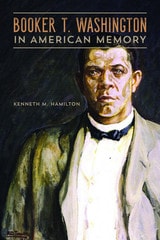
Booker T. Washington in American Memory
Kenneth M. Hamilton
University of Illinois Press, 2017

Bookmarks
Reading in Black and White, First Paperback EditionKarla F. Holloway
Rutgers University Press, 2006
"BookMarks is a moving and revelatory memoir... a work of fiercely intelligent scholarship." - Susan Larson,
"Erudite and emotional in turns, [BookMarks] is full of truths that appeal to the head and the heart." - Charlotte News Observer"
What are you reading? What books have been important to you? Whether you are interviewing for a job, chatting with a friend or colleague, or making small talk, these questions arise almost unfailingly. Some of us have stock responses, which may or may not be a fiction of our own making. Others gauge their answers according to who is asking the question. Either way, the replies that we give are thoughtfully crafted to suggest the intelligence, worldliness, political agenda, or good humor that we are hoping to convey. We form our answers carefully because we know that our responses say a lot.
But what exactly do our answers say? In BookMarks, Karla FC Holloway explores the public side of reading, and specifically how books and booklists form a public image of African Americans. Revealing her own love of books and her quirky passion for their locations in libraries and on bookshelves, Holloway reflects on the ways that her parents guided her reading when she was young and her bittersweet memories of reading to her children. She takes us on a personal and candid journey that considers the histories of reading in children’s rooms, prison libraries, and “Negro” libraries of the early twentieth century, and that finally reveals how her identity as a scholar, a parent, and an African American woman has been subject to judgments that public cultures make about race and our habits of reading.
Holloway is the first to call our attention to a remarkable trend of many prominent African American writers—including Maya Angelou, W.E.B. Du Bois, Henry Louis Gates, Malcolm X, and Zora Neale Hurston. Their autobiographies and memoirs are consistently marked with booklists—records of their own habits of reading. She examines these lists, along with the trends of selection in Oprah Winfrey’s popular book club, raising the questions: What does it mean for prominent African Americans to associate themselves with European learning and culture? How do books by black authors fare in the inevitable hierarchy of a booklist?
BookMarks provides a unique window into the ways that African Americans negotiate between black and white cultures. This compelling rumination on reading is a book that everyone should add to their personal collections and proudly carry “cover out.”

Border Biomes
Ecological Imaginaries of Mexico's EdgesEmily Celeste Vázquez Enríquez
Vanderbilt University Press, 2025
This book is freely available in an open-access edition thanks to the generous support by the University of California Davis Library.
What effect do heavily fortified national borders have on the natural environments that surround them? In Border Biomes, Emily Celeste Vázquez Enríquez explores this question by analyzing contemporary Mexican, Latinx, and Indigenous literature that has tried to highlight the human and ecological toll of Mexico’s borders with the United States and Guatemala. By challenging the very premise of borders as permanent, immovable boundaries, she shows how novelists and poets in Mexico and the United States have tried to represent and understand the vast social, political, and ecological harm caused by these constructions. She argues that the environmental destruction that borders create is inseparable from state‑sanctioned, anti‑immigrant racial violence. To do this, she structures the book around three main biomes: rivers, deserts, and forests. Within each chapter, Vázquez Enríquez considers how authors such as Dolores Dorantes, Natalie Diaz, and Ofelia Zepeda have drawn upon alternative Indigenous epistemologies and forms of representation to register the sweeping damage of bordering regimes on the Colorado River, the Southwest Desert, and the Selva El Petén, and other biomes. By critically analyzing the work of these US and Mexican writers, she contests traditional interpretations of Mexican literature as nationally bounded and instead proposes an expansive view of “Mexican literature.” More fundamentally, Border Biomes suggests literature's potential to create new ecological realities and challenge the naturalization of borders and the ecological violence that they provoke.
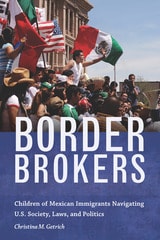
Border Brokers
Children of Mexican Immigrants Navigating U.S. Society, Laws, and PoliticsChristina M. Getrich
University of Arizona Press, 2019
Based on ethnographic fieldwork in San Diego over more than a decade, Border Brokers documents the continuing deleterious effects of U.S. immigration policies and enforcement practices on a group of now young adults and their families. In the first book-length longitudinal study of mixed-status families, Christina M. Getrich provides an on-the-ground portrayal of these young adults’ lives from their own perspectives and in their own words.
More importantly, Getrich identifies how these individuals have developed resiliency and agency beginning in their teens to improve circumstances for immigrant communities. Despite the significant constraints their families face, these children have emerged into adulthood as grounded and skilled brokers who effectively use their local knowledge bases, life skills honed in their families, and transborder competencies. Refuting the notion of their failure to assimilate, she highlights the mature, engaged citizenship they model as they transition to adulthood to be perhaps their most enduring contribution to creating a better U.S. society.
An accessible ethnography rooted in the everyday, this book portrays the complexity of life in the U.S.-Mexico borderlands. It offers important insights for anthropologists, educators, policy-makers, and activists working on immigration and social justice issues.
Border Cinema
Reimagining Identity through AestheticsEdited by Monica Hanna and Rebecca A. Sheehan
Rutgers University Press, 2019
Border Contraband
A History of Smuggling across the Rio GrandeBy George T. Díaz
University of Texas Press, 2015
Border Crossings
An Introduction to East German ProseThomas C. Fox
University of Michigan Press, 1993
Border Dilemmas
Racial and National Uncertainties in New Mexico, 1848–1912Anthony Mora
Duke University Press, 2011
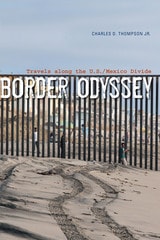
Border Odyssey
Travels along the U.S./Mexico DivideBy Charles D. Thompson, Jr.
University of Texas Press, 2015
“We were trying to change the vision and the conversation about border fears.”
Border Odyssey takes us on a drive toward understanding the U.S./Mexico divide: all 1,969 miles—from Boca Chica to Tijuana—pressing on with the useful fiction of a map.
“We needed to go to the place where countless innocent people had been kicked, cussed, spit on, arrested, detained, trafficked, and killed. It would become clear that the border, la frontera, was more multifaceted and profound than anything we could have invented about it from afar.”
Along the journey, five centuries of cultural history (indigenous, French, Spanish, Mexican, African American, colonist, and U.S.), wars, and legislation unfold. And through observation, conversation, and meditation, Border Odyssey scopes the stories of the people and towns on both sides.
“Stories are the opposite of walls: they demand release, retelling, showing, connecting, each image chipping away at boundaries. Walls are full stops. But stories are like commas, always making possible the next clause.”
Among the terrain traversed: walls and more walls, unexpected roadblocks and patrol officers; a golf course (you could drive a ball across the border); a Civil War battlefield (you could camp there); the southernmost plantation in the United States; a hand-drawn ferry, a road-runner tracked desert, and a breathtaking national park; barbed wire, bridges, and a trucking-trade thoroughfare; ghosts with guns; obscured, unmarked, and unpaved roads; a Catholic priest and his dogs, artwork, icons, and political cartoons; a sheriff and a chain-smoking mayor; a Tex-Mex eatery empty of customers and a B&B shuttering its doors; murder-laden newspaper headlines at breakfast; the kindness of the border-crossing underground; and too many elderly, impoverished, ex-U.S. farmworkers, braceros, lined up to have Thompson take their photograph.
Border People
Life and Society in the U.S.-Mexico BorderlandsOscar J. Martínez
University of Arizona Press, 1994
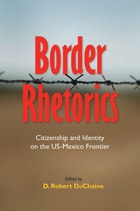
Border Rhetorics
Citizenship and Identity on the US-Mexico FrontierEdited by D. Robert DeChaine
University of Alabama Press, 2012
Undertakes a wide-ranging examination of the US-Mexico border as it functions in the rhetorical production of civic unity in the United States
A “border” is a powerful and versatile concept, variously invoked as the delineation of geographical territories, as a judicial marker of citizenship, and as an ideological trope for defining inclusion and exclusion. It has implications for both the empowerment and subjugation of any given populace. Both real and imagined, the border separates a zone of physical and symbolic exchange whose geographical, political, economic, and cultural interactions bear profoundly on popular understandings and experiences of citizenship and identity.
The border’s rhetorical significance is nowhere more apparent, nor its effects more concentrated, than on the frontier between the United States and Mexico. Often understood as an unruly boundary in dire need of containment from the ravages of criminals, illegal aliens, and other undesirable threats to the national body, this geopolitical locus exemplifies how normative constructions of “proper”; border relations reinforce definitions of US citizenship, which in turn can lead to anxiety, unrest, and violence centered around the struggle to define what it means to be a member of a national political community.
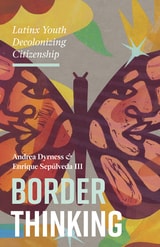
Border Thinking
Latinx Youth Decolonizing CitizenshipAndrea Dyrness
University of Minnesota Press, 2020
Rich accounts of how Latinx migrant youth experience belonging across borders
As anti-immigrant nationalist discourses escalate globally, Border Thinking offers critical insights into how young people in the Latinx diaspora experience belonging, make sense of racism, and long for change. Every year thousands of youth leave Latin America for the United States and Europe, and often the young migrants are portrayed as invaders and, if able to stay, told to integrate into their new society. Border Thinking asks not how to help the diaspora youth assimilate but what the United States and Europe can learn about citizenship from these diasporic youth.
Working in the United States, Spain, and El Salvador, Andrea Dyrness and Enrique Sepúlveda III use participatory action research to collaborate with these young people to analyze how they make sense of their experiences in the borderlands. Dyrness and Sepúlveda engage them in reflecting on their feelings of belonging in multiple places—including some places that treat them as outsiders and criminals. Because of their transnational existence and connections to both home and host countries, diaspora youth have a critical perspective on national citizenship and yearn for new forms of belonging not restricted to national borders. The authors demonstrate how acompañamiento—spaces for solidarity and community-building among migrants—allow youth to critically reflect on their experiences and create support among one another.
Even as national borders grow more restricted and the subject of immigration becomes ever more politically fraught, young people’s identities are increasingly diasporic. As the so-called migrant crisis continues, change in how citizenship and belonging are constructed is necessary, and urgent, to create inclusive and sustainable futures. In Border Thinking, Dyrness and Sepúlveda decouple citizenship from the nation-state, calling for new understandings of civic engagement and belonging.
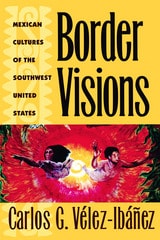
Border Visions
Mexican Cultures of the Southwest United StatesCarlos G. Vélez-Ibáñez
University of Arizona Press, 1996
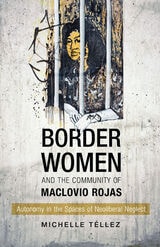
Border Women and the Community of Maclovio Rojas
Autonomy in the Spaces of Neoliberal NeglectMichelle Téllez
University of Arizona Press, 2021
Border Women and the Community of Maclovio Rojas tells the story of the community’s struggle to carve out space for survival and thriving in the shadows of the U.S.-Mexico geopolitical border. This ethnography by Michelle Téllez demonstrates the state’s neglect in providing social services and local infrastructure. This neglect exacerbates the structural violence endemic to the border region—a continuation of colonial systems of power on the urban, rural, and racialized poor. Téllez shows that in creating the community of Maclovio Rojas, residents have challenged prescriptive notions of nation and belonging. Through women’s active participation and leadership, a women’s political subjectivity has emerged—Maclovianas. These border women both contest and invoke their citizenship as they struggle to have their land rights recognized, and they transform traditional political roles into that of agency and responsibility.
This book highlights the U.S.-Mexico borderlands as a space of resistance, conviviality, agency, and creative community building where transformative politics can take place. It shows hope, struggle, and possibility in the context of gendered violences of racial capitalism on the Mexican side of the U.S.-Mexico border.

Bordering Blackness
Migration and Dispossession in the Afro-MediterraneanLeslie Gross-Wyrtzen
Duke University Press, 2027
Borderland Dreams
The Transnational Lives of Korean Chinese WorkersJune Hee Kwon
Duke University Press, 2023
Borderlands Saints
Secular Sanctity in Chicano/a and Mexican CultureMartín, Desirée A
Rutgers University Press, 2013
Winner of the 2014 Latina/o Studies Section - LASA Outstanding Book Award
In Borderlands Saints, Desirée A. Martín examines the rise and fall of popular saints and saint-like figures in the borderlands of the United States and Mexico. Focusing specifically on Teresa Urrea (La Santa de Cabora), Pancho Villa, César Chávez, Subcomandante Marcos, and Santa Muerte, she traces the intersections of these figures, their devotees, artistic representations, and dominant institutions with an eye for the ways in which such unofficial saints mirror traditional spiritual practices and serve specific cultural needs.
Popular spirituality of this kind engages the use and exchange of relics, faith healing, pilgrimages, and spirit possession, exemplifying the contradictions between high and popular culture, human and divine, and secular and sacred. Martín focuses upon a wide range of Mexican and Chicano/a cultural works drawn from the nineteenth century to the present, covering such diverse genres as the novel, the communiqué, drama, the essay or crónica, film, and contemporary digital media. She argues that spiritual practice is often represented as narrative, while narrative—whether literary, historical, visual, or oral—may modify or even function as devotional practice.
Borderless Borders
edited by Frank Bonilla, Edwin Meléndez, Rebecca Morales and María de los Angeles Torres
Temple University Press, 2000
Borderless Borders describes the structural processes and active interventions taking place inside and outside U.S. Latino communities. After a context-setting introduction by urban planner Rebecca Morales, the contributors focus on four themes. Economist Manuel Pastor Jr., urban sociologist Saskia Sassen, and political scientist Carol Wise look at emerging forms of global and transnational interdependence and at whether they are likely to produce individuals who are economically independent or simply more dependent. Sociologist Jorge Chapa, social anthropologist Maria P. Fernandez Kelly, and economist Edwin Melendez examine the negative impact of economic and political restructuring within the United States,especially within Latino communities. Performance artist Guillermo Gomez-Pena, legal scholar Gerald Torres, political scientist Maria de los Angeles Torres, and modern language specialist Silvio Torres-Saillant consider the implications -- for community formation, citizenship, political participation, and human rights -- of the fact that individuals are forced to construct identities for themselves in more than one sociopolitical setting. Finally, sociologist Jeremy Brecher, sociologist Frank Bonilla, and political scientist Pedro Caban speculate on new paths into international relations and issue-oriented social movements and organizations among these mobile populations. To supplement the written contributions, Painter Bibiana Suarez has chosen several artworks that contribute to the interdisciplinary scope of the book.
Borderpunk
Non-Respectable Narratives of the Post-SixtiesSophia Martínez Abbud
University of Arizona Press, 2027
The U.S.-Mexico border has long been a home to artists, poets, emos, and punks. In the clandestine undergrounds of borderlands cultural production, there lies an impulse to live below and beyond border surveillance technologies. This book is about the utopic stories that narrate this impulse and the punk literary scenes that facilitate these fabulations.
Using an innovative methodology of “scene-work”—a blend of literary analysis, queer theory, critical regionalism, and auto-ethnography—Borderpunk identifies, aggregates, and outlines the emergent genre of borderpunk cultural productions. Beginning with the post-1960s through the present, author Sophia Martínez Abbud examines how music, playlists, literature, art, and performance borderpunk narratives teach us to elide, undermine, and work against the border’s presumed authority. Through these narratives, readers become attuned to the anarchic sense of abjection that permeates the border regions and the kinds of punk subjectivities emerging from these sites of re-mediation.
Borderpunk offers scenes that refuse notions of respectability at different time periods, geographies, and scales. Following the mechanics of other narrative punk genres, such as cyberpunk or solarpunk, it sketches out the uses of “punk” as a way of being in border spaces—where abjection, relajo, and illegibility become useful tools that encourage us to divest from the norm, participate in horizontal community building, and imagine borders in radical new ways.
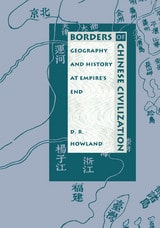
Borders of Chinese Civilization
Geography and History at Empire's EndD. R. Howland
Duke University Press, 1996
With Japan’s decision in the 1870s to modernize and westernize, China’s relationship with Japan underwent a crucial change—one that resulted in its decisive separation from Chinese civilization and, according to Howland, a destabilization of China’s worldview. His examination of the ways in which Chinese perceptions of Japan altered in the 1880s reveals the crucial choice faced by the Chinese of whether to interact with Japan as “kin,” based on geographical proximity and the existence of common cultural threads, or as a “barbarian,” an alien force molded by European influence.
By probing China’s poetic and expository modes of portraying Japan, Borders of Chinese Civilization exposes the changing world of the nineteenth century and China’s comprehension of it. This broadly appealing work will engage scholars in the fields of Asian studies, Chinese literature, history, and geography, as well as those interested in theoretical reflections on travel or modernism.
Borders, Human Itineraries, and All Our Relation
Dele Adeyemo, Natalie Diaz, Nadia Yala Kisukidi, and Rinaldo Walcott. With a Foreword by Christina Sharpe
Duke University Press, 2024
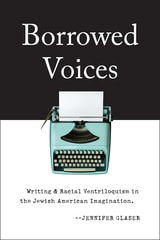
Borrowed Voices
Writing and Racial Ventriloquism in the Jewish American ImaginationGlaser, Jennifer
Rutgers University Press, 2016
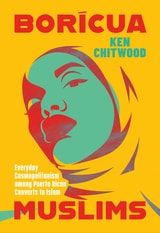
Borícua Muslims
Everyday Cosmopolitanism among Puerto Rican Converts to IslamKen Chitwood
University of Texas Press, 2025
The stories and struggles of Puerto Rican Muslims in modern day America.
Among Puerto Rican converts to Islam, marginalization is a fact of daily life. Their “authenticity” is questioned by other Muslims and by fellow Borícua on the island and in the United States. At the same time, they exist under the shadow of US colonization and as Muslims in the context of American empire. To be a Puerto Rican Muslim, then, is to negotiate identity at numerous intersections of diversity and difference.
Drawing on years of ethnographic research and more than a hundred interviews conducted in Puerto Rico, New York, Florida, Texas, New Jersey, and online, Ken Chitwood tells the story of Puerto Rican Muslims as they construct a shared sense of peoplehood through everyday practices. Borícua Muslims thus provides a study of cosmopolitanism not as a political ideal but as a mundane social reality—a reality that complicates scholarly and public conversations about race, ethnicity, and religion in the Americas. Expanding the geography of global Islam and recasting the relationship between religion and Puerto Rican culture, Borícua Muslims is an insightful reckoning with the manifold entanglements of identity amid late-modern globalization.
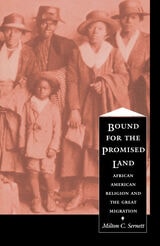
Bound For the Promised Land
African American Religion and the Great MigrationMilton C. Sernett
Duke University Press, 1997
Drawing on a range of sources—interviews, government documents, church periodicals, books, pamphlets, and articles—Sernett shows how the mass migration created an institutional crisis for black religious leaders. He describes the creative tensions that resulted when the southern migrants who saw their exodus as the Second Emancipation brought their religious beliefs and practices into northern cities such as Chicago, and traces the resulting emergence of the belief that black churches ought to be more than places for "praying and preaching." Explaining how this social gospel perspective came to dominate many of the classic studies of African American religion, Bound for the Promised Land sheds new light on various components of the development of black religion, including philanthropic endeavors to "modernize" the southern black rural church. In providing a balanced and holistic understanding of black religion in post–World War I America, Bound for the Promised Land serves to reveal the challenges presently confronting this vital component of America’s religious mosaic.
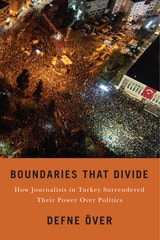
Boundaries That Divide
How Journalists in Turkey Surrendered Their Power over PoliticsDefne Över
Rutgers University Press, 2026
Turkey presents a striking example of the most recent wave of global authoritarian turns. The two-decade-long transition in the country’s political system also transformed its media environment. As mainstream journalists gradually yielded their places to sycophants, much more willing to praise the government in their news, the mainstream media that once oversaw—however imperfectly—political decisions started devoting its full service to cheerleading the government. Simultaneously, a new sphere of critical journalism began to emerge, with mainstream media journalists joining their fellows in the peripheries of the media. Considering the transformation of Turkey’s news media as the decay of a democratic institution, this book asks, How does the media break down under the rule of an elected government?
Drawing on fieldwork and in-depth interviews, the book traces the ruling AKP’s manipulation of social divides to consolidate power and journalists’ navigation of the resulting climate of fear, hope, doubt, and anger. The book shows how Turkey’s news media surrendered its power over politics as some journalists embraced disinformation as a path to heightened status, others turned to self-censorship for protection, and still others resisted capture through continuous but fragmented efforts.
The book portrays journalists as central actors in media decay, while also revealing that resilience to decay emerges where rising demand for “news” meets the contentious mobilization of journalists. Although focused on Turkey, the book’s insights extend far beyond, offering urgent lessons about the future of journalism in an age of populism, polarization, and institutional erosion.
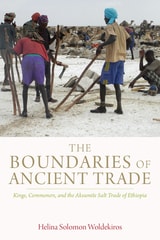
Boundaries of Ancient Trade
Kings, Commoners, and the Aksumite Salt Trade of EthiopiaHelina Solomon Woldekiros
University Press of Colorado, 2023
trade routes in the world.
For thousands of years, farmers in the Tigray, Amhara, and Afar regions of Ethiopia and Eritrea have run caravans of nearly 250,000 people and pack animals annually along an eighty-mile route through both cold, high-altitude farmlands and some of the hottest volcanic desert terrain on earth. In her fieldwork, archaeologist Helina Solomon Woldekiros followed the route with her own donkey and camel caravan, observing and interviewing over 150 Arho (caravaners), salt miners, salt cutters, warehouse owners, brokers, shop owners, and salt village residents to model the political economy of the ancient Aksumite state. The first integrated ethnoarchaeological and archaeological research on this legendary route, this volume provides evidence that informal economies and local participation have played a critical role in regional trade and, ultimately, in maintaining the considerable power of the Aksumite state. Woldekiros also contributes new insights into the logistics of pack animal–based trade and variability in the central and regional organization of global ancient trade.
Using a culturally informed framework for understanding the organization of the ancient salt route and its role in linking the Aksumite state to rural highland agricultural and lowland mobile pastoralist populations, The Boundaries of Ancient Trade makes a key contribution to theoretical discussions of hierarchy and more diffuse power structures in ancient states. This work generates new interest in the region as an area of global relevance in archaeological and anthropological debates on landscape, social interaction, and practice theories.
Boundaries of the Text
Epic Performances in South and Southeast AsiaJoyce Burkhalter Flueckiger and Laurie Sears, Editors
University of Michigan Press, 1991
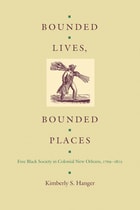
Bounded Lives, Bounded Places
Free Black Society in Colonial New Orleans, 1769–1803Kimberly S. Hanger
Duke University Press, 1997
Drawing on rare archives in Louisiana and Spain, Hanger reconstructs the world of late-eighteenth-century New Orleans from the perspective of its free black residents, and documents the common experiences and enterprises that helped solidify libres’ sense of group identity. Over the course of three and a half decades of Spanish rule, free people of African descent in New Orleans made their greatest advances in terms of legal rights and privileges, demographic expansion, vocational responsibilities, and social standing. Although not all blacks in Spanish New Orleans yearned for expanded opportunity, Hanger shows that those who did were more likely to succeed under Spain’s dominion than under the governance of France, Great Britain, or the United States.
The advent of U.S. rule brought restrictions to both manumission and free black activities in New Orleans. Nonetheless, the colonial libre population became the foundation for the city’s prosperous and much acclaimed Creoles of Color during the antebellum era.
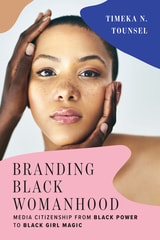
Branding Black Womanhood
Media Citizenship from Black Power to Black Girl MagicTimeka N. Tounsel
Rutgers University Press, 2022
Beginning with the inception of the Essence brand in the late 1960s, Timeka N. Tounsel examines the individuals and institutions that have reconfigured Black women’s empowerment as a business enterprise. Ultimately, these commercial gatekeepers have constructed an image economy that operates as both a sacred space for Black women and an easy hunting ground for their dollars.
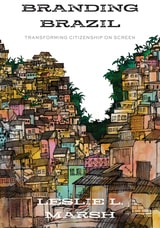
Branding Brazil
Transforming Citizenship on ScreenLeslie L. Marsh
Rutgers University Press, 2021
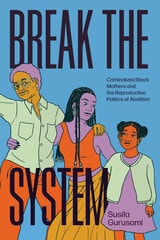
Break the System
Criminalized Black Mothers and the Reproductive Politics of AbolitionSusila Gurusami
University of Chicago Press, 2026
Upends the “broken systems” myth and reveals how the law deliberately criminalizes and punishes Black women, inflicting lasting harm on Black communities in the process.
The United States has one of the highest rates of incarceration in the world, with Black Americans representing a disproportionate share of theimprisoned. Many view this statistic as evidence of a broken system. But sociologist Susila Gurusami argues that the carceral system that so disproportionately harms Black families is not broken at all. In fact, it works just as it was intended. Looking closely at the lives of formerly incarcerated Black mothers, Gurusami shows how state institutions—the criminal-legal, child welfare, and healthcare systems—keep Black mothers from their families, harming Black communities in the process. She also shows how Black women work towards conditions that seem impossible—and even utopian—as part of their everyday mothering labor, but find themselves criminalized for these same actions.
Drawing on ethnographic data and interviews with formerly incarcerated Black women in South Los Angeles, Gurusami challenges dominant assumptions about mothering and criminal justice reform. Gurusami finds that criminalized Black women endure multigenerational political, social, and embodied assaults–what she calls “reproductive warfare”— and still, they build networks, practices, and theories of radical care that protect Black maternal life, legacies, and futures. With incarcerated, formerly incarcerated, and system-impacted Black mothers at the forefront of the growing movement to abolish prisons and jails, Gurusami demonstrates how their everyday mothering work—what she calls “abolitionist motherwork”—is essential to imagining the end of incarceration and ultimately achieving it.
Written with a tender and honest voice, Break the System shares moving vignettes that underscore why we must break the system, rather than reform it, and why we must imagine a future that is radically different than the one we’re told we must accept or salvage.
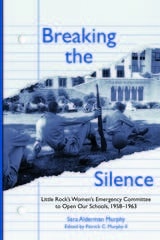
Breaking the Silence
The Little Rock Women's Emergency Committee to Open Our Schools, 1958–1963Sara Murphy
University of Arkansas Press, 1997
The Little Rock Central High School integration crisis did not end in1957 when President Eisenhower sent a portion of the first Airborne Division to protect nine black students. The turmoil was entering its second year in 1958 when Arkansas governor Orval Faubus invoked a hastily passed state law to close the high schools rather than obey the federal court orders that would integrate them.
A group of respectable, middle-class white women, faced with the prospect of no schools as well as the further loss of their city’s good name, turned militant. Led by Adolphine Fletcher Terry, a prominent, “old family” civic leader in her seventies, the women quickly put together the Women’s Emergency Committee to Open Our Schools (WEC), a highly effective organization that bombarded the city with ads, fliers, and statements challenging Faubus’s action. At peak membership, the WEC mustered two thousand to their cause. Largely inexperienced in politics when they joined the WEC, these women became articulate, confident promoters of public schools and helped others to understand that those schools must be fully integrated.
Forty years later, Sara Murphy, a key member of the WEC, recounts the rarely told sto1y of these courageous women who formed a resistance movement. With passion and sensitivity, she reconstructs the challenges and triumphs of that battle, which issued from the mutual link Southern white women shared with disfranchised African Americans in their common goal for full citizenship.
Breaking the World
Black Insecurity and the Horizons of Speculative FictionJustin L. Mann
Duke University Press, 2026
Breaks in the Air
The Birth of Rap Radio in New York CityJohn Klaess
Duke University Press, 2022

Brick City Vanguard
Amiri Baraka, Black Music, Black ModernityJames Smethurst
University of Massachusetts Press, 2020
Amiri Baraka is unquestionably the most recognized leader of the Black Arts Movement of the 1960s and 1970s, and one of the key literary and cultural figures of the postwar United States. While Baraka's political and aesthetic stances changed considerably over the course of his career, Brick City Vanguard demonstrates the continuity in his thinking about the meaning of black music in the material, psychic, and ideological development of black people. Drawing on primary texts, paratexts (including album liner notes), audio and visual recordings, and archival sources, James Smethurst takes a new look at how Baraka's writing on and performance of music envisioned the creation of an African American people or nation, as well as the growth and consolidation of a black working class within that nation, that resonates to this day. This vision also provides a way of understanding the encounter of black people with what has been called “the urban crisis” and a projection of a liberated black future beyond that crisis.
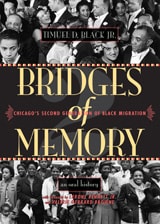
Bridges of Memory Volume 2
Chicago's Second Generation of Black MigrationTimuel Black
Northwestern University Press, 2008
In the second volume of Bridges of Memory, historian Timuel D. Black Jr. continues his conversations with African-Americans who migrated to Chicago from the South in search of economic, social, and cultural opportunities. With his trademark gift for interviewing, Black-himself the son of first-generation migrants to Chicago-guides these individual discussions with ease, resulting in first-person narratives that are informative and entertaining.
Picking up where the first book left off, volume 2 introduces the reader to more members of the first wave of migration and also members of the second generation, the children of those who came in the first wave. In telling their stories, the interviewees paint a vivid picture of the thriving and tight-knit Chicago community formerly known as the Black Belt—today's historic Bronzeville neighborhood. They bring to life the role of family, religion, business, music, and, most of all, the hopes, dreams, and perseverance that enabled a group of people to establish a successful community within a larger society that seemed determined to keep them from success. The experiences of these diverse and vivid personalities often illustrate the role that racial prejudice has played in shaping the specific arcs of their lives. But personal histories such as these are not just chronicles of frustration and despair; more important these narratives reveal an unwavering dedication to breaking the color line and a tireless pursuit of their right to the promise of America.
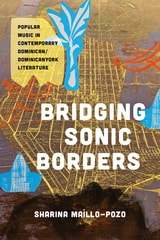
Bridging Sonic Borders
Popular Music in Contemporary Dominican/Dominicanyork LiteratureSharina Maíllo-Pozo
University of Texas Press, 2025
2026 Creative Research Medal, Office of Research at the University of Georgia
2026 Isis Duarte Book Prize, Haiti/Dominican Republic Section, Latin American Studies Association
How music depicted in literature shapes Dominican and Dominican New Yorkers’ identities and links the homeland to the diaspora.
Music has played a large role in recent Dominican literature, whether of the island or the diaspora. Bridging Sonic Borders explores this sonic connection linking the homeland and far-flung locales—especially New York, the center of Dominican cultural production in the United States. Sharina Maíllo-Pozo argues that literary representations of popular music delineate a shared aesthetic territory for US and Caribbean Dominicans, fostering an inclusive and transnational Dominicanidad.
Examining works written in Spanish, English, and Dominicanish, Maíllo-Pozo focuses on Dominican/Dominicanyork writings that have nurtured a borderless aesthetics through their shared investment in hip-hop, jazz, blues, pop, rock, and merengue. For Dominican writers, popular music has become a way of exploring memory and nostalgia and a means of centering people rejected from hegemonic identity formation—the working class, those of African descent, rural and queer people. For example, many works focused on the life of rocker Luis “Terror” Días have emphasized the in-between identity of being both Dominican and a New Yorker. Collectively, these writings have created a space in which boundaries of nation and diaspora are revealed for their fundamental porosity.
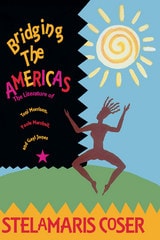
Bridging The Americas
The Literature of Paule Marshall, Toni Morrison, and Gayl JonesStelamaris Coser
Temple University Press, 1994
A literary study of three important black women writers, this book examines the "inter-American" characteristics in the work of Marshall, Morrison, and Jones, including detailed discussions of Morrison's Song of Solomon and Tar Baby, Jones's Corregidora and Song of Anninho, and Marshall's The Chose Place, The Timeless People.
Coser defines the inter-American characteristics in these authors' novels as a connection based on a common African heritage and a shared legacy of colonialism and racism. These three authors redefine the boundaries between the Americas, bridging the "extended Caribbean" that stretches from the U.S. Atlantic coast to Brazil. Their work reinterprets ethnic and sexual identity. Issues of race, class, and nationality overlap. History and identity are reinvented.
To explore the collective forms of resistance and cultural processes in Brazil, the Caribbean, and the United States, Coser also makes provocative connections between the visibility of black women writers and the popularity of male Latin American novelists like Carlos Fuentes and Gabriel Garcia Marquéz.