Results by title
22279 books match the query 'Social Science' and 1147 start with b
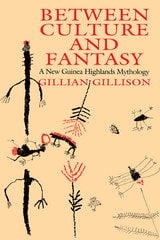
Between Culture and Fantasy
A New Guinea Highlands MythologyGillian Gillison
University of Chicago Press, 1993
Gillison shows how the themes expressed in Gimi myths—especially sexual hostility and an obsession with menstrual blood—are dramatized in the elaborate public rituals that accompany marriage, death, and other life crises. The separate myths of Gimi women and men seem to speak to one another, to protest, alter, and enlarge upon myths of the other sex. The sexes cast blame in the veiled imagery of myth and then play out their debate in joint rituals, cooperating in shows of conflict and resolution that leave men undefeated and accord women the greater blame for misfortune.
Between Desert and River
Hohokam Settlement and Land Use in the Los Robles CommunityChristian E. Downum
University of Arizona Press, 1993
"Downum's carefully done volume is an important contribution to Hohokam archaeology. . . . Clearly written and illustrated."—AM Indian Quarterly
Between Exile and Asylum
An Eastern EpistolaryPredrag Matvejevic
Central European University Press, 2004
Between Families and Institutions
Mental Health and Biopolitical Paternalism in Contemporary ChinaZhiying Ma
Duke University Press, 2025
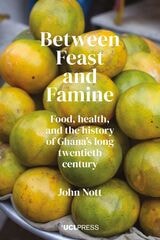
Between Feast and Famine
Food, Health, and the History of Ghana's Long Twentieth CenturyJohn Nott
University College London, 2025
Between Feast and Famine unravels the intertwined histories of food, health, and capitalism in Ghana, charting the country’s shifting nutritional landscape from colonial-era hunger crises to contemporary epidemics of obesity and diabetes. Moving between Ghana’s diverse ecological and economic zones, John Nott excavates how uneven capitalist transformation reshaped diets and childhood nutrition across the twentieth century. At the heart of this story is the evolving science of nutrition itself, from its colonial-era applications to its role in shaping modern health policies.
Using a new historical approach, Between Feast and Famine exposes how global scientific debates and local lived realities co-produced the country’s shifting nutritional conditions. A necessary contribution to African history and medical humanities, this book debunks preconceived notions about hunger and public health, suggesting crucial insights into the complex relationship between food systems and human well-being.

Between Feminism and Islam
Human Rights and Sharia Law in MoroccoZakia Salime
University of Minnesota Press, 2011
There are two major women’s movements in Morocco: the Islamists who hold shari’a as the platform for building a culture of women’s rights, and the feminists who use the United Nations’ framework to amend shari’a law. Between Feminism and Islam shows how the interactions of these movements over the past two decades have transformed the debates, the organization, and the strategies of each other.
In Between Feminism and Islam, Zakia Salime looks at three key movement moments: the 1992 feminist One Million Signature Campaign, the 2000 Islamist mass rally opposing the reform of family law, and the 2003 Casablanca attacks by a group of Islamist radicals. At the core of these moments are disputes over legitimacy, national identity, gender representations, and political negotiations for shaping state gender policies. Located at the intersection of feminism and Islam, these conflicts have led to the Islamization of feminists on the one hand and the feminization of Islamists on the other.
Documenting the synergistic relationship between these movements, Salime reveals how the boundaries of feminism and Islamism have been radically reconfigured. She offers a new conceptual framework for studying social movements, one that allows us to understand how Islamic feminism is influencing global debates on human rights.
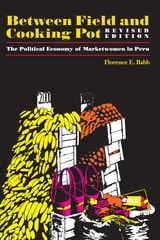
Between Field and Cooking Pot
The Political Economy of Marketwomen in Peru, Revised EditionBy Florence E. Babb
University of Texas Press, 1998
From reviews of the first edition:
"Between Field and Cooking Pot offers details of the daily lives of marketwomen in the central Andean departmental capital of Huaraz.... A welcome addition to studies of women and international development, this book contains a wealth of firsthand material, collected through informal participant-observation as well as formal interviews and analysis of statistical data.... The book encourages us to imagine how the dynamic culture of marketwomen might intersect with the construction, representation, and effects of class and gender."
—American Anthropologist
"The book has a clear and readable style, moving easily between vignettes of marketwomen's lives, descriptions of the markets themselves, and surveys of the theoretical literature. Babb's long, close involvement with the Huaraz markets is apparent. As someone who has spent a lot of time in Andean markets, I found the book pleasurable to read, because it recreated the experience of the marketplace so well."
—American Ethnologist
This revised edition of Between Field and Cooking Pot offers an updated appraisal of what neoliberal politics and economics mean in the lives of marketwomen in the nineties, based on new fieldwork conducted in 1997. Babb also reflects on how recent currents in feminist and anthropological studies have caused her to rethink some aspects of Andean marketers in Peruvian culture and society.
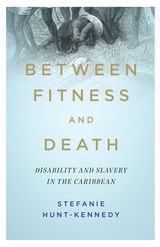
Between Fitness and Death
Disability and Slavery in the CaribbeanStefanie Hunt-Kennedy
University of Illinois Press, 2020
Stefanie Hunt-Kennedy provides a three-pronged analysis of disability in the context of Atlantic slavery. First, she examines the connections of enslavement and representations of disability and the parallel development of English anti-black racism. From there, she moves from realms of representation to reality in order to illuminate the physical, emotional, and psychological impairments inflicted by slavery and endured by the enslaved. Finally, she looks at slave law as a system of enforced disablement.
Audacious and powerful, Between Fitness and Death is a groundbreaking journey into the entwined histories of racism and ableism.
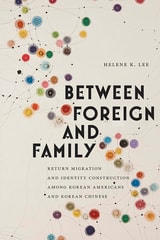
Between Foreign and Family
Return Migration and Identity Construction among Korean Americans and Korean ChineseLee, Helene K
Rutgers University Press, 2018
Between Foreign and Family explores the impact of inconsistent rules of ethnic inclusion and exclusion on the economic and social lives of Korean Americans and Korean Chinese living in Seoul. These actors are part of a growing number of return migrants, members of an ethnic diaspora who migrate “back” to the ancestral homeland from which their families emigrated. Drawing on ethnographic observations and interview data, Helene K. Lee highlights the “logics of transnationalism” that shape the relationships between these return migrants and their employers, co-workers, friends, family, and the South Korean state.
While Koreanness marks these return migrants as outsiders who never truly feel at home in the United States and China, it simultaneously traps them into a liminal space in which they are neither fully family, nor fully foreign in South Korea. Return migration reveals how ethnic identity construction is not an indisputable and universal fact defined by blood and ancestry, but a contested and uneven process informed by the interplay of ethnicity, nationality, citizenship, gender, and history.
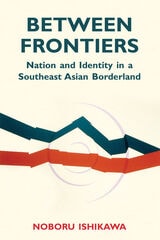
Between Frontiers
Nation and Identity in a Southeast Asian BorderlandNoboru Ishikawa
Ohio University Press, 2010
Noboru Ishikawa grounds his discussion of border zones in materials gathered during two years of archival research and fieldwork relating to the boundary that separates Malaysian from Indonesian territory in western Borneo. His book considers how the state maintains its national space and how people strategically situate themselves by their community, nation, and ethnic group designated as national territory. Examining these issues in the context of concrete circumstances, where a village boundary coincides with a national border, allows him to delineate the dialectical relationship between nation-state and borderland society both as history and as process. Scholars across the humanities and social sciences will learn from this masterful linking of history and ethnography, and of macro and micro perspectives.
Between Gaia and Ground
Four Axioms of Existence and the Ancestral Catastrophe of Late LiberalismElizabeth A. Povinelli
Duke University Press, 2021
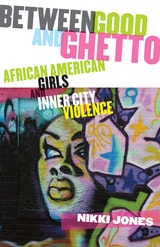
Between Good and Ghetto
African American Girls and Inner-City ViolenceNikki Jones
Rutgers University Press, 2009
Drawing on personal encounters, traditions of urban ethnography, Black feminist thought, gender studies, and feminist criminology, Nikki Jones gives readers a richly descriptive and compassionate account of how African American girls negotiate schools and neighborhoods governed by the so-called "code of the street"ùthe form of street justice that governs violence in distressed urban areas. She reveals the multiple strategies they use to navigate interpersonal and gender-specific violence and how they reconcile the gendered dilemmas of their adolescence. Illuminating struggles for survival within this group, Between Good and Ghetto encourages others to move African American girls toward the center of discussions of "the crisis" in poor, urban neighborhoods.
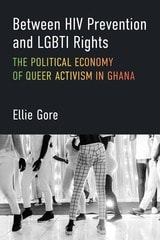
Between HIV Prevention and LGBTI Rights
The Political Economy of Queer Activism in GhanaEllie Gore
University of Michigan Press, 2024
Gore combines original ethnography, documentary analysis, and the examination of development and global health data to connect the struggle for queer liberation in Ghana to broader trajectories of capitalist transformation and crisis and the afterlives of colonialism. In doing so, Between HIV Prevention and LGBTI Rights offers fascinating insights into the political economy of sexuality and global development for scholars, activists, and policymakers seeking to understand and address sexual injustice and oppression, both in Africa and beyond.
The open access edition of this book was made possible through the support of the Economic and Social Research Council (UK).
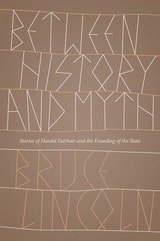
Between History and Myth
Stories of Harald Fairhair and the Founding of the StateBruce Lincoln
University of Chicago Press, 2014
Taking the story of how Harald Fairhair unified Norway in the ninth century as its central example, Bruce Lincoln illuminates the way a state’s foundation story blurs the distinction between history and myth and how variant tellings of origin stories provide opportunities for dissidence and subversion as subtle—or not so subtle—modifications are introduced through details of character, incident, and plot structure. Lincoln reveals a pattern whereby texts written in Iceland were more critical and infinitely more subtle than those produced in Norway, reflecting the fact that the former had a dual audience: not just the Norwegian court, but also Icelanders of the twelfth and thirteenth centuries, whose ancestors had fled from Harald and founded the only non-monarchic, indeed anti-monarchic, state in medieval Europe.
Between History and Myth will appeal not only to specialists in Scandinavian literature and history but also to anyone interested in memory and narrative.
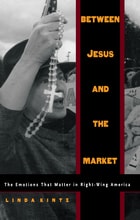
Between Jesus and the Market
The Emotions that Matter in Right-Wing AmericaLinda Kintz
Duke University Press, 1997
With texts from such organizations as the Christian Coalition, the Heritage Foundation, and Concerned Women for America, and writings by Elizabeth Dole, Newt Gingrich, Pat Robertson, and Rush Limbaugh, Kintz traces the usefulness of this activism for the secular claim that conservative political economy is, in fact, simply an expression of the deepest and most admirable elements of human nature itself. The discussion of Limbaugh shows how he draws on the skepticism of contemporary culture to create a sense of absolute truth within his own media performance—its truth guaranteed by the market. Kintz also describes how conservative interpretations of the Holy Scriptures, the U.S. Constitution, and the Declaration of Independence have been used to challenge causes such as feminism, women’s reproductive rights, and gay and lesbian rights. In addition to critiquing the intellectual and political left for underestimating the power of right-wing grassroots organizing, corporate interests, and postmodern media sophistication, Between Jesus and the Market discusses the proliferation of militia groups, Christian entrepreneurship, and the explosive growth and "selling" of the Promise Keepers.
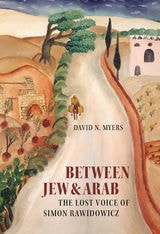
Between Jew and Arab
The Lost Voice of Simon RawidowiczDavid N. Myers
Brandeis University Press, 2009
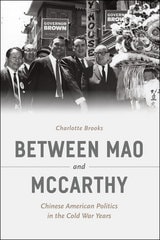
Between Mao and McCarthy
Chinese American Politics in the Cold War YearsCharlotte Brooks
University of Chicago Press, 2014
Between Mao and McCarthy looks at the divergent ways that Chinese Americans in these two cities balanced domestic and international pressures during the tense Cold War era. On both coasts, Chinese Americans sought to gain political power and defend their civil rights, yet only the San Franciscans succeeded. Forging multiracial coalitions and encouraging voting and moderate activism, they avoided the deep divisions and factionalism that consumed their counterparts in New York. Drawing on extensive research in both Chinese- and English-language sources, Charlotte Brooks uncovers the complex, diverse, and surprisingly vibrant politics of an ethnic group trying to find its voice and flex its political muscle in Cold War America.
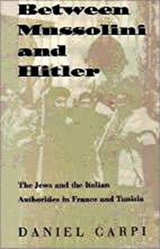
Between Mussolini and Hitler
The Jews and the Italian Authorities in France and TunisiaDaniel Carpi
University Press of New England, 2002
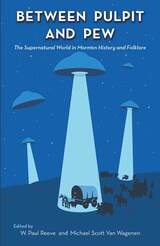
Between Pulpit and Pew
The Supernatural World in Mormon History and FolkloreW. Paul Reeve and Michael Scott Van Wagenen
Utah State University Press, 2011
Cain wanders the frontier as a Bigfoot-like hairy beast and confronts an early Mormon apostle. An evil band of murderers from Mormon scripture, known as the Gadianton robbers, provides an excuse for the failure of a desert town. Stories of children raised from the dead with decayed bodies and damaged minds help draw boundaries between the proper spheres of human and divine action. Mormons who observe UFOs in the nineteenth and twentieth centuries find ways to explain them in relation to the church’s cosmology. The millenarian dimension of that belief system induces church members to invest in the Dream Mine, a hidden treasure that a would-be heir to Joseph Smith wraps in prophecy of the end times. A Utah version of Nessie haunts a large mountain lake. Non-Mormons attempt to discredit Joseph Smith with tales that he had tried and failed to walk on water.
Mormons gave distinctive meanings to supernatural legends and events, but their narratives incorporated motifs found in many cultures. Many such historical legends and beliefs found adherents down to the present. This collection employs folklore to illuminate the cultural and religious history of a people.
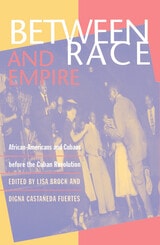
Between Race and Empire
African-Americans and Cubans before the Cuban RevolutionLisa Brock
Temple University Press, 1998
The eleven essays gathered here, written by scholars from both countries, heighten our appreciation of African-Americans as international actors and challenge the notion that Cubans had little or no race consciousness. This is the first study of the world capitalist system to track the international consciousness of working peoples, peoples of color, and women. With a focus on two sets of peoples not in state power, Between Race and Empire expands our understanding of "history from below," and reflects current trends in PanAfricanist and African Diaspora studies by tracing a little-studied linkage between two peoples of African descent.
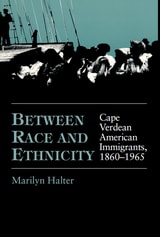
Between Race and Ethnicity
Cape Verdean American Immigrants, 1860-1965Marilyn Halter
University of Illinois Press, 1993
Marilyn Halter combines oral history with analyses of ships' records to chart the history and adaptation patterns of the Cape Verdean Americans. Though identifying themselves in ethnic terms, Cape Verdeans found that their African-European ancestry led their new society to view them as a racial group. Halter emphasizes racial and ethnic identity formation to show how Cape Verdeans set themselves apart from the African Americans while attempting to shrug off white society's exclusionary tactics. She also contrasts rural life on the bogs of Cape Cod with New Bedford’s urban community to reveal the ways immigrants established their own social and religious groups as they strove to maintain their Crioulo customs.

Between Rebels and Relief
Negotiating Humanitarian Access in the Democratic Republic of the CongoMyfanwy James
University of Michigan Press, 2027
Between Rebels and Relief follows the frontline humanitarians who negotiate access with rebel groups in North Kivu, in the eastern Democratic Republic of the Congo, to foreground the work of local aid workers who are the backbone of humanitarian operations. Myfanwy James examines how global endeavors are built on the personal networks, knowledge, and skills of local personnel who are rarely given credit. Based on ethnographic research on Médecins Sans Frontières (Doctors Without Borders), James uncovers the brokerage, translation, and creative identity work that keeps medical relief operations running, and the crucial role of locally hired staff in navigating violent political terrains and building trust with armed groups.
Humanitarian agencies draw upon the personal profiles of different staff who learn to position themselves strategically for different audiences, casting and recasting themselves as a form of tactical agency in uncertain violent terrains. Identities are put to work—they become tools, influencing who can wield power, who can gain trust, and who is at particular risk of violence. Yet this produces a central paradox: To uphold a universalist mandate, humanitarian organizations leverage and reproduce the very borders between people—of race, gender, ethnicity, and personal history—that their egalitarian values seek to transcend.
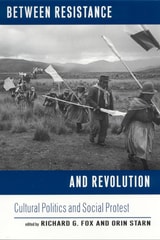
Between Resistance and Revolution
Cultural Politics and Social ProtestFox, Richard G.
Rutgers University Press, 1997
Peasants in India hugging trees to protest logging, Brazilian feminists marching to impeach a president, Okinawan television comedians joke-starting ethnic activity. All are instances of social protest that exist in the charged territory between the cataclysmic upheaval of revolutionary war and the everyday acts of private resistance. Yet these movements "in between" resistance and revolution have remained invisible to scholars of politics, culture, and society. Leading scholars in anthropology, political science, history, sociology, and ethnomusicology examine dissent and direct action in Australia, Brazil, Germany, Colombia, India, Korea, Peru, and the United States and demonstrate the importance of looking beyond these poles of protest to the midways of mobilization.
The contributors are Nancy Abelmann, Sonia Alvarez, Arturo Escobar, Richard Fox, Faye Ginsburg, Ramachandra Guha, Ingrid Monson, Yoshinobu Ota, Orin Starn, and Nathan Stoltzfus.
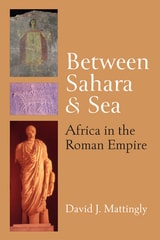
Between Sahara and Sea
Africa in the Roman EmpireDavid J. Mattingly
University of Michigan Press, 2023
Winner of the 2024 Association of American Publishers PROSE Award for Classics
- Winner of the 2025 Vinson Sutlive Book Prize and Lecture
Between Sahara and Sea: Africa in the Roman Empire challenges orthodox views of the story of Africa under Roman domination. It presents a new framework for understanding this and other territories incorporated in the Roman Empire. Based on decades of research in North Africa, David Mattingly’s book is a cleverly constructed and innovative account of the history and archaeology of ancient North Africa (roughly equivalent to Morocco, Algeria, Tunisia, and Libya) from the first century BCE to the third century CE. He charts a new path toward a bottom-up understanding of North African archaeology, exploring in turn the differing material cultures and experiences of the Roman communities of the military and the urban and rural areas. Regional and societal differences emerge as significant and of long duration in the fascinating story of one of the most important sectors of the Roman Empire.
This important book is the most comprehensive in English on Roman North Africa. It is remarkably rich, with up-to-date references and a host of new ideas and perspectives. Well written and illustrated, with a plethora of maps, it will be required reading for anyone interested in the subject. Rather than emphasizing the role of external actors, as studies of “Roman Africa” have traditionally done, Between Sahara and Sea focuses on local contributions to the making of Africa in the Roman Empire. The author demonstrates that the multiple populations encountered by Rome were not an indistinct bloc, but had different identities and cultures.
Between Self and Community
Children’s Personhood in a Globalized South KoreaJunehui Ahn
Rutgers University Press, 2023
Between Shadows and Noise
Sensation, Situatedness, and the UndisciplinedAmber Jamilla Musser
Duke University Press, 2024
Between Two Fires
Gypsy Performance and Romani Memory from Pushkin to Post-SocialismAlaina Lemon
Duke University Press, 2000
Lemon’s ethnographic study is based on extensive fieldwork in 1990s Russia and focuses on Moscow Romani Theater actors as well as Romani traders and metalworkers. Drawing from interviews with Roma and Russians, observations of performances, and conversations, as well as archives, literary texts, and media, Lemon analyzes the role of theatricality and theatrical tropes in Romani life and the everyday linguistics of social relations and of memory. Historically, the way Romani stage performance has been culturally framed and positioned in Russia has served to typecast Gypsies as “natural” performers, she explains. Thus, while theatrical and musical performance may at times empower Roma, more often it has reinforced and rationalized racial and social stereotypes, excluding them from many Soviet and Russian economic and political arenas. Performance, therefore, defines what it means to be Romani in Russia differently than it does elsewhere, Lemon shows. Considering formal details of language as well as broader cultural and social structures, she also discusses how racial categories relate to post-Soviet economic changes, how gender categories and Euro-Soviet notions of civility are connected, and how ontological distinctions between “stage art” and “real life” contribute to the making of social types. This complex study thus serves as a corrective to romantic views of Roma as detached from political forces.
Between Two Plenums
China’s Intraleadership Conflict, 1959–1962Ellis Joffe
University of Michigan Press, 1975
Between Us
Healing Ourselves and Changing the World Through SociologyEdited by Marika Lindholm and Elizabeth Anne Wood
University of Chicago Press, 2024
The world is a tough place right now. Climate change, income inequality, racist violence, and the erosion of democracy have exposed the vulnerability of our individual and collective futures. But as the sociologists gathered here by Marika Lindholm and Elizabeth Wood show, no matter how helpless we might feel, it’s vital that we discover new paths toward healing and change. The short, accessible, emotionally and intellectually powerful essays in Between Us offer a transformative new way to think about sociology and its ability to fuel personal and social change. These forty-five essays reflect a diverse range of experiences. Whether taking an adult son with autism grocery shopping or fighting fires in Barcelona, contending with sexism at the beach or facing racism at a fertility clinic, celebrating one’s immigrant heritage, or acknowledging one’s KKK ancestors, this book shows students that sociology is deeply rooted in everyday life and can be used to help us process and understand it. A perfect introduction to the discipline and why it matters, Between Us will resonate with students from all backgrounds as they embark on their academic journey.

Between Woman and Nation
Nationalisms, Transnational Feminisms, and the StateCaren Kaplan, Norma Alarcón, and Minoo Moallem, eds.
Duke University Press, 1999
This interdisciplinarily collection investigates women in diverse locales—ranging from Quebec to Beirut. The contributors consider such subjects as Yucatan feminism, Islamic fundamentalisms, Canadian gender formations, historic Chicana/o struggles, and Israeli/Palestinian conflicts. Divided into three parts, the collection first examines constructions of nationalism and communities whose practices complicate these constructions. The second section discusses regulations of particular nation-states and how they affect the lives of women, while the third presents studies of transnational identity formation, in which contributors critique ideas such as “multicultural nationalism” and “global feminism.” Arguing provocatively that such movements and concepts inadequately represent women’s interests, contributors examine how such beliefs and their attendant organizations may actually bolster the very formations they ought to subvert.
In its demonstration of the critical possibilities of feminist alliances across discrepant and distinct material conditions, Between Woman and Nation will make a unique contribution to women’s studies, feminist theory, studies of globalization and transnationalism, ethnic studies, and cultural studies.

Between You and Me
Queer Disclosures in the New York Art World, 1948-1963Gavin Butt
Duke University Press, 2005
Focusing on the period from 1948 to 1963, Butt draws on the accusations and denials of homosexuality that appeared in the popular press, on early homophile publications such as One and the Mattachine Review, and on biographies, autobiographies, and interviews. In a stunning exposition of Larry Rivers’s work, he shows how Rivers incorporated gossip into his paintings, just as his friend and lover Frank O’Hara worked it into his poetry. He describes how the stories about Andy Warhol being too “swish” to be taken seriously as an artist changed following his breakthrough success, reconstructing him as an asexual dandy. Butt also speculates on the meanings surrounding a MoMA curator’s refusal in 1958 to buy Jasper Johns’s Target with Plaster Casts on the grounds that it was too scandalous for the museum to acquire. Between You and Me sheds new light on a pivotal moment in American cultural production as it signals new directions for art history.
Between the Andes and the Amazon
Language and Social Meaning in BoliviaAnna M. Babel
University of Arizona Press, 2018
Between the Andes and the Amazon is ethnography in storytelling form, a rigorous yet sensitive exploration of how people understand themselves and others as members of social groups through the words and languages they use.
Drawing on fifteen years of ethnographic research, Babel offers a close examination of how people produce oppositions, even as they might position themselves “in between” those categories. These oppositions form the raw material of the social system that people accept as “normal” or “the way things are.” Meaning-making happens through language use and language play, Babel explains, and the practice of using Spanish versus Quechua is a claim to an identity or a social position. Babel gives personal perspectives on what it is like to live in this community, focusing on her own experiences and those of her key consultants. Between the Andes and the Amazon opens new ways of thinking about what it means to be a speaker of an indigenous or colonial language—or a mix of both.
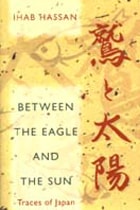
Between the Eagle and the Sun
Traces of JapanIhab Hassan
University of Alabama Press, 1996
A fascinating memoir by Egypt-born American literary theorist and writer Ihab Hassan about his life in Japan. Part recollection, part cultural perception, Between the Eagle and the Sun records his journey, living and seeing himself sometimes as another, assaying always to read the hieroglyphs of his past in the scripts of Japan. As lucid as it is intensely felt, at once lyrical and critical, the work offers a beguiling vision of Japan and, by tacit contrast, of America. For writing, the author says, is more than praise or blame, it is also knowledge, empathy, and delight. These attributes are evident in Hassan's treatment of Japanese culture, its people and scenes. Indeed, the people, rendered in vibrant portraits throughout the book, abide when all the shadows of romance and exasperation have fled.
True to its moment, the work also reinvests the forms of memoir, travel, and quest. Cultural essays, travel anecdotes, autobiographical meditations, portraits of Japanese friends, a section titled "Entries, A to Z," fit into a tight frame, with clear transitions from one section to another. The style, however, alters subtly to suit topic, occasion, and mood.
Japan may not hold the key to this planet's future; no single nation does. Yet the continuing interest in its history, society, and people and the incresed awareness of its recent trends and growing global impact engage an expanding audience. Avoiding cliches, sympathetic to its subject yet analytical, unflinching in judgment, and withal highly personal, Between the Eagle and the Sun offers a unique image of its subject by a distinguished and well-traveled critic, at home in several cultures.
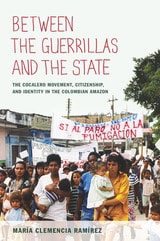
Between the Guerrillas and the State
The Cocalero Movement, Citizenship, and Identity in the Colombian AmazonMaría Clemencia Ramírez
Duke University Press, 2011
Between the Lines
Letters Between Undocumented Mexican and Latin American Immigrants and Their Families and FriendsLarry Siems
University of Arizona Press, 1992
Between the Lines
South Asians and Postcolonialityedited by Deepika Bahri and Mary Vasudeva
Temple University Press, 1996
This ground-breaking collection of new interviews, critical essays, and commentary explores South Asian identity and culture. Sensitive to the false homogeneity implied by "South Asian," "diaspora," "postcolonial," and "Asian American," the contributors attempt to unpack these terms. By examining the social, economic, and historical particularities of people who live "between the lines"—on and between borders—they reinstate questions of power and privilege, agency and resistance. As South Asians living in the United States and Canada, each to some degree must reflect on the interaction of the personal "I," the collective "we," and the world beyond.
The South Asian scholars gathered together in this volume speak from a variety of theoretical perspectives; in the essays and interviews that cross the boundaries of conventional academic disciplines, they engage in intense, sometimes contentious, debate.
Contributors: Meena Alexander, Gauri Viswanathan, Gayatri Chakravorty Spivak, Amritjit Singh, M. G. Vassanji, Sohail Inayatullah, Ranita Chatterjee, Benita Mehta, Sanjoy Majumder, Mahasveta Barua, Sukeshi Kamra, Samir Dayal, Pushpa Naidu Parekh, Indrani Mitra, Huma Ibrahim, Amitava Kumar, Shantanu DuttaAhmed, Uma Parameswaran.
In the series Asian American History and Culture, edited by Sucheng Chan, David Palumbo-Liu, Michael Omi, K. Scott Wong, and Linda Trinh Võ.
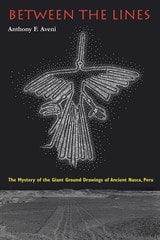
Between the Lines
The Mystery of the Giant Ground Drawings of Ancient Nasca, PeruBy Anthony F. Aveni
University of Texas Press, 2000
The Nasca Lines are one of the world's great enigmas. Who etched the more than 1,000 animal, human, and geometric figures that cover 400 square miles of barren pampa in southern Peru? How did the makers create lifelike images of monkeys, birds, and spiders without an aerial vantage point from which to view these giant figures that stretch across thousands of square yards? Most puzzling of all, why did the ancient Nasca lay out these lines and images in the desert? These are the questions that pioneering archaeoastronomer Anthony Aveni seeks to answer in this book.
Writing for a wide public audience, Aveni begins by establishing the Nasca Lines as a true wonder of the ancient world. He describes how viewers across the centuries have tried to interpret the lines and debunks the wilder theories. Then he vividly recounts his own years of exploration at Nasca in collaboration with other investigators and the discoveries that have answered many of the riddles about who made the Nasca Lines, when, and for what purposes. This fascinating overview of what the leading expert and his colleagues currently understand about the lines is required reading for everyone intrigued by ancient mysteries.
Between the Middle East and the Americas
The Cultural Politics of DiasporaEdited by Evelyn Alsultany and Ella Shohat
University of Michigan Press, 2013
Between the Middle East and the Americas: The Cultural Politics of Diaspora traces the production and circulation of discourses about "the Middle East" across various cultural sites, against the historical backdrop of cross-Atlantic Mahjar flows. The book highlights the fraught and ambivalent situation of Arabs/Muslims in the Americas, where they are at once celebrated and demonized, integrated and marginalized, simultaneously invisible and spectacularly visible. The essays cover such themes as Arab hip-hop's transnational imaginary; gender/sexuality and the Muslim digital diaspora; patriotic drama and the media's War on Terror; the global negotiation of the Prophet Mohammad cartoons controversy; the Latin American paradoxes of Turcophobia/Turcophilia; the ambiguities of the bellydancing fad; French and American commodification of Rumi spirituality; the reception of Iranian memoirs as cultural domestication; and the politics of translation of Turkish novels into English. Taken together, the essays analyze the hegemonic discourses that position "the Middle East" as a consumable exoticized object, while also developing complex understandings of self-representation in literature, cinema/TV, music, performance, visual culture, and digital spaces. Charting the shifting significations of differing and overlapping forms of Orientalism, the volume addresses Middle Eastern diasporic practices from a transnational perspective that brings postcolonial cultural studies methods to bear on Arab American studies, Middle Eastern studies, and Latin American studies. Between the Middle East and the Americas disentangles the conventional separation of regions, moving beyond the binarist notion of "here" and "there" to imaginatively reveal the thorough interconnectedness of cultural geographies.
Between the Sheets, in the Streets
Queer, Lesbian, Gay DocumentaryChris Holmlund
University of Minnesota Press, 1997
The first book to focus on the connections between sexuality, activism, and documentary film.
From film festivals to university campuses, from private homes to first-run theaters, people everywhere are viewing and discussing gay, lesbian, queer, bisexual, and transgender films and videos. Between the Sheets, In the Streets considers these videos and films, testifying to the unavoidable connections between sexuality (the sheets) and activism (the streets) for all who identify as gay, lesbian, or queer in the 1990s.
This first collection of essays to focus exclusively on queer, lesbian, and gay documentary argues that documentary films and videos speak with a sense of political and social urgency, acting as testaments to the importance of reclaiming history and asserting the importance of these points of view. Among the topics discussed are representations of young queers on such shows as MTV’s The Real World; pre-Stonewall films; portrayals of lesbians and aging; video activism in Oregon and the South; and the works of Derek Jarman, Su Friedrich, Cheryl Dunye, and Sadie Benning. A range of films and videos is examined, including Strangers in Good Company, Paris Is Burning, Juggling Gender, Silverlake Life, and Without You I’m Nothing.Tracing an exhilarating range of perspectives and subject positions, Between the Sheets, In the Streets is an essential guide to current developments in queer, lesbian, and gay documentary. Contributors: Chris Cagle, Brown U; Linda Dittmar, U of Massachusetts, Boston; Lynda Goldstein, Pennsylvania State U, Wilkes-Barre Campus; Ronald Gregg, Drake U; Janet Jakobsen, U of Arizona; Lynda McAfee, New York Public Library; Kathleen McHugh, U of California, Riverside; Beverly Seckinger, U of Arizona; Marc Siegel, UCLA; Chris Straayer, Tisch School of the Arts; Erika Suderburg, U of California, Riverside; Thomas Waugh, Concordia U, Montreal; Justin Wyatt, U of North Texas.
Between the Stage and the Audience
The Theatre of the Oppressed from the Joker’s PerspectiveDana Moree and Líza Urbanová
Karolinum Press, 2025
What is the theater of the oppressed—the theatrical forms arising in the 1970s that blur the line between performer and spectator? What is its method? How is the performance created and who are its non-actors and non-audiences? These and other questions are answered in Between the Stage and the Audience from the perspective of a “joker,” a guide of theater groups and a presenter of theater performances. This role works both with the group that prepares the theater performance and with the audience itself.
This book is structured according to the joker's dual roles. Descriptions of the various stages of the creation of a performance are interspersed with interviews with theater practitioners as well as specific examples from realized performances. In the second part of the book, six jokers who actively use the method of theater of the oppressed share their experiences and unique adaptations of these theatrical innovations in the Czech context.

Beverley Ditsie's Fearless Speech
A Dialogue on the Pitfalls of Queer StruggleSharad Chari with Beverley Palesa Ditsie
Temple University Press, 2027
Beverley Palesa Ditsie is a key South African Black lesbian activist, part of a world of queer activism during South Africa’s decade of transition from apartheid, when sexuality was crucial to recircuiting post-apartheid power and possibility. Part of the Gay and Lesbian Organization of the Witwatersrand (GLOW) which organized the continent’s first Pride March, she has stood steadfastly for Black lesbian self-determination and African queer representation.
Beverley Ditsie’s Fearless Speech enters this recent history of sexuality politics through an activist and a critical theorist in conversation. This book bends an account of Ditsie’s life and work in the critique of racial and sexual capitalism. Grounded in South Africa, the conversation is cut through with radical queer, materialist, and feminist critique in an internationalist frame.
Through this dialogic form, Beverley Ditsie emerges alongside other figures of fearless speech willing to stand for Black and African queer liberation, yet aware of pitfalls in these struggles that point to work that remains to be done. Beverley Ditsie’s Fearless Speech is a cautionary tale of hope for radical change in a world of deepening injustice and political homophobia.
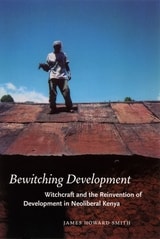
Bewitching Development
Witchcraft and the Reinvention of Development in Neoliberal KenyaJames Howard Smith
University of Chicago Press, 2008
Similar to magic, development’s promise of a better world elicits both hope and suspicion from Wataita. Smith shows that the unforeseen changes wrought by development—greater wealth for some, dashed hopes for many more—foster moral debates that Taita people express in occult terms. By carefully chronicling the beliefs and actions of this diverse community—from frustrated youths to nostalgic seniors, duplicitous preachers to thought-provoking witch doctors—BewitchingDevelopment vividly depicts the social life of formerly foreign ideas and practices in postcolonial Africa.
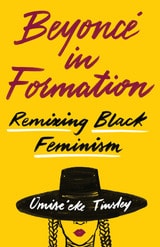
Beyoncé in Formation
Remixing Black FeminismBy Omise'eke Tinsley
University of Texas Press, 2018
Making headlines when it was launched in 2015, Omise’eke Tinsley’s undergraduate course “Beyoncé Feminism, Rihanna Womanism” has inspired students from all walks of life. In Beyoncé in Formation, Tinsley now takes her rich observations beyond the classroom, using the blockbuster album and video Lemonade as a soundtrack for vital new-millennium narratives.
Woven with candid observations about her life as a feminist scholar of African studies and a cisgender femme married to a trans spouse, Tinsley’s “Femme-onade” mixtape explores myriad facets of black women’s sexuality and gender. Turning to Beyoncé’s “Don’t Hurt Yourself,” Tinsley assesses black feminist critiques of marriage and then considers the models of motherhood offered in “Daddy Lessons,” interspersing these passages with memories from Tinsley’s multiracial family history. Her chapters on nontraditional bonds culminate in a discussion of contemporary LGBT politics through the lens of the internet-breaking video “Formation,” underscoring why Beyoncé’s black femme-inism isn’t only for ciswomen. From pleasure politics and the struggle for black women’s reproductive justice to the subtext of blues and country music traditions, the landscape in this tour is populated by activists and artists (including Loretta Lynn) and infused with vibrant interpretations of Queen Bey’s provocative, peerless imagery and lyrics.
In the tradition of Roxanne Gay’s Bad Feminist and Jill Lepore’s best-selling cultural histories, Beyoncé in Formation is the work of a daring intellectual who is poised to spark a new conversation about freedom and identity in America.
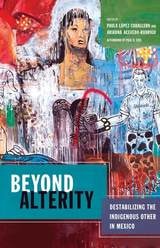
Beyond Alterity
Destabilizing the Indigenous Other in MexicoEdited by Paula López Caballero and Ariadna Acevedo-Rodrigo; Afterword by Paul K. Eiss
University of Arizona Press, 2018
Although previous studies have usually focused on the most visible aspects of differences—cosmovision, language, customs, resistance—the contributors to this volume show that emphasizing difference prevents researchers from seeing all the social phenomena where alterity is not obvious. Those phenomena are equally or even more constitutive of social life and include property relations (especially individual or private ones), participation in national projects, and the use of national languages.
The category of “indigenous” has commonly been used as if it were an objective term referring to an already given social subject. Beyond Alterity shows how this usage overlooks the fact that the social markers of differentiation (language, race or ethnic group, phenotype) are historical and therefore unstable. In opposition to any reification of geographical, cultural, or social boundaries, this volume shows that people who (self-)identify as indigenous share a multitude of practices with the rest of society and that the association between indigenous identification and alterity is the product of a specific political history.
Beyond Alterity is essential reading for anyone interested in understanding indigenous identity, race, and Mexican history and politics.
Contributors
Ariadna Acevedo-Rodrigo
Laura Cházaro
Michael T. Ducey
Paul K. Eiss
José Luis Escalona-Victoria
Vivette García Deister
Peter Guardino
Emilio Kourí
Paula López Caballero
Elsie Rockwell
Diana Lynn Schwartz
Gabriela Torres-Mazuera
Beyond Betrayal
The Priest Sex Abuse Crisis, the Voice of the Faithful, and the Process of Collective IdentityPatricia Ewick and Marc W. Steinberg
University of Chicago Press, 2019
Beyond Betrayal charts a nationwide identity shift through the story of one chapter of Voice of the Faithful (VOTF), an organization founded in the scandal’s aftermath. VOTF had three goals: helping survivors of abuse; supporting priests who were either innocent or took risky public stands against the wrongdoers; and pursuing a broad set of structural changes in the church. Patricia Ewick and Marc W. Steinberg follow two years in the life of one of the longest-lived and most active chapters of VOTF, whose thwarted early efforts at ecclesiastical reform led them to realize that before they could change the Catholic Church, they had to change themselves. The shaping of their collective identity is at the heart of Beyond Betrayal, an ethnographic portrait of how one group reimagined their place within an institutional order and forged new ideas of faith in the wake of widespread distrust.
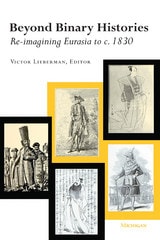
Beyond Binary Histories
Re-imagining Eurasia to c. 1830Victor Lieberman, Editor
University of Michigan Press, 1999
The collaborators of this project show, in varying degrees, that political centralization in these areas reflected and inspired the creation of vernacular literatures at the expense of more universal languages. They illustrate that societies in widely separated areas, with no obvious links, became more literate, mobile, specialized, and commercial at roughly the same time. And they point out that administrative development in many of these same areas showed curiously synchronized cycles. Finally, having defined Eurasian parallels and sketched their limits, they push on to explore the underlying dynamics of these discoveries, scrutinizing the role of guns, global climate, markets, new information networks, institutional pressures, and sixteenth-century messianism.
Insofar as similarities between some European and Asian areas exceeded those between different sectors of Asia, this collection invites historians to reject continental perspectives in favor of more thematic, contextually-specific categories. But at the same time, it raises the possibility of a broad "early modern" period for Eurasia at large.
The contributors are Mary Elizabeth Berry (University of California, Berkeley), Peter Carey (University of Oxford), James B. Collins (Georgetown University), Valerie Kivelson (University of Michigan), R. I. Moore (University of Newcastle upon Tyne), Sanjay Subrahmanyam (Ecole des Hautes Etudes en Sciences Sociales, Paris), John K. Whitemore (University of Michigan), and David K. Wyatt (Cornell University).
Beyond Biopolitics
Essays on the Governance of Life and DeathPatricia Ticineto Clough and Craig Willse, eds.
Duke University Press, 2011
Contributors. Ann Anagnost, Una Chung, Patricia Ticineto Clough, Steve Goodman, Sora Y. Han, Stefano Harney, May Joseph, Randy Martin, Brian Massumi, Luciana Parisi, Jasbir Puar, Amit S. Rai, Eugene Thacker, Çağatay Topal, Craig Willse
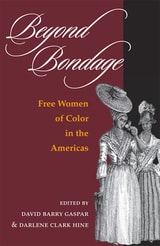
Beyond Bondage
Free Women of Color in the AmericasEdited by David Barry Gaspar and Darlene Clark Hine
University of Illinois Press, 2004

Beyond Boundaries
C.L.R. James and Postnational StudiesEdited by Christopher Gair
Pluto Press, 2006
Invaluable for students of post-colonial studies, the book examines points where James crosses with other theorists, such as Lacan and Gramsci. Racial identity and cultural politics are key themes in his work, not to mention his unique writings on cricket. Contributors including Donald E Pease, Nicole King, Christopher Gair and Anthony Bogues illuminate the key themes in James's writing, and put forward the idea that the breath of James's thinking can be identified as the beginning of 'post-national' studies.
Christopher Gair is a lecturer in the Department of American and Canadian Studies, University of Birmingham. He is the author of Complicity and Resistance in Jack London¹ s Novels (Edwin Mullen Press, 1997), of The American Counterculture (forthcoming, Edinburgh University Press, 2006), and of numerous essays on American literature and culture. He is the editor of the journal Symbiosis.
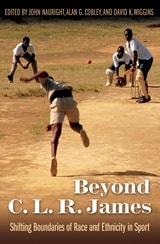
Beyond C. L. R. James
Shifting Boundaries of Race and Ethnicity in SportsJohn Nauright
University of Arkansas Press, 2014