Results by title
428 books match the query 'Authorship' and 29 start with c
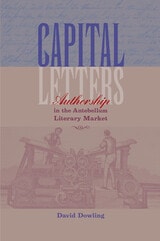
Capital Letters
Authorship in the Antebellum Literary MarketDavid Dowling
University of Iowa Press, 2009
In the 1840s and 1850s, as the market revolution swept the United States, the world of literature confronted for the first time the gaudy glare of commercial culture. Amid growing technological sophistication and mounting artistic rejection of the soullessness of materialism, authorship passed from an era of patronage and entered the clamoring free market. In this setting, romantic notions of what it meant to be an author came under attack, and authors became professionals.
In lively and provocative writing, David Dowling moves beyond a study of the emotional toll that this crisis in self-definition had on writers to examine how three sets of authors—in pairings of men and women: Harriet Wilson and Henry David Thoreau, Fanny Fern and Walt Whitman, and Rebecca Harding Davis and Herman Melville—engaged with and transformed the book market. What were their critiques of the capitalism that was transforming the world around them? How did they respond to the changing marketplace that came to define their very success as authors? How was the role of women influenced by these conditions?
Capital Letters concludes with a fascinating and daring transhistorical comparison of how two superstar authors—Herman Melville in the nineteenth century and Stephen King today—have negotiated the shifty terrain of the literary marketplace. The result is an important contribution to our understanding of print culture and literary work.
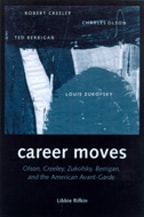
Career Moves
Olson, Creeley, Zukofsky, Berrigan, AndLibbie Rifkin
University of Wisconsin Press, 2000
How much did "making it new" have to do with "making it"? For the four "outsider poets" considered in this book—Charles Olson, Robert Creeley, Louis Zukofsky, and Ted Berrigan—the connection was everything. At once a social history of literary ambition in America in the fifties and sixties and a uniquely collective form of literary biography, Career Moves offers an intimate account of the postwar poetry underground.
Making the controversial claim that anti-Establishment poets were at least as "careerist" as their mainstream peers, Libbie Rifkin shows how the nature of these poets’ ambition actually defined postwar avant-garde identity. In doing so, she clarifies the complicated link between the crafting of a literary career and the defining of a literary canon.
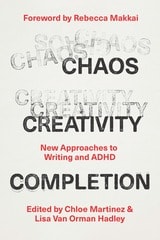
Chaos, Creativity, Completion
New Approaches to Writing and ADHDEdited by Chloe Martinez and Lisa Van Orman Hadley
University of Chicago Press, 2026
A rising number of ADHD diagnoses, particularly among adults, is not only confirmed by medical studies and mainstream reporting but also borne out across social media and elsewhere among people who’d been privately coping with persistent, often inexpressible challenges. Many of the contributors to this collection can attest to how a later-in-life diagnosis radically demystified the patterns, impulses, and impasses that had affected their lives and their writing. The essays in Chaos, Creativity, Completion reflect the ways poets, novelists, memoirists, filmmakers, and others have come to understand and engage the relationship between their ADHD and their creative tool kits.
These essays consider how writers can embrace rather than mask their neurodifference, offering multiple ways of finding writing practices that work for ADHD brains—including techniques that often look quite different from traditional writing instruction. Some essays are analytical, some are reflective, and some are delightfully weird, employing humor, research, personal narrative, deep description, close reading, and experimental approaches to genre and form. Each essay also concludes with a writing prompt, providing readers with opportunities to expand their own creative toolkits. Finally, the book includes an interview with David Kessler, a licensed therapist and nationally recognized ADHD advocate, and an appendix with a glossary of helpful terms and a list of recommended resources, from books and organizations to apps and gadgets.
Just as the experience of ADHD varies from person to person, so, too, do the ways those experiences can be expressed. Chaos, Creativity, Completion is a kaleidoscopic, adventurous series of takes on what writing looks like today.
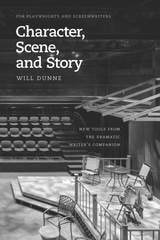
Character, Scene, and Story
New Tools from the Dramatic Writer's CompanionWill Dunne
University of Chicago Press, 2017
Featuring forty-two new workshop-tested exercises, this sequel to The Dramatic Writer’s Companion allows writers to dig deeper into their scripts by fleshing out images, exploring characters from an emotional perspective, tapping the power of color and sense memory to trigger ideas, and trying other visceral techniques. The guide also includes a troubleshooting section to help tackle problem scenes. Writers with scripts already in progress will find they can think deeper about their characters and stories. And those who are just beginning to write will find the guidance they need to discover their best starting point. The guide is filled with hundreds of examples, many of which have been developed as both plays and films.
Character, Scene, and Story is fully aligned with the new edition of The Dramatic Writer’s Companion, with cross-references between related exercises so that writers have the option to explore a given topic in more depth. While both guides can stand alone, together they give writers more than one hundred tools to develop more vivid characters and craft stronger scripts.
Chiaroscuro
Essays on Identity: Revised EditionHelen Barolini
University of Wisconsin Press, 1999
“A lively, lucid, and often extremely moving collection of essays.”—Sandra Gilbert, author of Wrongful Death: A Memoir
“Barolini’s essays moved me. Their commitment, their passion, their intelligence struck me very powerfully and made them among the most incisive essays on Italian-Americana, ethnicity, and diversity in literature that I have ever read.”—Fred Misurella, author of Understanding Milan Kundera: Public Events, Private Affairs and Short Time
Part memoir, part social commentary, and part literary criticism, Chiaroscuro is not only profoundly original but also of crucial importance in establishing the contours of an Italian-American tradition. Spanning a quarter century of work, the essays in Helen Barolini’s essays explore her personal search; literature as a formative influence; and the turning of the personal into the political. Included in Chiaroscuro is an updated re-introduction to Barolini’s American Book Award-winning collection, The Dream Book: An Anthology of Writings by Italian-American Women.
Chicano Authors
Inquiry by InterviewBy Bruce-Novoa
University of Texas Press, 1980
The need for this book became apparent to Bruce-Novoa when he first taught a Chicano culture course in 1970. His students could find no source to satisfy their curiosity about Chicano writers' backgrounds, opinions, and attitudes. Chicano Authors: Inquiry by Interview provides that information.
Fourteen leading Chicano authors respond to questions about their personal and educational backgrounds, their perception of the role of the Chicano writer, and their evaluation of the literary, linguistic, and sociocultural significance of Chicano literature. The authors included are José Antonio Villarreal, Rolando Hinojosa, Sergio Elizondo, Miguel Méndez M., Abelardo Delgado, José Montoya, Tomás Rivera, Estela Portillo, Rudolfo A. Anaya, Bernice Zamora, Ricardo Sánchez, Ron Arias, Tino Villanueva, and Alurista.
Each interview is preceded by a brief introductory note which locates the author in the context of Chicano literature and provides a sense of his or her writing. Also included are a general introduction to Chicano literature, a chronological chart of publications by genre, and a selected bibliography. The volume will be an essential research tool for the student of Chicano literature and culture and a useful introduction for the general reader.
Chiefs, Scribes, and Ethnographers
Kuna Culture from Inside and OutBy James Howe
University of Texas Press, 2009
Ciardi Himself
Fifteen Essays in the Reading, Writing, and Teaching of PoetryJohn Ciardi
University of Arkansas Press, 1989
Circulating Literacy
Writing Instruction in American Periodicals, 1880-1910Alicia Brazeau
Southern Illinois University Press, 2016
Brazeau establishes how these magazines shared a common strategy in the construction of literacy identities by connecting a specific identity with a particular set of reading and writing practices. She explores how farm journals were preoccupied with the value of literacy as a tool for shaping community; considers how the Journal and the Bazar deployed distinctly different illustrations of literacy values for women; shows how the Journal and editor Edward Bok cast women as consumers and sellers of literacy; and looks at the ways in which Bazar editors urged readers to adopt habits of reading and writing that emphasized communal relationships among women. In Circulating Literacy, Brazeau speaks to, and connects, the important topics of rural studies, gender, professionalization, and literacy sponsorship and identity, arguing for the value of the study of periodicals as literacy education tools.
Coauthoring with Undergraduates in Writing Studies
Revising Identities and InstitutionsLaurie Grobman
Utah State University Press, 2025
In this book, faculty and undergraduates describe and theorize about their coauthoring experiences within a variety of institutional contexts including land-grant universities, Historically Black Colleges and Universities, Hispanic-Serving Institutions, religiously affiliated research universities, and regional campuses of statewide higher education systems. They explore the relationships between undergraduates and faculty that lead to coauthoring opportunities in a range of courses—first-year writing classes, general educational requirements in various disciplines, and upper-level offerings for English majors—as well as in other institutional spaces such as writing centers, community engagement initiatives, and assessment offices. The collection offers faculty and undergraduates models, ideas, and strategies for how to coauthor together while also preparing them for the challenges—pragmatic, intellectual, and ethical—that they may encounter.
Coauthoring with Undergraduates in Writing Studies showcases why and how coauthorship between faculty and undergraduates is a vital site for scholarly engagement, professional development, and socially just education. It boldly enacts rhetoric and composition’s commitment to collaborative scholarship and is significant for graduate students and faculty in rhetoric and writing studies, especially in community-engaged writing, undergraduate education, collaborative writing, and mentorship, as well as those interested in WAC, WID, and the scholarship of teaching and learning.
Collaborative Dickens
Authorship and Victorian Christmas PeriodicalsMelisa Klimaszewski
Ohio University Press, 2019
From 1850 to 1867, Charles Dickens produced special issues (called “numbers”) of his journals Household Words and All the Year Round, which were released shortly before Christmas each year. In Collaborative Dickens, Melisa Klimaszewski undertakes the first comprehensive study of these Christmas numbers. She argues for a revised understanding of Dickens as an editor who, rather than ceaselessly bullying his contributors, sometimes accommodated contrary views and depended upon multivocal narratives for his own success.
Klimaszewski uncovers connections among and between the stories in each Christmas collection. She thus reveals ongoing conversations between the works of Dickens and his collaborators on topics important to the Victorians, including race, empire, supernatural hauntings, marriage, disability, and criminality. Stories from Wilkie Collins, Elizabeth Gaskell, and understudied women writers such as Amelia B. Edwards and Adelaide Anne Procter interact provocatively with Dickens’s writing. By restoring links between stories from as many as nine different writers in a given year, Klimaszewski demonstrates that a respect for the Christmas numbers’ plural authorship and intertextuality results in a new view of the complexities of collaboration in the Victorian periodical press and a new appreciation for some of the most popular texts Dickens published.
Coming After
Essays on PoetryAlice Notley
University of Michigan Press, 2005
Notley explores the work of second-generation New York School poets and their allies: Ted Berrigan, Anne Waldman, Joanne Kyger, Ron Padgett, Lorenzo Thomas, and others. These essays and reviews are among the first to deal with a generation of poets notorious for their refusal to criticize and theorize, assuming the stance that "only the poems matter." The essays are characterized by Notley's strong, compelling voice, which transfixes the reader even in the midst of professional detail. Coming After revives the possibility of the readable book of criticism.
Communicating Professionally
A How-To-Do-It Manual for LibrariansCatherine Sheldrick Ross
American Library Association, 2013
Companionship in Grief
Love and Loss in the Memoirs of C. S. Lewis, John Bayley, Donald Hall, Joan Didion, and Calvin TrillinJeffrey Berman
University of Massachusetts Press, 2010
In Companionship in Grief, Jeffrey Berman focuses on the most life-changing event for many people—the death of a spouse. Some of the most acclaimed memoirs of the past fifty years offer insights into this profound loss: C. S. Lewis's A Grief Observed; John Bayley's three memoirs about Iris Murdoch, including Elegy for Iris; Donald Hall's The Best Day the Worst Day; Joan Didion's best-selling The Year of Magical Thinking; and Calvin Trillin's About Alice. These books explore the nature of spousal bereavement, the importance of caregiving, the role of writing in recovery, and the possibility of falling in love again after a devastating loss.
Throughout his study, Berman traces the theme of love and loss in all five memoirists' fictional and nonfictional writings as well as in those of their spouses, who were also accomplished writers. Combining literary studies, grief and bereavement theory, attachment theory, composition studies, and trauma theory, Companionship in Grief will appeal to anyone who has experienced love and loss. Berman's research casts light on five remarkable marriages, showing how autobiographical stories of love and loss can memorialize deceased spouses and offer wisdom and comfort to readers.
Composing Media Composing Embodiment
Kristin L. Arola and Anne Frances Wysocki
Utah State University Press, 2012
“What any body is—and is able to do—cannot be disentangled from the media we use to consume and produce texts.” ---from the Introduction.
Kristin Arola and Anne Wysocki argue that composing in new media is composing the body—is embodiment. In Composing (Media) = Composing (Embodiment), they havebrought together a powerful set of essays that agree on the need for compositionists—and their students—to engage with a wide range of new media texts. These chapters explore how texts of all varieties mediate and thereby contribute to the human experiences of communication, of self, the body, and composing. Sample assignments and activities exemplify how this exploration might proceed in the writing classroom.
Contributors here articulate ways to understand how writing enables the experience of our bodies as selves, and at the same time to see the work of (our) writing in mediating selves to make them accessible to institutional perceptions and constraints. These writers argue that what a body does, and can do, cannot be disentangled from the media we use, nor from the times and cultures and technologies with which we engage.
To the discipline of composition, this is an important discussion because it clarifies the impact/s of literacy on citizens, freedoms, and societies. To the classroom, it is important because it helps compositionists to support their students as they enact, learn, and reflect upon their own embodied and embodying writing.
Condition Red
Essays, Interviews, and CommentariesYusef Komunyakaa; Edited by Radiclani Clytus
University of Michigan Press, 2017

Content Machines
Reading and Writing in the Platform EraSarah Brouillette
Duke University Press, 2026
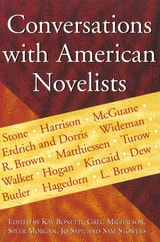
Conversations with American Novelists
Edited by Kay Bonetti, Greg Michalson, Speer Morgan, Jo Sapp, & Sam Stowers
University of Missouri Press, 1997
Readers of fine novels cherish the opportunity to hear their favorite novelists speak directly, without commentary or interpretation, about how their lives and concerns drive their fiction writing. For twenty years The Missouri Review has brought these readers some of the most compelling and thought- provoking literary interviews in print. In this collection of fifteen in-depth interviews with contemporary novelists, the authors discuss the style and themes of their work, their writing habits, their cultural and social backgrounds, and larger aesthetic issues with refreshing insight about themselves and their art.
Originally conducted for the American Audio Prose Library, the interviews were then edited for publication in The Missouri Review. Here they are reproduced with an introduction and with a brief biographical and bibliographical headnote for each writer. These candid interviews with some of our favorite novelists are sure to delight all readers.
Authors Interviewed in This Volume:Robert Stone
Jamaica Kincaid
Jim Harrison
Tom McGuane
Louise Erdrich and Michael Dorris
John Edgar Wideman
Robb Forman Dew
Rosellen Brown
Peter Matthiessen
Scott Turow
Margaret Walker
Linda Hogan
Robert Olen Butler
Jessica Hagedorn
Larry Brown
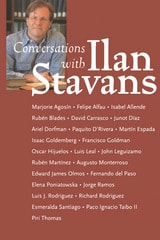
Conversations with Ilan Stavans
Ilan Stavans
University of Arizona Press, 2005
Spontaneous and surprising, these conversations reflect Latino life in the United States in all its facets. Among the more than two dozen selections, Edward James Olmos talks about Hispanics in Hollywood; John Leguizamo describes how he shapes a stage show; author Richard Rodriguez reflects on his gang background; Esmeralda Santiago takes on the Puerto Rican stereotype; and Piri Thomas shares thoughts on the writing of Down These Mean Streets. "A conversation is a tango," writes Stavans, "for it takes two to dance it." Conversations with Ilan Stavans invites readers to catch the rhythm and enjoy these unique meetings of minds.
Conversations with Texas Writers
Edited by Frances Leonard and Ramona Cearley, for Humanities Texas
University of Texas Press, 2005
Larry McMurtry declares, "Texas itself doesn't have anything to do with why I write. It never did." Horton Foote, on the other hand, says, "I've just never had a desire to write about any place else." In between those figurative bookends are hundreds of other writers—some internationally recognized, others just becoming known—who draw inspiration and often subject matter from the unique places and people that are Texas. To give everyone who is interested in Texas writing a representative sampling of the breadth and vitality of the state's current literary production, this volume features conversations with fifty of Texas's most notable established writers and emerging talents.
The writers included here work in a wide variety of genres—novels, short stories, poetry, plays, screenplays, essays, nonfiction, and magazine journalism. In their conversations with interviewers from the Writers' League of Texas and other authors' organizations, the writers speak of their apprenticeships, literary influences, working habits, connections with their readers, and the domestic and public events that have shaped their writing. Accompanying the interviews are excerpts from the writers' work, as well as their photographs, biographies, and bibliographies. Joe Holley's introductory essay—an overview of Texas writing from Cabeza de Vaca's 1542 Relación to the work of today's generation of writers, who are equally at home in Hollywood as in Texas—provides the necessary context to appreciate such a diverse collection of literary voices.
A sampling from the book:
"This land has been my subject matter. One thing that distinguishes me from the true naturalist is that I've never been able to look at land without thinking of the people who've been on it. It's fundamental to me." —John Graves
"Writing is a way to keep ourselves more in touch with everything we experience. It seems the best gifts and thoughts are given to us when we pause, take a deep breath, look around, see what's there, and return to where we were, revived." —Naomi Shihab Nye
"I've said this many times in print: the novel is the middle-age genre. Very few people have written really good novels when they are young, and few people have written really good novels when they are old. You just tail off, and lose a certain level of concentration. Your imaginative energy begins to lag. I feel like I'm repeating myself, and most writers do repeat themselves." —Larry McMurtry
"I was a pretty poor cowhand. I grew up on the Macaraw Ranch, east of Crane, Texas. My father tried very hard to make a cowboy out of me, but in my case it never seemed to work too well. I had more of a literary bent. I loved to read, and very early on I began to write small stories, short stories, out of the things I liked to read." —Elmer Kelton
Crafting Presence
The American Essay and the Future of Writing StudiesNicole B. Wallack
Utah State University Press, 2016
Wallack analyzes examples drawn primarily from volumes of The Best American Essays to illuminate the most important quality of the essay as a literary form: the writer’s “presence.” She demonstrates how accounting for presence provides a flexible and rigorous heuristic for reading the contexts, formal elements, and purposes of essays. Such readings can help students learn writing principles, practices, and skills for crafting myriad presences rather than a single voice.
Crafting Presence holds serious implications for writing pedagogy by providing new methods to help teachers and students become more insightful and confident readers and writers of essays. At a time when liberal arts education faces significant challenges, this important contribution to literary studies, composition, and creative writing shows how an essay-centered curriculum empowers students to show up in the world as public thinkers who must shape the “knowledge economy” of the twenty-first century.
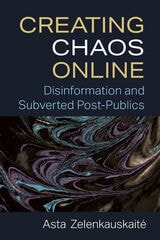
Creating Chaos Online
Disinformation and Subverted Post-PublicsAsta Zelenkauskaite
University of Michigan Press, 2022
With the prevalence of disinformation geared to instill doubt rather than clarity, Creating Chaos Online unmasks disinformation when it attempts to pass as deliberation in the public sphere and distorts the democratic processes. Asta Zelenkauskaitė finds that repeated tropes justifying Russian trolling were found to circulate across not only all analyzed media platforms’ comments but also across two analyzed sociopolitical contexts suggesting the orchestrated efforts behind messaging. Through a dystopian vision of publics that are expected to navigate in the sea of uncertain both authentic and orchestrated content, pushed by human and nonhuman actors, Creating Chaos Online offers a concept of post-publics. The idea of post-publics is reflected within the continuum of treatment of public, counter public, and anti-public. This book argues that affect-instilled arguments used in public deliberation in times of uncertainty, along with whataboutism constitute a playbook for chaos online.
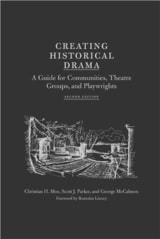
Creating Historical Drama
A Guide for Communities, Theatre Groups, and PlaywrightsChristian H. Moe, Scott J. Parker, and George McCalmon. Foreword by Romulus Linney
Southern Illinois University Press, 2005
This guidebook for transforming actual American figures and events into dramatic form has aided many communities and groups in writing, planning, and producing first-rate historical dramas. The new edition of Creating Historical Drama: A Guide for Communities, Theatre Groups, and Playwrights features updated examples of drama and dramatic activities from short indoor productions to large-scale, outdoor historical dramas; new material about funding, economic impact on communities, budgeting, and marketing; and current information on physical theatre development.
Responding to a national interest in dramatizing historical material in a variety of community settings, the volume begins with a discussion on the scope and sources of historical drama, as well as the reasons for historicizing drama. From there, it details the features of biography, pageant, and epic dramas, and takes on important issues such as historical accuracy and dealing with expository material. The handbook then provides assistance in composing drama, leading and organizing the theatre group, organizing the community’s resources, and evaluating the audience and the production site. Twenty-nine illustrations, with sketches by Darwin Payne and Ronald Naverson, augment the discussion.
Written for the nonspecialist and particularly useful to novice playwrights and directors, the volume is equally important for professional historians, educators, and theatre artists. More than a guidebook, Creating Historical Drama convincingly demonstrates that the genre is a beneficial and significant cultural phenomenon that not only educates and entertains, but also has the power to revitalize civic economy and morale.
Critical Academic Writing and Multilingual Students
A. Suresh Canagarajah
University of Michigan Press, 2002
This volume facilitates teacher self-reflection and enables readers to better understand the motivations and pedagogical implications--especially for L2 writing--of a more openly pedagogical approach.
Critical Academic Writing and Multilingual Students explains what it means to commit to an academic pedagogy, in terms of form, self, content, and community--and what it can accomplish in the L2 writing classroom. It's a guide for writing teachers who wish to embark on a journey toward increased critical awareness of the role they play, or potentially could play, in the lives of their students.
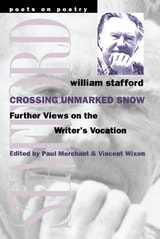
Crossing Unmarked Snow
Further Views on the Writer's VocationWilliam Stafford
University of Michigan Press, 1998
--William Stafford
A plain-spoken but eminently effective poet, the late William Stafford (1914-1993) has managed to shape part of the mainstream of American poetry by distancing himself from its trends and politics. Though his work has always inspired controversy, he was widely admired by students and poetry lovers as well as his own peers. His fascination with the process of writing joined with his love of the land and his faith in the teaching power of nature to produce a unique poetic voice in the last third of the twentieth century.
Crossing Unmarked Snow continues--in the tradition of Stafford's well-loved collections Writing the Australian Crawl and You Must Revise Your Life-- collecting prose and poetry on the writer's profession. The book includes reviews and reflections on poets from Theodore Roethke to Carolyn Forche, from May Sarton to Philip Levine; conversations on the making of poems; and a selection of Stafford's own poetry. The book also includes a section on the art of teaching, featuring interviews, writing exercises, and essays on the writer's vocation.
William Stafford authored more than thirty-five books of poetry and prose during his lifetime, including the highly acclaimed Writing the Australian Crawl: Views on the Writer's Vocation and You Must Revise Your Life.
Crumpled Paper Boat
Experiments in Ethnographic WritingAnand Pandian and Stuart McLean, editors
Duke University Press, 2017
A School for Advanced Research Advanced Seminar
Culture, Genre, and Literary Vocation
Selected Essays on American LiteratureMichael Davitt Bell
University of Chicago Press, 2000
Throughout, Bell revisits issues of genre with an eye toward the unexpected details of authors' lives, and invites us to reconsider the hidden functions that terms such as "romanticism" and "realism" served for authors and their critics. Whether tracing the demands of the market or the expectations of readers, Bell examines the intimate relationship between literary production and culture; each essay closely links the milieu in which American writers worked with the trajectory of their storied careers.
Cultures of Letters
Scenes of Reading and Writing in Nineteenth-Century AmericaRichard H. Brodhead
University of Chicago Press, 1993
Curious Attractions
Essays on Fiction WritingDebra Spark
University of Michigan Press, 2005
While the book will have immediate appeal for students of writing, it will also be of interest to general readers for its in-depth reading of contemporary fiction and for its take on important issues of the day: Should writers try to be more uplifting? How is emotion best conveyed in fiction? Why are serious writers in North America wedded to the realist tradition?
When she was only twenty-three, Debra Spark's best-selling anthology 20 Under 30 introduced readers to some of today's best writers, including David Leavitt, Susan Minot, Lorrie Moore, Ann Patchett, and Mona Simpson. Almost twenty years later, Spark brings this same keen critical eye to Curious Attractions, discussing a broad range of authors from multiple genres and generations.
A collection of essays in the belles-lettres tradition, Curious Attractions offers lively and instructive discussions of craft flavored with autobiographical reflections and commentary on world events. Throughout, Spark's voice is warm, articulate, and engaging as it provides valuable insights to readers and writers alike.