Results by title
5159 books match the query 'Biography' and 258 start with c
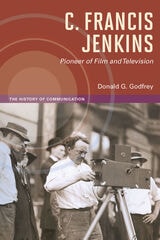
C. Francis Jenkins, Pioneer of Film and Television
Donald G. Godfrey
University of Illinois Press, 2014
This is the first biography of the important but long-forgotten American inventor Charles Francis Jenkins (1867-1934). Historian Donald G. Godfrey documents the life of Jenkins from his childhood in Indiana and early life in the West to his work as a prolific inventor whose productivity was cut short by an early death. Jenkins was an inventor who made a difference.
As one of America's greatest independent inventors, Jenkins's passion was to meet the needs of his day and the future. In 1895 he produced the first film projector able to show a motion picture on a large screen, coincidentally igniting the first film boycott among his Quaker viewers when the film he screened showed a woman's ankle. Jenkins produced the first American television pictures in 1923, and developed the only fully operating broadcast television station in Washington, D.C. transmitting to ham operators from coast to coast as well as programming for his local audience.
Godfrey's biography raises the profile of C. Francis Jenkins from his former place in the footnotes to his rightful position as a true pioneer of today's film and television. Along the way, it provides a window into the earliest days of both motion pictures and television as well as the now-vanished world of the independent inventor.
C. L. R. James's Caribbean
Paget Henry and Paul Buhle, eds.
Duke University Press, 1992
Drawing upon James's observations of his own life as revealed to interviewers and close friends, this volume provides an examination of James's childhood and early years as colonial literatteur and his massive contribution to West Indian political-cultural understanding. Moving beyond previous biographical interpretations, the contributors here take up the problem of reading James's texts in light of poststructuralist criticism, the implications of his texts for Marxist discourse, and for problems of Caribbean development.
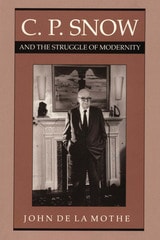
C. P. Snow and the Struggle of Modernity
By John de la Mothe
University of Texas Press, 1992
The condition of modernity springs from that tension between science and the humanities that had its roots in the Enlightenment but reached its full flowering with the rise of twentieth-century technology. It manifests itself most notably in the crisis of individuality that is generated by the nexus of science, literature, and politics, one that challenges each of us to find a way of balancing our personal identities between our public and private selves in an otherwise estranging world. This challenge, which can only be expressed as "the struggle of modernity," perhaps finds no better expression than in C. P. Snow. In his career as novelist, scientist, and civil servant, C. P. Snow (1905-1980) attempted to bridge the disparate worlds of modern science and the humanities.
While Snow is often regarded as a late-Victorian liberal who has little to say about the modernist period in which he lived and wrote, de la Mothe challenges this judgment, reassessing Snow's place in twentieth-century thought. He argues that Snow's life and writings—most notably his Strangers and Brothers sequence of novels and his provocative thesis in The Two Cultures and the Scientific Revolution—reflect a persistent struggle with the nature of modernity. They manifest Snow's belief that science and technology were at the center of modern life.

CANCELED - Notes from Home
Jonna McKone
Rutgers University Press, 2021
Through portraiture, oral history, writing, and family archives, the contributors explore childhood, geography, immigration, education, and family relationships, recovering misunderstood or overlooked moments. In the process of making this work, the group found old family photos, returned to sites of significance, and made new friendships, discovering the transformational potential of this kind of storytelling to reframe hardship, loss, and uncertainty. In the words of one contributor, “I felt like this process was a necessary step that allowed me to acknowledge and comprehend what I was experiencing at the time. It allowed me to create a more coherent understanding that I am who I am because of my past and because I was the one who had control of molding my own, better path.” Each chapter, encompassing one person’s story, is strikingly unique in its vision and approach.
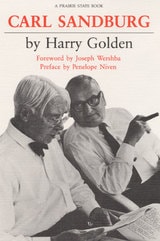
CARL SANDBURG
Harry Golden
University of Illinois Press, 1988
mutual. Toward the end of his life, Sandburg shared his papers, letters,
photographs, and memories with Golden. Combining these materials with his
own recollections, Golden reconstructs the life of his closest friend. His
anecdotal account is both an engaging portrait of Sandburg and a tribute
to their friendship. Generations of Sandburg's devoted readers will want
to own this very personal biography.
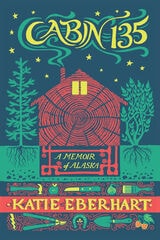
Cabin 135
A Memoir of AlaskaKatie Eberhart
University of Alaska Press, 2020

Cabin Stories
The Best of Dark Winter Nights: True Stories from AlaskaRob Prince
University of Alaska Press, 2022
From the humorous to the heart-wrenching, these are the stories told up north on dark winter nights. Anyone curious about what living in Alaska is really like will appreciate this wild and fun anthology.
Contributors: Glenner Anderson, Kat Betters, Randy Brown, Melissa Buchta, JB Carnahan, Philip Charette, Roy Churchwell, Richard Coleman, Michael Daku, Wendy Demers, Alexandra Dunlap, Alyssa Enriquez, Jan Hanscom, Mike Hopper, James Mennaker, Ken Moore, Steve Neumeth, Kaiti Ott, Lori Schoening, Bill Schnabel, Guy Schroder, Ed Shirk, Eric Stevens, Chris Zwolinski
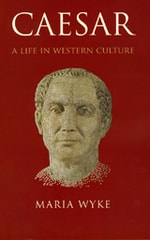
Caesar
A Life in Western CultureMaria Wyke
University of Chicago Press, 2008
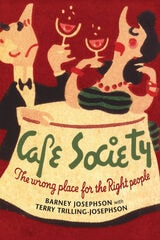
Cafe Society
The wrong place for the Right peopleBarney Josephson with Terry Trilling-Josephson. Foreword by Dan Morgenstern.
University of Illinois Press, 2009
Set against the drama of the Great Depression, the conflict of American race relations, and the inquisitions of the House Un-American Activities Committee, Cafe Society tells the personal history of Barney Josephson, proprietor of the legendary interracial New York City night clubs Cafe Society Downtown and Cafe Society Uptown and their successor, The Cookery. Famously known as "the wrong place for the Right people," Cafe Society featured the cream of jazz and blues performers--among whom were Billie Holiday, boogie-woogie pianists, Big Joe Turner, Lester Young, Buck Clayton, Big Sid Catlett, and Mary Lou Williams--as well as comedy stars Imogene Coca, Zero Mostel, and Jack Gilford, and also gospel and folk singers. A trailblazer in many ways, Josephson welcomed black and white artists alike to perform for mixed audiences in a venue whose walls were festooned with artistic and satiric murals lampooning what was then called "high society."
Featuring scores of photographs that illustrate the vibrant cast of characters in Josephson's life, this exceptional book speaks richly about Cafe Society's revolutionary innovations and creativity, inspired by the vision of one remarkable man.

Calamities of Exile
Three Nonfiction NovellasLawrence Weschler
University of Chicago Press, 1998
"Beautiful but harrowing chronicles of three exiles that probe the moral and personal risks of their encounters with totalitarianism. . . . Piercing and timely."—Kirkus Reviews, starred review
"Weschler . . . combines a novelist's gift for drama with the objectivity and research skills of a journalist. . . . The result is three gripping profiles of very human but also extraordinary men."—Publishers Weekly
"[Weschler's] thorough accounting of the men's covert operations, assumed identities and strained relationships with fathers, wives, and colleagues creates a disturbing triptych of the perils of totalitarianism."—Lance Gould, New York Times Book Review
"Weschler tells these three tragic tales with an admirable combination of psychological penetration, intellectual thrust, concision and compassion."—Francis King, Spectator
"Endlessly absorbing. . . . Breathtaking."—Jeri Laber, Los Angeles Times Book Review

Caliban's Freedom
The Early Political Thought of C.L.R. JamesAnthony Bogues
Pluto Press, 1997
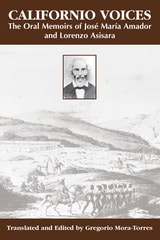
Californio Voices
The Oral Memoirs of Jose Maria Amador and Lorenzo AsisaraGregorio Mora-Torres
University of North Texas Press, 2005
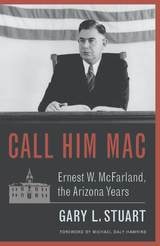
Call Him Mac
Ernest W. McFarland, the Arizona YearsGary L. Stuart; Foreword by Michael Daly Hawkins
University of Arizona Press, 2018
In Call Him Mac, Gary L. Stuart renders a nuanced portrait of a young, ambitious, restless, and smiling man on the verge of becoming a political force headed for the highest levels of governance in Arizona and America. Stuart reveals how Mac became an expert on water law and a visionary in Arizona’s agricultural future. Using interviews with friends and family and extensive primary source research, Stuart spotlights Mac’s unerring focus as a loving husband, father, and grandfather, even in times of great personal tragedy. Mac’s commitments to his family mirrored his sense of fiduciary duty in public life. His enormous political successes were answers to how he dealt with threats to his own life in 1919, the loss of his first wife and three children in the 1930s, and a political loss in 1952 that no one saw coming.
Stuart writes the little-known story of how Arizona’s culture and citizens shaped this energetic, determined, likable lawyer. The fame Mac created was not for himself but for those he served in Arizona and beyond. Mac’s unparalleled political success was fermented during his early Arizona years, the bridge that brought him to his future as an approachable and likable elder statesman of Arizona politics.
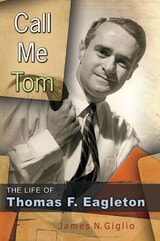
Call Me Tom
The Life of Thomas F. EagletonJames N. Giglio
University of Missouri Press, 2011
Born in St. Louis, Eagleton began his public career in 1956 as St. Louis Circuit Attorney. At 27, he was the youngest person in the history of the state to hold that position, and he duplicated the feat in his next two elected positions, attorney general in 1960 and lieutenant governor in 1964. In 1968, he was elected to the U.S. Senate, where he served until 1987. He was thrown into the national spotlight in 1972 when revelations regarding his mental health, particularly the shock treatments he received for depression, forced his resignation as a vice presidential nominee of the Democratic Party. All of that would overshadow his significant contributions as senator, especially on environmental and social legislation, as well as his defense of Congressional authority on war making and his role in the U. S. military disengagement from Southeast Asia in 1973.
Respected biographer James N. Giglio provides readers with an encompassing and nuanced portrait of Eagleton by placing the man and his career in the context of his times. Giglio allows readers to see his rumpled suits, smell the smoke of his Pall Mall cigarettes, hear his gravelly voice, and relish his sense of humor. At the same time, Giglio does not shy away from the personal torments that Eagleton had to overcome. A definitive examination of the senator’s career also reveals his unique ability to work with Republican counterparts, especially prior to the 1980s when bipartisanship was more possible.
Measuring the effect his mental illness had on his career, Giglio determines that the removal of aspirations for higher office in 1972 made Eagleton a better senator. He consistently took principled stands, with the ultimate goal of preserving and modernizing the agenda of Franklin D. Roosevelt, his favorite president.
Thoroughly researched using the Eagleton Papers and interviews with more than eighty-five people close to Eagleton, including family, friends, colleagues, subordinates, and former classmates, Call Me Tom offers an engaging and in-depth portrayal of a man who remained a devoted public servant throughout his life.
Callaghan
Harry Conroy
Haus Publishing, 2006
Called to Courage
Four Women in Missouri HistoryMargot Ford McMillen & Heather Roberson
University of Missouri Press, 2002
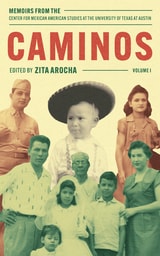
Caminos
Memoirs from the Center for Mexican American Studies at the University of Texas at AustinEdited by Zita Arocha
University of Texas Press, 2026
Fourteen writers reflect on the complexities of Mexican American identity in hyphenated America.
At a time when memoir has become an increasingly popular form of self-expression, fourteen writers from diverse backgrounds engaged with one another in a series of writing workshops sponsored by the Center for Mexican American Studies at UT Austin to reflect on their life journeys. They wrestle with issues that shaped them in provocative, evocative, and sometimes humorous short essays. The writers include a lawyer, a civil rights activist, actors, journalists, and professors who write of belonging, national and sexual identity, coping with illness and loss, career challenges, and life-altering events familiar to us all. The contributors write poignantly about losing a parent at an early age; growing up in segregated communities; bravely confronting serious health problems; living in a household with a mentally disturbed family member; the complexity of being “American” as well as “Mexican”; and the professional challenges facing all hyphenated Americans, many of whom are often the first person of color in their workplaces.
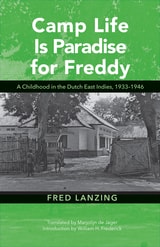
Camp Life Is Paradise for Freddy
A Childhood in the Dutch East Indies, 1933–1946Fred Lanzing
Ohio University Press, 2017
“Children see and hear what is there; adults see and hear what they are expected to and mainly remember what they think they ought to remember,” David Lowenthal wrote in The Past Is a Foreign Country. It is on this fraught foundation that Fred Lanzing builds this memoir of his childhood in a Japanese internment camp for Dutch colonialists in the East Indies during the World War II.
When published in the Netherlands in 2007, the book triggered controversy, if not vitriol, for Lanzing’s assertion that his time in the camp was not the compendium of horrors commonly associated with the Dutch internment experience. Despite the angry reception, Lanzing’s account corresponds more closely with the scant historical record than do most camp memoirs. In this way, Lanzing’s work is a substantial addition to ongoing discussions of the politics of memory and the powerful—if contentious—contributions that subjective accounts make to historiography and to the legacies of the past.
Lanzing relates an aspect of the war in the Pacific seldom discussed outside the Netherlands and, by focusing on the experiences of ordinary people, expands our understanding of World War II in general. His compact, beautifully detailed account will be accessible to undergraduate students and a general readership and, together with the introduction by William H. Frederick, is a significant contribution to literature on World War II, the Dutch colonial experience, the history of childhood, and Southeast Asian history.

Campbell-Bannerman
Roy Hattersley
Haus Publishing, 2006
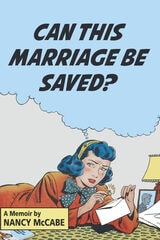
Can This Marriage Be Saved?
A MemoirNancy McCabe
University of Missouri Press, 2020
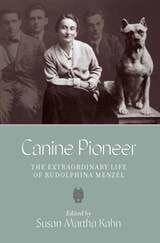
Canine Pioneer
The Extraordinary Life of Rudolphina MenzelEdited by Susan Martha Kahn
Brandeis University Press, 2022
Rudolphina Menzel (née Waltuch, 1891–1973), was a Viennese-born, Jewish scientist whose pioneering research on canine psychology, development, and behavior fundamentally shaped the ways dogs came to be trained, cared for, and understood. Between the two world wars, Menzel was known throughout Europe as one of the foremost breeders and trainers of police dogs and served as a sought-after consultant at Kummersdorf, the German military dog training institute in Berlin. She was also a fervent Zionist who was responsible for inventing the canine infrastructure in what came to be the State of Israel and for training hundreds of dogs to protect Jewish lives and property in pre-state Palestine. Teaching Jews to like dogs and training dogs to serve Jews became Menzel’s unique kind of Zionist mission. Detailed and insightful, Canine Pioneer: The Extraordinary Life of Rudolphina Menzel brings to light an important piece of history.
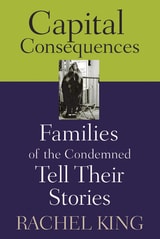
Capital Consequences
Families of the Condemned Tell Their StoriesKing, Rachel
Rutgers University Press, 2004
Those who support capital punishment often claim that they do so because it provides justice and closure for the victims’ families. In Capital Consequences, attorney Rachel King reminds us that there are other families and other victims who must be considered in the debate over the death penalty.
Combining a narrative voice with vivid, passionate, and painful accounts of the families of death row inmates, the book demonstrates that crimes that lead to death sentences also devastate the families of those convicted. These families, King argues, are the unseen victims of capital punishment.
King challenges readers to question the morality of a punishment that victimizes families of the condemned and ripples out through future generations. Chapters tell the stories of families that have lost life savings supporting an accused loved one, endured intense public scrutiny, been subjected to harassment by the media, and are struggling to live with the inhumane treatment that their loved ones receive on death row. The author also explores the unique nature of the grief that these families suffer. Because their pain tends to elicit less attention and empathy than that of the crime victims’ families, King shows how it becomes much more desperate and isolating.
On a human level, this book is a powerful reminder that tragic events have tragic consequences that far outreach their immediate victims. At the same time, the accounts illustrate many of the flaws inherent in the judicial system—racial and economic bias, incompetent counsel, prosecutorial misconduct, the execution of juveniles, and wrongful convictions, some of which are only now being overturned because of recent advances in DNA technology.
Regardless of which side of the death penalty issue you are on, this book will lead you to pause and consider that all acts—criminal and retributive—have broader human implications than we are sometimes willing to realize.
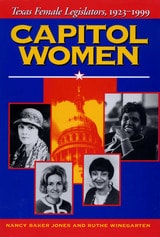
Capitol Women
Texas Female Legislators, 1923-1999By Nancy Baker Jones and Ruthe Winegarten
University of Texas Press, 2000
Along with bar rooms and bordellos, there has hardly been a more male-focused institution in Texas history than the Texas Legislature. Yet the eighty-six women who have served there have made a mark on the institution through the legislation they have passed, much of which addresses their concerns as citizens who have been inadequately represented by male lawmakers.
This first complete record of the women of the Texas Legislature places such well-known figures as Kay Bailey Hutchison, Sissy Farenthold, Barbara Jordan, Irma Rangel, Eddie Bernice Johnson, Susan Combs, and Judith Zaffirini in the context of their times and among the women and men with whom they served. Drawing on years of primary research and interviews, Nancy Baker Jones and Ruthe Winegarten offer concise biographies and profiles of all eighty-six women who have served or currently hold office in the Texas Legislature.
The biographies describe the women lawmakers' lives, campaign strategies, and legislative successes and defeats. Four introductory essays provide historical and cultural context for the biographies, which are arranged chronologically to give a sense of the passage of time, of relationships among and between women, and of the issues of their eras.
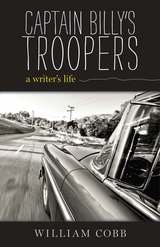
Captain Billy's Troopers
A Writer's LifeWilliam Cobb
University of Alabama Press, 2015
Captain Billy’s Troopers is a frank, literary memoir about William Cobb’s life as a southern writer—his struggles with addiction and illness, his career as a teacher and novelist, and his hard‑won return to creative life.
In this audacious memoir, William Cobb reveals the tumultuous creative life of a distinguished practitioner of southern and Alabama storytelling. As poignant and inspiring as his own fiction, Captain Billy’s Troopers traces Cobb’s early life, education, and struggles with alcohol and the debilitating condition normal pressure hydrocephalus (NPH).
Like a curving river, the broad sweep of Cobb’s turbulent life includes both startling cataracts and desultory eddies, leading sometimes into shadows or opening into unexpected sunlight. With unsentimental clarity, Cobb recounts coming of age in his native Demopolis in the churning middle years of the twentieth century. It’s there he has his first tantalizing tastes of alcohol and begins to drink habitually. Readers then travel with Cobb to Livingston University (now the University of West Alabama) and then on to Vanderbilt University. Along the way, readers relish his first experiences of love and success as a writer, leading to a career as a professor of writing at Alabama College (now the University of Montevallo) in 1963.
From there Cobb’s struggles with alcohol and depression lead to elongated years of tumbling creative output and the collapse of his marriage. The summer of 1984 found Cobb in rehab, the first step in his path to recovery. His unflinching memoir narrates both the milestones and telling details of his intense therapy and years in Alcoholics Anonymous (AA). In the sober thirty years since, Cobb has published a string of critically praised novels and a prize-winning collection of short stories. The capstone of his comeback was winning the Harper Lee Award in 2007 for distinguished fiction writing.
In 2000, shortly after retiring, Cobb developed NPH, which upset his sense of balance and triggered dementia symptoms and other maladies. Nine years later in 2009, brain surgery brought Cobb a dramatic recovery, which began the third act in his writing career. Vital, honest, and entertaining, Captain Billy’s Troopers captures the life of an Alabama original.
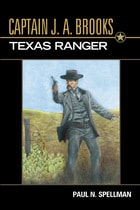
Captain J. A. Brooks, Texas Ranger
Paul N. Spellman
University of North Texas Press, 2007
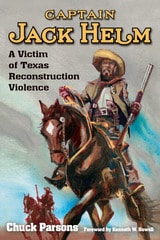
Captain Jack Helm
A Victim of Texas Reconstruction ViolenceChuck Parsons
University of North Texas Press, 2018
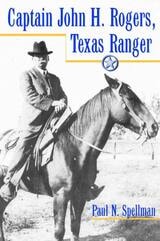
Captain John H. Rogers, Texas Ranger
Paul N. Spellman
University of North Texas Press, 2003
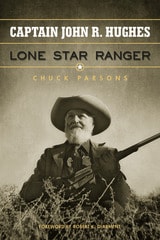
Captain John R. Hughes
Lone Star RangerChuck Parsons
University of North Texas Press, 2011
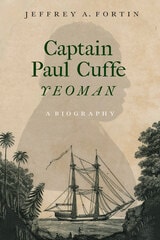
Captain Paul Cuffe, Yeoman
A BiographyJeffrey A. Fortin
University of Massachusetts Press, 2024
Paul Cuffe is best understood as a member of the Black founding fathers—a group of pre-eminent African Americans who built institutions and movements during the first decades of the United States. While he is known amongst scholars, his astounding life story deserves a much wider audience. Jeffrey A. Fortin has crafted a beautiful, moving portrait of this important maritime figure that will appeal to anyone interested in early American history and who loves great story telling.
Born on Cuttyhunk Island, Massachusetts in 1759 to a formerly enslaved African father and a Wampanoag Indian mother, Cuffe emerged from anonymity to become the most celebrated African-American sea captain during the Age of Sail. An abolitionist, veteran, and community activist, celebrity followed Cuffe as he built a shipping empire that traded both in American coastal waters and across the wider Atlantic Ocean. Cuffe and his Black crews shook the foundations of systemic racism, challenging norms by sailing into Charleston and other ports where slavery was legal, and thus demonstrating that business and profits were more powerful than social limitations. He founded America’s first racially integrated school in Westport, Massachusetts, and is considered the leader of the nation’s first back-to-Africa movement. Newspapers in England, the United States, and the Caribbean reported his whereabouts and adventures, and abolitionists hailed him for his Quaker beliefs, sobriety, and commitment to advancing opportunities for persons of African descent.
Drawing on pamphlets, letters, and other documents, and painstakingly reconstructing his genealogy, Fortin vividly describes Cuffe’s experiences and places them within the broader history of the Early Republic to help reveal the central role of African Americans in the founding of the United States. Unlike previous biographies, Fortin situates Cuffe within an Atlantic world where race and identity were fluid, and Africans and African Americans sought to build and govern a free Black nation in West Africa.
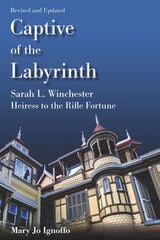
Captive of the Labyrinth
Sarah L. Winchester, Heiress to the Rifle Fortune, Revised and Updated EditionMary Jo Ignoffo
University of Missouri Press, 2022
Author and historian Mary Jo Ignoffo’s definitive biography unearths the truth about this reclusive eccentric, revealing that she was not a maddened spiritualist driven by remorse but an intelligent, articulate woman who sought to protect her private life amidst the chaos of her public existence and the social mores of the time. The author takes readers through Winchester’s several homes, explores her private life, and, by excerpting from personal correspondence, one learns the widow’s true priority was not dissipating her fortune on the mansion in San José but endowing a hospital to eradicate a dread disease.
Sarah Winchester has been exploited for profit for over a century, but Captive of the Labyrinth finally puts to rest the myths about this American heiress, and, in the process, uncovers her true legacies.
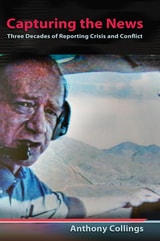
Capturing the News
Three Decades of Reporting Crisis and ConflictAnthony Collings
University of Missouri Press, 2010
Anthony Collings found himself in his share of difficult situations in his thirty-four years as a newsman. Like being captured by AK-47–toting Syrians in Lebanon in 1981 while looking for missiles that threatened a new outbreak of hostilities with Israel, or being “detained” by the KGB in Moscow in 1967 during his first foreign posting for the Associated Press filing stories about Soviet dissidents.
Brimming with entertaining stories about journalism, especially the chaotic early years at CNN when he and his colleagues established the first major cable news network, Collings’s book reveals the dangers and pressures of covering the news and the difficulties of overcoming obstacles to the truth. He recalls smuggling tapes out of Poland after the Communists had imposed martial law; flying dangerously near Libya’s “Line of Death”; interviewing world figures from Brezhnev to Kaddafi and Arafat; and winning awards for covering Iran-Contra and the Oklahoma City bombing. Collings brings fresh insights to the Oliver North affair and examines how the press was suckered in its coverage of the Jessica Lynch prisoner-of-war story in 2003. He voices his concerns regarding oversimplified reporting of complex issues and poses provocative questions about covering terrorism.
In this book, Collings presents an insider’s appraisal of the American news media’s failings and accomplishments. Easy to read, informative, and thoughtful, Capturing the News will enlighten general readers interested in how journalists cover current affairs, while offering newsmen food for thought about the craft and ethics of journalism.
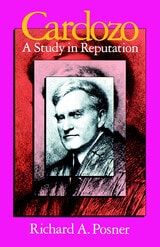
Cardozo
A Study in ReputationRichard A. Posner
University of Chicago Press, 1993
"The present compact and unflaggingly interesting volume . . . is a full-bodied scholarly biography. . . .It is illuminating in itself, and will serve as a significant contribution."—Paul A. Freund, New York Times Book Review
Career Patterns in the Ch’ing Dynasty
The Office of the Governor GeneralRaymond W. Chu and William G. Saywell
University of Michigan Press, 1981
Caribbean Autobiography
Cultural Identity and Self-RepresentationSandra Pouchet Paquet
University of Wisconsin Press, 2002
Despite the range and abundance of autobiographical writing from the Anglophone Caribbean, this book is the first to explore this literature fully. It covers works from the colonial era up to present-day AIDS memoirs and assesses the links between more familiar works by George Lamming, C. L. R. James, Derek Walcott, V. S. Naipaul, and Jamaica Kincaid and less frequently cited works by the Hart sisters, Mary Prince, Mary Seacole, Claude McKay, Yseult Bridges, Jean Rhys, Anna Mahase, and Kamau Brathwaite.
Sandra Pouchet Paquet charts the intersection of multiple, contradictory viewpoints of the colonial and postcolonial Caribbean, differing concepts of community and levels of social integration, and a persistent pattern of both resistance and accommodation within island states that were largely shaped by British colonial practice from the mid-seventeenth through the mid-twentieth century. The texts examined here reflect the entire range of autobiographical practice, including the slave narrative and testimonial, written and oral narratives, spiritual autobiographies, fiction, serial autobiography, verse, diaries and journals, elegy, and parody.
Carl B. Stokes and the Rise of Black Political Power
Leonard N. Moore
University of Illinois Press, 2002
In this wide-ranging political biography, Leonard N. Moore examines the convictions and alliances that brought Stokes to power. Impelled by the problems plaguing Cleveland's ghettos in the decades following World War II, Stokes and other Clevelanders questioned how the sit-ins and marches of the civil rights movement could correct the exclusionary zoning practices, police brutality, substandard housing, and de facto school segregation that African Americans in the country's northern urban centers viewed as evidence of their oppression.
As civil unrest in the country's ghettos turned to violence in the 1960s, Cleveland was one of the first cities to heed the call of Malcolm X's infamous "The Ballot or the Bullet" speech. Understanding the importance of controlling the city's political system, Cleveland's blacks utilized their substantial voting base to put Stokes in office in 1967.
Stokes was committed to showing the country that an African American could be an effective political leader. He employed an ambitious and radically progressive agenda to clean up Cleveland's ghettos, reform law enforcement, move public housing to middle-class neighborhoods, and jump-start black economic power. Hindered by resistance from the black middle class and the Cleveland City Council, spurned by the media and fellow politicians who deemed him a black nationalist, and unable to prove that black leadership could thwart black unrest, Stokes finished his four years in office with many of his legislative goals unfulfilled.
Focusing on Stokes and Cleveland, but attending to themes that affected many urban centers after the second great migration of African Americans to the North, Moore balances Stokes's failures and successes to provide a thorough and engaging portrait of his life and his pioneering contributions to a distinct African American political culture that continues to shape American life.

Carl Sandburg - American Writers 97
University of Minnesota Pamphlets on American WritersGay Wilson Allen
University of Minnesota Press, 1972
Carl Sandburg - American Writers 97 was first published in 1972. Minnesota Archive Editions uses digital technology to make long-unavailable books once again accessible, and are published unaltered from the original University of Minnesota Press editions.

Carla Bley
Amy C. Beal
University of Illinois Press, 2011
This is the first comprehensive treatment of the remarkable music and influence of Carla Bley, a highly innovative American jazz composer, pianist, organist, band leader, and activist. With fastidious attention to Bley's diverse compositions over the last fifty years spanning critical moments in jazz and experimental music history, Amy C. Beal tenders a long-overdue representation of a major figure in American music.
Best known for her jazz opera "Escalator over the Hill," her role in the Free Jazz movement of the 1960s, and her collaborations with artists such as Jack Bruce, Don Cherry, Robert Wyatt, and Pink Floyd drummer Nick Mason, Bley has successfully maneuvered the field of jazz from highly accessible, tradition-based contexts to commercially unviable, avant-garde works. Beal details the staggering variety in Bley's work as well as her use of parody, quotations, and contradictions, examining the vocabulary Bley has developed throughout her career and highlighting the compositional and cultural significance of her experimentalism.
Beal also points to Bley's professional and managerial work as a pioneer in the development of artist-owned record labels, the cofounder and manager of WATT Records, and the cofounder of New Music Distribution Service. Showing her to be not just an artist but an activist who has maintained musical independence and professional control amid the profit-driven, corporation-dominated world of commercial jazz, Beal's straightforward discussion of Bley's life and career will stimulate deeper examinations of her work.
Carlos Lacerda, Brazilian Crusader
Volume I: The Years 1914-1960By John W. F. Dulles
University of Texas Press, 1991
Playwright, journalist, and spectacularly successful governor, Carlos Lacerda was Brazil's foremost orator in the 20th century and its most controversial politician. He might have become president in the 1960s had not the military taken over. In the words of eminent historian José Honório Rodrigues, "No one person influenced the Brazilian historical process as much as Carlos Lacerda from 1945 to 1968."
In this volume, the first of a two-volume biography, Professor Dulles paints a portrait of a rebellious youth, who had the willfulness of his prominent father and who crusaded for Communism before becoming its most outspoken foe. Recalling Lacerda's rallying cry, "Brazil must be shaken up," Dulles traces the career of the journalist whose unsparing attacks on the men in power led authorities to imprison him and employ thugs who pummeled him physically. The story covers events in which Lacerda helped alter Brazil, such as the redemocratization in 1945 and his revelation of scandals in high places in the early 1950s. An unsuccessful attempt by government men to murder him in 1954 led to the suicide of President Getulio Vargas in 1954.
Lacerda's spirited oratory helped him become Brazil's most popular congressman, but it scared the rulers of Brazil and they prohibited the broadcast of his speeches after he returned from exile in 1956. Their effort to deprive him of his mandate stirred the entire nation and culminated in one of the most dramatic sessions ever held in the Chamber of Deputies.
Dulles, who knew Lacerda well and had access to his papers, sheds light on Lacerda the man, ardent in courtship and in all his undertakings, intellectually restless, and scornful of routine and mediocrity. Lacerda had a vitriolic pen that made bitter enemies, but, as disclosed in these pages, his courage and incorruptibility attracted an enthusiastic following, evident in the landslide election victories that brought him seats on Rio de Janeiro's city council and in the federal Congress.
Carlos Lacerda, Brazilian Crusader
Volume II: The Years 1960-1977By John W. F. Dulles
University of Texas Press, 1991
From reviews of Volume I:
"Brazilian Crusader is no doubt the best biography yet produced on Lacerda and the second volume . . . is certainly worth waiting for."
—Luso-Brazilian Review
Journalist and spectacularly successful governor, Carlos Lacerda was Brazil's foremost orator in the 20th century and its most controversial politician. He might have become president in the 1960s had not the military taken over.
In the first volume, John F. W. Dulles paints a portrait of a rebellious youth, who had the willfulness of his prominent father and who crusaded for Communism before becoming its most outspoken foe. Recalling Lacerda's rallying cry, "Brazil must be shaken up," Dulles traces the career of the journalist whose unsparing attacks on the men in power led authorities to imprison him and employ thugs who pummeled him physically. Lacerda's spirited oratory helped him become Brazil's most popular congressman, but it scared the rulers of Brazil, who prohibited the broadcast of his speeches after he returned from exile in 1956. Their effort to deprive him of his mandate stirred the entire nation and culminated in one of the most dramatic sessions ever held in the Chamber of Deputies.
In the second and final volume, Dulles explores the political and private life of Lacerda from 1960, when he became governor of Brazil's Guanabara state, until his death in 1977. Dulles focuses particularly on the years 1960 to 1968, in which Lacerda played a central role in some of the most drastic political changes that Brazil has experienced in this century.
Lacerda's story ranges from the headlines constantly generated by his political attacks and journalistic sensationalism to private moments of personal tragedy. In telling his story, Dulles draws on hundreds of interviews, as well as extensive research in press archives, Lacerda's public papers, and the private collections of Lacerda's family and associates. This material paints a compelling portrait of an honest administrator who alienated top figures in politics, the press, and the military.
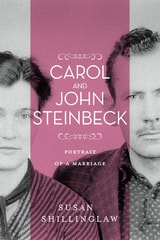
Carol and John Steinbeck
Portrait of a MarriageSusan Shillinglaw
University of Nevada Press, 2024
Caroline Quarlls and the Underground Railroad
Julia Pferdehirt
Wisconsin Historical Society Press, 2008
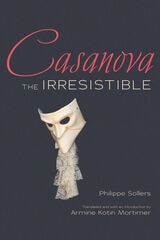
Casanova the Irresistible
Translated and with an Introduction by Armine Kotin Mortimer
University of Illinois Press, 2016
Armine Kotin Mortimer's translation of Sollers's reading tracks the alluring Venetian through the whole of his astounding and disreputable life. Eschewing myth, Sollers dares to present the plain realities of a man "simple, direct, courageous, cultivated, seductive, funny. A philosopher in action." The lovers are here, and the ruses and adventures. But Sollers also rescues Casanova the writer, a gifted composer of words who reigns as a titan of eighteenth-century literature. As always, Sollers seeks to shame society for its failure to recognize its failings. By admiring those of Casanova's admirable qualities present in himself, Sollers spurns bourgeois hypocrisy and cliché to affirm a jocund philosophy of life devoted to the twinned pursuits of pleasure and joy.
A masterful translation that captures Sollers's idiosyncratic style, Casanova the Irresistible escorts readers on a journey into the heads and hearts of two singular personalities.
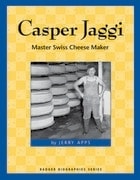
Casper Jaggi
Master Swiss Cheese MakerJerry Apps
Wisconsin Historical Society Press, 2008
The book opens the doors to Jaggi's Brodhead Swiss Cheese Factory - largest factory of its kind in Wisconsin in the 1950s. Archival photos help illustrate, step-by-step, the process Jaggi and his workers followed to transform 2,000 pounds of milk in a copper kettle into a 200-pound wheel of Swiss cheese.
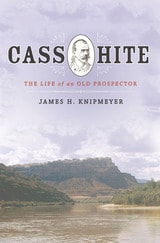
Cass Hite
The Life of an Old ProspectorJames H. Knipmeyer
University of Utah Press, 2016
Despite this notoriety, no one has written a full-length, scholarly account of Hite’s life. This biography fills that void, detailing Hite’s story from his birth in central Illinois in 1845 to his death in Glen Canyon in 1914. It corrects some of the long-accepted stories about Hite and puts others in their proper perspective, while revealing new information. Scores of photographs and excerpts from Hite’s own writing further illuminate this colorful prospector’s life.
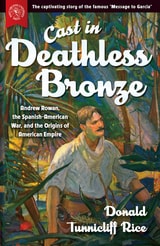
Cast in Deathless Bronze
Andrew Rowan, the Spanish-American War, and the Origins of American EmpireDonald Tunnicliff Rice
West Virginia University Press, 2016
Donald Tunnicliff Rice reveals the facts behind the story of “A Message to García” while using Rowan’s biography as a window into the history of the Spanish-American War, the Philippine War, and the Moro Rebellion. The result is a compellingly written narrative containing many details never before published in any form, and also an accessible perspective on American diplomatic and military history in the late nineteenth and early twentieth centuries.

Castle Valley America
Hard Land, Hard-won HomeNancy Taniguchi
Utah State University Press, 2004
This is American history told through the stories of an atypical, for Utah, region. Castle Valley is roughly conterminous with two counties, Carbon and Emery, which together formed a rural, industrial enclave in a mostly desert environment behind the mountain range that borders Utah's principal corridor of settlement. In Castle Valley, coal mining and the railroad attracted diverse, multiethnic communities and a fair share of historic characters, from Butch Cassidy, who stole its largest payroll, to Mother Jones, who helped organize its workers against its mining companies. Among the last major segments of the state to be settled, it was also a generally poor region that stretched the capabilities of people to scratch a living from a harsh landscape.
The people of Castle Valley experienced complex, unusual combinations of both social cohesion and conflict, but they struggled through poverty, labor disputes, major mining disasters, and other challenges to build communities whose stories reflected the historical course of the nation as a whole. In order to convey her subject's both unique and representative qualities, Nancy Taniguchi has written an epic history that is not just local history, but American history written locally.
Nancy J. Taniguchi, who lived for thirteen years in Castle Valley and was previously on the faculty of the College of Eastern Utah in Price, is professor of history at California State University, Stanislaus. She is the author of numerous published articles in mining, legal, women's, western, and Utah history and of one book, Necessary Fraud: Progressive Reform
and Utah Coal.
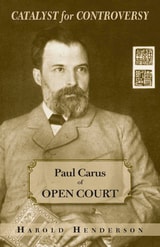
Catalyst for Controversy
Paul Carus of Open CourtHarold Henderson
Southern Illinois University Press, 2009
"I am not a common atheist; I am an atheist who loves God."—Paul Carus, "The God of Science," 1904
In the summer of 1880, while teaching at the military academy of the Royal Corps of Cadets of Saxony in Dresden, Paul Carus published a brief pamphlet denying the literal truth of scripture and describing the Bible as a great literary work comparable to the Odyssey.
This unremarkable document was Carus’s first step in a wide-ranging intellectual voyage in which he traversed philosophy, science, religion, mathematics, history, music, literature, and social and political issues. The Royal Corps, Carus later reported, found his published views "not in harmony with the Christian spirit, in accordance with which the training and education of the Corps of Cadets should be conducted." And so the corps offered the young teacher the choice of asking "most humbly for forgiveness for daring to have an opinion of my own and to express it, perhaps even promise to publish nothing more on religious matters, or to give up my post. I chose the latter. . . . There was thus no other choice for me but to emigrate and, trusting in my own powers, to establish for myself a new home." His resignation was effective on Easter Sunday, 1881.
Carus toured the Rhine, lived briefly in Belgium, and taught in a military college in England to learn English well enough to "thrive in the United States." By late 1884 or early 1885 he was on his way to the New World. Thriving in the United States proved more difficult than it had in England, but before 1885 ended he had published his first philosophical work in English, Monism and Meliorism. The book was not widely read, but it did reach Edward C. Hegeler, a La Salle, Illinois, zinc processor who became his father-in-law as well as his ideological and financial backer.
Established in La Salle, Carus began the work that would place him among the prominent American philosophers of his day and make the Open Court Publishing Company a leading publisher of philosophical, scientific, and religious books. He edited The Open Court and The Monist, offering the finest view of Oriental thought and religion then available in the West, and sought unsuccessfully to bring about a second World Parliament of Religions. He befriended physicist-philosopher Ernst Mach. For eleven years he employed D. T. Suzuki, who later became a great Zen Buddhist teacher. He published more articles by Charles S. Peirce, now viewed as one of the great world philosophers, in The Monist than appeared in any other publication.
Biographer Harold Henderson concludes his study of this remarkable man: "Whenever anyone is so fired with an idea that he or she can’t wait to write it down, there the spirit of Paul Carus remains, as he would have wished, active in the world."
Catarino Garza's Revolution on the Texas-Mexico Border
Elliott Young
Duke University Press, 2004
Elliott Young provides the first full-length analysis of the revolt and its significance, arguing that Garza’s rebellion is an important and telling chapter in the formation of the border between Mexico and the United States and in the histories of both countries. Throughout the nineteenth century, the borderlands were a relatively coherent region. Young analyzes archival materials, newspapers, travel accounts, and autobiographies from both countries to show that Garza’s revolution was more than just an effort to overthrow Díaz. It was part of the long struggle of borderlands people to maintain their autonomy in the face of two powerful and encroaching nation-states and of Mexicans in particular to protect themselves from being economically and socially displaced by Anglo Americans. By critically examining the different perspectives of military officers, journalists, diplomats, and the Garzistas themselves, Young exposes how nationalism and its preeminent symbol, the border, were manufactured and resisted along the Rio Grande.
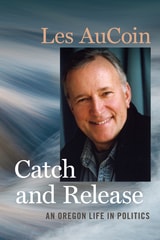
Catch and Release
An Oregon Life in PoliticsLes AuCoin
Oregon State University Press, 2019
In this compelling collection of life stories, AuCoin traces his unlikely rise from a fatherless childhood in Central Oregon to the top ranks of national power. Then came a painful defeat in one of the most controversial races in US Senate history, against incumbent Bob Packwood.
A fly fisher, AuCoin uses “catch and release” as a metaphor for succeeding and letting go of loss with dignity and equanimity. His memories are in turn funny, suspenseful, and revealing. AuCoin takes us to the Kremlin, pre-industrial China, the Arctic National Wildlife Refuge, and into the tortuous politics of the Northwest spotted owl crisis. He interacted with world figures like Mikhail Gorbachev, Ronald Reagan, House Speakers Tip O’Neill and Jim Wright, and Oregon legends Tom McCall and Mark Hatfield. Closer to home, AuCoin allied himself with activists like Sidney Lasseigne of the Newport Fishermen’s Wives.
Catch and Release offers readers a revealing glimpse behind the scenes of congressional life, as lived by the 535 souls who inhabit the US House and Senate—including the author, who assesses his own strengths and foibles with humility and candor.
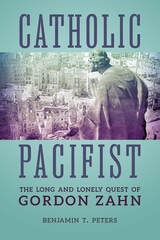
Catholic Pacifist
The Long and Lonely Quest of Gordon ZahnBenjamin Peters
Catholic University of America Press, 2026