Results by title
260 books match the query 'Central America' and 22 start with c
Carnegie Maya
The Carnegie Institution of Washington Maya Research Program, 1913-1957John M. Weeks
University Press of Colorado, 2006
The Carnegie Institution of Washington sponsored archaeological, ethnographic, linguistic, and historical investigations in the Maya region of southern Mexico and northern Central America between 1914 and 1957. The institution led the field during that time, with financial support and other resources no university could match.
Dispersed and out-of-print for fifty years, more than 350 reports from the Maya program are now available in this single volume. Reports from the institution's annual Year Books and other materials collected here tell the history of Maya research through firsthand accounts by participating scholars and reveal the progression of Mesoamerican archaeology from avocational interest to scholarly pursuit. Thematic and regional organization of the reports permits readers to monitor development of research concepts. Appendixes list all Carnegie Maya publications, Carnegie personnel, and the archival holdings of Carnegie-derived material at Harvard University, Tulane University, and the University of Chicago.
Purchase of the print book comes with free individual access to the Adobe Digital Editions Carnegie Maya Series Ebook, which contains the complete set of The Carnegie Maya, The Carnegie Maya II, The Carnegie Maya III and The Carnegie Maya IV, thus making hundreds of documents from the Carnegie Institution's Maya program available in one source.
Central America and the Treaty of Versailles
Michael Streeter
Haus Publishing, 2010
Central America, 1821-1871
Liberalism before Liberal ReformLowell Gudmundson
University of Alabama Press, 1995
Reassessing the foundations of liberalism, nation-building, and economic change in nineteenth-century Central America.
Central America and its ill-fated federation (1824-1839) are often viewed as the archetype of the “anarchy” of early independent Spanish America. This book consists of two interrelated essays dealing with the economic, social, and political changes that took place in Central America, changes that let to both Liberal regime consolidation and export agricultural development after the middle of the last century. The authors provide a challenging reinterpretation of Central American history and the most detailed analysis available in English of this most heterogeneous and obscure of societies. It avoids the dichotomous (Costa Rica versus the rest of Central America) and the centralist (Guatemala as the standard or model) treatments dominant in the existing literature and is required reading for anyone with an interest in 19th century Latin America.
Central American Migrations in the Twenty-First Century
Edited by Mauricio Espinoza, Miroslava Arely Rosales Vásquez, and Ignacio Sarmiento
University of Arizona Press, 2023
Central American Migrations in the Twenty-First Century tackles head-on the way Central America has been portrayed as a region profoundly marked by the migration of its people. Through an intersectional approach, this volume demonstrates how the migration experience is complex and affected by gender, age, language, ethnicity, social class, migratory status, and other variables. Contributors carefully examine a broad range of topics, including forced migration, deportation and outsourcing, intraregional displacements, the role of social media, and the representations of human mobility in performance, film, and literature. The volume establishes a productive dialogue between humanities and social sciences scholars, and it paves the way for fruitful future discussions on the region’s complex migratory processes.
Contributors
Guillermo Acuña
Andrew Bentley
Fiore Bran-Aragón
Tiffanie Clark
Mauricio Espinoza
Hilary Goodfriend
Leda Carolina Lozier
Judith Martínez
Alicia V. Nuñez
Miroslava Arely Rosales Vásquez
Manuel Sánchez Cabrera
Ignacio Sarmiento
Gracia Silva
Carolina Simbaña González
María Victoria Véliz
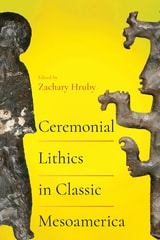
Ceremonial Lithics in Classic Mesoamerica
Zachary Hruby
University Press of Colorado, 2025
Ceremonial Lithics in Classic Mesoamerica explores how and why ceremonial lithic artifacts were made in ancient Mesoamerica’s Classic period, focusing on their implications for economic and sociopolitical organization. Technological analyses of unique examples are interpreted to understand the processes of lithic production and how chipped stone was ritualized across Mesoamerica.
Investigations of ritualized lithics also draw on iconography, epigraphy, and ethnohistory to understand the meaning of these objects, including the so-called eccentric flints and obsidians of the Maya area and Central Mexico, massive debitage deposits in tomb contexts, and the use of utilitarian objects in ceremonial contexts. In the cases of the largest and most elaborate artifacts (e.g., the effigy flints of Copan, Honduras and the obsidian serpents of Teotihuacan), authors examine what the basic production processes may have been, while cases of blade and debitage deposits focus on how the objects were produced within their social context, in what sequence, and why they may have been chosen for ritual deposition.
Ceremonial Lithics in Classic Mesoamerica is the first book to address from a pan-Mesoamerican perspective how and why these objects were made. While obsidian and flint carried their own respective symbolic meanings, the final form of an artifact and the process of its production also contributed to its identification. Hence, this volume is an essential step toward understanding the ancient meanings imbued in these material objects.
Chicle
The Chewing Gum of the Americas, From the Ancient Maya to William WrigleyJennifer P. Mathews
University of Arizona Press, 2009
Chicle is a history in four acts, all of them focused on the sticky white substance that seeps from the sapodilla tree when its bark is cut. First, Jennifer Mathews recounts the story of chicle and its earliest-known adherents, the Maya and Aztecs. Second, with the assistance of botanist Gillian Schultz, Mathews examines the sapodilla tree itself, an extraordinarily hardy plant that is native only to Mesoamerica and the Caribbean. Third, Mathews presents the fascinating story of the chicle and chewing gum industry over the last hundred plus years, a tale (like so many twentieth-century tales) of greed, growth, and collapse. In closing, Mathews considers the plight of the chicleros, the “extractors” who often work by themselves tapping trees deep in the forests, and how they have emerged as icons of local pop culture—portrayed as fearless, hard-drinking brawlers, people to be respected as well as feared.
Before Dentyne® and Chiclets®, before bubble gum comic strips and the Doublemint® twins, there was gum, oozing from jungle trees like melting candle wax under the slash of a machete. Chicle tells us everything that happened next. It is a spellbinding story.
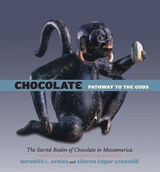
Chocolate
Pathway to the GodsMeredith L. Dreiss and Sharon Edgar Greenhill
University of Arizona Press, 2008
Although it didn’t receive its Western scientific name, Theobroma cacao—“food of the gods”—until the eighteenth century, the cacao tree has been at the center of Mesoamerican mythology for thousands of years. Not only did this “chocolate tree” produce the actual seeds from which chocolate was extracted but it was also symbolically endowed with cosmic powers that enabled a dialogue between humans and their gods. From the pre-Columbian images included in this sumptuous book, we are able to see for ourselves the importance of chocolate to the Maya, Aztecs, Olmecs, Mixtecs, and Zapotecs who grew, produced, traded, and fought over the prized substance.
Through archaeological and other ethnohistoric research, the authors of this fascinating book document the significance of chocolate—to gods, kings, and everyday people—over several millennia. The illustrations allow us to envision the many ancient uses of this magical elixir: in divination ceremonies, in human sacrifices, and even in ball games. And as mythological connections between cacao trees, primordial rainforests, and biodiversity are unveiled, our own quest for ecological balance is reignited. In demonstrating the extraordinary value of chocolate in Mesoamerica, the authors provide new reasons—if any are needed—to celebrate this wondrous concoction.
Cinema between Latin America and Los Angeles
Origins to 1960Horak, Jan-Christopher
Rutgers University Press, 2019
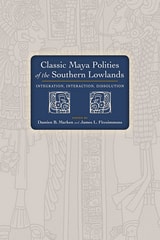
Classic Maya Polities of the Southern Lowlands
Integration, Interaction, DissolutionDamien B. Marken
University Press of Colorado, 2015
Classic Maya Polities of the Southern Lowlands investigates Maya political and social structure in the southern lowlands, assessing, comparing, and interpreting the wide variation in Classic period Maya polity and city composition, development, and integration. Traditionally, discussions of Classic Maya political organization have been dominated by the debate over whether Maya polities were centralized or decentralized. With new, largely unpublished data from several recent archaeological projects, this book examines the premises, strengths, and weaknesses of these two perspectives before moving beyond this long-standing debate and into different territory.
The volume examines the articulations of the various social and spatial components of Maya polity—the relationships, strategies, and practices that bound households, communities, institutions, and dynasties into enduring (or short-lived) political entities. By emphasizing the internal negotiation of polity, the contributions provide an important foundation for a more holistic understanding of how political organization functioned in the Classic period.
Contributors include Francisco Estrada Belli, James L. Fitzsimmons, Sarah E. Jackson, Caleb Kestle, Brigitte Kovacevich, Allan Maca, Damien B. Marken, James Meierhoff, Timothy Murtha, Cynthia Robin, Alexandre Tokovinine, and Andrew Wyatt.
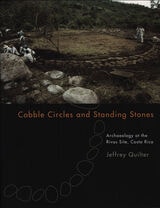
Cobble Circles and Standing Stones
Archaeology at the Rivas Site, Costa RicaJeffrey Quilter
University of Iowa Press, 2004
Writing in the first person with a balance between informal language and academic theory, Quilter concludes that Rivas was a ceremonial center for mortuary rituals to bury chiefly elite on the Panteón. Through use of his narrative technique, he provides the reader with accounts of discoveries as they occurred in fieldwork and the development of interpretations to explain the ancient refuse and cobble architecture his team uncovered. As his story progresses amid the enchantment of the Costa Rican landscape, research plans are adjusted and sometimes completely overturned as new discoveries, often serendipitous ones, are made. Such changing circumstances lead to new insights into the rise and fall of the people who built the cobble circles and raised the standing stones at Rivas, a thousand years ago.
The only book in English that focuses on a single archaeological site in Costa Rica, which continues to develop as a destination for archaeological tourism, Cobble Stones and Standing Circles will appeal to laypeople and professionals alike.
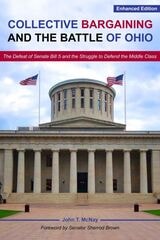
Collective Bargaining and the Battle for Ohio
The Defeat of Senate Bill 5 and the Struggle to Defend the Middle ClassJohn T. McNay
University of Minnesota Press, 2022
In 2011, Ohio Governor John Kasich and his Republican-controlled legislature passed the radical Senate Bill 5 designed to impede the labor movement, particularly targeting unionized professors. Collective Bargaining and the Battle for Ohio is the story of how professors worked alongside firefighters, police, and janitors to defend universities, the value of higher education, and their collective bargaining rights. Faculty across the state joined “We Are Ohio,” a historic coalition of unions and progressive groups that spearheaded efforts to protect employees’ rights to have a voice in the workplace. A massive political struggle ensued, pitting the labor movement against powerful corporate forces, and on election day, Ohioans defended the middle class by repealing Senate Bill 5 by a nearly 2-1 margin.
In this tenth-anniversary edition, historian, higher education expert, and author John T. McNay updates the introduction and pairs his compelling account with video and articles which highlight the struggles of the union battle.
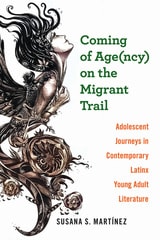
Coming of Age(ncy) on the Migrant Trail
Adolescent Journeys in Contemporary Latinx Young Adult LiteratureSusana S. Martínez
The Ohio State University Press, 2025
Confronting the American Dream
Nicaragua under U.S. Imperial RuleMichel Gobat
Duke University Press, 2005
Gobat focuses primarily on the reactions of the elites to Americanization, because the power and identity of these Nicaraguans were the most significantly affected by U.S. imperial rule. He describes their adoption of aspects of “the American way of life” in the mid–nineteenth century as strategic rather than wholesale. Chronicling the U.S. occupation of 1912–33, he argues that the anti-American turn of Nicaragua’s most Americanized oligarchs stemmed largely from the efforts of U.S. bankers, marines, and missionaries to spread their own version of the American dream. In part, the oligarchs’ reversal reflected their anguish over the 1920s rise of Protestantism, the “modern woman,” and other “vices of modernity” emanating from the United States. But it also responded to the unintended ways that U.S. modernization efforts enabled peasants to weaken landlord power. Gobat demonstrates that the U.S. occupation so profoundly affected Nicaragua that it helped engender the Sandino Rebellion of 1927–33, the Somoza dictatorship of 1936–79, and the Sandinista Revolution of 1979–90.
Conquered Conquistadors
The <i>Lienzo de Quauhquechollan,</i> A Nahua Vision of the Conquest of GuatemalaFlorine Asselbergs
University Press of Colorado, 2004
The people of the Nahua community of Quauhquechollan (present-day San Martín Huaquechula), in central Mexico, allied with Cortés during the Spanish-Aztec War and were assigned to the Spanish conquistador Jorge de Alvarado. De Alvarado and his allies, including the Quauhquecholteca and thousands of other indigenous warriors, set off for Guatemala in 1527 to start a campaign against the Maya. The few Quauhquecholteca who lived to tell the story recorded their travels and eventual victory on the huge cloth map, the Lienzo de Quauhquechollan.
Conquered Conquistadors, published in a European edition in 2004, overturned conventional views of the European conquest of indigenous cultures. American historians and anthropologists will relish this new edition and Asselbergs's astute analysis, which includes context, interpretation, and comparison with other pictographic accounts of the "Spanish" conquest. This heavily illustrated edition includes an insert reproduction of the Lienzo de Quauhquechollan.
Construction of Maya Space
Causeways, Walls, and Open Areas from Ancient to Modern TimesThomas H. Guderjan
University of Arizona Press, 2023
Through fifteen engaging chapters, contributors examine the construction of spatial features by ancient, historic, and contemporary Maya elite and nonelite peoples to understand how they used spaces differently. Through cutting-edge methodologies and case studies, chapters consider how and why Maya people connected and divided the spaces they used daily in their homes, in their public centers, in their sacred places such as caves, and across their regions to inform us about the mental constructs they used to create their lives and cultures of the past.
Contributors
Elias Alcocer Puerto
Alejandra Alonso Olvera
Traci Ardren
Jaime J. Awe
Alejandra Badillo Sánchez
Nicolas C. Barth
Grace Lloyd Bascopé
Adolpho Iván Batún-Alpuche
Elizabeth Beckner
M. Kathryn Brown
Bernadette Cap
Miguel Covarrubias Reyna
Juan Fernandez Diaz
Alberto G. Flores Colin
Thomas H. Guderjan
C. Colleen Hanratty
Héctor Hernández Álvarez
Scott R. Hutson
Joshua J. Kwoka
Whitney Lytle
Aline Magnoni
Jennifer P. Mathews
Stephanie J. Miller
Shawn G. Morton
Holley Moyes
Shannon Plank
Dominique Rissolo
Patrick Rohrer
Carmen Rojas Sandoval
Justine M. Shaw
J. Gregory Smith
Travis W. Stanton
Karl A. Taube
Daniel Vallejo-Cáliz
Contemporary Short Stories from Central America
Edited by Enrique Jaramillo Levi and Leland H. Chambers
University of Texas Press, 1993
This volume collects some of the best short fiction from the six Spanish-speaking countries of Central America—Guatemala, Honduras, El Salvador, Nicaragua, Costa Rica, and Panama. Selected from stories written between 1963 and 1988, it is a broad representation of active Central American writers.
Many of the stories are quite sophisticated and utilize elements of the absurd or techniques of magical realism. Some stories deal with war—the unending struggle against dictators and military power that engrosses Central Americans. Others explore the realm of the writer's imagination. Some of the writers included are Augusto Monterroso (Guatemala), Carmen Naranjo and Samuel Rovinski (Costa Rica), Rosa María Britton and Jaime García Saucedo (Panama), and Alfonso Quijada Urías (El Salvador).
Contesting Trade in Central America
Market Reform and ResistanceBy Rose J. Spalding
University of Texas Press, 2014
In 2004, the United States, five Central American countries, and the Dominican Republic signed the Central American Free Trade Agreement (CAFTA), signaling the region’s commitment to a neoliberal economic model. For many, however, neoliberalism had lost its luster as the new century dawned, and resistance movements began to gather force. Contesting Trade in Central America is the first book-length study of the debate over CAFTA, tracing the agreement’s drafting, its passage, and its aftermath across Central America.
Rose J. Spalding draws on nearly two hundred interviews with representatives from government, business, civil society, and social movements to analyze the relationship between the advance of free market reform in Central America and the parallel rise of resistance movements. She views this dynamic through the lens of Karl Polanyi’s “double movement” theory, which posits that significant shifts toward market economics will trigger oppositional, self-protective social countermovements. Examining the negotiations, political dynamics, and agents involved in the passage of CAFTA in Costa Rica, El Salvador, and Nicaragua, Spalding argues that CAFTA served as a high-profile symbol against which Central American oppositions could rally. Ultimately, she writes, post-neoliberal reform “involves not just the design of appropriate policy mixes and sequences, but also the hard work of building sustainable and inclusive political coalitions, ones that prioritize the quality of social bonds over raw economic freedom.”

Convictions of the Heart
Jim Corbett and the Sanctuary MovementMiriam Davidson
University of Arizona Press, 1988
Corbett first worked within the law to help refugees process applications for asylum, but the U.S. Immigration and Naturalization Service soon began a program of arrests; then he began to smuggle refugees from the Mexican border to the homes of citizens willing to provide shelter, making hundreds of trips over the next two years; finally he enlisted the support of the Tucson Ecumenical Council and persuaded John Fife, pastor of the Southside Presbyterian Church, to open that building as a refuge. When legal action against Corbett and the others seemed imminent, Southside became, on March 24, 1982, the first of two hundred churches in the country to declare itself a sanctuary.
Convictions of the Heart takes readers inside the santuary movement to reveal its founders' motives and underlying beliefs, and inside the courtroom to describe the government's efforts to stop it. Although the book addresses many points of view, its primary focus is on the philosophy of Jim Corbett. Rooted in the nonviolence of Gandhi, the Society of Friends, and Martin Luther King, Corbett's beliefs challenged individuals and communities of faith across the country to examine the strength of their commitment to the needs and rights of others.
Crisis in Costa Rica
The 1948 RevolutionBy John Patrick Bell
University of Texas Press, 1971
The Costa Rican revolution of 1948 capped an extended period of social tension and political unrest. This book analyzes the circumstances of 1940–1948 that led to a successful armed uprising. A secondary and related theme is the role of José Figueres Ferrer in marshaling disparate groups into a movement sufficiently cohesive to seize and hold power.
In the 1940s the Communists, the Social Democrats (forerunners of the National Liberation Party), and the followers of Rafael Angel Calderón Guardia within the traditional National Republican party competed to lead the middle sector’s demand for modernization. Most accounts of this period have presented the Calderón regime as aristocratic or oligarchic in nature, yet as linked to an international Communist movement.
John Patrick Bell, supporting his argument with considerable detail and documentation from newspapers and private papers, argues that Calderón came to depend upon his alliance with the Communist-oriented Vanguardia Popular to counteract the defection of the right wing of the National Republican party and that the sources of the Vanguardia Popular were basically indigenous. The calderonistas’ comprehensive program for social and economic reform had elicited strong conservative reaction, and this opposition was ready to push the charge of communism against Calderón.
Costa Rica thus entered a period of violent political confrontation that culminated in the electoral victory of the conservative candidate, Otilio Ulate Blanco, in February 1948. When the calderonista majority in Congress annulled the election, José Figueres Ferrer launched a successful uprising purportedly to force ratification of Ulate’s election. In reality, however, Figueres had been planning a revolt for nearly six years to redirect modernization along social democratic lines.
Figueres and his group, seeking even more radical reforms than the calderonistas, were able to use the opposition movement to their advantage, simply because they were prepared, even with force, when the right moment arrived. The National Liberation Movement, led to power by Figueres, dominated the national political development of Costa Rica for decades afterward.
Eschewing a strictly chronological framework, Bell has utilized a topical structure that facilitates a full description of shifts in foreign policy in the United States and Latin America that affected the outcome of the struggle in Costa Rica.
Crucifixion by Power
Essays on Guatemalan National Social Structure, 1944–1966By Richard Newbold Adams
University of Texas Press, 1970
"Quite the contrary of old generals, nations do not fade away; they have to be killed."
Richard Adams' view of the nation as a basic social unit is central to this pioneering study in social anthropology. The result of many years of research in Guatemala, this volume utilizes the author's fieldwork as well as that of his colleagues and students to construct a set of concepts explaining how Guatemala reached the difficult circumstances in which it found itself in the 1960s—and still finds itself today.
With the breakup of the great colonial empires after the Second World War, the curtain that had been drawn around Marx by Western social scientists fell away; countries once called "primitive" began to be seen as "underdeveloped," while those once thought to be stable and advanced began to appear predatory and conflict ridden. The theme of Mr. Adams' book is that, in the world as a whole, there is a structural escalation of power concentration.
The author believes that Guatemala, as a small nation within the general domain of the United States, is caught in the developmental hinterland of that powerful neighbor and that the United States, within its own capitalistic development pattern and in competition with other leading world powers, cannot allow the smaller nation to resolve its own political and social problems. Thus Guatemala, he declares, finds itself crucified by unyielding and uncontrollable power plays beyond its national borders.
As a background for the study of specific sectors in Guatemalan society, the author discusses the theoretical nature of complex societies. He shows the cohesive force of a nation to be its power structure and then examines mechanisms whereby this structure is kept intact in Guatemala. Special emphasis is given to the lack of access to power by the poor, the development of the military, the organization of power within the Catholic Church, and the expansion of upper-sector interest groups.
While there was important growth in the power of upper-sector Guatemalan society over the two decades of the study, there was no comparable increase in distribution; the position of the lower sectors within the power structure has therefore changed very slightly. "Development," then, in Guatemala was principally in terms of what was advantageous to the major powers.
Cultivating Coffee
The Farmers of Carazo, Nicaragua, 1880–1930Julie A. Charlip
Ohio University Press, 2002
Many scholars of Latin America have argued that the introduction of coffee forced most people to become landless proletarians toiling on large plantations. Cultivating Coffee tells a different story: small and medium-sized growers in Nicaragua were a vital part of the economy, constituting the majority of the farmers and holding most of the land.
Alongside these small commercial farmers was a group of subsistence farmers, created by the state’s commitment to supplying municipal lands to communities. These subsistence growers became the workforce for their coffee-growing neighbors, providing harvest labor three months a year. Mostly illiterate, perhaps largely indigenous, they nonetheless learned the functioning of the new political and economic systems and used them to acquire individual plots of land.
Julie Charlip’s Cultivating Coffee joins the growing scholarship on rural Latin America that demonstrates the complexity of the processes of transition to expanded export agriculture in the nineteenth and twentieth centuries, emphasizing the agency of actors at all levels of society. It also sheds new light on the controversy surrounding landholding in Nicaragua during the Sandinista revolution.
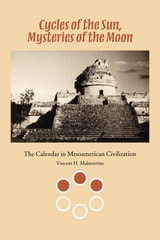
Cycles of the Sun, Mysteries of the Moon
The Calendar in Mesoamerican CivilizationBy Vincent H. Malmström
University of Texas Press, 1996
The simple question "How did the Maya come up with a calendar that had only 260 days?" led Vincent Malmström to discover an unexpected "hearth" of Mesoamerican culture. In this boldly revisionist book, he sets forth his challenging, new view of the origin and diffusion of Mesoamerican calendrical systems—the intellectual achievement that gave rise to Mesoamerican civilization and culture.
Malmström posits that the 260-day calendar marked the interval between passages of the sun at its zenith over Izapa, an ancient ceremonial center in the Soconusco region of Mexico's Pacific coastal plain. He goes on to show how the calendar developed by the Zoque people of the region in the fourteenth century B.C. gradually diffused through Mesoamerica into the so-called "Olmec metropolitan area" of the Gulf coast and beyond to the Maya in the east and to the plateau of Mexico in the west.
These findings challenge our previous understanding of the origin and diffusion of Mesoamerican civilization. Sure to provoke lively debate in many quarters, this book will be important reading for all students of ancient Mesoamerica—anthropologists, archaeologists, archaeoastronomers, geographers, and the growing public fascinated by all things Maya.