Results by title
24 books match the query 'Author'
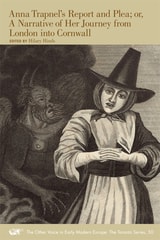
Anna Trapnel’s Report and Plea; or, A Narrative of Her Journey from London into Cornwall
Anna Trapnel
Iter Press, 2016
In 1654, Anna Trapnel — a Baptist, Fifth Monarchist, millenarian, and visionary from London — fell into a trance during which she prophesied passionately and at length against Oliver Cromwell and his government. The prophecies attracted widespread public attention, and resulted in an invitation to travel to Cornwall. Her Report and Plea, republished here for the first time, is a lively and engaging firsthand account of the visit, which concluded in her arrest, a court hearing, and imprisonment. Part memoir, part travelogue, and part impassioned defense of her beliefs and actions, the Report and Plea offers vivid and fascinating insight into the life and times of an early modern woman claiming her place at the center of the tumultuous political events of mid-seventeenth-century England.
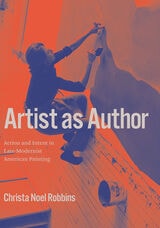
Artist as Author
Action and Intent in Late-Modernist American PaintingChrista Noel Robbins
University of Chicago Press, 2021

David Cronenberg
Author or Filmmaker?Mark Browning
Intellect Books, 2007
Film scholar Mark Browning examines Cronenberg’s literary aesthetic not only in relation to his films’ obvious source material, but by comparing his movies to the writings of Vladimir Nabokov, Angela Carter, and Bret Easton Ellis. This groundbreaking volume addresses Cronenberg’s narrative structures and his unique conception of auteurism, as well as his films’ shocking psychological frameworks, all in the broader context of film adaptation studies. David Cronenberg is an essential read for anyone interested in the symbiotic relationship between literature and filmmaking.
Facing It
AIDS Diaries and the Death of the AuthorRoss Chambers
University of Michigan Press, 2001
"Groundbreaking in its approach and potentially wide in its appeal. . . . The rigor of the ideas, their dramatic nature, and the political drive of the rhetoric all should win Facing It a large readership that could extend far beyond students of narrative or queer theory." --David Bergman, Towson University, editor of Camp Grounds: Style and Homosexuality
Ross Chambers is Distinguished University Professor of French and Comparative Literature, University of Michigan, and author of Room for Maneuver: Reading (the) Oppositional (in) Narrative and Story and Situation: Narrative Seduction and the Power of Fiction.

Facing It
AIDS Diaries and the Death of the AuthorRoss Chambers
University of Michigan Press, 1999
"Groundbreaking in its approach and potentially wide in its appeal. . . . The rigor of the ideas, their dramatic nature, and the political drive of the rhetoric all should win Facing It a large readership that could extend far beyond students of narrative or queer theory." --David Bergman, Towson University, editor of Camp Grounds: Style and Homosexuality
Ross Chambers is Distinguished University Professor of French and Comparative Literature, University of Michigan, and author of Room for Maneuver: Reading (the) Oppositional (in) Narrative and Story and Situation: Narrative Seduction and the Power of Fiction.
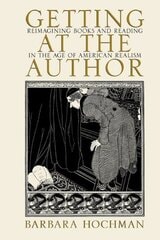
Getting at the Author
Reimagining Books and Reading in the Age of American RealismBarbara Hochman
University of Massachusetts Press, 2009
But reading practices were slow to change; many resisted the effort to reconceptualize the relationship among writers, readers, and books. Even the most consistent advocates of "impartial" narration found it difficult to imagine a book without an author or to dissociate the experience of reading from the idea of a reciprocal human transaction.
In analyzing the battle over realism and the gradual shift in conventional reading practices, Hochman draws on a rich array of sources, including popular works, advertisements, and letters. She combines traditional modes of literary inquiry with methods adapted from the new historicism, cultural studies, and book history. By elucidating the realists' ambivalence about their own aesthetic criteria, she shows how a late nineteenth century conflict about reading practices reflected pressing tensions in American culture, and how that conflict shaped criteria of literary value for most of the twentieth century.
Hmong in Wisconsin
Mai Zong Vue
Wisconsin Historical Society Press, 2020
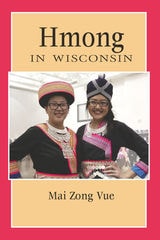
Many of these families found homes in Wisconsin, which now has the third largest Hmong population in the country, following California and Minnesota. As one of the most recent cultural groups to arrive in the Badger State, the Hmong have worked hard to establish a new life here, building support systems to preserve traditions and to help one another as they enrolled in schools, started businesses, and strived for independence.
Told with a mixture of scholarly research, interviews, and personal experience of the author, this latest addition to the popular People of Wisconsin series shares the Hmong’s varied stories of survival and hope as they have become an important part of Wisconsin communities.

Ibsen’s Drama
Author to AudienceEinar Haugen
University of Minnesota Press, 1979
Ibsen's Drama was first published in 1979. Minnesota Archive Editions uses digital technology to make long-unavailable books once again accessible, and are published unaltered from the original University of Minnesota Press editions.
"A dramatist for all seasons" Einar Haugen calls Henrik Ibsen in this series of lectures given in honor of the 150th anniversary of the Norwegian playwright's birth. Using a modified version of the communications model developed by linguist Roman Jakobson, Haugen provides a readable, succinct analysis of Ibsen's thinking and dramaturgy. He examines the ways in which Ibsen the author communicated with his nineteenth-century audience and is able, still, to move and inform playgoers today.
Haugen brings to this work a lifetime of familiarity with Ibsen in Norwegian and in translation, and he draws upon his own experience as a theatergoer and as an observer of student and audience reaction to the plays. Ibsen's Drama will bring pleasure and a deeper understanding of the playwright to students and playgoers alike.
Einar Haugen is Victor S. Thomas Professor of Scandinavian and Linguistics, emeritus, at Harvard University. He is author, editor, or translator of many books and articles in linguistics, literature, and immigrant history, notably The Norwegian Language in America (1953), The Scandinavian Languages (1976), and Land of the Free (1978).
John Stuart Mill
Articles, Columns, Reviews and Translations of Plato's DialoguesJohn Stuart Mill
St. Augustine's Press, 2021
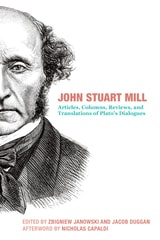
The contribution of Mill’s most authoritative biographer, Nicholas Capaldi, is a singular and unmatched highlight. The tenor of St. Augustine’s Press volumed on Mill is distinct in its intention to place his work in the framework of political philosophy and the conversation of the viability of liberalism as a tradition of thought.
Memoirs and Reflections
Evgeny Kissin
University Press of New England, 2018

Memories of a Bygone Age
Qajar Persia and Imperial Russia 1853-1902Prince Arfa
Gingko, 2016
Prince Arfa writes with arresting wit about the deadly intrigues of the Qajar court. Lamentingly, but resolutely, he chronicles the decline of Iran from a once great empire to an almost bankrupt, lawless state, in which social unrest is channelled and exploited by the clergy. He describes the complex interactions between Iran and Europe, including an account of Naser-od-Din Shah’s profligate visits to Britain and France; the splendor and eccentricities of the doomed Tsar Nicholas II’s court; the Tsar’s omen-laden coronation; and his own favor with the Tsarina, who would grant him concessions on matters of vital importance to his country. The result is a memoir of extraordinary political intrigue.
Odyssey of a Wandering Mind
The Strange Tale of Sara Mayfield, AuthorJennifer Horne
University of Alabama Press, 2024
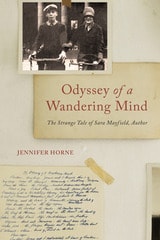
A carefully rendered portrait of a brilliant but troubled daughter of the Old South who struggled against the conventions of gender, class, family, and ultimately of sanity, yet survived to define a creative life of her own
Sara Mayfield was born into Alabama’s governing elite in 1905 and grew up in a social circle that included Zelda Sayre, Sara Haardt, and Tallulah and Eugenia Bankhead. After winning a Goucher College short story contest judged by H. L. Mencken, Mayfield became friends with Mencken and his circle, then visited with Scott and Zelda Fitzgerald and hobnobbed with the literati while traveling in Europe after a failed marriage. Returning to Alabama during the Depression, she briefly managed the family landholdings before departing for New York City where she became involved in the theater. Inventing a plastic compound while working on theatrical sets, she applied for a patent and set her sights on a livelihood as an inventor and businesswoman. With the advent of World War II, Mayfield returned to her family home in Tuscaloosa where she expanded her experiments, freelanced as a journalist, and doggedly pursued a bizarre series of military and intelligence schemes, prompting temporary hospitalization. In 1945, she mingled with a host of cultural figures, including Frida Kahlo, Diego Rivera, Orson Welles, Rita Hayworth, and even a young John F. Kennedy, while reporting on the creation of the United Nations from Mexico and California. Back in Tuscaloosa after the war, however, she struggled to find her way with both work and family, becoming increasingly paranoid about perceived conspiracies arrayed against her. Finally, her mother and brother committed her to Bryce Hospital for the Insane, where she remained for the next seventeen years.
Throughout her life, Mayfield kept journals, wrote fiction, and produced thousands of letters while nursing the ambition that had driven her since childhood: to write and publish books. During her confinement, Mayfield assiduously recorded her experiences and her determined efforts—sometimes delusional, always savvy—to overturn her diagnosis and return to the world as a sane, independent adult. At 59, she was released from Bryce and later obtained a decree of “having been restored to sanity,” enabling her to manage her own financial affairs and to live how and where she pleased. She went on to publish noteworthy literary biographies of the Menckens and the Fitzgeralds plus a novel based on the life of Mona Lisa, finally achieving her quest to become the author of books and her own life. In Odyssey of a Wandering Mind, noted writer Jennifer Horne draws on years of research and an intimate understanding of the vast archive Sara Mayfield left behind to sensitively render Mayfield’s struggle to move through the world as the person she was—and her ultimate success in surviving to define the terms of her story.

Reclaiming the Author
Figures and Fictions from Spanish AmericaLucille Kerr
Duke University Press, 1992
By focusing on works by well-known Spanish American authors—Cortazar, Donoso, Fuentes, Poniatowska, Puig, and Vargas Llosa—Kerr shows how the Spanish Americans have formed a radical poetics of the author. Her readings demonstrate how exemplary Spanish American texts, such as Rayuela, Terra nostra, and El hablador, call into question the author as a unitary or uniform, and therefore unproblematical, figure. Individually and together, Kerr's readings reclaim "the author" as a complex critical concept encompassing diverse, conflicting, even competitive roles.
Rousseau as Author
Consecrating One's Life to the TruthChristopher Kelly
University of Chicago Press, 2002
Unlike many other writers of his day, Rousseau refused to publish anonymously, even though he risked persecution for his writings. But Rousseau felt that authors must be self-restrained, as well as bold, and must carefully consider the potential political effects of what they might publish: sometimes seeking the good conflicts with writing the truth. Kelly shows how this understanding of public authorship played a crucial role in Rousseau's conception—and practice—of citizenship and political action.
Rousseau as Author will be a groundbreaking book not just for Rousseau scholars, but for anyone studying Enlightenment ideas about authorship and responsibility.
Sound and Sentiment
Birds, Weeping, Poetics, and Song in Kaluli Expression, 3rd edition with a new introduction by the authorSteven Feld
Duke University Press, 2012

The Author and His Publisher
Lectures Delivered in Mainz and AustinSiegfried Unseld
University of Chicago Press, 1980
Through close examination of four writers, Unseld shows how the author's personality can affect the publisher's dilemma. Hermann Hesse, by virtue of his loyalty and his desire for financial independence, enjoyed an exemplary relationship with his publishers. With Bertolt Brecht it was all confusion; with Rainer Maria Rilke, a one-author-one-publisher lifetime alliance; with Swiss poet Robert Walser, a mire of difficulties ("Each book printed," he once said, was "a grave for its author").
The Author as Hero
Self and Tradition in Bulgakov, Pasternak, and NabokovJustin Weir
Northwestern University Press, 2011
The Author of the Prometheus Bound
By C. J. Herington
University of Texas Press, 1970
The Prometheus Bound has proved to be both the most problematic and the most influential of extant Greek tragedies. Especially during the past two hundred years the character here created has transcended the boundaries of nationality, ideology, and race: Goethe, Shelley, Marx, and—to judge by other published translations—modern Russia and China have in turn been fascinated by this being who is tortured by the gods for furthering the progress of humanity. Yet the interpretation of the play itself and its relation to the group of now-lost plays with which it was originally produced continue to arouse violent controversy. At the center of the controversy stand the questions, raised with increasing urgency during the twentieth century, whether the play is by Aeschylus at all and when it was written.
This monograph attempts a systematic answer to these questions. It first surveys the general conditions of the authenticity problem as they appeared after the redating of Aeschylus’ Supplices. Next, it catalogues in detail the stylistic, metrical, and thematic features of the Prometheus that have been supposed to tell against Aeschylus’ authorship. Finally, it suggests that these phenomena will not make sense on the assumption that the play was written by anyone other than Aeschylus, and that the date of composition must fall after the Oresteia, in the last two years of Aeschylus’ life. Given this definite context and date, many of the apparent problems of the Prometheus Bound either fall away or at least can be more precisely formulated by reference to the other extant tragedies of Aeschylus’ latest phase.
The Deaths of the Author
Reading and Writing in TimeJane Gallop
Duke University Press, 2011
The People’s Plaza
Sixty-Two Days of Nonviolent ResistanceJustin Jones
Vanderbilt University Press, 2022
Central to the occupation was Justin Jones, a student of Fisk University and Vanderbilt Divinity School whose place at the forefront of the protests brought him and the occupation to the attention of the Tennessee state troopers, state and US senators, and Governor Bill Lee. The result was two months of solidarity in the face of rampant abuse, community in the face of state-sponsored terror, and standoff after standoff at the doorsteps of the people's house with those who claimed to represent them. In this, his first book, Jones describes those two revolutionary months of nonviolent resistance against a police state that sought to dehumanize its citizens.
The People's Plaza is a rumination on the abuse of power, and a vision of a more just, equitable, anti-racist Nashville—a vision that kept Jones and those with him posted on the plaza through intense heat, unprovoked arrests, vandalism, theft, and violent suppression. It is a first-person account of hope, a statement of intent, and a blueprint for nonviolent resistance in the American South and elsewhere.

The Six-Minute Memoir
Fifty-Five Short Essays on LifeMary Helen Stefaniak
University of Iowa Press, 2022
What’s more, writing prompts at the end of the book invite readers to search their own lives for such moments—the kind that could be forgotten but instead are turned, by the gift of perspective and perfectly chosen detail, into treasure. The Six-Minute Memoir encourages people to tell their own stories even if they think they don’t have the kind of story that belongs in a memoir.

The Southern Agrarians
With a new preface by the authorPaul K. Conkin
Vanderbilt University Press, 2001
Interweaving group biography and intellectual history, Conkin traces how these young intellectuals came to write their classic manifesto, I'll Take My Stand, relates their political advocacy to the earlier Fugitive movement in poetry, and follows their careers after the Agrarian crusade fell apart. More than any other historian or critic, Conkin takes seriously the economic and political beliefs of these southern writers.

William Wells Brown
Author and ReformerWilliam Edward Farrison
University of Chicago Press, 1969
Writings of Warner Mifflin
Forgotten Quaker Abolitionist of the Revolutionary EraGary B. Nash
University of Delaware Press, 2021