Results by title
129 books match the query 'City and town life' and 17 start with c
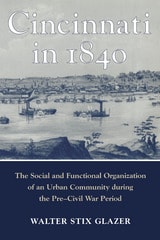
CINCINNATI IN 1840
The Social and Functional Organization of an Urban Community during the Pre-Civil War PeriodWALTER STIX GLAZER
The Ohio State University Press, 1999
During the pre-Civil War period, Cincinnati was the fastest growing and, according to many contemporary observers, most interesting city in America. This classic study, completed in the early 1970s, focuses on the community in 1840 to explain its success but also to suggest some broader patterns in the city’s development and American urbanization.
Using local census records, city directories, tax lists, newspapers, and other contemporary sources, Walter Stix Glazer describes the demographic, social, economic, and political structure of the adult white male population in 1840 and then develops a unified model of its social and functional organizations. This analysis (based on computerized records of thousands of Cincinnatians) also documents some broader trends between 1820 and 1860: the volatility of Cincinnati’s labor force, the career patterns of its homeowners, and the leadership of a small group of successful citizens active in a broad range of voluntary associations.
This statistical analysis is complemented with sections of traditional historical narrative and biographical profiles that illustrate the general themes of the book. Glazer argues that Cincinnati’s success up to 1840 was due to a unified booster vision and a cohesive community elite that gradually broke down, as a result of ethnic and economic division, over the next twenty years. This story has broader implications in terms of the character of Jacksonian democracy and American urbanization.
Cafe Wisconsin
A Guide To Wisconsin's Down-Home CafesJoanne Raetz Stuttgen
University of Wisconsin Press, 2004
Featuring 133 cafes, with another 101 Next Best Bets alternatives, Cafe Wisconsin is every hungry traveler’s guide to real mashed potatoes, melt-in-your-mouth hot beef, from-scratch baked goods, and colorful coffee klatches. At the counter of aptly named cafes like the Coffee Cup, Main Street, and Chatterbox, you’ll laugh with owners, shake dice with customers, and find the authentic taste and flavor of Wisconsin.
Come on. Let’s go out to eat!
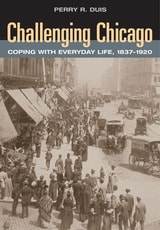
Challenging Chicago
Coping with Everyday Life, 1837-1920Perry R. Duis
University of Illinois Press, 2006
Follow along and encounter some of Chicago’s most infamous citizens--the loathed Traction Baron, high-speed “scorchers,” and peddlers of “swill milk.” Learn about the perils of payday, the lunchtime problems of women, the lure of dime museums, and the fatal attraction of Chicago’s “cruelest place.” Against this bleak backdrop emerged the innovators and institutions that made Chicago the vibrant city it is today. The superbly textured narrative is enhanced by eighty-six historic photographs and illustrations.
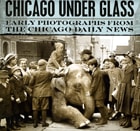
Chicago under Glass
Early Photographs from the Chicago Daily NewsMark Jacob and Richard Cahan in association with the Chicago History Museum
University of Chicago Press, 2007
These cameramen helped sell papers, but, as Mark Jacob and Richard Cahan reveal, they also made art. Chicago under Glass: Early Photographs from the Chicago Daily News is the first collection of images from the photo staff’s early years, 1901 to 1930. Jacob and Cahan, seasoned journalists themselves, have selected more than 250 images—many of which have never before been published—from the nearly 57,000 glass negatives housed at the Chicago History Museum. They include rare photographs of a young Buster Keaton with his wife and child, waiting to board a train and the notorious Al Capone outside a courtroom, smoking a cigar and consulting with his lawyer. Each thematic section begins with a fascinating introduction by the authors, and each image is accompanied by insightful historical commentary.
These fragile glass records are a remarkable piece of American history. Together, they capture a time of massive change and stark contrasts, the defining years in a place Nelson Algren called “Hustlertown.” From candid shots of the Eastland steamer disaster to the glittering electric lights of the White City amusement park and the grim aftermath of the Saint Valentine’s Day Massacre, the history these images reveal is not simply the story of Chicago, but the history of the modern American city.
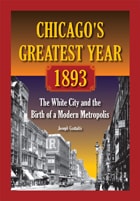
Chicago's Greatest Year, 1893
The White City and the Birth of a Modern MetropolisJoseph Gustaitis
Southern Illinois University Press, 2013
In 1893, the 27.5 million visitors to the Chicago World’s Fair feasted their eyes on the impressive architecture of the White City, lit at night by thousands of electric lights. In addition to marveling at the revolutionary exhibits, most visitors discovered something else: beyond the fair’s 633 acres lay a modern metropolis that rivaled the world’s greatest cities. The Columbian Exposition marked Chicago’s arrival on the world stage, but even without the splendor of the fair, 1893 would still have been Chicago’s greatest year.
An almost endless list of achievements took place in Chicago in 1893. Chicago’s most important skyscraper was completed in 1893, and Frank Lloyd Wright opened his office in the same year. African American physician and Chicagoan Daniel Hale Williams performed one of the first known open-heart surgeries in 1893. Sears and Roebuck was incorporated, and William Wrigley invented Juicy Fruit gum that year. The Field Museum, the Art Institute of Chicago, and the Museum of Science and Industry all started in 1893. The Cubs’ new ballpark opened in this year, and an Austro-Hungarian immigrant began selling hot dogs outside the World’s Fair grounds. His wares became the famous “Chicago hot dog.”
“Cities are not buildings; cities are people,” writes author Joseph Gustaitis. Throughout the book, he brings forgotten pioneers back to the forefront of Chicago’s history, connecting these important people of 1893 with their effects on the city and its institutions today. The facts in this history of a year range from funny to astounding, showcasing innovators, civic leaders, VIPs, and power brokers who made 1893 Chicago about so much more than the fair.
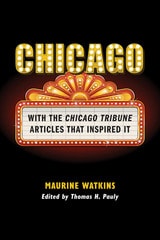
Chicago
With the Chicago Tribune Articles That Inspired ItMaurine Watkins, Edited by Thomas H. Pauly, Foreword by Charles H. Cosgrove
Southern Illinois University Press, 2025
In 1924, the murder trials of Beulah Annan and Belva Gaertner shocked the world, providing the real-life inspiration for Maurine Watkins’s unforgettable characters, Roxie Hart and Velma Kelly. Now, a century later, this reissue of Watkins’s play offers a fresh look at the origins of the story that has since become a household name.
From the silent film Chicago produced by Cecil B. DeMille in 1927 to the 1942 film Roxie Hart starring Ginger Rogers and the Broadway sensation created by Bob Fosse, Fred Ebb, and John Kander, this play has continuously evolved. It even inspired the 2002 Oscar-winning film Chicago starring Renée Zellweger, Catherine Zeta-Jones, and Richard Gere. But until recently, as editor Thomas H. Pauly writes in the book’s introduction, the real-life roots of the story were obscured.
While researching for a book on crime-as-entertainment during the 1920s, Pauly came across Maurine Watkins’s play, which was then out of print. After noticing similarities between the play and a series of articles Watkins penned for the Chicago Tribune prior to the creation of her play, Pauly knew he had stumbled upon a revelation: Watkins’s play was based on real people. His republication of the play, alongside substantial background material and a reprinting of Watkins’s news articles, has become an indispensable starting point for all subsequent interest in Watkins and Chicago, whose subject remains as topical as ever.
This special edition includes a new foreword by Charles H. Cosgrove, author of They Both Reached for the Gun: Beulah Annan, Maurine Watkins, and the Trial That Became Chicago. Cosgrove’s extensive research into the real-life cases provides deeper insight into the world that Watkins portrayed with such satirical brilliance. Additionally, the original editor, Thomas H. Pauly, has contributed a new preface, further enhancing understanding of the play and its inspiration, the thrilling true-crime story that captivated a nation and birthed a cultural phenomenon.
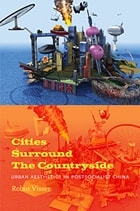
Cities Surround The Countryside
Urban Aesthetics in Postsocialist ChinaRobin Visser
Duke University Press, 2010
In the 1980s, writers, filmmakers, and artists began to probe the contradictions in China’s urbanization policies and rhetoric. Powerful neorealist fiction, cinema, documentaries, paintings, photographs, performances, and installations contrasted forms of glittering urban renewal with the government’s inattention to a livable urban infrastructure. Narratives and images depicting the melancholy urban subject came to illustrate ethical quandaries raised by urban life. Visser relates her analysis of this art to major transformations in urban planning under global neoliberalism, to the development of cultural studies in the Chinese academy, and to ways that specific cities, particularly Beijing and Shanghai, figure in the cultural imagination. Despite the environmental and cultural destruction caused by China’s neoliberal policies, Visser argues for the emergence of a new urban self-awareness, one that offers creative resolutions for the dilemmas of urbanism through new forms of intellectual engagement in society and nascent forms of civic governance.
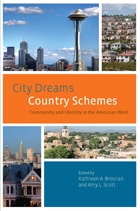
City Dreams, Country Schemes
Community and Identity in the American WestKathleen A. Brosnan
University of Nevada Press, 2011
The American West, from the beginning of Euro-American settlement, has been shaped by diverse ideas about how to utilize physical space and natural environments to create cohesive, sometimes exclusive community identities. When westerners developed their towns, they constructed spaces and cultural identities that reflected alternative understandings of modern urbanity. The essays in City Dreams, Country Schemes utilize an interdisciplinary approach to explore the ways that westerners conceptualized, built, and inhabited urban, suburban, and exurban spaces in the twentieth century.
The contributors examine such topics as the attractions of open space and rural gentrification in shaping urban development; the role of tourism in developing national parks, historical sites, and California's Napa Valley; and the roles of public art, gender, and ethnicity in shaping urban centers. City Dreams, Country Schemes reveals the values and expectations that have shaped the West and the lives of the people who inhabit it.

City Games
The Evolution of American Urban Society and the Rise of SportsSteven A. Riess
University of Illinois Press, 1989
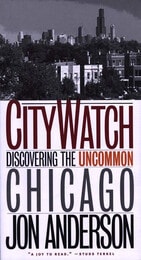
City Watch
Discovering The Uncommon ChicagoJon Anderson
University of Iowa Press, 2000
In forty-five years as one of Chicago's liveliest journalists for Time, Life, and the Chicago Tribune, Jon Anderson has established a reputation for picking up on what someone once called "the beauty of the specific fact." Part "Talk of the Town," part On the Road with Charles Kuralt, Anderson's twice-a-week "City Watch" columns in the Chicago Tribune seek out interesting and unexpected people and places from the everyday life of what the author calls the "most typical American big city." In the process he discovers the joys and triumphs of ordinary people.
Anderson writes with wit and insight about those who find themselves inspired or obsessed with alternative ways of viewing life or getting through the day. Like the man who started with one light pole, then painted all the poles in his southside neighborhood. Or the founder of Cats-Are-Purrsons-Too, a nun who lives with sixty-seven cats. Or the philosopher who, with no financial success, still publishes a newsletter called "The Meaning of Life." After years of hunting down moments of everyday life that have drama and meaning, Anderson offers a book that has curious power, because all of its stories are true.
Drawn from the best of Anderson's columns, City Watch introduces readers to an eclectic mix of social clubs, subcultures, and minor celebrities. From Foraging Friends, a group of penniless ecologists who forage for wild foods in a county forest preserve, to the annual Dumpster Diver fashion show, from the Oakton Elementary School chess team to a group that calls itself Some Chicago Anarchists, readers will discover the characters and events that define Chicago's local color.
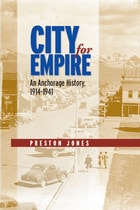
City for Empire
An Anchorage History, 1914-1941Preston Jones
University of Alaska Press, 2010
First settled in 1915, Anchorage, Alaska, was founded with the American empire in mind. During World War I, it served as a conduit through which coal could be shipped to the Pacific, where the US Navy was engaged with Japan. Decades later, during World War II, Anchorage became an equally important site for the defense of the mainland and the projection of American power. City for Empire tells the story of Anchorage's development in that period, focusing in particular on the international context of the city's early decades and its surprisingly diverse inhabitants. A thorough yet accessible read, City for Empire captures the history of this remarkable city.
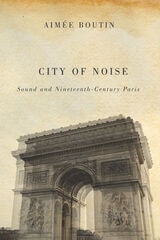
City of Noise
Sound and Nineteenth-Century ParisAimee Boutin
University of Illinois Press, 2015
Aimée Boutin tours the sonic space that orchestrated the different, often conflicting sound cultures that defined the street ambience of Paris. Mining accounts that range from guidebooks to verse, Boutin braids literary, cultural, and social history to reconstruct a lost auditory environment. Throughout, impressions of street noise shape writers' sense of place and perception of modern social relations. As Boutin shows, the din of the Cris contrasted economic abundance with the disparities of the capital, old and new traditions, and the vibrancy of street commerce with an increasing bourgeois demand for quiet. In time, peddlers who provided the soundtrack for Paris's narrow streets yielded to modernity, with its taciturn shopkeepers and wide-open boulevards, and the fading songs of the Cris became a dirge for the passing of old ways.
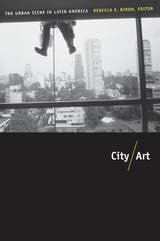
City/Art
The Urban Scene in Latin AmericaRebecca E. Biron , ed.
Duke University Press, 2009
Contributors delve into the aspirations embodied in the modernist urbanism of Brasília and the work of Lotty Rosenfeld, a Santiago performance artist who addresses the intersections of art, urban landscapes, and daily life. One author assesses the political possibilities of public art through an analysis of subway-station mosaics and Julio Cortázar’s short story “Graffiti,” while others look at the representation of Buenos Aires as a “Jewish elsewhere” in twentieth-century fiction and at two different responses to urban crisis in Rio de Janeiro. The collection closes with an essay by a member of the São Paulo urban intervention group Arte/Cidade, which invades office buildings, de-industrialized sites, and other vacant areas to install collectively produced works of art. Like that group, City/Art provides original, alternative perspectives on specific urban sites so that they can be seen anew.
Contributors. Hugo Achugar, Rebecca E. Biron, Nelson Brissac Peixoto, Néstor García Canclini, Adrián Gorelik, James Holston, Amy Kaminsky, Samuel Neal Lockhart, José Quiroga, Nelly Richard, Marcy Schwartz, George Yúdice
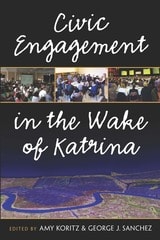
Civic Engagement in the Wake of Katrina
Amy Koritz and George J. Sanchez, editors
University of Michigan Press, 2009
"Civic engagement has been underrated and overlooked. Koritz and Sanchez illuminate the power of what community engagement through art and culture revitalization can do to give voice to the voiceless and a sense of being to those displaced."
---Sonia BasSheva Mañjon, Wesleyan University
"This profound and eloquent collection describes and assesses the new coalitions bringing a city back to life. It's a powerful call to expand our notions of culture, social justice, and engaged scholarship. I'd put this on my 'must read' list."
---Nancy Cantor, Syracuse University
"Civic Engagement in the Wake of Katrina is a rich and compelling text for thinking about universities and the arts amid social crisis. Americans need to hear the voices of colleagues who were caught in Katrina's wake and who responded with commitment, creativity, and skill."
---Peter Levine, CIRCLE (The Center for Information & Research on Civic Learning & Engagement)
This collection of essays documents the ways in which educational institutions and the arts community responded to the devastation wrought by Hurricane Katrina. While firmly rooted in concrete projects, Civic Engagement in the Wake of Katrina also addresses the larger issues raised by committed public scholarship. How can higher education institutions engage with their surrounding communities? What are the pros and cons of "asset-based" and "outreach" models of civic engagement? Is it appropriate for the private sector to play a direct role in promoting civic engagement? How does public scholarship impact traditional standards of academic evaluation? Throughout the volume, this diverse collection of essays paints a remarkably consistent and persuasive account of arts-based initiatives' ability to foster social and civic renewal.
Amy Koritz is Director of the Center for Civic Engagement and Professor of English at Drew University.
George J. Sanchez is Professor of American Studies and Ethnicity and History at the University of Southern California.
Front and rear cover designs, photographs, and satellite imagery processing by Richard Campanella.
digitalculturebooks is an imprint of the University of Michigan Press and the Scholarly Publishing Office of the University of Michigan Library dedicated to publishing innovative and accessible work exploring new media and their impact on society, culture, and scholarly communication. Visit the website at www.digitalculture.org.
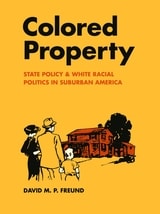
Colored Property
State Policy and White Racial Politics in Suburban AmericaDavid M. P. Freund
University of Chicago Press, 2007
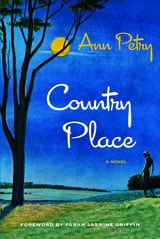
Country Place
A NovelAnn Petry, foreword by Farah Jasmine Griffin
Northwestern University Press, 1947
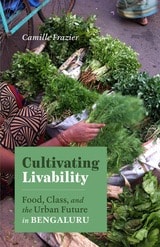
Cultivating Livability
Food, Class, and the Urban Future in BengaluruCamille Frazier
University of Minnesota Press, 2024
What urban food networks reveal about middle class livability in times of transformation
In recent years, the concept of “livability” has captured the global imagination, influencing discussions about the implications of climate change on human life and inspiring rankings of “most livable cities” in popular publications. But what really makes for a livable life, and for whom?
Cultivating Livability takes Bengaluru, India, as a case study—a city that is alternately described as India’s most and least livable megacity, where rapid transformation is undergirded by inequalities evident in the food networks connecting peri-urban farmers and the middle-class public. Anthropologist Camille Frazier probes the meaning of “livability” in Bengaluru through ethnographic work among producers and consumers, corporate intermediaries and urban information technology professionals.
Examining the varying efforts to reconfigure processes of food production, distribution, retail, and consumption, she reveals how these intersections are often rooted in and exacerbate ongoing forms of disenfranchisement that privilege some lives at the expense of others.