Results by title
50 books match the query 'Colonialism' and 12 start with c
Can a Liberal be a Chief? Can a Chief be a Liberal?
Some Thoughts on an Unfinished Business of ColonialismOlúfémi Táíwò
Prickly Paradigm Press, 2021
Across Africa, it is not unusual for proponents of liberal democracy and modernization to make room for some aspects of indigenous culture, such as the use of a chief as a political figure. Yet for Olúfẹ́mi Táíwò, no such accommodation should be made. Chiefs, he argues, in this thought-provoking and wide-ranging pamphlet, cannot be liberals—and liberals cannot be chiefs. If we fail to recognize this, we fail to acknowledge the metaphysical underpinnings of modern understandings of freedom and equality, as well as the ways in which African intellectuals can offer a distinctive take on the unfinished business of colonialism.
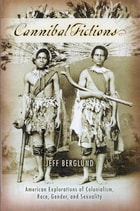
Cannibal Fictions
American Explorations of Colonialism, Race, Gender, and SexualityJeff Berglund
University of Wisconsin Press, 2006
Cannibal Fictions brings together two discrete periods in U.S. history: the years between the Civil War and World War I, the high-water mark in America's imperial presence, and the post-Vietnam era, when the nation was beginning to seriously question its own global agenda. Berglund shows how P. T. Barnum, in a traveling exhibit featuring so-called "Fiji cannibals," served up an alien "other" for popular consumption, while Edgar Rice Burroughs in his Tarzan of the Apes series tapped into similar anxieties about the eruption of foreign elements into a homogeneous culture. Turning to the last decades of the twentieth century, Berglund considers how treatments of cannibalism variously perpetuated or subverted racist, sexist, and homophobic ideologies rooted in earlier times. Fannie Flagg's novel Fried Green Tomatoes invokes cannibalism to new effect, offering an explicit critique of racial, gender, and sexual politics (an element to a large extent suppressed in the movie adaptation). Recurring motifs in contemporary Native American writing suggest how Western expansion has, cannibalistically, laid the seeds of its own destruction. And James Dobson's recent efforts to link the pro-life agenda to allegations of cannibalism in China testify still further to the currency and pervasiveness of this powerful trope.
By highlighting practices that preclude the many from becoming one, these representations of cannibalism, Berglund argues, call into question the comforting national narrative of e pluribus unum.
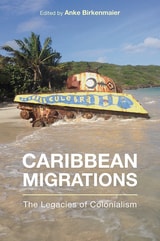
Caribbean Migrations
The Legacies of ColonialismAnke Birkenmaier
Rutgers University Press, 2021
With mass migration changing the configuration of societies worldwide, we can look to the Caribbean to reflect on the long-standing, entangled relations between countries and areas as uneven in size and influence as the United States, Cuba, Hispaniola, Puerto Rico, and Jamaica. More so than other world regions, the Caribbean has been characterized as an always already colonial region. It has long been a key area for empires warring over influence spheres in the new world, and where migration waves from Africa, Europe, and Asia accompanied every political transformation over the last five centuries. In Caribbean Migrations, an interdisciplinary group of humanities and social science scholars study migration from a long-term perspective, analyzing the Caribbean's "unincorporated subjects" from a legal, historical, and cultural standpoint, and exploring how despite often fractured public spheres, Caribbean intellectuals, artists, filmmakers, and writers have been resourceful at showcasing migration as the hallmark of our modern age.
Cochabamba, 1550-1900
Colonialism and Agrarian Transformation in BoliviaBrooke Larson
Duke University Press, 1998
This study of Bolivia uses Cochabamba as a laboratory to examine the long-term transformation of native Andean society into a vibrant Quechua-Spanish-mestizo region of haciendas and smallholdings, towns and villages, peasant markets and migratory networks caught in the web of Spanish imperial politics and economics. Combining economic, social, and ethnohistory, Brooke Larson shows how the contradictions of class and colonialism eventually gave rise to new peasant, artisan, and laboring groups that challenged the evolving structures of colonial domination. Originally published in 1988, this expanded edition includes a new final chapter that explores the book’s implications for understanding the formation of a distinctive peasant political culture in the Cochabamba valleys over the eighteenth and nineteenth centuries.
Colonialism and Christianity in Mandate Palestine
By Laura Robson
University of Texas Press, 2011
Drawing on a rich base of British archival materials, Arabic periodicals, and secondary sources, Colonialism and Christianity in Mandate Palestine brings to light the ways in which the British colonial state in Palestine exacerbated sectarianism. By transforming Muslim, Christian, and Jewish religious identities into legal categories, Laura Robson argues, the British ultimately marginalized Christian communities in Palestine. Robson explores the turning points that developed as a result of such policies, many of which led to permanent changes in the region's political landscapes. Cases include the British refusal to support Arab Christian leadership within Greek-controlled Orthodox churches, attempts to avert involvement from French or Vatican-related groups by sidelining Latin and Eastern Rite Catholics, and interfering with Arab Christians' efforts to cooperate with Muslims in objecting to Zionist expansion. Challenging the widespread but mistaken notion that violent sectarianism was endemic to Palestine, Colonialism and Christianity in Mandate Palestine shows that it was intentionally stoked in the wake of British rule beginning in 1917, with catastrophic effects well into the twenty-first century.
Colonialism and Culture
Nicholas B. Dirks, Editor
University of Michigan Press, 1992
Colonialism and Race in Luso-Hispanic Literature
Jerome C. Branche
University of Missouri Press, 2006
Colonialism and Science
Saint Domingue and the Old RegimeJames E. McClellan III
University of Chicago Press, 2010
How was the character of science shaped by the colonial experience? In turn, how might we make sense of how science contributed to colonialism? Saint Domingue (now Haiti) was the world’s richest colony in the eighteenth century and home to an active society of science—one of only three in the world, at that time. In this deeply researched and pathbreaking study of the colony, James E. McClellan III first raised his incisive questions about the relationship between science and society that historians of the colonial experience are still grappling with today. Long considered rare, the book is now back in print in an English-language edition, accompanied by a new foreword by Vertus Saint-Louis, a native of Haiti and a widely-acknowledged expert on colonialism. Frequently cited as the crucial starting point in understanding the Haitian revolution, Colonialism and Science will be welcomed by students and scholars alike.
“By deftly weaving together imperialism and science in the story of French colonialism, [McClellan] . . . brings to light the history of an almost forgotten colony.”—Journal of Modern History
“McClellan has produced an impressive case study offering excellent surveys of Saint Domingue’s colonial history and its history of science.”—Isis
Colonialism in the Congo Basin, 1880–1940
Samuel H. Nelson
Ohio University Press, 1993
Colonialism, Antisemitism, and Germans of Jewish Descent in Imperial Germany
Christian S. Davis
University of Michigan Press, 2012
Colonialism, Antisemitism, and Germans of Jewish Descent in Imperial Germany examines the relationship between the colonial and antisemitic movements of modern Germany from 1871 to 1918, examining the complicated ways in which German antisemitism and colonialism fed off of and into each other in the decades before the First World War. Author Christian S. Davis studies the significant involvement with and investment in German colonialism by the major antisemitic political parties and extra-parliamentary organizations of the day, while also investigating the prominent participation in the colonial movement of Jews and Germans of Jewish descent and their tense relationship with procolonial antisemites.
Working from the premise that the rise and propagation of racial antisemitism in late-nineteenth-century Germany cannot be separated from the context of colonial empire, Colonialism, Antisemitism, and Germans of Jewish Descent in Imperial Germany is the first work to study the dynamic and evolving interrelationship of the colonial and antisemitic movements of the Kaiserreich era. It shows how individuals and organizations who originated what would later become the ideological core of National Socialism---racial antisemitism---both influenced and perceived the development of a German colonial empire predicated on racial subjugation. It also examines how colonialism affected the contemporaneous German antisemitic movement, dividing it over whether participation in the nationalist project of empire building could furnish patriotic credentials to even Germans of Jewish descent. The book builds upon the recent upsurge of interest among historians of modern Germany in the domestic impact and character of German colonialism, and on the continuing fascination with the racialization of the German sense of self that became so important to German history in the twentieth century.

Comfort Women
Colonialism, War, and Sex, Volume 5Chungmoo Choi, ed.
Duke University Press, 0
Extending its interrogation to the Cold War power dynamics and contingent economic development that have contributed to the silencing of the colonial past in East Asia, these essays also examine “the Tokyo Trials” and the discourses of postwar compensation and apology. They not only reveal the capitalistic incentives behind the nominalism of compensation but also unmask the Janus face of humanism, which claims to be universal while excluding Asian women from the category of humanity.
This exceptional collection includes artwork by two Korean comfort women, Tok-kyong Kang and Sun-dok Kim, as well as pieces by Japanese artists and Korean American artists. Other features include a narrative composed of several interviews with comfort women and a conversation between the Nobel laureate Kenzaburo Oe of Japan and South Korean dissident poet Chi-ha Kim.
Contributors. Chungmoo Choi, Chin Sung Chung, Norma Field, Yuki Fujime, Tok-kyong Kang, Chi-ha Kim, Hyun Sook Kim, Daisil Kim-Gibson, Jin Kyung Lee, Sasha Y. Lee, Yong Soon Min, Kenzaburo Oe, Kerry Ross, Yoshiko Shimada, Youn Ok Song, Won Soon Park, Kyung sik Suh, Taeko Tomiyama, Melissa Wender, Hyanah Yang
Crossing the Color Line
Race, Sex, and the Contested Politics of Colonialism in GhanaCarina E. Ray
Ohio University Press, 2015
Winner of the 2017 Aidoo-Snyder Book Prize
Winner of the 2016 American Historical Association’s Wesley-Logan Prize in African diaspora
Finalist for the 2016 Fage and Oliver Prize from the African Studies Association of the UK
Interracial sex mattered to the British colonial state in West Africa. In Crossing the Color Line, Carina E. Ray goes beyond this fact to reveal how Ghanaians shaped and defined these powerfully charged relations. The interplay between African and European perspectives and practices, argues Ray, transformed these relationships into key sites for consolidating colonial rule and for contesting its hierarchies of power. With rigorous methodology and innovative analyses, Ray brings Ghana and Britain into a single analytic frame to show how intimate relations between black men and white women in the metropole became deeply entangled with those between black women and white men in the colony in ways that were profoundly consequential.
Based on rich archival evidence and original interviews, the book moves across different registers, shifting from the micropolitics of individual disciplinary cases brought against colonial officers who “kept” local women to transatlantic networks of family, empire, and anticolonial resistance. In this way, Ray cuts to the heart of how interracial sex became a source of colonial anxiety and nationalist agitation during the first half of the twentieth century.