Results by title
89 books match the query 'Communities' and 27 start with c
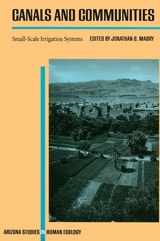
Canals and Communities
Small-Scale Irrigation SystemsJonathan B. Mabry
University of Arizona Press, 1996
CONTENTS
Introduction
The Ethnology of Irrigation: Cross-Cultural Characteristics of Local Water Management, Jonathan B. Mabry
Patterns of Cooperation and Conflict in Local Irrigation
1. La Gente es Muy Perra: Conflict and Cooperation over Irrigation Water in Cucurpe, Sonora, Mexico, Thomas E. Sheridan
2. Dhasheeg Agriculture in the Jubba Valley of Somalia, Catherine Besteman
3. The Dry and the Drier: Cooperation and Conflict in Moroccan Irrigation, John R. Welch
4. The Political Ecology of Irrigation in an Andean Peasant Community, Paul H. Gelles
Methods and Models for Analyzing Local Irrigation
5. Rapid Rural Appraisal of Arid Land Irrigation: A Moroccan Example, John R. Welch, Jonathan B. Mabry, and Hsain Ilahiane
6. Simulation Modelling of Balinese Irrigation, J. Stephen Lansing
7. Institutional Innovation in Small-Scale Irrigation Networks: A Cape Verdean Case, Mark W. Langworthy and Timothy J. Finan
Development Lessons from Local Irrigation
8. Qanats and Rural Societies: Sustainable Agriculture and Irrigation Cultures in Contemporary Iran, Michael E. Bonine
9. The Utility of Tradition in Sri Lankan Bureaucratic Irrigation: The Case of the Kirindi Oya Project, Pamela Stanbury
10. The Relevance of Indigenous Irrigation: A Comparative Analysis of Sustainability, Jonathan B. Mabry and David A. Cleveland
Conclusion
The Hydraulics of History: Evolutionary Trajectories of Local and Centralized Irrigation, Jonathan B. Mabry
Care Activism
Migrant Domestic Workers, Movement-Building, and Communities of CareEthel Tungohan
University of Illinois Press, 2023
Character, Community, and Politics
Clarke E. Cochran
University of Alabama Press, 1982
The revival of political philosophy has frequently assumed that a theory of human well-being and fulfillment is necessary, preoccupied with questions of epistemology and technical conceptual analysis. In instances where the nature of the human good is considered, the paradigm of autonomous individualism customarily dominates. In Character, Community, and Politics, Cochran moves away from these prevailing ideas to develop a communal theory of political order, helping to redefine a number of fundamental, but often neglected, ideas. Chief among them are commitment, community, responsibility, and character—concepts Cochran develops through discussions of authority, freedom, pluralism, and the common good.
Drawing on a wide variety of fields, such as philosophy, ethics, literature, moral theology, and sociology, the author renews these concepts to outline a theory of human life and political order distinct from sclerotic categories such as conservatism, socialism, radicalism, or Marxism.

Children and the Communities
Paul Henderson
Pluto Press, 1995
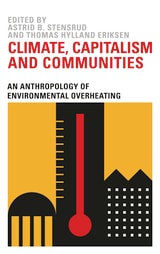
Climate, Capitalism and Communities
An Anthropology of Environmental OverheatingAstrid B. Stensrud
Pluto Press, 2019
Coming Community
Giorgio Agamben
University of Minnesota Press, 1993
Communities In Economic Crisis
edited by John Gaventa, Barbara Ellen Smith and Alex Willingham
Temple University Press, 1990
Hard times are no stranger to the people of Appalachia and the South. Earlier books have documented the low wages of the textile industry, boom-and-bust cycles of coal mining, and debt peonage of Southern agriculture that have established a heritage of poverty that endures. This book is a unique collection of essays by people who are actively involved in the efforts to challenge economic injustice in these regions and to empower the residents to build democratic alternatives.
In the series Labor and Social Change, edited by Paula Rayman and Carmen Sirianni.
Communities and Crime
An Enduring American ChallengePamela Wilcox
Temple University Press, 2017
Social scientists have long argued over the links between crime and place. The authors of Communities and Crime provide an intellectual history that traces how varying images of community have evolved over time and influenced criminological thinking and criminal justice policy.
The authors outline the major ideas that have shaped the development of theory, research, and policy in the area of communities and crime. Each chapter examines the problem of the community through a defining critical or theoretical lens: the community as social disorganization; as a system of associations; as a symptom of larger structural forces; as a result of criminal subcultures; as a broken window; as crime opportunity; and as a site of resilience.
Focusing on these changing images of community, the empirical adequacy of these images, and how they have resulted in concrete programs to reduce crime, Communities and Crime theorizes about and reflects upon why some neighborhoods produce so much crime. The result is a tour of the dominant theories of place in social science today.
Communities and Households in the Greater American Southwest
New Perspectives and Case StudiesRobert J. Stokes
University Press of Colorado, 2019
Today’s archaeologists and anthropologists understand that communities operate as a multi-level, -organizational, -contextual, and -referential human creation, which informs their understanding of how people actively negotiate their way through and around community constraints. The chapters in this book creatively examine these interactions, revealing the dynamic nature of ancient and modern groups in the American Southwest. The book has two broad complementary themes: one focusing on household decision-making, identity, and structural relations with the greater community; the other concerned with community organization and integration, household roles within the community, and changes in community organization—violence and destabilization, coalescence and cooperation—over time.
Communities and Households in the Greater American Southwest weaves a rich tapestry of ancient and modern life through innovative approaches that will be of interest not only to Southwestern archaeologists but to all researchers and students interested in social organization at the household and community levels.
Contributors: James R. Allison, Andrew Duff, Lindsay Johansson, Michael Lindeman, Myles Miller, James Potter, Alison E. Rautman, J. Jefferson Reid, Katie Richards, Oscar Rodriguez, Barbara Roth, Kristin Safi, Deni Seymour, Robert J. Stokes, Richard K. Talbot, Scott Ure, Henry Wallace, Stephanie M. Whittlesey
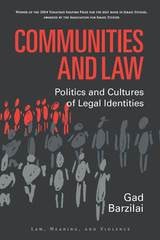
Communities and Law
Politics and Cultures of Legal IdentitiesGad Barzilai
University of Michigan Press, 2005
--Choice
"A remarkable achievement."
--Malcolm Feeley, University of California, Berkeley
"A rich, subtle, and wide-ranging analysis of the complex interaction between law and culture in Israeli society."
--Pnina Lahav, Boston University School of Law
"Barzilai makes a major contribution to thinking about state-society relations, pointing researchers to the plurality of communities harboring different sorts of legal identities, consciousness, and practices."
--Joel Migdal, University of Washington
Communities and Law examines the intersection of communities, cultures, and laws in public life, asking important questions about how nonruling communities confront the law in their efforts to achieve political goals.
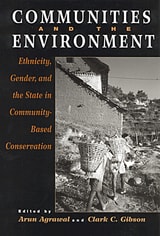
Communities and The Environment
Ethnicity, Gender, and the State in Community-Based ConservationAgrawal, Arun
Rutgers University Press, 2001
For years environmentalists thought natural resources could be best protected by national legislation. But the poor outcomes of this top-down policy have led conservation professionals today to regard local communities as the agents of conservation efforts. According to a recent survey, more than fifty countries report that they pursue partnerships with local communities in an effort to protect their forests. Despite the recent popularity of a community-based approach, the concept of community rarely receives the attention it should get from those concerned with resource management. This balanced volume redresses the situation, demonstrating both the promise and the potential dangers of community action.
Although the contributors advocate community-based conservation, they examine the record with a critical eye. They pay attention to the concrete political contexts in which communities emerge and operate. Understanding the nature of community requires understanding the internal politics of local regions and their relationship to external forces and actors. Especially critical are issues related to ethnicity, gender, and the state.
Communities in Dispute
Current Scholarship on the Johannine EpistlesR. Alan Culpepper
SBL Press, 2014
Presenting the best work on the Johannine Epistles from a world-class gathering of scholars
This anthology includes papers presented at the McAfee School of Theology Symposium on the Johannine Epistles (2010). Contributions on the relationship between the Gospel of John and the Letters of John, Johannine theology and ethics, the concept of the Antichrist, and the role of the elder round out the collection. This is a must-have book for libraries and New Testament scholars.
Features:
- Introductory essay places the collection in context
- Articles engage the work of Raymond Brown and J. Louis Martyn
- Sixteen essays from the Book of Psalms Consultation group and invited scholars
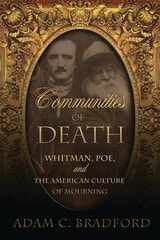
Communities of Death
Whitman, Poe, and the American Culture of MourningAdam C. Bradford
University of Missouri Press, 2014
Communities of Health Care Justice
Galarneau, Charlene
Rutgers University Press, 2016
Communities of Informed Judgment
Newman's Illative Sense and Accounts of RationalityFrederick D. Aquino
Catholic University of America Press, 2004
Communities of Journalism
A History of American Newspapers and Their ReadersDavid Paul Nord
University of Illinois Press, 2006
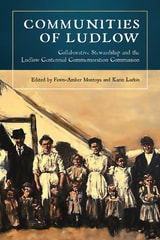
Communities of Ludlow
Collaborative Stewardship and the Ludlow Centennial Commemoration CommissionFawn-Amber Montoya
University Press of Colorado, 2021
The history of the Ludlow Massacre encompasses the stories of immigrant groups, women, the working-class, and people of color as much as the story of that tragedy, and the continued relevance of these issues creates a need for remembrance and discussion of how to make the events of the Ludlow Massacre available to contemporary society. The book outlines recent efforts to remember and commemorate this important historical event, documenting the unique collaborations in public scholarship and outreach among the diverse group of people involved in marking the 100-year anniversary of the Ludlow Massacre. The chapters relate the tales of the stewards of the Ludlow Massacre—the various communities that rallied together to keep this history alive and show its relevance, including lineal descendants, members of the United Mine Workers of America, historians, archaeologists, scholars, artists, interpreters, authors, playwrights, and politicians. The book also offers tips, strategies, and cautionary tales for practicing engaged public scholarship.
The history of the Ludlow Massacre has been told as a tragedy of striking miners in the West that occurred during a turbulent time in US labor relations, but it is so much more than that. Communities of Ludlow explores the intersections of public scholarship, advocacy, and personal experience, weaving these perspectives together with models for practicing public scholarship to illustrate the power of creating spaces for sharing ideas and information in an environment that encourages creativity, open dialogue, public outreach, political action, and alternative narratives.
Contributors: Robert Butero, Robin Henry, Michael Jacobson, Elizabeth Jameson, Linda Linville, Matthew Maher, Yolanda Romero
Communities of Practice
An Alaskan Native Model for Language Teaching and LearningEdited by Patrick E. Marlow and Sabine Siekmann
University of Arizona Press, 2013
In Alaska, the Second Language Acquisition Teacher Education (SLATE) project was designed to enable Indigenous communities and schools to improve the quality of native-language and English-language instruction and assessment by focusing on the elimination of barriers that have historically hindered degree completion for Indigenous and rural teachers. The Guided Research Collaborative (GRC) model, was employed to support the development of communities of practice through near-peer mentoring and mutual scaffolding. Through this important new model, teachers of both the heritage language, in this case Central Yup’ik, and English were able to situate their professional development into a larger global context based on current notions of multilingualism.
In Communities of Practice contributors show how the SLATE program was developed and implemented, providing an important model for improving second-language instruction and assessment. Through an in-depth analysis of the program, contributors show how this project can be successfully adapted in other communities via its commitment to local control in language programming and a model based on community-driven research.
Communities of Practice demonstrates how an initial cohort of Yup’ik- and English-language teachers collaborated to negotiate and ultimately completed the SLATE program. In so doing, these educators enhanced the program and their own effectiveness as teachers through a greater understanding of language learning. It is these understandings that will ultimately allow heritage- and English-language teachers to work together to foster their students’ success in any language.
Communities of Sense
Rethinking Aesthetics and PoliticsBeth Hinderliter, William Kaizen, Vered Maimon, Jaleh Mansoor, and Seth McCormick, eds.
Duke University Press, 2009
The first of the collection’s three sections explicitly examines the links between aesthetics and social and political experience. Here a new essay by Rancière posits art as a key site where disagreement can be staged in order to produce new communities of sense. In the second section, contributors investigate how sense was constructed in the past by the European avant-garde and how it is mobilized in today’s global visual and political culture. Exploring the viability of various models of artistic and political critique in the context of globalization, the authors of the essays in the volume’s final section suggest a shift from identity politics and preconstituted collectivities toward processes of identification and disidentification. Topics discussed in the volume vary from digital architecture to a makeshift museum in a Paris suburb, and from romantic art theory in the wake of Hegel to the history of the group-subject in political art and performance since 1968. An interview with Étienne Balibar rounds out the collection.
Contributors. Emily Apter, Étienne Balibar, Carlos Basualdo, T. J. Demos, Rachel Haidu, Beth Hinderliter, David Joselit, William Kaizen, Ranjanna Khanna, Reinaldo Laddaga, Vered Maimon, Jaleh Mansoor, Reinhold Martin, Seth McCormick, Yates McKee, Alexander Potts, Jacques Rancière, Toni Ross
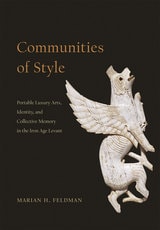
Communities of Style
Portable Luxury Arts, Identity, and Collective Memory in the Iron Age LevantMarian H. Feldman
University of Chicago Press, 2014
Marian H. Feldman brings her dual training as an art historian and an archaeologist to bear on the networks that were essential to the movement and trade of luxury goods—particularly ivories and metal works—and how they were also central to community formation. The interest in, and relationships to, these art objects, Feldman shows, led to wide-ranging interactions and transformations both within and between communities. Ultimately, she argues, the production and movement of luxury goods in the period demands a rethinking of our very geo-cultural conception of the Levant, as well as its influence beyond what have traditionally been thought of as its borders.
Communities of Work
Rural Restructuring in Local and Global ContextsWilliam W. Falk
Ohio University Press, 2003
The image of rural America portrayed in this illuminating study is one that is vibrant, regionally varied, and sometimes heroic. Communities of Work focuses on the ways in which rural people and places are affected by political, social, and economic forces far outside their control and how they sustain themselves and their communities in response.
Bringing together the two fundamental concepts of community—where the relationships and practices of daily life occur—and work, in which an elementary exchange occurs, Communities of Work bridges several fields of study. Presented here is the contextual and embedded nature of social relations and the complexity involved in understanding them. Through the use of multiple case studies, the authors apply diverse theories and methods in seeking an integrated outcome, one captured by “communities of work.”
Beginning with a description of the broad changes in work and economic activities across the United States, ranging from the Ohio River Valley to a western boomtown, the book shifts its focus to the interplay of work, family, and local networks in time and place. Activities range from fishing in the Mississippi Delta to farming and family life in the Midwest. The authors then highlight how rural people and places respond to extra-local, increasingly global forces in settings as diverse as rural South Carolina and Wisconsin.
A certain communitarian theme runs through Communities of Work. It is about people and communities not merely reacting, but instead responding in ways that reflect their local culture, while being cognizant of the larger world within which they live.
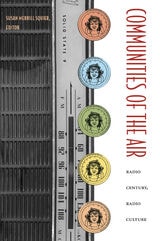
Communities of the Air
Radio Century, Radio CultureSusan Merrill Squier, ed.
Duke University Press, 2003
Drawing on the perspectives of literary and cultural studies, science studies and feminist theory, radio history, and the new field of radio studies, these essays consider the development of radio as technology: how it was modeled on the telephone, early conflicts between for-profit and public uses of radio, and amateur radio (HAMS), local programming, and low-power radio. Some pieces discuss how radio gives voice to different cultural groups, focusing on the BBC and poetry programming in the West Indies, black radio, the history of alternative radio since the 1970s, and science and contemporary arts programming. Others look at radio’s influence on gender (and gender’s influence on radio) through examinations of Queen Elizabeth’s broadcasts, Gracie Allen’s comedy, and programming geared toward women. Together the contributors demonstrate how attention to the variety of ways radio is used and understood reveals the dynamic emergence and transformation of communities within the larger society.
Contributors. Laurence A. Breiner, Bruce B. Campbell, Mary Desjardins, Lauren M. E. Goodlad, Nina Hunteman, Leah Lowe, Adrienne Munich, Kathleen Newman, Martin Spinelli, Susan Merrill Squier, Donald Ulin, Mark Williams, Steve Wurzler
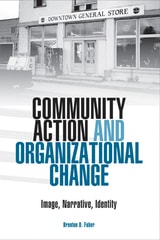
Community Action and Organizational Change
Image, Narrative, IdentityBrenton D. Faber
Southern Illinois University Press, 2002
Brenton D. Faber’s spirited account of an academic consultant’s journey through banks, ghost towns, cemeteries, schools, and political campaigns explores the tenuous relationships between cultural narratives and organizational change.
Blending Faber’s firsthand experiences in the study and implementation of change with theoretical discussions of identity, agency, structure, and resistance within contexts of change, this innovative bookis among the first such communications studies to profile a scholar who is also a full participant in the projects. Drawing on theories of Michel Foucault, Anthony Giddens, and Pierre Bourdieu, Faber notes that change takes place in the realm of narrative, in the stories people tell.
Faber argues that an organization’s identity is created through internal stories. When the organization’s internal stories are consistent with its external stories, the organization’s identity is consistent and productive. When internal stories contradict the external stories, however, the organization’s identity becomes discordant. Change is the process of realigning an organization’s discordant narratives.
Faber discusses the case studies of a change management plan he wrote for a city-owned cemetery, a cultural change project he created for a downtown trade school, and a political campaign he assisted that focused on creating social change. He also includes detailed reflections on practical ways academics can become more involved in their communities as agents of progressive social change. Featuring six illustrations, Faber’s unique study demonstrates in both style and substance how stories work as agents of change.
Community Listening
Stories, Hauntings, PossibilitiesJenn Fishman
University Press of Colorado, 2025
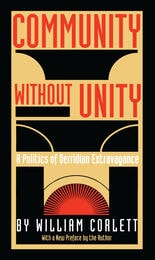
Community Without Unity
A Politics of Derridian ExtravaganceWilliam Corlett
Duke University Press, 1989
Now available in paperback with a new preface by the author, this award-winning book breaks new ground by challenging traditional concepts of community in political theory. William Corlett brings the diverse (and sometimes contradictory) work of Foucault and Derrida to bear on the thought of Pocock, Burke, Lincoln, and McIntyre, among others, to move beyond the conventional dichotomy of "individual vs. community," arguing instead that community is best advanced within a politics of difference.
Community, Cosmopolitanism and the Problem of Human Commonality
Vered Amit and Nigel Rapport
Pluto Press, 2012
In this follow up to their widely read earlier volume, The Trouble with Community, Vered Amit and Nigel Rapport ask: 'Do notions of community remain central to our sense of who we are, in the dislocating context of globalization, or can we see beyond community closures to a human whole?'
This volume explores the variable nature of contemporary sociality. It focuses on the ethical, organizational and emotional claims and opportunities sought or fashioned for mobilizing and evading social collectivities in a world of mobile subjects. Here is an examination of the tensions and interactions between everyday forms of fluid fellowship, culturally normative claims to identity, and opportunities for realizing a universal humanity.
The book offers a new perspective on human commonality through a dialogue between two eminent anthropologists who come from distinct, but complementary positions.

Crime and Justice, Volume 8
Communities and CrimeEdited by Albert J. Reiss Jr. and Michael Tonry
University of Chicago Press Journals, 1987
Examining the ways in which communities both affect crime and are affected by it, this volume seeks to explain the wide variation of crime levels among different communities. As it attempts to redress the bias toward describing crime in terms of individuals, Communities and Crime brings concentrated attention to crime at a community level, suggesting ways in which neighborhoods can change their crime patterns.