Results by title
324 books match the query 'Comparative literature' and 23 start with c
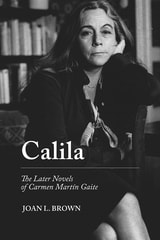
Calila
The Later Novels of Carmen Martín GaiteJoan L. Brown
Bucknell University Press, 2021
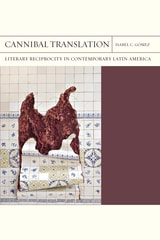
Cannibal Translation
Literary Reciprocity in Contemporary Latin AmericaIsabel C. Gómez
Northwestern University Press, 2023
Winner of the 2024 ACLA Harry Levin Prize • Honorable Mention MLA Katherine Singer Kovacs Prize
A bold comparative study illustrating the creative potential of translations that embrace mutuality and resist assimilation
Cannibal translators digest, recombine, transform, and trouble their source materials. Isabel C. Gómez makes the case for this model of literary production by excavating a network of translation projects in Latin America that includes canonical writers of the twentieth century, such as Haroldo and Augusto de Campos, Rosario Castellanos, Clarice Lispector, José Emilio Pacheco, Octavio Paz, and Ángel Rama. Building on the avant-garde reclaiming of cannibalism as an Indigenous practice meant to honorably incorporate the other into the self, these authors took up Brazilian theories of translation in Spanish to fashion a distinctly Latin American literary exchange, one that rejected normative and Anglocentric approaches to translation and developed collaborative techniques to bring about a new understanding of world literature.
By shedding new light on the political and aesthetic pathways of translation movements beyond the Global North, Gómez offers an alternative conception of the theoretical and ethical challenges posed by this artistic practice. Cannibal Translation: Literary Reciprocity in Contemporary Latin America mobilizes a capacious archive of personal letters, publishers’ records, newspapers, and new media to illuminate inventive strategies of collectivity and process, such as untranslation, transcreation, intersectional autobiographical translation, and transpeaking. The book invites readers to find fresh meaning in other translational histories and question the practices that mediate literary circulation.
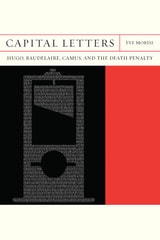
Capital Letters
Hugo, Baudelaire, Camus, and the Death PenaltyÈve Morisi
Northwestern University Press, 2020
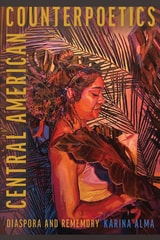
Central American Counterpoetics
Diaspora and RememoryKarina Alma
University of Arizona Press, 2024
Author Karina Alma offers a systemic method and artistic mode for unpacking social and political memory formation that resists dominant histories. Central American Counterpoetics responds to political repression through acts of creativity that prioritize the well-being of anticolonial communities. Building on Toni Morrison’s theory of rememory, the volume examines the concept as an embodied experience of a sensory place and time lived in the here and now. By employing primary sources of image and word, interviews of creatives, and a critical self-reflection as a Salvadoran immigrant woman in academia, Alma’s research breaks ground in subject matter and methods by considering cultural and historical ties across countries, regions, and traditions. The diverse creatives included explore critical perspectives on topics such as immigration, forced assimilation, maternal love, gender violence, community arts, and decolonization.
Challenging the Black Atlantic
The New World Novels of Zapata Olivella and GonçalvesJohn T. Maddox IV
Bucknell University Press, 2021
Published by Bucknell University Press. Distributed worldwide by Rutgers University Press.

Chinese Whispers
Toward a Transpacific PoeticsYunte Huang
University of Chicago Press, 2022
In this new book, the noted critic and best-selling author Yunte Huang explores the dynamics of poetry and poetics in the age of globalization, particularly questions of translatability, universality, and risk in the transpacific context. “Chinese whispers” refers to an American children’s game dating to the years of the Cold War, a period in which everything Chinese, or even Chinese sounding, was suspect. Taking up various manifestations of the phrase in the twentieth and twenty-first centuries, Huang investigates how poetry, always to a significant degree untranslatable, complicates the transpacific production of meanings and values.
The book opens with the efforts of I. A. Richards, arguably the founder of Anglo-American academic literary criticism, to promote Basic English in China in the early twentieth century. It culminates by resituating Ernest Fenollosa’s famous essay “The Chinese Written Character as a Medium for Poetry,” exploring the ways in which Chinese has historically enriched but also entrapped the Western conception of language.
Christ's Subversive Body
Practices of Religious Rhetoric in Culture and PoliticsOlga V. Solovieva; Foreword by Haun Saussy
Northwestern University Press, 2018
Solovieva’s survey includes the iconoclastic polemics of Epiphanius at the moment of struggles for supremacy between the Roman state and the Christian church, the mystical theologico-political alchemy of an anonymous treatise circulated at the Council of Constance, Lavater’s counter-Enlightenment visions of the afterlife expressd through physiognomy, Dostoevsky’s refashioning of ethical communities, Pier Paolo Pasolini’s attempts to provoke the “scandal” of Jesus’s mission once more in the modern world, and the elaboration of a political theology subordinating democratic dissent to the higher unity of a corporately conceived “unitary executive” in early twenty-first-century America.
Solovieva presents her findings not as an entry into theological or Christological debates but rather as a study in comparative discourse analysis. She demonstrates how these uses of Christ’s body are triggered by moments of epistemological, political, and representational crisis in the history of Western civilization.
Civilizing War
Imperial Politics and the Poetics of National RuptureNasser Mufti
Northwestern University Press, 2018
Honorable Mention for the 2019 Sonya Rudikoff Prize, awarded by the Northeast Victorian Studies Association
Civilizing War traces the historical transformation of civil war from a civil affair into an uncivil crisis. Civil war is today synonymous with the global refugee crisis, often serving as grounds for liberal-humanitarian intervention and nationalist protectionism.
In Civilizing War, Nasser Mufti situates this contemporary conjuncture in the long history of British imperialism, demonstrating how civil war has been and continues to be integral to the politics of empire. Through comparative readings of literature, criticism, historiography, and social analysis, Civilizing War shows how writers and intellectuals of Britain’s Anglophone empire articulated a “poetics of national rupture” that defined the metropolitan nation and its colonial others.
Mufti’s tour de force marshals a wealth of examples as diverse as Thomas Carlyle, Benjamin Disraeli, Friedrich Engels, Arthur Conan Doyle, Rudyard Kipling, Joseph Conrad, V. S. Naipaul, Nadine Gordimer, and Michael Ondaatje to examine the variety of forms this poetics takes—metaphors, figures, tropes, puns, and plot—all of which have played a central role in Britain’s civilizing mission and its afterlife. In doing so, Civilizing War shifts the terms of Edward Said’s influential Orientalism to suggest that imperialism was not only organized around the norms of civility but also around narratives of civil war.
Colorblind Tools
Global Technologies of Racial PowerMarzia Milazzo
Northwestern University Press, 2023
Winner of the 2023 Association for Ethnic Studies Outstanding Book Award
A study of anti-Blackness and white supremacy across four continents demonstrates that colorblindness is neither new nor a subtype of racist ideology, but a constitutive technology of racism
In Colorblind Tools, Marzia Milazzo offers a transnational account of anti-Blackness and white supremacy that pushes against the dominant emphasis on historical change pervading current racial theory. This emphasis on change, she contends, misses critical lessons from the past.
Bringing together a capacious archive of texts on race produced in Brazil, Cuba, Mexico, Panama, the United States, and South Africa from multiple disciplines and genres, Milazzo uncovers transnational continuities in structural racism and white supremacist discourse from the inception of colonial modernity to the present. In the process, she traces the global workings of what she calls colorblind tools: technologies and strategies that at once camouflage and reproduce white domination. Whether examining Rijno van der Riet’s defense of slavery in the Cape Colony, discourses of racial mixture in Latin American eugenics and their reverberations in contemporary scholarship, the pitfalls of white “antiracism,” or Chicana indigenist aesthetics, Milazzo illustrates how white people collectively disavow racism to maintain power across national boundaries, and how anti-Black and colonial logics can be reproduced even in some decolonial literatures. Milazzo’s groundbreaking study proves that colorblindness is not new, nor is it a subtype of racist ideology or a hallmark of our era. It is a constitutive technology of racism—a tool the master cannot do without.
Comparative Essays on the Poetry and Prose of John Donne and George Herbert
Combined LightsRussell M. Hillier
University of Delaware Press, 2022
Comparative Perspectives on the Rise of the Brazilian Novel
Edited by Ana Cláudia Suriani da Silva, and Sandra Guardini Vasconcelos
University College London, 2020
Comparative Perspectives on the Rise of the Brazilian Novel presents a framework of comparative literature based on a systemic and empirical approach to the study of the novel and applies that framework to the analysis of key nineteenth-century Brazilian novels. The works under examination were, therefore, published during the period in which the forms and procedures of the novel were acclimatized as the genre established and consolidated itself in Brazil.
The 15 original essays by experienced and early career scholars explore the links between themes, narrative paradigms, and techniques of Brazilian, European and North American novels and the development of the Brazilian novel. The European and North American novels cover a wide range of literary traditions and periods and are in conversation with the different novelistic trends that characterize the rise of the genre in Brazil. Chapters reflect on both canonical and lesser-known Brazilian works from a comparatist perspective.
Complaint
Grievance among FriendsAvital Ronell
University of Illinois Press, 2018
Avital Ronell considers how literature and philosophy treat bellyachers, wailers, and grumps—and the complaints they lavish on the rest of us. Combining her trademark jazzy panache with a fearless range of readings, Ronell opens a dialogue with readers that discusses thinkers with whom she has directly engaged. Beginning with Hamlet, and with a candid awareness of her own experiences, Ronell proceeds to show how complaining is aggravated, distracted, stifled, and transformed. She moves on to the exemplary complaints of Friedrich Nietzsche, Hannah Arendt, and Barbara Johnson and examines the complaint-riven history of deconstruction.
Infused with the author’s trademark wit, Complaint takes friends, colleagues, and all of us on a courageous philosophical journey.
Concepts of the World
The French Avant-Garde and the Idea of the International, 1910–1940Effie Rentzou
Northwestern University Press, 2022
The writers and artists of the French avant-garde aspired to reach a global audience that would be wholly transformed by their work. In this study, Effie Rentzou delves deep into their depictions of the interwar world as an international and modern landscape, one marked by a varied cosmopolitanism. The avant-garde’s conceptualization of the world paralleled, rejected, or expanded prevailing notions of the global sphere.
The historical avant garde—which encompassed movements like futurism, Dada, and surrealism—was self-consciously international, operating across global networks and developed with the whole world as its horizon and its public. In the heady period between the end of the Belle Époque and the tumult of World War II, both individual artists (including Guillaume Apollinaire, Blaise Cendrars, Francis Picabia, Louis Aragon, Leonora Carrington, and Nicolas Calas) and collective endeavors (such as surrealist magazines and exhibitions) grappled with contemporary anxieties about economic growth, imperialism, and colonialism, as well as various universalist, cosmopolitan, and internationalist visions. By probing these works, Concepts of the World offers an alternative narrative of globalization, one that integrates the avant-garde’s enthusiasm for, as well as resistance to, the process. Rentzou identifies within the avant-garde a powerful political language that expressed the ambivalence of living and creating in an increasingly globalized world—a language that profoundly shaped the way the world has been conceptualized and is experienced today.
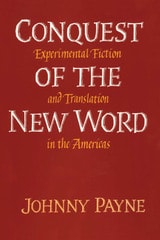
Conquest of the New Word
Experimental Fiction and Translation in the AmericasBy Johnny Payne
University of Texas Press, 1993
Latin American fiction won great acclaim in the United States during the 1960s, when many North American writers and critics felt that our national writing had reached a low ebb. In this study of experimental fiction from both Americas, Johnny Payne argues that the North American reception of the "boom" in Latin American fiction distorted the historical grounding of this writing, erroneously presenting it as mainly an exotic "magical realism." He offers new readings that detail the specific, historical relation between experimental fiction and various authors' careful, deliberate deformations and reformations of the political rhetoric of the modern state.
Payne juxtaposes writers from Argentina and Uruguay with North American authors, setting up suggestive parallels between the diverse but convergent practices of writers on both continents. He considers Nelson Marra in conjunction with Donald Barthelme and Gordon Lish; Teresa Porzecanski with Harry Mathews; Ricardo Piglia with John Barth; Silvia Schmid and Manuel Puig with Fanny Howe and Lydia Davis; and Jorge Luis Borges and Luisa Valenzuela with William Burroughs and Kathy Acker.
With this innovative, dual-continent approach, Conquest of the New Word will be of great interest to everyone working in Latin American literature, women's studies, translation studies, creative writing, and cultural theory.
Contemporary French and Francophone Narratology
Edited by John Pier
The Ohio State University Press, 2020
The essays included in this collection seek to take the pulse of recent developments in narratological research in the French-speaking countries. Theorists in these countries heavily participated in and shaped narratology, an outgrowth of the structuralist movement during the 1960s and 1970s. While US, German, and Scandinavian theorists took the forefront in the 1990s, narratology in France faded into the background. It was not until the turn of the century that a new interest in narratological issues among French researchers emerged. Activity in the field has since intensified, spurred on, in part, by the realization that narratology cannot be summed up by its formalist and structuralist origins.
Well-versed in French narrative theory, both classical and more recent, the authors in this collection also draw on scholarship coming from other research traditions. The result is that these contributions offer a number of syntheses and perspectives representative of recent French-language scholarship in the field that readers may not be familiar with or that provide them with further insight into subjects they may have encountered in other contexts. This volume will leave readers with a greater awareness of the directions taken by present-day French-language narratology as well as new and developing themes in narrative theory generally.
Contributors
Raphaël Baroni, Denis Bertrand, Olivier Caïra, Claude Calame, Benoît Hennaut, Françoise Lavocat, Sylvie Patron, John Pier, Françoise Revaz, and Richard Saint-Gelais
Context in Literary and Cultural Studies
Edited by Jakob Ladegaard and Jakob Gaardbo Nielsen
University College London, 2019
Introducing readers to new developments in literary and cultural theory, Context in Literary and Cultural Studies connects all disciplines related to these areas to provide an interdisciplinary overview of the challenges different scholarly fields today meet in their studies of artworks in context. Spanning a number of countries and covering subjects from nineteenth-century novels to rave culture, the chapters together constitute an informed, diverse and wide-ranging discussion. The volume is written for scholarly readers at all levels in the fields of literary studies, comparative literature, cultural studies, art history, film, theater studies, and digital humanities.
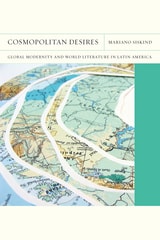
Cosmopolitan Desires
Global Modernity and World Literature in Latin AmericaMariano Siskind
Northwestern University Press, 2014
Mariano Siskind’s groundbreaking debut book redefines the scope of world literature, particularly regarding the place of Latin America in its imaginaries and mappings. In Siskind’s formulation, world literature is a modernizing discursive strategy, a way in which cultures negotiate their aspirations to participate in global networks of cultural exchange, and an original tool to reorganize literary history. Working with novels, poems, essays, travel narratives, and historical documents, Siskind reads the way Latin American literary modernity was produced as a global relation, from the rise of planetary novels in the 1870s and the cosmopolitan imaginaries of modernism at the turn of the twentieth century, to the global spread of magical realism. With its unusual breadth of reference and firm but unobtrusive grounding in philosophy, literary theory, and psychoanalysis, Cosmopolitan Desires will have a major impact in the fields of Latin American studies and comparative literature.
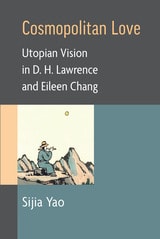
Cosmopolitan Love
Utopian Vision in D. H. Lawrence and Eileen ChangSijia Yao
University of Michigan Press, 2023
Finalist: 2024 Southern Atlantic Modern Language Association (SAMLA) Book Award Finalist | 05/21/2024
Love, and the different manifestations of it, is a common theme in literature around the world. In Cosmopolitan Love, Sijia Yao examines the writings of D. H. Lawrence, a British writer whose literature focused primarily on interpersonal relationships in domestic settings, and Eileen Chang, a Chinese writer who migrated to the United States and explored Chinese heterosexual love in her writing. While comparing the writings of a Chinese writer and an English one, Yao avoids a direct comparison between East and West that could further enforce binaries. Instead, she uses the comparison to develop an idea of cosmopolitanism that shows how the writers are in conversation with their own culture and with each other. Both D. H. Lawrence and Eileen Chang wrote stories that are influenced by—but sometimes stand in opposition to—their own cultures. They offer alternative understandings of societies dealing with modernism and cultural globalization. Their stories deal with emotional pain caused by the restrictions of local politics and economics and address common themes of incestuous love, sexual love, adulterous love, and utopian love. By analyzing their writing, Yao demonstrates that the concept of love as a social and political force can cross cultural boundaries and traditions to become a basis for human meaning, the key to a cosmopolitan vision.
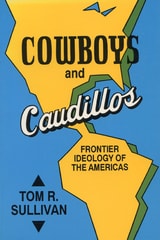
Cowboys and Caudillos
Frontier Ideology of the AmericasTom R. Sullivan
University of Wisconsin Press, 1990
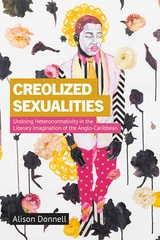
Creolized Sexualities
Undoing Heteronormativity in the Literary Imagination of the Anglo-CaribbeanAlison Donnell
Rutgers University Press, 2022
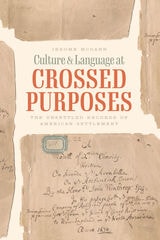
Culture and Language at Crossed Purposes
The Unsettled Records of American SettlementJerome McGann
University of Chicago Press, 2022
Classic American literature, Jerome McGann argues, is haunted by the betrayal of seventeenth- and eighteenth-century Indian treaties—“a stunned memory preserved in the negative spaces of the treaty records.” A noted scholar of the “textual conditions” of literature, McGann investigates canonical works from the colonial period, including the Arbella sermon and key writings of William Bradford, John Winthrop, Anne Bradstreet, Cotton Mather’s Magnalia, Benjamin Franklin’s celebrated treaty folios and Autobiography, and Thomas Jefferson’s Notes on the State of Virginia. These are highly practical, purpose-driven works—the record of Enlightenment dreams put to the severe test of dangerous conditions. McGann suggests that the treaty-makers never doubted the unsettled character of what they were prosecuting, and a similar conflicted ethos pervades these works. Like the treaty records, they deliberately test themselves against stringent measures of truth and accomplishment and show a distinctive consciousness of their limits and failures. McGann’s book is ultimately a reminder of the public importance of truth and memory—the vocational commitments of humanist scholars and educators.
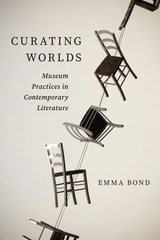
Curating Worlds
Museum Practices in Contemporary LiteratureEmma Bond
Northwestern University Press, 2025
Showing how museum practices shed new light on literary form
How and why do books deploy objects in order to narrate the past? To answer this question, Emma Bond sifts through collections of objects stored in boxes, drawers, baskets, and displayed on shelves in contemporary texts by authors such as Valeria Luiselli, Maaza Mengiste, Orhan Pamuk, and Olga Tokarczuk and interprets them using a framework of museum practices. These practices, which include collection, curation, conservation, and display, have helped to turn real-life museums into three-dimensional narrative spaces. Curating Worlds: Museum Practices in Contemporary Literature shows how we can use this same set of practices to shed light on literary form itself: how stories are created, shaped, and communicated. Harnessing museum practices as an innovative lens for critical interpretation, Bond provides a fresh theoretical framework to engage with the meanings of object collections in literature and to make sense of the lives, and afterlives, of things today.
Cyborgs, Sexuality, and the Undead
The Body in Mexican and Brazilian Speculative FictionM. Elizabeth Ginway
Vanderbilt University Press, 2020
In Cyborgs, Sexuality, and the Undead, M. Elizabeth Ginway examines all these issues from a number of theoretical perspectives, most importantly through the lens of Bolívar Echeverría’s “baroque ethos,” which emphasizes the strategies that subaltern populations may adopt in order to survive and prosper in the face of massive historical and structural disadvantages. Foucault’s concept of biopolitics is developed in discussion with Roberto Esposito’s concept of immunity and Giorgio Agamben’s distinction between “political life” and “bare life.”
This book will be of interest to scholars of speculative fiction, as well as Mexicanists and Brazilianists in history, literary studies, and critical theory.