Results by title
103 books match the query 'Conservation' and 15 start with c
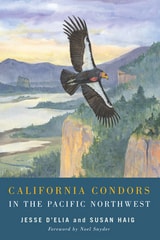
California Condors in the Pacific Northwest
Jesse D'Elia and Susan M. Haig
Oregon State University Press, 2013
Despite frequent depiction as a bird of California and the desert southwest, North America’s largest avian scavenger once graced the skies of the Pacific Northwest, from northern California to British Columbia. This important volume documents the condor’s history in the region, from prehistoric times to the early twentieth century, and explores the challenges of reintroduction.
Jesse D’Elia and Susan Haig investigate the paleontological and observational record as well as the cultural relationships between Native American tribes and condors, providing the most complete assessment to date of the condor’s occurrence in the Pacific Northwest. They evaluate the probable causes of regional extinction and the likelihood that condors once bred in the region, and they assess factors that must be considered in determining whether they could once again thrive in Northwest skies.
Incorporating the newest research and findings and more than eighty detailed historical accounts of human encounters with these birds of prey, California Condors in the Pacific Northwest sets a new standard for examining the historical record of a species prior to undertaking a reintroduction effort. It is a vital reference for academics, agency decision makers, conservation biologists, and readers interested in Northwest natural history. The volume is beautifully illustrated by Ram Papish and includes a number of previously unpublished photographs.
Carey Act and Conservation in Colorado
Gerald C. Morton
University Press of Colorado, 2024
Morton contextualizes the Carey Act’s significance in Colorado through a study of the Two Buttes and Muddy Creek projects in the state’s southeastern corner—tragic examples of the disconnect among developers seeking windfall profits in the face of financial rollercoasters, the challenge of reclaiming remote sagebrush country, and settlers seeking viable livelihoods that eventually led conservationists to reimagine the failures as public wildlife refuges. A collision of values between developers and settlers lay at the center of those wildlife habitat conservation efforts, forcing people to rethink their relationship with the land and ephemeral streams—an awareness that correlated with the advent of modern ecology.
The Carey Act and Conservation in Colorado is the untold story of the manipulation of nature and the reconceived use of land for public wildlife areas on the southern plains of the American West. Offering original research on arid lands policy, federal and state agency oversight, irrigation bond financing, heartbroken settlers’ grievances, individual developers’ motives, and the rise of wildlife conservation, this compelling tale of misfortune will appeal to scholars and general readers interested in conservationist and environmental history in the American West.
Chasing Giants
In Search of the World's Largest Freshwater FishZeb Hogan
University of Nevada Press, 2023
On May 1, 2005, a Thai fisherman caught a truly monstrous Mekong giant catfish. At 646 pounds, it captured the world’s attention, and with awe and wonder, it was deemed the largest freshwater fish on record. There was no denying its size, but when biologist and research associate professor Hogan saw a photo of the fish, he wondered if it really was the biggest in the world. To his surprise, no one had systematically sought to answer the question: Which of the giant freshwater species really was the largest?
Seeking to answer that question has brought Hogan face to face with massive arapaima and piranha in the Amazon, alligator gar in Texas, pigeon-eating wels catfish in France, stingrays in Cambodia, and the gnarled-toothed sawfish in Australia. Part of his scientific adventure has been captured on Monster Fish, and Hogan now tells the full story of his 25-year quest to understand the mysteries of some of the oldest, largest, most bizarre creatures on Earth.
The fate of these giant fish motivates Hogan to understand the various species he studies. The megafish’s numbers are dwindling, and the majority of them face extinction. In this book, he teams up with award-winning journalist Stefan Lovgren to tell, for the first time, the remarkable and troubling story of the world’s largest freshwater fish. It is a story that stretches across the globe, chronicling a race against the clock to find and protect these ancient leviathans before they disappear forever.
Chasing Giants: In Search of the World’s Largest Freshwater Fish combines science, adventure, and wonder to provide insights into the key role the massive fish of our lakes and rivers play in our past, present, and future.
Chimpanzees in Context
A Comparative Perspective on Chimpanzee Behavior, Cognition, Conservation, and WelfareEdited by Lydia M. Hopper and Stephen R. Ross
University of Chicago Press, 2020
After a foreword by Jane Goodall, the book features sections that examine chimpanzee life histories and developmental milestones, behavior, methods of study, animal communication, cooperation, communication, and tool use. The book ends with chapters that consider how we can apply contemporary knowledge of chimpanzees to enhance their care and conservation. Collectively, these chapters remind us of the importance of considering the social, ecological, and cognitive context of chimpanzee behavior, and how these contexts shape our comprehension of chimpanzees. Only by leveraging these powerful perspectives do we stand a chance at improving how we understand, care for, and protect this species.
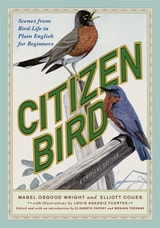
Citizen Bird
Scenes from Bird-Life in Plain English for Beginners, A Critical EditionMabel Osgood Wright
Rutgers University Press, 2025
Born of a collaboration between naturalist Mabel Osgood Wright, ornithologist Elliott Coues, and bird artist Louis Agassiz Fuertes, the book is vital to the history of birding and the broader study of nineteenth-century American culture and literature. This new edition of Citizen Bird preserves the original book’s 111 drawings and adds explanatory footnotes, supplemental historical material, and a new introduction. More than a century and a quarter after its original publication, Elizabeth Cherry and Meghan Freeman contextualize the book in the tradition and history of birding and discuss the roles of its authors and illustrator in birding history. A landmark text in the history of American conservationism, Citizen Bird is a timeless classic that will bring joy to birdwatchers of all ages.
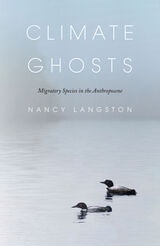
Climate Ghosts
Migratory Species in the AnthropoceneNancy Langston
Brandeis University Press, 2021
Environmental historian Nancy Langston explores three “ghost species” in the Great Lakes watershed—woodland caribou, common loons, and lake sturgeon. Ghost species are those that have not gone completely extinct, although they may be extirpated from a particular area. Their traces are still present, whether in DNA, in small fragmented populations, in lone individuals roaming a desolate landscape in search of a mate. We can still restore them if we make the hard choices necessary for them to survive. In this meticulously researched book, Langston delves into how climate change and human impact affected these now ghost species. Climate Ghosts covers one of the key issues of our time.
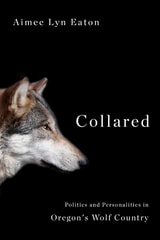
Collared
Politics and Personalities in Oregon's Wolf CountryAimee Lyn Eaton
Oregon State University Press, 2013
Teeming with the tension and passion that accompany one of North America’s most controversial apex predators, Collared tracks the events that unfolded when wolves from the reintroduced population of the northern Rocky Mountains dispersed west across state lines into Oregon.
In a forthright and personal style, Aimee Lyn Eaton takes readers from meeting rooms in the state capitol to ranching communities in the rural northeast corner of the state. Using on-the-ground inquiry, field interviews, and in-depth research, she shares the story of how wolves returned to Oregon and the repercussions of their presence in the state.
Collared: Politics and Personalities in Oregon’s Wolf Country introduces readers to the biologists, ranchers, conservationists, state employees, and lawyers on the front lines, encouraging a deeper, multifaceted understanding of the controversial and storied presence of wolves in Oregon.
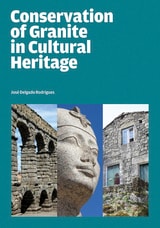
Conservation of Granite in Cultural Heritage
José Delgado Rodrigues
J. Paul Getty Trust, The, 2025
The field of stone conservation has long needed a holistic perspective that embraces the needs of conservation professionals and provides scientific support to enable them to better analyze preservation issues and implement efficient, long-lasting treatments. Conservation of Granite in Cultural Heritage offers such a perspective by bridging scholarly research on the available literature related to granite decay and best practices from conservators working in the field and laboratory.
First offering an overview of granitic rocks and their natural weathering, this volume then outlines the issues that arise when removing granite from quarries and incorporating it into what eventually becomes built heritage. Case studies are presented alongside guidelines for assessing conservation problems. This book will serve as a fundamental manual for students, conservation scientists, conservators, and restorers alike.
Conservation of Natural and Cultural Heritage in Kenya
Edited by Anne-Marie Deisser and Mugwima Njuguna
University College London, 2016
Conserving Migratory Pollinators and Nectar Corridors in Western North America
Gary Paul Nabhan
University of Arizona Press, 2004
This book, a unique work of comparative zoogeography and conservation biology, is the first to bring together studies of these important migratory pollinators and of what we must do to conserve them. It considers the similarities and differences among the behavior and habitat requirements of several species of migratory pollinators and seed dispersers in the West—primarily rufous hummingbirds, white-winged doves, lesser long-nosed bats, and monarch butterflies. It examines the population dynamics of these four species in flyways that extend from the Pacific Ocean to the continental backbone of the Sierra Madre Oriental and Rocky Mountains, and it investigates their foraging and roosting behaviors as they journey from the Tropic of Cancer in western Mexico into the deserts, grasslands, and thornscrub of the U.S.-Mexico borderlands. The four pollinators whose journeys are traced here differ dramatically from one another in foraging strategies and stopover fidelities, but all challenge many of the truisms that have emerged regarding the status of migratory species in general. The rufous hummingbird makes the longest known avian migration in relation to body size and is a key to identifying nectar corridors running through northwestern Mexico to the United States. And there is new evidence to challenge the long-supposed separation of eastern and western monarch butterfly populations by the Rocky Mountains as these insects migrate.
Conserving Migratory Pollinators and Nectar Corridors in Western North America demonstrates new efforts to understand migratory species and to determine whether their densities, survival rates, and health are changing in response to changes in the distribution and abundance of nectar plants found within their ranges. Representing collaborative efforts that bridge field ecology and conservation biology in both theory and practice, it is dedicated to safeguarding dynamic interactions among plants and pollinators that are only now being identified.
Contesting Leviathan
Activists, Hunters, and State Power in the Makah Whaling ConflictLes Beldo
University of Chicago Press, 2019
In Contesting Leviathan, anthropologist Les Beldo describes the complex judicial and political climate for whale conservation in the United States, and the limits of the current framework in which whales are treated as “large fish” managed by the National Marine Fisheries Service. Emphasizing the moral dimension of the conflict between the Makah, the US government, and antiwhaling activists, Beldo brings to light the lived ethics of human-animal interaction, as well as how different groups claim to speak for the whale—the only silent party in this conflict. A timely and sensitive study of a complicated issue, this book calls into question anthropological expectations regarding who benefits from the exercise of state power in environmental conflicts, especially where indigenous groups are involved. Vividly told and rigorously argued, Contesting Leviathan will appeal to anthropologists, scholars of indigenous culture, animal activists, and any reader interested in the place of animals in contemporary life.
Cougar
Ecology and ConservationEdited by Maurice Hornocker and Sharon Negri
University of Chicago Press, 2009
The cougar is one of the most beautiful, enigmatic, and majestic animals in the Americas. Eliciting reverence for its grace and independent nature, it also triggers fear when it comes into contact with people, pets, and livestock or competes for hunters’ game. Mystery, myth, and misunderstanding surround this remarkable creature.
The cougar’s range once extended from northern Canada to the tip of South America, and from the Pacific to the Atlantic, making it the most widespread animal in the western hemisphere. But overhunting and loss of habitat vastly reduced cougar numbers by the early twentieth century across much of its historical range, and today the cougar faces numerous threats as burgeoning human development encroaches on its remaining habitat.
When Maurice Hornocker began the first long-term study of cougars in the Idaho wilderness in 1964, little was known about this large cat. Its secretive nature and rarity in the landscape made it difficult to study. But his groundbreaking research yielded major insights and was the prelude to further research on this controversial species.
The capstone to Hornocker’s long career studying big cats, Cougar is a powerful and practical resource for scientists, conservationists, and anyone with an interest in large carnivores. He and conservationist Sharon Negri bring together the diverse perspectives of twenty-two distinguished scientists to provide the fullest account of the cougar’s ecology, behavior, and genetics, its role as a top predator, and its conservation needs. This compilation of recent findings, stunning photographs, and firsthand accounts of field research unravels the mysteries of this magnificent animal and emphasizes its importance in healthy ecosystem processes and in our lives.
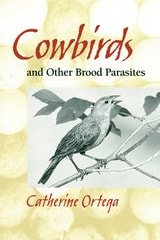
Cowbirds and Other Brood Parasites
Catherine P. Ortega
University of Arizona Press, 1998
In this timely book, Catherine Ortega summarizes and synthesizes a wealth of information on cowbirds from around the world that has appeared since the publication of Herbert Friedmann's classic 1929 monograph on these birds. Most of this information has appeared in the last quarter-century and reflects advances in our understanding of how brood parasitism influences, and is influenced by, host species. Ortega shows that in order to manage cowbirds without further damaging delicate balances in host-parasite relationships, it is necessary to understand such factors as behavior, reproduction, population dynamics, and response to landscape patterns. She examines and explains the origin, evolution, and costs of brood parasitism, and she discusses the philosophical and ecological considerations regarding the management of cowbirds—a controversial issue because of their perceived influence on threatened and endangered birds.
Because brood parasitism has evolved independently in various bird families, information on this adaptive strategy is of great ecological interest and considerable value to wildlife management. Cowbirds and Other Brood Parasites is an important reference on these creatures that enhances our understanding of both their behavior and their part in the natural world.
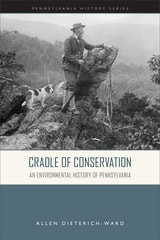
Cradle of Conservation
An Environmental History of PennsylvaniaAllen Dieterich-Ward
Temple University Press, 2024
Cradle of Conservation moves across time and place, from the Haudenosaunee people of the Susquehanna Valley, to the iron furnaces of nineteenth-century Pittsburgh, to the diesel trucks on the twentieth-century Pennsylvania Turnpike. In addition, Dieterich-Ward explores the histories of Philadelphia’s Schuylkill River and the state’s anthracite region and traces the environmental movements and crises that have led to public policy changes in the face of climate change.
Cradle of Conservation deepens our understanding of how Pennsylvanians have conserved and consumed.
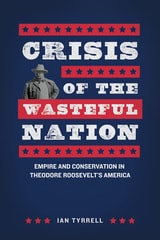
Crisis of the Wasteful Nation
Empire and Conservation in Theodore Roosevelt's AmericaIan Tyrrell
University of Chicago Press, 2014
In Crisis of the Wasteful Nation, Ian Tyrrell gives us a cohesive picture of Roosevelt’s engagement with the natural world along with a compelling portrait of how Americans used, wasted, and worried about natural resources in a time of burgeoning empire. Countering traditional narratives that cast conservation as a purely domestic issue, Tyrrell shows that the movement had global significance, playing a key role in domestic security and in defining American interests around the world. Tyrrell goes beyond Roosevelt to encompass other conservation advocates and policy makers, particularly those engaged with shaping the nation’s economic and social policies—policies built on an understanding of the importance of crucial natural resources. Crisis of the Wasteful Nation is a sweeping transnational work that blends environmental, economic, and imperial history into a cohesive tale of America’s fraught relationships with raw materials, other countries, and the animal kingdom.