Results by title
345 books match the query 'Design' and 27 start with c
CASE 5.1 Boston MedFlight
Leveraging Data to Design a New Helicopter AlgorithmMatthew Kriegsman
Brandeis University Press, 2024
Chance or Dance
An Evaluation of DesignJimmy H. Davis
Templeton Press, 2008
Chance or Dance provides an overview of design and clarification of the controversial Intelligent Design (ID) movement and ultimately concludes there is no scientific proof behind Intelligent Design. As the controversy over Intelligent Design has grown over the past few years, there is a tendency to confuse all statements about design with the Intelligent Design movement and to confuse any affirmation of creation with Scientific Creationism. Davis and Poe begin with a brief historical perspective of the design argument and then examine the significant breakthroughs in cosmology, math, physics, chemistry, and biology that have provided renewed speculation in design.
The authors discuss that the idea of design is far more expansive than the ID movement’s version of it, evaluate Dawkins’ interpretation of genetic determinism, include a chapter that explores the tendency since Darwin to assume that the presence of an observable cause excludes the possibility of divine involvement; and introduce further reflections on wonder and awe that take into account the recent surge of interest in this area. The book concludes with an argument for the correlation between faith and sensory experience and suggests that science has successfully described processes but failed to explain origins.
Chance or Dance is ideal for students and general readers interested in understanding how modern science gives evidence for nature’s creation by the Bible’s God.

Chimera
The Expanded Body for a New Ecosophy of the ArtsMarco Mancuso
Intellect Books, 2026
Exploring the evolving relationship between the human body, technoscience, and the environment, Chimera introduces the concept of the “expanded body” as a transdisciplinary meeting point between art, design, technology, and science. Through a critical examination of developments such as biomechanics, prosthetics, body hacking, and biotechnology, the book investigates how these innovations alter our bodily, sensory, and cognitive capacities. Providing a unique methodological systematization of the main ecological and posthuman philosophy theories, it argues for a new framework in which the human is deeply entangled with both human and nonhuman elements in a shared environment.
Building on ideas from both past and present—ranging from twentieth-century research to current discussions in neuroscience, design, and media theory—Chimera offers a thoughtful response to common fears about futures driven by technology and science. Instead of imagining a world dominated by machines or centered only on human needs, the book imagines fluid, queer, and nonhierarchical relational models between human bodies and the environment. Essential reading for scholars and students in contemporary art, new media, science and technology studies, and environmental and posthuman studies, Chimera also speaks to a wider audience interested in how technology and science are reshaping our understanding of life, identity, and ethical coexistence.
Christina Rossetti and Illustration
A Publishing HistoryLorraine Janzen Kooistra
Ohio University Press, 2002
Readers do not always take into account how books that combine image and text make their meanings. But for the Pre-Raphaelite poet Christina Rossetti, such considerations were central.
Christina Rossetti and Illustration maps the production and reception of Rossetti’s illustrated poetry, devotional prose, and work for children, both in the author’s lifetime and in posthumous twentieth-century reprints.
Lorraine Janzen Kooistra’s reading of Rossetti’s illustrated works reveals for the first time the visual-verbal aesthetic that was fundamental to Rossetti’s poetics. Her exhaustive archival research brings to light new information on how Rossetti’s commitment to illustration and attitudes to copyright and control influenced her transactions with publishers and the books they produced. Janzen Kooistra also tracks the poet’s reception in the twentieth century through a complex web of illustrated books produced for a wide range of audiences.
Analyzing an impressive array of empirical data, Janzen Kooistra shows how Rossetti’s packaging for commodity consumption—by religious presses, publishers of academic editions and children’s picture books, and makers of erotica and collectibles—influenced the reception of her work and her place in literary history.
Circuit Analysis and Design
Fawwaz T. Ulaby, Michel M. Mahabiz, & Cynthia M. Furse
Michigan Publishing Services, 2018
Circuit Analysis and Design
Fawwaz T. Ulaby, Michel M. Mahabiz, & Cynthia M. Furse
Michigan Publishing Services, 2018
(1) It should introduce the fundamental principles of circuit analysis and equip the student with the skills necessary to analyze any planar, linear circuit, including those driven by dc or ac sources, or by more complicated waveforms such as pulses and exponentials.
(2) It should start the student on the journey of circuit design.
(3) It should guide the student into the seemingly magical world of domain transformations—such as the Laplace and Fourier transforms, not only as circuit analysis tools, but also as mathematical languages that are “spoken” by many fields of science and engineering.
(4) It should expand the student’s technical horizon by introducing him/her to some of the many allied fields of science and technology.
Circuit Analysis and Design
Fawwaz Ulaby
Michigan Publishing Services, 2025
(1) It should introduce the fundamental principles of circuit analysis and equip the student with the skills necessary to analyze any planar, linear circuit, including those driven by dc or ac sources, or by more complicated waveforms such as pulses and exponentials.
(2) It should start the student on the journey of circuit design.
(3) It should guide the student into the seemingly magical world of domain transformations—such as the Laplace and Fourier transforms, not only as circuit analysis tools, but also as mathematical languages that are “spoken” by many fields of science and engineering.
(4) It should expand the student’s technical horizon by introducing him/her to some of the many allied fields of science and technology.
This book aims to accomplish exactly those objectives. Among its distinctive features are:
Technology Briefs: The book contains 32 Technology Briefs, each providing an overview of a topic that every electrical and computer engineering professional should become familiar with. Electronic displays, data storage media, sensors and actuators, supercapacitors, and 3-D imaging are typical of the topics shared with the reader. The Briefs are presented at a technical level intended to introduce the student to how the concepts in the chapter are applied in real-world applications and to interest the reader in pursuing the subject further on his/her own. Technology Briefs cover applications in circuits, medicine, the physical world, optics, signals and systems, and more.
Application Notes: Most chapters include a section focused on how certain devices or circuits might be used in practical applications. Examples include power supplies, CMOS inverters in computer processors, signal modulators, and several others.
Multisim and MathScript: Multisim is a SPICE circuit simulator available from National Instruments (see cad.eecs.umich.edu for details). Multisim is highlighted through many end-of-chapter demonstrations. The student is strongly encouraged to take advantage of this rich resource. The Math-Script software can perform matrix inversion and many other calculations, much like the MathWorks, Inc. MATLAB® software.
Clothing Goes to War
Creativity Inspired by Scarcity in World War IINan Turner
Intellect Books, 2021
Manufacturing for civilians across the globe nearly stopped at the outset of World War II, as outfitting troops took precedence over nonmilitary production. Raw materials were prioritized for the armed forces and the majority of nonmilitary factories were shifted to war work, resulting in shortages and rationing of consumer products. Civilians, especially women, responded to the resulting scarcity of goods by using ingenuity and creativity to “make do.” In Clothing Goes to War, Nan Turner offers a critical look at some of the resourceful results of this period as necessity paved the way for fashionable invention.

Code of Practice for Grid-connected Solar Photovoltaic Systems
Design, specification, installation, commissioning, operation and maintenanceThe Institution of Engineering and Technology
The Institution of Engineering and Technology, 2015
Commodification and Spectacle in Architecture
A Harvard Design Magazine ReaderWilliam Saunders
University of Minnesota Press, 2005
Framed with a provocative introduction by Kenneth Frampton, the contributions to Commodification and Spectacle in Architecture stake out a variety of positions in the debate over the extent to which it is possible—or desirable—to escape from, resist, or suggest plausible alternatives to the dominant culture of consumer capitalism. Rejecting any dreamy nostalgia for an idealized present or past in which design is completely divorced from commerce—and, in some cases, celebrating the pleasures of spectacle—the individual essays range from indictments of particular architects and critiques of the profession to broader concerns about what the phenomenon of commodification means for the practice of democracy and the health of society.
Bringing together an impressive and varied group of critics and practitioners, Commodification and Spectacle in Architecture will help to sharpen the discussion of how design can respond to our hypercommodified culture.
Contributors: Michael Benedikt, Luis Fernández-Galiano, Thomas Frank, Kevin Ervin Kelley, Daniel Naegele, Rick Poynor, Michael Sorkin, Wouter Vanstiphout.
William S. Saunders is editor of Harvard Design Magazine and assistant dean for external relations at the Harvard Design School. He is the author of Modern Architecture: Photographs by Ezra Stoller.
Kenneth Frampton is Ware Professor of Architecture at Columbia University Graduate School of Architecture, Planning, and Preservation and author of many books, including Labour, Work, and Architecture.
Concrete Changes
Architecture, Politics, and the Design of Boston City HallBrian M. Sirman
University of Massachusetts Press, 2018
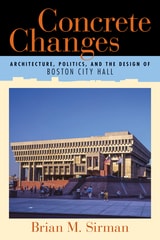
And yet Boston City Hall frequently ranks among the country's ugliest buildings. Concrete Changes seeks to answer a common question for contemporary viewers: How did this happen? In a lively narrative filled with big personalities and newspaper accounts, Brian M. Sirman argues that this structure is more than a symbol of Boston's modernization; it acted as a catalyst for political, social, and economic change.
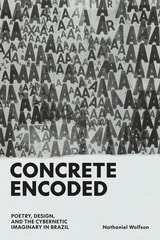
Concrete Encoded
Poetry, Design, and the Cybernetic Imaginary in BrazilNathaniel Wolfson
University of Texas Press, 2025
A study of concrete art and poetry, its implications, and influence in Brazil.
Concrete art and poetry burst onto Brazil’s cultural stage in the 1950s, while the country was embarking on a dizzying period of modernization. Bringing together key poets and visual artists alongside less recognized figures, Nathaniel Wolfson shows that concretism was hardly socially inert, as pundits have suggested. Rather, it presciently grappled with an emerging information age that would soon reorganize human relations globally.
Concrete Encoded describes a nascent cybernetic imaginary. Concretism has long been considered Brazil’s most global aesthetic movement. Wolfson traces new circles of international theorists and practitioners involved in critical technological thought. Wolfson argues that concrete poetry is the quintessential literary genre of the early information age. He shows that Brazilian poets, artists, and designers contested the military dictatorship’s technological authoritarianism and information-gathering operations. Vigorous experimentalists, their attention to form and semantics unveiled both the creative and nefarious possibilities of algorithmic writing. A highly original work, Concrete Encoded reckons with aesthetic responses from Brazil to an advancing capitalist and digital era.
Contemporary Design Education in Australia
Creating Transdisciplinary FuturesEdited by Lisa Scharoun, Deanna Meth, Philip Crowther, et al.
Intellect Books, 2023
This book offers a range of approaches to teaching higher education design students to learn to design collaboratively and creatively, through transdisciplinary, multidisciplinary, cross-disciplinary, and interdisciplinary learning experiences. It highlights that the premise of traditional disciplinary silos does little to advance the competencies needed for contemporary design and non-linear career paths and emphasizes the importance of higher education being responsive to changes in society, including fluctuating market demands, economic variations, uncertainties, and globalization. Chapters highlight approaches that address this changing landscape, to meet student, industry, and societal needs and reflect a range of design education contexts in which the authors have taught, with a focus on experiences at the Queensland University of Technology (QUT), Brisbane, Australia, but also including collaborations and comparative discussions elsewhere in Australia and globally, including Europe, Asia, the Middle East, and the United States.
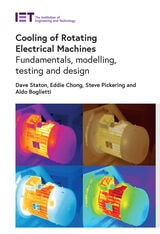
Cooling of Rotating Electrical Machines
Fundamentals, modelling, testing and designDavid Staton
The Institution of Engineering and Technology, 2022
Copenhagen Chic
A Locational History of Copenhagen FashionEdited by Katrina Sark
Intellect Books, 2023
Copenhagen has long been celebrated for its unique fashion, design, innovation, and sustainability practices, yet there has never been a comprehensive history of Copenhagen fashion and its current innovation and sustainability drive. This book fills that gap, assembling a multidisciplinary roster of contributors to examine all aspects of Copenhagen fashion and culture. Grounded in a broad context of Danish culture, industry, media, technology, sustainability, and innovation practices within the wider cultural and economic fields of fashion, the book helps us understand what makes Copenhagen unique.
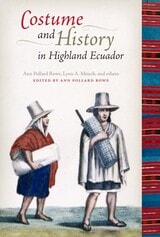
Costume and History in Highland Ecuador
Edited by Ann Pollard Rowe
University of Texas Press, 2011
The traditional costumes worn by people in the Andes—women's woolen skirts, men's ponchos, woven belts, and white felt hats—instantly identify them as natives of the region and serve as revealing markers of ethnicity, social class, gender, age, and so on. Because costume expresses so much, scholars study it to learn how the indigenous people of the Andes have identified themselves over time, as well as how others have identified and influenced them.
Costume and History in Highland Ecuador assembles for the first time for any Andean country the evidence for indigenous costume from the entire chronological range of prehistory and history. The contributors glean a remarkable amount of information from pre-Hispanic ceramics and textile tools, archaeological textiles from the Inca empire in Peru, written accounts from the colonial period, nineteenth-century European-style pictorial representations, and twentieth-century textiles in museum collections. Their findings reveal that several garments introduced by the Incas, including men's tunics and women's wrapped dresses, shawls, and belts, had a remarkable longevity. They also demonstrate that the hybrid poncho from Chile and the rebozo from Mexico diffused in South America during the colonial period, and that the development of the rebozo in particular was more interesting and complex than has previously been suggested. The adoption of Spanish garments such as the pollera (skirt) and man's shirt were also less straightforward and of more recent vintage than might be expected.
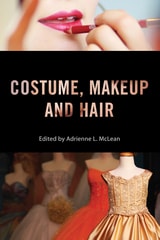
Costume, Makeup, and Hair
McLean, Adrienne L
Rutgers University Press, 2016
From the acclaimed Behind the Silver Screen series, Costume, Makeup, and Hair charts the development of these three crafts in the American film industry from the 1890s to the present. Each chapter examines a different era in film history, revealing how the arts of cinematic costume, makeup, and hair, have continually adapted to new conditions, making the transitions from stage to screen, from monochrome to color, and from analog to digital. Together, the book’s contributors give us a remarkable glimpse into how these crafts foster creative collaboration and improvisation, often fashioning striking looks and ingenious effects out of limited materials.
Costume, Makeup, and Hair not only considers these crafts in relation to a wide range of film genres, from sci-fi spectacles to period dramas, but also examines the role they have played in the larger marketplace for fashion and beauty products. Drawing on rare archival materials and lavish color illustrations, this volume provides readers with both a groundbreaking history of film industry labor and an appreciation of cinematic costume, makeup, and hairstyling as distinct art forms.
Cotton
Companies, Fashion and the Fabric of Our LivesEdited by Joseph H. II Hancock, Nioka Wyatt, and Tasha L. Lewis
Intellect Books, 2016

Couture and Consensus
Fashion and Politics in Postcolonial ArgentinaRegina A. Root
University of Minnesota Press, 2010
Crafting Womanhood
Needlework, Gender, and Politics in the United States, 1810-1920Mariah Kupfner
University of Delaware Press, 2027
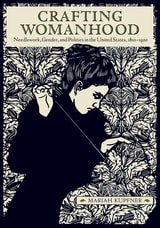
Decorative needlework was a key medium through which American women constructed femininity and its relationship to public and political concerns in the nineteenth and early twentieth centuries. Through samplers, needlecases, lace coats, silk sofas, cotton scraps, banners, and other textile things, scholars can see the ways in which women and girls related to education, property-holding, slavery and freedom, labor, and women’s right to vote. Needlework’s durable association with “traditional” notions about womanhood made it a potent resource through which to make gender in expansive and meaningful ways that had profound public, political implications as educational opportunities for girls and women were expanding, and the antislavery and women's suffrage movements were growing. Indeed, needlework's very conventionality and relationship to the past made it a useful tool for crafting womanhood anew.
Creating Outdoor Classrooms
Schoolyard Habitats and Gardens for the SouthwestBy Lauri Macmillan Johnson, with Kim Duffek
University of Texas Press, 2008
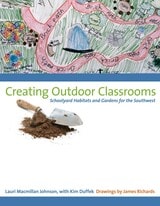
Schoolyards have come a long way from the barren playgrounds that many people remember. Today's school campuses often feature gardens in which students can learn about native plants and wildlife, grow vegetables and fruit, explore cultural traditions, practice reading and math skills, and use their imaginations to create fun play spaces. And for a growing number of urban students, these schoolyard gardens offer the best, if not the only, opportunity to experience the natural world firsthand and enjoy its many benefits.
This book is a practical, hands-on guide for creating a variety of learning environments in the arid Southwest. Filled with clear, easy-to-use information and illustrated with photographs, drawings, and plans, the book covers everything necessary to create schoolyard gardens:
- An introduction to schoolyards as outdoor classrooms and several types of habitats, including art gardens, cultural history gardens, ecological gardens, literacy gardens, and vegetable gardens
- Design theory, including a history of garden styles, and design principles and design elements
- Beginning the design process, including identifying participants and writing a design program that sets out goals and requirements
- Conducting site research and synthesizing design elements to arrive at a final design
- Design essentials, including project funding and design features, maintenance, accessibility, safety, and project evaluation and revision
- Wildlife ecology, including elements needed for survival such as food and shelter
- Creating gardens for pollinators and other wildlife, including hummingbirds, butterflies, bees, moths, bats, and flies, as well as pest control
- Lists of native plants for various kinds of habitats and nurseries that sell native plants, as well as books, web sites, and other resources for learning more about native plants and wildlife
This guide will be essential for landscape architects, school personnel, parents, and students. Indeed, its principles can be used in designing schoolyard habitats across the country, while its information on gardening with native plants and wildlife will be useful to homeowners across the Southwest.

Creating a Winning Online Exhibit
Martin R. Kalfatovic
American Library Association, 2002

Creative Instructional Design
Practical Applications ForBrandon West
Assoc of College & Research Libraries, 2017
Critical Studies in Art and Design Education
Edited by Richard Hickman
Intellect Books, 2005
Rod Taylor, who has done much to promote and develop critical studies in the UK, provides us with examples of classroom practice and gives us his more recent thoughts on fundamental issues – "universal themes" in art – and gives examples of how both primary and secondary schools might develop their teaching of art through attending to themes such as "identity," "myth," and "environments" to help "re-animate the practical curriculum."
Although some of the discussion in this book centres on or arises from the English National curriculum, the issues are more global, and relevant to anyone involved in developing or delivering art curricula in schools. An American perspective is given in papers by George Geahigan and Paul Duncum. Geahigan outlines an approach to teaching about visual form which begins with students' personal responses and is developed through structured instruction. In Duncum’s vision of ‘visual culture art education’ sites such as theme parks and shopping malls are the focus of students' critical attention in schools; Nick Stanley gives a lucid account of just such an enterprise, giving practical examples of ways to engage students with this particular form of visual pleasure.
This publication serves to highlight some of the more pressing issues of concern to art and design teachers in two aspects. Firstly it seeks to contextualise the development of critical studies, discussing its place in the general curriculum – possibly as a discrete subject – and secondly it examines different approaches to its teaching.
Cross-Cultural Design for Healthy Ageing
Edited by Lisa Scharoun, Danny Hills, Carlos Montana Hoyos, Fanke Peng, and Vivien Sung
Intellect Books, 2020
This book examines some of the challenges associated with ageing in multicultural societies. Worldwide, ageing presents a profound potential shift in design for society. The impact of the change in population balance challenges designers, planners, and health care professionals to develop solutions to better meet the needs of older citizens. Different disciplinary and cultural perspectives allow for new approaches to issues of housing, community interaction and cooperation, health and well-being, and the integration of new technologies.
Drawing from case studies, interviews with key practitioners in design and health, and practical pedagogical experience, the authors provide a framework for engaging designers, planners, and health professionals in the process of creating new design solutions for the growing global ageing population.
Crossing Gender Boundaries
Fashion to Create, Disrupt and TranscendEdited by Andrew Reilly and Ben Barry
Intellect Books, 2020

Czechoslovakia at the World’s Fairs
Behind the FaçadeMarta Filipová
Central European University Press, 2024
Established in 1918, as a new state the First Czechoslovak Republic was keen to project a distinct image. Participation in World Fairs offered the perfect opportunity-. In this comprehensive account of Czechoslovak participation in international exhibitions of the interwar period Marta Filipová looks beyond the sleek façade of the modernist pavilions to examine the intersections of architecture, art and design with commercial interests, state agendas, individual action and the public, offering a complex insight into the production and reception of national displays.
The rich collection of images – mainly photographs – provides a close look at the Czechoslovak pavilions. The design, content and context of the displays convey an idealized narrative that was created for the fairs and the myths on which the Czechoslovak nation and state were built. Heavy machinery, modern art, tourist destinations, and food and drink were presented as Czechoslovak, while many aspects of social life – particularly women or ethnic minorities – were strikingly underrepresented or absent. The book argues that the objects and ideas that the pavilion organizers put on display legitimized and validated the existence of the new state through the inclusion and exclusion of exhibits, people, and ideas.
While Marta Filipová primarily focuses on Czechoslovakia, she also offers insights into how other emerging nations projected and sustained their image during this historical period and how interwar world’s fairs accommodated them.