917 books match the query 'Economics' and 56 start with c
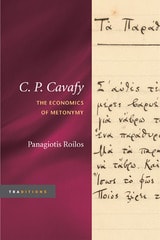
cover of C. P. Cavafy: The Economics of Metonymy

C. P. Cavafy

The Economics of Metonymy

Panagiotis Roilos

University of Illinois Press, 2009

Konstantinos P. Kavafis--known to the English-reading world as C. P. Cavafy--has been internationally recognized as an important poet and attracted the admiration of eminent literary figures such as E. M. Forster, F. T. Marinetti, W. H. Auden, George Seferis, and James Merrill. Cavafy's idiosyncratic poetry remains one of the most influential and perplexing voices of European modernism.

Focusing on Cavafy's intriguing work, this book navigates new territories in critical theory and offers an interdisciplinary study of the construction of (homo)erotic desire in poetry in terms of metonymic discourse and anti-economic libidinal modalities. Panagiotis Roilos shows that problematizations of art production, market economy, and trafficability of erôs in diverse late-nineteenth and early twentieth-century European sociocultural and political contexts were re-articulated in Cavafy's poetry in new subversive ways that promoted an "unorthodox" discursive and libidinal anti-economy of jouissance.
[more]
cover of Capital and Interest

Capital and Interest

F. A. Hayek

University of Chicago Press, 2015
Produced throughout the first fifteen years of Hayek’s career, the writings collected in Capital and Interest see Hayek elaborate upon and extend his landmark lectures that were published as Prices and Production and work toward the technically sophisticated line of thought seen in his later Pure Theory of Capital. Illuminating the development of Hayek’s detailed contributions to capital and interest theory, the collection also sheds light on how Hayek’s work related to other influential economists of the time. Highlights include the 1936 article “The Mythology of Capital”—presented here alongside Frank Knight’s criticisms of the Austrian theory of capital that prompted it—and “The Maintenance of Capital,” with subsequent comments by the English economist A. C. Pigou. These and other familiar works are accompanied by lesser-known articles and lectures, including a lecture on technological progress and excess capacity. An introduction by the book’s editor, leading Hayek scholar Lawrence H. White, places Hayek’s contributions in careful historical context, with ample footnotes and citations for further reading, making this a touchstone addition to the University of Chicago Press’s Collected Works of F. A. Hayek series.
[more]
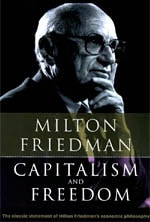
cover of Capitalism and Freedom

Capitalism and Freedom

Milton Friedman

University of Chicago Press, 1963

In the classic bestseller, Capitalism and Freedom, Milton Friedman presents his view of the proper role of competitive capitalism—the organization of economic activity through private enterprise operating in a free market—as both a device for achieving economic freedom and a necessary condition for political freedom. Beginning with a discussion of principles of a liberal society, Friedman applies them to such constantly pressing problems as monetary policy, discrimination, education, income distribution, welfare, and poverty.

"Milton Friedman is one of the nation's outstanding economists, distinguished for remarkable analytical powers and technical virtuosity. He is unfailingly enlightening, independent, courageous, penetrating, and above all, stimulating."-Henry Hazlitt, Newsweek

"It is a rare professor who greatly alters the thinking of his professional colleagues. It's an even rarer one who helps transform the world. Friedman has done both."-Stephen Chapman, Chicago Tribune
[more]
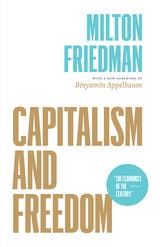
cover of Capitalism and Freedom

Capitalism and Freedom

Milton Friedman

University of Chicago Press, 2020

One of TIME magazine’s All-TIME 100 Best Nonfiction Books
One of Times Literary Supplement’s 100 Most Influential Books Since the War
One of National Review’s 100 Best Nonfiction Books of the Century
​One of the Intercollegiate Studies Institute’s 50 Best Books of the 20th Century


How can we benefit from the promise of government while avoiding the threat it poses to individual freedom? In this classic book, Milton Friedman provides the definitive statement of an immensely influential economic philosophy—one in which competitive capitalism serves as both a device for achieving economic freedom and a necessary condition for political freedom.
​
First published in 1962, Friedman’s Capitalism and Freedom is one of the most significant works of economic theory ever written. Enduring in its eminence and esteem, it has sold nearly a million copies in English, has been translated into eighteen languages, and continues to inform economic thinking and policymaking around the world. This new edition includes prefaces written by Friedman for both the 1982 and 2002 reissues of the book, as well as a new foreword by Binyamin Appelbaum, lead economics writer for the New York Times editorial board.
[more]
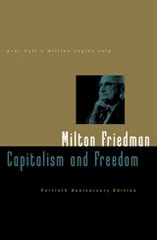
cover of Capitalism and Freedom: Fortieth Anniversary Edition

Capitalism and Freedom

Fortieth Anniversary Edition

Milton Friedman

University of Chicago Press, 2002

Selected by the Times Literary Supplement as one of the "hundred most influential books since the war"

How can we benefit from the promise of government while avoiding the threat it poses to individual freedom? In this classic book, Milton Friedman provides the definitive statement of his immensely influential economic philosophy—one in which competitive capitalism serves as both a device for achieving economic freedom and a necessary condition for political freedom. The result is an accessible text that has sold well over half a million copies in English, has been translated into eighteen languages, and shows every sign of becoming more and more influential as time goes on.
[more]
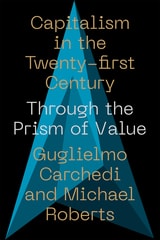
cover of Capitalism in the 21st Century: Through the Prism of Value

Capitalism in the 21st Century

Through the Prism of Value

Michael Roberts

Pluto Press, 2022

A sweeping, authoritative, and accessible overview of major issues in the global economy from a Marxist perspective.

Contemporary capitalism is always evolving. From digital technologies to cryptocurrencies, current trends in political economy are much discussed, but often little understood. So where can we turn for clarity? As Michael Roberts and Guglielmo Carchedi argue, new trends don't necessarily call for a new theory.

In Capitalism in the 21st Century, the authors show how Marx's law of value explains numerous issues in our modern world. In both advanced economies and the periphery, value theory provides a piercing analytical framework through which we can approach topics as varied as labor, profitability, technology, the environment, the role of China, imperialism, and the state.

An ambitious work that will appeal to both heterodox economists and labor movement activists alike, as it demonstrates the ongoing contemporary relevance of Marxist theory to current trends in political economy.
[more]
cover of Capitalism's New Clothes: Enterprise, Ethics and Enjoyment in Times of Crisis

Capitalism's New Clothes

Enterprise, Ethics and Enjoyment in Times of Crisis

Colin Cremin

Pluto Press, 2011

From broadsheet newspapers to television shows and Hollywood films, capitalism is increasingly recognised as a system detrimental to human existence. Colin Cremin investigates why, despite this de-robing, capitalism remains a powerful and seductive force.

Using materialist, psychoanalytic and linguistic approaches, Cremin shows how capitalism, anxiety and desire enter into a mutually supporting relationship. He identifies three ways in which we are tied in to capitalism – through a social imperative for enterprise and competition; through enjoyment and consumption; and through the depoliticisation of ethical debate by government and business.

Capitalism's New Clothes is ideal for students of sociology and for anyone worried about the ethics of capitalism or embarrassed by the enjoyments the system has afforded them.
[more]
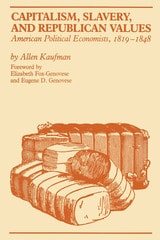
cover of Capitalism, Slavery, and Republican Values: American Political Economists, 1819-1848

Capitalism, Slavery, and Republican Values

American Political Economists, 1819-1848

By Allen Kaufman

University of Texas Press, 1982

In the troubled days before the American Civil War, both Northern protectionists and Southern free trade economists saw political economy as the key to understanding the natural laws on which every republican political order should be based. They believed that individual freedom was one such law of nature and that this freedom required a market economy in which citizens could freely pursue their particular economic interests and goals.

But Northern and Southern thinkers alike feared that the pursuit of wealth in a market economy might lead to the replacement of the independent producer by the wage laborer. A worker without property is a potential rebel, and so the freedom and commerce that give birth to such a worker would seem to be incompatible with preserving the content citizenry necessary for a stable, republican political order.

Around the resolution of this dilemma revolved the great debate on the desirability of slavery in this country. Northern protectionists argued that independent labor must be protected at the same time that capitalist development is encouraged. Southern free trade economists answered that the formation of a propertyless class is inevitable; to keep the nation from anarchy and rebellion, slavery—justified by racism—must be preserved at any cost.

Battles of the economists such as these left little room for political compromise between North and South as the antebellum United States confronted the corrosive effects of capitalist development. And slavery's retardant effect on the Southern economy ultimately created a rift within the South between those who sought to make slavery more like capitalism and those who sought to make capitalism more like slavery.
[more]
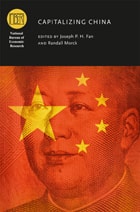
cover of Capitalizing China

Capitalizing China

Edited by Joseph P. H. Fan and Randall Morck

University of Chicago Press, 2012
China’s economic boom over the last two decades has taken many analysts by surprise, given the ongoing role of central government planning. Its current growth trajectory suggests that the size of its economy could soon surpass that of the United States. Some argue that continued growth and the expanding middle class will ultimately exert pressure on the government to bring about greater openness of the financial market.
 
To better understand China’s recent economic performance, this volume examines the distinctive system it has developed: “market socialism with Chinese characteristics.” While its formal institutional makeup resembles that of a free-market economy, many of its practices remain socialist, including strategically placed state-owned enterprises that wield influence both directly and through controlled business groups, and Communist Party cells whose purpose is to maintain control of many segments of the economy. China’s economic system, the contributors find, also retains many historical characteristics that play a central role in managing the economy. These and other issues are examined in chapters on China’s financial regulations, corporate governance codes, bankruptcy laws, taxation, and disclosure rules.
[more]
cover of Capitol Investments: The Marketability of Political Skills

Capitol Investments

The Marketability of Political Skills

Glenn R. Parker

University of Michigan Press, 2011

What would you do if, the very day you were hired, you knew you could be unemployed in as little as two years? You'd seek opportunities in your current job to develop a portfolio of skills and contacts in order to make yourself more attractive to future employers. Representatives and senators think about their jobs in Congress in this way, according to Glenn R. Parker.

While in office, members of Congress plan not merely for the next election but for the next stage of their careers. By networking, serving on committees, and championing particular legislation, they deliberately accumulate human capital---expertise, networks, and reputation---which later will give them bargaining power in the job market. Parker's study of the postelective careers of more than 200 former members of Congress, both U.S. representatives and senators, who have left office during the last half century shows that such strategic planning generally succeeds. In most cases, the human capital these politicians amassed while in office increased their occupational mobility and earning power.

Capitol Investments offers a sophisticated yet accessible analysis of the acquisition and marketability of political skills. It suggests that an awareness of the trade in human capital shapes an officeholder's actions as much as the desire to win another election.

Glenn R. Parker is Distinguished Professor in the Department of Political Science at Purdue University.
[more]
cover of Capturing Finance: Arbitrage and Social Domination

Capturing Finance

Arbitrage and Social Domination

Carolyn Hardin

Duke University Press, 2021

Arbitrage—the trading practice that involves buying assets in one market at a cheap price and immediately selling them in another market for a profit—is fundamental to the practice of financial trading and economic understandings of how financial markets function. Because traders complete transactions quickly and use other people's money, arbitrage is considered to be riskless. Yet, despite the rhetoric of riskless trading, the arbitrage in mortgage-backed securities led to the 2008 financial crisis. In Capturing Finance Carolyn Hardin offers a new way of understanding arbitrage as a means for capturing value in financial capitalism. She shows how arbitrage relies on a system of abstract domination built around risk. The commonsense beliefs that taking on debt is necessary for affording everyday life and that investing is necessary to secure retirement income compel individuals to assume risk while financial institutions amass profits. Hardin insists that mitigating financial capitalism's worst consequences, such as perpetuating class and racial inequities, requires challenging the narratives that naturalize risk as a necessary element of financial capitalism as well as social life writ large.
[more]
cover of Carl Menger and His Legacy in Economics

Carl Menger and His Legacy in Economics

Duke University Press, 0

[more]
cover of Categorically Unequal: The American Stratification System

Categorically Unequal

The American Stratification System

Douglas S. Massey

Russell Sage Foundation, 2007
The United States holds the dubious distinction of having the most unequal income distribution of any advanced industrialized nation. While other developed countries face similar challenges from globalization and technological change, none rivals America's singularly poor record for equitably distributing the benefits and burdens of recent economic shifts. In Categorically Unequal, Douglas Massey weaves together history, political economy, and even neuropsychology to provide a comprehensive explanation of how America's culture and political system perpetuates inequalities between different segments of the population. Categorically Unequal is striking both for its theoretical originality and for the breadth of topics it covers. Massey argues that social inequalities arise from the universal human tendency to place others into social categories. In America, ethnic minorities, women, and the poor have consistently been the targets of stereotyping, and as a result, they have been exploited and discriminated against throughout the nation's history. African-Americans continue to face discrimination in markets for jobs, housing, and credit. Meanwhile, the militarization of the U.S.-Mexican border has discouraged Mexican migrants from leaving the United States, creating a pool of exploitable workers who lack the legal rights of citizens. Massey also shows that women's advances in the labor market have been concentrated among the affluent and well-educated, while low-skilled female workers have been relegated to occupations that offer few chances for earnings mobility. At the same time, as the wages of low-income men have fallen, more working-class women are remaining unmarried and raising children on their own. Even as minorities and women continue to face these obstacles, the progressive legacy of the New Deal has come under frontal assault. The government has passed anti-union legislation, made taxes more regressive, allowed the real value of the federal minimum wage to decline, and drastically cut social welfare spending. As a result, the income gap between the richest and poorest has dramatically widened since 1980. Massey attributes these anti-poor policies in part to the increasing segregation of neighborhoods by income, which has insulated the affluent from the social consequences of poverty, and to the disenfranchisement of the poor, as the population of immigrants, prisoners, and ex-felons swells. America's unrivaled disparities are not simply the inevitable result of globalization and technological change. As Massey shows, privileged groups have systematically exploited and excluded many of their fellow Americans. By delving into the root causes of inequality in America, Categorically Unequal provides a compelling argument for the creation of a more equitable society. A Volume in the Russell Sage Foundation's Centennial Series
[more]
cover of Catholic Social Teaching

Catholic Social Teaching

Mary Hobgood

Temple University Press, 1991
"This excellent book is one of the few scholarly investigations that analyze the official Catholic School Teaching from the perspective of the secular, economic, and political sciences." --Gregory Baum Drawing upon a lively debate within the field of social theory, Mary E. Hobgood argues that the paradigm conflict between orthodox neoclassical and radical economic models is reflected in Catholic documents that address economic justice. She maintains that dynamics within Catholic teaching are explicable only in terms of this clash of fundamentally opposing perspectives. This study shows how normative values of social justice are always tied to a particular social theory or model of society. When assumptions shift from one model to another, the concrete actions mandated by these justice norms change significantly. Consequently, the Catholic social justice tradition contains not only two mutually exclusive analyses of capitalist dynamics, it also has very different interpretations of such norms as economic democracy and a preferential notion for the poor. Hobgood argues that the Church needs to clarify the economic models that inform its social justice mandates and to assess those models for their compatibility with the Church's moral concerns, otherwise, Catholic social teaching's interpretations of justice and how Christians must act for it remain inconsistent. "[Mary Hobgood] asks what Catholic teaching itself has assumed about the way the economy works, and she brings to the fore hidden assumptions that are fundamental to the policy prescriptions in Catholic teaching.... The result is a clear picture of the divided mind and practice of Catholicism when confronting twentieth-century economic realities. If Catholic teaching did us all the service of finding a strong moral and theological voice for a critique of secular economics, Dr. Hobgood points the way to make that voice a clearer one, more aware of its limitations and of its potential." --Larry L. Rasmussen, from the Foreword "This is one of the most enlightening analyses of Catholic social teaching that I have ever read. It goes far beyond the available commentaries because of its sharp focus on the economic--not just as the content of the teaching, but its provision of the theoretical framework in which to situate the economic content. The book is very insightful with regard to Catholic social teaching, but I think her exposition holds great value for the analysis of World Council of Churches' positions and the positions of any denomination. Even beyond that, her models throw light on the daily battles within any church institution that is working for justice and peace while at the same time engaging in the compromises and contradictions required to maintain itself within the current economic system." --Marie J. Giblin, Maryknoll School of Theology
[more]
cover of Challenges to Globalization: Analyzing the Economics

Challenges to Globalization

Analyzing the Economics

Edited by Robert E. Baldwin and L. Alan Winters

University of Chicago Press, 2004

People passionately disagree about the nature of the globalization process. The failure of both the 1999 and 2003 World Trade Organization's (WTO) ministerial conferences in Seattle and Cancun, respectively, have highlighted the tensions among official, international organizations like the WTO, the International Monetary Fund (IMF), the World Bank, nongovernmental and private sector organizations, and some developing country governments. These tensions are commonly attributed to longstanding disagreements over such issues as labor rights, environmental standards, and tariff-cutting rules. In addition, developing countries are increasingly resentful of the burdens of adjustment placed on them that they argue are not matched by commensurate commitments from developed countries.

Challenges to Globalization evaluates the arguments of pro-globalists and anti-globalists regarding issues such as globalization's relationship to democracy, its impact on the environment and on labor markets including the brain drain, sweat shop labor, wage levels, and changes in production processes, and the associated expansion of trade and its effects on prices. Baldwin, Winters, and the contributors to this volume look at multinational firms, foreign investment, and mergers and acquisitions and present surprising findings that often run counter to the claim that multinational firms primarily seek countries with low wage labor. The book closes with papers on financial opening and on the relationship between international economic policies and national economic growth rates.
[more]
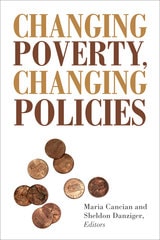
cover of Changing Poverty, Changing Policies

Changing Poverty, Changing Policies

Maria Cancian

Russell Sage Foundation, 2009

Poverty declined significantly in the decade after Lyndon Johnson's 1964 declaration of "War on Poverty." Dramatically increased federal funding for education and training programs, social security benefits, other income support programs, and a growing economy reduced poverty and raised expectations that income poverty could be eliminated within a generation. Yet the official poverty rate has never fallen below its 1973 level and remains higher than the rates in many other advanced economies. In this book, editors Maria Cancian and Sheldon Danziger and leading poverty researchers assess why the War on Poverty was not won and analyze the most promising strategies to reduce poverty in the twenty-first century economy. Changing Poverty, Changing Policies documents how economic, social, demographic, and public policy changes since the early 1970s have altered who is poor and where antipoverty initiatives have kept pace or fallen behind. Part I shows that little progress has been made in reducing poverty, except among the elderly, in the last three decades. The chapters examine how changing labor market opportunities for less-educated workers have increased their risk of poverty (Rebecca Blank), and how family structure changes (Maria Cancian and Deborah Reed) and immigration have affected poverty (Steven Raphael and Eugene Smolensky). Part II assesses the ways childhood poverty influences adult outcomes. Markus Jäntti finds that poor American children are more likely to be poor adults than are children in many other industrialized countries. Part III focuses on current antipoverty policies and possible alternatives. Jane Waldfogel demonstrates that policies in other countries—such as sick leave, subsidized child care, and schedule flexibility—help low-wage parents better balance work and family responsibilities. Part IV considers how rethinking and redefining poverty might take antipoverty policies in new directions. Mary Jo Bane assesses the politics of poverty since the 1996 welfare reform act. Robert Haveman argues that income-based poverty measures should be expanded, as they have been in Europe, to include social exclusion and multiple dimensions of material hardships. Changing Poverty, Changing Policies shows that thoughtful policy reforms can reduce poverty and promote opportunities for poor workers and their families. The authors' focus on pragmatic measures that have real possibilities of being implemented in the United States not only provides vital knowledge about what works but real hope for change.
[more]
cover of Chaos Theory in the Social Sciences: Foundations and Applications

Chaos Theory in the Social Sciences

Foundations and Applications

L. Douglas Kiel and Euel Elliott, Editors

University of Michigan Press, 1997
Chaos Theory in the Social Sciences: Foundations and Applications offers the most recent thinking in applying the chaos paradigm to the social sciences. The book explores the methodological techniques--and their difficulties--for determining whether chaotic processes may in fact exist in a particular instance and examines implications of chaos theory when applied specifically to political science, economics, and sociology. The contributors to the book show that no single technique can be used to diagnose and describe all chaotic processes and identify the strengths and limitations of a variety of approaches.
The essays in this volume consider the application of chaos theory to such diverse phenomena as public opinion, the behavior of states in the international arena, the development of rational economic expectations, and long waves.
Contributors include Brian J. L. Berry, Thad Brown, Kenyon B. DeGreene, Dimitrios Dendrinos, Euel Elliott, David Harvey, L. Ted Jaditz, Douglas Kiel, Heja Kim, Michael McBurnett, Michael Reed, Diana Richards, J. Barkley Rosser, Jr., and Alvin M. Saperstein.
L. Douglas Kiel and Euel W. Elliott are both Associate Professors of Government, Politics, and Political Economy, University of Texas at Dallas.
[more]
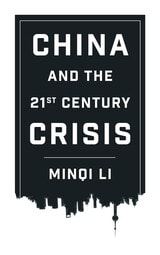
cover of China and the Twenty-first-Century Crisis

China and the Twenty-first-Century Crisis

Minqi Li

Pluto Press, 2015

The USA is widely seen as the country at the centre of the recent economic crash. But will this be the case the next time the system goes into shock? This book analyses how the political and economic imbalances in China will exacerbate system collapse, and how this could happen much sooner than we imagine, possibly within a decade.

By looking at the big questions of class struggle, global economic imbalances, peak oil, climate change and political power play, Minqi Li argues that by the time of the next crisis, China will be at the epicentre of these contradictions.

China is the last large region, and source of cheap labour, into which capital could expand: the system is at its limits. By combining this argument with issues surrounding the planet’s ecological limits and the internal politics of the Chinese Communist Party, Li commands a narrative of China at a pivotal, and possibly apocalyptic stage.
[more]
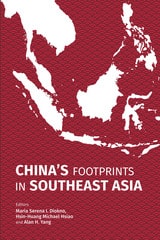
cover of China's Footprints in Southeast Asia

China's Footprints in Southeast Asia

Edited by Maria Serena I. Diokno, Hsin-Huang Michael Hsiao, and Alan H. Yang

National University of Singapore Press, 2018

The countries that make up Southeast Asia are seeing an incredible resurgence in their economic power. Over the past fifty years, their combined wealth has reached the same level as the United Kingdom and, taken together, they are on track to become the fifth-largest world economy. But that stability and success has drawn the attention of the second largest world economy—China. The emerging superpower is increasingly involved in Southeast Asia as part of the ongoing global realignment. As China deepens its influence across the region, the countries of Southeast Asia are negotiating spaces for themselves in order to respond to—or even challenge—China’s power.
                This is the first book to survey China’s growing role in Southeast Asia along multiple dimensions. It looks closely and skeptically at the multitude of ways that China has built connections in the region, including through trade, foreign aid, and cultural diplomacy. It incorporates examples such as the operation of Confucius Institutes in Indonesia or the promotion of the concept of guangxi.China’s Footprints in Southeast Asia raises the question of whether the Chinese efforts are helpful or disruptive and explores who it is that really stands to benefit from these relationships. The answers differ from country to country, but, as this volume suggests, the footprint of hard and soft power always leaves a lasting mark on other countries’ institutions.
 
[more]
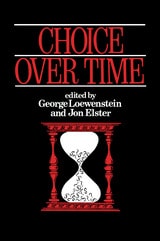
cover of Choice Over Time

Choice Over Time

George Loewenstein

Russell Sage Foundation, 1992
Many of our most urgent national problems suggest a widespread lack of concern for the future. Alarming economic conditions, such as low national savings rates, declining corporate investment in long-term capital projects, and ballooning private and public debt are matched by such social ills as diminished educational achievement, environmental degradation, and high rates of infant mortality, crime, and teenage pregnancy. At the heart of all these troubles lies an important behavioral phenomenon: in the role of consumer, manager, voter, student, or parent, many Americans choose inferior but immediate rewards over greater long-term benefits. Choice Over Time offers a rich sampling of original research on intertemporal choice—how and why people decide between immediate and delayed consequences—from a broad range of theoretical and methodological perspectives in philosophy, political science, psychology, and economics. George Loewenstein, Jon Elster, and their distinguished colleagues review existing theories and forge new approaches to understanding significant questions: Why do people seem to "discount" future benefits? Do individuals use the same decision-making strategy in all aspects of their lives? What part is played by situational factors such as the certainty of delayed consequences? How are decisions affected by personal factors such as willpower and taste? In addressing these issues, the contributors to Choice Over Time address many social, economic, psychological, and personal time problems. Their work demonstrates the predictive power of short-term preferences in behavior as varied as addiction and phobia, the effect of prices on consumption, and the dramatic rise in debt and decline in savings. Choice Over Time provides an essential source for the most recent research and theory on intertemporal choice, offering new models for time preference patterns—and their aberrations—and presenting a diversity of potential solutions to the problem of "temporal myopia."
[more]
cover of Choice-Free Rationality: A Positive Theory of Political Behavior

Choice-Free Rationality

A Positive Theory of Political Behavior

Robert Grafstein

University of Michigan Press, 1999
Rational choice theory has become the basis for much of the recent work done in political science. Yet explanations of many political phenomena elude rational choice theorists. Robert Grafstein offers a modification to rational choice theory that extends its ability to explain social behavior.
Grafstein argues that, instead of basing the analysis on the assumption that an actor will maximise her expected utility or her utility given the probability that the event will happen, we should define rationality as the maximisation of expected utility conditional on the probability that her act will bring the event about. This definition of utility, based on the work of Richard Jeffrey, restores the consequences of an individual's act to rational choice analysis. For example, in making a decision to vote, a conditional expected utility maximiser will compare the likelihood of victory for her preferred candidate given her own participation with the likelihood of a victory given her abstention.
The author shows the theoretical implications of this new definition of rationality and then uses it to explain certain aspects of ethnic identity and mobilization, ideology, and altruism and intertemporal choice. He then explores the implications of this idea for policy analysis and econometrics. This book will provoke a debate about how work based in rational choice theories is done.
Robert Grafstein is Professor of Political Science, University of Georgia.
[more]
cover of Choke Points: Logistics Workers Disrupting the Global Supply Chain

Choke Points

Logistics Workers Disrupting the Global Supply Chain

Edited by Jake Alimahomed-Wilson and Immanuel Ness

Pluto Press, 2017

Global capitalism is a precarious system. Relying on the steady flow of goods across the world, trans-national companies such as Wal-Mart and Amazon depend on the work of millions in docks, warehouses and logistics centres to keep their goods moving. 

This is the global supply chain, and, if the chain is broken, capitalism grinds to a halt. This book looks at case studies across the world to uncover a network of resistance by these workers who, despite their importance, often face vast exploitation and economic violence. 

Experiencing first hand wildcat strikes, organised blockades and boycotts, the authors explore a diverse range of case studies, from South China dockworkers to the transformation of the port of Piraeus in Greece, and from the Southern California logistics sector, to dock and logistical workers in Chile and unions in Turkey.
[more]
cover of Chosen Capital: The Jewish Encounter with American Capitalism

Chosen Capital

The Jewish Encounter with American Capitalism

Kobrin, Rebecca

Rutgers University Press, 2012

At which moments and in which ways did Jews play a central role in the development of American capitalism? Many popular writers address the intersection of Jews and capitalism, but few scholars, perhaps fearing this question’s anti-Semitic overtones, have pondered it openly. Chosen Capital represents the first historical collection devoted to this question in its analysis of the ways in which Jews in North America shaped and were shaped by America’s particular system of capitalism. Jews fundamentally molded aspects of the economy during the century when American capital was being redefined by industrialization, war, migration, and the emergence of the United States as a superpower.

Surveying such diverse topics as Jews’ participation in the real estate industry, the liquor industry, and the scrap metal industry, as well as Jewish political groups and unions bent on reforming American capital, such as the American Labor Party and the International Ladies’ Garment Workers’ Union, contributors to this volume provide a new prism through which to view the Jewish encounter with America. The volume also lays bare how American capitalism reshaped Judaism itself by encouraging the mass manufacturing and distribution of foods like matzah and the transformation of synagogue cantors into recording stars. These essays force us to rethink not only the role Jews played in American economic development but also how capitalism has shaped Jewish life and Judaism over the course of the twentieth century.

Contributors:
Marni Davis, Georgia State University
Phyllis Dillon, independent documentary producer, textile conservator, museum curator
Andrew Dolkart, Columbia University
Andrew Godley, Henley Business School, University of Reading
Jonathan Karp, executive director, American Jewish Historical Society
Daniel Katz, Empire State College, State University of New York
Ira Katznelson, Columbia University
David S. Koffman, New York University
Eli Lederhendler, Hebrew University, Jerusalem
Jonathan Z. S. Pollack, University of Wisconsin—Madison
Jonathan D. Sarma, Brandeis University
Jeffrey Shandler, Rutgers University
Daniel Soyer, Fordham University
[more]
cover of Civilizing Money: Hume, his Monetary Project, and the Scottish Enlightenment

Civilizing Money

Hume, his Monetary Project, and the Scottish Enlightenment

George Caffentzis

Pluto Press, 2021

Taking the Scottish Enlightenment philosopher David Hume as its subject, this book breaks new ground in focusing its lens on a little-studied aspect of Hume’s thinking: his understanding of money.

George Caffentzis makes both an intervention in the field of monetary philosophy and into Marxian conceptions of the relation between philosophy and capitalist development. He vividly charts the ways in which Hume’s philosophy directly informed the project of ‘civilizing’ the people of the Scottish Highlands and pacifying the English proletariat in response to the revolts of both groups at the heart of the empire.

Built on careful historical and philosophical detective work, Civilizing Money offers a stimulating and radical political reading of the ways in which Hume’s fundamental philosophical claims performed concrete political functions.
[more]
cover of Classics of Social Choice

Classics of Social Choice

Iain McLean and Arnold Urken, Editors

University of Michigan Press, 1995
Pioneering contributions to social choice and voting from Pliny to Lewis Carroll
[more]
cover of Clipped Coins, Abused Words, and Civil Government: John Locke’s Philosophy of Money

Clipped Coins, Abused Words, and Civil Government

John Locke’s Philosophy of Money

George Caffentzis

Pluto Press, 2021

This book situates John Locke’s philosophy of knowledge and his political theory within his engagement in British monetary debates of the 17th and 18th century.

Anchored in extensive archival research, George Caffentzis offers the most expansive reading of Locke’s economic thought to date, contextualizing it within the expansion of capitalist accumulation on a world scale and the universality of money as a medium of exchange.

Updated with a new introduction by Paul Rekret, a new foreword by Harry Cleaver and new material by the author, Clipped Coins, Abused Words, and Civil Government continues to make a significant intervention in contemporary debates around the history of capitalism, colonialism and philosophy.

[more]
cover of College Choices: The Economics of Where to Go, When to Go, and How to Pay for It

College Choices

The Economics of Where to Go, When to Go, and How to Pay for It

Edited by Caroline M. Hoxby

University of Chicago Press, 2004

Aspiring college students and their families have many options. A student can attend an in-state or an out-of-state school, a public or private college, a two-year community college program or a four-year university program. Students can attend full-time and have a bachelor of arts degree by the age of twenty-three or mix college and work, progressing toward a degree more slowly. To make matters more complicated, the array of financial aid available is more complex than ever. Students and their families must weigh federal grants, state merit scholarships, college tax credits, and college savings accounts, just to name a few.

In College Choices, Caroline Hoxby and a distinguished group of economists show how students and their families really make college decisions—how they respond to financial aid options, how peer relationships figure in the decision-making process, and even whether they need mentoring to get through the admissions process. Students of all sorts are considered—from poor students, who may struggle with applications and whether to continue on to college, to high aptitude students who are offered "free rides" at elite schools. College Choices utilizes the best methods and latest data to analyze the college decision-making process, while explaining how changes in aid and admissions practices inform those decisions as well.
[more]
cover of Commerce and Society in Sung China

Commerce and Society in Sung China

Shiba Yoshinobu; Translated by Mark Elvin

University of Michigan Press, 1969
The full dimensions of the medieval Chinese economic revolution are still almost unknown to economic historians in the Western world, and the manifold problems that it raises for accepted theories of economic development have hardly begun to be systematically considered. Japanese scholars have been the pioneers in opening up this field, and Professor Shiba’s Commerce and Society in Sung China is among the most recent and most impressive fruits of their labors. For the first time it is possible to be relatively confident, as the result of the author’s systematic exploitation of an enormous range of source materials, about the parts played by transport, trade, business organization and urbanization in this revolution. It is hardly necessary to labor the significance of the advance. China’s was beyond any reasonable doubt the most developed economy in the medieval world, and the investigation both of the causes that made this possible and of those that subsequently prevented a take-off into sustained growth is among the most pressing tasks waiting to be accomplished before any general theory of economic development, solidly grounded in comparative historical analysis, becomes possible.
[more]
cover of Commodity & Propriety: Competing Visions of Property in American Legal Thought, 1776-1970

Commodity & Propriety

Competing Visions of Property in American Legal Thought, 1776-1970

Gregory S. Alexander

University of Chicago Press, 1997

Most people understand property as something that is owned, a means of creating individual wealth. But in Commodity and Propriety, the first full-length history of the meaning of property, Gregory Alexander uncovers in American legal writing a competing vision of property that has existed alongside the traditional conception. Property, Alexander argues, has also been understood as proprietary, a mechanism for creating and maintaining a properly ordered society. This view of property has even operated in periods—such as the second half of the nineteenth century—when market forces seemed to dominate social and legal relationships.

In demonstrating how the understanding of property as a private basis for the public good has competed with the better-known market-oriented conception, Alexander radically rewrites the history of property, with significant implications for current political debates and recent Supreme Court decisions.

[more]
cover of Commoning with George Caffentzis and Silvia Federic

Commoning with George Caffentzis and Silvia Federic

Camille Barbagallo, Nicholas Beuret and David Harvie

Pluto Press, 2019
[more]
cover of Comparative Law and Economics

Comparative Law and Economics

Ugo Mattei

University of Michigan Press, 1998

The comparative study of law and the institutions of law have enriched our understanding of the role law plays in our society by comparing law and legal institutions in different countries, but we have lacked a strong theoretical structure. Scholars studying the role of law in society by applying economic theories have offered a parsimonious theoretical structure with which to understand the relationship between law and society but have tended to focus only on American legal issues. Ugo Mattei joins insights from both areas of scholarship in a productive relationship that furthers our understanding of why societies adopt different laws and why some societies share similar laws.
Mattei shows how concepts from economics can be applied to the study of comparative law. He then applies the concepts to several significant problems in comparative law, including the history and sources of law, differences between civil and common law systems, and the reasons for legal change and the movement of law from one country to another. He looks at specific problems in property, contracts, and trust law. Finally he uses the insights he has developed to understand the issues involved in changing law in developing countries and in formerly socialist countries.
This book will be of interest to scholars of law, economics, and development, as well as those interested in transformation in formerly communist states.
Ugo Mattei is Alfred and Hanna Fromm Professor of International and Comparative Law, Hastings College of Law, University of California; and Professor of Civil Law, University of Trento.
[more]
cover of Comparative Media Policy, Regulation and Governance in Europe: Unpacking the Policy Cycle

Comparative Media Policy, Regulation and Governance in Europe

Unpacking the Policy Cycle

Edited by Leen d’Haenens, Helena Sousa, and Josef Trappel

Intellect Books, 2018

This book offers a comprehensive overview of the current European media in a period of disruptive transformation. It maps the full scope of contemporary media policy and industry activities while also assessing the impact of new technologies and radical changes in distribution and consumption on media practices, organizations, and strategies. Combining a critical assessment of media systems with a thematic approach, it can serve as a resource for scholars or as a textbook, as well as a source of good practices for steering media policy, international communication, and the media landscape across Europe.
[more]
cover of Comparative National Balance Sheets: A Study of Twenty Countries, 1688-1979

Comparative National Balance Sheets

A Study of Twenty Countries, 1688-1979

Raymond W. Goldsmith

University of Chicago Press, 1985

Raymond W. Goldsmith has combined his experience, good sense, and flair with figures to construct this groundbreaking comparative study of the balance sheets of twenty of the largest nations. A pioneer in the field of national accounts, Goldsmith now presents a work that will be a valuable tool in tracking the economic progress of and between nations.

The majority of the balance sheets were created especially for this project, their components gleaned from fragmentary and heterogeneous data. There are approximately 3,500 entries, each measuring the value of one type of tangible or financial asset or liability at a given date. Goldsmith's estimates are keyed to fifteen benchmark dates in the economic progress of the cited nations, and for twelve nations he was able to construct balance sheets dating back to the nineteenth century or earlier. Combined, worldwide balance sheet are included for 1950 and 1978.

Comparative National Balance Sheets will provide an essential basis for the quantitative analysis of the long-term financial development of these nations. In addition to national balance sheets for all large countries except Brazil and China, sectoral balance sheets for France, Germany, Great Britain, India, Japan, and the United States in the postwar period are also included.
[more]
cover of Competition and Cooperation: Conversations with Nobelists about Economics and Political Science

Competition and Cooperation

Conversations with Nobelists about Economics and Political Science

James Alt

Russell Sage Foundation, 1999
What can the disciplines of political science and economics learn from one another? Political scientists have recently begun to adapt economic theories of exchange, trade, and competition to the study of legislatures, parties, and voting. At the same time, some of the most innovative and influential thinkers in economics have crossed the boundaries of their discipline to explore the classic questions of political science. Competition and Cooperation features six of these path-breaking scholars, all winners of the Nobel Prize for Economics, in a series of conversations with more than a dozen distinguished political scientists. The discussions analyze, adapt, and extend the Nobelists' seminal work, showing how it has carried over into political science and paved the way for fruitful cooperation between the two disciplines. The exchanges span all of the major conceptual legacies of the Nobel laureates: Arrow's formalization of the problems of collective decisions; Buchanan's work on constitutions and his critique of majority rule; Becker's theory of competition among interest groups; North's focus on insecure property rights and transaction costs; Simon's concern with the limits to rationality; and Selten's experimental work on strategic thinking and behavior. As befits any genuine dialogue, the traffic of ideas and experiences runs both ways. The Nobel economists have had a profound impact upon political science, but, in addressing political questions, they have also had to rethink many settled assumptions of economics. The standard image of economic man as a hyper-rational, self-interested creature, acting by and for for himself, bears only a passing resemblance to man as a political animal. Several of the Nobelists featured in this volume have turned instead to the insights of cognitive science and institutional analysis to provide a more recognizable portrait of political life. The reconsideration of rationality and the role of institutions,in economics as in politics, raises the possibility of a shared approach to individual choice and institutional behavior that gives glimmers of a new unity in the social sciences. Competition and Cooperation demonstrates that the most important work in both economics and political science reflects a marriage of the two disciplines.
[more]
cover of Competitiveness Matters: Industry and Economic Performance in the U.S.

Competitiveness Matters

Industry and Economic Performance in the U.S.

Candace Howes and Ajit Singh, Editors

University of Michigan Press, 2000

This book argues, against the current view, that competitiveness--that is, the competitiveness of the manufacturing sector--matters to the long-term health of the U.S. economy and particularly to its long-term capacity to raise the standard of living of its citizens. The book challenges the arguments popularized most recently by Paul Krugman that
competitiveness is a dangerous obsession that distracts us from the question most central to solving the problem of stagnant real income growth, namely, what causes productivity growth, especially in the service sector.
The central argument is that, if the U.S. economy is to achieve full employment with rising real wages, it is necessary to enhance the competitiveness of its tradable goods sector. The book shows that current account deficits cannot be explained by macroeconomic mismanagement but are rather the consequence of an uncompetitive manufacturing sector. It finds that the long-term health of the manufacturing sector requires not only across-the-board policies to remedy problems of low or inefficient investment, but also sectoral policies to address problems that are strategic to resolving the balance of payments problems. Lessons are drawn from the experience of some European and Asian countries.
This book will be of interest to economists, political scientists, and business researchers concerned with the place of the manufacturing sector in overall health of the U.S. economy, with issues of industrial policy and industrial restructuring, and with the conditions for rising standards of living.
Candace Howes is Associate Professor, Barbara Hogate Ferrin Chair, Connecticut College. Ajit Singh is Professor of Economics, Queens College, Cambridge.
[more]
cover of Complementarity: Anti-Epistemology after Bohr and Derrida

Complementarity

Anti-Epistemology after Bohr and Derrida

Arkady Plotnitsky

Duke University Press, 1994

Many commentators have remarked in passing on the resonance between deconstructionist theory and certain ideas of quantum physics. In this book, Arkady Plotnitsky rigorously elaborates the similarities and differences between the two by focusing on the work of Niels Bohr and Jacques Derrida. In detailed considerations of Bohr’s notion of complementarity and his debates with Einstein, and in analysis of Derrida’s work via Georges Bataille’s concept of general economy, Plotnitsky demonstrates the value of exploring these theories in relation to each other.
Bohr’s term complementarity describes a situation, unavoidable in quantum physics, in which two theories thought to be mutually exclusive are required to explain a single phenomenon. Light, for example, can only be explained as both wave and particle, but no synthesis of the two is possible. This theoretical transformation is then examined in relation to the ways that Derrida sets his work against or outside of Hegel, also resisting a similar kind of synthesis and enacting a transformation of its own.
Though concerned primarily with Bohr and Derrida, Plotnitsky also considers a wide range of anti-epistemological endeavors including the work of Nietzsche, Bataille, and the mathematician Kurt Gödel. Under the rubric of complementarity he develops a theoretical framework that raises new possiblilities for students and scholars of literary theory, philosophy, and philosophy of science.
[more]
cover of Conceptualizing Capitalism: Institutions, Evolution, Future

Conceptualizing Capitalism

Institutions, Evolution, Future

Geoffrey M. Hodgson

University of Chicago Press, 2015

A few centuries ago, capitalism set in motion an explosion of economic productivity. Markets and private property had existed for millennia, but what other key institutions fostered capitalism’s relatively recent emergence? Until now, the conceptual toolkit available to answer this question has been inadequate, and economists and other social scientists have been diverted from identifying these key institutions.          

With Conceptualizing Capitalism, Geoffrey M. Hodgson offers readers a more precise conceptual framework. Drawing on a new theoretical approach called legal institutionalism, Hodgson establishes that the most important factor in the emergence of capitalism—but also among the most often overlooked—is the constitutive role of law and the state. While private property and markets are central to capitalism, they depend upon the development of an effective legal framework. Applying this legally grounded approach to the emergence of capitalism in eighteenth-century Europe, Hodgson identifies the key institutional developments that coincided with its rise. That analysis enables him to counter the widespread view that capitalism is a natural and inevitable outcome of human societies, showing instead that it is a relatively recent phenomenon, contingent upon a special form of state that protects private property and enforces contracts. After establishing the nature of capitalism, the book considers what this more precise conceptual framework can tell us about the possible future of capitalism in the twenty-first century, where some of the most important concerns are the effects of globalization, the continuing growth of inequality, and the challenges to America’s hegemony by China and others.
[more]
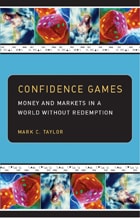
cover of Confidence Games: Money and Markets in a World without Redemption

Confidence Games

Money and Markets in a World without Redemption

Mark C. Taylor

University of Chicago Press, 2004

Awash in a sea of data that seems to have no meaning and bombarded by images and sounds transmitted from around the globe 24/7, people are no longer sure what is real and what is fake. Artists recycle ads in their paintings and businesses use images of artists in their ads; politicians mount campaigns based on hit films; and bankers make billions trading incomprehensible financial products backed by nothing more than abstract figures and signs.

In Confidence Games, Mark C. Taylor considers the implications of these developments for our digital and increasingly virtual economy. According to Taylor, money and markets do not exist in a vacuum but grow in a profoundly cultural medium, reflecting and in turn shaping their world. To understand the recent changes in our economy, it is not enough to analyze the impact of politics and technology—one must consider the influence of art, philosophy, and religion as well.

Bringing John Calvin, G. W. F. Hegel, and Adam Smith to Wall Street by way of Las Vegas, Taylor first explores the historical and psychological origins of money, the importance of religious beliefs and practices for the emergence of markets, and the unexpected role of religion and art in the classical understanding of economics. He then moves to an account of economic developments during the past four decades, exploring the dawn of our new information age, the growing virtuality of money and markets, and the complexity of the networks by which monetary value is now negotiated.

Returning full circle to a version of the market first proposed by Adam Smith when he used theology and aesthetics to rethink economics, Confidence Games closes with a plea for a conception of life that embraces uncertainty and insecurity as signs of the openness of the future. Like religion and economics, life is a confidence game in which the challenge is not to find redemption but to learn to live without it.

"Before the global credit system began its collapse in 2007, Mark Taylor had connected the dots between increasingly complex financial instruments and larger cultural forces. Anyone who wants to understand the disappearing foundation of our financial markets needs to read this book immediately."—Michael Lewitt, editor, The HCM Market Letter
“Beyond simply dealing with ‘money and markets,’ Confidence Games is a fascinating and wide-ranging tour of modern and postmodern ideas and conditions from Aristotle to Nietzsche, from Wall Street to Las Vegas.”—Craig Bay, Journal of Markets & Morality
[more]
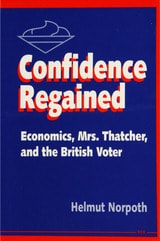
cover of Confidence Regained: Economics, Mrs. Thatcher, and the British Voter

Confidence Regained

Economics, Mrs. Thatcher, and the British Voter

Helmut Norpoth

University of Michigan Press, 1992

Elected to office at the end of a decade of economic decline, Prime Minister Margaret Thatcher set out to cure Britain's ills with daring new free-market policies. Putting financial stability first on the agenda of macroeconomic priorities, the Thatcher government pursued this goal with rare tenacity. In Confidence Regained, Helmut Norpoth examines the electoral risks and rewards of this economic strategy.Professor Norpoth paints a vivid picture of the fierce battle over the economic policies and record of the Thatcher government. Using electoral surveys, Norpoth reveals how British voters sorted out the competing claims of economists and politicians in their various partisan choices. Turning from election outcomes to government popularity between elections, Professor Norpoth charts the rise and decline of Margaret Thatcher's approval ratings and Conservative party support, showing how responsive these ratings were to economic performance. The statistical evidence presented shows that economic views significantly affected voter choices in the Thatcher elections. But the author reveals that the Conservatives under Mrs. Thatcher owed their ability to regain the confidence of the British electorate not only to the nation’s economic success, but also, in large measure, to the British victory in the Falkland Islands.Confidence Regained is an invaluable source to scholars of electoral politics, especially of British elections, but it will also interest historians of Thatcherism and scholars studying the role of macroeconomics in elections.
[more]
cover of Confronting Mass Democracy and Industrial Technology : Political and Social Theory from Nietzsche to Habermas

Confronting Mass Democracy and Industrial Technology

Political and Social Theory from Nietzsche to Habermas

John P. McCormick, ed.

Duke University Press, 2002

With a groundbreaking, interdisciplinary approach to German political and social theory, Confronting Mass Democracy and Industrial Technology provides fresh insight into the thought of many of the most influential intellectual figures of the twentieth century. Its essays detail the manner in which a wide range of German intellectuals grappled with the ramifications and implications of democracy, technology, knowledge, and control from the late Kaisserreich to the Weimar Republic, from the Third Reich and the Federal Republic through recently unified Germany.
Scholars representing the fields of political science, philosophy, history, law, literature, and cultural studies devote essays to the work of Nietzsche, Weber, Heidegger, Lukács, Schmitt, Marcuse, Adorno, and Habermas. They also discuss the writings of such figures as Brecht and Freud, who are not primarily thought of as political theorists, and explore the thought of Helmut Plessner and reformist theorists from East Germany who have been little studied in the English language. In the process of debating the nature and responsibilities of the modern state in an era of mass politics, unparalleled military technology, capacity for surveillance, and global media presence, the contributors question whether technology is best understood as an instrument of human design and collective control or as an autonomous entity that not only has a will and life of its own but one that forms the very fabric of modern humanity.

Contributors. Seyla Benhabib, Richard J. Bernstein, Peter C. Caldwell, Richard Dienst, David Dyzenhaus, Andrew Feenberg, Nancy S. Love, John P. McCormick, Jan-Werner Müller, Gia Pascarelli, William E. Scheuerman, Steven B. Smith, Tracy B. Strong, Richard Wolin
[more]
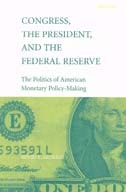
cover of Congress, the President, and the Federal Reserve: The Politics of American Monetary Policy-Making

Congress, the President, and the Federal Reserve

The Politics of American Monetary Policy-Making

Irwin L. Morris

University of Michigan Press, 2002

Congress, the President, and the Federal Reserve is a study of the politics of monetary policy making at the Federal Reserve--widely considered the most important and most powerful federal bureaucracy. Ostensibly, the Federal Reserve is independent of the political branches of government; however, Congress, the President, and the Federal Reserve clearly demonstrates-- from both a theoretical and empirical standpoint--how the preferences of members of Congress and the President impact decisionmaking at the Fed.
Current formal theories of the general policy-making process are utilized to construct an explanatory framework that identifies the mechanisms through which congressional and executive influence is exercised. The theoretical framework presented in the text also helps to explain the political dynamics of several of the most significant policy decisions of the Federal Reserve during the last half-century. In addition, this book provides a unique perspective on the manner in which Fed policymakers attempt to shield themselves from unwelcome political influence.
While the main focus of Congress, the President, and the Federal Reserve is monetary policy-making, it also speaks to the political nature of policy-making in a more general sense and provides a guide for the future study of the political dynamics in a wide variety of substantive policy areas. Thus it will interest not only political scientists and economists interested in monetary policy-making specifically but also those interested in the nature of public policy-making more generally.
Irwin L. Morris is Assistant Professor of Political Science, University of Maryland.
[more]
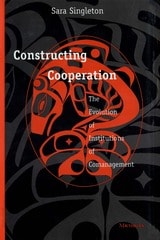
cover of Constructing Cooperation: The Evolution of Institutions of Comanagement

Constructing Cooperation

The Evolution of Institutions of Comanagement

Sara Singleton

University of Michigan Press, 1999

In a pathbreaking analysis, Sara Singleton explores the development of schemes for the management of fisheries in the northwestern United States in which native American tribes, and state, federal, and local governments cooperate to manage limited fishing resources. In the policy dispute over the apportionment of scarce resources, some argue that only government control or private ownership will prevent the destruction of limited common resources. The author shows how cooperation among interested parties can produce a workable system for self-management of common resources. Through the detailed study of the management of fisheries in the Northwest the author tests theories explaining the basis of collective action and social cooperation, an area of rich theoretical speculation in political science, law, economics and sociology. At the same time, her findings have important implications for policy makers who are interested in efficient and effective schemes of resource control that avoid the problems caused by regulation by remote government officials or private control.
This book will appeal to policy makers concerned with the management of natural resources as well as to economists, political scientists, and sociologists concerned with collective action problems.
Sara Singleton is Assistant Professor of Political Science, Tulane University.
[more]
cover of Consumers’ Cooperatives in the North Central States

Consumers’ Cooperatives in the North Central States

Leonard Kercher

University of Minnesota Press, 1941
Consumers’ Cooperatives in the North Central States was first published in 1941. Minnesota Archive Editions uses digital technology to make long-unavailable books once again accessible, and are published unaltered from the original University of Minnesota Press editions.“Comprehensive, up-to-date analysis of the region having the longest history of successful consumer cooperation.”“Detailed case histories to 1940 of typical retail units and leading wholesale organizations.”“Practical recommendations and thoughtful criticism, useful to cooperatives and cooperators everywhere.”No other book on this subject is so rich in reliable facts, objective reporting, and comprehensive treatment as this study. It is based on extensive first-hand investigation by trained research men, with figures brought down to 1940.Case histories of the 3 leading wholesales and 15 local societies typical of some 800 in the region are included. Each discusses the origin, growth, membership, trends of operation, buying methods, price levels, advertising, financial organization, personnel, patronage returns, ratio of annual earnings to total assets and net worth, relations with other cooperatives in districts and regional federations for education, recreation, insurance, credit, etc. Every phase of operation of these carefully selected cases is expertly analyzed and described. Many are summarized with recommendations for future action.Of special value are the discussions of types of cooperatives, the analyses of basic community factors involved in successful cooperation, the suggested solutions for problems of organization and management, and the long-range view of possibilities for price regulation and customer satisfaction.
[more]
cover of Containing Health Care Costs in Japan

Containing Health Care Costs in Japan

Naoki Ikegami and John Creighton Campbell, Editors

University of Michigan Press, 1996

The Japanese health care system provides universal coverage to a healthy but aging population. Its costs are among the lowest in the world and have remained nearly constant as a share of the economy for more than a decade. Americans concerned about runaway medical spending need to know about the successes that Japan has experienced and the problems the country has encountered in its effort to control costs while maintaining quality of care.

Offered here is an analysis of the key issues of cost-containment by specialists followed by reactions from some of America's best-known experts on health care delivery and finance. Topics include the macro-and microeconomics of health care, technology and costs, institutions and costs, attitudinal and behavioral aspects, and the politics of health care.

This collection provides an authoritative study of successful cost-containment in the Japanese health care system---a chronicle of success that is neither a statistical illusion nor a result of sociocultural factors. Detailed here is information on the key mechanism of cost constraint: a fee schedule that covers virtually all medical services and rewards inexpensive services while making expensive services unprofitable. This system has resulted in the provision of quality health care to the entire population at roughly half the cost of American health care. Is it a single-payer system? Would the United States have to introduce a dramatically altered health care structure to benefit from the Japanese experience? No. Japan relies mainly on fee-for-service medicine financed by multiple insurers---a system familiar to Americans and one from which many lessons may be learned.

Based on conferences held in Washington, D.C., and Izu, Japan, this volume collects original chapters on the overall cost structure, how the negotiated mandatory fee schedule works, specific mechanisms for cost control, the politics of health care financing, and the impact of cost cutting on quality, among other topics. These pathbreaking studies will be a significant resource for policymakers and scholars interested in comparative health care systems as well as those interested in health care reform in the United States.
[more]
cover of Continuous Improvement: Quality Control Circles in Japanese Industry

Continuous Improvement

Quality Control Circles in Japanese Industry

Paul Lillrank; Noriaki Kano

University of Michigan Press, 1989
Quality Control Circles (QCCs) are small groups of workers from the same workshop, which meet, often on their own time, to discuss ways to improve the quality of their work. They are supported by management; the circles and the support structure together are called Quality Control Circle (QCC) activity. The phenomenon is widespread in Japan: as of December 1987, 264,899 circles had been registered with more than two million members. QCC activities have spread to more than fifty countries worldwide and can be considered the most famous Japanese organizational innovation to date. The Japanese QCC, in its contribution to business application and theory, may rival the discovery of the informal organization of Hawthorne Studies frame.
The Japanese QCC movement has achieved quite impressive results, which are well described in the Japanese-language literature. Of concern, however, is what sustains and causes the phenomenon. The existing literature is quite thin on these mechanisms and forces.
Our aim in this research is to develop a systematic model of the organizational nature and management of Japanese QCC activities. Quality engineering and group dynamics are not part of this study; the focus is on the supporting arrangements, not on what happens within a circle. [1]
[more]
cover of Contours of the Illiberal State: Governing Circulation in the Smart Economy

Contours of the Illiberal State

Governing Circulation in the Smart Economy

Edited by Boris Vormann and Christian Lammert

Campus Verlag, 2019

The post-Cold War era was marked by the emergence of unprecedented new networks of international private trade, cooperation, and circulation of goods that promised to render the state nearly obsolete—at least in theory. The essays collected in this book dissect the notions of this so-called “smart economy,” revealing the crucial role that government interventions still play in facilitating the production and the global flow of goods. The contributors focus particularly on the role played by the United States, often incorrectly assumed to be the most liberal and least interventionist in the global order. More than a mere market fixer, the United States has long assumed an outsized position in expediting the global circulation of goods through its supply chains and communication channels. Drawing from such diverse fields as political science, urban sociology, and cultural studies, Contours of the Illiberal State takes a broad interdisciplinary look at how nations became active market enablers.
[more]
cover of Contra Keynes and Cambridge: Essays, Correspondence

Contra Keynes and Cambridge

Essays, Correspondence

F. A. Hayek

University of Chicago Press, 1995

In 1931, when the young F. A. Hayek challenged the economic theories of John Maynard Keynes, sixteen years his senior, and one of the world's leading economists, he sparked a spirited debate that would influence economic policy in democratic countries for decades. Their extensive exchange lasted until Keynes's death in 1946, and is reprinted in its entirety in this latest volume of The Collected Works of F. A. Hayek.

When the journal Economica published a review of Keynes's Treatise on Money by Hayek in 1931, Keynes's response consisted principlally of an attack on Hayek's own work on monetary theory, Prices and Production. Conducted almost entirely in economics journals, the battle that followed revealed two very different responses to a world in economic crisis. Keynes sought a revision of the liberal political order—arguing for greater government intervention in the hope of protecting against the painful fluctuations of the business cycle. Hayek instead warned that state involvement would cause irreparable damage to the economy.

This volume begins with Hayek's 1963 reminiscence "The Economics of the 1930s as Seen from London," which has never been published before. The articles, letters, and reviews from journals published in the 1930s are followed by Hayek's later reflections on Keynes's work and influence. The Introduction by Bruce Caldwell puts the debate in context, providing detailed information about the economists in Keynes's circle at Cambridge, their role in the acceptance of his ideas, and the ways in which theory affected policy during the interwar period.

Caldwell calls the debate between Hayek and Keynes "a battle for the minds of the rising generation of British-trained economists." There is no doubt that Keynes won the battle during his lifetime. Now, when many of Hayek's ideas have been vindicated by the collapse of collectivist economies and the revival of the free market around the world, this book clarifies Hayek's work on monetary theory—formed in heated opposition to Keynes—and illuminates his efforts to fight protectionism in an age of economic crisis.

F. A. Hayek (1899-1992), recipient of the Medal of Freedom in 1991 and co-winner of the Nobel Memorial Prize in Economics in 1974, was a pioneer in monetary theory and the principal proponent of classical liberal thought in the twentieth century. He taught at the University of London, the University of Chicago, and the University of Freiburg.

[more]
cover of Controlling Crime: Strategies and Tradeoffs

Controlling Crime

Strategies and Tradeoffs

Edited by Philip J. Cook, Jens Ludwig, and Justin McCrary

University of Chicago Press, 2011

 Criminal justice expenditures have more than doubled since the 1980s, dramatically increasing costs to the public. With state and local revenue shortfalls resulting from the recent recession, the question of whether crime control can be accomplished either with fewer resources or by investing those resources in areas other than the criminal justice system is all the more relevant.
Controlling Crime considers alternative ways to reduce crime that do not sacrifice public safety. Among the topics considered here are criminal justice system reform, social policy, and government policies affecting alcohol abuse, drugs, and private crime prevention. Particular attention is paid to the respective roles of both the private sector and government agencies. Through a broad conceptual framework and a careful review of the relevant literature, this volume provides insight into the important trends and patterns of some of the interventions that may be effective in reducing crime.
[more]
cover of Coping With Poverty: The Social Contexts of Neighborhood, Work, and Family in the African-American Community

Coping With Poverty

The Social Contexts of Neighborhood, Work, and Family in the African-American Community

Sheldon Danziger and Ann Chih Lin, Editors

University of Michigan Press, 2000
Conservatives often condemn the poor, particularly African-Americans, for having children out of wedlock, joblessness, dropping out of school, or tolerating crime. Liberals counter that, with more economic opportunity, the poor differ little from the nonpoor in these areas. In answer to both, Coping with Poverty points to the survival strategies of the poor and their multiple roles as parents, neighbors, relatives, and workers. Their attempts to balance multiple obligations occur within a context of limited information, social support, and resources. Their decisions may not always be the wisest, but they "make sense" in context.
Contributors use qualitative research methods to explore the influence of community, workplace, and family upon strategies for dealing with poverty. Promising young scholars delve into poor black inner-city neighborhoods and suburbs and middle-income black urban communities, exploring experiences at all stages of life, including high-school students, young parents, employed older men, and unemployed mothers. Two chapters discuss the role of qualitative research in poverty studies, specifically examining how this research can be used to improve policymaking.
The volume's contribution is in the diversity of experiences it highlights and in how the general themes it illustrates are similar across different age/gender groups. The book also suggests an approach to policymaking that seeks to incorporate the experiences and the needs of the poor themselves, in the hope of creating more successful and more relevant poverty policy. It is especially useful for undergraduate and graduate courses in sociology, public policy, urban studies, and African-American Studies, as its scope makes it THE basic reader of qualitative studies of poverty.
Sheldon Danziger is Director of the Poverty Research and Tranining Center and Professor of Social Work and Public Policy, University of Michigan. Ann Chih Lin is Assistant Professor of Political Science and Public Policy, University of Michigan.
[more]
cover of Corporate Sovereignty: Law and Government under Capitalism

Corporate Sovereignty

Law and Government under Capitalism

Joshua Barkan

University of Minnesota Press, 2013

Refinery explosions. Accounting scandals. Bank meltdowns. All of these catastrophes—and many more—might rightfully be blamed on corporations. In response, advocates have suggested reforms ranging from increased government regulation to corporate codes of conduct to stop corporate abuses. Joshua Barkan writes that these reactions, which view law as a limit on corporations, misunderstand the role of law in fostering corporate power.

In Corporate Sovereignty, Barkan argues that corporate power should be rethought as a mode of political sovereignty. Rather than treating the economic power of corporations as a threat to the political sovereignty of states, Barkan shows that the two are ontologically linked. Situating analysis of U.S., British, and international corporate law alongside careful readings in political and social theory, he demonstrates that the Anglo-American corporation and modern political sovereignty are founded in and bound together through a principle of legally sanctioned immunity from law. The problems that corporate-led globalization present for governments result not from regulatory failures as much as from corporate immunity that is being exported across the globe.

For Barkan, there is a paradox in that corporations, which are legal creations, are given such power that they undermine the sovereignty of states. He notes that while the relationship between states and corporations may appear adversarial, it is in fact a kind of doubling in which state sovereignty and corporate power are both conjoined and in conflict. Our refusal to grapple with the peculiar nature of this doubling means that some of our best efforts to control corporations unwittingly reinvest the sovereign powers they oppose.

[more]